
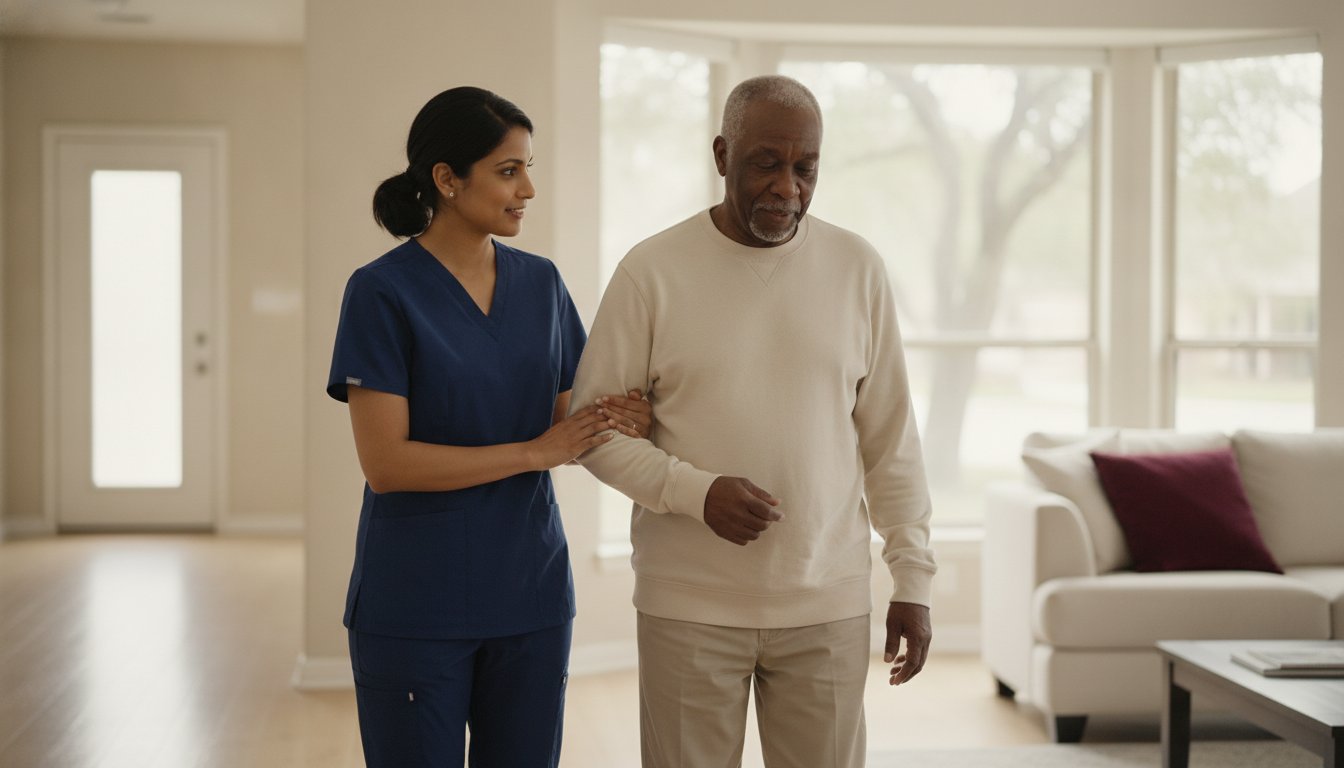
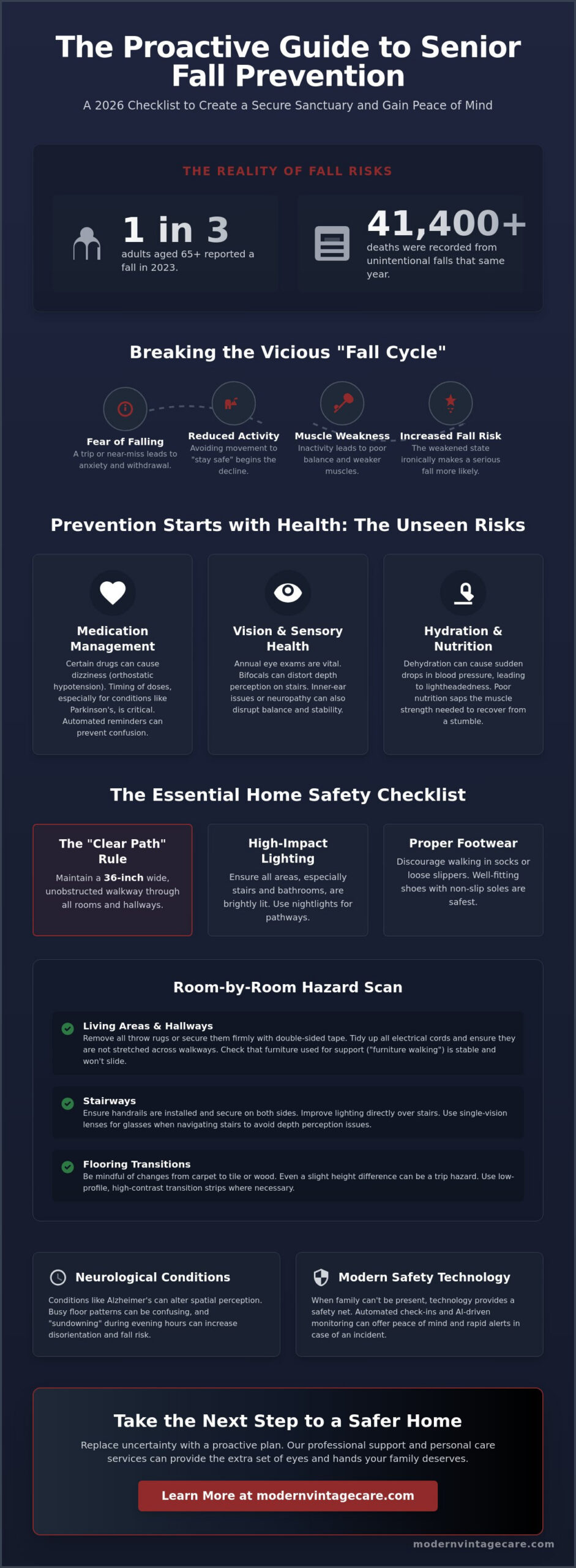
Did you know that in 2023, nearly one in three adults aged 65 and older reported a fall? With over 41,400 deaths recorded from unintentional falls that same year, these statistics represent a significant source of anxiety for families. You want your loved one to maintain their independence, yet you likely feel a constant weight of worry whenever they’re alone. It’s natural to feel overwhelmed by the technical side of home modifications or guilty that you can’t be there every minute of the day to ensure their safety. Effective fall prevention for seniors at home doesn’t have to be a source of confusion or stress.
This 2026 safety checklist provides a comprehensive, room-by-room guide to identifying hidden hazards and implementing life-saving measures. Whether you’re looking for simple lighting fixes or exploring how AI-driven monitoring can provide a safety net, we’ve organized the most effective strategies into one clear path. We’ll show you how to blend physical home updates with proactive care routines to create a secure sanctuary. This guide aims to replace your uncertainty with a proactive plan, ensuring a hazard-free environment and the lasting peace of mind your family deserves.
Key Takeaways
- Understand how to break the “Fall Cycle,” where the fear of falling often leads to reduced activity and a higher risk of accidents.
- Identify “invisible” hazards throughout the house, specifically focusing on high-traffic areas and transitions between different flooring types.
- Learn why cost-effective lighting updates and a shift in footwear habits are among the most impactful strategies for fall prevention for seniors at home.
- Gain insight into how Alzheimer’s and other neurological conditions alter spatial perception, making certain floor patterns or evening hours particularly hazardous.
- Discover how to integrate modern safety technology, such as automated check-ins, to provide a reliable safety net when family members cannot be present.
Understanding Fall Risks: Why Prevention Starts with Health
Many families view safety as a matter of removing rugs or installing grab bars. While those physical changes are vital, effective fall prevention for seniors at home begins with a deep look at their physical health. It’s a multi-disciplinary effort that combines medical oversight with daily wellness habits. If we only look at the floor and ignore the person walking on it, we miss half the picture. By centering our approach on the individual’s physical well-being, we create a stronger foundation for independence.
One of the most challenging obstacles is the “Fall Cycle.” This occurs when an older adult experiences a minor trip or a near-miss and develops a deep fear of falling again. If a senior becomes fearful, then they often withdraw from physical activities to stay safe. This inactivity leads to muscle weakness and poor balance, which actually increases their risk of a serious accident. Breaking this cycle requires a gentle, encouraging approach that restores confidence through movement and reliable support.
Current 2026 health standards emphasize proactive screenings rather than waiting for a crisis. In March 2026, Medicare introduced the Long-term Enhanced ACO Design (LEAD) program, which pays doctors for preventive care like fall risk assessments. These screenings help identify subtle changes in gait or stability early on. Additionally, simple factors like hydration and nutrition play a massive role. Dehydration can lead to sudden drops in blood pressure, while poor nutrition saps the muscle strength needed to recover from a stumble. Using a comprehensive guide to fall prevention can help you track these health indicators alongside home modifications.
Medication Management and Side Effects
Certain medications can inadvertently increase the risk of a fall by causing orthostatic hypotension, which is a sudden dizzy spell when standing up. This is particularly common with blood pressure treatments or sedatives. For those managing Parkinson’s, the timing of doses is critical to avoid “wearing-off” periods where mobility becomes stiff or unpredictable. Our Medication Management services focus on these nuances to ensure safety. To prevent double-dosing or confusion, we often implement Automated medication reminders, providing a steady routine that keeps health stable and predictable.
Vision and Sensory Awareness
Clear sight is a primary defense against trips, yet it’s often overlooked. Annual exams are necessary to check for cataracts, glaucoma, and macular degeneration, which can blur the edges of steps or furniture. Whether a senior uses bifocals or trifocals, they should be cautious on stairways. These lenses can distort depth perception when looking down at feet, so single-vision lenses are often safer for movement between floors. We also watch for “silent” risks like peripheral neuropathy or inner-ear imbalances, which can make a senior feel disconnected from the ground beneath them.
The Essential Room-by-Room Home Safety Checklist
A systematic walkthrough helps you identify “invisible” hazards that often blend into the background of a familiar family home. In Sugar Land, many residences feature beautiful open floor plans and expansive patios. While these designs feel airy, they often lack the wall space or furniture placement needed for a senior to steady themselves. To address this, we recommend the “Clear Path” rule. This means maintaining a 36-inch wide, unobstructed walkway throughout every room. It’s also vital to monitor high-traffic transitions, such as moving from thick carpet to smooth tile, where a slight change in floor height can cause a stumble. Implementing these home safety tips ensures the physical environment supports rather than hinders mobility.
Effective fall prevention for seniors at home requires a proactive eye for detail. If you find your loved one is “furniture walking” by grabbing onto tables or chair backs for balance, it’s time to assess the stability of those pieces. If a table wobbles or a chair slides easily, it shouldn’t be used as a mobility aid. If you need help managing these daily environment checks, our companionship and personal care services can provide an extra set of eyes to keep the home secure.
Living Areas and Hallways
Living rooms are often cluttered with small trip hazards. Start by eliminating throw rugs entirely; if they’re sentimental, secure them with industrial-grade double-sided tape. Tucking away electrical cords and “daisy-chained” power strips is also essential, especially near favorite recliners where oxygen lines or phone chargers often trail across the floor. Ensure all furniture is heavy enough to support a person’s weight if they reach out for balance unexpectedly.
Kitchen and Bathroom Modifications
Bathrooms are high-risk zones due to moisture and hard surfaces. Install ADA-compliant grab bars near the toilet and inside the shower, but never rely on towel racks, which aren’t designed to hold weight. Many Houston area homes feature high-gloss tile floors that become incredibly slick when wet. Applying a non-slip coating can add much-needed traction. In the kitchen, organize “reach zones” by keeping heavy pots and daily essentials between waist and eye level to prevent overreaching or bending.
Stairways and Outdoor Entryways
Stairs require dual handrails that extend beyond the first and last steps, allowing for a steady grip before the ascent begins. For seniors with depth perception issues, adding high-contrast “step-edge” tape helps them distinguish where one step ends and the next begins. Don’t forget the impact of Missouri City humidity. Damp weather often causes mold or algae to grow on porches and walkways, creating a dangerously slick surface. Keeping these areas power-washed and clear of debris is a simple yet vital safety measure.
Lighting, Footwear, and Daily Habit Adjustments
Many families focus on major home renovations while overlooking the subtle daily factors that influence safety. Improving lighting and choosing proper footwear are among the most cost-effective ways to manage fall prevention for seniors at home. These adjustments don’t require a contractor, yet they provide immediate protection. By pairing these physical changes with “habit stacking,” we help seniors build routines that keep them steady. This proactive approach turns safety into a natural, stress-free part of the day.
Habit stacking is the practice of attaching a new safety habit to an existing routine. For example, if a senior always drinks a glass of water after breakfast, then they can use that time to ensure their mobility aid is within reach for the next transition. This makes safety feel like a natural rhythm rather than a series of rules. Our companionship services play a vital role here, as having a dedicated partner present encourages these safe habits and provides the gentle motivation needed for regular movement. For families seeking deeper insights, the Fall Prevention Resources for Older Adults offers extensive tools to support these lifestyle shifts.
Illuminating the Path to Safety
Shadows are a hidden enemy in the home. If a hallway has pockets of darkness, then a senior might misjudge the distance to a doorway or trip over a low-profile object. Upgrading to 2026-standard motion-sensing LED nightlights is a simple, effective solution for paths to the bathroom. These lights activate only when needed, which prevents sleep-disrupting glare while ensuring a clear path. We also recommend installing “rocker” style light switches. If a senior struggles with arthritis, then these wide, flat switches are much easier to operate than traditional small toggles. Ensuring uniform brightness throughout the home eliminates the visual confusion that leads to missteps.
Selecting the Right Footwear
The psychology of footwear is often a battle between comfort and safety. Many seniors prefer loose-fitting slippers or walking in socks, but these are leading causes of home fractures. A safe shoe must pass the “Three-Point Test.” It needs a firm heel for stability, a non-slip sole for traction, and a secure closure to prevent the foot from sliding inside the shoe. If a senior experiences swelling or bunions, then a professional shoe fitting is essential. Proper footwear provides the sensory feedback the brain needs to maintain balance, making it a critical component of any fall prevention for seniors at home strategy.
Managing Fall Risks for Alzheimer’s and Neurological Conditions
Neurological conditions add a layer of complexity to home safety that physical modifications alone cannot solve. If a senior lives with Alzheimer’s, their brain may no longer process environmental cues correctly. A simple change in floor color can appear as a physical barrier or a drop-off, leading to hesitation and loss of balance. Effective fall prevention for seniors at home must adapt to these shifting perceptions. We focus on creating a “visual calm” that reduces confusion and prevents the startle responses that so often lead to accidents. By understanding how the mind interprets the space, we can stay one step ahead of potential trips.
Timing is just as important as the physical space. The “Sundowning” effect often causes a surge in activity during the late afternoon when fatigue is high and vision is naturally dimmed. This is when wandering becomes a primary safety concern. Keeping a senior within a safe, familiar zone during these hours prevents them from entering unlit or hazardous areas of the house. For those recovering from a stroke or living with Parkinson’s, impulsivity is another major hurdle. A senior might forget their physical limitations and attempt to stand up quickly without their walker. If your family is struggling to manage these difficult evening transitions, our Alzheimer’s & Dementia Care services provide the specialized, 24-hour support needed to ensure safety around the clock.
Spatial Perception and Environmental Cues
Dementia patients often struggle with “visual noise.” High-contrast patterns, such as a black-and-white tiled kitchen floor, can be terrifying for someone who perceives the dark tiles as holes in the ground. Using wayfinding techniques, such as brightly colored tape to mark the path to the bathroom, provides a clear, unmistakable guide. We also recommend removing or covering mirrors in late-stage memory loss. A senior might not recognize their own reflection, leading to a “startle fall” or sudden agitation that compromises their stability. Creating a predictable, low-stimulus environment is a key component of fall prevention for seniors at home.
Specialized Support for Parkinson’s and Stroke
Neurological conditions like Parkinson’s often cause a “freezing of gait,” where the feet feel glued to the floor while the upper body continues to move forward. This is a common cause of forward falls. Managing these moments requires rhythmic cues and professional supervision to help the senior regain their stride safely. Personal care attendants are also vital for preventing “unassisted transfers.” Many injuries occur when a stroke survivor impulsively tries to get out of bed or a chair without help. Having a steady, professional arm during high-fatigue hours ensures that every movement is supported, controlled, and secure. Families navigating this recovery period should also review the available post-hospital care for seniors Houston families rely on to manage the critical transition from hospital to home safely.
Professional Support and Safety Technology in Sugar Land
There comes a point where physical modifications and habit changes reach their limit. If a senior’s mobility continues to decline or their cognitive health shifts, then even the safest home can feel like a place of risk. Recognizing when “DIY” safety is no longer enough is a vital step in preserving a loved one’s dignity. Professional intervention isn’t about taking away independence; instead, it’s about providing the necessary infrastructure to keep that independence sustainable. For families in Fort Bend County, having a local partner ensures that safety plans are grounded in the specific needs of our community.
One of the most effective ways to bridge the gap between family visits is through Quick Care Services. These focused visits target high-risk times of day, such as the morning routine or bathing hours, when the risk of a slip is statistically higher. By having a professional present during these transitions, you eliminate the “what-if” scenarios that cause so much family anxiety. This proactive approach to fall prevention for seniors at home allows you to be a son or daughter again, rather than a constant safety monitor. Modern Vintage Home Care serves as this steady presence, offering a range of supportive solutions tailored to the rhythms of life in Sugar Land.
Modern Safety Monitoring and Tech
Technology has evolved far beyond the traditional “help button.” Modern automated check-in services represent a shift toward proactive wellness rather than reactive emergency response. These systems can verify a senior’s well-being at set intervals, providing a safety net that doesn’t feel intrusive. When paired with automated medication reminders, this technology ensures that the prescriptions intended to maintain physical stability are taken exactly as directed. If a senior stays consistent with their health regimen, then their balance and clarity naturally improve. Smart home devices now integrate seamlessly with professional oversight, creating a multi-layered defense against accidents.
The Modern Vintage Advantage
We believe that every home has its own unique set of challenges and opportunities. Our Sugar Land-based care experts conduct tailored safety assessments that look beyond the obvious hazards to find the subtle risks unique to your loved one’s environment. If the risk of a fall is extreme due to advanced neurological conditions, then our 24-hour care provides the continuous, vigilant support needed to prevent unassisted transfers. We act as a bridge between professional expertise and familial warmth, ensuring that your relative feels nurtured while remaining secure. Schedule a free home safety assessment with Modern Vintage Home Care today.
Taking the First Step Toward a Safer Home
Securing a loved one’s environment involves more than just clearing the floor; it’s about fostering a lifestyle of safety and confidence. We’ve explored how a health-first approach, combined with a meticulous room-by-room checklist and proper lighting, can significantly reduce risks. For families navigating neurological conditions, understanding the nuances of spatial perception is equally critical. Comprehensive fall prevention for seniors at home is a dynamic process that requires both physical adjustments and compassionate oversight.
Modern Vintage Home Care is a licensed Texas home care agency serving Sugar Land and Houston. We specialize in Alzheimer’s, dementia, and 24-hour safety support, providing families with reliable expertise and heartfelt care. Our innovative automated check-in and medication reminder systems offer an extra layer of protection even when you can’t be there yourself. If you’re ready to transform your worry into a proactive plan, then we’re here to act as your steady guide. Request Your Free Senior Home Safety Consultation today to ensure your loved one can age in place with the dignity they deserve. You’ve already taken the most important step by seeking information; now, let us help you turn that knowledge into a secure reality.
Frequently Asked Questions
How can I prevent my elderly parent from falling at night?
Nighttime falls are best prevented by ensuring a brightly lit and clear path to the bathroom. Use motion-sensing LED nightlights that activate automatically to illuminate hallways without requiring a senior to fumble for switches. Keep a phone and a flashlight within easy reach of the bed. If your parent needs to get up frequently, then having a sturdy bedside commode or professional 24-hour care can provide the extra layer of safety needed during dark hours.
What are the most common causes of falls for seniors living at home?
Common causes include poor lighting, loose rugs, and side effects from medications that cause dizziness. Health factors like declining vision and muscle weakness also play a major role. Environmental transitions, such as moving from carpet to tile, often lead to trips when the floor height changes slightly. Addressing these varied factors is the core of effective fall prevention for seniors at home and helps maintain long-term independence.
Do medical alert buttons actually prevent falls?
Medical alert buttons do not prevent falls; they only provide a way to call for help after an accident occurs. True prevention requires proactive measures like balance exercises and home modifications. While these devices are valuable safety nets that offer peace of mind, they shouldn’t replace active strategies that address the root causes of instability, such as muscle weakness or environmental hazards like cluttered walkways.
Should I remove all rugs from my senior’s home?
Removing all throw rugs is the safest option to eliminate a primary trip hazard. If a rug must stay for sentimental reasons, then it should be secured with industrial-grade double-sided tape or a non-slip backing. Rugs in high-traffic areas or near transitions between rooms are particularly dangerous. These should be the first ones removed to ensure a clear, level walking surface throughout the house.
How does dementia increase the risk of falling?
Dementia increases risk by altering how the brain interprets visual information and spatial distances. A senior might see a dark rug as a hole or a shadow as an obstacle, leading to a sudden loss of balance. Cognitive decline also impacts judgment and impulsivity, making it more likely that a senior will attempt a difficult movement without assistance. Creating a predictable environment is a key part of fall prevention for seniors at home.
Are there specific exercises that help seniors prevent falls?
Exercises that focus on balance and lower-body strength, such as Tai Chi or simple leg lifts, are highly effective. These movements improve coordination and help seniors recover their balance if they do stumble. Consistency is key to maintaining the muscle tone needed for steady walking. You should always consult a healthcare provider before starting a new physical routine to ensure the movements are safe for your loved one’s specific health status.
How do I talk to my parent about home safety without upsetting them?
Frame the conversation around preserving their independence and dignity rather than taking away their freedom. Use “I” statements to express your concern and ask for their input on what would make them feel more secure. If you approach the topic as a partnership to help them stay in their own home longer, then they’re much more likely to accept safety suggestions without feeling judged or controlled.
What is the first thing I should do after my parent has a fall?
The first thing you should do is stay calm and check for signs of serious injury or head trauma. Don’t try to move them immediately; instead, encourage them to stay still while you assess the situation. If they’re in pain or cannot get up, then call for medical help. Even if they seem fine, it’s vital to notify their doctor and review the home to identify exactly what caused the fall.