
What if the safest place for your parent to age isn’t a facility with a locked memory ward, but the very home where they raised you? You’re likely feeling the heavy weight of this decision every single day. It’s normal to worry that staying at home might lead to caregiver burnout, or that choosing in-home care vs assisted living Sugar Land means sacrificing professional expertise. You want your loved one to remain dignified and safe, yet the fear of hidden facility contracts or a sudden decline in specialized conditions like dementia keeps you awake at night.
We understand that you’re looking for a partner, not just a service. This guide provides a clear framework to help you evaluate the critical differences between aging in place and facility living for 2026. You’ll discover how new Texas safety regulations and modern technology are changing the landscape of senior support. We’ll show you how to balance one-on-one attention with professional expertise so you can make a choice that prioritizes your loved one’s spirit and your family’s peace of mind. By the end of this guide, you’ll have the confidence to choose a path that ensures your relative remains a person, not just a resident.
Key Takeaways
- Understand the difference in attention levels between one-on-one home care and the higher staff-to-senior ratios typically found in residential facilities.
- Learn why familiar surroundings are vital for memory care and how staying at home can help prevent wandering while maintaining a sense of security.
- Evaluate the financial impact of in-home care vs assisted living Sugar Land by comparing flexible hourly models against “all-in” facility fees.
- Discover a framework for choosing a care path that balances professional expertise with the heartfelt warmth of your loved one’s own home.
Understanding Senior Care Options in Fort Bend County
Choosing between in-home care vs assisted living Sugar Land is rarely just a matter of logistics; it’s a decision rooted in love and the desire for your parent to flourish. In Fort Bend County, we see families grappling with these options every day. In-home care involves professional support brought directly into the senior’s private residence, allowing them to remain in the environment they know best. Assisted living, by contrast, is a residential facility where housing and meals are provided alongside a shared staff that assists multiple residents at once.
For many in neighborhoods like First Colony or Sweetwater, the decision often centers on how much independence a loved one can safely maintain. If your father still enjoys his morning walks through the local park or your mother wants to keep her garden in Sweetwater, staying home preserves those vital connections. Understanding In-Home Care helps clarify that this path isn’t just about help; it’s about maintaining a lifestyle that feels authentic and dignified. It’s a way to ensure that the transition into a higher level of support feels like a natural step forward rather than a disruptive move.
The Core Differences in Care Philosophy
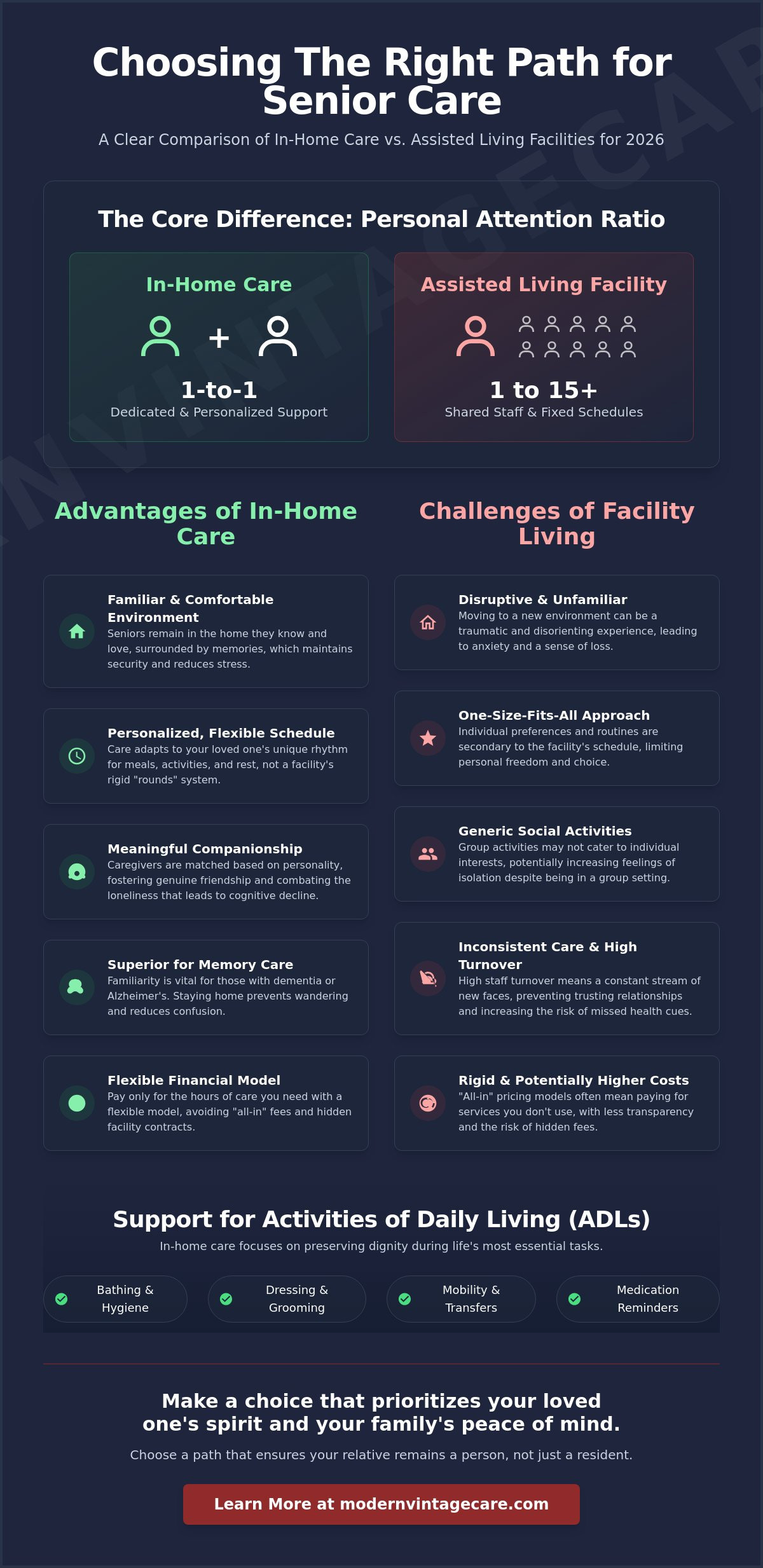
The primary distinction lies in the level of personal attention. In a facility, a single staff member might be responsible for fifteen or twenty residents. This often leads to a “one size fits all” schedule for meals and activities. When you choose in-home care, the ratio is one-to-one. This means the caregiver’s entire focus is on your loved one’s specific needs and preferences. Whether it’s a favorite breakfast at 9:00 AM or a specific routine for winding down, the care adapts to the person, not the other way around. It allows seniors to stay active in Sugar Land and Missouri City, keeping them connected to their neighbors and local church groups.
Activities of Daily Living (ADLs) and Your Needs
Both models address Activities of Daily Living, which include essential tasks like bathing, dressing, and mobility. However, the experience of receiving this help can differ significantly. In-home personal care focuses on preserving the individual’s spirit during these vulnerable moments. A dedicated caregiver becomes a trusted partner who understands exactly how your loved one prefers to be supported. Families often wonder about the “tipping point” for professional help. If you notice a parent struggling with medication schedules or if their hygiene is slipping, it may be time for intervention. A professional caregiver provides the necessary support while ensuring your parent doesn’t feel like they’ve lost their autonomy.
Personalized Support vs. Residential Facility Living
When you evaluate in-home care vs assisted living Sugar Land, the most striking difference is the staff-to-senior ratio. In a residential facility, a single caregiver often manages fifteen or more residents at once. This creates a “rounds” system where your loved one must wait for their turn to receive help with basic needs. In contrast, home care provides a dedicated one-on-one relationship. This ensures that your parent’s unique rhythm is the priority, rather than a facility’s rigid schedule. Families in Sugar Land often prioritize this level of personalized attention to ensure their relatives don’t just exist, but truly flourish.
The Benefits of One-on-One Companionship
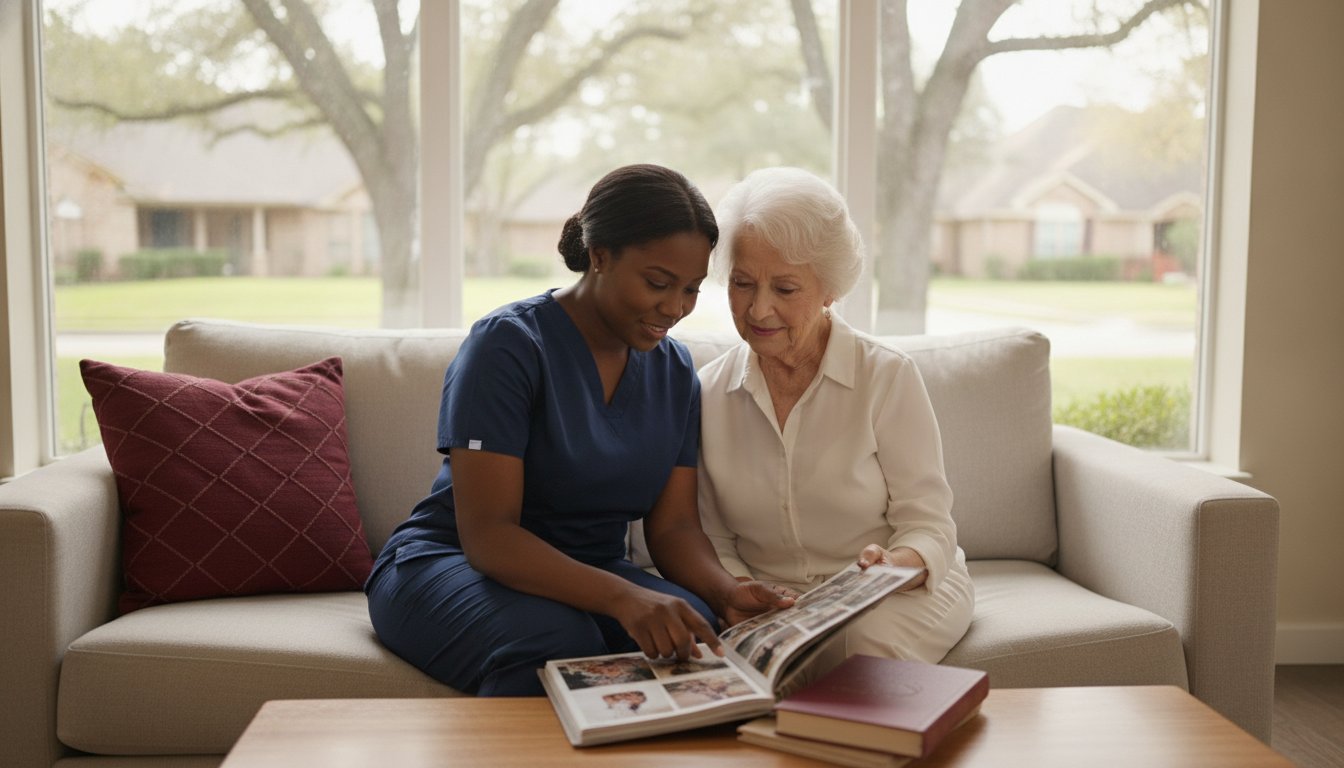
Isolation is a silent struggle for many seniors in Fort Bend County. Generic group activities in a facility don’t always foster deep connection or spark genuine interest. Our senior companionship services Sugar Land focus on the individual spirit by matching caregivers with seniors based on personality and shared history. Whether it’s preparing a favorite family recipe, looking through old photo albums, or taking a stroll through the local botanical garden, these interactions feel like friendship. This tailored social engagement directly combats the loneliness that often leads to cognitive decline, ensuring your loved one stays mentally active and emotionally supported.
Facility Limitations and the “Rounds” System
High staff turnover is a persistent challenge in many residential settings. It’s difficult for a senior to feel secure when a different person enters their room every few days. This lack of consistency can lead to missed details, such as a subtle change in gait or appetite that might signal a larger health issue. Reviewing the Financial Realities of Home Care helps families see that they are investing in a proactive safety net. A dedicated caregiver notices these small shifts immediately because they aren’t rushing to the next room on a floor plan. This constant presence is critical for preventing falls and managing chronic conditions before they become emergencies.
Flexibility is another cornerstone of aging in place that facilities simply can’t match. Residential centers often have set times for meals, bathing, and social events. Home care scales with your specific needs, offering everything from “Quick Care” visits for medication reminders to comprehensive 24-hour supervision. This adaptability allows your loved one to stay in their familiar environment while receiving the exact level of support they require today. If you’re feeling overwhelmed by the complexity of these choices, reaching out to a compassionate care advocate can help clarify the best path forward for your family’s unique situation.
Safety and Memory Care: Evaluating Alzheimer’s Support at Home
Safety is the primary concern for any family facing an Alzheimer’s diagnosis. Evaluating in-home care vs assisted living Sugar Land often means looking for the environment that offers the highest level of security without stripping away a loved one’s dignity. For many seniors, the “clinical” feel of a memory care facility can trigger anxiety and confusion. In contrast, staying in a familiar home provides a sense of continuity that is vital for emotional stability. If a senior can remain in their own living room with their own furniture and photos, then their brain doesn’t have to work as hard to interpret a new, sterile environment.
Our dementia home care services Sugar Land are designed to meet seniors where they are. We focus on creating a specialized memory care routine that mirrors the life they’ve always known. This consistency is a powerful tool in slowing cognitive decline. This preservation of energy allows them to focus more on social engagement and less on the fear of the unknown. Whether it’s a specific morning ritual or a favorite evening television program, these small details create a foundation of safety that a facility’s rotating staff simply can’t replicate.
Many families worry about wandering or medication errors when they choose home over a facility. However, the official guide to long-term care highlights that personalized support is a cornerstone of safety. We bridge the safety gap by integrating modern technology into our care plans. Automated medication reminders ensure that complex prescriptions are taken on time, every time. These tools prevent the dangerous errors that often lead to hospitalizations, providing a proactive approach to wellness that keeps your loved one secure.
The Clinical Advantage of Aging in Place with Dementia
Agitation and “sundowning” are common challenges for those with dementia. Facilities often use generic routines that don’t account for an individual’s unique triggers. By staying home, we can tailor the environment to reduce sensory overload. One-on-one monitoring means a caregiver is always present to redirect a senior gently if they become disoriented. This personalized engagement helps maintain cognitive function longer than group-based facility activities, giving Sugar Land families peace of mind that their parent is receiving truly attentive care.
Modern Safety Technology in the Home
We use automated check-ins as a proactive wellness tool to keep families informed. These systems act as a secondary safety net, ensuring that even when a caregiver isn’t in the room, there’s a digital eyes-on approach to health. This modern integration is a key reason why the debate between in-home care vs assisted living Sugar Land is shifting toward home-based solutions. Human empathy combined with technological precision creates a secure environment that rivals facility supervision while keeping your loved one in the comfort of their own home.
Comparing Costs: Financial Realities of Home Care in Sugar Land
Choosing the right path requires a clear look at the numbers. When families compare in-home care vs assisted living Sugar Land, they often discover that the hourly model offers far better control over their monthly budget. You aren’t paying for a generic suite of services or amenities your parent might not use. Instead, you’re investing in specific, one-on-one attention that adapts to your parent’s actual daily needs. This precision ensures that your financial resources go directly toward improving your loved one’s quality of life without the burden of paying for a large facility’s overhead.
The “all-in” cost of assisted living can be deceptive. While the base rate covers room and board, it rarely tells the full story. Many facilities in Fort Bend County use tiered care levels. As a senior’s needs increase, so does the monthly bill. If your parent requires 24-hour supervision or specialized memory care, these costs can escalate rapidly. Home care allows you to scale support exactly when it’s needed, whether that’s a few hours of companionship or comprehensive around-the-clock monitoring, all while your loved one remains in the comfort of their own home.
Hidden Costs and Tiered Pricing in Facilities
It’s vital to look beyond the initial tour and glossy brochures. Many residential centers require a substantial “community fee” before move-in, which acts as a non-refundable entry cost. There’s also the financial impact of relocation and the potential loss of the family home as an asset. Keeping your parent in their long-term residence provides significant stability. It allows the home to remain a part of the family legacy while providing a familiar, safe harbor for your loved one to age with dignity and grace.
Flexible Care Models: Quick Care and Concierge Services
For many families, full-time care isn’t necessary right away. Short-term “Quick Care” visits serve as a cost-effective entry point for those who only need help with specific tasks like bathing or medication management. This approach is also a powerful tool for preventing primary caregiver burnout. It gives you the respite you need while ensuring your parent is safe. If you are a veteran or the spouse of one, you may be eligible for veterans home care benefits Sugar Land. These programs are specifically designed to honor those who served by making personalized home support more accessible. To see how these flexible options can fit your family’s unique situation, we invite you to request a personalized care consultation today.
Why Families Choose Modern Vintage Home Care for Aging in Place
Choosing a care provider is a deeply personal step. It’s about finding a team that sees your parent as a person, not just a set of medical tasks. The Modern Vintage philosophy is our direct answer to the in-home care vs assisted living Sugar Land debate. We combine professional authority with heartfelt empathy to create a nurturing presence in your home. Our services are comprehensive, ranging from simple companionship and personal care to dedicated hospice support. We recognize that today’s seniors expect autonomy and personalization, and our model is built to meet those generational expectations by keeping the individual at the center of everything we do.
Our commitment to safety is proactive rather than reactive. We use automated medication reminders and automated check-ins to provide a secondary safety net that operates quietly in the background. This technology doesn’t replace the human touch; it enhances it. By focusing on specialized memory care and personalized routines, we help manage the challenges of cognitive decline while preventing the agitation often found in crowded facility settings. Whether you live in Sugar Land or Missouri City, our goal is to provide a solution that balances professional expertise with the warmth of a dedicated caregiver.
A Trusted Partner for Sugar Land Families
We have deep roots in the Fort Bend County community. This local connection allows us to act as steady advocates for your loved one’s well-being. Our caregivers aren’t just staff; they are compassionate partners who prioritize your parent’s dignity above all else. We understand that every individual’s spirit is unique, and we work tirelessly to preserve that spirit through gentle routine and genuine social engagement. You don’t have to navigate this transition alone; we are here to ensure your relative remains a vibrant part of the family unit.
Taking the Next Step Toward Peace of Mind
Peace of mind starts with a simple, honest conversation. During a specialized home care consultation, we’ll listen to your family’s concerns and evaluate your loved one’s specific requirements in their own environment. We don’t believe in static care plans that sit on a shelf. Instead, we design a routine that evolves as your parent’s needs change, ensuring they always have the right level of support. This proactive approach allows your family to focus on being a family again, rather than just being caregivers. Schedule your free care assessment with Modern Vintage Home Care today and discover how we can help your loved one age with the grace and dignity they deserve.
Empowering Your Loved One to Age with Grace
Deciding between in-home care vs assisted living Sugar Land is about more than just a change in address; it’s about preserving the lifestyle and memories your parent treasures. You’ve learned that staying home offers a unique level of one-on-one attention and safety that facilities often struggle to match. By leveraging modern tools like automated medication reminders and specialized memory care routines, you can ensure your relative remains secure while keeping their independence intact. It’s a choice that prioritizes their dignity while providing you with much-needed peace of mind.
Our team of specialized Alzheimer’s and dementia care experts is here to act as your steady advocate. We provide a proactive safety net with automated check-ins and medication reminders, serving families throughout Sugar Land, Missouri City, and the Greater Houston Area. We’re ready to help you design a path forward that honors your parent’s spirit and brings lasting stability to your entire family. You don’t have to carry this weight alone.
Request Your Free In-Home Care Assessment
Frequently Asked Questions
Is in-home care safer than assisted living for someone with dementia?
In-home care is often safer for those with dementia because familiar surroundings reduce the confusion and agitation that often lead to wandering. While an assisted living facility relies on shared staff who manage multiple residents, home care provides one-on-one attention. This constant presence ensures a senior is never left unmonitored during vulnerable moments, allowing for immediate redirection and a deeper understanding of their unique triggers.
How do the costs of 24-hour home care compare to assisted living in Sugar Land?
Evaluating the financial side of in-home care vs assisted living Sugar Land requires looking at both direct costs and hidden fees. Home care follows a flexible hourly model where you only pay for the specific support your loved one needs. Assisted living often involves “all-in” monthly rates that can increase significantly with tiered care levels or community fees. For many families, the ability to scale home care up or down provides a more manageable long-term budget.
Can in-home caregivers help with medication management?
Yes, our caregivers provide comprehensive medication management to ensure your loved one adheres to their health plan. We often integrate technology like automated medication reminders to prevent dangerous errors or missed doses. This proactive approach keeps health conditions stable and provides families with the reassurance that their parent’s medical needs are handled with professional precision and care.
What happens if my loved one only needs help for a few hours a day?
If your parent only needs assistance for a short duration, our Quick Care Services are an ideal solution. These visits are designed for specific tasks like help with a morning routine, meal preparation, or medication reminders. You don’t have to commit to a full day of care if your loved one only requires a few hours of targeted support to maintain their independence at home.
Are there specialized home care benefits for veterans in Fort Bend County?
Veterans and their surviving spouses in Fort Bend County may be eligible for specialized Veterans Care benefits that help cover the cost of home support. We assist families in understanding how these programs can be applied to personal care or companionship services. It’s an honor to support those who served by making high-quality aging in place more accessible for their families through these dedicated programs.
How does Modern Vintage Home Care ensure the safety of seniors living alone?
We ensure the safety of seniors living alone through a combination of dedicated personal care and modern technology. Our automated check-in systems act as a secondary safety net, allowing us to monitor wellness even between caregiver visits. Whether it’s fall prevention or monitoring for cognitive changes, we provide a proactive layer of security that keeps seniors safe and sound in their own homes.
What is the difference between personal care and companionship?
Personal care involves hands-on assistance with activities of daily living, such as bathing, dressing, and mobility. Companionship focuses on the emotional and social well-being of the senior, providing meaningful interaction through conversation, hobbies, and shared errands. Many families choose a care plan that combines both to ensure their loved one’s physical and spiritual needs are fully met by a trusted partner.
How do I know when it is time to transition from family care to professional help?
It’s often time to seek professional help when you notice a decline in your parent’s hygiene, frequent medication errors, or if you’re experiencing caregiver burnout. If the safety of your loved one is at risk due to wandering or falls, professional intervention provides the stability you need. Transitioning to a partner allows you to return to the role of a supportive family member rather than a full-time caregiver.