

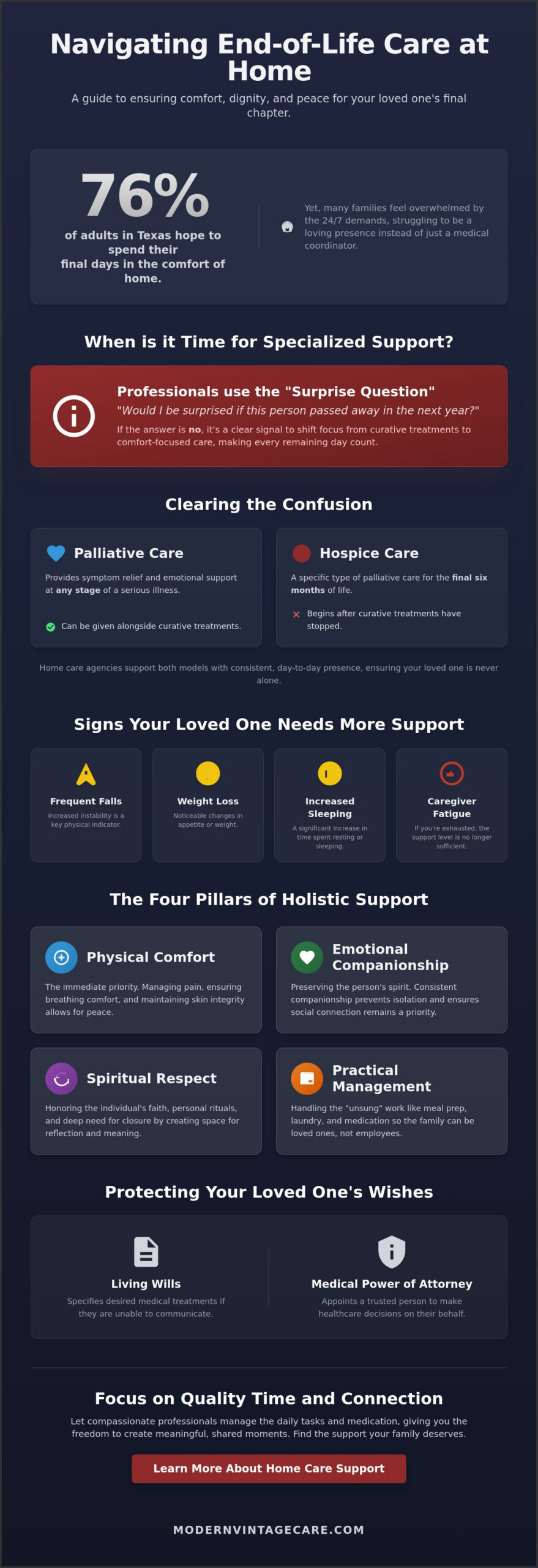
According to a 2022 survey, 76% of adults in Texas hope to spend their final days in the comfort of their own home, yet many families find themselves overwhelmed by the 24/7 demands that this reality requires. You might feel a heavy sense of fear about the unknown or struggle to distinguish between hospice, palliative, and home care. It’s a deeply emotional time, and searching for the right end of life care support in Sugar Land and Missouri City can feel like a difficult journey to take alone when your heart is already heavy.
We understand that you want to be a present, loving daughter, son, or spouse rather than just a medical coordinator. Whether you are managing the daily realities of 24-hour care or looking for ways to keep a relative comfortable, you deserve to find a balance where your loved one remains pain-free and dignified. This guide will show you how to navigate the physical, emotional, and practical aspects of end-of-life support. We’ll explore the essential steps to ensure your loved one’s comfort at home while protecting your own well-being from the strain of caregiver burnout.
Key Takeaways
- Learn how to identify the right time for specialized assistance by understanding the “surprise question” professionals use to assess a loved one’s changing needs.
- Discover how a holistic approach to end of life care support balances physical comfort with emotional companionship to preserve your loved one’s spirit at home.
- Compare the benefits of 24-hour home care versus nursing facilities to determine which environment best supports your family’s unique requirements for safety and familiarity.
- Identify the essential legal documents, including Living Wills and Medical Power of Attorney, needed to protect your loved one’s dignity and final wishes.
- Explore how personalized concierge and quick care services can manage daily tasks and medication, allowing you to focus on quality time and emotional connection.
What is End of Life Care Support and When Does It Begin?
End-of-life care isn’t just a medical phase; it’s a dedicated season of life focused on the person’s unique journey. When we discuss What is End of Life Care, we are describing a holistic framework of support for individuals facing the final stages of a terminal illness or significant age-related decline. This approach represents a vital pivot from curative treatments, which aim to resolve a medical condition, to comfort-focused care, which prioritizes the person’s peace and physical ease. End of life care support is a compassionate approach that honors a person’s dignity and maximizes their quality of life during their final chapter.
Many Houston families find themselves wondering when it’s time to transition from standard medical treatments to specialized end of life care support. Professionals often use a simple yet profound tool called the “surprise question” to help guide this decision. They ask themselves, “Would I be surprised if this patient passed away in the next year?” If the answer is no, it’s a clear signal that the focus should shift toward ensuring comfort, managing symptoms, and making every remaining day count. This transition isn’t about giving up; it’s about choosing a different path that centers on the individual’s spirit rather than just their diagnosis.
Hospice vs. Palliative Care: Clearing the Confusion
It’s common to use these terms interchangeably, but they serve different purposes. Palliative care provides symptom relief and emotional support at any stage of a serious illness, even while a patient continues curative treatments. Hospice is a specific type of palliative care reserved for the final six months of life when curative efforts have stopped. While medical hospice teams provide clinical oversight through periodic visits, home care agencies support both models by providing the consistent, day-to-day presence that medical teams typically don’t. This ensures your loved one is never alone and their routine remains steady.
Signs Your Loved One Needs Increased Support
Recognizing the right time for more intensive help can be difficult when you see your relative every day. Watch for physical indicators such as frequent falls, noticeable weight loss, or a significant increase in time spent sleeping. For those already receiving Alzheimer’s or dementia care, cognitive shifts or a sudden loss of interest in social connection can be strong signals. Perhaps the most telling sign is caregiver fatigue. If the 24/7 demands of care are leaving you exhausted or emotionally drained, it’s a primary indicator that the current support level is no longer sufficient for your family’s needs. Families navigating these early warning signs may also benefit from reviewing a comprehensive resource on home care for aging parents to better understand the full spectrum of available support options.
The Four Pillars of Holistic End-of-Life Support
Providing a peaceful environment for a loved one requires more than just medical oversight. Comprehensive end of life care support rests on four foundational pillars that address the whole person rather than just their diagnosis. When these pillars work in harmony, the home transforms from a place of clinical stress into a sanctuary of comfort and connection.
The physical pillar is the most immediate priority. It focuses on managing pain, maintaining skin integrity through gentle repositioning, and ensuring breathing comfort. If these physical needs aren’t met, the individual cannot find the peace necessary for the other pillars. Alongside this, the emotional pillar focuses on preserving the person’s spirit. Through consistent companionship, we ensure that social connection remains a priority, preventing the isolation that often accompanies serious illness.
The spiritual pillar respects the individual’s faith, personal rituals, and the deep human need for closure. Whether this involves coordinating with a religious leader or simply creating a quiet space for reflection, it honors the person’s life story. Finally, the practical pillar handles the “unsung” work of daily life. This includes meal preparation, laundry, and medication management. If the household routine is steady, the family can stop acting as employees and start acting as loved ones again. Our concierge services are designed to manage these essential details, giving you the freedom to focus on shared moments.
Special Considerations for Dementia and Alzheimer’s
When a loved one is non-verbal, interpreting their needs requires a specialized approach. We look for subtle cues like furrowed brows, increased restlessness, or changes in breathing to identify pain. Sensory comfort becomes vital when cognitive faculties decline. Soft music, gentle touch, or familiar scents can create a “no-stress” environment that prevents agitation. By minimizing loud noises and bright lights, we provide a steady, calming presence during the final weeks.
Preserving Dignity Through Personal Care
Maintaining a parent-child relationship is difficult when the child must handle intimate tasks like bathing or toileting. Professional attendants step in to provide personal care, which preserves the dignity of the individual and the emotional bond of the family. Routine and familiar faces are essential for reducing anxiety. When a loved one sees the same compassionate caregiver every day, it maintains a sense of normalcy in the home. This consistency ensures that the individual feels safe, respected, and truly seen until the very end.
In-Home Support vs. Facility Care in Sugar Land
Choosing where a loved one spends their final days is one of the most significant decisions a family can make. In Sugar Land and Missouri City, many families find that staying at home is the most comforting path. While a nursing facility offers a clinical structure, it can often feel detached from the person’s life story. Home provides a landscape of familiarity, allowing your relative to remain surrounded by their own community, neighbors, and cherished memories. This sense of belonging is a vital component of end of life care support that a facility simply cannot replicate.
If safety is your primary concern, our 24-Hour Care model provides a solution that bridges the gap between medical needs and home comfort. Whether it’s monitoring for falls or ensuring medication is taken on time, a constant presence ensures that your loved one is never left vulnerable. This model is deeply personalized. Through our concierge approach, we tailor the home environment to match the individual’s lifelong habits. If they always enjoyed tea at 4:00 PM or preferred a specific radio station in the morning, those routines continue uninterrupted. This level of detail maintains their spirit and provides a sense of control during a time of great change.
The Role of a Home Care Agency in the Hospice Team
Understanding how different providers work together is essential for a seamless experience. Hospice nurses are vital for clinical management, but they typically visit for short periods to adjust medications or check vitals. In contrast, home care attendants stay for hours at a time, providing the continuous presence your loved one needs. These caregivers act as the “eyes and ears” for the medical team. They notice subtle shifts in comfort or mood that might occur between nurse visits, ensuring that the hospice provider has the accurate information needed to manage pain effectively. Families seeking hospice support at home Houston families trust can benefit greatly from this collaborative approach between clinical and non-medical caregivers.
Respite Care: Support for the Family Caregiver
Caregiving is an act of love, but it is also physically and emotionally demanding. Respite care serves as a necessary pause that allows you to rest and recharge. By utilizing short-term Quick Care visits, you can step away to handle personal affairs or simply rest, knowing your loved one is in safe hands. This prevents the burnout that so often affects families providing intensive end of life care support. If you feel the weight of these responsibilities becoming too heavy, exploring respite care for family caregivers can provide the breathing room you need to remain a supportive presence for your relative.
Navigating Logistics and Advance Directives
While the emotional side of care is often the focus, the practical logistics are what keep a household running smoothly during difficult times. Navigating these details ensures that your loved one’s wishes are respected and that your family isn’t forced to make agonizing decisions during a medical crisis. Clear documentation is the foundation of effective end of life care support because it removes the guesswork for medical teams and family members alike.
In Texas, there are three essential documents you should have in place: a Directive to Physicians (Living Will), a Medical Power of Attorney, and an Out-of-Hospital Do-Not-Resuscitate (DNR) order. Initiating “The Conversation” about these preferences before a health emergency occurs allows for a calm, thoughtful exchange of values. It helps you understand what quality of life means to your relative, whether that involves specific medical interventions or a focus on natural comfort. Advance directives are a gift of clarity for grieving families.
Medication management is another critical logistical piece. As needs change, the complexity of prescriptions often increases, making automated reminders essential to prevent errors. If you’re feeling overwhelmed by the paperwork and daily tasks, reach out to our team today for guidance on streamlining your loved one’s care.
Managing Daily Logistics with Technology
Modern tools can significantly alleviate the daily stress of caregiving. Automated check-ins for seniors living at home provide a safety net without being intrusive, giving family members peace of mind when they can’t be physically present. Similarly, using medication management systems ensures that comfort doses are never missed, which is vital for effective pain control. Our concierge services handle the “outside” world, managing grocery shopping and errands so you can stay fully focused on shared moments with your relative.
Veterans Benefits for End-of-Life Care
For eligible veterans in Texas, specialized resources can make a significant difference in the feasibility of home care. Programs like the Aid and Attendance benefit are designed to help offset the costs of home support for those who served. This specialized end of life care support honors the veteran’s service while providing the high-quality assistance they require in their own home. You can learn more about veterans home care benefits Sugar Land to see how these resources can be integrated into your family’s plan.
Compassionate Hospice Support with Modern Vintage Home Care
Modern Vintage Home Care serves as a steady advocate and compassionate guide for families in Sugar Land facing the complexities of terminal illness. We believe that end of life care support should be as unique as the individual receiving it. While medical hospice teams focus on clinical management, our role is to provide the “living” care that makes a peaceful home environment possible. We act as a trusted partner, ensuring that your loved one’s final chapter is defined by comfort, dignity, and a sense of profound respect for their life story.
Our approach goes beyond traditional caregiving by offering specialized Quick Care and Concierge services. These programs are designed to handle the small but essential details of daily life that can become overwhelming for grieving families. Whether it is managing laundry, preparing a favorite meal, or running errands, we step in to handle the household logistics. This allows you to step out of the role of a task-manager and return to being a present, loving family member. We also provide specialized Alzheimer’s and dementia care for end-of-life scenarios, ensuring that those with cognitive challenges receive the gentle, sensory-focused support they need to remain calm and comfortable. For families who are earlier in this journey and still evaluating their options, our detailed guide on home care for aging parents can help you understand how to build the right support system before a crisis occurs.
Why Families in Houston Trust Our Caregivers
Families throughout the Houston area turn to us because of the delicate balance we maintain between professional authority and heartfelt empathy. Our staff members are not just trained professionals; they are dedicated caregivers who prioritize the preservation of the individual’s spirit. We ensure safety and independence through 24-hour supervision, providing a constant, watchful presence that prevents falls and manages medication schedules. By focusing on companionship, we reduce the isolation that often accompanies serious illness, keeping your relative socially engaged and emotionally supported until the very end.
Starting the Journey: Your Next Steps
Taking the first step toward specialized assistance can feel daunting, but we make the transition as seamless as possible. Whether you are currently managing on your own or are already working with a medical hospice provider, we can integrate our services to provide a comprehensive layer of end of life care support. You can begin by requesting a wellness check or a home safety assessment to identify how we can best support your family’s specific needs. We invite you to join us for a no-pressure consultation where we can listen to your concerns and develop a personalized plan that honors your loved one’s wishes.
Contact Modern Vintage Home Care for a compassionate consultation to learn how we can support your family during this sensitive time.
Embracing Peace and Dignity in the Final Chapter
Choosing the right path for your loved one is a profound expression of love. We have explored how a holistic approach addresses the four pillars of comfort and why staying at home in Sugar Land preserves cherished community connections. By handling the complex logistics of medication management and advance directives now, you ensure that your relative’s final days are defined by tranquility rather than crisis. This preparation allows your family to focus on what matters most: the time you have left together.
As a provider licensed in the state of Texas, Modern Vintage Home Care has spent years serving families across Greater Houston with unwavering reliability. Our specialized Alzheimer’s and dementia care ensures that even the most complex cognitive needs are met with gentleness and expertise. We are here to act as your steady advocate, providing the comprehensive end of life care support your family deserves. You don’t have to navigate this sensitive transition alone.
If you are ready to transition from being a full-time caregiver back to being a present, loving family member, we invite you to Request a Compassionate Care Consultation today. We are ready to walk this journey with you, offering the steady hand and nurturing presence your loved one needs to remain comfortable and dignified at home.
Frequently Asked Questions
What is the difference between end-of-life care and hospice?
End-of-life care is a broad category of support that addresses the physical, emotional, and spiritual needs of someone in their final stages of life. Hospice is a specific medical model typically reserved for the final six months when curative treatments stop. While hospice focuses on clinical symptom management through periodic visits, home care agencies provide the continuous day-to-day presence and personal care that medical teams do not offer.
Can my loved one receive end-of-life support at home in Sugar Land?
Yes, many families in Sugar Land and Greater Houston choose in-home care to keep their relatives in a familiar, comforting environment. Agencies provide 24-hour care and companionship that allow your loved one to stay near their community and friends. This approach ensures safety and dignity in a private setting, avoiding the clinical atmosphere of a nursing facility while still meeting all daily personal requirements.
How do I know when it is time to start end-of-life care?
It is often time to consider increased help when a loved one experiences frequent falls, significant weight loss, or a noticeable increase in sleeping. Professionals suggest asking, “Would I be surprised if this person passed away in the next year?” If the answer is no, starting end of life care support early ensures that comfort measures and emotional connections are prioritized before a crisis occurs.
What does a home care agency do that a hospice nurse doesn’t?
Hospice nurses visit for short periods to manage clinical needs, such as adjusting prescriptions or checking vitals. In contrast, home care attendants provide the hours of direct presence required for assisted bathing, meal preparation, and companionship. We act as the constant “eyes and ears” for the medical team, noticing subtle shifts in comfort that occur during the many hours when a nurse isn’t present in the home.
Is end-of-life care support covered by insurance or veterans benefits?
Medicare typically covers clinical hospice services, but it often does not pay for the long-term, 24-hour personal care many families need at home. However, eligible veterans in Texas can often utilize Aid and Attendance benefits to help offset the costs of end of life care support. Many families also use long-term care insurance or private funds to ensure their loved one has a dedicated caregiver available around the clock.
How can I prevent caregiver burnout during this time?
Utilizing respite care or “Quick Care” services is the most effective way to prevent burnout by allowing you to take a necessary pause. These short-term visits give you the freedom to rest, handle personal affairs, or simply recharge your emotional energy. By sharing the 24/7 demands with professional caregivers, you can step out of the role of a task-manager and focus on being a supportive family member.
What happens if my loved one has dementia and can no longer communicate their wishes?
Specialized Alzheimer’s and dementia care focuses on interpreting non-verbal cues like restlessness or facial expressions to identify and manage pain. If no advance directives are in place, care decisions are typically made by the family based on the individual’s lifelong values. We focus on creating a low-stress, sensory-friendly environment with familiar routines to ensure your loved one feels safe and respected even when communication is difficult.
How do we manage medications for pain at home?
Effective medication management is vital to ensure that comfort doses are never missed. We use automated medication reminders and consistent oversight to keep your loved one’s schedule on track throughout the day and night. This proactive approach prevents “breakthrough pain” before it starts, allowing your relative to remain at ease and enabling your family to focus on peaceful moments together rather than tracking pill schedules.