

You are sitting at your desk trying to focus on a deadline, but your mind is miles away, wondering whether your mother remembered her medication or if your father managed the stairs safely this morning. It’s a heavy burden to carry, and you’re certainly not alone in feeling this way. Most families want to provide every ounce of support themselves, yet the reality of balancing a career and a household often leads to deep fatigue and a lingering sense of guilt. Finding reliable home care for aging parents isn’t about giving up your role as a daughter or son; it’s about choosing a proactive safety net that allows you to return to being family again.
In this guide, you’ll discover how to identify the specific level of support your loved ones need and how to evaluate local agencies with confidence. We promise to help you navigate the complexities of 2026 care standards, from understanding the new SEMARC employee verification requirements to utilizing available financial resources effectively. Whether you need a few hours of companionship or more intensive assistance, this article provides a clear path forward. You’ll gain a concrete plan for aging in place that ensures your parents stay safe while keeping their dignity and independence fully intact.
Key Takeaways
- Learn to recognize the subtle behavioral and physical changes that signal when your loved ones need extra support at home.
- Distinguish between social companionship and hands-on personal care so you can choose the most supportive environment for your family’s unique situation.
- Discover how to properly vet agencies by verifying Texas licensing and modern caregiver screening requirements when exploring home care for aging parents.
- Gain a clear understanding of local cost structures and financial strategies to help you build a sustainable plan for long-term support.
- Explore how flexible options like Quick Care Services can bridge the gap between independence and safety without disrupting your parents’ established routines.
Identifying When Your Aging Parents Need Home Care Support
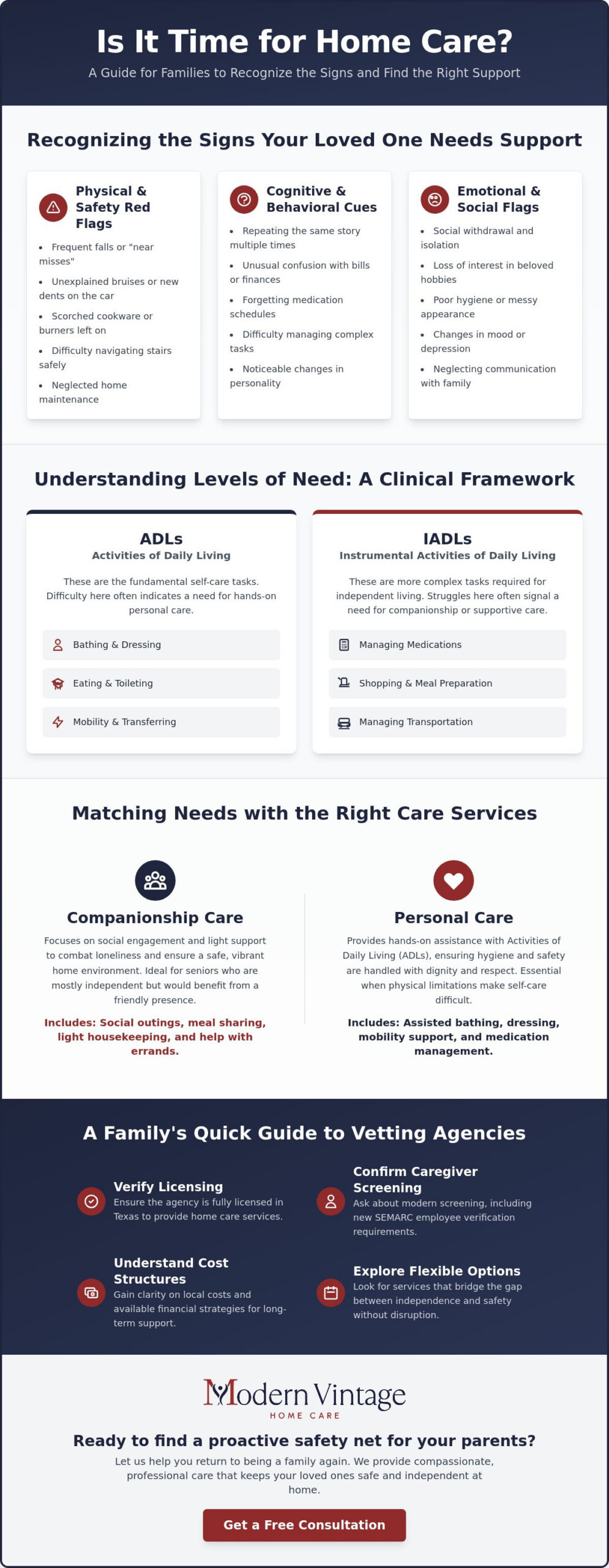
Recognizing the shift in a parent’s health is rarely a sudden realization. It’s usually a collection of small, quiet observations that eventually lead to a bigger conversation. If you’ve started wondering about home care for aging parents, it’s likely because your intuition is picking up on these subtle cues. You might notice your mother repeating the same story three times in a single afternoon, or perhaps your father seems unusually confused by his monthly utility bills. These aren’t just signs of getting older; they’re signals that the current routine is becoming too much to manage alone.
Safety in the home is often where the most visible red flags appear. Have you noticed a new dent in the car or unexplained bruising on their arms? Look closely at the kitchen. Scorched cookware or a burner left on can indicate that multitasking is becoming a hazard. These physical markers suggest that while your parents value their independence, their environment is becoming less secure. Frequent falls or “near misses” should never be dismissed as just a part of aging. They are clear indicators that some level of professional support is necessary to maintain their safety.
The ADL vs. IADL Framework for Families
Activities of Daily Living (ADLs) are the most basic self-care tasks, such as bathing, dressing, and eating independently. Instrumental Activities of Daily Living (IADLs) involve more complex cognitive and physical coordination, like preparing nutritious meals, managing daily medications, and arranging transportation. When you speak with your parents’ doctor, using this specific framework helps provide a clinical picture of where they are struggling. If they can still dress themselves but can no longer manage their heart medication, it helps the medical team determine the exact level of home care for aging parents required to bridge that gap.
Emotional and Social Red Flags
Social withdrawal is a significant yet often overlooked indicator of a need for change. For seniors living alone in areas like Sugar Land, isolation can creep in quietly and affect their overall well-being. If a parent who once loved gardening or weekly bridge games suddenly loses interest in these hobbies, it’s a clinical signal for care intervention. Professional home care services often focus on more than just physical safety; they provide the vital social engagement that can actually help slow cognitive decline. A dedicated companion can turn a lonely afternoon into a meaningful social connection, preserving your parent’s spirit while ensuring their routine remains stable and supportive.
Types of Home Care Services: Finding the Right Level of Help
Selecting the appropriate level of home care for aging parents is about matching their daily reality with the right degree of professional warmth. Support isn’t a one-size-fits-all model; it’s a spectrum of assistance designed to grow alongside your loved ones’ changing needs. For many, the journey begins with companionship care. This level of support focuses on social engagement and light housekeeping, ensuring the home remains a vibrant and tidy place. It’s a perfect solution if your parent is still physically independent but could benefit from a friendly face to share a meal, help with the laundry, or organize social outings.
When daily tasks like bathing or mobility become difficult, personal care offers a more hands-on approach. This service ensures that hygiene and grooming are handled with the utmost respect for the individual’s privacy. If you’re looking for personal care for seniors Houston, you’ll find that professional attendants are trained to maintain a parent’s dignity while assisting with sensitive tasks. Beyond physical help, these services often incorporate automated medication reminders. These systems are vital for managing complex health regimens, providing peace of mind that no dose is missed while you are at work or managing your own household.
Personal Care and Medication Management
Professional attendants do more than just help with tasks; they preserve the spirit of the person they are caring for. By providing assisted bathing and dressing, they help your parents maintain a sense of routine and self-worth. When combined with medication management, this level of care reduces the risk of hospitalizations caused by common errors. A professional eye ensures that prescriptions are followed exactly as the doctor intended, which is especially critical when multiple medications are involved.
Specialized Alzheimer’s and Dementia Care at Home
Specialized memory care is another critical pillar, particularly for those navigating the challenges of cognitive decline. Receiving dementia home care services Sugar Land allows your parent to remain in a familiar environment, which is often the best defense against the confusion and anxiety that memory loss can cause. Caregivers focus on routine-heavy schedules and implement safety modifications to prevent wandering, ensuring the home remains a sanctuary rather than a source of stress.
Finally, families often reach a crossroads where they must decide between continuous support and temporary relief. While some believe assisted living is the only option for around-the-clock needs, 24-hour home care provides a direct, personalized alternative that keeps your parent in their own bed. It allows for constant professional monitoring without the emotional trauma of a move. Conversely, respite care offers a necessary pause for family caregivers, preventing burnout by providing short-term professional support. Programs like the VA’s Homemaker and Home Health Aide Care can often help veterans access these essential services, making professional help more attainable. If you’re feeling overwhelmed by these choices, taking a moment to explore personalized care options can help clarify the most supportive path forward for your family’s unique situation.
Evaluating Home Care Agencies: A Family Buying Guide
Selecting the right agency is a decision rooted in both logic and heart. When you explore home care for aging parents, you aren’t just hiring a service; you’re inviting a partner into your family’s inner circle. This partnership must be built on a foundation of transparency and professional accountability. In Texas, the first step is verifying that the agency is properly licensed and insured. A licensed agency operates under state oversight, which ensures they follow strict safety protocols and maintain professional liability insurance. This protection is vital, as it shields your family from financial responsibility should an accident occur within the home.
Vetting goes much deeper than a simple interview. As of 2026, reputable Texas agencies utilize the Search Engine for Multi-Agency Reportable Conduct (SEMARC) to verify the employability of their staff. This rigorous screening process replaces older registries and provides a higher standard of safety for your loved ones. Beyond these checks, look for an agency that prioritizes specialized training. If your parent is living with a specific condition, the caregiver should demonstrate a gentle, experienced approach to those unique challenges rather than following a generic, “cookie-cutter” care plan.
Agency vs. Independent Caregivers
Many families consider hiring an independent caregiver to save on costs, but this path often introduces significant risks and administrative burdens. Choosing an agency provides a level of reliability that is difficult to replicate on your own, especially for families in Missouri City and Sugar Land who need consistent, professional oversight.
| Feature | Professional Agency | Independent Caregiver |
|---|---|---|
| Liability & Insurance | Fully insured and bonded; agency assumes risk. | Family is often legally liable for injuries. |
| Backup Coverage | Guaranteed replacement if a caregiver is ill. | No coverage if the individual is unavailable. |
| Taxes & Payroll | Handled entirely by the agency. | Family acts as employer; responsible for taxes. |
| Vetting | Professional SEMARC and background checks. | Family must conduct and verify all checks. |
Questions to Ask During the Initial Consultation
The initial meeting is your opportunity to see if the agency’s personality aligns with your family’s spirit. Don’t hesitate to ask direct questions about their daily operations. You might ask how they handle caregiver-client personality mismatches, as a strong emotional connection is essential for successful home care for aging parents. Inquire about their emergency medical alert protocols and how they document daily activities. You should feel confident that you’ll receive regular updates, whether through a digital portal or a detailed daily log, so you’re always informed about your parents’ well-being and any subtle changes in their routine.
Navigating Costs and Local Financial Resources in Texas
Thinking about the financial side of home care for aging parents can feel like a heavy weight, but understanding your options in Texas often brings a sense of relief. Most families start by exploring private pay or long-term care insurance (LTCI). If your parents have a policy, it’s vital to check the daily benefit amount and the “elimination period” before coverage begins. This small step helps you budget with precision. Whether you need a few hours of help through Quick Care Services or a more comprehensive 24-hour care package, you’ll find that agencies offer structures designed to fit different needs. This flexibility means you don’t have to pay for more support than is actually required at this stage of their journey.
Beyond insurance, many families in the Houston area overlook the value of respite care as a budgeting tool. By scheduling professional help for just a few days a month, you can manage the majority of the care yourself while preventing the physical exhaustion that leads to expensive health crises for the family caregiver. It’s a proactive way to maintain your own career and health while ensuring your parents have high-quality, professional monitoring. This balanced approach often makes long-term support more sustainable for everyone involved. Family members who take on the bulk of daily care responsibilities should also explore preventing caregiver burnout tips to protect their own well-being alongside their loved ones’.
Leveraging Veterans Home Care Benefits
Texas has deep roots in military service, and Fort Bend County offers specific resources for those who served. The VA’s “Aid and Attendance” benefit is a significant resource that many families miss. In 2026, a single veteran may receive up to $2,300 per month, while a veteran with a spouse could access up to $2,727 monthly. Veterans in Sugar Land may be eligible for significant monthly stipends to cover in-home personal care. These funds can directly offset the cost of daily assistance, making professional support much more attainable for aging service members and their surviving spouses.
Integrating Hospice and Respite Care
As health needs evolve, you might find that your family requires hospice support at home Houston. This transition allows for a focus on comfort and dignity in a familiar setting. By integrating your existing home care with hospice, you create a seamless environment of support. This ensures your loved one receives compassionate end of life care support while you get the emotional space you need. If you’re ready to build a financial plan that works, explore our local care resources to see how we can help your family navigate these options together.
The Modern Vintage Approach: Proactive Care in Sugar Land
Effective home care for aging parents should never feel like a clinical transaction. At Modern Vintage Home Care, we believe that support is most powerful when it honors the spirit and dignity of the person receiving it. Our approach in Sugar Land and the Greater Houston area is rooted in proactive advocacy. We ensure that your loved ones don’t just stay safe, but continue to find joy in their daily routines. By focusing on the individual’s history and preferences, we create a care environment that feels both professional and deeply personal. It’s about more than just a checklist; it’s about preserving the essence of the person you love.
Many families find themselves in a difficult middle ground. They don’t yet need full-time assistance, but they require more than just an occasional check-in. This is where our Quick Care Services provide a vital solution. These flexible, short-term visits are designed for busy families who need a professional presence to assist with specific tasks or provide a brief wellness check. You don’t have to commit to long hourly blocks if only a brief visit is needed to ensure a meal was eaten or a door was locked. When combined with our Concierge Services, which handle errands, transportation, and lifestyle needs, your parents can maintain a high quality of life. This level of local expertise allows us to serve families across Fort Bend County with the precision and heart they deserve.
Innovative Safety: Automated Check-ins and Reminders
Our commitment to innovation includes layers of safety that extend beyond physical visits. If your parent lives alone, our automated check-in service offers a consistent touchpoint throughout the day. This technology, paired with automated medication reminders, significantly reduces the risk of errors and provides a 24/7 safety net. It’s a reliable way to ensure that even between caregiver visits, your family is protected by a system that prioritizes routine and responsiveness. This blend of modern technology and vintage compassion ensures that home care for aging parents remains both efficient and warm.
Starting the Journey with Modern Vintage Home Care
Starting this process begins with a conversation, not a contract. During our initial in-home assessment, we take the time to understand the small details that make your parents who they are. We don’t just look at physical requirements; we look at personality, temperament, and life stories. This allows us to match the right caregiver to your parents’ unique spirit, creating a bond that feels like a trusted partnership. You can expect a steady, methodical transition that respects your family’s pace and specific needs. If you’re ready to see how personalized support can change your family’s daily life, schedule a compassionate consultation for your parents today.
Creating a Supportive Path Forward for Your Family
Choosing to transition into home care for aging parents is a profound act of love that prioritizes their safety and your peace of mind. By recognizing the subtle signs that extra support is needed and understanding the unique financial resources available in Texas, you’ve already taken the most important steps toward a sustainable plan for aging in place. Whether your family requires help with basic daily routines or specialized memory support, the ultimate goal is always to preserve the independence and spirit of those who raised you.
As a Licensed Texas Home Care Agency with specialized Alzheimer’s and dementia training, we are dedicated to serving families across Sugar Land and the Greater Houston area with steady, heartfelt expertise. You don’t have to navigate this sensitive life transition alone. We are here to act as a compassionate guide, ensuring your loved ones receive the personalized attention they deserve while you regain your role as a daughter or son. If you’re ready to explore how a custom care plan can benefit your family, please Schedule a Free In-Home Care Assessment for Your Parents. We look forward to supporting your family’s journey with confidence and care.
Frequently Asked Questions
How do I talk to my parents about starting home care without upsetting them?
Start the conversation by focusing on their desire to stay independent at home rather than the need for help. Frame home care for aging parents as a way to handle burdensome chores like laundry or meal prep so they can focus on what they enjoy. If you suggest a “trial period” with a few hours of companionship, it often feels less permanent and more like a helpful addition to their social life.
Does Medicare or Medicaid cover the cost of home care for aging parents in Texas?
Medicare generally does not cover the non-medical personal care or companionship that most families require. In Texas, the STAR+PLUS Medicaid program can help, but it has strict eligibility requirements. As of 2026, a single applicant’s monthly income limit is $2,982, with an asset limit of $2,000. Many families find that private pay or long-term care insurance are more direct ways to secure immediate, consistent support.
What is the difference between home health care and home care?
Home health care is clinical and medical in nature, typically involving skilled nursing or physical therapy ordered by a doctor for short-term recovery. Home care, which we provide, focuses on daily living activities and companionship to help seniors age in place safely. While home health is a medical intervention, home care is a long-term lifestyle support that assists with bathing, dressing, and medication management.
Can we get home care for just a few hours a week in Sugar Land?
You can certainly schedule flexible, short-term support through our Quick Care Services in Sugar Land and the surrounding areas. This “middle ground” option is perfect for busy families who only need professional help with specific errands, wellness checks, or a few hours of respite. It ensures your parents are safe and monitored without requiring a commitment to a full-time care schedule.
How does 24-hour care work? Does the caregiver live in the house?
Our 24-hour care model utilizes a team of professional caregivers working in shifts to provide continuous, around-the-clock monitoring. Unlike traditional “live-in” arrangements where a caregiver might sleep, our shift-based approach ensures that a professional is awake and alert at all times. This is especially vital for seniors with high fall risks or those who require frequent assistance throughout the night.
What happens if our assigned caregiver is sick or can’t make it?
As a professional agency, we assume full responsibility for staffing and backup coverage so your family is never left without support. If a caregiver is unwell or has an emergency, we coordinate a qualified replacement from our team who is briefed on your parent’s unique care plan. This reliability is one of the primary reasons families choose an agency over hiring an independent caregiver.
How do you ensure the safety of seniors with dementia who might wander?
We manage wandering risks through a combination of specialized routine-building and proactive home safety modifications. Our caregivers receive specific training to identify triggers and use gentle redirection techniques that preserve the individual’s dignity. By maintaining a steady environment and utilizing automated check-ins, we create a secure atmosphere that significantly reduces the anxiety often associated with memory loss.
Are there specific home care benefits for veterans in the Houston area?
Veterans in Fort Bend County and the Greater Houston area can often access the VA Aid & Attendance benefit to help cover costs. In 2026, this program provides up to $2,300 per month for single veterans and up to $2,727 for those with a dependent spouse. These funds are designed specifically to help eligible veterans pay for in-home personal care, making professional support much more affordable for those who served.