
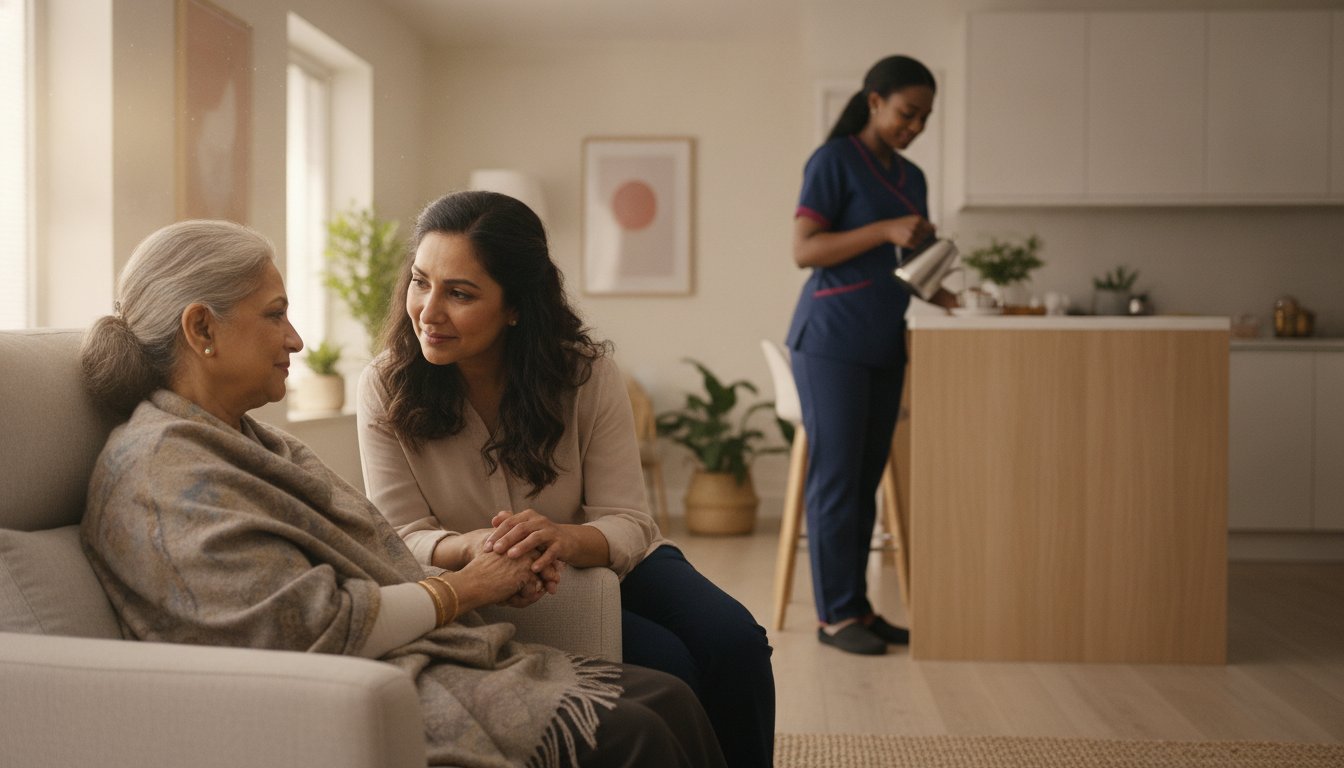
What if the most important part of hospice isn’t the medical equipment, but the ability to simply be a daughter or a spouse again? Many families in Texas find themselves exhausted by the physical and emotional demands of end-of-life care. While medical teams handle clinical needs, the daily reality often falls on relatives who feel overwhelmed by the weight of constant monitoring. If you are struggling with caregiver burnout or the fear of a midnight emergency, you aren’t alone. Finding reliable hospice support at home Houston families trust is a vital step in preserving the quality of life for everyone involved.
You will discover how professional non-medical support provides the safety and dignity your loved one deserves during this sensitive transition. Whether you need help with medication management or overnight companionship, this guide shows how dedicated caregiving allows you to step back from the role of “nurse” and return to being a family member. We’ll explore the differences between medical hospice and daily caregiving to ensure your home remains a place of comfort, safety, and peace.
Key Takeaways
- Learn how non-medical hospice support complements clinical care by assisting with essential daily activities like hygiene, meal preparation, and mobility.
- Discover how professional caregivers can prevent burnout, allowing you to focus on being a supportive family member rather than a full-time nurse.
- Understand the differences between intermittent medical visits and the continuous hospice support at home Houston families use for 24/7 safety and monitoring.
- Get practical advice on preparing your home layout for end-of-life care and navigating Houston’s specialized medical resources and hospital systems.
- Explore modern safety innovations, such as automated check-ins and medication reminders, that provide peace of mind during sensitive life transitions.
What is Hospice Support at Home in Houston?
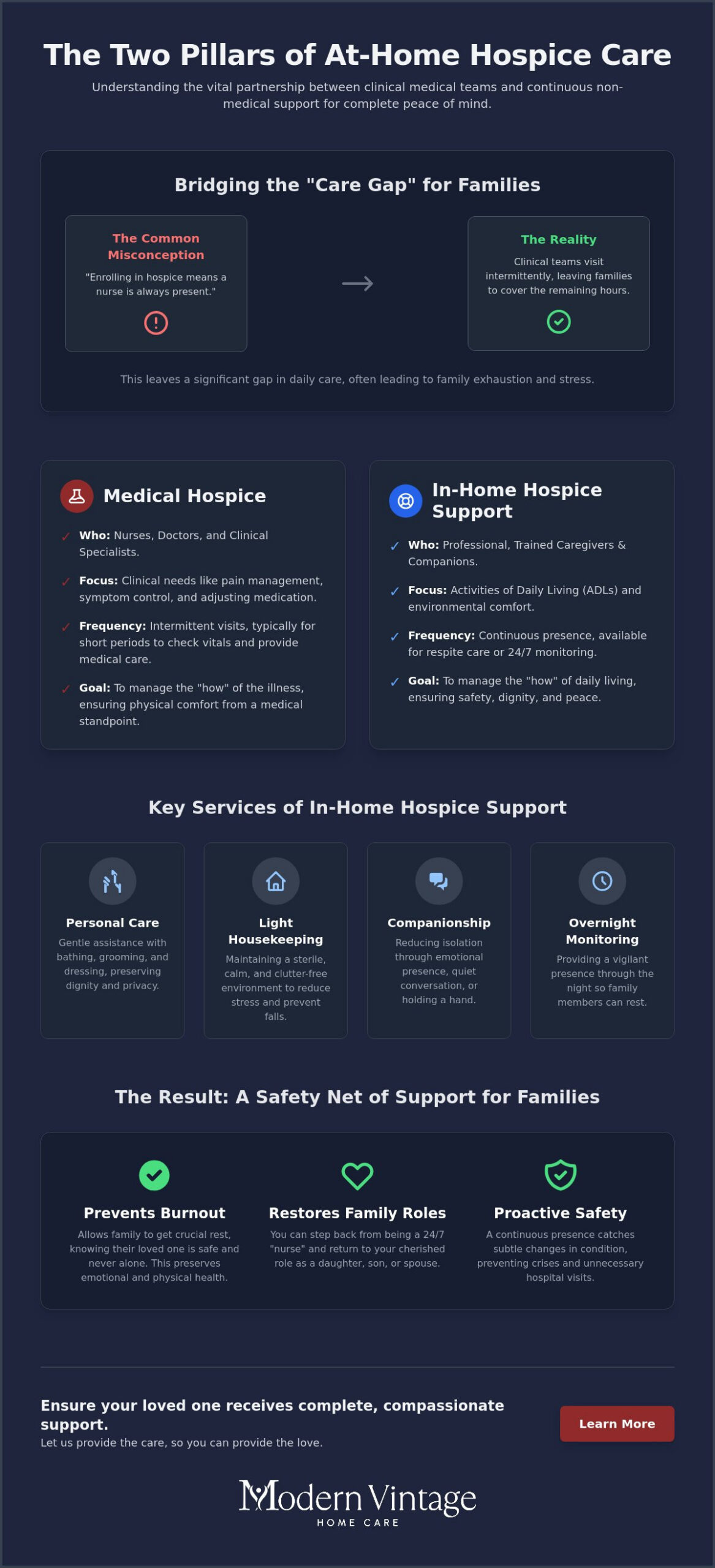
Many families assume that enrolling in a hospice program means they will have a nurse by their side around the clock. In reality, clinical teams usually visit for short periods to manage pain and symptoms. This leaves a significant gap in daily care that often falls on the shoulders of exhausted family members. Professional hospice support at home Houston families rely on fills these hours, providing a steady, nurturing presence when medical teams are away. This non-medical service complements clinical care by focusing on the person’s immediate environment and physical comfort.
Hospice care is a philosophy centered on comfort rather than cure, but the day-to-day execution of that comfort often requires more than just medical oversight. Support services focus on Activities of Daily Living (ADLs), ensuring that the home remains a peaceful, safe, and organized sanctuary. Whether you need help for a few hours of respite or a 24-hour continuous presence, this level of support ensures your loved one is never alone during their most sensitive moments.
The Difference Between Hospice Care and Hospice Support
It’s helpful to view these two services as a partnership. Medical hospice is clinical; it’s provided by nurses and doctors who specialize in pain management and symptom control. They visit intermittently to adjust medications or check vital signs. In contrast, hospice support is about the rhythm of daily life. Trained attendants provide the hands-on care that medical teams don’t stay for, such as assistance with movement or hygiene. Most families in Houston find they actually need both to avoid the necessity of a facility placement. If the medical team manages the “how” of the illness, the support team manages the “how” of the living.
Key Services Included in Home Support
The goal of hospice support at home Houston is to maintain the individual’s spirit and dignity through gentle, routine-based care. The services are highly personalized and often include:
- Personal care assistance: Helping with bathing, grooming, and dressing with the utmost gentleness and respect for privacy.
- Light housekeeping: Maintaining a sterile, calm, and clutter-free environment to reduce stress and prevent falls.
- Companionship: Reducing the weight of isolation through emotional presence, quiet conversation, or simply being there to hold a hand.
- Meal preparation: Creating soft or preferred meals that provide comfort and nutrition according to the individual’s changing needs.
If you find yourself waking up every hour to check on your parent, then a professional caregiver can provide the overnight monitoring you need to finally rest. This proactive approach ensures that any changes in condition are noticed immediately and reported to the medical hospice team, creating a seamless safety net for your family.
The Benefits of Specialized Hospice Support for Families
Choosing to keep a loved one at home during their final months is a profound act of love, but it often comes with a physical and emotional cost for the family. Specialized hospice support at home Houston families choose provides a necessary bridge between medical necessity and personal comfort. This care ensures that the patient’s environment remains exactly as they wish, surrounded by their own memories and personal belongings. While medical teams focus on clinical needs, a dedicated support attendant provides the one-on-one attention that facility staff simply cannot offer because of their high patient ratios.
This continuous presence acts as an early warning system for the clinical hospice team. When a caregiver is present throughout the day and night, they notice subtle changes in breathing, skin tone, or comfort levels that might otherwise go unnoticed until a crisis occurs. By alerting medical providers early, families can avoid the stress of midnight emergency calls or unnecessary hospital readmissions. For a clear understanding of how these services fit into the broader healthcare picture, the National Institute on Aging provides a detailed look at Palliative Care and Hospice Care.
The primary benefits of this specialized support include:
- Burnout Prevention: Allowing family members to sleep and recharge while knowing their loved one is safe.
- Vigilant Monitoring: Providing a second set of eyes to catch symptom changes immediately.
- Personalized Attention: Focusing entirely on one individual’s needs, preferences, and comfort.
- Environmental Control: Honoring the patient’s final wishes by maintaining the home exactly how they like it.
Maintaining Dignity Through Professional Personal Care
Professional attendants are trained to handle sensitive hygiene tasks with a level of gentleness and expertise that preserves the patient’s dignity. It is often difficult for a child or spouse to manage intimate care, such as bathing or incontinence support, without it affecting the family dynamic. Delegating these responsibilities to a compassionate professional removes the awkwardness and allows the relationship to remain focused on emotional connection. For those living with cognitive decline, having a consistent routine provided by a familiar face reduces the anxiety and confusion that often accompany the end of life. By shifting the physical labor to a professional, you are free to reclaim your role as a family member rather than a clinical aide.
Safety and Vigilance Around the Clock
Safety is a primary concern when a patient becomes physically weak or less mobile. Professional support includes expert transfer techniques and fall prevention strategies that keep your loved one safe in their own bedroom or living room. Additionally, medication reminders ensure that comfort protocols established by the doctor are followed precisely, preventing the return of pain or restlessness. If you are feeling overwhelmed by the demands of 24-hour vigilance, exploring hospice support and respite care can provide the relief your family needs to stay strong together.
Medical Hospice vs. In-Home Support: A Comparison
Understanding the distinction between medical hospice and supplemental support is crucial for families planning end-of-life care. Medical hospice is primarily intermittent. This means that while a team of professionals oversees the case, they are not present in the home for most of the day. They focus on clinical management, such as adjusting pain medications or monitoring vital signs. In contrast, hospice support at home Houston families utilize provides a continuous presence. These attendants fill the hours when the medical team isn’t there, ensuring that your loved one is never left without assistance or companionship.
It’s important to recognize that these two teams do not compete; they coordinate to provide a complete “circle of care.” While the medical team handles the clinical aspects of the illness, the support team handles the daily reality of living with it. For a clear foundation on what the medical side entails, Hospice Care summaries explain the focus on symptom relief and emotional support for those with terminal illnesses. By combining both services, you ensure that every clinical need is met while also maintaining the highest possible standard for daily comfort and safety.
Who Provides What? The Care Team Roles
Each member of the team has a specific, vital role in maintaining the patient’s well-being. The Hospice Nurse is the clinical lead, responsible for assessments and medication adjustments. The Home Care Attendant is the steady anchor, providing daily living assistance and a constant, watchful eye. Finally, the Social Worker or Chaplain offers the emotional and spiritual guidance that helps both the patient and the family process the transition. This multi-layered approach ensures that no aspect of the individual’s humanity is overlooked.
Filling the Gaps in Medicare Coverage
While Medicare provides robust coverage for medical hospice services, it rarely covers 24/7 custodial care or long-term personal assistance. This gap often causes significant stress for families who cannot provide round-the-clock monitoring themselves. Supplemental hospice support at home Houston services bridge this financial and logistical divide. By investing in private support, families can often prevent the need for a move to an expensive inpatient hospice unit. Whether you need a full 24-hour shift or specialized “Quick Care” visits during high-need times like morning hygiene or evening meals, these services ensure your home remains a viable and safe place for care.
Planning for Care in Sugar Land and Greater Houston
Planning for end-of-life care requires a shift in perspective. You aren’t just looking at your house as a home; you’re looking at it as a sanctuary for care. For families in Fort Bend County and the Greater Houston area, this means coordinating with world-class medical systems like the Texas Medical Center (TMC) or Memorial Hermann while ensuring the local environment is safe. Initiating a conversation about bringing in extra hospice support at home Houston families trust can be difficult, but it’s often the most compassionate step you can take for your loved one’s comfort.
Assessing the layout of your home is a vital first step in this journey. If your loved one’s mobility has decreased, you may need to relocate their primary living space to the ground floor or clear pathways for medical equipment. These logistical adjustments, while practical, also serve to reduce the anxiety that comes with a changing physical environment. By addressing these needs early, you create a stable foundation for the care team to provide their services without interruption. Families who are earlier in the caregiving journey may also benefit from reviewing a comprehensive guide to home care for aging parents to understand the full spectrum of support options available before needs become critical.
Evaluating Your Loved One’s Level of Need
How do you know when it’s time to move beyond occasional help? There are clear signs that respite care might no longer be sufficient for your family’s needs. If your loved one experiences frequent falls, requires help with every physical transfer, or shows signs of distress when left alone, 24-hour care becomes a necessity. Early intervention is key. Waiting for a crisis often leads to rushed decisions that don’t honor the patient’s long-term wishes. Use a simple checklist to evaluate the home: Are there trip hazards like rugs? Is the lighting sufficient for nighttime safety? Is there a designated space for a caregiver to remain vigilant nearby?
Local Resources and Coordination
Navigating the specific geography of neighborhoods like Missouri City, First Colony, or Greatwood requires a partner who understands the local landscape. We work closely with local Sugar Land physicians to ensure that the non-medical support we provide aligns perfectly with their clinical orders. Many of our families begin their journey with dementia home care services Sugar Land before transitioning into hospice support as needs evolve. Choosing an agency that provides reliable hospice support at home Houston families trust means you have a partner who understands the local medical hubs and staffing requirements of our specific community.
Legal and logistical preparations are also a vital part of the process for Fort Bend County residents. Ensuring that Medical Power of Attorney documents are easily accessible and that the care team understands the patient’s advance directives prevents confusion during high-stress moments. If you are ready to discuss how to build a customized plan for your family, contact us for a consultation to explore your options and find the right path forward.
Why Families Trust Modern Vintage Home Care for Hospice Support
Families in our community deserve more than just a service provider; they need a partner who understands the emotional weight of this season. At Modern Vintage Home Care, we pride ourselves on a compassionate, expert-led approach to end of life care support that honors the individual’s history and spirit. We recognize that providing hospice support at home Houston families can rely on means being present for the small details that make a house feel like a home, even during difficult times. Our team is deeply rooted in the Sugar Land and Houston community, allowing us to offer a level of neighborly care that larger, national franchises often miss.
Our scheduling is designed to be as flexible as your family’s needs. Whether you require “Quick Care” visits to assist with morning routines or round-the-clock supervision for total peace of mind, we adapt our services to fit your unique situation. This agility ensures that your loved one always has the right level of care without unnecessary complexity. It’s our goal to provide the steady, nurturing presence that allows your family to focus on creating meaningful moments together.
The Modern Vintage Difference: Technology and Heart
What truly sets us apart is how we blend high-touch personal care with innovative safety features. Our unique automated check-in service provides an extra layer of security, ensuring that a connection is maintained even when a caregiver isn’t directly in the room. We also utilize automated medication reminders to ensure that comfort protocols are followed precisely; this is critical in a hospice environment where managing pain is the top priority. Our caregivers undergo specialized training to handle the emotional and physical nuances of end-of-life care, focusing on preserving dignity and independence whenever possible. We believe that even in life’s final transition, the individual’s spirit should be celebrated and nurtured.
Getting Started with a Personalized Care Plan
The journey begins with a conversation. We offer a free in-home assessment throughout the Houston area to understand your family’s specific challenges and goals. During this visit, we don’t just look at physical requirements; we look at personality, preferences, and the small details that make your loved one unique. This allows us to match a caregiver who isn’t just a professional, but a compatible companion for your family. By choosing the right hospice support at home Houston, you are choosing a path of safety, respect, and enduring comfort.
Contact Modern Vintage Home Care today for a compassionate consultation to learn how we can support your family during this time.
Finding Peace and Presence in Every Moment
Transitioning into this phase of life is a significant journey for any family. You now understand that while medical teams manage clinical symptoms, professional support manages the daily environment. By choosing hospice support at home Houston families can trust, you ensure that your loved one’s dignity is preserved through gentle personal care and constant vigilance. This allows you to step away from the stress of being a full-time caregiver and return to being a supportive spouse or child during these precious final months.
Modern Vintage Home Care brings years of experience to Sugar Land and the Greater Houston area. We are licensed by the State of Texas, and our team undergoes specialized hospice and respite training to handle these sensitive moments with both technology and heart. Whether you need overnight monitoring or help with daily routines, we act as your steady advocate. You don’t have to navigate this transition alone.
If you are ready to explore how a personalized plan can bring comfort to your home, we invite you to reach out. Request Your Free Compassionate Home Care Assessment today to find the stability and peace your family deserves. We are honored to walk beside you, providing the nurturing presence that makes every day a little easier.
Frequently Asked Questions
Does insurance or Medicare cover hospice support at home in Texas?
Medicare typically covers the clinical aspects of hospice, such as nursing visits, medical equipment, and pain medications. However, it doesn’t usually pay for non-medical, continuous daily support or custodial care. Most families in our area use private pay or long-term care insurance to cover the essential caregiving hours that medical insurance excludes. We can help you review your specific policy to see how your benefits might apply to our services.
What is the difference between palliative care and hospice support?
Palliative care is intended for anyone with a serious illness and can be provided at any stage, often alongside curative treatments. In contrast, hospice support at home Houston families utilize is specifically for those with a terminal diagnosis who are focusing on comfort rather than a cure. Our support focuses on the physical environment and daily assistance to ensure that your loved one’s dignity and comfort are maintained 24/7.
Can my loved one stay at home until the very end with your support?
Yes, many individuals are able to remain in their own homes until the very end when they have a dedicated support system in place. Our goal is to provide the consistent monitoring and physical assistance needed to prevent a move to an inpatient hospice unit. We work closely with your family to honor your loved one’s wish to stay in a familiar, peaceful environment surrounded by those they love most.
How quickly can you start providing hospice support in Sugar Land?
We understand that needs can change rapidly during this sensitive time, so we strive to begin services as quickly as possible. After an initial in-home assessment to understand your specific requirements, we can often have a caregiver in place within 24 to 48 hours. Our deep roots in the Sugar Land and Missouri City area allow us to mobilize our team quickly to provide the relief and safety your family needs.
Do your caregivers work alongside my existing medical hospice team?
Absolutely, our caregivers act as a vital extension of your clinical hospice team. While the nurses and doctors handle medical assessments and medication adjustments, we provide the daily hands-on care and alert the medical team to any subtle changes in condition. This coordination ensures a seamless circle of care where both clinical requirements and personal comfort are met without any gaps in service.
What happens if we need to change the level of care suddenly?
We offer flexible scheduling because we know that end-of-life care is often unpredictable. If your loved one’s condition changes and you need to move from a few hours of respite to 24-hour care, we adjust our staffing to meet that new reality immediately. Our priority is ensuring that your loved one is never left without the professional safety and supervision they require as their needs evolve.
Are your caregivers trained to handle patients with dementia on hospice?
Yes, our team is specifically trained in Alzheimer’s and dementia care to support those facing cognitive decline alongside a terminal illness. We use specialized techniques to reduce anxiety, manage “sundowning” symptoms, and maintain a calm, familiar routine. This expertise ensures that your loved one is treated with the patience and specialized understanding their unique condition demands during this transition.
Is there a minimum number of hours required for hospice support visits?
We offer various options to fit different family situations, including our “Quick Care” services for shorter, high-impact visits. Generally, we work with you to establish a schedule that provides meaningful support, whether that’s a four-hour block or round-the-clock supervision. During your free assessment, we’ll determine the best rhythm for your specific needs to ensure your home remains a safe and peaceful environment.