

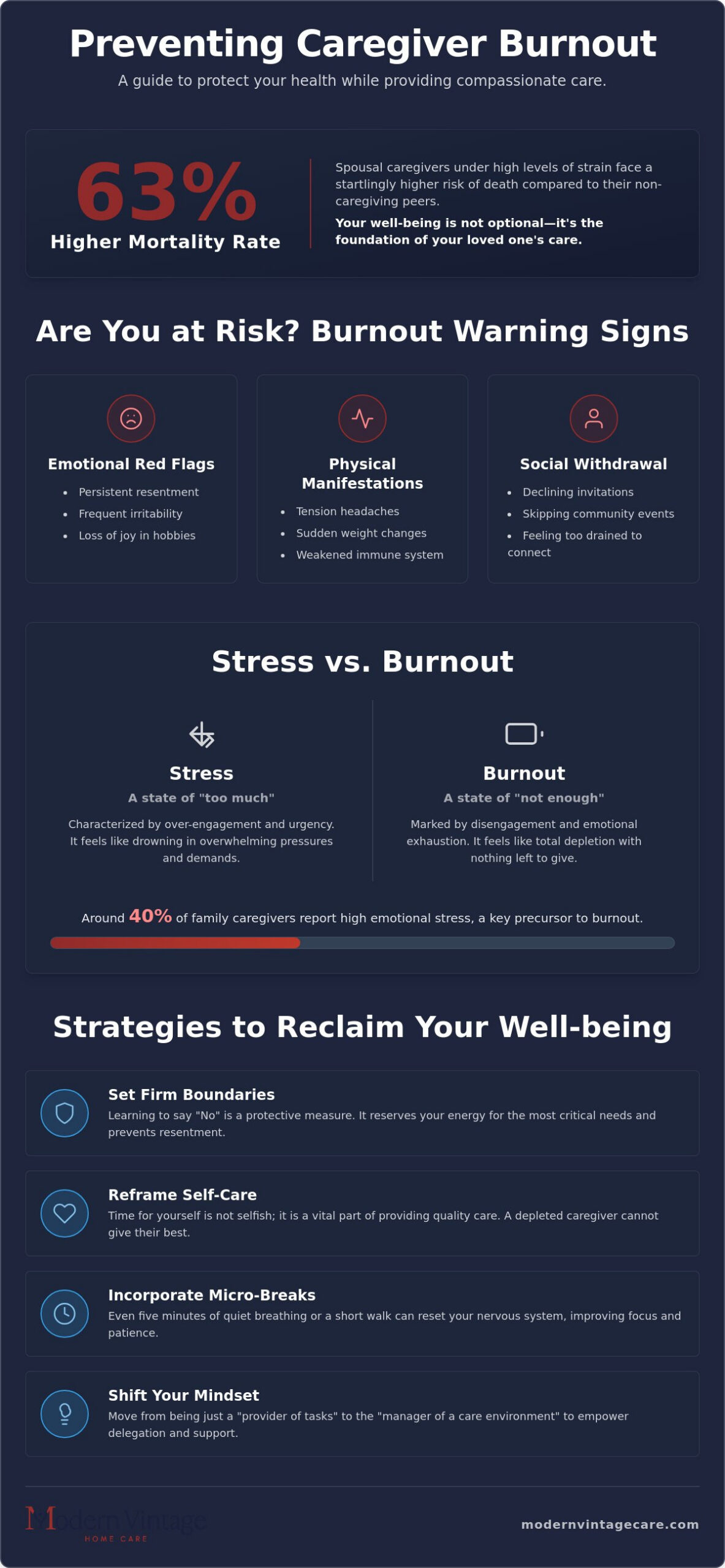
Did you know that elderly spousal caregivers experiencing high levels of strain have a 63 percent higher mortality rate than their peers who are not in a caregiving role? It is a startling figure that highlights just how much your health is tied to the person you are supporting. Most Houston families step into these roles out of deep love, yet many soon find themselves searching for preventing caregiver burnout tips as they struggle with constant fatigue and social isolation. You likely feel that if you aren’t doing everything yourself, you’re somehow failing, but the truth is that your well-being is the foundation of your loved one’s care.
We understand the unique challenges of balancing family life with the demands of home care. This article provides a comprehensive checklist to help you move from a state of exhaustion to one of sustainable balance. You’ll discover how to identify early warning signs of stress and learn practical ways to accept support from your community without feeling guilty. By the end of this guide, you’ll have a clear roadmap to reduce daily stress and protect your own health while providing the compassionate care your family member deserves.
Key Takeaways
- Learn to identify the subtle emotional red flags that signal a shift from normal fatigue to clinical exhaustion.
- Discover how setting firm boundaries and reframing self-care can help you implement preventing caregiver burnout tips that protect your mental space.
- Use a practical five-step checklist to audit your weekly tasks and create a specific “Help Wanted” list for your community.
- Understand how professional respite care in Houston and Sugar Land serves as a vital health service for the entire family unit.
- Transition from reactive crisis management to proactive care by integrating helpful technology like automated medication reminders.
Recognizing the Warning Signs: Your Burnout Risk Checklist
Caring for an aging parent or spouse often begins with small gestures of help that gradually grow into a full-time commitment. In Houston, where family ties run deep, it’s common to push through fatigue because you feel it’s your duty. However, there’s a vital distinction between being tired after a long day and being clinically exhausted. Recognizing this shift is the first step toward reclaiming your health. If you find yourself constantly irritable or feeling a persistent sense of resentment toward your caregiving duties, you’ve likely crossed the line into burnout. Identifying these signals early is one of the most effective preventing caregiver burnout tips you can implement.
To help you assess your current situation, consider this risk checklist of common red flags:
- Emotional Red Flags: You feel a persistent sense of resentment, experience frequent outbursts of irritability with your loved one, or have lost interest in hobbies that used to bring you joy.
- Physical Manifestations: You struggle with frequent tension headaches, notice sudden weight changes from stress eating or skipping meals, and feel like your immune system is so weakened that you catch every seasonal cold.
- The Social Withdrawal Test: Are you still connecting with your Sugar Land community? If you’re consistently declining invitations from friends or skipping services at your local church because you feel too drained to interact, you’re losing your vital support network.
The Difference Between Caregiver Stress and Burnout
It’s helpful to view stress as a state of “too much” while burnout is a state of “not enough.” Stress involves an overwhelming amount of pressures and physical demands that require your attention. Burnout, however, is a feeling of emptiness and total depletion. Caregiver burnout is a state of physical, emotional, and mental exhaustion. Research shows that about 40 percent of family caregivers report high levels of emotional stress, and without intervention, this frequently leads to total collapse. To understand the broader clinical perspective on this toll, it’s useful to explore What is Caregiver Burnout? and how it impacts your long-term health.
A Daily Self-Check for Family Caregivers
Your morning routine offers the clearest window into your well-being. If you wake up with a heavy sense of dread before the day even starts, your “cup” is likely empty. Tracking your sleep quality is also essential because a lack of rest directly erodes your patience and decision-making abilities. Over time, this exhaustion leads to compassion fatigue, where you feel emotionally numb to the needs of the person you love most. Using these preventing caregiver burnout tips to monitor your daily mood helps you catch these issues before they become a health crisis for both you and your loved one.
Internal Strategies: Reclaiming Your Mental Space
While identifying physical symptoms is a vital first step, the long-term work of preservation happens within your own mindset. Many family caregivers in Houston feel they must carry the entire burden alone to prove their devotion, yet this approach is rarely sustainable. Reclaiming your mental space starts with a fundamental shift in how you view your role. You aren’t just a provider of tasks; you’re the manager of a complex care environment, and that requires you to be at your best. One of the most effective preventing caregiver burnout tips is learning the power of the word “No.” Setting firm boundaries with siblings or relatives who offer opinions without offering help is a protective measure, not a rejection of family. It ensures that your energy is reserved for the most critical needs of your loved one.
Re-framing guilt is equally essential. It’s common to feel that time spent on yourself is time stolen from your senior, but self-care is actually an act of love. If you’re depleted, the quality of care you provide inevitably suffers. According to medical experts, recognizing the signs of burnout allows you to intervene before your own health reaches a breaking point. Instead of aiming for perfection, which is a dangerous trap in Alzheimer’s and dementia care, try to incorporate mindfulness and micro-breaks into your day. Even five minutes of quiet breathing or a short walk around the block can reset your nervous system and help you return to your duties with a clearer head.
Setting Realistic Expectations for Progress
Accepting the non-linear nature of cognitive decline or chronic illness is a gift you give to yourself. There will be days when your loved one is more confused or agitated despite your best efforts. By focusing on “Good Enough” care rather than “Perfect” care, you remove an impossible weight from your shoulders. Celebrate micro-victories, such as a successful medication routine or a moment of shared laughter, to maintain a positive outlook amidst the challenges.
Combating the Isolation of Home Care
Don’t let your social world shrink until it only includes the four walls of your home. It’s important to schedule non-caregiving social time at least once a week, whether it’s a coffee date in Sugar Land or a quick phone call with a friend. Joining local Houston caregiver support groups can also provide a sense of community with others who truly understand your journey. If finding the time to step away feels impossible, exploring companionship or personal care services can provide the reliable support you need to maintain your own identity and hobbies.
Practical Prevention Checklist: 5 Steps to Lighten the Load
Moving from a state of constant overwhelm to a sense of calm control requires more than just a mindset shift; it demands a structured plan of action. While the emotional work we discussed previously is vital, the physical logistics of daily care often create the most friction. To help you regain your footing, we’ve developed a practical framework based on established Burnout Risk Checklist data. Implementing these preventing caregiver burnout tips can transform your daily experience from one of chaos to one of manageable routine.
Follow these five steps to begin lightening your daily load:
- Step 1: Audit your weekly tasks. List every chore you perform, from laundry to medical advocacy, and highlight “delegate-ready” items that don’t require your specific expertise.
- Step 2: Create a “Help Wanted” list. Be specific with friends and church members. Instead of asking for “help,” ask if they can mow the lawn on Tuesdays or pick up a specific prescription.
- Step 3: Organize records and schedules. Centralize medical documents and appointment calendars to reduce the mental clutter of trying to remember every detail.
- Step 4: Prioritize your preventative health. Schedule your own dental cleanings and annual physicals now. Your health is the foundation of the care you provide.
- Step 5: Budget for professional respite. Integrate professional support into your monthly financial planning, treating it as a non-negotiable health service rather than a luxury.
The Art of Delegation for Busy Families
Delegation is often the hardest skill for a family caregiver to master. If you’re feeling stretched thin, utilizing “Quick Care” visits for simple errands or grocery runs can reclaim hours of your week. You don’t have to do it all. Assign specific, remote roles to non-local family members, such as managing insurance claims or paying bills online. Even small changes, like using a meal prep service, can save you five hours a week that are better spent resting or connecting with your loved one. These small adjustments are essential preventing caregiver burnout tips that build long-term sustainability.
Organizational Tools for Peace of Mind
Technology can act as a silent partner in your caregiving journey. Utilizing digital calendars for shared schedules ensures everyone in the family is on the same page. Effective medication management for elderly seniors is another critical tool, as it reduces the daily anxiety of potential errors. By setting up automated check-ins and safety sensors, you can monitor your loved one’s well-being without needing to be physically present every second. This creates a safety net that allows you to step away with genuine peace of mind.
Utilizing Professional Respite Care in Sugar Land and Houston
Accepting professional support is often the most difficult step for a family, yet it is frequently the most transformative. Viewing respite care for family caregivers as a vital health service rather than a luxury allows you to prioritize the long-term stability of your household. Whether you need a few hours a week to attend your own medical appointments or require 24-hour support during a personal emergency, professional caregivers provide the specialized expertise needed for complex conditions like Parkinson’s or Alzheimer’s. By integrating these preventing caregiver burnout tips into your family’s routine, you ensure that your loved one receives high-quality engagement while you take the time necessary to recharge your own spirit.
When choosing between in-home respite and adult day centers, consider your loved one’s personality and physical needs. In-home care allows your senior to remain in the comfort of their familiar environment, which is often essential for those with advanced cognitive decline. Conversely, day centers can provide group social interaction if your loved one still craves a busy community setting. Regardless of the setting, having a formal backup care plan in place is a proactive way to handle life’s unexpected turns. If you have a reliable professional partner already acquainted with your family’s routine, then a sudden illness or personal obligation won’t lead to a caregiving crisis.
Overcoming the Guilt of Hiring Help
It is natural to feel a sense of guilt when stepping away, but it’s helpful to reframe professional care as social enrichment for your senior. A fresh face can often invigorate a senior’s day, especially if they are experiencing behavioral symptoms that have become taxing for family members. Professional home care for aging parents actually improves the quality of your visits because you can focus on being a daughter, son, or spouse again rather than just a task manager. When you aren’t exhausted by the physical demands of personal care, your emotional connection with your loved one has the space to flourish.
Local Resources for Houston Caregivers
Houston and Fort Bend County offer specific resources that can help alleviate the financial and logistical weight of caregiving. If your loved one is a veteran, you may be eligible for specific home care benefits that honor their service while supporting your family. For those navigating end-of-life transitions, leveraging hospice support at home Houston ensures a peaceful, dignified environment for everyone involved. Families should also investigate state programs like Texas STAR+PLUS, which provides managed care options for eligible seniors. If you are ready to explore how personalized support can benefit your family, contact our compassionate team today to discuss a tailored care plan.
Sustainable Care: Building a Long-Term Support System
Moving from a state of reactive crisis management to proactive care planning is the final step in securing your family’s future. While previous sections focused on immediate relief, long-term sustainability requires a system that functions even when you aren’t at your best. By layering technology with professional support, you create a safety net that protects both your loved one’s dignity and your own mental health. These preventing caregiver burnout tips are designed to help you build a routine that lasts for years, not just weeks. It’s a marathon, not a sprint, and you don’t have to be the only person on the track.
Integrating technology like automated medication reminders and safety sensors can significantly reduce your cognitive load. These tools act as a silent partner, handling the repetitive “did I remember?” questions that cause so much daily anxiety. For high-stress times of the day, such as the morning rush or the difficult “sundowning” hours common in dementia care, Quick Care Services provide a targeted solution. A professional caregiver can step in during these specific windows to handle the heavy lifting, allowing you to focus on simply being present for your family member.
Your 30-Day Burnout Prevention Plan:
- Days 1-7: Finalize your task audit and identify two chores to delegate immediately to a professional or a family member.
- Days 8-14: Set up automated medication reminders and safety sensors to monitor your loved one’s environment.
- Days 15-21: Schedule your first trial respite session to get comfortable with a professional presence in the home.
- Days 22-30: Review your progress and adjust your custom care plan based on how much your stress levels have decreased.
Modern Solutions for Caregiver Peace of Mind
Many families struggle with “phone-call fatigue,” where the constant need to check in becomes a source of stress itself. Utilizing automated check-in services ensures your loved one is safe without requiring a dozen calls a day. If you’re managing complex errands or transportation, concierge services can take those logistical hurdles off your plate. It’s also wise to consider integrating end of life care support early in the process. Addressing these emotional transitions before a crisis occurs allows your family to navigate sensitive changes with grace and professional guidance.
Starting Small with Modern Vintage Home Care
If you’re hesitant about inviting someone into your home, starting with a 4-hour Quick Care session is an excellent way to take your first break. This short window provides enough time for a nap, a doctor’s appointment, or a quiet lunch with a friend. Our personalized care plans are never static; they adapt as your loved one’s needs change and as you discover which preventing caregiver burnout tips work best for your lifestyle. We invite you to request a consultation today to build a custom respite schedule that restores balance to your home and protects your well-being for the long haul.
Embracing a Sustainable Path Forward for Your Family
Protecting your well-being is the most compassionate choice you can make for the person in your care. We’ve explored how identifying emotional red flags and setting firm boundaries can transform your daily routine from one of crisis to one of calm. By using a structured checklist to audit your tasks and integrating technology, you build a support system that honors your own health. Implementing these preventing caregiver burnout tips ensures that you remain a patient, loving presence in your home for years to come.
You don’t have to carry this responsibility by yourself. As a Licensed Texas Home Care Agency, we provide specialized Alzheimer’s and dementia training to ensure your loved one receives the highest standard of dignity and safety. Whether you need our unique Quick Care services for a few hours or comprehensive concierge options for complex errands, we’re here to act as your trusted partner. Take a well-deserved break with Modern Vintage Home Care’s respite services. Remember that asking for help is a sign of strength; you deserve the same level of care that you so selflessly give to others.
Frequently Asked Questions
What are the first signs of caregiver burnout?
The first signs of caregiver burnout often include persistent irritability, a shift in sleep patterns, and a loss of interest in activities you once enjoyed. You might also notice physical symptoms like frequent headaches or a weakened immune system. Recognizing these early signals allows you to implement preventing caregiver burnout tips before your health reaches a crisis point. It’s vital to listen to your body when it tells you that the current pace is not sustainable.
Is it normal to feel angry at the person I am caring for?
Yes, feeling moments of anger or resentment toward the person you are caring for is a common and normal reaction to chronic stress. These feelings don’t mean you are a bad person; rather, they indicate that your emotional resources are depleted. When you feel this way, it is often a sign that you need a break to restore your patience and perspective. Acknowledging these feelings without judgment is the first step toward finding a more balanced path.
How often should I take a break from caregiving?
You should aim for short micro-breaks every day and at least one longer period of rest each week. Even fifteen minutes of quiet time can help reset your nervous system during a busy day. For long-term health, scheduling a few hours of respite care once a week allows you to reconnect with your own identity. This regular rhythm of rest prevents the cumulative exhaustion that leads to clinical burnout and protects the quality of care you provide.
What is the difference between respite care and home health?
Respite care focuses on providing non-medical support and companionship to give the family caregiver a break, while home health involves clinical medical services like physical therapy or wound care. Respite care is designed to support the family unit’s lifestyle and safety. It’s important to note that home health is a separate medical service, whereas our focus is on personal care, companionship, and specialized dementia support that helps you manage daily life more effectively.
How can I afford professional home care in Sugar Land?
Families in Sugar Land can often explore options like veterans benefits, long-term care insurance, or state programs like Texas STAR+PLUS to help manage costs. These programs are designed to support seniors who wish to remain in their own homes. Investigating these resources early can provide the financial flexibility needed to integrate professional support into your monthly budget. We recommend speaking with a local specialist to see which specific programs your family might qualify for based on current 2026 regulations.
Can caregiver burnout lead to serious health problems for me?
Yes, chronic caregiver burnout can lead to significant health issues, including a 23 percent higher risk of heart disease and clinical depression. The physical and emotional toll of constant stress weakens your immune system and can even lead to a higher mortality rate for elderly spousal caregivers. Prioritizing your own medical appointments and utilizing preventing caregiver burnout tips is not selfish; it is a necessary part of ensuring you are healthy enough to continue your caregiving journey.
How do I explain to my loved one that I need a caregiver to help?
When explaining the need for extra help, it’s best to frame the professional caregiver as “extra support for the family” or a “social companion” rather than a replacement for your care. Focus on how the additional help will allow your time together to be more enjoyable and less focused on chores. If you present it as a way to ensure everyone in the house stays healthy and happy, your loved one is more likely to accept the transition with grace.
What should I do if I feel like I’m at my breaking point right now?
If you are at your breaking point, you should immediately reach out to a trusted family member, friend, or professional respite service to step in. Do not wait for the feeling to pass on its own. Taking even a few hours away from your duties can provide the clarity needed to build a more sustainable long-term plan. Your safety and your loved one’s safety depend on you being in a stable mental and physical state, so please ask for help today.