
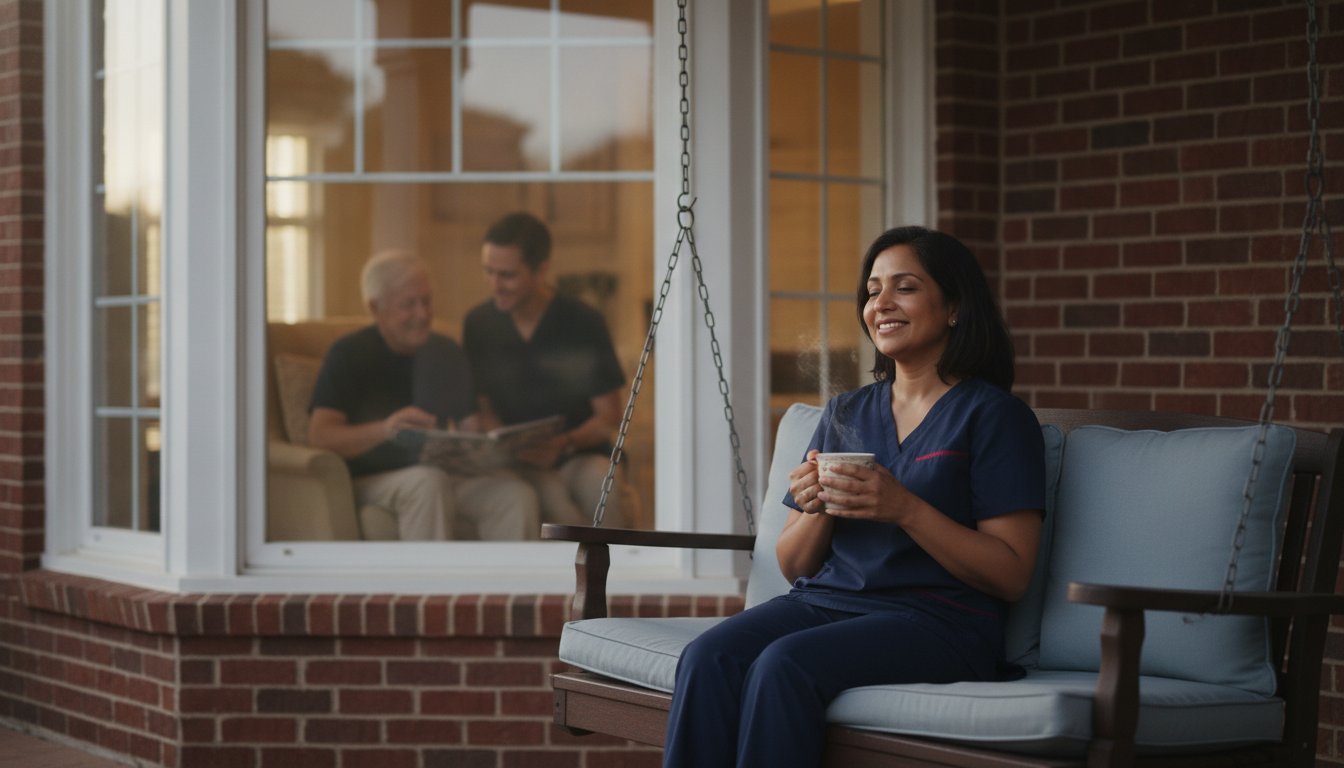
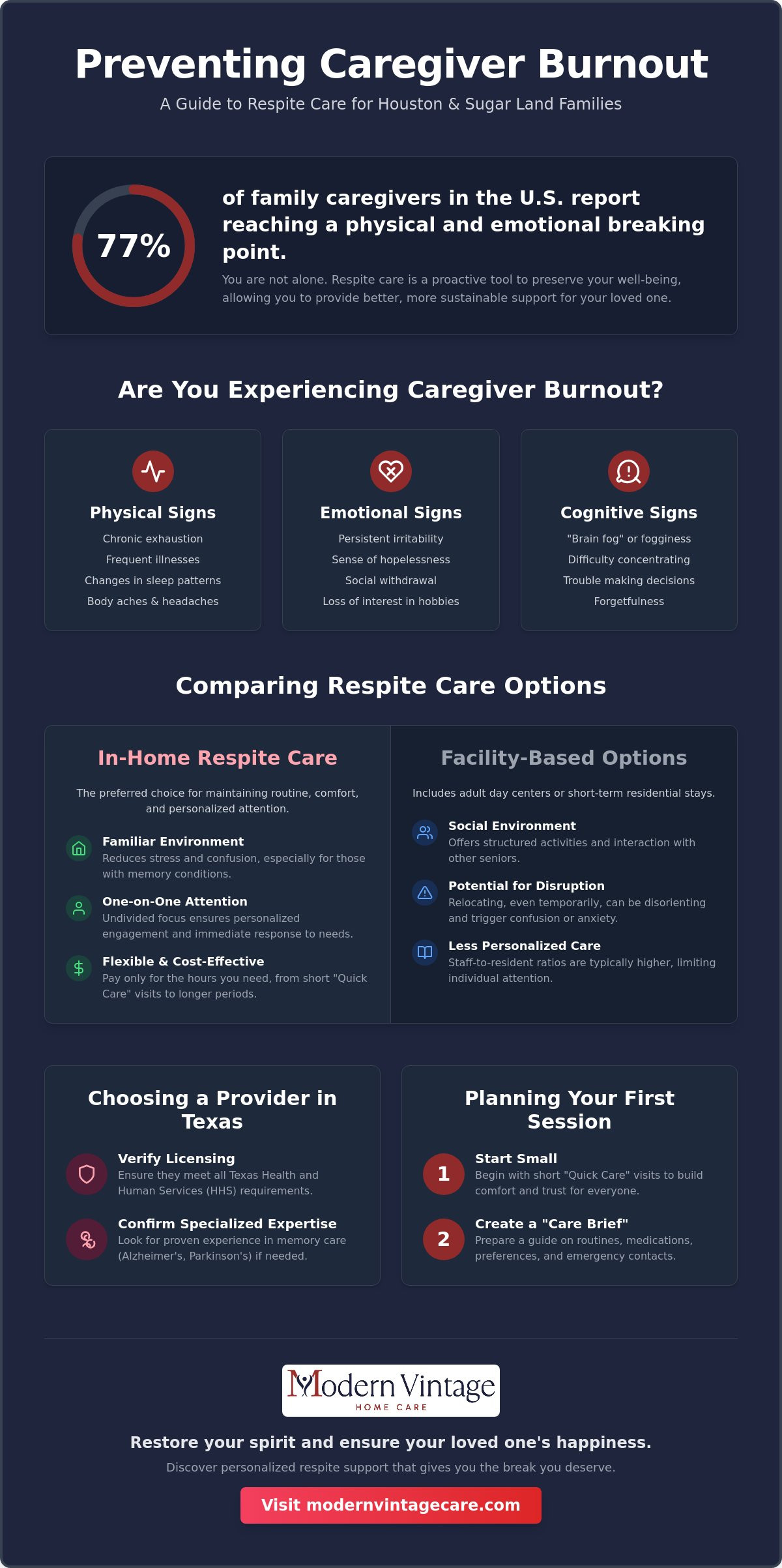
Did you know that 77% of family caregivers in the United States now report feeling they’ve reached a physical and emotional breaking point? If you find yourself struggling with chronic fatigue or constant anxiety about your loved one’s safety, you’re certainly not alone in this journey. It’s natural to feel a sense of guilt at the thought of stepping away, yet neglecting your own health often makes providing high-quality support much harder. Finding professional respite care for family caregivers is a proactive clinical tool that preserves your well-being so you can remain the dedicated advocate your family member deserves.
We understand that you need more than just a break; you need the confidence that your loved one is safe, engaged, and respected while you rest. This comprehensive 2026 guide will help you discover how to find reliable relief, prevent burnout, and choose the best respite care options in the Houston area. Whether you’re looking for a few hours of companionship or a more structured support plan, we’ll explore the latest Texas resources and provide a roadmap to a sustainable long-term care strategy that restores your spirit and ensures your loved one’s happiness.
Key Takeaways
- Learn how to identify the signs of caregiver burnout and use temporary relief as a proactive tool for your long-term health.
- Explore why in-home respite care for family caregivers is often the preferred choice for Houston families who want to maintain their loved one’s daily routine.
- Find out the essential criteria for choosing a provider, including Texas Health and Human Services licensing requirements and specialized expertise in memory care.
- Get a step-by-step guide to planning your first session, from starting small with “Quick Care” visits to building a comprehensive Care Brief.
- Discover how personalized support in Sugar Land can provide the flexibility you need for errands, self-care, or career obligations while ensuring your loved one is safe.
What is Respite Care for Family Caregivers?
Respite care is a vital strategy for sustainable caregiving, though many families initially view it as a luxury they can’t afford or don’t deserve. It involves planned or emergency temporary care provided to a senior to offer you, the primary caregiver, a necessary interval of rest. If you are managing the complexities of Alzheimer’s, Parkinson’s, or general age-related decline, you likely understand that your own energy is a finite resource. This support is highly flexible; it can range from a few hours of companionship to comprehensive 24-hour temporary support during a family emergency. Understanding What is Respite Care? is the first step in realizing that taking a break is a clinical necessity for both you and your loved one.
The core purpose of respite care for family caregivers is the prevention of Caregiver Burnout Syndrome. This isn’t just a term for being tired; it’s a recognized condition where the physical, emotional, and mental exhaustion of caregiving begins to degrade your own quality of life. When you utilize professional support, you aren’t “abandoning” your post. Instead, you’re ensuring that the care you provide remains high-quality and compassionate over the long term. By stepping away for a short period, you return with restored patience and the physical energy required to handle daily challenges.
Identifying the Signs of Caregiver Burnout
Burnout doesn’t happen overnight. It’s a gradual accumulation of stress that eventually impacts every facet of your life. Physically, you might notice chronic exhaustion that sleep doesn’t fix, frequent minor illnesses, or significant changes in your own sleep patterns. Emotional red flags are often more subtle but equally damaging. You might experience persistent irritability with your loved one, a heavy sense of hopelessness, or a desire to withdraw from social connections you once enjoyed. Cognitively, burnout often manifests as “brain fog,” where you find it difficult to concentrate or make even simple decisions about daily routines. Recognizing these symptoms early allows you to seek respite care for family caregivers before a health crisis occurs. For a structured approach to staying ahead of these warning signs, review our preventing caregiver burnout tips checklist designed specifically for Houston families.
The Different Forms of Respite Support
There is no single way to structure a break, as every family in the Houston area has different needs. In-home care is frequently the preferred choice because it allows your relative to stay in a familiar environment while professional attendants provide personal care or companionship. Other families utilize Adult Day Centers, which offer social-based programs during business hours, or Residential Respite, which involves short-term stays in a licensed facility. Whether you need a few hours of Quick Care Services to run errands or a full week of support for a vacation, there is a solution that fits your specific situation.
Comparing In-Home Respite vs. Facility-Based Options
Deciding where your loved one will spend their time while you rest is a deeply personal choice that requires a balance of logic and heart. While both in-home and facility-based options exist, many families in the Houston area find that in-home respite care for family caregivers offers the most stability and peace of mind. Keeping a senior in their own home supports the “aging in place” philosophy, which is especially critical for those living with cognitive decline. Relocating to an unfamiliar facility, even for a short stay, can often trigger “sundowning” or intense periods of confusion that take days to resolve once they return home.
From a cost-benefit perspective, in-home support allows for greater precision and financial control. Instead of paying a full daily rate at a facility, you can choose to pay for the specific hours you need to accomplish your goals. This one-on-one attention ensures that your loved one isn’t just another face in a crowded hallway; they receive the undivided focus of a professional who understands their unique personality and safety requirements. If you’re unsure which path is right for your family, exploring personalized home care options can help you weigh the benefits of keeping your loved one in a familiar environment.
The Benefits of Professional In-Home Attendants
Professional in-home attendants do more than just monitor safety; they provide personalized engagement that respects the individual’s spirit. Whether it’s discussing a favorite book, listening to music, or assisting with a specific hobby, this social connection is vital for emotional health. Consistency is also essential for physical health, particularly regarding medication management for elderly seniors. When a caregiver follows your established protocols in your own kitchen or living room, the risk of missed doses or timing errors is significantly reduced. This level of detail ensures that routines remain identical even when you are away.
When to Consider Residential Respite
There are specific scenarios where residential respite might be the appropriate path for a family. If your loved one requires 24/7 clinical monitoring that exceeds what can be safely provided at home, a facility stay offers that higher level of medical oversight. Some families also use these short-term stays as a “trial run” to see how a senior might adjust to a potential long-term placement in the future. However, it’s vital to weigh the emotional impact of this transition. The move can be distressing for individuals who thrive on the comfort of their own surroundings, and the shared nature of facility staff means your loved one will not receive the same level of individual companionship found at home.
How to Choose a Respite Provider in the Houston Area
Selecting the right partner for respite care for family caregivers is about more than just finding a set of helping hands. It’s about finding a professional team that integrates seamlessly into your family’s life while providing the high standard of safety you expect. In the Greater Houston area, your first step should always be to verify that a home care agency holds a current license from Texas Health and Human Services (HHS). This licensing ensures the agency adheres to state regulations regarding caregiver training, background checks, and operational standards, providing a baseline of protection for your loved one.
Beyond the legal requirements, specialized expertise is what truly defines a quality provider. If you’re managing a diagnosis like Alzheimer’s or Parkinson’s, you need a team with specific training in memory care and behavioral support. A caregiver who understands how to navigate the nuances of cognitive decline can turn a simple visit into a meaningful social experience. We also recommend looking for agencies that utilize modern communication tools. Automated check-ins and real-time updates allow you to see exactly when care begins and ends, offering a layer of transparency that traditional agencies often lack.
Essential Questions to Ask During the Interview
When you speak with a potential agency, focus on their responsiveness and their local presence. Ask how they handle emergency situations or sudden changes in a senior’s health. You should also inquire about their specific process for background-checking in-home attendants; in Texas, this should include checks against the Employee Misconduct Registry and the Nurse Aide Registry. Don’t hesitate to ask for references from other families in Sugar Land, Missouri City, or Pearland. A provider who is deeply rooted in the local community will have a trackable history of reliability and compassionate service.
Understanding the Costs of Private Respite Care
The cost of respite support depends heavily on the level of care required and the duration of the sessions. While private pay is common, there are several avenues to help manage these expenses. For instance, Veterans Care benefits often include provisions for respite to support those who served. If your family includes a veteran, understanding the full scope of veterans home care benefits Sugar Land programs offer can help you unlock financial support that significantly reduces your out-of-pocket costs. If you are interested in exploring how similar person-centred models operate internationally, you can visit Elleson Care to learn about their specialized DVA and aged care services. Long-term care insurance policies may also cover in-home attendants if certain criteria are met. If you only need support for a short window, such as running errands or attending a doctor’s appointment, Quick Care Services offer a flexible, budget-conscious way to get the help you need without committing to a full day of care. The “social match” between the caregiver and the senior is just as important as the price; when a senior enjoys the company of their attendant, the transition is smoother and the value of each session increases.
Planning Your First Respite Session: A Transition Guide
The transition to professional support is a journey that works best when approached in manageable steps. For many, the first experience with respite care for family caregivers feels overwhelming because of the high emotional stakes involved. To ensure a smooth experience, we recommend starting small with a “Quick Care” visit. This short window of 1 to 2 hours allows your loved one to bond with a new face while you handle a simple errand nearby. It builds a foundation of trust without the pressure of a long absence.
Preparation is the key to a successful hand-off. Before the first session, create a “Care Brief” that goes beyond basic medical needs. While medication schedules are vital, your caregiver also needs to understand the small details that make a day successful. List specific likes and dislikes, favorite conversation topics, and potential trigger points that might cause anxiety. Once the attendant arrives, conduct a supervised “hand-off” session where you work together for thirty minutes. This allows the professional to observe your techniques and ensures your loved one feels secure during the change in leadership.
Setting communication boundaries is equally important for your own peace of mind. Establish a clear plan for how the agency will update you during your break. Whether you prefer a text after lunch or an automated check-in, knowing when to expect news prevents you from spending your rest time staring at your phone. After the session concludes, take time to review the experience and adjust the care plan. If a specific routine didn’t work, then you can refine the approach for the next visit. To get started with a personalized plan, you can schedule a Quick Care session to see how a small break makes a big difference.
Managing Caregiver Guilt and Anxiety
It is common to feel a sense of “abandonment” when you first step away, but it’s helpful to reframe your perspective. Respite isn’t a luxury; it’s a gift of a “rested caregiver” to your loved one. When you are physically and mentally recharged, you can provide the patient, high-quality support they deserve. To truly benefit, you must commit to a true “unplug.” Resist the urge to call every hour. Instead, use your first break in Houston to do something purely for yourself, such as visiting a local park, enjoying a quiet meal, or simply taking a long, uninterrupted nap. If guilt and anxiety persist, our practical checklist for preventing caregiver burnout offers actionable strategies to help you move from exhaustion to sustainable balance.
Preparing the Senior for a New Caregiver
The language you use when introducing an attendant can significantly impact your loved one’s reception. Instead of using clinical terms, try introducing the caregiver as a “friend” or an “assistant” who is there to help with daily tasks so you can focus on being a daughter or son again. Maintaining the environment is also crucial; ensure familiar items, such as a favorite blanket or a specific television program, remain part of the routine. For more advice on handling these sensitive conversations, explore our tips on home care for aging parents to help bridge the gap between family and professional support.
Personalized Respite and Quick Care in Sugar Land
Modern Vintage Home Care offers a localized approach that understands the specific needs of Fort Bend County families. We don’t believe in a one-size-fits-all model for respite care for family caregivers. Instead, we focus on matching our professional attendants to the unique spirit and personality of your loved one. This ensures that the time they spend with us is more than just a safety check; it’s a period of genuine social engagement and comfort. By prioritizing the dignity of the individual, we help maintain the quality of life that your family has worked so hard to preserve.
Our Quick Care Services are specifically designed for the modern family’s unpredictable schedule. Whether you need to attend a school event, handle a career obligation, or simply take three hours for personal self-care, this flexible support provides the bridge you need. For families navigating more complex medical journeys, we also integrate our respite sessions with specialized hospice support at home Houston. This ensures that even during the most sensitive life transitions, you have a reliable partner to share the weight of daily care tasks while you focus on being present with your relative.
Flexible Scheduling for Busy Families
Whether you require a brief 4-hour window or 24-hour temporary support, our team adapts to your family’s specific rhythm. We serve Sugar Land, Missouri City, and the Greater Houston area with a proactive and engaged mindset. To ensure 100% safety and transparency, we utilize automated medication reminders and automated check-ins. These tools provide you with the quiet confidence that your loved one is following their routine exactly as planned, even while you are away. If your schedule changes at the last minute, then our responsive coordination team works to find a solution that keeps your care plan on track.
A Trusted Partner for Specialized Needs
Our dementia-certified caregivers are trained in wandering prevention and behavioral support, making them an ideal choice for families managing cognitive decline. We offer a concierge-level service that goes beyond basic assistance to actively enhance your loved one’s quality of life. From medication management to meaningful companionship, we act as a steady advocate for your family’s well-being. For families who want to understand the full scope of available support, learning about personal care for seniors Houston families rely on can help clarify how daily assistance with bathing, grooming, and mobility fits alongside respite services. We understand that trusting someone else with your parent’s care is a significant transition, and we’re here to make that process as gentle as possible.
Contact Modern Vintage Home Care for a personalized respite consultation.
Empowering Your Caregiving Journey
Choosing to step back for a short time isn’t an act of surrender; it is a proactive step toward becoming a more resilient and patient caregiver. By prioritizing your own well-being, you ensure that the support you provide remains rooted in love rather than exhaustion. Throughout this guide, we’ve explored how in-home options maintain essential routines and how starting with small “Quick Care” sessions can build a lasting foundation of trust. Finding quality respite care for family caregivers is the most effective way to protect your own health while ensuring your loved one continues to thrive in a familiar environment.
Modern Vintage Home Care is here to act as your steady advocate and trusted partner. As an agency licensed in the state of Texas with specialized Alzheimer’s and dementia training, we’ve been dedicated to serving families across Sugar Land and the Greater Houston area with compassion and professional excellence. We understand the nuances of this transition and are ready to help you create a sustainable plan that honors your loved one’s spirit. Schedule Your Free Respite Care Consultation Today and take the first step toward a restored sense of balance and peace for your entire family.
Frequently Asked Questions
Is respite care covered by Medicare in Texas?
Medicare Part A only covers respite care if it is provided in a Medicare-approved inpatient setting, such as a hospital or hospice facility, for up to five consecutive days. Most standard Medicare plans don’t pay for in-home respite services or long-term support. If you need home-based relief, then you might explore the Texas STAR+PLUS program or Veterans benefits, which often provide more flexibility for families wishing to keep their loved ones at home.
How do I know if my loved one is ready for a respite caregiver?
You’ll know it is time when the demands of daily care begin to impact your own physical health, sleep patterns, or mental clarity. If you feel constantly overwhelmed or notice that your loved one’s safety requires more supervision than you can provide alone, then professional support is a proactive solution. Introducing respite care for family caregivers early helps prevent a crisis and ensures your relative receives attentive, high-quality engagement from a rested provider.
What is the difference between respite care and home health care?
Home health care focuses on clinical medical needs, such as wound care or physical therapy, and is usually ordered by a physician for a specific recovery period. In contrast, respite care is designed to provide non-medical support and temporary relief for the primary family caregiver. It focuses on companionship, personal care, and safety, allowing you to take a necessary break while ensuring your loved one’s daily routine remains stable and comfortable.
Can I get respite care for just a few hours a week in Sugar Land?
Yes, you can certainly book support for just a few hours through our Quick Care Services in Sugar Land. These shorter sessions are ideal for when you need to run errands, attend a personal appointment, or simply enjoy a brief period of self-care. This flexible scheduling ensures you only pay for the time you actually need without committing to a long-term or full-day care contract, making it an excellent option for budget-conscious families.
How do I talk to my parent about bringing in a respite attendant?
Try reframing the conversation to focus on your needs rather than their limitations to reduce potential resistance. You might explain that having an “assistant” or “household helper” allows you to spend more quality time together as a family rather than just focusing on chores. If you present the caregiver as a companion who helps with specific tasks, then your parent may feel more receptive to the idea of a new person in the home.
Does respite care include help with meal prep and light housekeeping?
Respite care often includes assistance with light housekeeping and basic meal preparation to ensure a safe and comfortable living environment. Our caregivers focus on maintaining your loved one’s existing routine, which includes preparing nutritious meals and tidying up common areas during their visit. These tasks are part of a holistic approach to care that prioritizes the senior’s dignity and the overall well-being of the entire household.
What happens if the respite caregiver and my loved one don’t get along?
If a personality conflict arises, then we prioritize finding a new match that better suits your loved one’s temperament and social preferences. The relationship between a senior and their attendant is the heart of successful respite care for family caregivers. We encourage open communication after the first session so we can adjust the care plan and ensure your relative feels safe, happy, and respected by a partner they truly enjoy.
How much notice is typically required to book a respite session?
While we prefer at least 48 to 72 hours of notice to ensure the best caregiver match, we understand that life is unpredictable. If an emergency arises, then we work diligently to provide support as quickly as possible to alleviate your stress. Planning ahead for scheduled breaks is always recommended, but our flexible coordination team is experienced in handling short-notice requests for families throughout the Greater Houston area.