
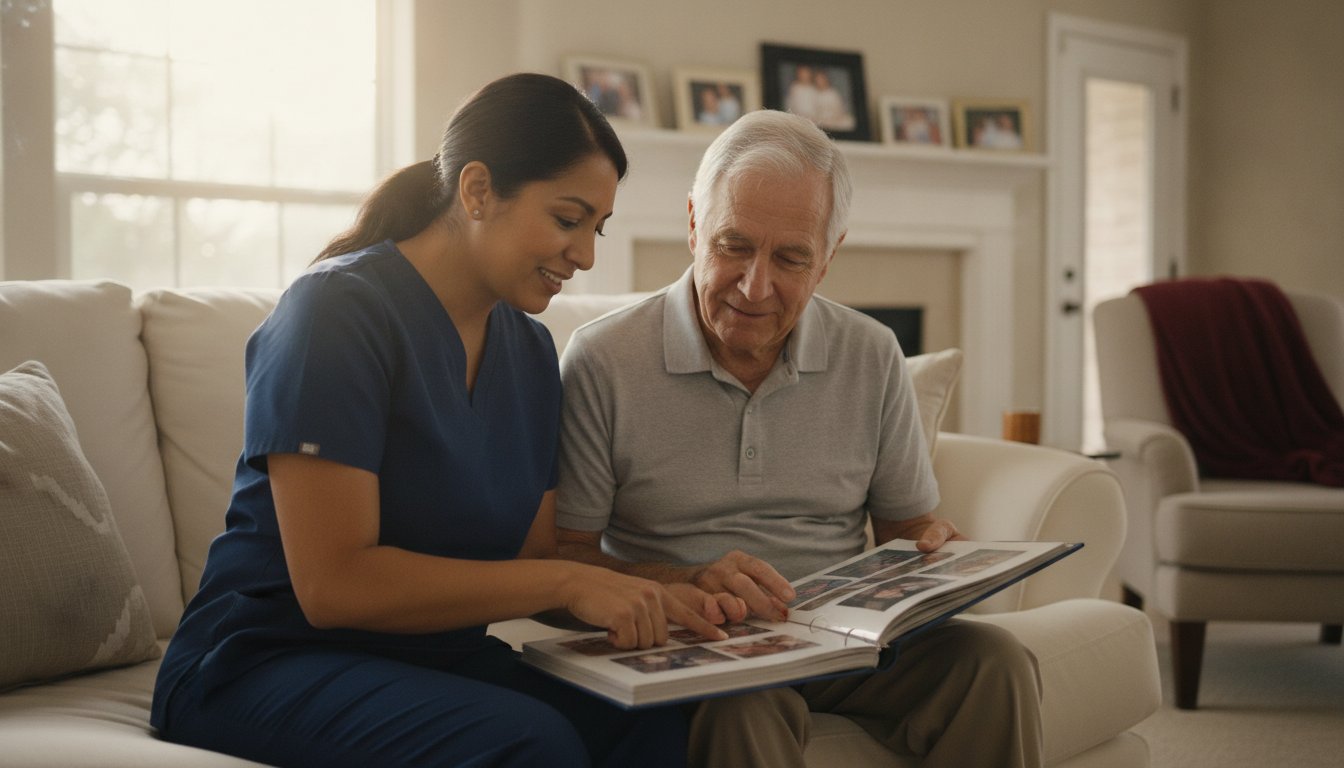
What if the safest place for your loved one to manage the complexities of memory loss isn’t a clinical facility, but the familiar hallway where they’ve lived for decades? Many families believe that choosing dementia home care means choosing between safety and comfort; however, it’s actually about merging the two. You likely worry about the risks of wandering or a missed medication dose, and that constant state of high alert often leads to deep caregiver burnout. It’s natural to feel a mix of love and exhaustion as you try to provide every level of support on your own.
This guide will show you how specialized in-home support helps your loved one stay safe, maintain their dignity, and remain in the comfort of their own home. We’ll explore how modern technology and personalized routines can prevent accidents while managing the difficult mood swings that often cause so much stress. You’ll learn how a strategic partnership with professional caregivers can turn your house into a sanctuary of memory support, giving you the peace of mind you deserve.
Key Takeaways
- Discover why staying in a familiar environment provides the essential stability and comfort needed for effective memory support.
- Learn how predictable routines and reminiscence therapy help reduce your loved one’s anxiety while improving their daily engagement.
- Explore how specialized dementia home care uses automated check-ins and subtle home modifications to address common fears about wandering or safety.
- Understand the emotional and practical differences between personalized 1-on-1 attention and the staff-to-resident ratios found in facilities.
- See how a dignity-first philosophy balances heartfelt companionship with modern technology to help your family member age in place safely.
What is Dementia Home Care and How Does it Support Aging in Place?
Dementia home care is a specialized form of non-medical support designed specifically for those experiencing cognitive decline. While standard senior care often focuses on physical mobility or general household chores, memory-focused care prioritizes the unique neurological needs of the individual. It’s a proactive partnership that bridges the gap between independent living and institutional care. For many families, this support is the key to aging in place, which refers to a person’s ability to live in their own home safely and comfortably regardless of their age or health status.
Familiarity is one of the most powerful tools for maintaining memory stability. In a known environment, the brain relies on long-standing environmental cues, such as the specific height of a kitchen chair or the layout of a hallway. Moving to a facility strips these cues away, which can often trigger increased confusion or a more rapid decline. Understanding the nuances of this support is easier when you look at a Dementia caregiving overview, which highlights how formal care differs from informal, family-led efforts. When professional dementia home care arrives, the emotional shift for the family is often immediate. You can finally step back into your role as a daughter, son, or spouse rather than acting solely as a 24-hour supervisor.
The Spectrum of Memory Care Services
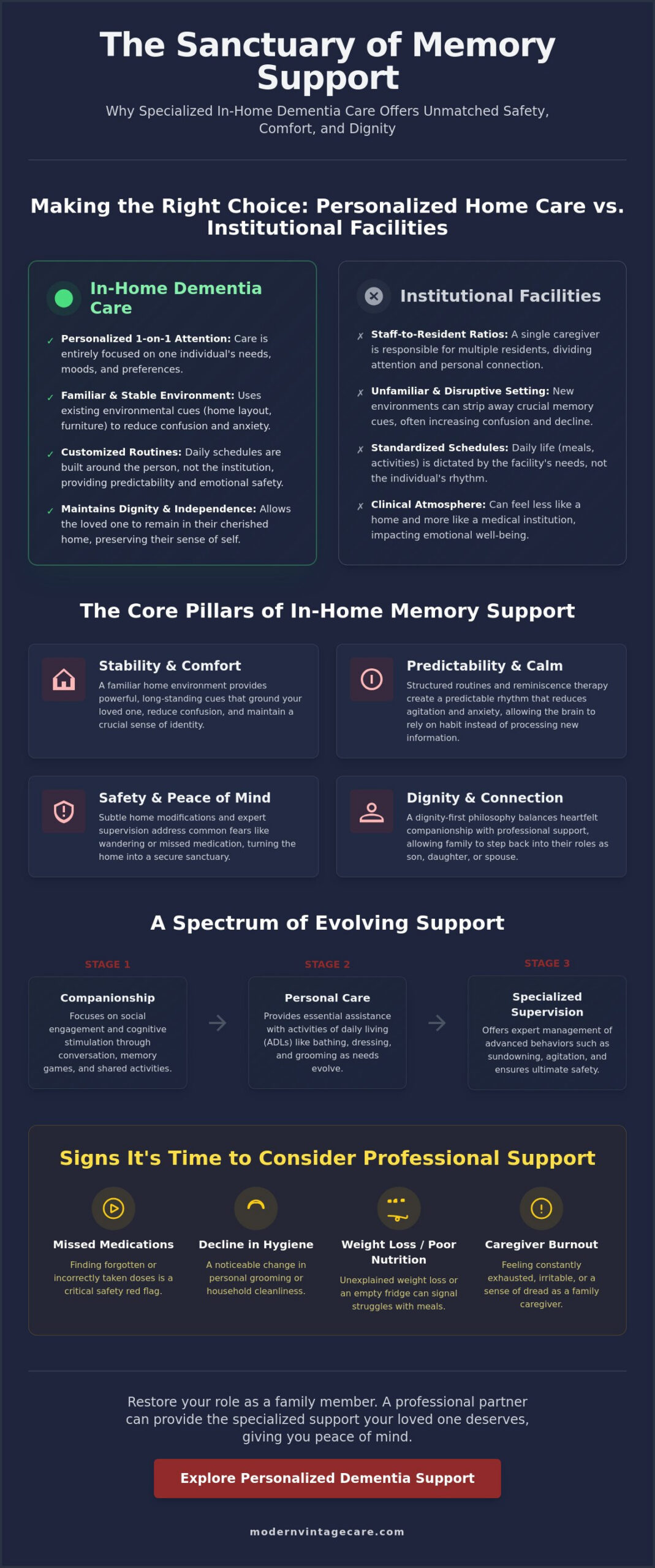
The support provided is never one-size-fits-all. Depending on the individual’s needs, services often include:
- Companionship: Focuses on social engagement and cognitive stimulation through conversation or memory games in the early stages.
- Personal Care: Provides essential assistance with activities of daily living (ADLs) like bathing, dressing, and grooming as physical coordination changes.
- Specialized Supervision: Offers expert management of behaviors such as sundowning, where confusion and agitation increase during the evening hours.
Signs it is Time to Consider Professional Dementia Support
Recognizing when to transition to professional support is a delicate process. You might notice subtle red flags like missed medications, a sudden decline in personal hygiene, or unexplained weight loss. These signs often indicate that the cognitive load of managing a household is becoming too heavy for your loved one to handle alone. Another critical sign is caregiver burnout. If you find yourself constantly exhausted, irritable, or feeling a sense of dread, the current arrangement isn’t sustainable for anyone involved. Starting professional support early allows your loved one to build a foundation of trust with their caregiver while their cognitive faculties are more intact. This makes the transition much smoother as their care needs inevitably increase over time.
Building a Structured Routine: The Key to Successful Memory Care
Predictability is perhaps the most powerful tool in managing cognitive decline. When the world feels increasingly unfamiliar, a steady, repeating rhythm provides a sense of emotional safety that medication alone cannot achieve. Professional caregivers specializing in dementia home care don’t just watch a loved one; they curate an environment where the next hour is always expected. This reduces agitation and helps maintain a sense of control for the individual. If the daily schedule remains consistent, then the brain can rely on habit rather than having to process new, stressful information.
One effective technique used by experts is reminiscence therapy. By intentionally discussing past experiences or looking through old albums, caregivers help individuals tap into long-term memories that often remain intact longer than short-term ones. These practical tips for dementia home care show that engaging the senses through familiar music or scents can ground a person in the present moment. This isn’t just about “remembering the past” but about using those memories to spark joy and connection today.
Transitioning from family-only care to professional assistance is often the hardest step for relatives. You might feel like you’re giving up, but it’s actually about upgrading the level of support. A professional partner bridges the gap by documenting what works and what doesn’t, ensuring that the care plan evolves alongside your loved one’s needs. If you’re feeling overwhelmed by the daily demands, exploring personalized dementia support can help restore your role as a family member rather than a task manager.
Creating a Daily Memory Care Plan
A successful day begins with a calm morning routine. Rushing can trigger anxiety, so caregivers allow ample time for dressing and breakfast to set a gentle tone. Throughout the day, they incorporate art, music, or familiar hobbies to stimulate cognitive function and motor skills. As evening approaches, the focus shifts to reducing sundowning symptoms. This involves dimming lights and minimizing loud noises to create a peaceful transition into sleep, helping to prevent the confusion that often peaks at dusk.
Nutritional Support and Meal Preparation
Proper hydration and nutrition are vital but often challenging for those with memory loss. Caregivers manage sensory issues, such as a sudden dislike for certain textures or colors of food, by adapting meals to fit changing preferences. They ensure meals are nutritious and easy to eat, often using social engagement to make mealtime an enjoyable event. Whether it’s preparing a favorite family recipe or simply sitting together to chat, these moments prevent the isolation that can lead to poor appetite.
Maximizing Safety with Technology and Home Modifications
The fear of a loved one wandering in the middle of the night is a heavy burden that keeps many family caregivers awake. It’s often the primary reason families begin to doubt whether staying at home is still a viable option. Modern dementia home care solves this challenge by blending professional supervision with smart technology. If you can monitor a home’s exits and daily movements through non-intrusive sensors, then you can maintain a high level of safety without stripping away your loved one’s independence. This proactive approach transforms a house from a place of potential risk into a secure sanctuary.
Automated Check-ins and Medication Reminders
Maintaining health stability relies heavily on consistency, especially with prescriptions. Missing a single dose can trigger a cascade of confusion or physical health complications that often lead to avoidable hospitalizations. Automated medication reminders provide a reliable safety net, ensuring the right pill is taken at the exact time it’s needed. These support services for caregivers offer a layer of protection that eases the mental load for the family. Whether you live across the country or just a few miles away, automated check-ins provide regular updates on your loved one’s well-being, confirming they’re safe and following their routine without the friction of constant phone calls.
Wandering Prevention and Environmental Safety
Environmental safety involves more than just removing trip hazards; it requires a strategic look at how a person with memory loss interacts with their space. Simple modifications can make a profound difference. For instance, smart doorbells and wall-mounted radar sensors can detect movement or an open door without the intrusive feel of traditional cameras. Research shows that home modifications for dementia safety typically cost between $5,000 and $25,000, depending on the level of technology and structural changes required. Families managing Alzheimer’s care at home can find a detailed room-by-room checklist of practical safety modifications and daily scheduling strategies to help reduce confusion and prevent wandering.
Professional caregivers act as your eyes and ears on the ground. They’re trained to notice subtle changes, such as a shift in walking patterns or a new habit of checking the front door, which might indicate an increased risk of wandering. By identifying these patterns early, they can adjust the care plan to provide extra supervision during high-risk times. This specialized attention ensures that safety measures feel like a natural part of the day rather than a restrictive set of rules.
Dementia Home Care vs. Assisted Living: Making the Right Choice
Deciding between keeping a loved one at home or moving them to a facility is one of the most difficult choices a family can make. While assisted living offers a community setting, the personalized nature of dementia home care provides a level of attention that is difficult to replicate in a large-scale environment. In a facility, staff-to-resident ratios often mean a single caregiver must split their time among several individuals. At home, your loved one is the sole focus. This 1-on-1 ratio ensures that subtle changes in mood or health are caught immediately rather than being overlooked in a busy hallway. If you want to ensure your parent’s unique preferences and personality remain at the center of their care, staying home is often the most effective path. Families weighing these options can benefit from a detailed look at at home memory care options in Houston and Sugar Land to understand how professional in-home support compares to facility-based alternatives.
The emotional impact of a move shouldn’t be underestimated. For someone living with memory loss, their home is a roadmap of their life. Moving to a new environment can trigger “transfer trauma,” a state of extreme stress that often leads to increased confusion, anxiety, and a faster rate of cognitive decline. By choosing home-based support, you preserve the familiar cues of their daily life, from the view out their favorite window to the specific feel of their own bed. This stability is a powerful anchor that helps them feel secure even as other parts of their world become less clear.
The Benefits of One-on-One Care
Having a consistent caregiver allows for a deep emotional bond to form. This relationship is vital because it builds a foundation of trust that makes daily tasks much easier. If a senior wakes up feeling particularly agitated, a private caregiver can pivot the entire day’s plan to accommodate that mood. They aren’t bound by a rigid facility schedule. They can spend extra time on a favorite hobby or simply sit and offer comfort during a difficult moment. This level of personalization ensures that care is always a proactive response to your loved one’s needs rather than a reactive checklist of tasks.
Flexibility and Respite for Families
Home care offers a level of scalability that facilities cannot match. You don’t have to commit to a full-time move to get the help you need. Instead, you can start with respite care to prevent caregiver burnout or utilize “Quick Care” visits for help with errands and emergencies. This flexibility allows you to adjust the level of support as the condition progresses, ensuring you only pay for the care your family actually requires. If the situation evolves and requires more intensive supervision, you can transition seamlessly into 24-Hour Home Care Services in Houston to provide around-the-clock safety. If you’re ready to explore how tailored support can help your family find balance, speak with our compassionate care advocates today to create a plan that fits your unique situation.
Specialized Memory Support in Sugar Land and Greater Houston
Finding the right support for a loved one shouldn’t feel like a transaction with a distant national corporation. In Fort Bend County and the Greater Houston area, families need a partner who understands the local community and the specific resources available right here at home. Modern Vintage Home Care stands as a local leader by bridging the gap between high-tech safety and high-touch compassion. Our approach to dementia home care is rooted in the belief that every senior deserves to be seen as an individual with a rich history, not just a set of symptoms to be managed. If you’re looking for a team that treats your family like neighbors, then local expertise makes all the difference. Families throughout Fort Bend County can learn more about our dementia home care services Sugar Land residents rely on to keep their loved ones safe and comfortable at home.
The Modern Vintage Home Care Difference
Our “Modern Vintage” philosophy combines old-fashioned dignity with the latest advancements in memory support. We don’t just provide basic supervision; we employ attendants who undergo specialized training in Alzheimer’s and dementia care. This ensures they understand the neurological nuances of the condition, from communication techniques to behavioral management. We also offer a suite of Concierge Services and Quick Care options designed for the busy lives of Houston families. Whether you need a brief check-in or comprehensive 24-hour support, our focus remains on preserving your loved one’s spirit and personality through every stage of their journey.
Getting Started: Your Local Path to Support
The first step toward peace of mind is often the hardest, but it’s also the most rewarding. We make the process straightforward by offering a free home assessment for families in Sugar Land, Missouri City, and the surrounding areas. During this initial consultation, we don’t just look at safety risks. We take the time to learn about your loved one’s life story, their favorite routines, and the small details that make them feel comfortable. This information allows us to create a highly personalized care plan that evolves as their needs change.
You don’t have to carry the weight of caregiving alone. By bringing in professional support early, you can focus on making meaningful memories with your loved one while we handle the complexities of daily safety and routine. If you’re ready to see how specialized support can transform your family’s quality of life, Schedule a consultation with Modern Vintage Home Care today. We’re here to provide the steady, nurturing presence your family deserves during this sensitive transition.
Embracing a Future of Comfort at Home
Choosing the right support system is about more than just safety; it’s about honoring the life your loved one has built. We’ve explored how a predictable routine and smart home modifications can transform a residence into a sanctuary of memory support. By prioritizing 1-on-1 attention, you ensure that your family member’s unique spirit remains the focus of every interaction. High-quality dementia home care provides the perfect balance of independence and professional protection, allowing your loved one to stay in the environment they know best.
Modern Vintage Home Care is fully licensed in the state of Texas and committed to the highest standards of reliability. Every member of our staff receives specialized Alzheimer’s and dementia training, ensuring they have the expertise to handle complex behavioral changes with patience and gentleness. We also utilize proprietary automated check-in and medication reminder technology to provide an extra layer of security for your family. If you’re ready to find a sustainable balance between caregiving and your own well-being, Request a Free Memory Care Assessment in Sugar Land today. You don’t have to walk this path alone; we’re here to be your steady advocate and compassionate guide.
Frequently Asked Questions
Is in-home care safe for someone with advanced dementia?
Yes, in-home care is a safe and effective option for those with advanced dementia because it provides 1-on-1 supervision that facilities often cannot match. Caregivers monitor for falls, manage confusion, and ensure the home environment remains secure. If your loved one’s needs increase, then the care plan can be adjusted to include 24-hour support to prevent wandering and ensure an immediate response to any distress.
How much does dementia home care cost in the Houston area?
While costs vary based on specific needs, specialized dementia home care in the Houston area typically ranges from $32 to $35 per hour according to 2026 market data. These rates reflect the specialized training required to manage memory loss effectively. It’s often a more flexible financial choice than a full-time memory care facility, especially for families who only need part-time or daytime assistance.
What is the difference between home health and dementia home care?
Home health focuses on short-term medical recovery, while dementia home care provides long-term, non-medical support for daily living. Home health is usually prescribed by a doctor and includes services like wound care or physical therapy. In contrast, memory care focuses on safety, routine, and cognitive stimulation to help individuals manage the ongoing challenges of dementia in the comfort of a familiar setting.
Can a home caregiver help with wandering prevention?
Yes, a specialized caregiver is a vital tool for preventing wandering by maintaining constant visual contact and identifying exit-seeking behaviors early. They establish engaging routines that reduce the boredom or anxiety that often triggers the urge to leave. If a caregiver is present, then they can use redirection techniques to guide your loved one back to a safe activity before they reach the door.
How do you handle aggressive behavior in dementia patients at home?
Caregivers handle aggression by identifying environmental triggers and using gentle de-escalation techniques. They focus on the emotion behind the behavior rather than the behavior itself. If a loved one becomes agitated, then the caregiver might use redirection, soft music, or a change of scenery to restore a sense of calm. This patient approach preserves the individual’s dignity while keeping everyone in the household safe. For professional guidance on managing these complex behaviors, you can visit Assure Psychiatry to learn about their compassionate approach to mental health care.
Will insurance or veterans benefits cover dementia home care?
Coverage depends on the specific policy, as traditional Medicare generally does not cover non-medical home care. However, long-term care insurance policies often provide significant support for these services. Eligible veterans and their spouses may also utilize the VA Aid and Attendance benefit to help cover the costs of professional support, making it easier for families to afford the consistent care their loved ones need.
What happens if my loved one needs care 24/7?
If your loved one requires around-the-clock supervision, then 24-hour care can be arranged through a team of rotating caregivers. This ensures there is always someone awake and alert to assist with nighttime confusion or bathroom trips. It provides a seamless safety net that allows family members to rest, knowing their loved one is never alone or at risk of an unmonitored accident during the night.
How do I know if a caregiver is qualified for memory care?
You can verify a caregiver’s qualifications by asking about their specific training in Alzheimer’s and dementia management. A qualified provider should be employed by an agency licensed by the Texas Health and Human Services Commission. It’s also important to ensure they understand cognitive engagement techniques and how to manage the unique behavioral challenges that come with memory loss rather than just providing basic housekeeping. Families who want to explore all available options can review a comprehensive guide to at home memory care choices in Houston and Sugar Land to make a fully informed decision.