
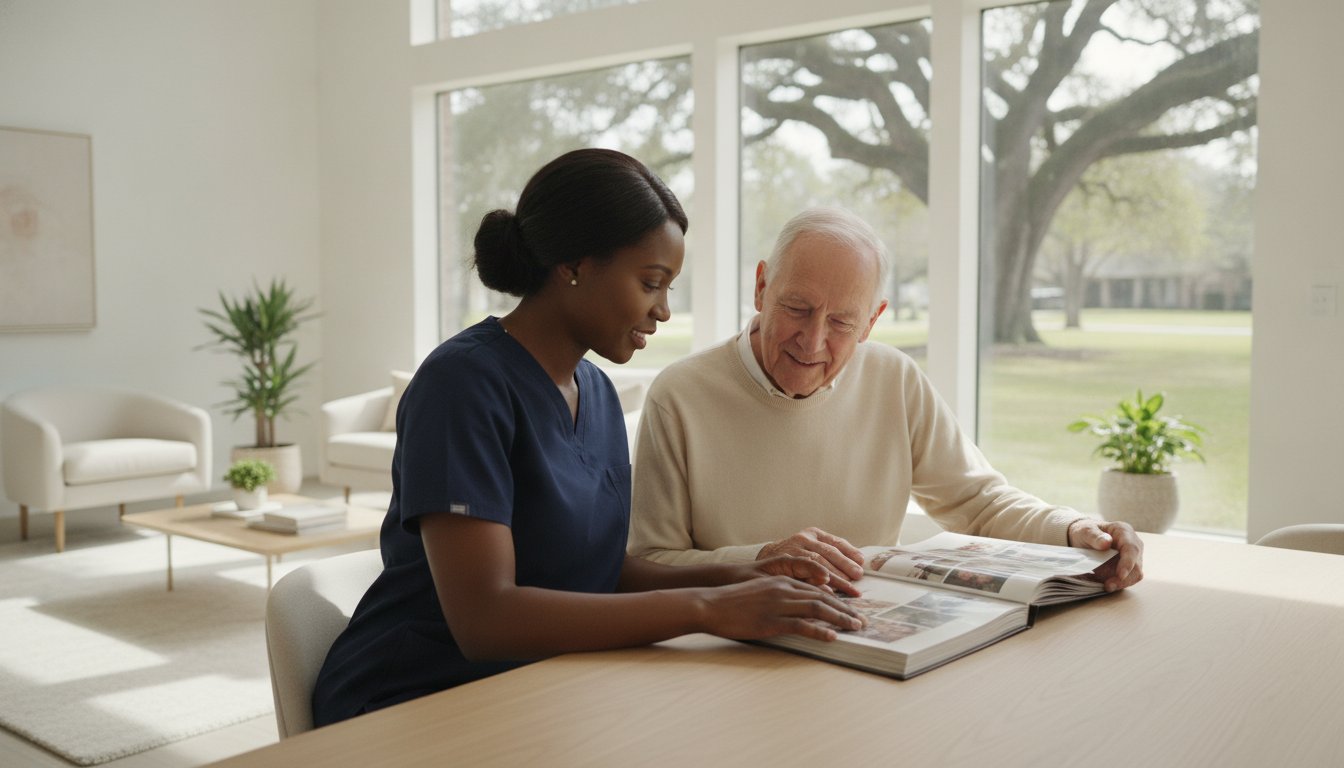
What if the safest path for your loved one isn’t a move to a sterile facility, but a specialized plan that brings professional support directly to their front door? With over 459,300 people living with Alzheimer’s in Texas, many families in Houston and Sugar Land are searching for a way to balance safety with the comfort of a familiar environment. You likely feel a heavy sense of guilt when considering a move, or perhaps you’re exhausted from the constant worry about wandering. It’s difficult to manage these complex medical needs alone while trying to preserve your loved one’s spirit. Choosing at home memory care provides a bridge between professional expertise and the warmth of a family setting.
We understand the weight of these decisions and want to help you find a path forward that offers both security and dignity. This article will help you discover how staying at home compares to other local options, providing you with the facts you need to move forward. We’ll explore various care levels, from companionship to 24-hour support, so you can make a choice that feels right for your family. By the end of this guide, you’ll have a clear understanding of your options and the peace of mind that comes from knowing your loved one is safe in the place they love most.
Key Takeaways
- Learn the vital differences between standard companionship and specialized at home memory care protocols that prioritize cognitive health and safety.
- Explore how a consistent daily routine and professional medication management can significantly reduce risks and help prevent unnecessary hospital visits.
- Compare the personalized attention of a one-on-one care ratio at home against the one-on-many staffing models typically found in larger facilities.
- Use our practical interview checklist to evaluate Houston and Sugar Land providers, ensuring they meet Texas licensing standards and rigorous background check requirements.
- Find out how flexible options like “Quick Care” and Concierge services provide a modern, dignified approach to supporting your family’s unique situation.
Understanding At-Home Memory Care: More Than Just Supervision
Choosing the right support for a loved one with cognitive decline is a deeply personal journey. At home memory care is a specialized form of support designed to provide safety and dignity within the comfort of a private residence. It moves beyond basic supervision by incorporating specific protocols that address the unique challenges of Alzheimer’s and other forms of dementia. For many seniors in Houston and Sugar Land, staying in a familiar environment isn’t just about comfort; it’s a vital component of neurological stability. When a person remains in their own home, they don’t have to relearn a new environment, which significantly reduces the cognitive load they face every day.
While standard companion care focuses on social interaction and light assistance, at home memory care protocols are much more proactive. These include specialized techniques for redirection, safety monitoring to prevent wandering, and cognitive engagement tailored to the individual’s history. These structured routines are particularly effective at managing “sundowning,” a period of increased confusion and agitation that often occurs in the late afternoon. By maintaining a calm, predictable schedule, professional caregivers can help mitigate these symptoms before they become overwhelming for the family.
The Clinical vs. Personal Approach
A clinical approach often focuses solely on physical health and safety, yet this perspective can overlook the profound emotional needs of those living with dementia. To understand the full scope of support required, one can look at a comprehensive overview of dementia caregiving, which highlights how emotional connection is just as critical as medical monitoring. Companionship plays a massive role in slowing cognitive decline by keeping the mind active and the spirit engaged. Ultimately, memory care is a delicate blend of physical safety, predictable routine, and meaningful social engagement.
Why Familiarity is a Therapeutic Tool
The layout of a long-term home is etched into a senior’s long-term memory, making it a powerful therapeutic tool. Unlike the long, identical hallways of a clinical facility that can trigger disorientation, a private home offers natural cues that help a person navigate their day. We believe in the “Vintage” aspect of care, where seniors are surrounded by their own photos, furniture, and personal history. This connection to the past provides a sense of identity that facilities often struggle to replicate. If you’re exploring how to make this work, our guide on dementia home care provides deeper insights into creating a safe, therapeutic environment at home.
The Essential Components of a Memory Care Strategy
Effective at home memory care is built on a foundation of proactive, specialized support rather than passive observation. A memory-trained caregiver spends their day weaving therapeutic activities into the natural flow of life. This might look like guided reminiscence during breakfast or gentle redirection when a loved one feels restless. These professionals are trained to identify the subtle behavioral shifts that often precede a difficult afternoon. This allows them to step in with a calming activity or a sensory-focused snack before stress levels rise, maintaining a peaceful atmosphere in the home.
Ensuring safety also means managing the complexities of daily health. Medication management is perhaps the most critical task for preventing avoidable hospitalizations. Many seniors manage several prescriptions, and missing even one dose can lead to significant confusion or physical setbacks. When families explore the types of in-home care services available, they often find that professional oversight provides a layer of security that family members simply can’t maintain alone. Beyond medicine, nutritional support plays a key role. Caregivers prepare meals that account for sensory changes, ensuring food is both appealing and easy to eat, which helps maintain physical strength and mood.
Life is unpredictable. Families in Houston and Sugar Land often face sudden emergencies where they need immediate help. Whether it’s a last-minute business trip or a family medical issue, Quick Care Services provide a flexible solution for these urgent needs. This ensures your loved one is never left without professional support during a crisis. If you’re feeling overwhelmed by the daily demands of care, you can explore how personalized support plans offer the relief your family needs.
Medication Adherence and Safety Monitoring
If a senior struggles with polypharmacy, the risk of adverse drug reactions increases significantly. We utilize automated medication reminders and check-ins to create a consistent safety net. This technology ensures that even when a caregiver isn’t physically present, the routine remains unbroken. It’s a reliable way for families living apart to feel confident that their loved one is following their prescribed health plan and staying safe throughout the day.
Structured Social Engagement
Isolation is a known catalyst for cognitive decline. Caregivers facilitate social interaction through activities that stimulate the mind without causing the frustration of “testing” memory. Simple tasks like assisted grooming or choosing an outfit help preserve self-esteem and personal dignity. These moments of connection break the isolation-decline loop, keeping the individual’s spirit vibrant and engaged with the world around them. When a person feels seen and valued, their quality of life improves dramatically.
Comparing Care Models: Home Care vs. Facilities vs. DIY
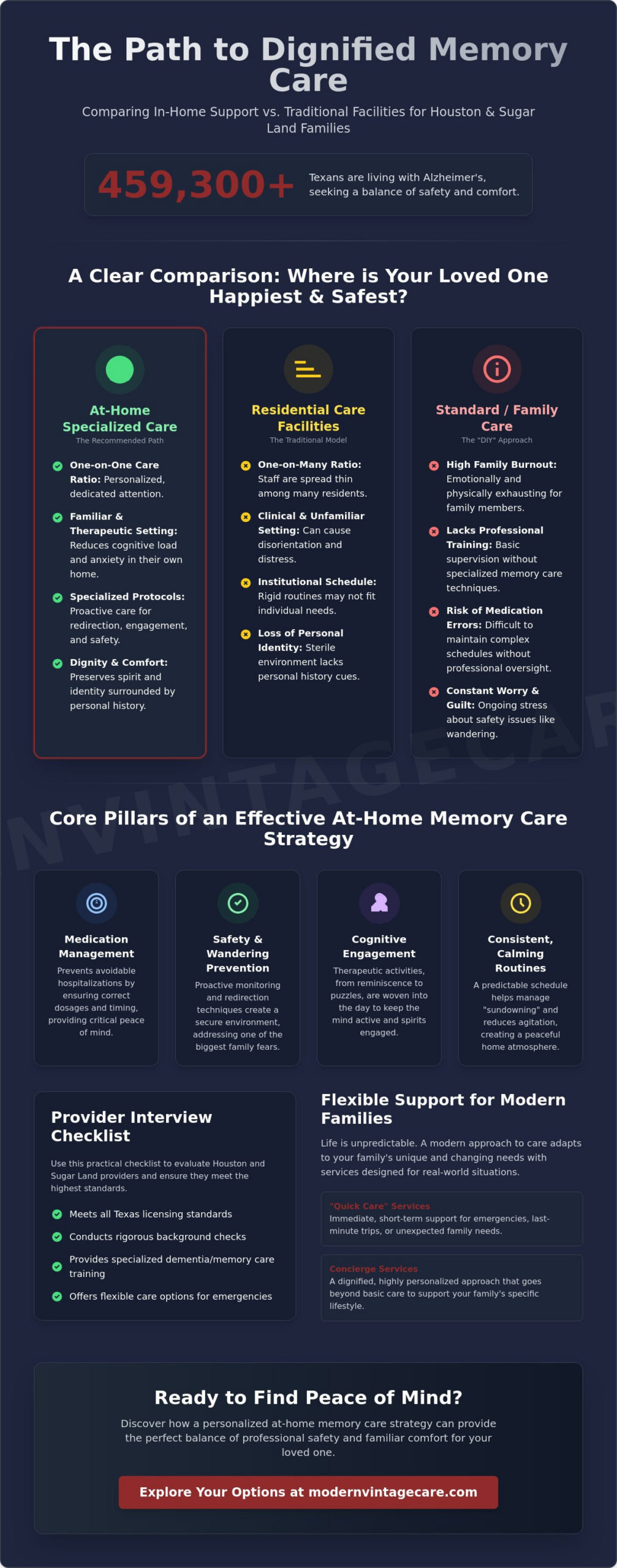
Choosing between different care models is one of the most stressful decisions a family can face. While facilities offer a structured environment, they often operate on a one-on-many staffing ratio. This means your loved one shares a caregiver’s attention with several other residents, which can lead to delays in support during moments of confusion. In contrast, at home memory care provides a dedicated one-on-one relationship. This personal connection ensures that every subtle change in mood or physical health is noticed immediately. It allows for a level of observation that is simply impossible in a crowded institutional setting.
Many families struggle with a deep sense of guilt when considering a move to a memory care facility. They worry that a move means losing the personal touch that only a family home provides. Beyond the emotional weight, there’s the practical issue of scheduling. Facilities often follow rigid institutional routines for meals, bathing, and sleep. Home care offers the flexibility to honor your loved one’s lifelong habits. If they prefer a late breakfast or a quiet evening walk, their care plan adapts to them. This preservation of choice is a cornerstone of maintaining dignity as cognitive needs change. Families navigating these decisions may also benefit from reviewing a comprehensive Alzheimer’s care at home checklist to ensure every aspect of daily safety and routine is thoughtfully addressed.
The Agency Advantage: Vetting and Reliability
Some families consider hiring independent caregivers to save on costs, but this path carries significant hidden risks. When you hire privately, you become the legal employer. This means you assume all responsibility for payroll taxes, background checks, and workers’ compensation liability if an injury occurs in your home. Perhaps more importantly, there’s no safety net if that individual falls ill. Working with a licensed agency removes these burdens entirely. Families looking for dementia home care services in Sugar Land benefit from a team that handles rigorous vetting and provides guaranteed backup care. This ensures your loved one is never left without support, regardless of individual staffing changes.
Memory Care Facilities vs. Staying Home
The transition to a facility can trigger what clinicians call “transfer trauma.” This is a period of intense stress and disorientation that often accelerates cognitive decline during a move. By focusing on Aging in Place: Growing Older at Home, you allow your loved one to remain in the setting where they feel most secure. The cost structure of home care is also more adaptable than facility fees. Instead of a fixed monthly rent that covers services you might not yet need, you can scale hourly support as the stages of dementia progress. This allows for a gentle, dignified transition that respects both your family’s budget and your loved one’s comfort.
Evaluating Providers: What Houston Families Must Prioritize
Recognizing when you can no longer manage a loved one’s needs alone is a brave step toward ensuring their safety and your own well-being. Caregiver burnout often develops slowly, manifesting as persistent exhaustion, irritability, or a withdrawal from personal hobbies. If you find yourself constantly fearing a wandering episode or feeling overwhelmed by medical schedules, it’s time to explore professional at home memory care. Choosing a provider in the Houston metro area requires looking beyond surface-level promises. You should verify that any agency you consider is licensed by the Texas Health and Human Services Commission (HHSC). This licensing ensures that caregivers have passed mandatory background checks and meet state-required training standards for dementia care.
Specialized training in wandering prevention for dementia patients is a non-negotiable priority for local families. A skilled caregiver doesn’t simply lock doors; they identify the “triggers” that cause a senior to feel restless or disoriented. By using redirection techniques and engaging the individual in purposeful tasks, professional support reduces the anxiety that often leads to wandering. This proactive approach allows your loved one to move freely within their own home while maintaining the highest level of security. If you’re ready to discuss a tailored plan for your family, you can schedule a consultation for specialized memory care to see how a dedicated partner can restore balance to your home.
The Interview: Questions for Memory Care Agencies
When you interview potential agencies, focus on their specific experience with cognitive decline. You need to know exactly how they handle the challenges that arise behind closed doors. Consider asking these five essential questions:
- What specific dementia-related certifications or training modules do your caregivers complete?
- How do you document and communicate daily behavioral changes or mood shifts to the family?
- What is your specific protocol for de-escalating a situation if a client becomes agitated or confused?
- How do you ensure consistency in staffing so my loved one sees the same familiar faces?
- Can you provide examples of how you’ve handled emergency medical situations in a home setting?
Local Support and Veterans Benefits
Families in Sugar Land and the greater Houston area often have access to financial resources they might not be aware of. For example, the VA Aid & Attendance program can be a significant help for veterans and their surviving spouses, often covering a portion of the costs for home-based support. Many families also use respite care as a “trial period.” This allows you to see how your loved one responds to professional at home memory care without making a long-term commitment. It provides you with a necessary break while ensuring your relative receives expert attention in a setting they already know and trust.
Personalized Memory Care: The Modern Vintage Approach
The Modern Vintage philosophy centers on the belief that aging is a season of life that deserves to be met with calm, reassuring, and dignified care. We don’t just provide a service; we act as a bridge between professional expertise and familial warmth. This approach ensures that your loved one’s unique history is respected while their immediate safety needs are met with precision. By focusing on the individual’s spirit, we help families move away from the stress of crisis management toward a proactive, peaceful routine. Choosing at home memory care should feel like adding a trusted partner to your family circle rather than making a clinical transaction.
Our model adapts to the specific rhythm of your life through flexible offerings like Concierge Services and Quick Care. Whether your family needs intensive 24-hour care or just a few hours of support during a busy week, these services ensure that professional help is always within reach. We integrate modern technology to enhance this support, utilizing automated medication reminders and check-ins to provide a consistent safety net. This allows us to maintain a high standard of reliability without intruding on the senior’s sense of independence or the home’s familiar atmosphere. These tools provide an extra layer of security, giving you confidence that your loved one is safe even during the quietest hours of the day.
A Trusted Partner in the Houston Area
Choosing a local provider means working with a team that understands the specific regulations and resources available in Texas. As a licensed agency, we combine the heart of a dedicated caregiver with the professional authority of a seasoned support team. If your family requires continuous oversight, our 24-hour care options provide the highest level of security, ensuring a trained professional is always present to manage behavioral shifts or medical needs. This level of dedication allows family members to return to their roles as sons, daughters, and spouses, knowing the heavy lifting of daily care is in expert hands. We take pride in being a steady advocate for seniors across Houston and Sugar Land, prioritizing their well-being at every stage of their journey.
Next Steps for Your Family
The path toward better support begins with understanding your specific environment. We encourage families to start with a no-obligation safety assessment of the home to identify potential risks and discuss personalized solutions. If you feel hesitant about introducing outside help, starting with small respite care visits can help build a foundation of trust between your loved one and our team. These short sessions allow everyone to adjust to the new routine at a comfortable pace. It’s a gentle way to introduce at home memory care while ensuring your family feels heard and supported at every step. To take the first step toward peace of mind, Contact Modern Vintage Home Care today to discuss a personalized plan.
Creating a Secure and Dignified Path Forward
Navigating the complexities of cognitive decline is a deeply personal journey, but you don’t have to manage these challenges alone. Choosing at home memory care ensures that your loved one benefits from a dedicated one-on-one relationship within the environment where they feel most secure. By focusing on therapeutic routines and specialized safety protocols, you can avoid the stress of facility transitions while preserving the individual’s dignity. It’s about finding a balance that supports both the senior’s well-being and the family’s need for lasting relief.
Modern Vintage Home Care is a licensed Texas home care provider with specialized Alzheimer’s and dementia training. We are proud to serve families in Sugar Land, Missouri City, and the greater Houston area with the heart of a caregiver and the authority of a seasoned professional. We are here to act as your steady advocate, ensuring every detail of your loved one’s routine is handled with gentleness and expertise.
Schedule a Compassionate Consultation with Modern Vintage Home Care to discuss a personalized plan tailored to your family’s unique requirements. You deserve the peace of mind that comes from knowing your loved one is safe, respected, and truly at home.
Frequently Asked Questions
Is at-home memory care safe for someone who wanders?
Yes, at-home memory care is a safe option for individuals who wander because it provides constant, one-on-one supervision. Caregivers are trained to identify the specific environmental triggers that lead to restlessness and use gentle redirection to keep your loved one secure within their own home. This personalized attention ensures that potential safety risks are addressed before they become emergencies.
How does memory care at home differ from standard home care?
Standard home care typically focuses on general companionship and light housekeeping, while at home memory care involves specialized protocols for cognitive decline. This includes structured engagement activities, specific behavioral management techniques, and enhanced safety monitoring designed to support neurological stability. It is a more proactive approach that prioritizes the unique emotional and physical needs of those with Alzheimer’s or dementia.
What happens if my loved one needs 24-hour care suddenly?
If your family faces a sudden crisis, we offer Quick Care Services and 24-Hour Care options to ensure your loved one is never alone. Our team can quickly scale support to provide round-the-clock supervision, giving you the flexibility to handle emergencies while knowing your relative is safe. This responsive model allows for a seamless transition from part-time help to full-time support when needs change unexpectedly.
Can veterans benefits be used for at-home memory care in Sugar Land?
Many families in Sugar Land utilize the VA Aid & Attendance program to help cover the costs of Veterans Care. This benefit provides financial assistance to eligible veterans and their surviving spouses, making professional support more accessible. It is an excellent resource for those who want to maintain their independence and stay in a familiar environment while receiving expert help.
How do I know if it is time to move from DIY care to a professional agency?
It is likely time to seek professional help if you are experiencing persistent caregiver burnout or if your loved one’s safety is at risk. Signs like frequent wandering, missed medications, or a significant decline in your own physical health suggest that a higher level of structured support is necessary. Bringing in an agency provides the stability and expertise needed to manage complex needs safely.
What is the difference between home health and home care for dementia?
Home health typically involves medical services like wound care or physical therapy provided by licensed medical professionals, whereas home care focuses on non-medical support for daily living. For those with dementia, home care provides the routine, personal care, and medication management needed to maintain a high quality of life. It emphasizes social engagement and safety within the home setting rather than clinical treatment.
How do you handle aggressive behavior or agitation at home?
Agitation is often managed through environmental adjustments and the implementation of a predictable daily routine. Caregivers use gentle communication and sensory engagement to de-escalate behavioral challenges, focusing on the individual’s comfort and emotional well-being. By identifying the root cause of the distress, we can create a calmer atmosphere that reduces the frequency of these episodes.
Is at-home care more expensive than a memory care facility?
At-home care is often more cost-effective because you only pay for the specific hours of support required. Unlike the fixed, high monthly fees of a memory care facility, our flexible model allows you to scale services as needs change. This approach also helps avoid the “transfer trauma” and disorientation often caused by moving to an institutional setting, providing better value for both safety and dignity.