

You wake up at 3:00 AM to the faint click of a door latch, your heart racing as you wonder if your dad has stepped out into the night again. It’s a moment of sharp anxiety that many families managing alzheimer’s care at home face every single day. You want to honor their wish to stay in a familiar environment, yet the constant vigilance can leave you feeling drained and uncertain about what comes next.
It’s okay to admit that this journey is harder than you expected. Whether you’re struggling with the fear of wandering or feeling the weight of caregiver burnout, your commitment to their comfort is a profound act of love. This guide offers a comprehensive, room-by-room checklist designed to turn your home into a safe haven while maintaining the routines that bring your loved one peace. We’ll explore practical safety modifications, daily scheduling tips to reduce confusion, and the specific resources available in the Houston area to ensure you don’t have to walk this path alone.
Key Takeaways
- Learn how to transform high-risk areas like the kitchen and bathroom into secure spaces using simple modifications that prioritize safety and independence.
- Discover the power of predictable routines and visual schedules to reduce daily anxiety and manage wandering behaviors effectively.
- Explore meaningful ways to foster emotional connection through reminiscence therapy and personalized hobbies that honor your loved one’s unique history.
- Identify the early signs of exhaustion and learn how to build a sustainable plan for alzheimer’s care at home that includes essential respite for your own well-being.
- Understand when to introduce professional concierge or quick care services to provide a higher level of personalized support for your family.
What is Alzheimer’s Care at Home?
Alzheimer’s care at home is much more than a simple safety watch. It’s a specialized form of non-medical support that prioritizes safety, predictable routines, and a person’s overall quality of life. At its heart lies the “Aging in Place” philosophy. For someone living with memory loss, the familiar texture of a favorite armchair or the specific light in a kitchen provides an emotional anchor. When the world begins to feel unpredictable, these small, familiar details offer a profound sense of security. Comprehensive research into Dementia caregiving highlights that staying in a known environment can help mitigate behavioral symptoms. It prevents the “relocation stress” that often accompanies a move to a clinical facility.
It’s helpful to understand the difference between basic companionship and specialized memory support. While companionship focuses on social interaction and light help, alzheimer’s care at home involves proactive engagement strategies like redirection, cognitive exercises, and specialized safety protocols. You’ll likely notice a shift in needs as your loved one moves from the early stages of the disease into the middle stage. They might begin to struggle with once-simple tasks like buttoning a shirt or following a recipe. This transition is a natural time to introduce professional support that focuses on preserving their dignity while ensuring their physical safety.
The Core Goals of In-Home Memory Care
The primary objective is to help your loved one maintain their independence through guided assistance. We don’t want to take over their life; we want to support it. By providing a structured daily schedule, we can effectively combat the confusion and “sundowning” that often occurs as the sun begins to set. Minimizing environmental changes keeps anxiety levels low. This stability allows the individual to feel more in control of their day, which is vital for their emotional well-being.
Home Care vs. Assisted Living: The Sugar Land Perspective
Families in Fort Bend County often find themselves weighing the benefits of a residential facility against the flexibility of personalized care at home. Staying in your own residence allows your loved one to keep their social ties within the local Houston community. They can continue to see the neighbors they know and visit the local parks they love. If you’re currently making this decision, you can explore a deeper comparison in our article on At-Home Memory Care: Comparing Your Options in Houston & Sugar Land. This local perspective helps you choose a path that honors your family’s unique needs and provides the highest quality of alzheimer’s care at home.
The Essential Home Safety Checklist
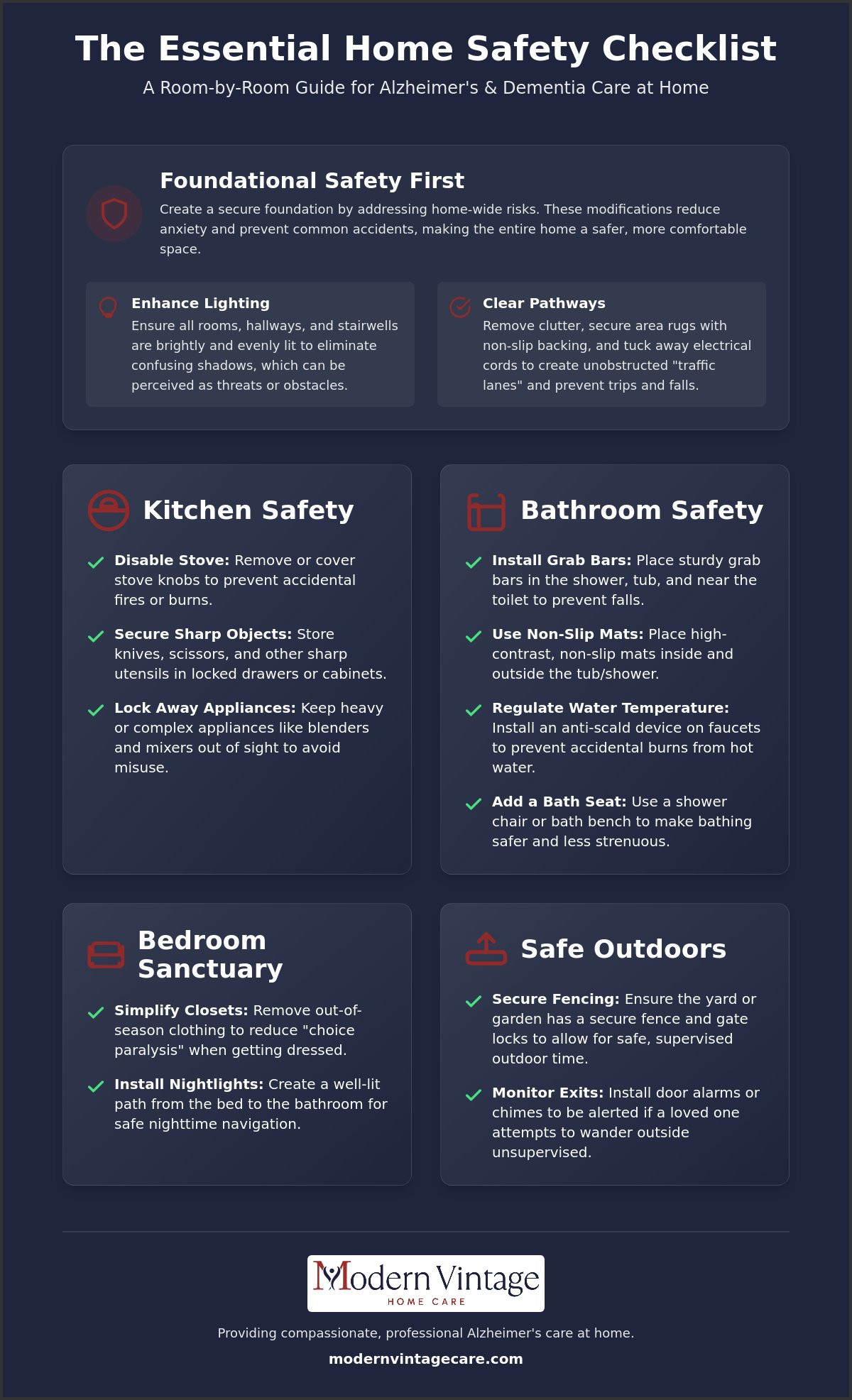
Safety is the bedrock of successful alzheimer’s care at home. When a house is properly modified, it stops being a source of stress and returns to being a place of comfort. Start in the kitchen, which is often the heart of the home but holds unique risks. If you’re worried about the stove, then removing or disabling the knobs is a proactive step that prevents accidental fires. Secure sharp knives and heavy appliances in locked cabinets to keep the environment predictable and calm.
The bathroom requires similar attention to detail. Falls are a significant concern, so installing sturdy grab bars and high-contrast non-slip mats is essential. Whether you choose a walk-in shower or a simple bath chair, the goal is to make hygiene a dignified, stress-free experience. Water temperature regulators are also vital; they prevent accidental scalding if your loved one becomes confused by the faucet settings. These small adjustments allow your relative to maintain their personal care routines with much greater confidence.
If you are considering more significant structural changes to improve accessibility, you can check out HomeSafe Living Solutions for expert guidance on professional ADA remodels and aging-in-place home modifications.
Lighting plays a surprisingly large role in behavior management. Dimly lit corners can create shadows that a person with dementia might perceive as intruders or deep holes. This confusion often leads to falls or increased anxiety, especially during the evening hours. Ensure every hallway and common area is brightly lit with consistent, glare-free bulbs. For more detailed strategies on layout and design, you can read our guide on Creating a Safe Home Environment for Alzheimer’s Patients.
Room-by-Room Safety Modifications
Every room has the potential to support independence if you address the small details. In the living room, clear the “traffic lanes” by securing area rugs and tucking electrical cords safely behind furniture. The bedroom should remain a sanctuary. Simplify closets by removing out-of-season clothing to reduce choice paralysis, and install a clear nightlight path from the bed to the bathroom. If you have a garden, then secure fencing and gate locks allow for safe, supervised outdoor time, which is wonderful for mental health. To see how these principles are applied in new constructions, such as laneway homes or secondary suites, you can visit Vancouver Custom Homes for inspiration on custom-built accessibility.
High-Tech Safety Solutions for 2026
Modern technology offers a secondary layer of protection that provides true peace of mind. GPS wearable technology, often disguised as a stylish watch, provides real-time location tracking for seniors prone to wandering. Discreet door alarms and smart sensors can also notify you immediately if a door is opened at an unusual hour. Many families also find value in Caregiver support resources that explain how to integrate these tools effectively. If you’re balancing a busy schedule, then our automated check-in services can provide an extra set of eyes, ensuring your loved one is safe throughout the day. These tools are the future of alzheimer’s care at home, blending innovation with human compassion.
Daily Routine and Engagement Checklist
While physical safety is the foundation of care, a predictable daily routine is what truly sustains the spirit. For a person living with memory loss, the world can feel like a series of disconnected fragments. A consistent schedule acts as the glue that holds these pieces together, significantly reducing the anxiety that often leads to agitation. If your day follows a steady rhythm, then your loved one can anticipate what comes next, which fosters a sense of mastery over their environment. It’s not just about the tasks; it’s about the emotional stability that familiarity provides.
Beyond the logistics of the National Institute on Aging Home Safety Checklist, successful alzheimer’s care at home requires a deep focus on social and emotional connection. This is often where family caregivers feel the most pressure, yet it’s also where the most joy can be found. Reminiscence therapy, such as looking through old photo albums or listening to music from their youth, isn’t just a pastime. It’s a way to honor their history and preserve their identity. Incorporating meaningful hobbies, even in simplified forms, ensures that the individual remains an active participant in their own life rather than a passive recipient of care.
Maintaining physical health is equally important for long-term stability. Mealtime can sometimes become a source of frustration if complex utensils are involved. Offering nutritious “finger foods” and reducing background noise can make eating a more pleasant, independent experience. Similarly, gentle physical activity, like a short walk or seated stretches, helps maintain mobility and promotes better sleep patterns. These small, intentional acts of care contribute to a more peaceful household for everyone involved, making the journey of alzheimer’s care at home more manageable for the whole family.
Structuring a Calm and Productive Day
A well-balanced day begins with consistent morning rituals. Start with a regular wake-up time and a gentle grooming routine to signal the start of the day. Save cognitively stimulating activities, such as puzzles or social visits, for the afternoon when energy levels are typically higher. As evening approaches, focus on a wind-down period. Lowering the lights and playing quiet music can help manage the symptoms of sundowning and prepare your loved one for a restful night.
Preserving Dignity in Personal Care
Empathetic communication is the most powerful tool in your caregiver toolkit. Use short, positive sentences and give your loved one plenty of time to process your words. When assisting with daily tasks, offer choice-driven care by presenting two simple options, such as “Would you like the blue shirt or the green one?” This preserves their sense of agency and reduces frustration. Person-centered care is the practice of prioritizing the individual’s unique history, preferences, and personal dignity above the clinical management of their symptoms.
Caregiver Resilience and Support Checklist
Your well-being is the engine that drives the quality of alzheimer’s care at home. It’s common to feel that you must do everything yourself to prove your love, but this mindset often leads to a quiet crisis of exhaustion. Burnout doesn’t happen overnight; it’s a gradual erosion of your physical and emotional reserves. If you notice you’re becoming easily irritated, losing interest in your own hobbies, or feeling a sense of hopelessness, then it’s time to pause and reassess your support system. Acknowledging these feelings isn’t a betrayal of your loved one. It’s the first step in becoming a more resilient caregiver.
Organizing the legal and financial aspects of care early in the journey provides a much-needed sense of control. Securing a Power of Attorney (POA) and establishing clear healthcare directives ensures your loved one’s wishes are honored even as the disease progresses. Additionally, building a local support network is vital. Many families in Fort Bend County find comfort in Houston-based caregiver groups where they can share advice and emotional support with others walking a similar path. These connections remind you that while the journey is personal, you don’t have to navigate it alone.
Preventing Burnout Before it Starts
Setting realistic expectations for yourself is essential for long-term success. You can’t be everything to everyone at all times without eventually running on empty. One of the most effective ways to preserve your energy is by outsourcing specific, high-stress tasks. For example, managing complex drug schedules can be a major source of anxiety. You can find practical tips on delegating these responsibilities in our guide on Medication Management for Elderly Seniors. Even small windows of relief, such as using “Quick Care” visits for short errands or a midday nap, can provide the micro-breaks necessary to sustain your mental health.
When to Seek Professional Respite
As care needs evolve, you might find that 24-hour supervision or overnight support becomes necessary to ensure safety. Professional caregivers act as a compassionate bridge, offering specialized alzheimer’s care at home that complements your family’s efforts. This allows you to step back from the role of “provider” and return to being a daughter, son, or spouse. Recognizing when the requirements of the disease exceed your personal capacity is an act of profound wisdom. Asking for help is a sign of strength, not failure.
If you’re feeling the weight of daily care, our team is ready to provide the steady advocacy your family needs. Explore our respite care and concierge services to discover how we can support your caregiving journey with heart and expertise.
Transitioning to Professional Home Care in Sugar Land
Deciding to bring a professional into your sanctuary is a significant milestone in the journey of alzheimer’s care at home. It isn’t about replacing your role as a family member; it’s about enhancing the support system that keeps your loved one safe and happy. At Modern Vintage Home Care, we understand that every family in the Houston area has a unique story. We specialize in personalizing the care experience to match the specific personality and history of each individual we serve. Whether you need a few hours of help or comprehensive 24-hour care, our goal is to provide a seamless transition that feels like a natural extension of your family’s love.
For busy families in Sugar Land and Missouri City, our Quick Care and Concierge services offer a flexible solution that adapts to your changing needs. We integrate modern tools like automated medication reminders and check-in services to provide an extra layer of security without being intrusive. These innovations ensure that even when you can’t be there in person, your loved one’s health and safety remain a top priority. We act as your eyes and ears, providing the quiet confidence you need to balance your own life while ensuring excellent alzheimer’s care at home.
The Modern Vintage Approach to Memory Care
Our philosophy centers on more than just physical assistance. We focus deeply on emotional connection and the maintenance of established routines. Our caregivers are expertly trained to understand the subtle nuances of dementia, from managing mood shifts to encouraging social engagement. If you’re looking for a partner who values dignity as much as safety, then you’ll find our approach deeply reassuring. You can learn more about our philosophy in our pillar guide on Specialized Dementia Home Care Services in Sugar Land.
Getting Started with a Care Plan
The first step toward peace of mind is a local assessment. During our initial in-home consultation, we’ll listen to your concerns and evaluate the specific needs of your household. We don’t believe in one-size-fits-all solutions. Instead, we customize care levels that can range from simple companionship to intensive hospice support and respite care. This tailored plan ensures that your loved one receives exactly the right amount of help at exactly the right time. Don’t wait until you’re overwhelmed to seek support. Speak with a Care Advocate today to begin creating a sustainable plan for your family’s future.
Embracing a Supportive Path Forward
Managing alzheimer’s care at home is a journey that requires both a practical strategy and a gentle heart. By prioritizing structural safety in every room and establishing a predictable daily rhythm, you create an environment where your loved one can truly thrive. It’s vital to remember that your own health is just as important as the care you provide. Whether you’re implementing small safety tweaks or building a comprehensive support network, every step you takes preserves the dignity and spirit of your family unit.
Modern Vintage Home Care is licensed in the state of Texas and has provided specialized Alzheimer’s and dementia training to our team since we began serving Sugar Land and the Greater Houston area. We understand the nuances of this transition and are here to act as your steady advocate. If the weight of daily care is becoming too heavy, then professional support can provide the relief you need to return to being a loving daughter, son, or spouse.
Schedule a Free In-Home Memory Care Assessment today to discover how we can help you navigate this season with confidence and compassion. You don’t have to carry this weight alone; a brighter, more supported future is possible for your entire family.
Frequently Asked Questions
Is it possible to care for an Alzheimer’s patient at home until the end?
It is entirely possible to care for a loved one at home until the end with a strong support plan in place. Many families utilize a combination of specialized memory care and hospice support to manage symptoms and provide comfort in a familiar setting. This approach allows your relative to remain surrounded by the people and memories they love most during their final journey.
How much does Alzheimer’s care at home cost in the Houston area?
The cost for alzheimer’s care at home in the Houston area depends on the intensity of support your loved one requires. Companion care is typically more accessible, while 24-hour specialized memory care or concierge services represent a higher investment. Because rates vary by agency and the specific certifications of the staff, we recommend a personalized assessment to understand the budget required for your family’s unique needs.
Can Medicare pay for in-home Alzheimer’s care services?
Medicare generally does not pay for non-medical home care services, such as help with bathing, dressing, or companionship. It is primarily focused on skilled nursing or physical therapy for a limited time. For families managing dementia, other options like the STAR+PLUS Waiver in Texas or personal long-term care insurance policies are often more effective ways to manage the ongoing costs of staying at home.
What is the best way to prevent wandering for a senior with dementia?
The most effective way to prevent wandering is to create a secure, predictable environment. You can install smart sensors that alert your smartphone when a door opens or use GPS-enabled wearables for real-time tracking. Keeping a structured daily schedule also helps reduce the anxiety and restlessness that often trigger the urge to leave the house. For a deeper look at triggers, environmental strategies, and safety tools, our comprehensive guide on wandering prevention for dementia patients can help you move from constant worry to prepared confidence. These tools provide a vital safety net for active seniors.
How do I handle aggressive behavior or agitation during home care?
When handling aggression, it’s important to stay calm and avoid logical arguments, as dementia can make reasoning difficult. Try to identify the underlying cause, which is often a physical discomfort or a confusing environmental trigger. Use short, reassuring sentences and gently redirect their attention to a favorite song or a familiar hobby to help lower their stress levels and de-escalate the moment.
What are the first signs that my loved one needs professional home care?
The most common signs include frequent falls, neglected household chores, or a noticeable decline in personal hygiene. You might also notice that your loved one is forgetting to take life-sustaining medications or is becoming increasingly confused about their surroundings. If your own health is suffering due to the demands of caregiving, then bringing in professional alzheimer’s care at home can help restore balance and safety to the household.
How can I make my home safer for someone with middle-stage Alzheimer’s?
Making a home safer for the middle stage involves removing physical hazards and simplifying visual cues. Secure all area rugs to prevent trips and install sturdy grab bars in the bathroom to assist with balance. It’s also helpful to lock away medications and household chemicals. Clear, bright lighting is essential, as it eliminates the dark shadows that can sometimes cause hallucinations or increased confusion for those with memory loss.
What is respite care and how often should a family caregiver use it?
Respite care is a professional service that provides a temporary break for family caregivers, allowing them to rest or attend to personal errands. You should use respite care proactively before you feel completely overwhelmed. Many families find that scheduling a weekly break or a few days of support each month helps them maintain their own health and remain effective, compassionate caregivers for the long term.