
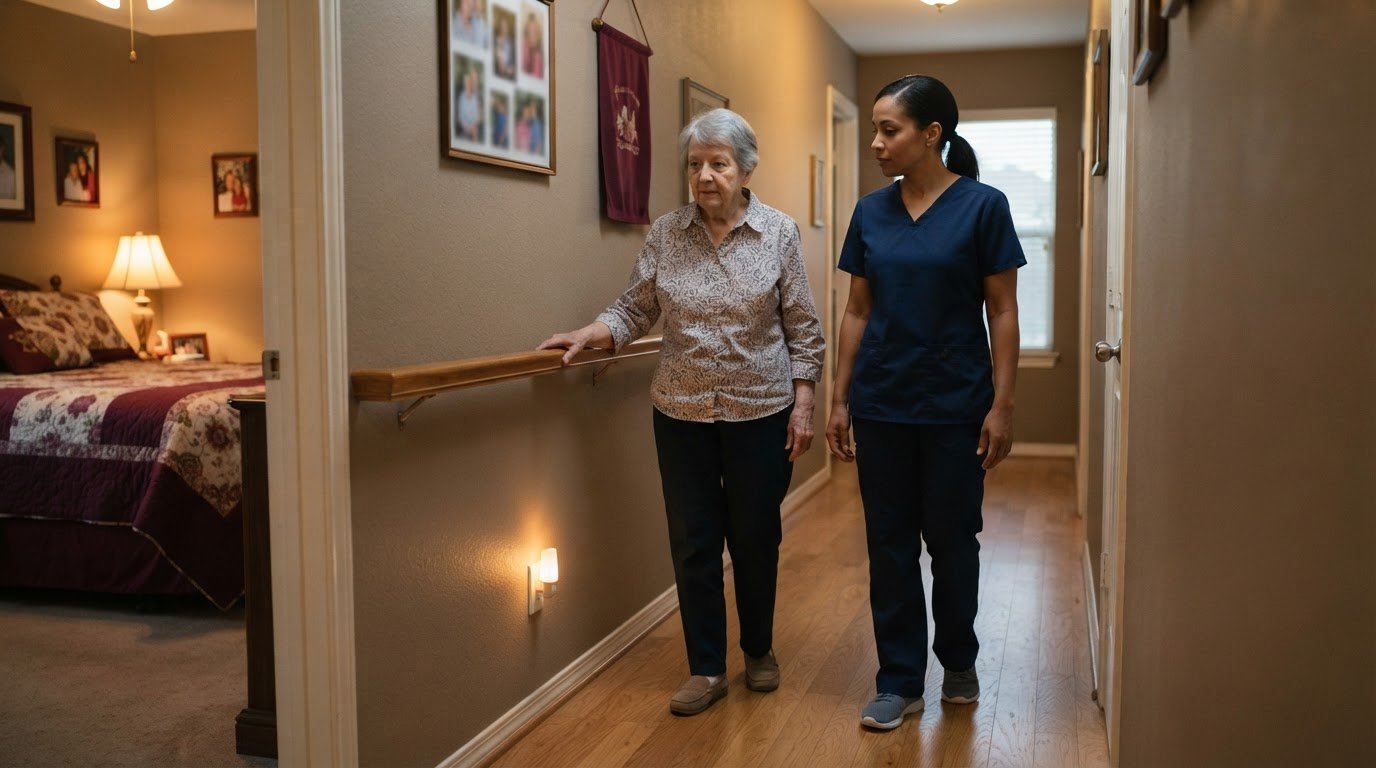
A hospital discharge is only the beginning of a senior’s recovery at home. A readmission typically means returning to the hospital within 30 days of discharge, and avoiding hospital readmission for seniors starts with making sure the transition home is safe and well supported.
It’s understandable to focus on getting a loved one home, but clear instructions and reliable support matter once they arrive. A discharge plan should make it easier to follow medication directions, recognize changes in health, and know who will help with daily needs.
This article explains why readmissions matter and what families can do to support a safer recovery. You’ll learn how discharge planning, care coordination, fall prevention, medication guidance, and consistent help at home can work together to reduce avoidable setbacks and help seniors maintain comfort and independence.
Key Takeaways
- Coordinate the transition home by sharing discharge information with the care team and making sure someone understands the care plan.
- Review the home for trip hazards, poor lighting, and places where safe mobility support may be needed.
- Keep medication directions and follow-up instructions clear, and know which changes in health need prompt attention.
- Understand what counts as a readmission and why preventing avoidable returns matters for a senior’s recovery.
- When daily support is needed at home, personal care, companionship, or dementia care can help seniors follow routines and feel more secure.
1. Hospital discharge planning and care coordination
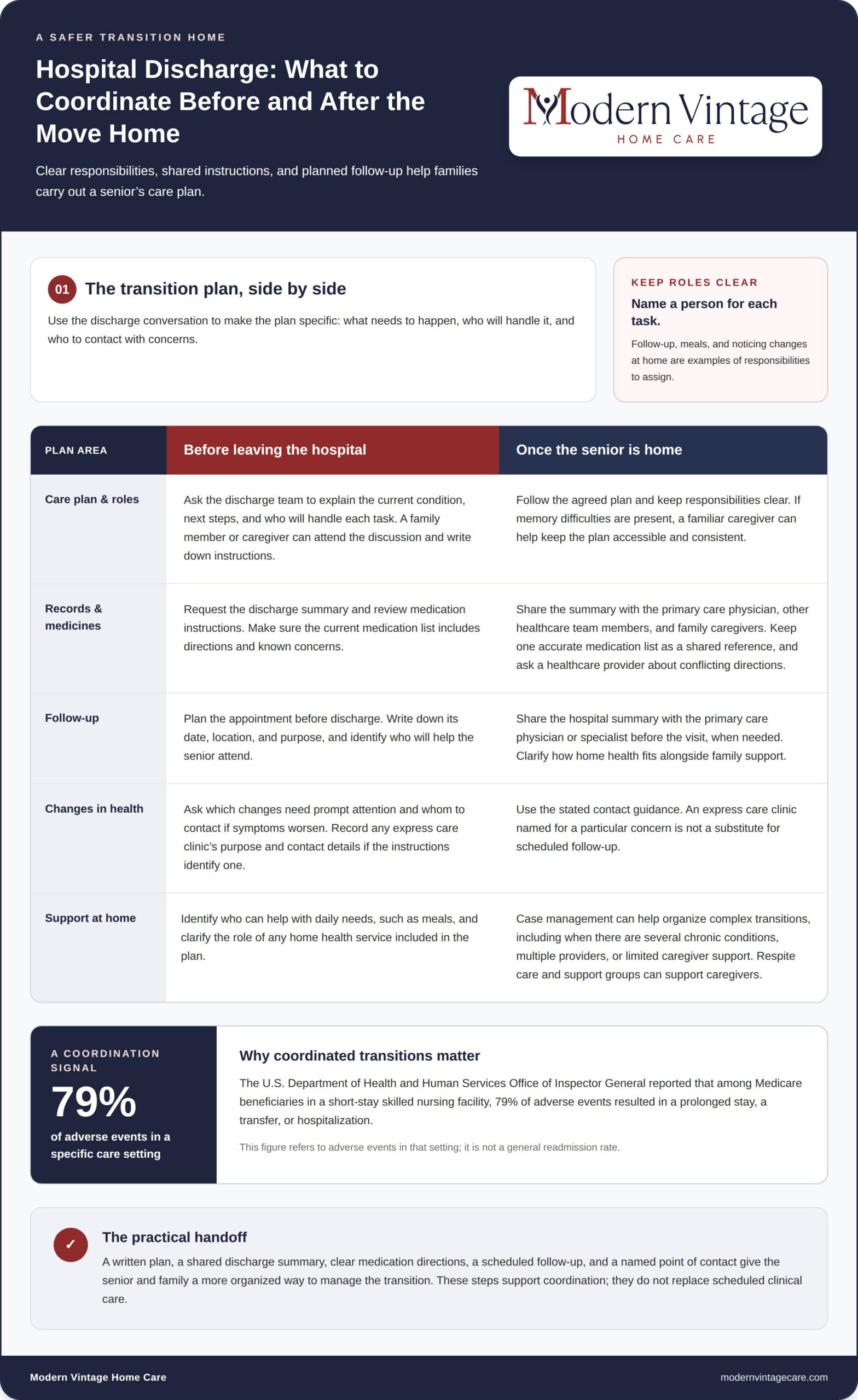
Safer transitions start before an older adult leaves the hospital. Ask the discharge team to explain the current condition, next steps, and who will handle each task. Name the person who will arrange follow-up, help with meals, or notice changes at home. A family member or caregiver can attend discharge discussions and write down instructions as they’re given.
Transitions can become risky when medication directions, follow-up plans, or information about chronic conditions don’t reach everyone involved. Before leaving, request the discharge summary and share it with the primary care physician, other healthcare team members, and family caregivers. Include a current medication list with directions and known concerns, so everyone has the same information. If a senior has memory difficulties, a familiar caregiver can help keep the plan accessible and consistent.
Practical steps include arranging timely follow-up, sharing the discharge summary, reviewing medication instructions, and assigning a caregiver to help carry out the plan. Ask who to contact if symptoms worsen and which changes need prompt attention. These steps support coordination, but they don’t replace scheduled clinical care.
Follow-up is easier when the appointment is planned before discharge. Write down the date, location, and purpose, then identify who will help the senior attend. If the primary care physician or a specialist needs the hospital summary, share it before the visit. When home health is part of the discharge plan, clarify its role alongside family support so care tasks aren’t left unclear.
Case management can help organize complex transitions, especially when an older adult has several chronic conditions, multiple providers, or limited caregiver support. A geriatric care manager may help families shape a personalized plan for memory-related needs. For a senior recovering from a short-stay skilled nursing facility, coordination matters: according to the U.S. Department of Health and Human Services Office of Inspector General, 79% of adverse events among Medicare beneficiaries in this setting resulted in a prolonged stay, a transfer, or hospitalization.
Caregivers also need support to sustain a safe plan. Respite care can provide a break from caregiving responsibilities, while support groups offer a place to share practical strategies and emotional support. If discharge instructions identify an express care clinic for a particular concern, record its purpose and contact details. Don’t treat it as a substitute for scheduled follow-up. Clear roles, written directions, and a named point of contact can make the transition more manageable for older adults and their families.
2. Why Is Reducing Hospital Readmissions Important?
A return to the hospital can interrupt recovery, disrupt familiar routines, and create another transition between care settings. Medication directions may change during a hospital stay, so patients and caregivers need a clear, current plan at home. Reducing avoidable returns matters because a senior’s recovery depends not only on treatment, but also on understanding and following the care plan.
Readmissions also matter to hospitals and Medicare. Under the CMS Hospital Readmissions Reduction Program, hospitals may face financial penalties when too many patients are readmitted within 30 days, according to the Centers for Medicare & Medicaid Services. That policy underscores why discharge planning and follow-up need to address care needs after a patient leaves the hospital.
Medication changes deserve focused attention. Ask the healthcare team to review which medicines are ongoing and which are temporary, and whether any dose adjustment or deprescribing is appropriate. Medication reconciliation means reviewing the full medication list for possible interactions or duplicate medicines, especially during transitions such as hospital discharge. A pharmacist or healthcare provider can help assess concerns and simplify a complicated regimen.
Build one accurate medication list that includes each medicine’s name, dose, and instructions. Add the reason for taking it when available, along with any directions about timing or food. Compare the list with the discharge instructions, and bring questions about conflicting directions to the appropriate healthcare provider. This gives the senior, caregiver, and providers one shared reference instead of several incomplete lists.
Patient education works best when directions are explained in plain language and reviewed together. A caregiver can ask the senior to describe when each medicine is taken, using the written schedule as a guide. If the instructions are difficult to remember, ask the provider about a simpler schedule, single-dose packs, or a pill organizer. Don’t change or stop a medicine without professional guidance.
Memory issues can make medication adherence harder, particularly when several providers prescribe medicines. A consistent routine, clearly labeled organizer, or automated dispenser may help a senior follow the agreed schedule. Automated medication reminders can also prompt a dose at the planned time. These supports help with routine, but don’t replace a medication review when directions change or concerns arise.
For families who need practical help keeping medication routines organized, medication management support can complement the plan developed with healthcare providers. Clear instructions, a reconciled list, and a reliable way to follow the schedule give patients and caregivers concrete tools for safer transitions home.
3. Fall prevention and home modifications
Medicare coverage and out-of-pocket costs depend on the type of care, the senior’s eligibility, and their coverage. Transitional care, home health, and rehabilitation are distinct services, so ask the hospital discharge team which service is recommended and what coverage applies before it begins.
At home, start with the routes the senior uses most: from bed to bathroom, kitchen to table, and entrance to living space. Remove loose rugs, cords, and clutter from these paths. Improve lighting near stairs, hallways, and bathrooms, and consider grab bars where the senior gets in and out of the shower or uses the toilet. Keep frequently used items within easy reach to avoid stretching or climbing.
Mobility support should match the person’s needs and discharge instructions. Keep a cane or walker close by, and clear enough space for safe turns. If balance is unsteady, avoid rushing between rooms and allow time to sit before standing or walking. A caregiver can stay nearby during transfers, such as moving from a chair to a walker, while preserving the senior’s independence where possible.
Home monitoring can help caregivers notice changes and share useful details with healthcare providers. Follow instructions for tracking vital signs or symptoms, and write down when a change begins. For example, note a new symptom, when it started, and whether it affects eating, walking, or sleep. Monitoring supports coordination, but sudden or worsening symptoms call for prompt attention according to the discharge instructions.
Caregivers can support follow-up appointments by recording the date, arranging transportation, and bringing current symptom notes. For chronic conditions, keep a simple record of changes in appetite, hydration, mobility, and daily routine. Offer regular drinks and meals, and note when a senior eats less than usual. These observations help providers understand how recovery is progressing between visits.
Home health or rehabilitation may be part of a discharge plan, while household support addresses different daily needs. The discharge team can explain the purpose of each recommended service and how it fits the recovery plan. Keep appointment details and care instructions together so the caregiver can coordinate visits and share updates. If a senior has limited support at home, a family member or friend can help organize transportation, meals, and check-ins.
Review the home setup as recovery progresses. A walker may need a wider path, or a frequently used chair may need to move closer to the bathroom. Small adjustments, clear walkways, and consistent follow-up can help older adults move through familiar spaces more safely.
Medicare coverage isn’t automatic. It depends on the service, the senior’s eligibility, and their coverage. Ask the discharge team to confirm whether the recommended care is covered and what out-of-pocket costs apply before it starts.
4. Discharge planning and postdischarge instructions
Prepare for a safe discharge by agreeing on the home plan before leaving the hospital. Ask the care team to explain the senior’s condition, next steps, and who will help with each task. Name the person responsible for transportation, meals, and observing changes. If the senior lives alone, discuss how daily needs will be met and who can provide support.
Use the discharge conversation to resolve practical questions, not just collect paperwork. Ask which symptoms may signal infection, confusion, or a worsening condition, and who to contact if they appear. Clarify the purpose and timing of follow-up visits, activity instructions, and what to do if the senior cannot attend an appointment. Write the answers in plain language for the senior and caregiver.
- Who will help with meals, bathing, mobility, and other daily routines?
- Which changes should prompt a call to the care team?
- When is the next appointment, and who will arrange transportation?
- How should the senior follow instructions for chronic conditions at home?
Before the senior leaves, make sure the discharge instructions match the plan for living at home. Ask the team to explain unfamiliar terms and identify any tasks that require another person’s help. A caregiver can keep the written plan somewhere accessible and use it to guide daily routines. If the instructions feel overwhelming, ask for them to be reviewed one step at a time.
Follow-up helps clinicians assess recovery and respond to concerns. Schedule an appointment with the primary care physician or specialist, and note what information to bring. For residents leaving a skilled nursing facility, the recommendation is to schedule follow-up within seven days after discharge. A caregiver can record changes in symptoms and questions between visits, giving the clinician a clearer picture of recovery.
Discharge planning also involves communication across care settings. Admission, discharge, and transfer information in electronic health records and health information exchanges can help healthcare providers identify patterns behind readmissions. For an individual senior, sharing relevant records among providers and family caregivers supports coordination. It can also clarify which team member is following a chronic condition or responding to a new concern.
Emotional readiness matters alongside practical arrangements. A senior may feel unsettled about returning home, especially after a change in routine or new limitations. Ask what feels difficult, then address a specific concern, such as arranging help with meals or identifying a family contact. If instructions change after discharge, update the written plan and share the new guidance with everyone involved in care.
5. Hospital readmission definition
A hospital readmission is typically a patient’s return to the hospital within 30 days of discharge. The definition centers on two details: a hospital discharge and a subsequent hospital return within that period. It gives care providers a shared way to describe a return after a hospital stay, while the senior’s particular circumstances still explain what happened.
The 30-day window makes timing important. A return after the window may still need clinical attention, but it falls outside this commonly used definition. Keep the discharge date and any later hospital visit in the senior’s records. Understanding this window can support avoiding hospital readmission for seniors by helping families focus on the transition period.
The term itself doesn’t explain why a patient returned to the hospital. A senior may need hospital care after symptoms change, a chronic condition worsens, or a new concern appears. The readmission label describes the timing of the return, not whether the original treatment or discharge instructions were appropriate. Care providers need the full sequence of events to understand the person’s needs.
For a clear account, record the discharge date, the reason for the original hospital stay, and any new symptoms. Note when changes began and which instructions the senior was following. If another hospital visit occurs, keep its discharge paperwork with the earlier plan. These details help a physician see what changed between the first discharge and the return.
Families can use the definition to ask focused questions during follow-up. Ask whether new symptoms relate to the original condition, whether medication directions changed, and which care provider is coordinating next steps. Share relevant records instead of relying on memory alone. A written timeline can make conversations more precise, especially when several providers are involved.
Readmission measures can help health systems examine patterns across transitions. Electronic health records and health information exchanges can help providers identify circumstances that precede hospital returns. For an individual senior, the practical takeaway is to notice changes, follow the care plan, and communicate concerns promptly. These strategies for avoiding hospital readmission for seniors keep attention on the person’s needs, not just a measurement.
Use the 30-day definition as a reference, not as a reason to delay care. If a senior’s condition worsens, follow the discharge instructions for seeking help. Keep a current medication list and appointment notes available for the physician. These steps can help families contribute to avoiding hospital readmission for seniors while giving care providers clearer information about ongoing needs.
Modern Vintage Home Care
Modern Vintage Home Care can support seniors who need practical help as they settle back into daily life at home. If personal care, companionship, or Alzheimer’s and dementia care would make routines easier to manage, these services can complement the discharge plan and family support. A caregiver’s presence may help a senior feel more comfortable with everyday activities while loved ones balance other responsibilities. The right support depends on the person’s needs and the care already arranged with their healthcare providers. If your family is considering help at home after a hospital stay, contact Modern Vintage Home Care to discuss support for your loved one.
Make the Next Step a Supported One
Coming home after a hospital stay can be a meaningful step toward familiar routines, but every senior has different support needs. Families can build on the discharge plan by deciding who will help with daily activities, offer companionship, and keep care providers informed about changes. This practical support can make avoiding hospital readmission for seniors a shared effort, alongside the senior’s medical team and follow-up care.
Modern Vintage Home Care offers Alzheimer’s & Dementia Care, 24-Hour Care, and Companionship for seniors who need support at home. These services may be relevant when memory needs, daily routines, or family caregiving demands make the transition more difficult. The goal is to consider support that fits the person, while keeping clinical decisions with healthcare providers.
If you’re considering in-home support for a loved one, contact Modern Vintage Home Care to discuss the next step. A thoughtful plan can help your family move forward with greater clarity and care.
Frequently Asked Questions
Why Is Reducing Hospital Readmissions Important?
Reducing readmissions matters because an unexpected hospital return can interrupt recovery and disrupt a senior’s routines. It can also signal that care arrangements need another look, without proving that anyone made a mistake. Under the CMS Hospital Readmissions Reduction Program, hospitals may face financial penalties for too many readmissions within 30 days, according to the Centers for Medicare & Medicaid Services. Families can use that context to ask how care transitions are being coordinated.
What Makes a Readmission “Preventable”?
A readmission may be considered preventable when a changeable problem contributed to the return and could have been addressed earlier. Unclear instructions, a missed follow-up, or an unsafe home setup may point to a gap in support. The label isn’t determined by the return alone. Reviewing the senior’s condition, care plan, and events after discharge helps providers understand which factors could have been managed differently.
What are the most common causes of hospital readmission among seniors?
Readmission risks can include worsening chronic conditions, complex medication routines, limited caregiver support, prior hospital returns, and challenges with housing or finances. A senior may also struggle when follow-up care is difficult to arrange or instructions are confusing. These factors can overlap. For instance, a change in mobility may make it harder to attend an appointment, while limited support at home can make symptoms harder to notice.
What should a senior’s discharge medication reconciliation include, and how can medication errors be prevented?
Review every medication and identify possible duplications, interactions, and changes made during the hospital stay. Keep one current list with each medicine’s name, dose, and directions, then compare it with the discharge paperwork. If an older bottle shows different instructions, don’t guess which is correct. Ask the prescribing provider or pharmacist to clarify, and use a written schedule or organizer to support the agreed routine.
When should seniors schedule follow-up appointments after hospital discharge?
Arrange follow-up as part of discharge planning, with the primary care physician or relevant specialist. Timing depends on the senior’s condition and discharge instructions, so record the recommended date and appointment purpose before leaving. For a senior discharged from a skilled nursing facility, follow-up within seven days is recommended. If transportation or scheduling becomes difficult, contact the care team promptly to discuss next steps.
How can home health care, skilled nursing, and rehabilitation reduce readmissions for seniors?
These services can support recovery after a hospital stay, but each has a distinct role. Skilled nursing facility rehabilitation can provide a setting for recovery support; home health can bring health services into the home; rehabilitation can address recovery goals. The discharge team can explain which services fit the care plan. Non-medical help at home may complement clinical services, but it doesn’t replace them.
What warning signs after discharge require calling a doctor or going to the emergency room?
Follow the written discharge instructions for symptoms that require a call or urgent care. Report new or worsening confusion, signs of infection, or a generally declining condition to the healthcare team using the contact steps provided. If the instructions identify a symptom as an emergency, seek emergency care rather than waiting for a routine visit. Keep the discharge papers accessible so a caregiver can act on the guidance.
How do hospitals and Medicare define and measure 30-day readmission rates for older adults?
A readmission is typically a return to the hospital within 30 days of discharge. A 30-day rate describes how often those returns occur across a group of discharged patients during that window. Hospitals and Medicare use readmission information to examine care transitions and identify patterns that may need attention. The figure reflects a group measure, not a complete explanation of one senior’s health or the reason for a return.