
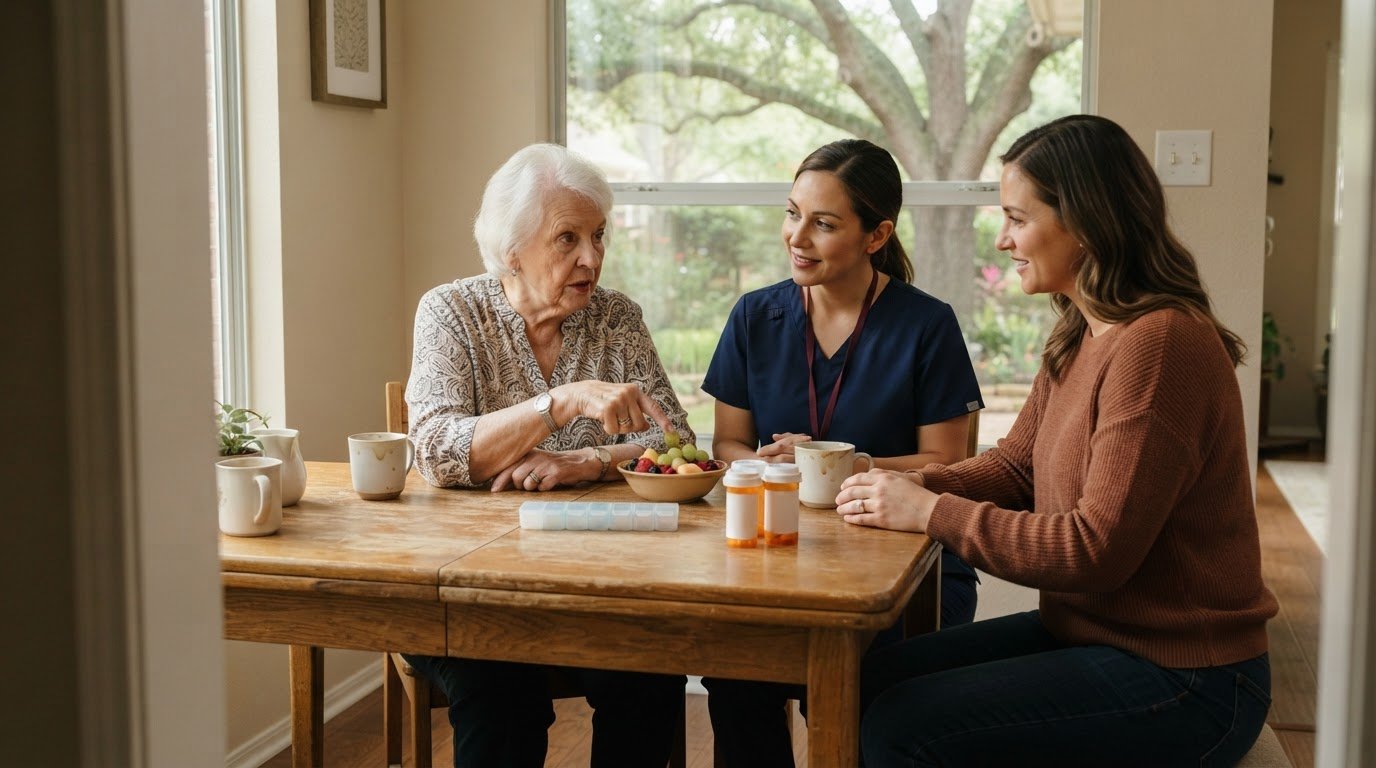
Yes, you can coordinate care from afar by organizing information, staying in regular contact with the person providing day-to-day care, and arranging help close to your loved one. Long-distance caregiving support in Sugar Land can include planning visits, coordinating appointments, keeping key details in one place, and making sure the primary caregiver gets practical support.
It’s understandable to worry that distance makes it harder to know what’s needed or give the person providing daily care a meaningful break. A thoughtful plan can clarify responsibilities while keeping your loved one’s preferences and routines at the center. This guide covers tasks you can handle remotely, ways to make visits more useful, which contacts and records to organize, and how to support the primary caregiver, including arranging respite. You’ll also learn how to recognize changing care needs and coordinate local help when you can’t be there in person.
Key Takeaways
- Use a care coordinator or agreed-upon family contact to help keep distant relatives informed and care details aligned.
- Plan visits around your loved one’s preferences and priorities, making room for time together beyond care tasks.
- Use a phone or video conversation to clarify current needs, responsibilities, and what support would help most.
- Keep important contacts, medication information, and essential documents organized so they’re easier to access and share.
- Ask the day-to-day caregiver what would give them a meaningful break, then explore respite options that fit the family’s needs.
1. What tasks can a long-distance caregiver help with?
Distance doesn’t prevent family members from contributing to everyday care. You can organize appointments, pay bills, arrange deliveries, and stay connected through calls or shared calendars. With your loved one’s permission, you can also join a telehealth appointment remotely. To receive information directly from a healthcare provider, ask about the signed release of information they require.
A care coordinator can serve as a consistent contact for relatives who live far away. Agree on who shares updates, how urgent concerns are communicated, and where the family records follow-up tasks. For example, the coordinator can tell relatives about a change in routine and identify who will make the next call. Families arranging long-distance caregiving support in Sugar Land can use a shared document to keep responsibilities clear.
Learn about daily needs by speaking with your loved one and the person providing day-to-day care. Ask about meals, personal care, medication routines, mobility, and activities the older adult enjoys. During visits, note specific changes and share those observations with the person’s healthcare team. Dementia is progressive, so care needs may change over time. Revisit the plan as routines or abilities shift.
An in-home assessment can help identify which tasks remain manageable and where added support may help. A personalized care plan should reflect the person’s preferences, daily schedule, abilities, and safety needs. If staying at home becomes harder, discuss in-home care or assisted living with your loved one and relevant healthcare providers. The best next step depends on the person’s wishes and support needs.
When choosing a home care agency in Sugar Land, consider whether its services match your loved one’s needs and routines. Ask how the agency shares updates with family members who live elsewhere and responds when support needs change. These details help relatives understand their roles and keep communication focused.
Texas Medicaid home and community-based services have program-specific eligibility requirements. Review the relevant program’s financial and care criteria, since eligibility depends on the program and the individual’s circumstances.
Long-distance caregiving support in Sugar Land can include coordinating appointments, arranging in-home help, organizing deliveries, and keeping relatives connected. A nearby family member, friend, or neighbor can help with local check-ins while distant relatives handle planning and communication.
In Fort Bend County, area agencies on aging may provide or refer older adults to services for meals, chores, and transportation. Family members can also include friends and neighbors in a local support network for practical check-ins.
In-home support can help with personal care and medication reminders. Medical evaluation and treatment should be coordinated with healthcare providers. Families can organize medication questions and details for those conversations, helping the person’s care team understand what support is needed.
2. Planning visits and reviewing safety, food, and medications
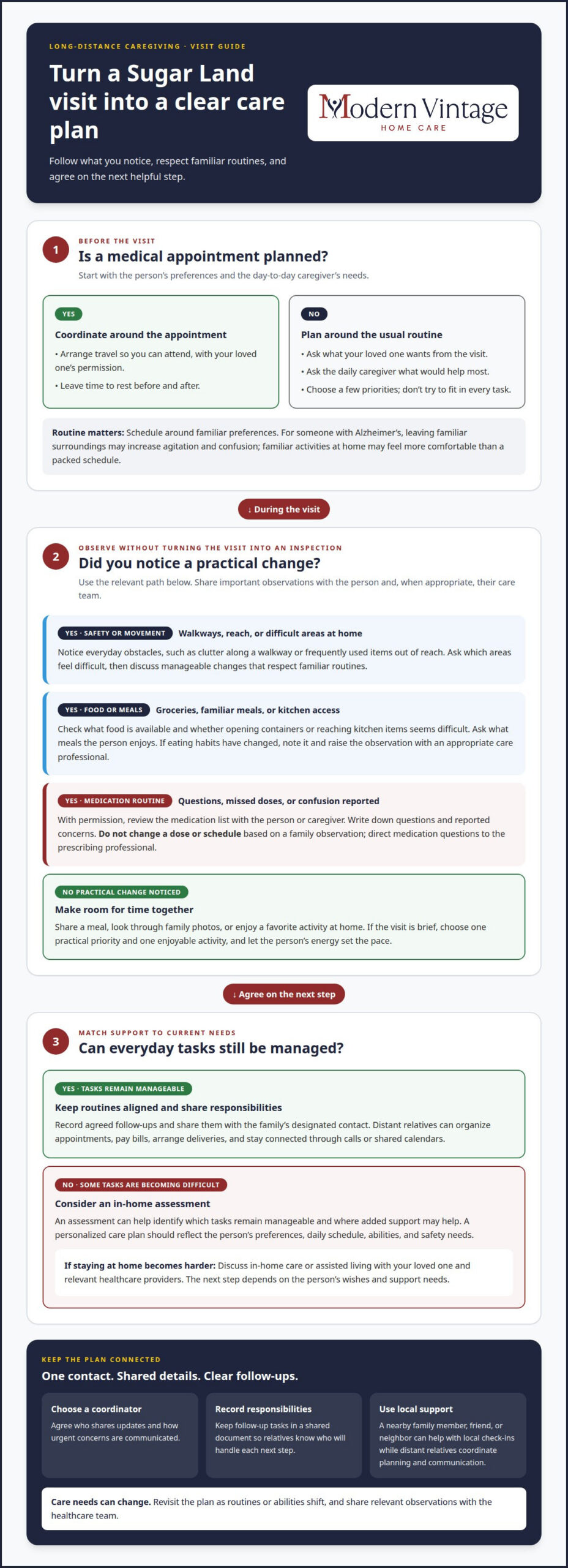
A planned visit can make limited time in Sugar Land more useful. Before traveling, ask your loved one what they want from the visit. If someone provides daily care, ask what would help them most, too. Set a few priorities, such as checking the pantry, discussing appointments, or spending relaxed time together. A short visit may not allow every task, so agree on what matters most.
Schedule around the person’s usual routine and preferences. If a medical appointment is planned, coordinate your travel so you can attend with their permission. Leave time for rest before and after the appointment, especially if travel or unfamiliar plans feel tiring. For someone with Alzheimer’s, leaving familiar surroundings may increase agitation and confusion. Familiar activities at home may feel more comfortable than a packed schedule.
During the visit, notice practical safety concerns without turning your time together into an inspection. Look for everyday obstacles, such as clutter along a walkway or frequently used items placed out of reach. Ask how the person moves through the home and which areas feel difficult. Share relevant observations with the person and their care team, then discuss manageable changes that respect their routines.
Food can offer a useful picture of daily needs. Check which groceries are available, whether familiar meals are being prepared, and whether opening containers or reaching kitchen items seems difficult. Ask what the person enjoys before shopping or planning meals. If eating habits have changed, note the observation and raise it with the appropriate care professional rather than assuming the cause.
Use the visit to organize medication questions and understand the existing routine. With the person’s permission, review the medication list with them or their caregiver, and note any reported missed doses or confusion. Don’t change a dose or schedule based on a family observation. Direct medication questions to the prescribing professional. A written list can help family members discuss medication reminders consistently.
Set aside time for something beyond caregiving tasks. Share a meal, look through family photos, or enjoy a favorite activity at home. These choices keep the visit centered on the person, not just appointments and household needs. If the visit is brief, choose one practical priority and one enjoyable activity, then let the person’s energy set the pace.
After leaving, record agreed follow-up tasks and share them with the family’s designated contact. If daily routines call for support with personal care or medication management, in-home care support can be part of the family’s plan.
3. Initial caregiving discussion by phone or videoconferencing
A first phone or video conversation can turn scattered concerns into a shared starting point. Invite the older person, the day-to-day caregiver, and relatives who will take on specific responsibilities. Ask the older person which topics they’re comfortable discussing and who may receive updates. Choose a quiet time, use a reliable connection, and agree on one person to guide the conversation.
Start with the person’s own view of daily life. Ask what feels manageable, what has become difficult, and what kind of help they would welcome. Use examples such as preparing breakfast, getting dressed, remembering appointments, or staying connected with friends. Avoid focusing only on problems. Their preferences and routines should guide any next steps.
Then invite the primary caregiver to describe the day-to-day picture. Ask which tasks take the most effort, what changes they’ve noticed, and what would make the week easier. A relative who lives far away can listen for practical tasks to take on, such as arranging a delivery or making a follow-up call. Ask specific questions and leave room for the caregiver’s perspective.
Discuss health concerns without trying to diagnose them during the call. With the older person’s permission, record questions for their healthcare provider and decide who will raise each one. A remote relative may join a telehealth visit if the person agrees. Healthcare providers need a signed release of information to share updates directly with a long-distance caregiver, so arrange this before expecting direct updates.
End the conversation by agreeing on a few next steps. For example, one relative can organize appointment details, another can look into a local resource, and the nearby caregiver can share observations. Write down each task, who is responsible, and how the family will report when it’s done. A shared online calendar or group chat can keep commitments visible.
Set a communication rhythm that suits the family without creating more messages than anyone can manage. Decide which channel carries routine updates and which signals an urgent concern. A short video call can help relatives notice changes in mood or engagement, while a text may work better for a simple reminder. Make the arrangement clear to everyone.
Before ending, ask the older person and caregiver whether the plan reflects what they said. Summarize decisions aloud, including unanswered questions and the purpose of the next conversation. If priorities change, revisit the plan together instead of treating the first call as final. This gives distant relatives a practical way to stay involved while keeping the person receiving care at the center.
4. Organizing contacts, medicines, and important documents
A shared, regularly updated document helps distant relatives access the same care details. Keep it somewhere secure that authorized family members can access. Ask the older person who may see sensitive information, then choose one person to maintain the file. A simple spreadsheet can separate contact details, appointments, medications, and follow-up tasks. Date each update so relatives can tell whether the information is current.
Start with a contact list of the people involved in daily care. Include the person’s doctors, other care providers, nearby family, trusted friends, and designated family contact. Record each person’s role and preferred way to communicate. Keep urgent contacts easy to find rather than buried among routine details. With the older person’s permission, share relevant information with relatives who need it to coordinate support.
For medications, maintain a current list using the names and instructions shown in the person’s medication records. Note who helps organize the routine, and record questions for the prescribing professional. Update the list when the care team or family learns of a change. Don’t use a shared document to make medication decisions. Use it to help relatives communicate accurate details and raise questions.
Keep legal, financial, and medical paperwork separate from everyday notes. This may include insurance information, care instructions, and records the family needs to locate quickly. Store documents securely, and make sure the agreed family contact knows how to access them. Avoid sending sensitive records through casual group chats. Instead, use a family-approved method that protects privacy and works for distant relatives.
A useful system also makes responsibilities visible. Create a short task log showing each action, the person responsible, and its status. For example, one relative might arrange a prescription pickup while a nearby friend shares an observation from a visit. Add follow-up details after calls, appointments, or changes in routine. This keeps updates from depending on one person’s memory.
Set a regular time to review the shared information with family members. Check whether doctor contacts still work, medicine details remain current, and important records are easy to locate. When a new caregiver joins, explain the file structure and who maintains each section. The Eldercare Locator can be reached by phone at 800-677-1116.
Keep the system simple enough to use during stressful moments. Use clear file names, plain language, and one agreed location for the latest version. If the older person prefers paper, keep a printed contact and medication list in an accessible place, while storing sensitive documents securely. A clear, shared record helps relatives coordinate care without creating conflicting versions.
5. Supporting the primary caregiver and arranging respite
The person providing daily care may need practical help, not just encouragement. Start by asking, “Which task would give you the most relief this week?” The answer might be picking up groceries, arranging a prescription delivery, or handling appointment calls. Offer a specific task and agree who will take responsibility. A clear offer is easier to accept than a general promise to help.
Distance doesn’t prevent relatives from taking work off the caregiver’s hands. A family member living elsewhere can coordinate deliveries, manage appointment reminders, or update relatives after a check-in. Friends and nearby family can help with errands or visit the person receiving care. Record each commitment in a shared calendar so the primary caregiver doesn’t have to remind everyone separately.
Respite gives the day-to-day caregiver time away from caregiving responsibilities. Depending on the family’s situation, support may come from a volunteer, an in-home aide, or an adult day care program. First, identify the dates or daily tasks when the caregiver most needs a break. Then coordinate the proposed support with the older person’s preferences and usual routine.
A long-distance relative may also travel to Sugar Land and stay with the older person, giving the primary caregiver time off. Before the visit, agree on responsibilities such as meals, companionship, or help with familiar routines. Discuss the plan with the caregiver and older person, then share essential care information with the visiting relative. A clear handoff helps everyone understand who is handling each task.
Stay in regular contact after arranging respite. Ask whether the plan gave the caregiver useful time away and whether anything felt difficult. If a volunteer visit didn’t cover the needed tasks, discuss another option, such as in-home support. If the older person has dementia, share familiar routines and preferences with anyone stepping in to help make the transition more predictable.
Make caregiver support an ongoing part of the family plan, rather than a response only to a crisis. At each check-in, ask what has changed, what remains manageable, and which task relatives can take over next. If the primary caregiver needs a planned break or support during hospice, discuss respite care support as part of the care plan.
Modern Vintage Home Care: Hospice Support & Respite Care
Modern Vintage Home Care offers Hospice Support & Respite Care for families supporting a loved one while giving the primary caregiver time to rest. This may help when relatives live far away, daily responsibilities are becoming difficult to share, or hospice support is part of the family’s needs. For a person living with dementia, Alzheimer’s & Dementia Care can provide relevant support, while Companionship can help maintain connection and familiar routines.
Discussing support can help your family identify the most important needs and how care can fit the person’s preferences. Contact Modern Vintage Home Care to talk about Hospice Support & Respite Care for your family.
Take the Next Step Toward Shared Support
A care plan can evolve as your loved one’s needs and family roles change. Choose one manageable next step, such as deciding who will coordinate updates or discussing what would ease the day-to-day caregiver’s workload. For families seeking long-distance caregiving support in Sugar Land, making that first decision together can turn concern into a clear path forward.
If your family is considering more consistent in-home assistance, Modern Vintage Home Care offers 24-Hour Care. The right conversation can begin with the needs you see now and the routines your loved one wants to preserve. You don’t have to settle every detail before asking about support.
Contact Modern Vintage Home Care to discuss a supportive next step for your family. Each thoughtful decision can help you stay connected and care for one another, even across the miles.
Frequently Asked Questions
Can I set up care without being there in person?
Yes, families can begin arranging in-home support remotely by discussing the older adult’s needs and preferences with a local care provider. A relative can help coordinate the initial conversation and share relevant details with the person’s permission. For example, explain which parts of the day feel difficult and which routines matter most. Keep the older adult involved in decisions, even when distance makes in-person planning difficult.
How will I know how my loved one is doing?
Agree on a communication approach with your loved one and the people involved in their care. Automated check-ins can support safety and adherence to a care plan, while automated medication reminders can prompt someone about their routine. To receive health information directly from a healthcare provider, the provider needs a signed release of information. With permission, a nearby friend or relative can also share observations.
What tasks can a long-distance caregiver help with?
Long-distance caregivers can handle practical and emotional tasks without being physically present. For example, you might coordinate a grocery delivery, organize appointment details, help track bills, or arrange a call with a family member. In-home caregivers can assist with personal care and companionship. Medication reminders can support a routine, but they aren’t medication administration or clinical changes. Choose tasks that match your loved one’s wishes and current needs.
Which home care agencies in Sugar Land provide care coordination for out-of-town family members?
Modern Vintage Home Care provides in-home services in Sugar Land, including Alzheimer’s & Dementia Care, Companionship, Personal Care, and Medication Management. Services also include automated check-ins and medication reminders. Families living elsewhere can discuss the older adult’s support needs and communication preferences as they consider care. Healthcare providers require the person’s signed release of information before sharing medical updates with distant relatives.
How can long-distance caregivers monitor a loved one’s safety and well-being at home?
Combine regular conversations with local observations and support suited to the person’s needs. Automated check-ins can help support safety and following a care plan, while 24-Hour Care provides continuous caregiver presence for seniors who need constant assistance. For a loved one living with cognitive decline, Alzheimer’s & Dementia Care focuses on safety, structured routines, and quality of life at home. Keep the person involved in choices about support.
