
Support at home can make daily life more manageable without taking away the comfort of familiar surroundings. Elder care services in New Territory can include personal care, companionship, medication reminders, dementia support, and care throughout the day or night, depending on an older adult’s needs.
It’s understandable to want dependable care that respects your family member’s routines, preferences, and independence. The right support can ease everyday pressures for families while providing attentive assistance in the place an older adult knows best.
This guide explains what in-home senior care can involve, how support can fit different needs, and what affects care arrangements and cost. You’ll also learn how support with daily routines, companionship, and memory-related needs can help you make a considered decision for your family.
Key Takeaways
- Match in-home support to the older adult’s daily routines, personal care needs, and level of independence.
- Companionship and household help can support comfort and social connection alongside practical daily assistance.
- Respite care can give family caregivers time away while maintaining support for their loved one at home.
- Personalized care plans work best when they reflect changing needs and keep family communication consistent.
- For community aging resources, the Administration for Community Living (Eldercare Locator) can be reached at 1-800-677-1116.
In-home senior care in Sugar Land and New Territory
In Sugar Land and New Territory, in-home support can help older adults remain in familiar surroundings while receiving practical assistance. When comparing elder care services in New Territory, consider daily routines, preferred activities, and the level of help needed. Support may include personal care, companionship, dementia care, or respite for family caregivers.
Non-Medical In-Home Assistance
Non-medical home care focuses on everyday support, not clinical treatment. Depending on an older adult’s needs, assistance may include personal care, companionship, meal preparation, light housekeeping, and medication reminders. A clear care plan can specify the tasks involved and how support will respect privacy, preferences, and independence.
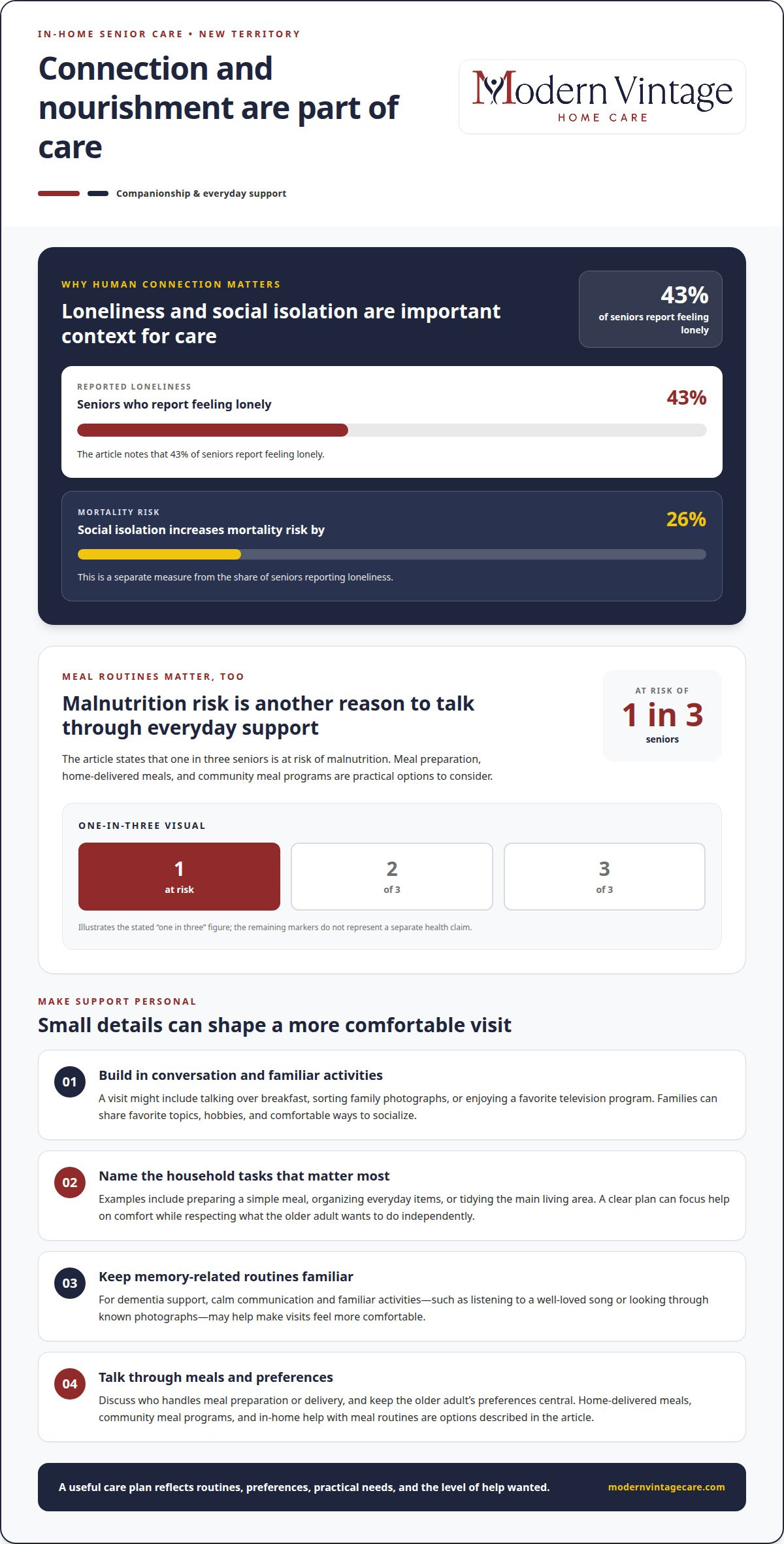
For example, a senior who needs help dressing but prepares breakfast independently may need a different arrangement from someone who benefits from support throughout the day. One in three seniors is at risk of malnutrition. Home-delivered meals and community meal programs can offer practical options; in-home assistance may also support meal routines.
Respite for Family Caregivers
In-home respite care provides temporary support while a family caregiver takes time for work, appointments, or rest. Before a visit, families can share important routines, meal preferences, and activities that help the older adult feel comfortable. Veterans and their families can also review relevant VA benefit information to understand whether a program may help with their circumstances.
For transportation, meals, and respite in Fort Bend County, local program options vary. Modern Vintage Home Care offers transportation, meal preparation, and respite care as part of its in-home support, helping families discuss practical needs such as appointments or meal routines.
What should families look for in an elder care provider in New Territory? Look for a clear care plan, respectful communication, and support matched to specific needs, such as dressing assistance or memory-related routines. Describing a typical day helps clarify expectations and identify what assistance would be useful.
Does Medicare, Medicaid, or long-term care insurance cover elder care in Texas? Medicare and most health-insurance plans typically don’t cover non-medical home care. Medicaid and long-term care insurance coverage depend on program eligibility and policy terms.
How much do assisted living and memory care cost near New Territory? Costs depend on the setting, included services, and level of memory support. Comparing what each arrangement provides helps families understand which factors shape the expense.
What elder care services are available in New Territory, Texas? Options can include non-medical personal assistance, companionship, dementia support, respite, and community meals or transportation. Choosing elder care services in New Territory means matching available support to the older adult’s routines and needs.
Because 1 in 3 seniors is at risk of malnutrition, families may want to include meal routines in conversations about in-home support, alongside personal care and companionship. Discussing who handles meal preparation or delivery can help clarify what assistance is being considered, while keeping the older adult’s preferences central.
Families can use that figure as a reference when comparing the amount of support they are considering, while recognizing that the fit of a care arrangement also depends on the older adult’s needs and routines.
Companionship and household help
Companionship adds conversation and shared activities to an older adult’s day. In New Territory, a visit might include talking over breakfast, sorting family photographs, or enjoying a favorite television program together. These everyday moments can make home feel less isolating while preserving familiar routines and personal preferences.
Forty-three percent of seniors report feeling lonely, and social isolation increases mortality risk by 26%. These figures highlight why regular human connection matters alongside practical help. A companion can listen, encourage participation in enjoyable activities, and notice when someone seems less engaged than usual. Families can describe favorite topics, hobbies, and comfortable ways to socialize.
Household help can make daily life easier when ordinary tasks become tiring. Families might prioritize preparing a simple meal, organizing everyday items, or tidying the main living area. A useful plan names the tasks that matter most, such as setting out breakfast supplies or keeping a favorite reading chair clear. Specific examples keep assistance focused on comfort.
Companionship and household assistance work best when expectations are clear. A family can explain which routines the older adult prefers, which tasks they want to do independently, and what makes a visit feel welcome. One person may enjoy a walk and conversation, while another prefers help organizing mail before a shared activity. The aim is support that respects choice.
Dementia can change how a person responds to conversation, familiar surroundings, and daily activities. Specialized dementia support can use calm communication and familiar routines, such as listening to a well-loved song or looking through known photographs. Families can share meaningful interests and topics that cause distress, helping visits feel more comfortable and less confusing.
On appointment days, support may include helping an older adult prepare to leave home and accompanying them during an outing. Families can describe the appointment, preferred timing, and routines that help the person feel at ease. A written note with those details can make coordination clearer.
When discussing companionship, describe a typical day rather than relying on broad labels. Mention preferred activities, household priorities, conversation needs, and any dementia-related routines. This helps shape support around the individual, not a generic schedule. For families seeking in-home companionship support, a conversation about daily preferences can be a practical next step.
With 43% of seniors reporting feeling lonely, families can make connection a deliberate part of a visit rather than an afterthought. Agree on a small, familiar activity and leave room for the older adult to choose whether to talk, participate, or simply share the space. A gentle question about what felt comfortable can help adjust a future visit without turning companionship into a fixed checklist.
For household help, identify what should be done, what the older adult prefers to do independently, and where items belong. Keep instructions simple and revisit them when routines or preferences change. If a person with dementia becomes unsettled, families can share which familiar topics, songs, or photographs feel reassuring and which subjects may cause distress. Clear communication can help keep visits consistent with the older adult’s choices and comfort.
Respite care for family caregivers
Respite care brings temporary in-home support into a family’s caregiving routine. A family caregiver can use that time for an appointment, work commitment, rest, or another responsibility while the older adult remains at home. Before a visit, outline daily routines, communication preferences, and tasks that need attention. A clear handoff helps the caregiver understand what makes the day comfortable and familiar.
Nutrition deserves a place in that plan. One in three seniors is at risk of malnutrition, according to the provided market fact. Caregivers can note usual meals, preferred foods, and any eating routines that matter. For example, a simple written schedule can show when the older adult typically eats and which foods they enjoy. Family caregivers also benefit from keeping their own meals in view while arranging respite.
Caregiver training should match the older adult’s needs. Experience supporting dementia, assisting with personal routines, or communicating calmly may matter for a particular household. A provider’s screening and preparation processes can help families understand how caregivers are selected and readied for assignments. Clear explanations of a caregiver’s role also help separate non-medical support from clinical care.
Non-medical respite and nurse-guided care have different purposes. A nurse may guide clinical decisions, while an in-home caregiver provides the non-medical services arranged, such as companionship or help with daily routines. Families can share existing care instructions during a consultation to help keep support consistent without confusing respite with nursing care.
Personalized caregiver matching starts with the older adult, not a generic task list. A family might describe whether conversation is welcome, which activities feel familiar, and what causes discomfort. If dementia affects communication, examples of calming phrases or reassuring routines can help a caregiver connect more gently. Schedule needs and the type of assistance required also shape a suitable match.
What qualifications and background checks should an in-home care provider have? Look for clearly explained screening practices and caregiver preparation relevant to the older adult’s needs, such as dementia experience or personal-care support. Modern Vintage Home Care caregivers undergo rigorous background checks, and the care plan should define their responsibilities and the limits of non-medical assistance.
How does a provider arrange an in-home care assessment or placement near New Territory? A consultation can begin with the family describing daily routines, needed support, preferred schedule, and home considerations. Those details guide a personalized care plan and caregiver match.
For respite in New Territory, families can prepare a concise handoff with meal preferences, routines, and key contacts. That practical information helps a caregiver provide continuity while relatives step away for the time they need.
Personalized care plans and ongoing monitoring
A useful care plan turns daily needs into clear, respectful support. It should reflect the older adult’s preferences, living space, routines, and goals. Someone may want help dressing but prefer to prepare their own breakfast. A customized plan can make that distinction clear and explain which tasks a caregiver will assist with.
Personal care often covers activities of daily living, including bathing, dressing, toileting, and grooming. The plan should describe the assistance needed for each activity rather than treating every task alike. One person may need help selecting clothing, while another needs hands-on support with buttons or shoes. These details preserve choice and make visits more predictable.
Mobility assistance should match the person’s abilities and home setup. A care plan might note whether support is needed when standing from a favorite chair, moving between rooms, or preparing to leave home. Clear instructions help a caregiver understand when to offer support or allow the person to move independently. A changed routine or newly difficult transfer is a useful reason to revisit the plan.
Grooming preferences deserve the same attention as other personal-care tasks. The plan can record whether the older adult prefers a morning wash, help brushing their hair, or time to choose an outfit. Familiar products and an established order can make preparation more comfortable. Respectful assistance means explaining each step and allowing the person to do what they can manage safely.
Ongoing communication keeps the plan connected to everyday experience. A caregiver can share practical observations, such as a missed meal, a change in participation, or increased difficulty completing a usual task. These notes give family members useful context for discussing adjustments. They do not replace medical evaluation, but can help families recognize which routines need attention.
Chronic conditions may also shape daily support. Sixty percent of older adults live with at least one chronic disease, according to the provided market fact. For instance, a person managing several daily routines may benefit from a written schedule that clarifies personal-care tasks and preferred activity times. The plan should describe non-medical assistance clearly, without confusing it with clinical treatment.
During a care-plan review, families can consider three practical points:
- Which daily tasks require assistance, and which should remain independent?
- Have mobility, grooming, or preparation routines changed?
- What observations should caregivers share with the family?
Clear answers help keep support personalized as needs evolve, while maintaining the older adult’s dignity and voice.
Finding services for older adults in local communities
Finding support around New Territory starts with defining the older adult’s needs. Consider in-home assistance, community programs, and residential care, then identify which needs matter most. For example, a family may prioritize medication reminders, Alzheimer’s support, transportation, or regular relief for family caregivers.
Older adults and their families in the United States can contact the Eldercare Locator by calling 1-800-677-1116, according to the Administration for Community Living (Eldercare Locator). Families can describe their location and the type of assistance they’re seeking, such as meals or caregiver respite. This gives them a starting point for learning about community resources around Fort Bend County.
How can families verify a Texas elder care provider’s licenses and inspection records? First identify the provider’s exact legal name and service category. Then review the applicable Texas agency’s current records for licensing status and inspection history, where those records apply, and compare the details with the services being considered.
What assisted living and memory care communities are near New Territory? Families can explore residential options in the surrounding Sugar Land and Fort Bend area, considering whether the setting supports daily living or memory-related needs. Location, available assistance, and the older adult’s preferences help determine which type of community merits consideration.
What senior care services does Fort Bend County provide? Local resources may help families locate community-based support, including meal, transportation, and respite options. The Eldercare Locator can help identify relevant resources; specific programs depend on local availability and the older adult’s situation.
For a focused search, write down the support needed and preferred setting before reviewing options. A useful list might include medication reminders, Alzheimer’s care, transportation to appointments, or respite for a family caregiver. Keeping these priorities together makes it easier to compare community resources with in-home support.
Residential care and in-home assistance serve different living arrangements. A person who wants to remain at home may need support with daily routines, while a family considering memory care may be looking for a residential setting. Matching the setting to the older adult’s needs, comfort, and preferences keeps the search centered on the person.
Families seeking continued support at home can explore in-home care options suited to daily routines and memory-related needs.
Families can look at residential communities in the surrounding Sugar Land and Fort Bend area, comparing whether they support daily living or memory-related needs.
Families can use local resources to look for meal, transportation, and caregiver respite support. Available services depend on the older adult’s needs and local options.
Modern Vintage Home Care
Modern Vintage Home Care helps families arrange in-home support that fits an older adult’s needs and routines. Turn to the team when daily personal care becomes difficult, companionship would support connection, or Alzheimer’s and dementia care is needed at home. For families seeking broader coverage, 24-Hour Care is also available. The next step is to share what the older adult needs help with, which routines matter, and what kind of support the family is seeking. These details help guide a conversation about an appropriate care arrangement, without losing sight of the person’s comfort and independence.
Contact Modern Vintage Home Care to discuss in-home support for your family.
Choose a next step that fits your family
The next step doesn’t need to settle every future care decision. Start by identifying the support that would make the greatest difference now, then discuss how it can respect your loved one’s routines and preferences. As needs change, the care arrangement can be revisited with the family’s observations in mind.
For families considering elder care services in New Territory, Modern Vintage Home Care offers Alzheimer’s & Dementia Care, 24-Hour Care, and Companionship. These options can support different needs at home, from memory-related assistance to a caring presence and help across the day and night. A conversation can help clarify what support may fit your family’s current circumstances.
Take the next step at a pace that feels right. Contact Modern Vintage Home Care to discuss care for your loved one. A thoughtful plan can begin with one clear conversation.
Frequently Asked Questions
Which home care agencies serve seniors in New Territory and nearby Sugar Land?
Modern Vintage Home Care provides in-home support in Sugar Land, Missouri City, and SW Houston, including personal care, medication reminders, companionship, and Alzheimer’s and dementia care. Describe the older adult’s daily routines and the assistance your family needs during a no-obligation care consultation. The team can discuss a personalized care plan and caregiver selection based on compatibility, skills, and personal preferences.
