
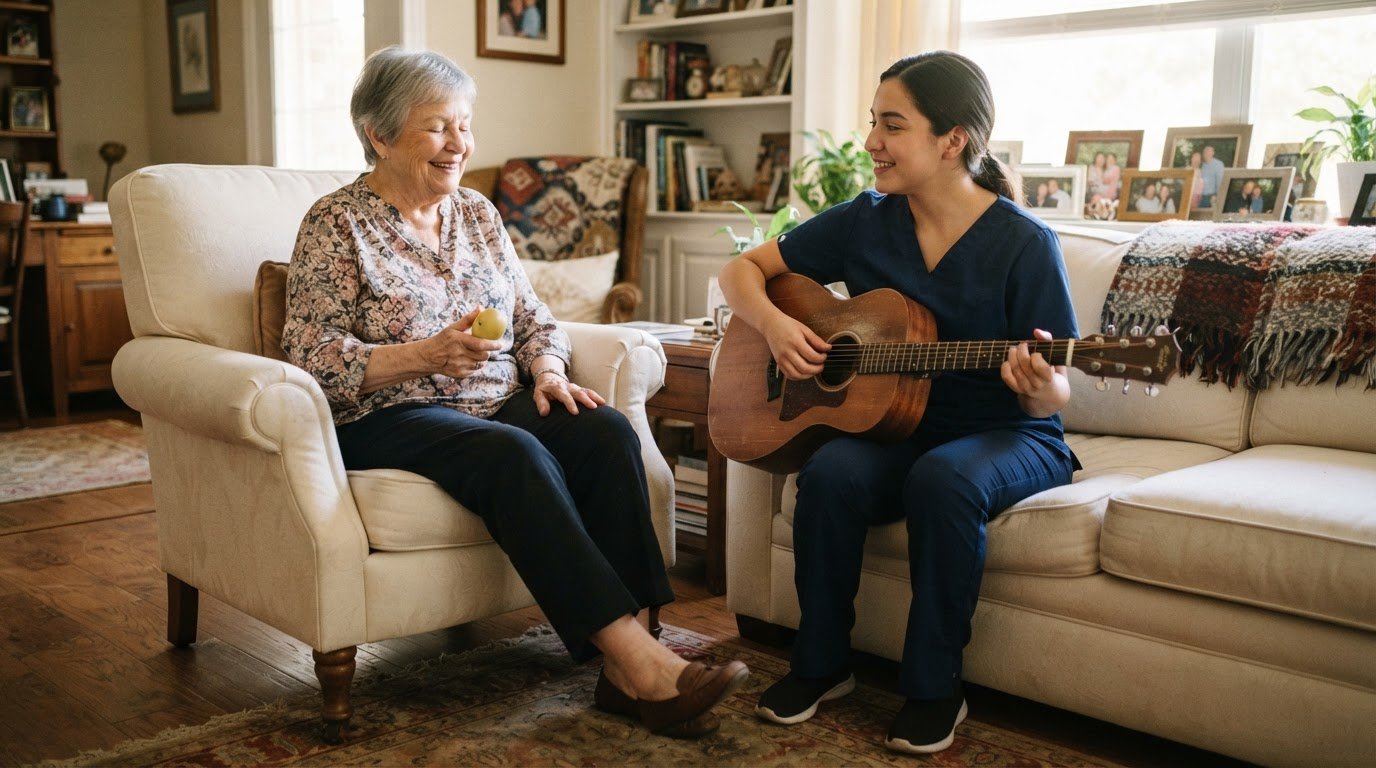
Music can do more than fill a quiet room. At home, music therapy for Alzheimer’s patients can involve familiar songs, singing, gentle movement, and simple instruments to encourage communication and emotional well-being. Choose activities that feel familiar and enjoyable, and adapt them to the person’s response.
When conversation becomes difficult, a song can offer another way to share a moment. Music may engage memory, emotion, and movement, but each person responds differently.
This article explores how music can support brain health and mood, and how to make listening, singing, and moving together feel comfortable at home. You’ll find practical activity ideas, ways to notice what your loved one enjoys, and gentle guidance for keeping the experience calm, personal, and respectful.
Key Takeaways
- Choose familiar songs connected to your loved one’s youth or meaningful life events, and notice which ones invite a positive response.
- When words are difficult, singing, humming, clapping, or gentle swaying can offer another way to share a moment.
- Use soothing music for a calmer atmosphere or livelier songs to invite energy, and stop a song if it causes distress.
- Simple activities such as matching songs to memories or playing easy percussion instruments can encourage participation and connection.
- Keep music sessions comfortable by reducing competing noise, choosing a suitable volume, and following your loved one’s cues.
Music Therapy Tips for Alzheimer’s and Dementia
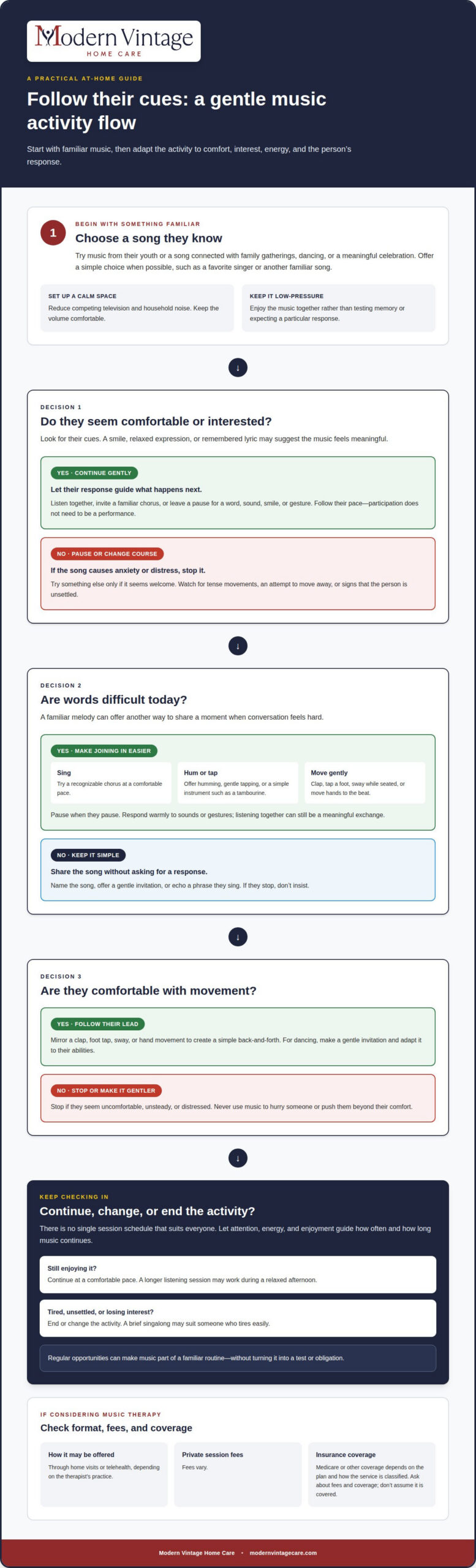
Begin with music your loved one knows, and notice their response rather than testing their memory. A familiar tune can be an enjoyable way to connect, even when conversation feels difficult.
Familiar Music and Autobiographical Memories
A familiar song may connect someone with memories from earlier in life. Start with music from their youth, including songs associated with family gatherings, dancing, or meaningful celebrations. Listen together and invite conversation without expecting a particular memory. A smile, relaxed expression, or remembered lyric can suggest the music feels meaningful.
Choosing Enjoyable Music
Choose music the person enjoys, and offer a simple choice when possible, such as a favorite singer or another familiar song. Their response matters more than remembering the title or lyrics. If a song seems to cause anxiety or distress, stop it and try something else.
As Alzheimer’s progresses, keep the activity manageable. Try a recognizable chorus, humming, or gentle tapping instead of asking someone to recall details. A phone or speaker can play familiar recordings; printed lyrics or a simple tambourine may invite participation. Reduce competing television and household noise, and keep the volume comfortable.
Finding and Funding Home Music Therapy
Music therapy may be offered through home visits or telehealth, depending on the therapist’s practice. Private session fees vary, and Medicare or other insurance coverage depends on the plan and how the service is classified. Ask about fees and coverage before arranging sessions, and don’t assume music therapy is covered.
Session Frequency and Length
There is no single session schedule that suits everyone. Let attention, energy, and enjoyment guide how often and how long a music activity continues. A brief singalong may suit someone who tires easily, while a longer listening session may work during a relaxed afternoon. End or change the activity if the person loses interest, seems tired, or becomes unsettled. Regular opportunities can make music part of a familiar routine without turning it into a test or obligation.
Communication through singing and movement
A familiar melody can offer another way to communicate when everyday conversation becomes difficult. Caregivers can use singing and gentle movement to share attention, express emotion, and invite participation without expecting perfect words.
Start with a song the person enjoys, then sing its chorus together at a comfortable pace. If the lyrics are hard to follow, humming or repeating a short phrase still allows participation. Leave pauses for your loved one to respond with a word, sound, smile, or gesture. The aim is shared expression, not a performance or memory test.
Singing may support language-based communication, and familiar lyrics can sometimes be easier to join than everyday conversation. Keep your words simple: name the song, offer a gentle invitation, or echo a phrase the person sings. If they stop, don’t insist. Listening together can still be a meaningful exchange without a spoken response.
- Sing together: Choose a recognizable chorus and let the person set the pace.
- Hum or tap: Offer these options if singing words feels difficult.
- Follow their lead: Pause when they pause, and respond warmly to gestures or sounds.
Movement offers another way to connect. Someone who doesn’t join the lyrics may still clap, tap a foot, sway, or move their hands to the beat. Caregivers can mirror these movements to create a simple back-and-forth exchange. Rhythm may also accompany walking, but never use music to hurry someone or push them beyond their comfort.
For dancing, make a gentle invitation and adapt the activity to the person’s abilities. Seated swaying or hand movements can make music enjoyable without requiring someone to stand. If they choose to move around, watch their cues and stop if they seem uncomfortable, unsteady, or distressed. The best activity is one they can join willingly.
To reduce overstimulation, choose one song, keep the volume comfortable, and turn off competing television or media. Watch for signs of distress, such as tense movements or an attempt to move away, and stop the music if they appear. If sound seems uncomfortable or the person struggles to hear, lower the volume and don’t press headphones against them.
When movement or communication becomes harder to manage alone, in-home Alzheimer’s and dementia care can provide support with everyday routines while preserving opportunities for connection.
Music therapy may help people with dementia express themselves through song and improve ordinary speech over time. Singing can also support language-based communication, while music’s rhythm may help people walk better. These possibilities do not require a polished performance; participation can be as small as a hum or a response to the beat.
Caregivers can encourage safe movement with music through dancing, clapping, foot-tapping, or humming. Music therapy for people with dementia can include movement activities such as dancing or rhythmic exercises. In memory care, gentle clapping, tapping, or swaying along to music can support balance, flexibility, and circulation. Music can help people connect after verbal communication becomes difficult.
Emotional well-being and mood
Music can shape the feel of a moment by offering comfort, energy, or a familiar focus. Notice how each person responds, then choose songs that suit their mood and the activity ahead.
Using Music to Influence Mood
Music may support emotional well-being by creating a calmer atmosphere or encouraging a brighter mood. A quiet, soothing song might accompany a tense afternoon, while an upbeat favorite may invite someone to sing along. These moments can make shared time feel more comfortable and connected.
For someone living with Alzheimer’s disease, agitation can make everyday routines harder. Calm music may redirect attention to a familiar sound and offer a reassuring focus. Keep the volume comfortable and reduce competing noise, such as television, so the song doesn’t add to sensory demands.
Matching Music to Mood
Match music to the person’s mood by choosing a song for how they seem now, rather than following a fixed playlist. If someone appears restless, try a quiet, steady favorite; if they seem withdrawn, offer a lively song they’ve enjoyed before. Watch their expression, movement, and engagement, and let their response guide what comes next.
Keep two kinds of music ready: relaxing selections and energizing favorites. Offer one song, then give the person time to respond before playing another. A smile, relaxed posture, tapping, or singing may suggest the choice feels positive. Tension, turning away, or signs of distress mean it’s time to stop or change the music.
Music can also help caregivers make transitions feel less abrupt. Before a familiar daily activity, play a calming song the person enjoys, then speak gently and explain what is happening. If the music appears to increase anxiety instead, turn it off and allow a quiet pause. The response matters more than completing the playlist.
Keep the activity person-centered: a song that comforts one person may upset another, even if both know it well. Consider their preferences and the feelings associated with each selection. A meaningful song can bring joy, but it may also stir sadness. If that happens, acknowledge the emotion without pressing for an explanation, and offer another familiar sound when they’re ready.
Music isn’t a cure for Alzheimer’s or a substitute for personal care. It can, however, offer caregivers a practical way to support emotional connection during daily life. By noticing which songs ease agitation, invite participation, or help someone settle, caregivers can adapt music to the moment instead of expecting one playlist to suit every need.
How can music support a person with dementia?
Music engages memory, emotion, and movement, offering another route to connection when conversation changes. Its effect depends on the person, the song, and the moment.
Musical Memory in Dementia
Musical memory is the ability to recognize or respond to songs despite difficulty recalling other information. A familiar melody may bring back feelings or memories connected to a person’s earlier life. Caregivers can begin with music linked to experiences between ages 10 and 30, then observe the response rather than quiz the person about names or dates.
A song from a wedding, birthday, or family gathering may carry personal meaning beyond its lyrics. Even if someone can’t explain the memory, singing, smiling, or becoming more engaged may suggest the tune feels familiar. Let the person lead: quiet listening can be just as meaningful as singing along.
Music, Emotion, and Motor Skills
Music brings together memory, emotional responses, and movement, which can make it engaging in dementia care. A recognizable chorus may invite singing, while a steady beat can prompt tapping or clapping. These responses give caregivers a way to share attention and connection without relying only on spoken conversation.
Try one activity at a time. Play a familiar song and offer a tambourine, or invite the person to tap a hand against their knee. Keep movements gentle and follow their pace. The goal is participation and enjoyment, not practicing a skill or completing an exercise program.
Evidence for Music Therapy
Music-based interventions have been associated with reduced agitation and improved communication and caregiver relationships for people with dementia. These findings support music as a useful way to encourage engagement, but they don’t mean every person will respond alike. Music therapy is distinct from simply playing a song: a therapist can shape an individualized plan around cognitive abilities, emotional state, physical health, and musical history.
Playing a favorite recording at home can bring enjoyment and a shared moment. A planned therapeutic approach adds specific goals and activities, such as singing to encourage expression or using rhythm to invite movement. Neither approach guarantees a particular result. Notice whether the person seems comfortable, engaged, or distressed, and adapt accordingly.
Consider playing a familiar song during an ordinary afternoon. Listening together may create a positive moment; a music therapy program may use that song as part of a tailored activity. In either case, the person’s response guides what happens next. Choose the approach that respects their preferences and supports connection in the moment.
Singing familiar songs may support memory recall and emotional well-being, including for people with limited speech. Familiar music may also prompt autobiographical memories and emotion, even in advanced stages.
Music therapy activities for dementia care
At home, music activities offer chances to participate without relying on conversation alone. Singing, listening, simple instruments, and song-based games each provide a different way to engage someone with dementia. For caregivers exploring music therapy for Alzheimer’s patients at home, choose an activity that fits the person’s interests and abilities.
Sing familiar songs together. Choose a well-known song and invite your loved one to join the chorus. If the words don’t come, humming or listening still counts as participation. Printed lyrics can offer a visual cue, but keep them optional. Pause between verses to leave room for conversation, a smile, or another response.
Try a song-and-memory match. Play a familiar tune and invite the person to connect it with a singer, place, or life event. Adapt “Name That Tune” by offering a choice between songs rather than asking for an answer. The aim is engagement, not testing recall. If guessing feels frustrating, simply listen together.
Add a simple instrument. A drum, tambourine, or maraca lets someone join through rhythm when singing feels difficult. Offer one instrument at a time, demonstrate a gentle beat, and let the person choose whether to copy it or make their own sound. Keep the activity flexible; there’s no need for a complex pattern.
Make a shared listening activity. Choose a recording connected to a favorite singer or meaningful event, then listen together without rushing to fill every pause. Ask an easy, open prompt, such as “Would you like to hear it again?” If conversation doesn’t follow, listening together can still support connection.
To make any activity easier to follow, turn off the television and reduce competing noise. Keep the music at a comfortable volume, and avoid layering several sounds at once. A quieter setting may help someone focus on the song, lyrics, or instrument rather than sorting through distractions.
Let the person’s response shape the activity. If a game feels confusing, switch to familiar listening; if an instrument draws interest, allow more time to explore its sound. Music can encourage cognitive engagement, but the activity should remain enjoyable rather than feel like a test or lesson. This person-led approach keeps music therapy for Alzheimer’s patients at home focused on connection, not performance.
Caregivers can weave a brief music activity into an ordinary shared moment, such as listening while sitting together. There’s no need to turn every song into a formal program. If planning enjoyable activities alongside dementia care feels difficult, connect with us about Alzheimer’s and dementia care.
Modern Vintage Home Care: Alzheimer’s & Dementia Care
Modern Vintage Home Care provides Alzheimer’s & Dementia Care for families who need support beyond music activities at home. If changes in memory make daily routines harder to manage, personalized care can help address practical needs while respecting the person’s preferences and dignity.
Companionship offers a caring presence during shared moments, while Personal Care supports everyday personal needs. Families in Sugar Land, Missouri City, and SW Houston can turn to Modern Vintage Home Care for in-home Alzheimer’s and dementia care alongside familiar routines, including music, conversation, and other meaningful activities.
For thoughtful support with Alzheimer’s and dementia care at home, contact Modern Vintage Home Care.
Make Room for More Moments of Connection
Music doesn’t need to be a formal activity to matter. A song shared during a quiet afternoon can create space for a smile, a gesture, or simply being together. As you explore music therapy for Alzheimer’s patients at home, let your loved one’s preferences guide what feels comfortable, and allow connection to take its own shape.
Caregiving needs can also change over time. Modern Vintage Home Care offers Alzheimer’s & Dementia Care, 24-Hour Care, and Companionship to support individuals and families at home. If additional help with daily care would make things easier, reach out to discuss your family’s needs.
Contact Modern Vintage Home Care to talk about support. Small shared moments can still bring closeness to everyday life.
Frequently Asked Questions
How Else Does Music Therapy Benefit Brain Health?
Music engages brain areas involved in memory, emotion, and movement, creating opportunities for active participation. In a structured session, a trained music therapist can tailor activities to someone’s abilities and musical history. Simply playing music can also bring enjoyment, but it doesn’t include the same individualized therapeutic planning. Neither approach should be viewed as a way to stop or reverse Alzheimer’s disease.
How can caregivers use music therapy at home for someone with Alzheimer’s?
At home, music therapy for Alzheimer’s patients can start with a listening moment connected to an existing routine, such as settling in before lunch. Offer a choice between two recordings, then give the person time to respond. A family member can keep a brief note of which music seems welcome and which activities invite participation. If the person turns away or loses interest, pause rather than insist.
What are the benefits of music therapy for Alzheimer’s symptoms and quality of life?
Music activities may support communication, emotional expression, and social connection, and may reduce agitation for some people. A shared song can also give caregivers and loved ones a positive way to spend time together. Its value may be a comfortable interaction in the moment, not a change in the disease itself. Notice whether the person appears more engaged or settled, and adapt accordingly.
What types of music and activities work best for people with Alzheimer’s?
Choose music the individual recognizes and enjoys. Someone who likes rhythm may prefer tapping along, while someone who enjoys singing may engage with a familiar chorus. Try one activity at a time, such as listening, humming, or using a simple percussion instrument. Reduce competing sounds so the music remains easy to follow.
How can caregivers choose familiar music tailored to a person’s preferences?
Start with what family members know about the person’s favorite artists, genres, and meaningful occasions. A song associated with a joyful family gathering may feel more personal than a general playlist. Introduce a selection and watch for cues such as singing, relaxed posture, or turning away. Keep a short list of songs that receive a comfortable response, and set aside music that causes distress.
