
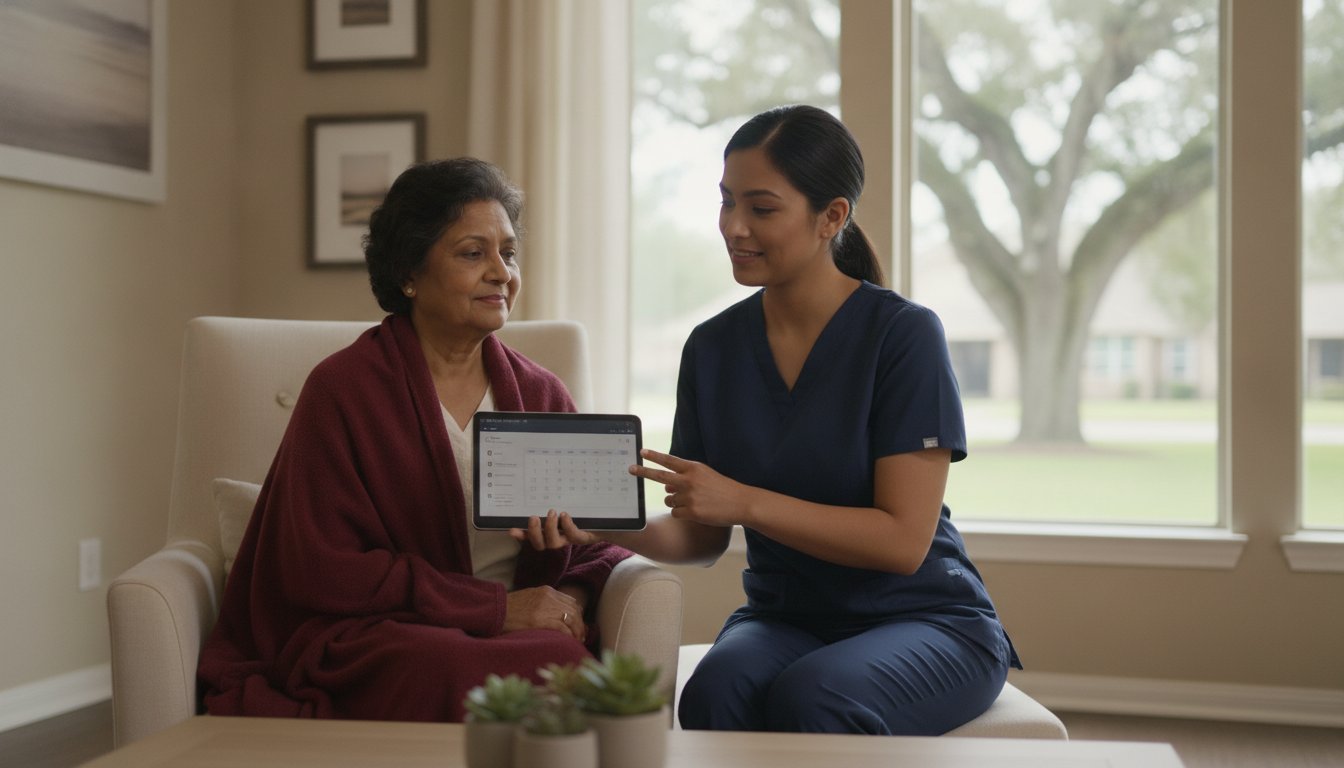
In Harris County, nearly 100,000 seniors recently reported needing medical care but failing to receive it, a gap that often triggers the revolving door of hospital readmissions. Bringing a loved one home should feel like a relief, yet for many families, the reality is a blur of complex discharge paperwork and the constant fear of a missed medication dose. If you’re feeling overwhelmed by the logistics of post-hospital care for seniors Houston offers, you aren’t alone. It’s difficult to provide constant support when you’re balancing a career or navigating the gridlock on I-10 just to pick up a prescription.
We understand that you want more than just a set of instructions; you want the peace of mind that comes with a professional watching for red flags. This 2026 guide provides a clear roadmap to manage the transition from hospital to home safely. You’ll learn how a proactive 72-hour intervention strategy, combined with automated safety technology, can reduce the risk of returning to the emergency room. We’ll explore how personalized care plans and routine check-ins create a stable environment where your loved one can truly recover without the stress of managing every detail yourself.
Key Takeaways
- Identify why the first 30 days after discharge are the most high-risk period and how to stay proactive against potential setbacks.
- Learn how to manage the critical 72-hour window by monitoring for red flags like sudden confusion or mobility changes.
- Discover the best ways to coordinate with discharge planners to arrange effective post-hospital care for seniors Houston families rely on for safety.
- Understand how to tailor the home environment and care routines for specific recovery paths, such as stroke or post-surgical healing.
- Find out what to look for in a licensed local agency to ensure your loved one has a steady advocate during their transition.
Navigating the Transition: What is Post-Hospital Care for Houston Seniors?
Post-hospital care is a specialized form of transitional support designed to help a person move safely from a clinical setting back to their own residence. While doctors focus on the surgery or the acute illness, this supportive care focuses on the whole person. It fills the gaps that often appear once the 24-hour medical staff is no longer present. For families looking into post-hospital care services, it’s about creating a safety net that catches the small details before they become big emergencies. This bridge between the hospital and the home is where true healing begins.
The first 30 days after leaving a Houston facility are undeniably the most precarious. During this month, the body is still fragile, and the mind is often clouded by the physical and emotional stress of a hospital stay. Without a steady advocate to manage the transition, even the best medical outcomes can quickly unravel. Professional caregivers serve as the essential link, ensuring that the discharge plan doesn’t just sit on a kitchen counter but is actively followed every single day.
The Hidden Risks of Hospital Readmission
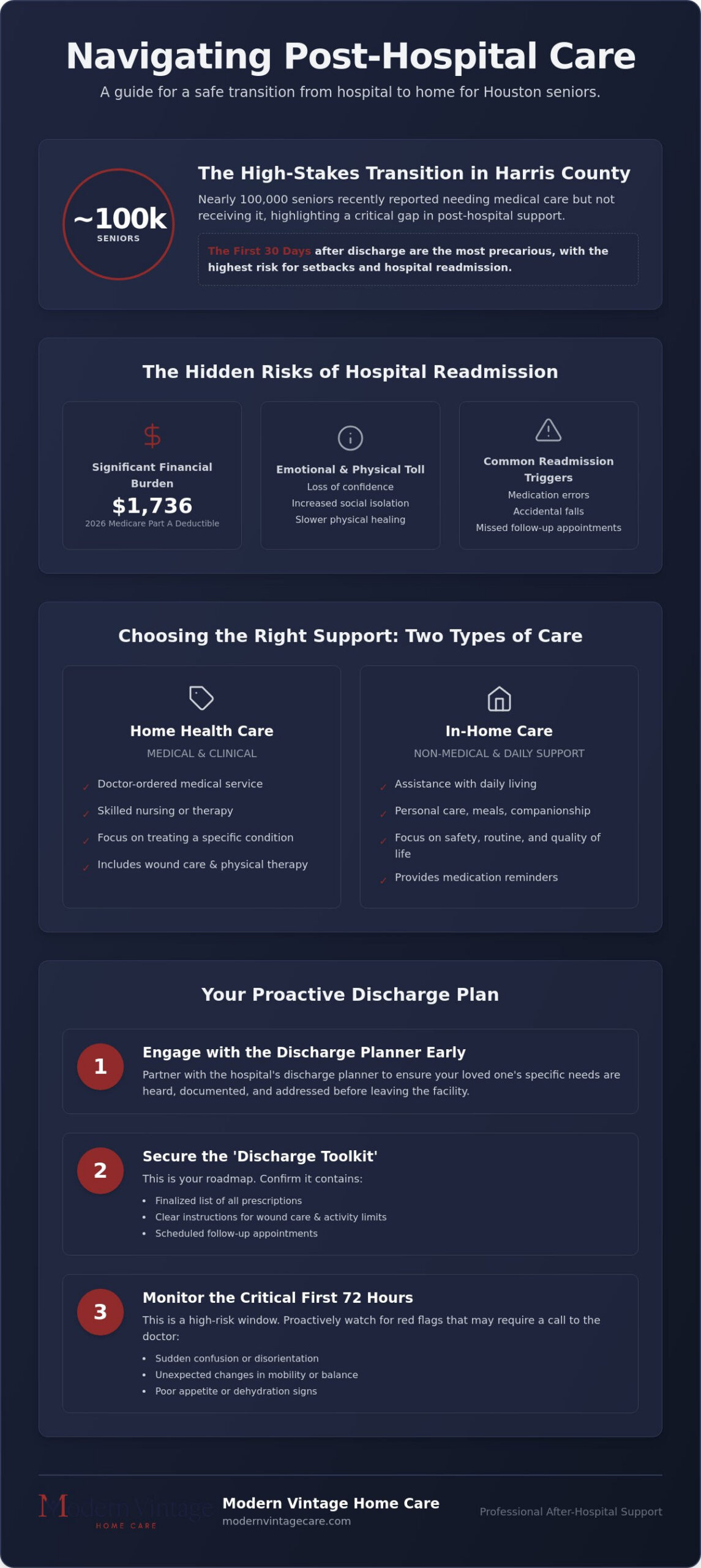
Many seniors return to Houston hospitals within weeks because they struggle with basic recovery tasks. Common triggers include medication errors, accidental falls, or simply failing to follow up with a primary care physician. In 2026, the Medicare Part A deductible for hospitalizations is $1,736, making every return visit a significant financial burden. Beyond the money, there’s an emotional toll. Each readmission can lead to a loss of confidence and increased social isolation, which slows down physical healing. Having a professional present to watch for red flags like sudden confusion or poor appetite can prevent these costly setbacks.
Home Health vs. In-Home Care: Making the Right Choice
Choosing the right support depends on the specific needs of your loved one. Home health is a medical service, typically ordered by a doctor, that involves skilled nursing or physical therapy to treat a specific condition. In contrast, in-home care provides the daily, non-medical assistance that makes life manageable. This includes help with personal care, preparing meals, and providing companionship. Identifying which service fits your situation is the first step in successful post-hospital care for seniors Houston families can trust.
- Home Health: Focuses on clinical recovery, wound care, and physical therapy.
- In-Home Care: Focuses on safety, routine, medication reminders, and daily quality of life.
Professional caregivers act as a bridge, ensuring that the instructions from hospital staff are followed while keeping the family informed of any changes. When medical and non-medical services work together, they create a comprehensive layer of protection for the individual. Effective recovery happens when clinical expertise meets the gentle, daily support of a dedicated caregiver.
Step-by-Step: Preparing for a Safe Discharge to Your Houston Home
Successful post-hospital care for seniors Houston families plan for begins long before the car pulls into the driveway. Whether you are navigating the halls of the Texas Medical Center or a local community hospital, the discharge planner is your vital partner. These professionals are responsible for coordinating the move, but they often work under tight timelines. By engaging with them early, you can ensure that your loved one’s specific needs are heard and documented. Use this Post-Acute Care Guide to understand the various levels of support available and how to advocate for the most appropriate setting for your relative’s recovery.
A primary tool for this transition is the ‘Discharge Toolkit.’ This isn’t just a folder of papers; it’s your roadmap for the coming weeks. It should contain a finalized list of prescriptions, clear instructions for wound care or activity limits, and a scheduled list of follow-up appointments. If the hospital doesn’t provide a specific timeline for these appointments, ask the nurse for a recommended window. Having these dates set before you leave the building prevents the stress of trying to coordinate care while also managing daily recovery tasks at home.
Logistics in a city as large as ours require extra attention. Houston traffic on I-10 or the 610 Loop is notoriously unpredictable, and a long, stressful commute can be physically taxing for a senior who just left a hospital bed. Arrange for transportation that allows the senior to remain comfortable and supported. If managing the commute to follow-up appointments or pharmacy runs seems daunting, our concierge services can provide the reliable transportation and errand support your family needs during this sensitive time.
The Pre-Discharge Checklist
Before you sign the final paperwork, walk through a few essential questions with the medical team. Ask about specific ‘red flags’ that would require a call to the doctor versus a trip to the emergency room. You should also verify the new medication list against what is already in the home medicine cabinet. If there are duplicates or conflicting instructions, resolve them immediately. Finally, ensure that any durable medical equipment (DME), such as walkers or shower chairs, has been delivered and assembled so it’s ready for use the moment you arrive home.
Home Safety Modifications for Recovery
A safe recovery environment is one that minimizes the risk of accidents. Start by removing common fall hazards like throw rugs, loose cords, or cluttered walkways. Improving lighting is equally important; place nightlights in hallways and bathrooms to assist with nighttime navigation. If the senior’s mobility is limited, consider setting up a ‘recovery station’ on the ground floor to avoid unnecessary trips up and down stairs. For a more detailed safety audit, you can refer to our fall prevention for seniors at home guide to ensure every room is prepared for a safe return.
The Critical First 72 Hours: Managing Recovery and Safety at Home
The 72 hours following a hospital discharge represent a critical crossroads for recovery. While the initial return home is a significant milestone, it is also the window where most complications begin to surface. If this period is managed with a structured routine, the foundation for long-term healing is set. Whether your loved one is recovering from a minor procedure or a major surgery, their needs during these three days are intense and require constant vigilance. This is why effective post-hospital care for seniors Houston families choose often prioritizes a high-touch approach during this initial phase.
Establishing a steady rhythm of rest, nutrition, and hydration acts as a bridge to independence. By being proactive rather than reactive, you ensure that the recovery stays on track and the risk of returning to the hospital remains low. Utilizing modern technology can further enhance this safety net. For instance, automated check-ins provide 24/7 peace of mind, ensuring that even when a family member is at work or running errands, a reliable system is monitoring for stability.
Day 1: The Arrival and Stabilization
The first day is often defined by the exhaustion phase. The physical effort of leaving the hospital and the stress of navigating Houston traffic can leave a senior completely depleted. Upon arrival, the primary goal is stabilization. This means settling them into a pre-prepared recovery zone where essentials like water, phone, and call buttons are within easy reach. The first medication pass is perhaps the most important task of Day 1. You must ensure the new prescriptions are administered exactly as directed to maintain pain control and prevent infection. If the transition feels overwhelming, automated medication reminders can provide an extra layer of security to ensure no doses are missed.
Day 2 & 3: Monitoring and Adjusting
As the initial adrenaline of returning home fades, Day 2 and Day 3 require close observation for red flags. You should watch for sudden confusion, a rising fever, or changes in mobility that could indicate a setback. Hydration is another priority; tracking fluid intake helps prevent dehydration, which is a common but avoidable cause of readmission. Maintaining personal hygiene during these days does more than just prevent infection; it boosts morale and helps the individual feel like themselves again. For families who need a helping hand but don’t require a full 24-hour shift, Quick Care Services offer short, professional check-ins to monitor progress, assist with personal care, and provide much-needed peace of mind during this sensitive time.
Specialized Post-Hospital Needs: From Stroke Recovery to Medication Management
Every recovery journey is distinct, demanding a strategy that respects the specific physical and cognitive hurdles your loved one faces. A senior returning home after a hip replacement needs help with mobility and wound observation, while someone recovering from a respiratory illness may require more focus on energy conservation and hydration. Effective post-hospital care for seniors Houston residents rely on adapts to these nuances, ensuring that the support provided is never generic. Whether the challenge is limited mobility or cognitive fatigue, a dedicated caregiver provides the steady hand needed to move forward safely.
In the context of post-hospital care for seniors Houston services provide, caregivers act as essential partners to physical and occupational therapists. While the therapist sets the goals, the caregiver provides the daily encouragement needed to reach them. This might include assisting with range-of-motion exercises or ensuring the senior practices safe walking techniques throughout the day. Consistent movement is often the difference between a quick recovery and a permanent loss of independence.
Nutrition also plays a central role in the repair process. If a senior is prescribed a specific recovery diet, professional meal preparation ensures they receive the correct balance of vitamins and minerals without the stress of cooking. Whether it is a heart-healthy menu or a soft-food diet, having a professional manage these details prevents nutritional gaps and keeps the body strong enough to heal.
Home Care for Stroke Recovery: A Targeted Approach
Recovery after a stroke requires a high level of patience and specialized attention. Our caregivers assist with speech exercises and cognitive stimulation to help rebuild neural pathways in a comfortable, low-stress setting. Safety is the priority when one-sided weakness is present; we utilize proper transfer techniques to prevent falls and skin breakdown. We also stay vigilant for secondary symptoms, ensuring that any subtle changes in health are reported to the medical team immediately.
The Vital Role of Medication Management
Managing multiple prescriptions is one of the most complex tasks families face after discharge. Our automated medication reminders are designed to eliminate the risk of double-dosing or missed tablets, which are leading causes of readmission. We also coordinate with local Houston pharmacies for home delivery, so you never have to worry about navigating traffic to pick up a refill. For a deeper look at how we keep your loved one safe, please see our medication management for elderly guide. If you need help coordinating these complex needs, our team is ready to help you build a personalized care plan today.
Selecting Professional After-Hospital Support in Sugar Land and Houston
Choosing the right partner for post-hospital care for seniors Houston families trust involves more than just checking a list of tasks. It requires an advocate who understands the local healthcare landscape and the specific stress of a medical transition. When you evaluate an agency, verify that they hold a Home and Community Support Services Agency (HCSSA) license from the Texas Health and Human Services Commission. This ensures they meet the state’s rigorous health and safety standards. Beyond the legal requirements, look for a team that prioritizes a personalized care plan rather than a generic, one-size-fits-all model. A plan tailored to your loved one’s unique routine is the most effective way to ensure a smooth return to independence.
As the initial recovery phase evolves, the focus naturally shifts from clinical monitoring to long-term wellness. A professional caregiver helps manage this transition by gradually adjusting the level of support as your relative regains their strength. This approach prevents the ‘recovery plateau’ where progress stalls due to a lack of consistent encouragement. By maintaining a steady routine of social engagement and physical activity, you aren’t just preventing a readmission; you’re improving their overall quality of life. It’s about moving from a state of vulnerability to one of sustained health.
Why a Local Houston Agency Matters
A local agency offers distinct advantages that national chains often overlook. We understand the specific discharge protocols at major regional medical centers and community hospitals across the area, which allows us to coordinate seamlessly with hospital staff before your loved one even leaves the building. Being rooted in the community means we’re familiar with Fort Bend County resources and can efficiently handle concierge tasks like errand running or pharmacy pickups without getting delayed by local traffic patterns. If your loved one is a former service member, we can also help you navigate veterans home care benefits Sugar Land families utilize to maximize their support.
Starting Your Recovery Journey with Modern Vintage Home Care
At Modern Vintage Home Care, we believe that the best recovery happens when the caregiver is a true match for the senior’s personality and spirit. Our initial assessment process is thorough, focusing on finding a companion who brings a sense of calm reassurance into the home. We blend this heartfelt human connection with proactive technology, such as automated check-ins, to ensure a high standard of reliability. This dual approach provides the safety of professional monitoring with the warmth of a dedicated partner. Contact us today for a personalized post-hospital care consultation.
Empowering a Confident Return Home
Transitioning from a clinical setting to the comfort of home is a journey that requires both careful planning and steady patience. By focusing on the critical first 72 hours and ensuring seamless coordination with hospital discharge planners, you can significantly reduce the risk of unexpected setbacks. Effective post-hospital care for seniors Houston families choose involves more than just observation; it is about active engagement in the recovery process through precise medication management and specialized support for conditions like stroke or surgery.
Since 2026, Modern Vintage Home Care has served as a trusted partner in Sugar Land and Houston, offering specialized stroke and surgery recovery plans that prioritize individual dignity. Our approach integrates automated safety monitoring with the warmth of a dedicated caregiver, ensuring your loved one is never alone in their healing process. We are here to help you navigate this transition with quiet confidence and professional expertise. Your peace of mind is our priority as we work together to restore independence.
Schedule a Free Post-Hospital Care Consultation to begin building a roadmap for your loved one’s safe and comfortable recovery.
Frequently Asked Questions
How soon can post-hospital care begin in Houston?
Post-hospital care can often begin the same day your loved one is released from a Houston facility. To ensure a seamless transition, we recommend contacting us as soon as a discharge date is discussed. This allows our team to coordinate with the hospital staff and have a caregiver ready to welcome your relative home the moment they arrive. Early planning is the best way to avoid a gap in support.
What is the difference between transitional care and respite care?
Transitional care focuses on the specific recovery goals following a hospital stay, such as rebuilding strength or managing new medications. Respite care is designed to provide a temporary break for family caregivers who need time to rest or attend to personal matters. While both offer professional support, transitional care is goal-oriented toward a safe recovery, whereas respite care prioritizes the continuity of daily routines for the family.
Does home care help with transportation to follow-up appointments in Sugar Land?
Our concierge services provide reliable transportation for seniors attending follow-up appointments in Sugar Land and the greater Houston area. We understand that navigating local traffic can be physically demanding for someone in recovery. A caregiver not only drives your loved one but also assists them in and out of the vehicle, ensuring they reach their physician safely and comfortably without the stress of driving themselves.
Can post-hospital care be provided for just a few days?
Yes, we offer Quick Care Services specifically for seniors who only require professional support for a few days following a procedure. This short-term post-hospital care for seniors Houston families utilize is ideal for managing the high-risk 72-hour window after discharge. It provides the necessary oversight to prevent complications and monitor red flags without requiring a long-term commitment if the senior recovers quickly and regains their independence.
How do caregivers help prevent falls after surgery?
Caregivers prevent falls by providing steady physical assistance during transfers and walking, especially when a senior is still unsteady from anesthesia or pain medication. We also maintain a vigilant eye on the home environment to ensure walkways remain clear of hazards. By assisting with personal care and mobility, we reduce the likelihood of a senior attempting to move independently before they are physically ready or strong enough.
What happens if my parent’s condition changes overnight?
If your parent’s condition changes during the night, our 24-hour care teams or automated systems provide an immediate layer of response. For families not utilizing overnight staff, our automated check-ins and medication reminders ensure that any missed routines are flagged quickly. This proactive approach allows us to notify family members or medical professionals the moment a potential red flag is identified, even during the late hours.
Is post-hospital care covered by veterans’ benefits in Texas?
Many veterans in Texas are eligible for home care benefits that can be applied toward post-hospital care for seniors Houston programs. These benefits often help cover the cost of personal care and companionship during the recovery phase. We work closely with families to help them understand how to maximize these resources to support a veteran’s safe return to their home after a stay in a clinical setting.
How do automated check-ins work for seniors recovering at home?
Automated check-ins work by sending scheduled prompts to the senior’s phone or a dedicated home device at specific times throughout the day. These check-ins require a simple response to confirm the senior is safe and following their recovery routine. If a response is not received, the system automatically alerts our team or designated family members so that a wellness check can be performed immediately to ensure their safety.