
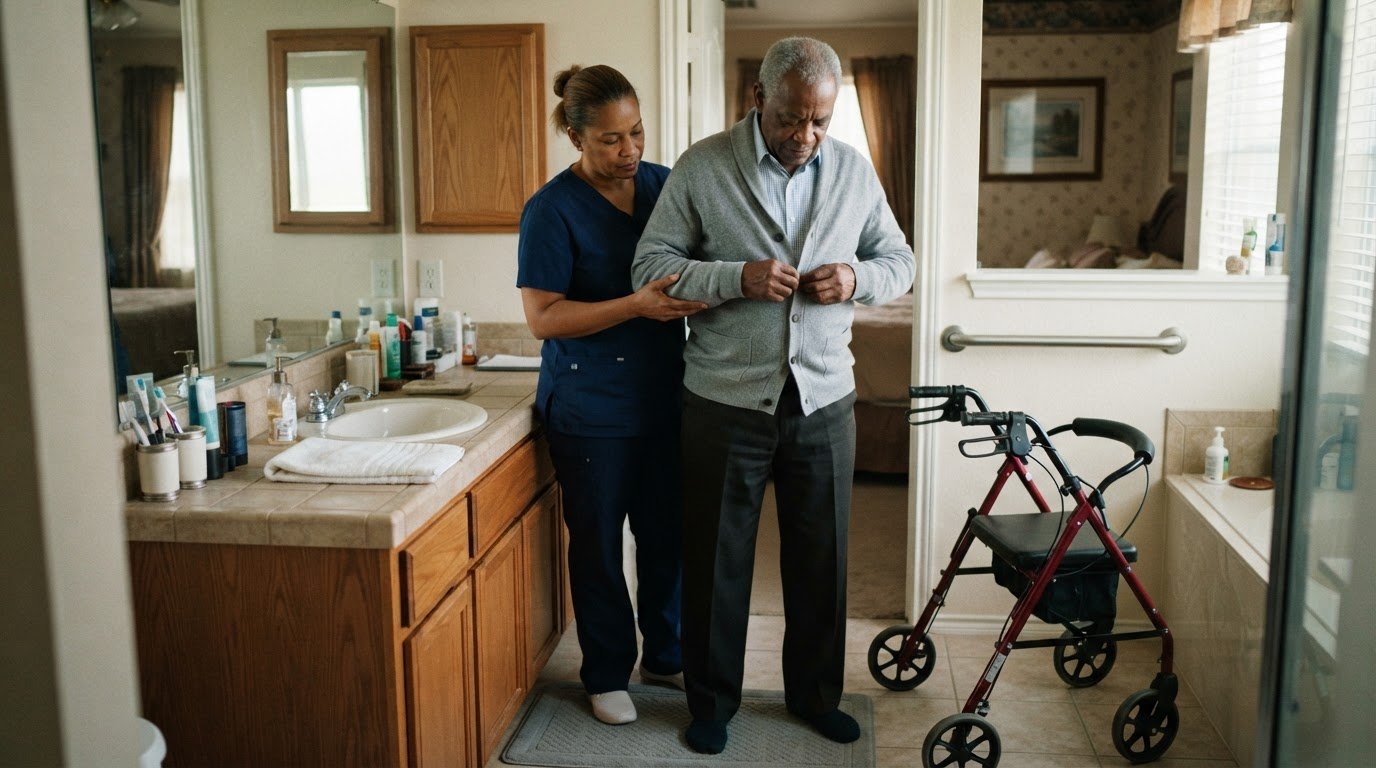
Home care helps seniors manage daily life where they live, without requiring a move to a facility. Families seeking same-day home care assistance in Missouri City, TX, often need to know what support is available and how it can fit a loved one’s routine. Modern Vintage Home Care provides non-medical in-home support in Missouri City, Sugar Land, and SW Houston, including personal care, companionship, and dementia care.
It’s understandable to want clear answers when everyday tasks become harder or a family caregiver needs support. This article explains what personal and companion care may include, who may qualify for in-home services, and how caregivers can support comfort and independence at home. You’ll also learn what to consider when care is needed promptly, so you can better understand the options and the next steps for your family.
Key Takeaways
- Personal care can support daily routines while respecting a senior’s preferences and independence.
- Eligibility for publicly funded in-home services depends on the program’s criteria, so understanding the type of support needed is an important first step.
- Caregiver experience and qualifications can vary; the right support should match the person’s daily needs and comfort.
- Companion care may help with household routines, errands, transportation, and meaningful social connection.
- Thoughtful in-home support can help seniors remain in familiar surroundings while families find a more manageable care routine.
Personal care and activities of daily living
Personal care helps seniors with everyday tasks such as bathing, dressing, grooming, and eating. In Missouri City, start by noting what your loved one can do independently and where hands-on assistance would help. This makes it easier to discuss a practical plan with Modern Vintage Home Care.
Hygiene and Mobility Assistance
Hygiene support may include help preparing for a bath, washing, choosing clothes, and grooming. Mobility assistance can help someone move between a bed, chair, or bathroom as part of a daily routine. Describe the specific task, such as fastening buttons or walking to the dining area. These details help shape respectful support around comfort and the person’s abilities.
Personalized Senior Care
Personalized senior home care starts with the individual’s routine, preferences, and specific tasks. One person may want help getting dressed before breakfast; another may need grooming support later in the day. Care should reflect those differences rather than impose a fixed schedule. Note the task, preferred timing, and level of help needed when discussing a plan with Modern Vintage Home Care.
Activities of daily living are the basic tasks involved in caring for oneself throughout the day. Consider these examples when describing support needs:
- Bathing: Help with preparing towels, clothing, and toiletries, or with washing.
- Dressing: Assistance choosing clothes, putting them on, or managing fasteners.
- Grooming: Support with brushing hair, shaving, or completing a familiar routine.
- Eating: Help getting settled for a meal and managing items such as utensils.
- Moving around: Assistance with everyday movement between rooms or seats.
For each activity, distinguish what your loved one does alone from where help is useful. Someone may wash their face independently but need assistance preparing for a shower. A care plan can focus on the specific task while preserving familiar abilities.
When arranging personal care, describe the routine in sequence. Note when your loved one usually wakes, which clothing feels comfortable, and whether they prefer privacy during grooming. These details help caregivers approach intimate tasks respectfully and give the senior more opportunity to make choices, such as selecting an outfit or deciding the order of morning activities.
Needs can vary from day to day. A simple daily note can record whether dressing, bathing, or moving between rooms required more help than usual. This gives family members and caregivers useful information for adjusting the routine. The goal is practical support that preserves the senior’s choices and independence wherever possible.
For personal care planning help, call the Missouri Senior Resource Line at 1-800-235-5503, which connects callers with local assistance. The Missouri Department of Health and Senior Services Senior and Disability Services phone number is 573-526-4542.
Eligibility for in-home services
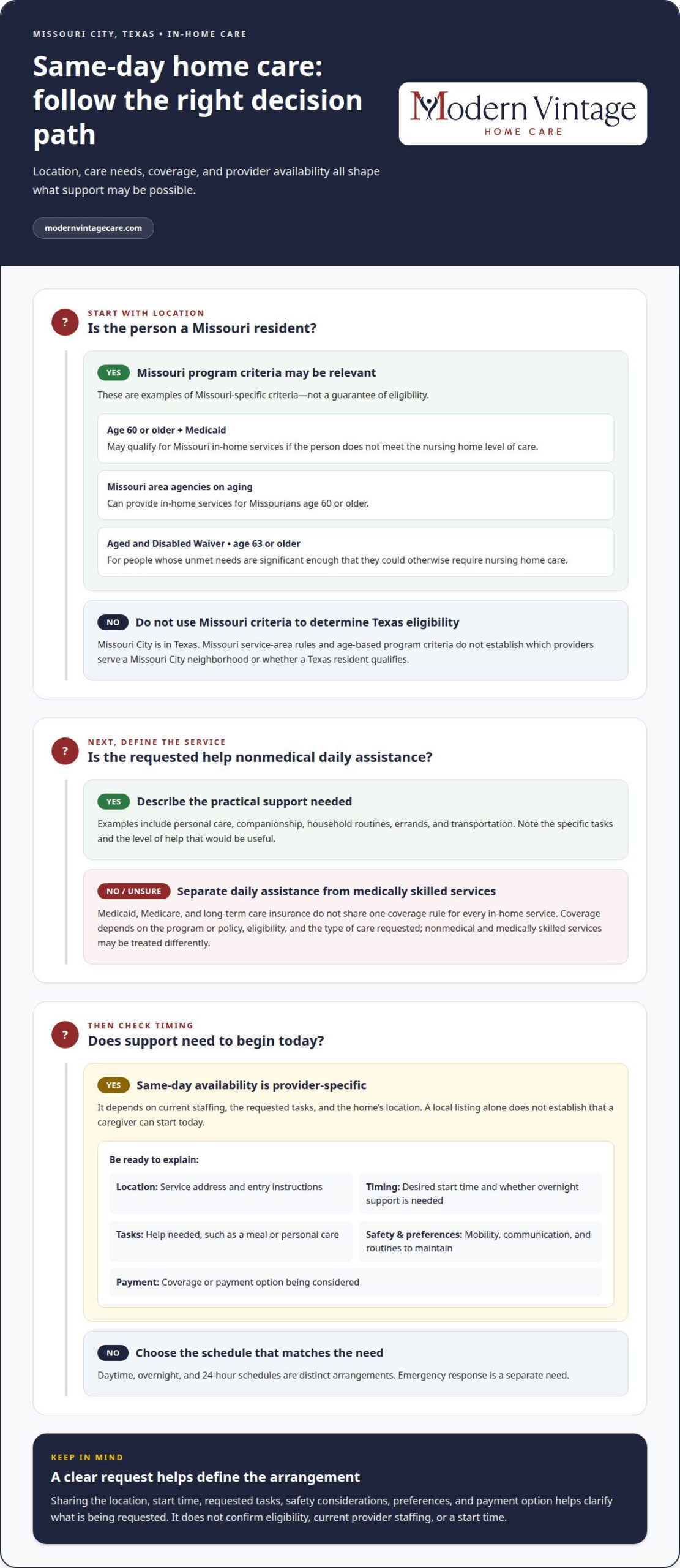
Eligibility depends on the type of care and how it will be paid for. Missouri’s age-based program criteria apply to Missouri residents, not automatically to people living in Missouri City, Texas.
Service Areas and Availability
Missouri City is in Texas, so Missouri service-area rules do not establish which providers serve its neighborhoods. Same-day availability depends on a provider’s current staffing, the requested tasks, and the home’s location. A local listing alone does not establish that a caregiver can start today. Daytime, overnight, and 24-hour schedules are distinct arrangements; emergency response is a separate need.
Which agencies offer same-day assistance in Missouri City, or have caregivers available today? Availability is specific to each provider and changes with staffing, location, and the care requested. A request for same-day home care assistance in Missouri City should describe the address, desired start time, and tasks, such as help with a meal or personal care.
To discuss care promptly, organize practical details before talking through the schedule:
- Location: Give the service address and any entry instructions.
- Timing: State when support should begin and whether it is needed overnight.
- Tasks: Describe the assistance needed, such as companionship or help with daily routines.
- Safety and preferences: Explain mobility considerations, communication needs, and routines the senior wants to maintain.
- Payment: Identify the coverage or payment option being considered.
This information helps clarify the requested arrangement; it does not establish a provider’s current staffing or start time.
Coverage for In-Home Services
Medicaid, Medicare, and long-term care insurance do not have one shared coverage rule for every in-home service in Missouri City. Coverage depends on the program or policy, the person’s eligibility, and the type of care requested. Separate nonmedical daily assistance from medically skilled services when discussing coverage, because they may be treated differently.
Missouri-specific programs illustrate why state and individual criteria matter. Missouri residents age 60 or older may qualify for in-home services if they have Medicaid but do not meet the nursing home level of care. Missouri area agencies on aging can provide in-home services for Missourians age 60 or older. Missouri’s Aged and Disabled Waiver serves people age 63 or older whose unmet needs are significant enough that they could otherwise require nursing home care. These criteria concern Missouri programs and should not be applied as Texas eligibility rules.
For Missouri City residents, identify the exact service needed and any insurance or public program you are considering. Then separate program eligibility from the care schedule: qualifying for a program does not determine when a caregiver can start. Share the tasks, timing, location, and payment questions during a consultation with Modern Vintage Home Care. Pricing varies by service and level of support, and the company provides a personalized quote.
Caregiver experience and qualifications
A caregiver’s fit depends on the tasks, schedule, and support your loved one needs. Helping with a meal differs from supporting someone with memory-related needs. In Missouri City, describe the senior’s daily routine and the assistance that would help them feel comfortable. Modern Vintage Home Care offers tailored Alzheimer’s and dementia care, as well as personal care and companionship.
When discussing same-day home care, focus on how the requested care matches the immediate need, the caregiver’s relevant experience, and the schedule. Companionship, personal care, and dementia support involve different tasks. Modern Vintage Home Care creates individualized care plans and lets families choose a caregiver based on compatibility, skills, and preferences.
Training rules depend on location and program. Missouri does not set statewide training requirements for caregivers employed by private-pay nonmedical home care agencies. Caregivers participating in Missouri Medicaid programs must pass a background check. These are Missouri-specific facts; they do not establish requirements for Missouri City, Texas.
Screening and preparation are useful topics when discussing care, especially if your loved one needs help with sensitive daily tasks. Describe the support required, such as a reminder to follow a routine or assistance preparing for the day. Relevant experience and respectful communication can help the senior feel at ease. Modern Vintage Home Care provides individualized, non-medical support.
- Daily task fit: Identify whether help is needed with meals, personal routines, or companionship.
- Relevant experience: Match the caregiver’s background to needs such as memory support.
- Schedule: Specify the requested start time and whether ongoing assistance is needed.
- Comfort: Consider the senior’s communication preferences and familiar routines.
Caregiver assistance can also support family members managing daily responsibilities. If a relative usually helps with meals or companionship, list those tasks to show where additional help may fit. Separating essential needs from preferred support makes it easier to explain what matters first, especially when arranging care promptly in Missouri City.
Respite care gives family caregivers support while they attend to other responsibilities. A family caregiver, for example, may need a break from the daily demands of supporting a loved one. Modern Vintage Home Care provides respite care and hospice support. Discuss the senior’s routine and the caregiver’s need for relief to shape the support requested.
Caregiver roles can involve practical help and respectful companionship for seniors, including support with daily routines or for someone living with dementia. In Missouri City, matching the support to the person’s needs helps define what a useful care arrangement looks like. Modern Vintage Home Care provides non-medical senior care, including specialized Alzheimer’s and dementia care.
Companion care, including housekeeping, shopping, and transportation
Companion care adds social connection and practical help to a senior’s day. In Missouri City, that might mean sharing conversation over breakfast, helping organize a shopping list, or assisting with a familiar household routine. Modern Vintage Home Care offers companionship tailored to what the person wants and what makes daily life easier.
A useful distinction is between nonmedical companionship and skilled medical care. Companion support focuses on social connection and help around the home; skilled medical services are a different type of care. Sharing lunch and tidying the table are household support, not medical treatment. Modern Vintage Home Care provides non-medical home care, not home health services.
Household assistance is most useful when it supports routines without taking over tasks a senior can still do. A caregiver might help sort groceries, prepare items for a simple meal, or return everyday belongings to familiar places. A short, specific task list keeps a visit focused on the person’s priorities. Modern Vintage Home Care offers personal care, companionship, and homemaker services.
- At home: Identify household routines where a helping hand would make the day more manageable.
- Shopping: Write down needed items and note whether the senior wants help planning or accompanying support.
- Transportation: Describe the destination and the assistance needed before, during, or after an outing.
- Social connection: Share conversation topics or activities the senior enjoys, such as a favorite game or music.
Plan errands and outings clearly. A grocery trip differs from help getting ready for an appointment or carrying items back inside. Describe the destination, timing, mobility considerations, and the senior’s preferred level of assistance. Modern Vintage Home Care provides senior errand assistance, including grocery shopping and prescription pickup. Explain the request rather than assuming every care arrangement includes driving.
Companionship can make time at home feel more connected. A visit might include talking through the day’s plans, looking at family photographs, or sharing a hobby. If your loved one prefers quiet company, mention that too. The aim is comfortable social time, not imposed conversation or activities. Modern Vintage Home Care offers companionship shaped around individual preferences.
Companionship may provide company and support, but it is not emergency response or medical monitoring. A companion can spend an ordinary afternoon with a senior; urgent symptoms call for appropriate medical attention. Be clear about whether the need is social presence, household help, or clinical support. Modern Vintage Home Care provides non-medical care, not clinical services.
Before arranging companionship, write down the tasks that matter most and the order that feels natural. A senior might prefer conversation first, then help sorting groceries, followed by time to rest. Sharing these preferences helps Modern Vintage Home Care shape a visit around the person’s routines, choices, and comfort.
Every care plan is built carefully around the senior’s priorities and preferred support. Modern Vintage Home Care provides non-medical companionship and help around the home. Home health care, by contrast, involves medically skilled services and is a separate type of care.
Supporting seniors to remain at home
Remaining at home can mean preserving familiar routines while adapting support to changing needs. A senior may want to keep preparing breakfast but need help organizing ingredients or moving safely around the kitchen. Practical assistance can support that choice without taking over every task.
Start with a simple review of the home and daily routine. Note which rooms your loved one uses most, where everyday items are kept, and which tasks cause difficulty. If bathing has become challenging, for example, describe whether the difficulty involves preparing supplies, entering the bathroom, or completing the routine. Specific details help Modern Vintage Home Care tailor its support.
Separate daily-living assistance from medical care. Help with dressing, companionship, or household routines is different from home health services involving skilled medical care. If a loved one needs medical assessment or treatment, daily assistance should not be treated as a replacement. Modern Vintage Home Care provides non-medical home care.
Families can make a home-support plan clearer by recording the senior’s priorities and the help each task requires:
- Keep familiar routines: Note preferred meal times, activities, and the order of morning tasks.
- Identify difficult moments: Describe where bathing, dressing, or moving through the home becomes harder.
- Preserve choices: Ask which tasks the senior wants to do independently and where help feels welcome.
- Share useful context: Record communication preferences, household routines, and important daily considerations.
Small adjustments can make routines easier to manage. Keeping a robe and clean clothes together may simplify getting dressed after bathing, while placing frequently used items within easy reach can reduce unnecessary trips across the room. Modern Vintage Home Care can recommend home safety updates, but these examples do not replace an assessment of medical or mobility concerns.
Family caregivers are part of the plan, too. If a daughter usually prepares lunch but cannot be present every day, identify the specific gap: meal setup, company during lunch, or another daily task. Clear responsibilities help everyone understand what support is needed and where family involvement remains important. Modern Vintage Home Care also offers respite care for family caregivers.
Review the plan when routines change. A senior who once managed a shower independently may later need help preparing the bathroom or choosing another bathing routine. Record what has changed and what the senior prefers now. This helps keep Modern Vintage Home Care’s support connected to current needs rather than assumptions about what worked before.
When family caregivers need relief while a loved one receives support, explore hospice support and respite care as part of planning for care at home. A clear outline of the senior’s routines, preferences, and daily assistance needs helps make that conversation more useful.
Modern Vintage Home Care
Modern Vintage Home Care helps families consider practical support when a senior needs assistance at home. If daily routines have become harder, Personal Care and Companionship can provide support shaped around the person’s needs. Alzheimer’s & Dementia Care is also available for families seeking help related to memory changes.
For a useful conversation, describe the tasks causing difficulty, your loved one’s preferred routine, and the support that would help your family. These details make it easier to discuss care options in the context of daily life. If you’re in Missouri City, Sugar Land, or SW Houston, contact Modern Vintage Home Care to arrange a no-obligation consultation.
Take the Next Step Toward Support at Home
Choosing care is also a chance to shape daily life around the support your loved one needs. If you’re seeking same-day home care assistance in Missouri City, start with the most pressing need and the routine your loved one wants to preserve. Contact Modern Vintage Home Care to discuss your priorities, the requested schedule, and next steps.
Modern Vintage Home Care offers Alzheimer’s & Dementia Care, 24-Hour Care, and Companionship. These options can support families seeking help that fits different needs at home. The right arrangement depends on the person’s circumstances and the support they’re seeking. If you’re ready to discuss care for your loved one, contact Modern Vintage Home Care. A thoughtful next step can help your family move forward with greater clarity and confidence.
Frequently Asked Questions
Can you only get care in a private residence?
No. Support can be arranged around routines at home and may include help with non-medical errands. For example, a senior might receive companionship at home and assistance with a grocery trip. The right setting depends on the activity and support needed. Home care is non-medical assistance, not home health care or skilled medical treatment.
How do I know how much care is needed?
Start by recording where support is needed during a typical day, then note which tasks need help and when. A senior may manage breakfast independently but need someone nearby later. Include changes in routine, times when family members can help, and whether overnight support is needed. This gives Modern Vintage Home Care a practical starting point for discussing an individualized plan.
What types of same-day home care services are available in Missouri City?
Modern Vintage Home Care serves Missouri City, Texas, with services including Personal Care, Companionship, Alzheimer’s & Dementia Care, and 24-Hour Care. Other offerings include Quick Care Services and automated medication reminders. These are nonmedical supports, such as help with daily routines or social connection. The specific care arrangement is shaped around the senior’s needs and requested tasks.
How quickly can a caregiver start after contacting a Missouri City home care agency?
Modern Vintage Home Care says services typically begin within a few days after an initial assessment. Contacting an agency does not mean a caregiver will necessarily start the same day. The assessment helps establish the senior’s needs and the support being arranged. For planning, share the desired start time, care tasks, location, and schedule at the outset.
How can I verify caregiver qualifications, background checks, and agency licensing in Texas?
For Modern Vintage Home Care, caregivers undergo background checks, and the agency is licensed in Texas under license number 020191. The company also allows families to choose a caregiver based on compatibility, skills, and preferences. When discussing care, describe the senior’s needs, such as dementia support or companionship, so relevant experience can be considered alongside personal fit.
