
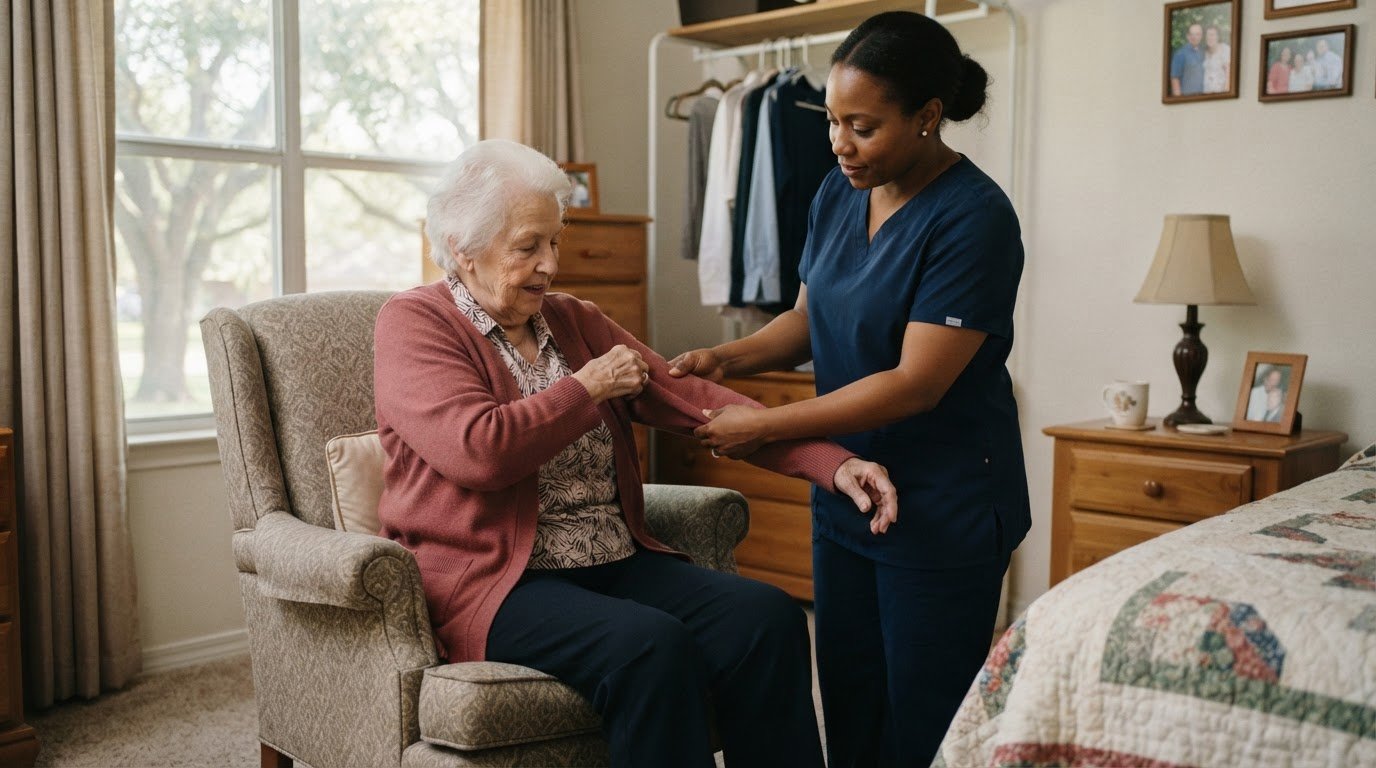
Start senior home care by identifying which dressing tasks need support and when help would be useful. For families seeking senior assistance in Lake Olympia, Missouri City, sharing those details helps a care professional understand the person’s routine and discuss suitable personal care. Dressing support can be part of a broader plan that respects comfort and independence.
It’s understandable to want clear answers before arranging care, especially when a familiar daily routine becomes harder to manage. To get started, describe the dressing tasks that need help, the person’s preferences, and the times support would be useful. Modern Vintage Home Care provides personal care and other nonmedical home care in Missouri City, Sugar Land, and SW Houston, helping families discuss support that fits their loved one’s daily routine.
Key Takeaways
- Start by describing which parts of dressing are difficult and what kind of routine feels comfortable.
- Personal care can be shaped around the support needed while preserving as much independence as possible.
- Scheduling and service availability depend on the care needs, preferred times, and location.
- For help locating services for older adults, the Eldercare Locator can be reached at 1-800-677-1116, according to the Administration for Community Living.
How do I get started with senior home care in Missouri City?
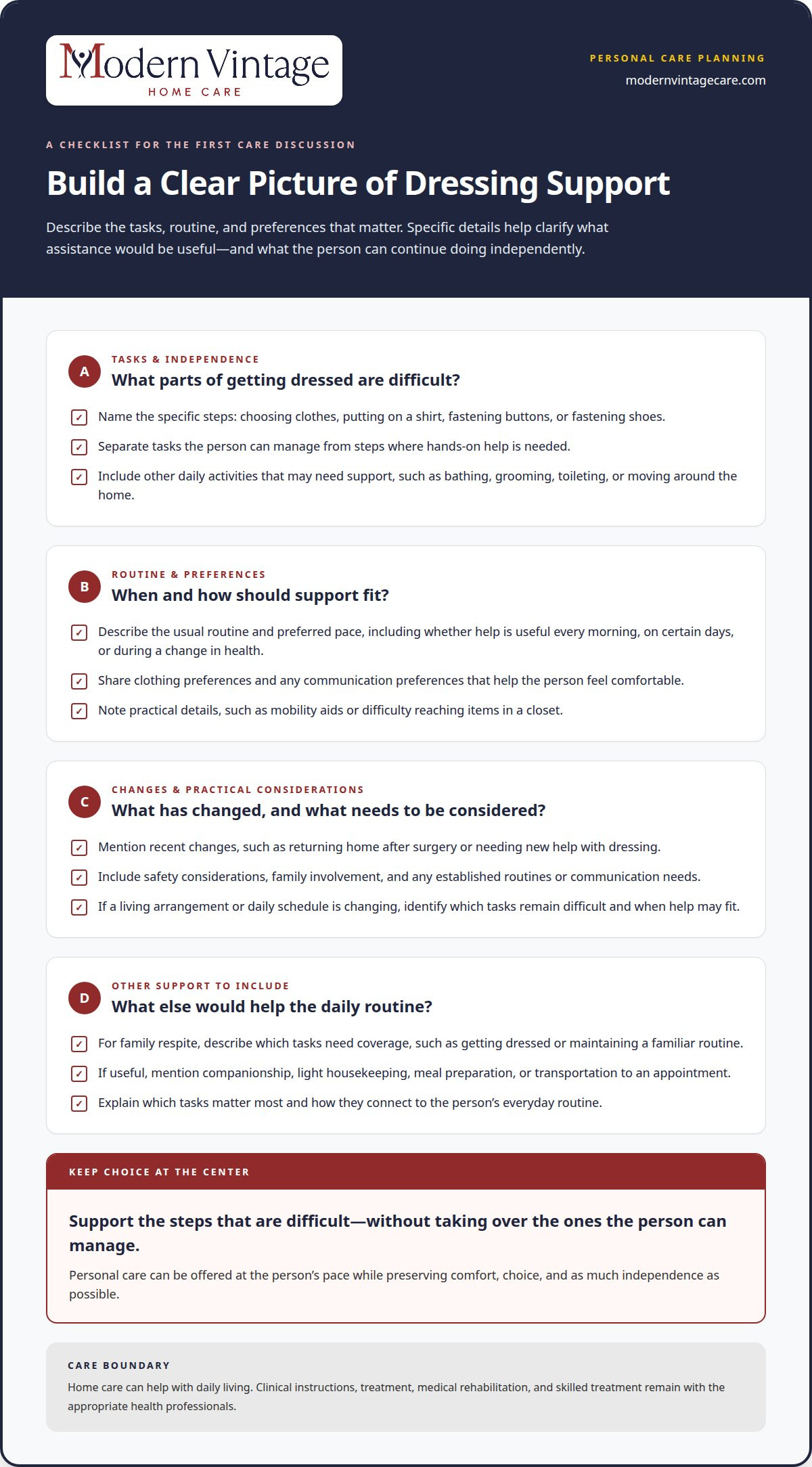
Begin with a clear picture of the daily tasks that have become difficult and the help that would make them easier. For a family in Lake Olympia, examples such as choosing clothes, fastening buttons, or getting ready for an appointment make care needs easier to describe.
Personal Care and Activities of Daily Living
Personal care can support activities of daily living, including dressing, bathing, grooming, toileting, and moving around the home. The right plan distinguishes tasks a person can still do independently from steps where assistance is needed. For example, someone may select an outfit but need help putting on a shirt or fastening shoes.
During an initial care discussion, describe the person’s usual routine, preferences, and specific challenges. Note whether support is needed every morning, only on certain days, or during a change in health. Personal Care should preserve choice: a caregiver can offer assistance at the person’s pace, rather than taking over tasks the person can manage.
Also describe practical details that affect the routine, such as clothing preferences, mobility aids, or difficulty reaching items in a closet. These examples help clarify what kind of assistance is useful and when it fits best. If needs vary, explain what changes and what support stays consistent.
Planning Care and Transitions
To get started, organize the main concerns into a short care overview: daily tasks, preferred times, safety considerations, and family involvement. Include recent changes, such as returning home after surgery or needing new help with dressing. This gives the care team a useful starting point for discussing nonmedical personal care.
For adults with disabilities, describe established routines and communication preferences. After surgery, identify everyday activities that have become harder, while leaving clinical instructions and treatment to the appropriate health professionals. Home care can help with daily living, but it does not replace medical rehabilitation or skilled treatment.
A move to a different living arrangement can also change the support plan. Identify which tasks remain difficult during the transition, such as choosing clothes or keeping a morning routine. Discuss the setting and expected daily schedule so assistance can fit the person’s needs.
Respite and Specialty Care
Family caregivers can include respite in the plan when they need time away from regular caregiving responsibilities. Describe the tasks that need coverage, such as help getting dressed or maintaining a familiar routine. Modern Vintage Home Care offers Hospice Support & Respite Care for families arranging this kind of support.
For adults with disabilities or people recovering from surgery, focus on daily activities and the help needed to complete them. Explain what the person can do independently and where hands-on assistance is useful. This distinction helps shape appropriate personal care without confusing it with clinical treatment.
Companion and Household Support
Companionship can add conversation and company to a person’s day, while homemaker services can help with practical tasks such as light housekeeping and meal preparation. If transportation to an appointment matters, include it in the care discussion. A clear example, such as needing a ride to a scheduled visit, is more useful than a broad request for help.
Describe which tasks matter most and how they connect to the person’s routine. For instance, a family might prioritize company during lunch, help with household tasks, or transportation assistance. This helps distinguish essential daily support from helpful additions and creates a focused starting point for care.
Senior home care service area in Lake Olympia and nearby Missouri City communities
For families in Lake Olympia, planning starts with the person’s home address and the support needed there. Lake Olympia is in Missouri City, so look for services serving this local community rather than places with similar names elsewhere.
Finding Services Near Lake Olympia
Describe the home’s location, daily living needs, and whether support is needed at home or elsewhere in the community. For example, a family might need help with routine tasks, caregiver respite, or companionship. Include whether a relative lives nearby and what role they currently play.
The U.S. Administration on Aging’s Eldercare Locator can be reached at 1-800-677-1116, according to Administration for Community Living. Families can share the older adult’s location and the type of service they are seeking. This national resource can help identify aging services relevant to a Texas community.
Fort Bend County’s You Are Not Alone (YANA) Program is a telephone reassurance program for seniors or disabled citizens who live alone. It may be relevant when regular contact is a concern. Telephone reassurance is different from hands-on daily living support, so identify which kind of help the person needs.
Community Resources in Fort Bend County
Community resources can address different needs, including social connection, benefits information, transportation, or caregiver support. The right starting point depends on the concern. For instance, a person who lives alone may value regular contact, while a family caregiver may need respite to manage other responsibilities.
Separate community resources from home care when discussing a plan. A meal or transportation resource may address one practical need, while a caregiver can help with activities at home. This distinction helps families describe what is already in place and where additional daily living assistance could help.
Caregiver Qualifications and Service Fit
Match caregiver responsibilities to the person’s routine, communication preferences, and support needs. Someone seeking companionship may need different assistance from someone who needs personal care or medication reminders. Explain specific tasks and preferences rather than relying on a broad label like “senior care.”
Also clarify whether the need is nonmedical daily assistance or clinical care. For example, a family may want help with a home routine while a clinician handles medical treatment. This distinction keeps the care conversation focused on the support being sought.
Social Services and Case Management
Social services can help families explore community programs and benefits. Case management may help coordinate needs such as transportation, social contact, and caregiver respite. Keep a simple record of resource names, eligibility steps, and follow-up tasks so relatives can coordinate the process clearly.
If daily support needs call for a separate home care conversation, in-home care support can be considered alongside community resources. A clear location, practical task list, and understanding of existing support can help families discuss a suitable next step.
Professional help with simple dressing and changing clothing
Dressing assistance can help older adults manage a daily task while keeping personal choice central. A caregiver may help select clothing, put on a shirt, fasten buttons, or change clothes after a meal. Support can focus on the steps a person finds difficult while leaving manageable tasks to them.
For families seeking senior assistance in Lake Olympia, Missouri City, describing a familiar dressing routine is a useful starting point. A person may prefer choosing clothes the night before, dressing after breakfast, or wearing familiar outfits. A caregiver can respect those preferences and offer help one step at a time, without rushing or taking over tasks the person can manage.
Dressing support can include preparing an outfit, helping with sleeves, fastening buttons, or adjusting clothing for comfort. If someone can pull on a shirt but struggles with small fasteners, assistance can focus on that step. This targeted approach supports participation and makes the routine more manageable.
Privacy and consent matter during personal care. Before helping with a clothing change, a caregiver can explain the next step and allow time for a response. For instance, they can ask which top the person prefers, then offer help with a sleeve or fastener. Respectful communication keeps the older adult involved.
Changing clothing may be needed after a spill, before an outing, or when an outfit feels uncomfortable. A caregiver can help gather clean clothes and support the change at the person’s pace. If the person wants to remain involved, they can choose the replacement outfit or complete the steps they can manage comfortably.
Clothing preferences shape how assistance works. Someone may prefer loose sleeves, familiar fabrics, or an outfit suited to a social visit. A caregiver can take these choices into account when preparing clothes and offering help. The aim is to support comfort and routine, not simply finish the task faster.
Some changes call for attention beyond ordinary dressing assistance. If a caregiver notices new discomfort, a change in movement, or a skin concern, they can share that observation with the family and an appropriate medical professional. Dressing support addresses daily living; it doesn’t diagnose a condition or replace medical care.
A consistent routine can make support easier to understand. For example, a caregiver can offer clothing choices, allow time for the person to dress, and help with any remaining fasteners. If needs change, the family can explain which steps have become difficult and which still feel comfortable.
A plan for senior assistance in Lake Olympia, Missouri City, can keep dignity and personal preferences at the center of dressing support. Clear communication and focused help allow older adults to take part in a familiar daily routine while receiving assistance where needed.
Provider availability and scheduling
A useful care schedule starts with the person’s daily routine and the moments when help matters most. For example, someone may need assistance getting ready in the morning, companionship in the afternoon, or help with bathing as part of personal care. Naming the task and preferred time helps shape a practical schedule.
A schedule should reflect the requested days and times, the person’s location, and the type of support involved. Morning dressing support differs from help with evening activities or a planned outing. A care plan can reflect these priorities and be revisited when needs or family responsibilities change.
For an initial scheduling discussion, gather a few clear details: the address in Lake Olympia or nearby Missouri City, the tasks requiring support, preferred times, and any regular appointments. Include whether a family member can be present or needs respite. These details give the care team a clear starting point for planning suitable support.
- Describe the routine. Explain when the person wakes, eats, gets dressed, and prefers companionship or quiet time.
- Identify priority tasks. Separate essential support, such as bathing assistance, from helpful activities, such as conversation or a walk.
- Share schedule constraints. Note appointment times, family availability, and periods when the person prefers not to receive help.
- Plan for changes. Discuss how the schedule should be revisited if a new daily task becomes difficult or a family caregiver’s availability shifts.
These details help distinguish a short visit for a specific activity from a broader schedule supporting several parts of daily living. For instance, a morning visit might focus on dressing and getting ready, while another period could provide companionship. The purpose of each visit should be clear to the person receiving care and the family coordinating it.
Scheduling also benefits from a simple way to communicate updates. A family member can share a changed appointment, a new preference, or a task that now takes longer. If the person becomes more comfortable completing part of an activity independently, the routine can be adjusted to preserve that participation.
When the family needs a short-term resource, such as help during a caregiver’s planned absence, explain the dates and tasks involved. For ongoing support, describe the recurring routine instead. These are different scheduling needs, and clearly stating which applies helps focus the planning conversation without assuming that every care arrangement follows the same pattern.
Keep the person involved in decisions about timing. Someone may prefer bathing at a familiar time or may want companionship after breakfast rather than earlier. A schedule that reflects these choices is easier to fit into daily life. To discuss care timing around your family’s routine, start a care scheduling conversation with Modern Vintage Home Care.
Availability discussions can also include community resources that may help with needs outside a scheduled visit. Texas Area Agencies on Aging benefits enrollment staff provide information about state and federal benefits that may help adults pay for food, medicine, health insurance, phone service, and energy. Texas Area Agencies on Aging provide home-delivered meals to people age 60+. Texas Area Agencies on Aging tailor service availability by region based on community input, so families can ask what options may be available in Lake Olympia and Missouri City when considering senior assistance in Lake Olympia Missouri City.
Texas has multiple local Area Agencies on Aging that provide services for older adults. The Texas Association of Area Agencies on Aging provides information and services for older adults and lists regional contact numbers for assistance. Families can use local contacts to ask about services and regional availability, then discuss any resulting needs or timing preferences with their care professional. Keeping resource questions distinct from the visit plan can help clarify which needs call for scheduled support and which may be addressed through community services.
Modern Vintage Home Care
Modern Vintage Home Care helps families in Missouri City, Sugar Land, and SW Houston plan thoughtful in-home support around daily needs. If dressing, personal routines, or companionship have become difficult, discuss the help that would make everyday life easier while respecting your loved one’s preferences and independence.
Personal Care can support daily activities, while Dementia & Alzheimer’s Care addresses needs related to memory conditions. Families can describe the routine, the tasks requiring help, and preferred times for support. This conversation helps identify suitable care, whether the need is focused on dressing or part of a broader daily routine.
If you’re considering support for a loved one in Lake Olympia, contact Modern Vintage Home Care to discuss your family’s needs.
Make the Next Care Conversation Count
Families arranging senior assistance in Lake Olympia, Missouri City, can use the next conversation to define what a helpful day looks like. Consider the person’s priorities, the support they welcome, and the routines they want to maintain. This keeps the plan centered on the individual, not just a task list. Share how needs vary through the day so the discussion can address the right support and schedule.
Modern Vintage Home Care offers Alzheimer’s & Dementia Care, 24-Hour Care, and Companionship. These options can be part of a broader conversation about the support that fits a person’s circumstances. Families can describe their concerns and discuss a suitable next step without rushing an important decision.
Start with the need that matters most today, then build the conversation from there. Contact Modern Vintage Home Care to discuss care for your loved one. A thoughtful first step can help your family move forward with greater clarity.
Frequently Asked Questions
Can you only get care in a private residence?
A person doesn’t need to own a private residence to discuss in-home care. The practical consideration is where they live and whether support can be arranged in that setting. For example, a family member may help coordinate care for an older adult living with relatives. Share the living arrangement and tasks involved so the care discussion reflects the person’s situation.
How do I know how much care is needed?
Consider how much assistance the person needs across a typical day, including times when no family member is present. For example, does the person need reminders, help with daily tasks, or someone nearby for extended periods? A care conversation can connect those needs with an appropriate level of support, from scheduled assistance to 24-Hour Care. Revisit the plan if the person’s routine or ability to manage alone changes.
What if my loved one’s care needs change over time?
Update the care plan when you notice a meaningful change, such as a different sleep pattern, appetite, or behavior. Modern Vintage Home Care develops individualized plans through ongoing monitoring of behavior, diet, sleep, and triggers. Sharing specific observations helps the care team understand what has changed and consider adjustments. For example, explain when a new difficulty appears and how it affects the person’s routine.
What home care agencies serve older adults in Lake Olympia and nearby Missouri City?
Modern Vintage Home Care serves Missouri City and nearby communities, including Sugar Land and southwest Houston. Its in-home support includes Personal Care, Companionship, and Alzheimer’s & Dementia Care. Families can describe the older adult’s location and support needs to guide a conversation about an appropriate service. The company provides non-medical home care, rather than skilled nursing or physical therapy.
How can seniors in Missouri City apply for caregiver support or respite care?
Families can contact Modern Vintage Home Care to discuss respite support for a family caregiver. Modern Vintage Home Care offers Hospice Support & Respite Care. Before the conversation, outline regular caregiving tasks and the periods when family support is needed. This helps clarify what relief would be useful and how care can fit alongside your loved one’s existing routine.