
A shared calendar won’t coordinate care on its own. Families also need clear roles, dependable updates, and a plan they can revisit. Coordinating care with family members starts by centering your loved one’s wishes, naming a main point of contact, and writing down who will handle each task. Regular check-ins keep everyone informed and help adjust responsibilities as needs change.
Appointments, medication updates, and daily support can be difficult to manage across a family, especially when relatives live far apart or have different schedules. A simple system makes responsibilities visible and reduces the chance that important details get missed.
This guide explains how to divide caregiving tasks according to each person’s strengths, coordinate appointments and professional support, and keep useful notes in one accessible place. It also shows how to review the plan as your loved one’s needs or family circumstances change, so support stays organized and focused on the person receiving care.
Key Takeaways
- Choose a clear communication method and keep care updates, appointment details, and agreed responsibilities easy for the family to find.
- Divide tasks according to each person’s strengths, availability, and willingness, including practical ways relatives who live far away can contribute.
- Prepare for appointments by organizing questions and current medication information, then share important follow-up details with the care team.
- Consider professional in-home support when daily care needs are becoming difficult for family members to cover on their own.
- Revisit the plan as your loved one’s needs or family circumstances change, and make sure there is a backup for gaps in care.
1. Establishing communication channels and monitoring the care plan
Hold a family meeting before a crisis, in person or by video call. Include your loved one whenever possible, and ask about their preferences, routines, and concerns. Agree on a primary contact to share important updates and keep the care plan organized. That person doesn’t have to handle every task; they help information reach the right people. Coordinating care with family members is easier when everyone knows who gathers updates and who needs to receive them.
Choose communication tools everyone involved can use. A shared calendar can track appointments, family check-ins, and caregiving shifts. A shared document or notebook can record responsibilities, appointment summaries, medication updates, follow-up instructions, and new concerns. Make the record accessible to the people involved, and date each update so relatives can tell what’s current. These tools give coordinating care with family members a clear, shared reference point.
Make communication routine and specific. Schedule a recurring family call, for example, and use a group text for time-sensitive updates. After a primary care visit, the attending relative can share the clinician’s instructions and next steps. If someone can’t cover an assigned shift, ask them to notify the primary contact promptly so the family can arrange coverage.
- Set a main contact and name a backup for times when that person is unavailable.
- Use the calendar for appointments and visits, and the shared notes for care updates.
- Record each task’s owner, timing, and any change in the plan.
- Invite relatives, friends, or neighbors to contribute in ways that suit their availability.
What legal permissions are needed to share a loved one’s medical information with family? Ask your loved one to tell their care team which relatives may receive updates, and follow the provider’s process for recording that permission. Being related alone doesn’t authorize someone to access private medical details.
Common risks include missed updates, unclear responsibilities, and resentment when one caregiver feels they’re carrying more of the load. Address these early by reviewing the written task list together and listening to everyone’s concerns. If relatives disagree, a calm conversation with a mediator or family therapist may help them reach a workable arrangement.
Professional and community support can also help keep communication consistent. A care coordinator or geriatric care manager may help families organize information across providers; friends and neighbors can offer practical observations or visits. Keep your loved one’s wishes central when deciding who joins care discussions and what information is shared.
In the United States, Medicare generally covers individuals aged 65 and older, according to Centers for Medicare & Medicaid Services. Record coverage questions and appointment follow-ups in the shared notes, so the family can raise them with the appropriate care team. This written record supports coordinating care with family members as questions or responsibilities change.
2. Assigning responsibilities among support network members
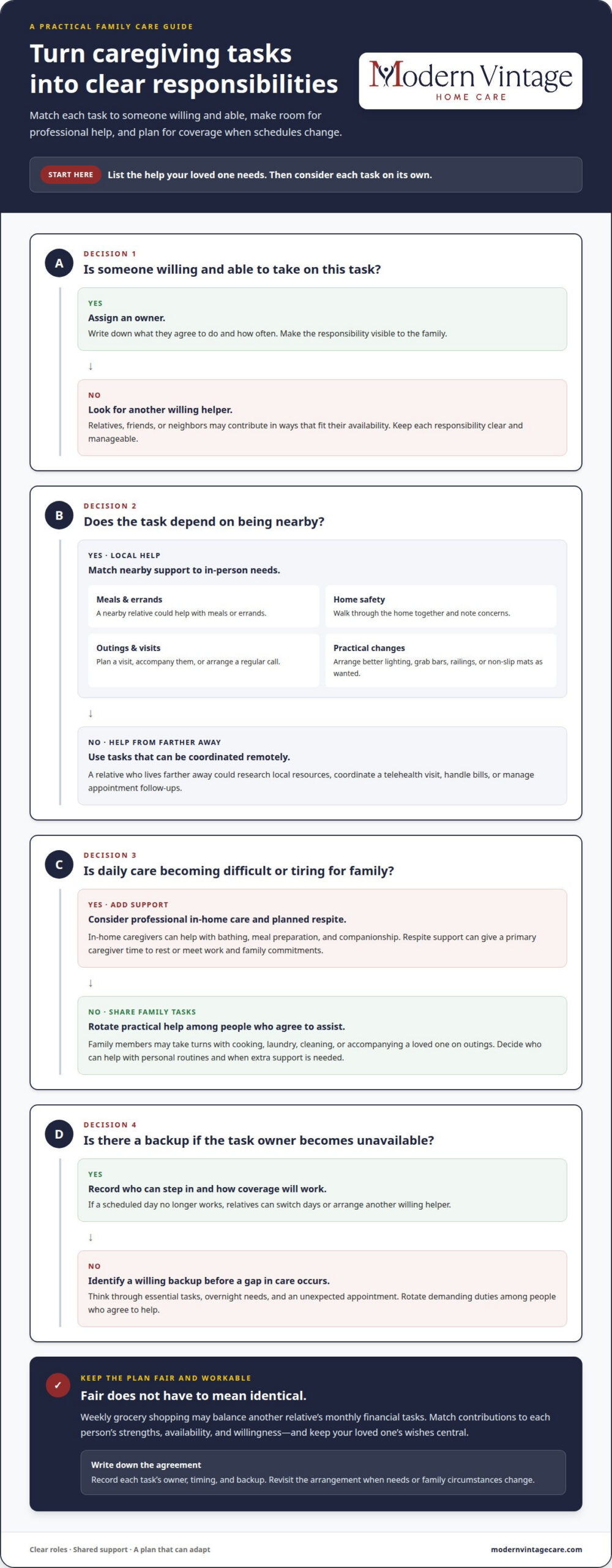
List the tasks your loved one needs help with, then match each responsibility to someone willing and able to take it on. One sibling might handle bills while another manages appointment follow-ups. A nearby relative could help with meals or errands; someone farther away could research local resources or coordinate a telehealth visit. This approach makes each person’s contribution visible without expecting everyone to do the same work.
Fair doesn’t always mean identical. Weekly grocery shopping, for instance, may balance another relative’s monthly financial tasks. Write down what each person agrees to do, how often, and who can step in if plans change. If someone can’t cover a scheduled day, relatives can switch days or arrange another willing helper. Friends who want to assist can be included, as long as responsibilities remain clear and manageable.
Consider the daily tasks that are becoming difficult or tiring. Family members may rotate cooking, laundry, and cleaning, or take turns accompanying a loved one on outings. For personal routines, decide who can assist and when professional home care would provide practical support. In-home caregivers can help with bathing, meal preparation, and companionship. Planned respite support can also give the primary caregiver time to rest or meet work and family commitments. Respite care support may be a useful part of the plan when family coverage needs a break.
Home safety is another shared responsibility. One person can walk through the home with the older adult and note concerns, while another arranges practical changes such as better lighting, grab bars, railings, or non-slip mats. Ask what the person wants and what would make daily routines easier. Revisit the observations if moving around the home or completing everyday tasks becomes harder.
Make room for emotional and social support alongside household tasks. A relative or friend could plan a visit, accompany the older adult to a community activity, or schedule a regular call. Joining an outing can feel more welcoming than simply suggesting the person go alone. These connections provide companionship and help caregivers understand what matters to their loved one.
Build a backup plan before someone becomes unavailable. Identify relatives or friends willing to cover essential tasks, and decide how the family will handle overnight needs or an unexpected appointment. Rotate demanding duties among those who agree to help instead of leaving them to one person. If the primary caregiver shows signs of strain, offer a specific break, such as taking over meals or arranging respite care.
- Assign each task to a named, willing person.
- Balance different contributions by time and effort, not identical duties.
- Include home safety, social visits, and backup coverage in the plan.
3. Professional care coordination and case management
Professional care coordination can help connect information from several healthcare providers and align caregiving responsibilities. A care manager may gather updates, organize next steps, and help the family understand how appointments, medication schedules, and daily support fit together. Roles vary by organization, so clarify who handles each task and who remains the primary contact.
Care coordination considers a person’s overall health and support needs. Disease management focuses more narrowly on education and support for a particular health problem. For example, a family might need help connecting a cardiology follow-up, medication routine, and daily assistance, while disease management provides education about one diagnosis. These approaches can complement each other, but one doesn’t replace the other.
A geriatric care manager may help families organize care across providers, identify community resources, and prepare for difficult caregiving conversations. Some can join a doctor’s appointment to help relatives stay informed. Before the visit, agree on the questions you want answered. Afterward, record the recommendations and assign follow-up tasks, such as arranging an appointment or updating shared care notes.
Chronic Care Management, often called CCM, is designed for ongoing support between medical visits. According to the Centers for Medicare & Medicaid Services, it is generally intended for patients with two or more chronic conditions. The conditions considered for Chronic Care Management are generally expected to last at least 12 months, or until the patient’s end of life, according to the Centers for Medicare & Medicaid Services.
Medicare Part B may cover CCM for eligible patients, although deductibles and coinsurance may apply. Keep insurance questions separate from care-planning decisions: coverage affects payment, while the person’s needs determine which support is useful. CCM doesn’t replace regular appointments, specialist care, or emergency services. It supports care across the month, rather than only during a scheduled visit.
To make professional coordination useful, prepare a concise handoff. Include current concerns, the names of involved providers, medication updates, upcoming visits, and questions that need follow-up. Identify who will share updates with relatives, and clarify what the professional will manage. If communication becomes difficult, a caregiver can ask the coordinator’s supervisor for help or request a different coordinator.
Professional support can also help families connect daily routines with healthcare instructions. For example, medication management can support an organized medication routine, while the family tracks questions for the prescribing clinician. Discuss possible future needs before an emergency, so relatives understand which tasks remain theirs and where professional coordination fits. A clear division prevents duplicated calls and makes unresolved concerns easier to spot.
4. Reviewing and adjusting the care plan
A care plan should change when your parent’s needs, routines, or family circumstances change. Set a monthly review, such as a family call, to discuss what’s working and what needs attention. Include your loved one in decisions whenever possible, so the plan reflects their preferences as well as practical support needs. Coordinating care with family members works best when everyone can raise concerns and agree on updates together.
Use each review to compare the written plan with daily life. Can your parent still manage meals, dressing, and household tasks independently? Have relatives noticed changes in eating, housekeeping, speech, attitude, hoarding, or spending? Record specific observations and when they began. An example, such as unopened mail accumulating, is more useful than a general note that things seem different. Note whether a change is occasional or affecting a regular routine, so relatives and care providers can discuss the same concern clearly.
Keep the care plan practical and easy to use. Include daily routines, medication schedules, appointments, emergency contacts, and the person responsible for each task. Note what help is needed, when it’s needed, and what your loved one prefers. If a routine changes, update the written plan and tell affected relatives and care providers. For coordinating care with family members, make each update specific, such as naming who will take over a task and when the new arrangement starts.
- Review daily tasks and note where independence has changed.
- Update routines, medication information, contacts, and assigned responsibilities.
- Ask your loved one which parts of the plan feel comfortable or difficult.
- Identify who will communicate changes to the rest of the support network.
Build a backup plan around tasks that can’t be missed. If the relative who usually provides transportation becomes unavailable, identify another willing family member or friend. For daily support, list professional or respite options the family can use. Specify which tasks need coverage, who can step in, and how the family will share the change.
During a monthly check-in, review whether the task-sharing arrangement still fits everyone’s schedule and capacity. A work change, a caregiver’s health concern, or a new appointment routine may mean shifting responsibilities. Ask each person to name one task they can continue and one obstacle that needs solving. Agree on an adjustment and record it in the care plan.
Changes in care needs may also call for a fresh look at the home environment and support schedule. If your parent now needs help preparing meals or moving safely through the home, document the specific difficulty and discuss suitable support. If family coverage has become unreliable, update the backup plan before a gap occurs. Regular reviews help everyone respond to changing needs with clear, timely adjustments.
5. Coordinating appointments and specialist care
Medical appointments go more smoothly when one family member tracks the full sequence, not just the next visit. Start with the primary care appointment, then record referrals, tests, specialist visits, and follow-up steps in one schedule. Ask your loved one which family member they want involved, and keep their preferences and independence central.
Before each visit, prepare a concise note with current concerns, questions, and an up-to-date medication list. Include over-the-counter and herbal medicines as well as prescriptions. A relative can bring the list, take notes, and capture instructions about medication changes or follow-up. Share the visit summary with relatives involved in care, respecting your loved one’s permission and privacy preferences.
Specialist appointments may need extra coordination. A primary care physician can provide referrals to medical or rehabilitation specialists. Track the referral date, the specialist’s contact details, and any next steps. If a specialist has a two-month wait list, record that timing and ask the primary care team about interim guidance or other appropriate options. Keep the pending referral on the family’s schedule.
Plan practical details alongside medical ones. Decide who will drive or accompany your loved one, and allow time for travel and check-in. If relatives live far away, they can help arrange a telehealth appointment or join remotely when invited. Afterward, the attending relative can share key instructions, upcoming visits, and questions that still need answers.
- Keep referral, test, and follow-up dates together in one schedule.
- Bring a current medication list and written questions to each appointment.
- Assign someone to accompany your loved one and record next steps.
- Share appointment updates with involved relatives, following your loved one’s preferences.
When several providers are involved, ask how their recommendations fit together. A care manager may help gather information from different providers, while a relative tracks outstanding questions. For example, note whether a new instruction affects daily routines, medication timing, or a scheduled specialist visit. Keep the original instruction clear, and direct medical questions to the appropriate care team.
Appointments can also feel tiring or emotional. Offer your loved one choices about who accompanies them and how much family support they want. If a visit raises concerns, give them time to talk before making changes. A calm follow-up conversation can help relatives understand the person’s priorities while keeping the next appointment or referral on track.
For help connecting appointment routines with daily support, explore care support options.
Modern Vintage Home Care
Modern Vintage Home Care can support families when daily caregiving needs become difficult to manage alone. Its in-home services include personal care, companionship, and Alzheimer’s and dementia care, helping families arrange support around a loved one’s routines. This can clarify which daily tasks need family attention and where additional help fits into the care plan. If needs change, families can revisit responsibilities and discuss how support should adapt while keeping the older adult’s preferences central. Professional care complements everyday family support, but does not replace family communication or medical appointments. For support with your family’s care needs in Sugar Land, Missouri City, or southwest Houston, contact Modern Vintage Home Care.
Choose a Next Step That Fits Your Family
Before changing the arrangement, invite your loved one to share what matters most in daily life. A conversation about preferred routines, trusted visitors, and welcome support can guide the family’s next decisions. Then consider which responsibilities relatives can sustain and where added help could ease pressure while supporting the person’s independence.
That’s a practical starting point for coordinating care with family members: keep your loved one’s wishes at the center, and make the next adjustment together. If family coverage needs to extend around the clock, Modern Vintage Home Care offers 24-Hour Care alongside support options for changing care needs.
When you’re ready to discuss support for your family’s situation, contact Modern Vintage Home Care. A thoughtful next step can help your family move forward with greater clarity and care.
Frequently Asked Questions
How can families coordinate care for an aging parent?
Start with your parent’s priorities, then make sure each caregiver understands the immediate needs and next decision. If your parent is returning home after a hospital stay, for example, clarify the discharge instructions, upcoming follow-ups, and who will help with the transition. Keep your parent involved in conversations whenever possible. Families in Sugar Land, Missouri City, and southwest Houston can also consider local support when making a plan.
What tools help family members manage caregiving schedules and tasks?
Use tools that show ownership and status, not just appointment times. A shared task board can show whether a request is pending, underway, or complete, while a calendar holds visits and travel plans. For example, label a task “confirm ride” and assign it to one relative. Agree on where urgent changes should be shared so important updates don’t get buried among routine messages.
How do you create a family caregiving plan?
List what your loved one wants help with, then separate essential tasks from preferences. Note whether meal preparation, a ride, or company during an appointment matters most this week. Ask which routines they want to keep doing independently. Then write down the family’s agreed actions and revisit the plan whenever a new concern or change in routine affects daily life.
How can families divide caregiving responsibilities fairly?
Discuss everyone’s actual availability and limits before assigning work. A relative with a flexible schedule may handle an appointment, while someone with less time could make a brief check-in call. Count planning and follow-up as contributions, too. If someone’s capacity changes, revisit the arrangement without blame and agree on a practical adjustment. Fairness means responsibilities remain sustainable for the people taking them on.
