
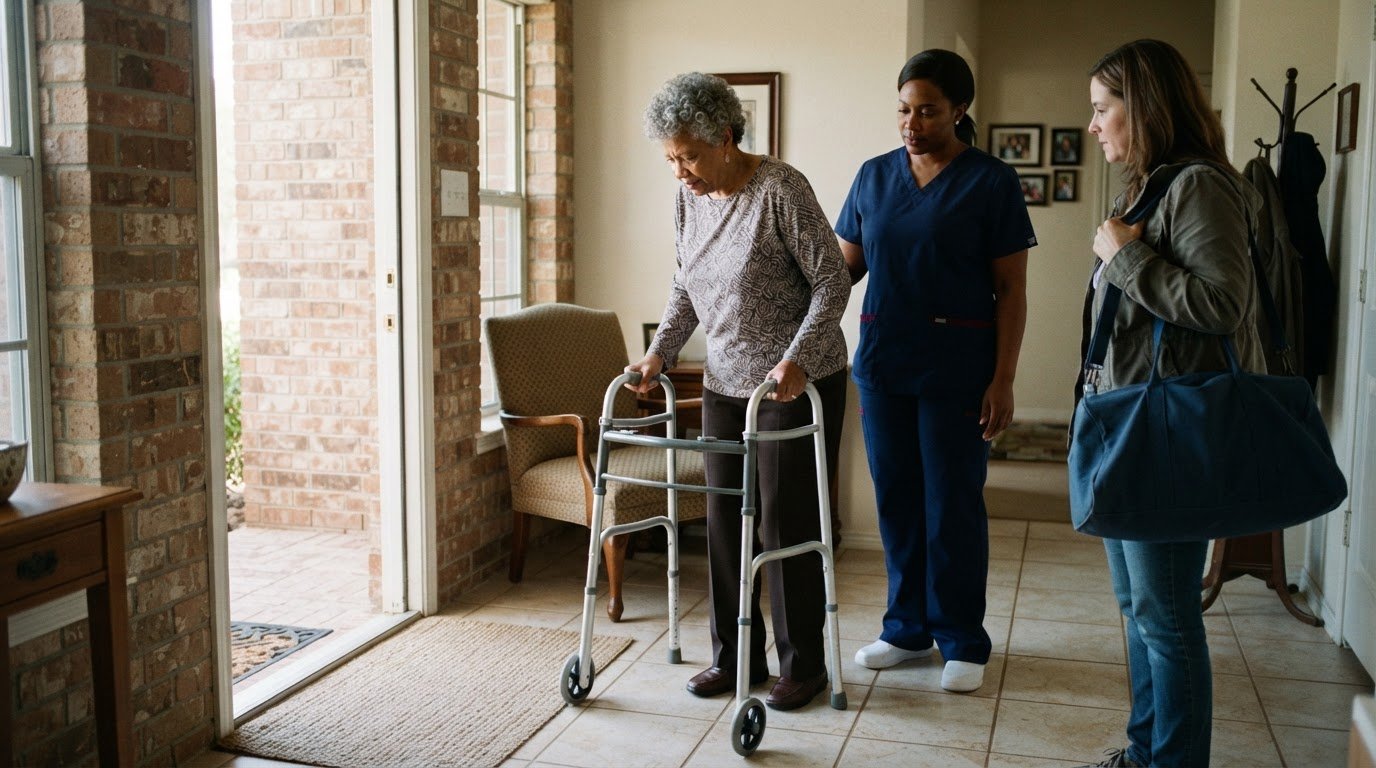
Coming home after a hospital stay can bring new challenges, from following recovery instructions to managing everyday tasks safely. Knowing how to transition from hospital to home care starts with a clear plan before discharge, so the patient and family understand what support will be needed at home.
It’s understandable to focus on getting home, but the first days may also involve medication routines, follow-up appointments, mobility needs, and changes in energy or mood. This guide explains what to discuss with the hospital team, how to organize recovery instructions, how to prepare the home, and when help with daily activities may be useful. With support in place, families can make the transition more organized while keeping the person’s comfort and independence in view.
Key Takeaways
- Look for daily tasks that have become difficult or unsafe to judge whether an aide’s support could help.
- Coordinate family roles and care-team communication so questions and concerns reach the right people.
- Use the discharge plan and recovery guidance to shape practical support at home.
- Make mobility easier by addressing obstacles and considering the safety equipment recommended for the patient.
- Recognize that falls, medication mix-ups, and emotional strain can complicate recovery, and plan support around the person’s needs.
1. When should you consider working with a home healthcare aide?
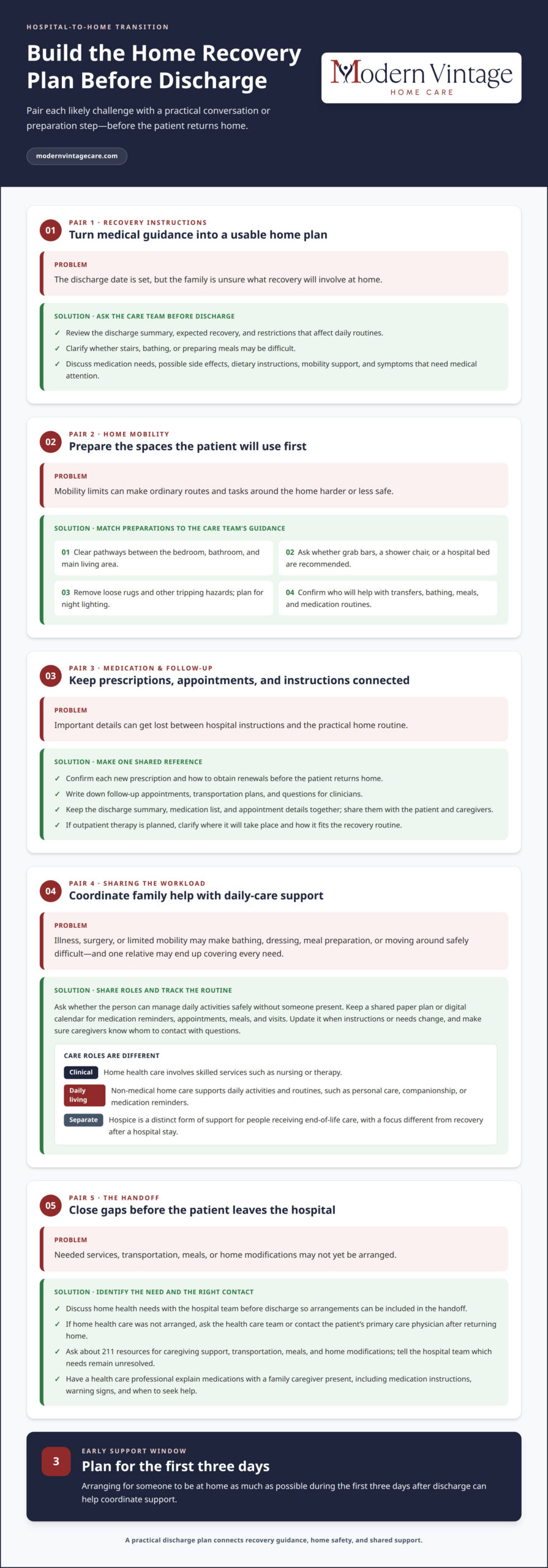
Consider an aide when illness, surgery, or limited mobility makes bathing, dressing, preparing meals, or moving around safely difficult. Ask whether the person can manage these daily activities safely without someone present. Before discharge, discuss likely challenges at home with the health care team, then share the guidance with family caregivers so everyone understands the support needed.
Keep the care plan and schedule accessible to the patient and everyone helping. A shared paper copy or digital calendar can track medication reminders, appointments, meals, and visits. For example, one relative might drive to a follow-up appointment while another checks in around dinner. Update the schedule when instructions or needs change, and make sure caregivers know whom to contact with questions or concerns.
A home care provider can complement family help by supporting daily routines while relatives handle tasks they can manage. Support might include personal care, companionship, or medication reminders, rather than leaving one family member to cover every need. Plan the routine together and identify any gaps for family to fill. Arranging for someone to be at home as much as possible during the first three days after discharge can also help coordinate support.
Home health care involves skilled services such as nursing or therapy, while non-medical home care supports daily activities and routines. Hospice is a separate form of support for people receiving end-of-life care, with a focus different from recovery after a hospital stay. These services meet different needs, so describe the patient’s goals and required tasks when discussing the care plan.
Home-care pricing depends on the care plan, schedule, and location, and is provided after a quote request. Medicare and other insurance may cover limited home health services, such as skilled nursing or physical or occupational therapy after a hospital stay. Coverage for personal caregiving through Medicare, Medicaid, or private insurance depends on the specific program and plan.
A home care provider can help organize daily support, but home health care has separate clinical requirements. Discuss any need for home health care with the hospital team before discharge so arrangements can be included in the handoff. If it was not arranged, the patient or family can ask the health care team or contact the patient’s primary care physician after returning home.
United Way and AARP describe 211 as a service that can help people find caregiving support. Ask about resources for transportation, meals, and home modifications, and tell the hospital care team which needs remain unresolved. Patient and family education should cover medication instructions, warning signs, and when to seek help. Have a health care professional explain medications with a family caregiver present, so the person supporting the patient hears the same instructions.
2. Planning before hospital discharge
Begin discharge planning while the patient is still in the hospital. Ask the care team to explain the discharge summary, expected recovery, and any restrictions that affect daily routines. Clarify whether stairs, bathing, or preparing meals may be difficult at home. A useful plan should reflect the patient’s condition, usual routine, and available family support, not just the discharge date.
Before discharge, discuss medication needs, possible side effects, dietary instructions, mobility support, and symptoms that require medical attention. Confirm each new prescription and how to obtain renewals before the patient returns home. Ask which follow-up appointments are needed and arrange transportation if necessary. If outpatient therapy is part of the plan, clarify where it will take place and how it fits into the recovery routine.
Make the written care plan useful to everyone involved. Connect the hospital’s instructions to the practical home schedule, including who will help with meals, personal care, and transportation. A family member coordinating care can keep the discharge summary, medication list, and appointment details together. Share the schedule with the patient and caregivers so changes and unanswered questions don’t get lost.
A home safety checklist can turn discharge instructions into practical preparations. While the patient is still in the hospital, ask the care team about mobility limits and equipment. Then consider the rooms and tasks the person will need first:
- Clear pathways between the bedroom, bathroom, and main living area.
- Ask whether grab bars, a shower chair, or a hospital bed are recommended.
- Remove loose rugs and other tripping hazards, and plan for night lighting.
- Confirm who will help with transfers, bathing, meals, and medication routines.
- Write down follow-up appointments, transportation plans, and questions for clinicians.
These steps help families match services to the discharge plan and identify where family help may be enough or additional support may be useful. Skilled nursing and therapy address clinical needs; daily assistance is a separate part of the plan. Keep these roles clear when deciding who will support recovery at home.
Medicare may cover limited home health care, such as skilled nursing or physical or occupational therapy after a hospital stay. A doctor’s order is required, so discuss the need and arrangements before discharge. Clarify the care needed and the order with the health care team.
To coordinate follow-up appointments, prescriptions, and medical records, a home care provider can help organize the household schedule and communicate practical support needs. Keep clinical questions with the health care team, and use the discharge summary as the shared reference. If daily routines also need support, personal care support can fit alongside the medical plan.
3. Learning about the patient’s condition and recovery instructions
Before leaving the hospital, ask rehabilitation and nursing staff to explain recovery instructions in everyday language. Instructions may cover wound care, vital-sign checks, movement precautions, and symptoms that need prompt attention. For example, ask what changes around a surgical wound should be reported and whom to contact. Write down the answers so family caregivers can follow the same instructions at home.
Turn each instruction into a clear routine. If the care team recommends monitoring a particular sign, record it as directed and note when it was checked. Keep observations with the discharge instructions rather than relying on memory. This gives the patient and caregivers specific details to share at health care visits, especially if new challenges or possible complications arise.
- Keep the written recovery instructions and contact details together.
- Record the care team’s directions for wound care or vital-sign checks.
- Note changes in symptoms, activity, appetite, or mood.
- Bring the notes and medication list to follow-up visits.
Nutrition is another part of recovery. Ask the health care team whether the patient has dietary instructions, food restrictions, or needs that affect meals. Then make the guidance workable at home. If fatigue makes cooking difficult, for instance, caregivers can plan simple meals that follow the instructions. Report difficulty eating or drinking to the appropriate health care professional rather than changing the plan independently.
Recovery can vary from day to day, particularly after surgery. A patient may manage a short walk one day and need more rest the next. Follow health professionals’ activity guidance and increase activity gradually as directed. If the patient’s abilities or symptoms change, share specific examples at a follow-up visit. The care plan may need adjustment as recovery progresses.
Regular monitoring can help caregivers notice patterns that are easy to miss during a busy day. A simple written log can track symptoms, medication taken as instructed, meals, sleep, and questions for the next appointment. It can also help the patient explain when a change began. Leave clinical decisions to the health care team, and use scheduled visits to discuss concerns and progress.
After major surgery, recovery may involve skilled nursing or therapy at home. These clinical services are distinct from everyday assistance, so clarify which instructions each person is expected to follow. A caregiver might support the patient’s routine while a health professional provides clinical guidance. Understanding these roles can prevent mixed messages and help the family notice complications that could interrupt healing or lead to readmission.
Emotional recovery matters alongside physical changes. Puzzles, card games, or sitting outside when the weather is pleasant can offer gentle mental stimulation when appropriate. Ask what feels manageable and adjust the routine to the patient’s energy. Share mood changes or growing distress at health care visits so the team can consider the whole recovery experience.
4. Preparing the home for mobility limitations
A home care provider can help identify everyday barriers before the patient returns from the hospital. Start by checking the route from the entrance to the bedroom, bathroom, and main living area. Note steps, narrow spaces, loose rugs, dim corners, and furniture that restricts movement. Let the patient’s mobility needs and discharge instructions guide changes instead of making assumptions about what they can manage.
Ask the health care team what equipment or accessibility changes may be needed after discharge. Recommendations might include bathroom grab bars, a shower chair, a hospital bed, or handrails. For safer movement, clear pathways, remove tripping hazards, add nightlights, and consider non-slip mats. The right changes depend on the patient’s mobility and the care team’s guidance.
- Clear walkways between frequently used rooms.
- Move furniture that blocks a walker or other mobility aid.
- Keep essential items within easy reach from the bed or chair.
- Prepare the bathroom with recommended safety equipment.
- Use nightlights along the route to the bathroom.
A home care provider can help make the home workable for the patient’s daily routine. For example, a caregiver can note whether a chair blocks the route to the bathroom or everyday supplies are hard to reach. This practical review helps families prioritize changes and arrange the space around the person’s movement. Choose equipment according to the health care team’s recommendations.
Light housekeeping can also reduce obstacles during recovery. A caregiver can help keep commonly used rooms orderly, put supplies within reach, and clear clutter from walking paths. For example, keeping laundry baskets and charging cords out of a hallway can make it easier to move around. The patient’s needs determine which household tasks matter most each day.
Meal preparation can make daily routines easier after a hospital stay. Set up a comfortable eating area that does not require carrying dishes across a crowded room. If standing is difficult, arrange meals so the patient can eat while seated. Caregivers can also help prepare meals and with basic homemaking, while following dietary instructions from the health care team.
Keep household support distinct from clinical care. Skilled nursing and therapy address health needs that require trained professionals; home care does not replace home health care. If the patient needs rehabilitation exercises, follow the therapist’s directions rather than creating a new exercise routine. Clear responsibilities help everyone support recovery safely.
Revisit the home setup as mobility changes. A patient who initially needs a clear route for a walker may later move more independently. Caregivers can adjust room layouts and daily assistance to match the current care plan, keeping comfort and safe access in mind.
5. Risks during hospital-to-home transitions
The return home can bring risks that are easy to overlook while everyone focuses on discharge. Up to 40% of older adults fall within 6 months after hospital discharge. Limited mobility, unfamiliar equipment, and obstacles along a route to the bathroom can make ordinary routines more difficult. A clear path and planned assistance help address practical hazards, but the patient’s needs can change during recovery.
Medication routines are another vulnerable point. Nearly 1 in 5 adults experience a medication issue that causes harm after hospital discharge. A changed prescription, confusing instructions, or missed dose can create problems. Keep the current medication list aligned with the discharge instructions, and tell the care team about mistakes or questions. Caregivers can also note when instructions seem unclear, rather than guessing or changing a dose.
Infection and other complications can affect recovery. Before leaving the hospital, ask the care team which changes need prompt attention and whom to call. Use the discharge instructions for symptoms specific to the patient’s condition or surgery. Call the doctor or care team about warning signs listed there. If symptoms seem severe or the person needs immediate emergency help, contact emergency services.
Missed appointments can delay follow-up and leave new concerns unanswered. Keep appointment details in a shared calendar, including transportation arrangements and contact information provided by the clinic. If rehabilitation or nursing visits are part of the discharge plan, record them alongside medical appointments. If a visit is delayed or care needs change, tell the care team so the plan can be addressed.
Readmission is another concern. Nearly one in five Medicare patients in the United States is readmitted to the hospital within 30 days of discharge. That figure underscores why families should report new concerns, follow the recovery instructions, and keep follow-up visits. It doesn’t mean every return to hospital can be prevented. It does make clear that a smooth handoff needs communication after discharge, not only paperwork before it.
Emotional changes also deserve attention. Some people experience anxiety or depression while recovering from illness or a procedure. Withdrawing from meals, conversation, or familiar activities may be a change worth sharing with the care team. Ask how the person feels, listen without rushing, and raise emotional concerns during appointments.
Families can reduce gaps by assigning a clear contact person and sharing updates with caregivers. A brief daily note about medication questions, mobility changes, meals, and appointments can help everyone stay informed. If recovery needs leave a family caregiver stretched, explore support for caregiving and respite as part of the wider plan.
Modern Vintage Home Care
Modern Vintage Home Care helps families plan practical support around a loved one’s return home. If bathing, dressing, or daily routines are difficult, Personal Care provides assistance that respects the person’s preferences. Companionship offers social connection, and Alzheimer’s & Dementia Care supports people whose memory needs affect familiar routines. These services complement the discharge plan and the guidance of the patient’s health care team.
Consider reaching out when family caregivers need help coordinating everyday support, or when needs change during recovery. Share the routines that matter, the activities that feel challenging, and the kind of assistance that would help the person feel comfortable at home. Contact Modern Vintage Home Care to discuss support for your family.
Build Support Around the Recovery Ahead
Recovery at home rarely follows a perfectly predictable schedule. Knowing how to transition from hospital to home care means treating support as an evolving plan, not a one-time discharge task. As comfort, mobility, or family availability shifts, revisit who is helping and which routines need attention. Keep the patient involved so support reflects their preferences, not only the household’s timetable. Small adjustments can help preserve a sense of choice as recovery progresses.
As you consider how to transition from hospital to home care, remember that everyday support can complement the medical plan. Modern Vintage Home Care offers options such as 24-Hour Care, Companionship, and Alzheimer’s & Dementia Care. A conversation about your loved one’s routines and support needs can help your family consider a thoughtful next step. Contact Modern Vintage Home Care to discuss support for your family, and move forward with a plan shaped around your loved one.
Frequently Asked Questions
What are common challenges people face after a hospital discharge?
Common challenges include falls, confusing medication changes, delays in planned visits, and difficulty managing everyday tasks. A patient may feel too tired to prepare food or remember several new instructions. Emotional changes, such as anxiety or low mood, can also affect daily routines. Families can help by noticing changes, recording concerns, and sharing relevant details with the care team.
When should you consider working with a home healthcare aide?
Consider an aide when the patient needs help with daily activities or cannot manage them safely alone. For instance, someone may be able to eat independently but need support with dressing or moving around the home. An aide can complement family support without replacing clinical services. Discuss the specific tasks, preferred routines, and times when help is most needed so support fits the patient’s day.
What steps can a home care provider take to help patients and caregivers plan a safe hospital discharge home?
A non-medical home care provider can help families organize practical support around the discharge plan, including daily routines, companionship, and personal care. In Sugar Land, Missouri City, and southwest Houston, Modern Vintage Home Care provides support that complements help from relatives. Clinical decisions and skilled services remain with the health care team. Sharing the patient’s routine and assistance needs helps clarify how home care fits.
What should be included in a hospital discharge plan and medication reconciliation?
A discharge plan should explain recovery instructions, follow-up appointments, mobility needs, dietary guidance, and symptoms that require medical attention. Medication reconciliation means comparing the medication list before and after the hospital stay, then clarifying which medicines to take, how to take them, and which prescriptions changed or stopped. Ask the health care team to resolve unclear directions and explain how to obtain prescription renewals.
How much does home care cost, and what do Medicare, Medicaid, and private insurance cover?
Medicare and other insurance may cover limited skilled nursing or physical or occupational therapy after a hospital stay, while coverage for personal caregiving through Medicare, Medicaid, or private insurance depends on the specific program and plan.