
A sick caregiver should not have to choose between protecting their health and keeping care on track. If you’re wondering what happens if a caregiver is sick, the immediate step is to let the person receiving care or the agency know and arrange a safe substitute before close personal care continues. A family member, friend, or professional caregiver may be able to step in, depending on the support needed.
It’s understandable to worry about missed visits, familiar routines, and whether a loved one will feel comfortable with someone new. Planning ahead can make the next steps clearer, even when illness arrives unexpectedly. This article explains how to choose a backup caregiver, coordinate help from family, and prepare for flexible visits. It also covers what to put in emergency instructions, so a fill-in caregiver can understand essential medication details and daily routines. With a practical plan in place, families can focus on their loved one’s comfort while the usual caregiver rests and recovers.
Key Takeaways
- Notify the care agency promptly when a paid caregiver becomes ill so it can coordinate coverage and share relevant health concerns.
- Choose backup support based on the care recipient’s needs, familiarity, and the level of help required.
- Coordinate family assistance by assigning clear tasks and considering who can adjust work commitments to help.
- Allow flexibility with replacement caregivers, including visit timing and time to learn household routines.
- Prepare emergency instructions with medication details and a clear outline of the person’s usual daily routine.
1. When a Family Caregiver Gets Sick: What Comes Next?
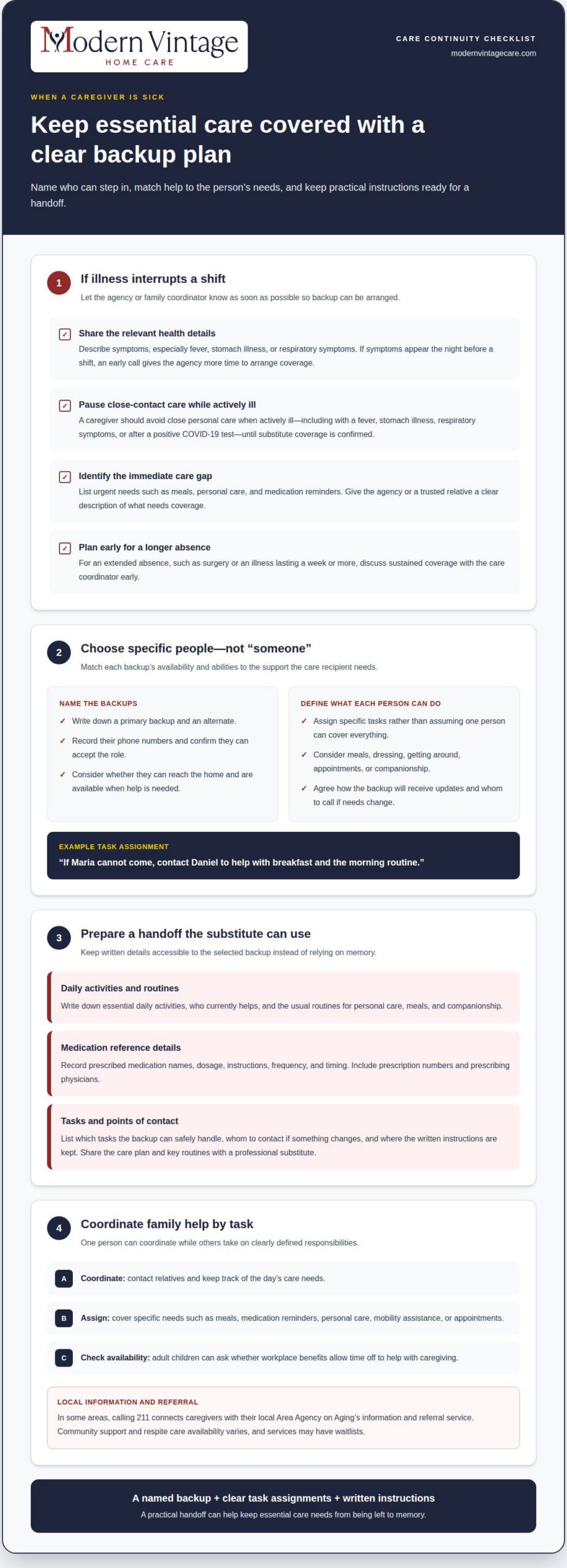
If you’re asking what happens if a caregiver is sick, start by telling the care agency or family coordinator as soon as possible. If symptoms appear the night before a shift, an early call gives the agency more time to arrange backup. Describe the symptoms, especially fever, stomach illness, or respiratory symptoms, because these can pose greater risks for a vulnerable care recipient. A paid caregiver should avoid close personal care until substitute coverage is confirmed.
A caregiver should stay home from close-contact care when actively ill, including with a fever, stomach illness, or respiratory symptoms, or after a positive COVID-19 test. Older adults and people with chronic conditions or weakened immune systems face higher risks of serious complications from common illnesses. To reduce exposure, limit close contact and arrange for someone else to provide hands-on assistance. If you’re still wondering what happens if a caregiver is sick, the next step is to arrange safe coverage for essential care.
Without backup, daily needs such as meals, personal care, and medication reminders may go unmet. A sick family caregiver may also be too unwell to make calls or coordinate help. Identify the urgent tasks first, then contact the agency or a trusted relative with a clear description of the gap. For an extended absence, such as surgery or an illness lasting a week or more, discuss sustained coverage with the care coordinator early.
Paid sick leave doesn’t have one answer for every caregiver in the United States; employment arrangements and applicable state rules matter. In Pennsylvania, a paid family caregiver employed through an agency is generally paid only for hours worked unless the employer offers paid sick time. If you can’t provide care, notify the agency or family promptly, explain which tasks need coverage, and share any immediate changes to the care recipient’s routine.
Informal caregivers can identify a nearby relative or friend as backup before an illness occurs. Adult children can ask whether workplace benefits allow time off to help with caregiving. In some areas, calling 211 connects caregivers with their local Area Agency on Aging’s information and referral service. Community support and respite care availability varies, and services may have waitlists, so explore options before an urgent gap arises. For a longer absence, early coordination gives family members more time to organize support.
2. Choosing a family member, friend, or professional backup caregiver
A useful backup plan names a specific person, not simply “someone in the family.” Choose a relative, friend, or professional caregiver who can step in when the usual caregiver is unavailable. Consider the care recipient’s needs, the backup person’s ability to help, and whether they can reach the home. If the person relies on help with meals, dressing, or getting around, specify who can cover each task.
Start by writing down the care recipient’s essential daily activities and who currently helps with them. Include medication routines, personal care, meals, and companionship, then identify which tasks a potential backup can safely handle. For medication support, record the prescribed medication names, dosage, instructions, frequency, and timing. Include prescription numbers and prescribing physicians so the substitute has clear reference details. Keep the information accessible to the selected backup, rather than relying on the family caregiver’s memory.
A family member may be a good backup if they already know the recipient’s preferences and home routine. A friend or relative could take on a defined task, such as preparing lunch or staying during an appointment. Discuss the request in advance, including how they will receive updates and whom to call if a need changes. Match each person’s availability and abilities to specific tasks rather than assuming one person can handle every responsibility.
A professional backup may be more suitable when daily care involves several tasks or the family network cannot cover the schedule. A care agency may have backup caregivers available for a missed shift, but a replacement may not match the recipient’s preferred caregiver. Share the care plan and key routines so the substitute can provide more consistent support. If a professional is the backup, clarify which care tasks are needed and how the agency receives notice of an absence.
Make the plan usable. Write down the primary backup and an alternate, their phone numbers, the care tasks they can cover, and where instructions are kept. Add a simple example: “If Maria cannot come, contact Daniel to help with breakfast and the morning routine.” Ask each named person whether they understand the role and can accept it. Planning ahead can often save families money by helping them organize support before an urgent gap develops.
If the care recipient depends on one caregiver for medication or daily activities, don’t leave those needs to memory or a last-minute handoff. Keep written instructions available and assign each essential task to a named backup. For ongoing help with personal routines, structured personal care support may fit into the broader plan.
3. Arranging support from family
When a caregiver is ill, one person can coordinate backup while others take on specific tasks. For example, one adult child can contact relatives, while another covers meals and a nearby family member visits the senior. A clear division keeps urgent needs from getting lost in a group chat or being left for the sick caregiver to manage.
Start with the care plan and mark what needs to happen that day. List meals, medication reminders, personal care, mobility assistance, and appointments, then assign someone to each task. If a senior needs help getting dressed before breakfast, name the relative who will arrive and explain what assistance is needed. Focus on essential responsibilities rather than asking family members to take on everything at once.
Ask adult children whether workplace benefits allow them to take time off to help. Each person can offer a specific time or task, such as preparing dinner after work or covering a morning visit. Relatives who live farther away may still help coordinate calls, arrange transportation, or keep the care calendar current. Choose one family manager to update everyone when plans change.
Agree on how family members will share updates. Choose a group text or a single phone contact, and have the manager record who accepted each responsibility. If one relative can cover Tuesday’s visit but not Wednesday’s, write that distinction into the schedule. A written handoff helps prevent duplicate trips and assumptions that someone else has handled a task.
Make room for the family caregiver’s recovery. A spouse or loved one may become ill or experience burnout, so the plan should include a way to pause their duties. Relatives can divide essential tasks for a short period and revisit the schedule as the caregiver recovers. If the care recipient receives hospice support, respite care may also be part of the family’s planning.
Some situations require more than relatives can provide. If the family caregiver becomes seriously ill and the senior depends on them for total care, the family may need to consider professional coverage or a facility or hospital stay. Discuss this possibility in advance, while the usual caregiver can explain the person’s routines and needs. A prepared care plan helps relatives make decisions based on the senior’s actual support needs, rather than panic or guesswork.
Planning ahead can often save families money by making responsibilities clear before care becomes urgent. Revisit the arrangement when a relative’s work schedule changes or the senior’s daily needs shift. A family manager can keep the current plan accessible, note who is available, and make sure each family member knows whom to contact when the caregiver cannot continue.
4. Flexibility with fill-in caregivers and visit schedules
A substitute caregiver may not know the person’s routine, preferred activities, or where household items are kept. Before the first visit, share practical details such as where breakfast supplies are stored and how the person likes to spend the morning. A short conversation with the care recipient can also introduce the fill-in caregiver and help them feel more familiar. Sometimes, a calm introduction matters as much as the schedule itself.
Families can introduce a backup caregiver before an illness creates an urgent gap. One or two visits a week can give the person receiving care time to become comfortable with a new face. Use these visits to show where supplies are kept, explain preferred routines, and point out activities the person enjoys. For example, a substitute can learn whether someone prefers conversation during lunch or quiet time afterward.
Keep the care calendar flexible when a substitute covers a shift. The visit may take place at a different time, depending on coverage and the person’s needs. If it moves from morning to afternoon, explain which activities can wait and which routines matter most. A clear handoff helps the substitute focus on essential support without trying to recreate every detail of a usual day.
When the schedule changes, tell the person receiving care what to expect. A simple explanation, such as “Jordan will visit after lunch today,” can reduce confusion and give them time to adjust. If the person has memory challenges, repeat the information calmly and keep the updated schedule visible. Note the change on the care calendar so family members know who is coming and when.
Weather can also affect visit timing. During dangerous conditions, the safety of caregivers and clients takes priority over keeping the schedule. An agency may ask a caregiver to arrive late for someone with a flexible schedule, or to stay late if driving home becomes unsafe. Families can identify which activities can shift, such as a later meal, and which needs require timely attention. This helps the agency make practical scheduling decisions while keeping the person informed.
Flexibility does not mean leaving the substitute to guess. Provide a concise handoff with the day’s priorities, household details, and the best way to reach the family contact. Give the substitute time to learn the routine, ask questions, and confirm where needed items are stored. Adjusting the visit time or an activity can make a temporary change easier for everyone.
5. Preparing emergency instructions
A backup care plan should explain what assistance the person needs to a friend, relative, or substitute. Keep instructions in one accessible place, such as a binder, and tell the designated backups where to find it. Include the daily routine, essential personal care tasks, and contact details for the family member coordinating help. Clear written steps reduce reliance on a sick caregiver’s memory.
Give medication information its own section. Record each prescribed medication’s name, prescription number, and prescribing physician, along with its dosage, instructions, frequency, and timing. For example, write when a medication is normally taken and any directions that accompany it. Keep the information current as prescriptions change, and make sure a substitute can locate it before providing care. Written details help prevent confusion during a handoff.
Add an hour-by-hour account of the care recipient’s usual daily routine. Note wake-up time, meals, personal care, rest, and regular activities. Describe practical preferences, too, such as where breakfast items are stored or which clothing the person can choose independently. A substitute can then follow familiar rhythms instead of guessing. If the person needs assistance with dressing or moving around, describe the task plainly and explain what support is usually provided.
Include contact details for the family contact, backup caregiver, and relevant care coordinator. Clarify who should be called if the scheduled caregiver becomes ill and who can decide whether to change the day’s plan. Family members who share caregiving can have defined roles, such as updating the calendar or contacting the friend covering a visit. Keep responsibilities specific so no one assumes another person has handled them.
Emergency instructions should also explain what to do when conditions disrupt the schedule. During dangerous weather, a home care agency should have a plan for telling caregivers what to do, which may include staying put. Include the family’s communication method and the person responsible for sharing schedule updates. A practical example is a note directing the substitute to contact the family manager if weather affects the planned arrival or departure.
Review the binder when the medication list, daily routine, or backup contacts change. Ask a friend or family member to locate the instructions and explain the next steps, so missing details become apparent before an urgent handoff. For help with daily routines and personal care, explore personal care support as part of the care plan.
Modern Vintage Home Care
Modern Vintage Home Care can help families plan support when a regular caregiver becomes ill or needs time to recover. Its in-home care offerings include personal care, companionship, and Alzheimer’s and dementia care, shaped around the person’s daily needs and familiar routines. Families may consider this support when relatives cannot cover essential tasks or when ongoing assistance is needed beyond a brief absence. A clear care plan helps identify the routines, preferences, and daily activities that matter most to the person receiving care. This can give family members a practical starting point for discussing the right support. Contact Modern Vintage Home Care to talk about care for your loved one.
Make the next step part of the care plan
Knowing what happens if a caregiver is sick is only the beginning. Make sure your family can use the plan calmly when the usual routine changes. Agree on when to revisit the arrangement, such as after a change in daily needs or in who is available. A planned conversation helps everyone understand how support should adapt over time.
Talk through the plan with the person receiving care in a way that respects their preferences and independence. Their comfort with a new caregiver, changes to familiar routines, and need for companionship all matter. A plan that reflects the person, not just the schedule, gives family members a stronger starting point when circumstances change.
If you’d like help discussing care options for your family’s situation, talk with Modern Vintage Home Care. A thoughtful next step can help your family feel more prepared.
Frequently Asked Questions
When a Family Caregiver Gets Sick: What Comes Next?
First, determine whether the person receiving care is safe and which essential needs require attention today. If no backup can cover those needs, contact the care agency or family coordinator and explain the specific gap, such as help preparing a meal or getting dressed. Let the sick caregiver focus on recovery, and give the substitute a brief update about changes since the care plan was written.
As my spouse’s primary caregiver, what happens if I get sick?
If you are sick, another person may need to cover the tasks you usually handle for your spouse. Tell a trusted relative what your spouse needs today and share any written instructions. If you cannot coordinate calls yourself, ask a family member to take that role. Once immediate support is arranged, give yourself time to rest rather than trying to manage every detail while unwell.
Does Your Loved One Lose Coverage While You’re Out?
A caregiver’s absence and a person’s insurance or program eligibility are separate questions. A missed visit may leave a practical gap in assistance, but it doesn’t by itself establish whether an existing benefit or authorization continues. For example, a family can ask the program or care coordinator whether an approved service can be used by a substitute caregiver. Keep any response with the care plan so the family can refer to it later.
Does health insurance or Medicaid cover respite or emergency backup care?
Medicare and most health insurance plans typically don’t cover non-medical home care, such as help with daily activities or companionship. Medicaid coverage for respite or backup care depends on the state program and the person’s eligibility and authorization. Review the person’s current plan documents, then ask the Medicaid case manager which services and providers the authorization includes. Don’t assume a temporary care gap automatically qualifies for additional coverage.
How can families find affordable emergency home care or respite care in the United States?
Start by listing the exact tasks and hours that need coverage, then separate urgent needs from tasks that can wait. This helps family members divide practical duties and explore respite options without arranging more support than the situation requires. In some areas, calling 211 can connect caregivers with local aging and community referrals; availability varies, and services may have waitlists. Planning ahead can often help families organize support and manage expenses.
