

You notice your father’s favorite sweater is stained, or perhaps his kitchen in Sugar Land feels unusually quiet and unkept. What if the very thing you’re afraid of mentioning is actually the key to helping him stay in the home he loves? It’s natural to feel a wave of guilt or worry when you first spot the signs your parent needs in-home care. You don’t want to overstep, yet you know that ignoring these subtle shifts could compromise his safety and well-being.
We understand that you’re trying to balance your role as a family member with the growing demands of being a caregiver. It’s a heavy weight to carry alone. This guide provides a clear checklist of red flags to watch for, from social withdrawal to missed medications. You’ll learn how to distinguish between normal age-related forgetfulness and more serious memory concerns. We’ll also explore how local Houston resources can support your family, allowing your parent to maintain their spirit and independence while receiving the gentle, professional assistance they deserve.
Key Takeaways
- Learn to distinguish between normal aging and the critical indicators that suggest a need for professional support to ensure your loved one stays safe at home.
- Identify physical and cognitive red flags, such as changes in personal hygiene or sudden mood shifts, that help you recognize the signs your parent needs in-home care.
- Discover why social withdrawal or financial confusion often serve as early warnings of safety risks for seniors living in the Houston area.
- Explore gentle ways to initiate a conversation about support that preserves your parent’s dignity and focuses on their long-term independence.
- Understand how flexible services like Quick Care or automated check-ins can provide peace of mind without the stress of a sudden move to a facility.
Understanding the Shift: Why Early Detection Preserves Independence
It’s often a quiet realization. You visit your parent’s home and notice things aren’t quite as they used to be. Perhaps the mail is stacking up, or the garden they once loved looks neglected. Distinguishing between normal aging and the specific signs your parent needs in-home care is the first step toward ensuring their safety. While some forgetfulness is expected, a pattern of missed medications or unexplained weight loss suggests it’s time for a supportive presence. You aren’t overreacting; you’re paying attention.
Identifying these shifts early serves a vital purpose. It prevents the sudden “crisis move” to an assisted living facility that often follows a fall or an unexpected medical emergency. By acting now, you become a compassionate advocate rather than a bystander. You’re giving your parent the scaffold they need to stay in the home they love. There is a profound psychological benefit to aging in place, especially within the familiar streets of Sugar Land or Missouri City. Staying home preserves their sense of identity and their connection to the community.
To gain a broader perspective on these services, you might wonder, What is in-home care? At its heart, it’s a way to provide professional assistance while keeping the individual’s daily routine intact. It prioritizes the individual’s comfort while addressing the practical challenges of daily life.
The “Aging in Place” Philosophy
Quality of life is deeply tied to routine. For many seniors, their spirit is linked to the small details of their day; the specific chair they sit in or the neighbors they wave to. Professional care acts as a bridge that maintains these connections. It isn’t a barrier that takes them away from family. Instead, it ensures that your time together is focused on connection rather than chores. When a professional handles the daily tasks, you can return to being a son or daughter. This preserves the dignity of the individual while providing the family with much-needed peace of mind.
Recognizing the Emotional Weight on the Family
Taking on the role of a family caregiver is a noble act, but it’s also incredibly demanding. Many adult children experience deep guilt when they realize they can’t manage every detail of their parent’s life alone. You don’t have to do it all. It’s vital to seek out respite care for family caregivers to prevent burnout and maintain your own well-being. If you are exhausted, you cannot provide the best support for your loved one.
Shifting your perspective is key. You aren’t “parenting your parent.” You are becoming their partner in safety. By recognizing the signs your parent needs in-home care early, you ensure they remain the author of their own story for as long as possible. It is a transition that, when handled with gentleness, strengthens the family bond.
Physical and Environmental Red Flags in the Home
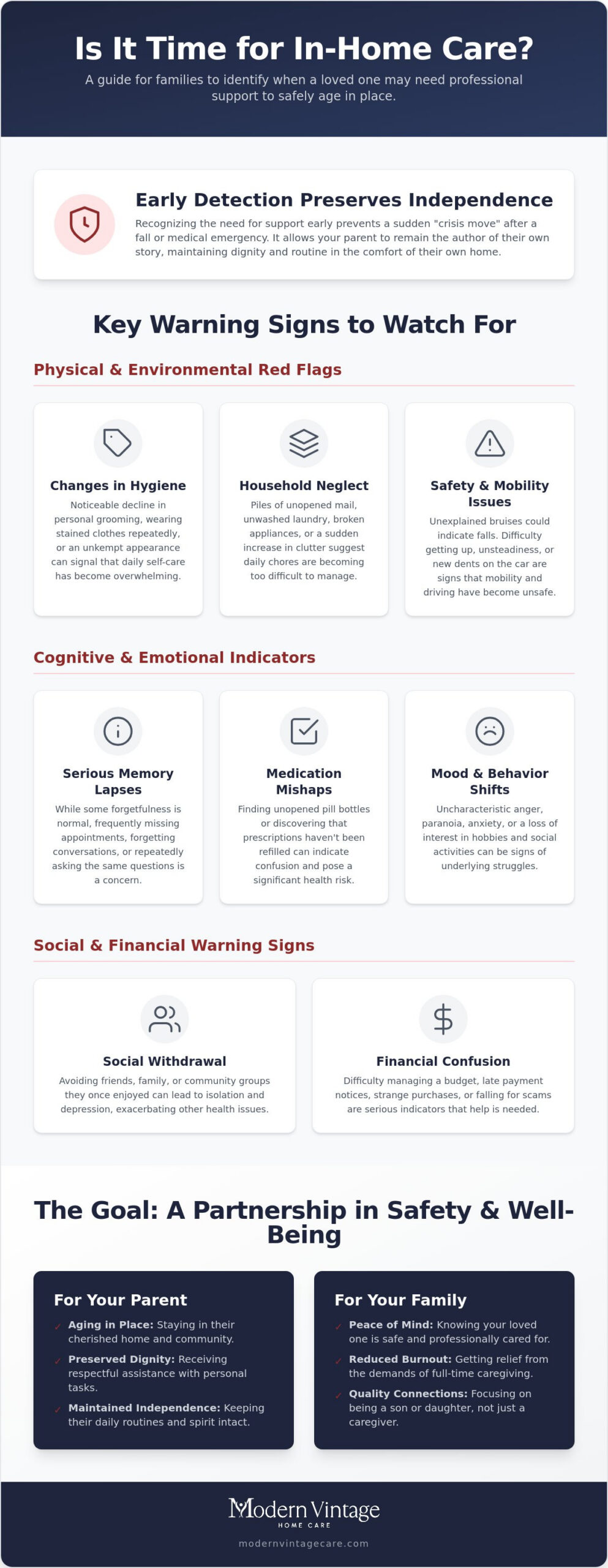
When you visit your parent’s home, the physical environment often speaks louder than words. If you notice your mom’s kitchen is filled with expired jars or your dad has lost a noticeable amount of weight, these are clear signs your parent needs in-home care. These changes aren’t always about a lack of appetite. Often, they stem from the physical exhaustion of standing at a stove or the confusion of navigating a grocery store. Malnutrition is a serious risk for seniors living alone, making a well-stocked and safe kitchen a priority for their health.
Hygiene is another critical indicator. If a parent who was once meticulous about their appearance now wears the same stained shirt for days, it’s a signal that the effort of bathing or doing laundry has become overwhelming. Recognizing these signs your parent needs in-home care allows you to step in before a health crisis occurs. According to the National Institute on Aging, these subtle shifts in self-care are frequently the first evidence that a senior requires extra help to maintain their dignity.
Walk through the rest of the house and look for patterns of neglect. A home that is suddenly cluttered or smells of urine indicates that the daily maintenance of a household is slipping. Watch for these specific environmental changes:
- Unopened mail and bills piling up on the counter.
- Laundry that remains unwashed or unfolded for weeks.
- Broken appliances or lightbulbs that haven’t been replaced.
- New dents or scratches on their car.
Keep an eye out for unexplained bruising on their arms or legs. This often points to frequent, unreported falls. Your parent might hide these incidents out of fear of losing their independence, but these marks are silent requests for a safer environment.
Activities of Daily Living (ADLs) and Safety
Clinicians often use Activities of Daily Living, or ADLs, as the primary benchmark for determining the level of care a person needs to live safely. These include basic tasks like dressing, grooming, and oral hygiene. If your loved one struggles with these, the risk of accidents increases. For example, a parent who finds it difficult to stand for long periods may accidentally leave a burner on or risk a burn while trying to prepare a meal. Professional personalized support can mitigate these risks while keeping them in their own home.
Medication Management and Health Maintenance
Managing multiple prescriptions is a complex task. You might find your parent is forgetting doses or taking incorrect amounts of vital medications. Some seniors engage in “pill hoarding,” keeping old or expired medications out of a sense of frugality or confusion. This is dangerous. Implementing proper medication management for elderly patients significantly reduces emergency room visits and prevents adverse drug interactions. It ensures that the health routine remains steady and reliable every single day.
Cognitive and Emotional Indicators: Beyond Forgetfulness
While physical changes are often visible, cognitive shifts can be more subtle and emotionally taxing for families to witness. You might notice your parent repeating the same story three times in a single afternoon or becoming uncharacteristically irritable during your weekly visit. These behaviors are common signs your parents need extra help with daily life. It’s not just “getting older”; it’s a signal that their environment needs to be more structured to maintain their sense of peace and safety.
A particularly telling sign is the “sundowning” effect. If you notice your loved one becomes increasingly agitated, anxious, or confused as the sun begins to set, they may be experiencing a common symptom of cognitive decline. This period of the day can be exhausting for both the senior and the family caregiver. Professional support during these transition hours provides a calming presence, ensuring that the evening remains a time of rest rather than distress. By identifying the signs your parent needs in-home care before a major safety incident occurs, you preserve their ability to stay in their own home.
Signs of Early-Stage Cognitive Decline
Misplacing items is common, but pay attention to where those items end up. Finding car keys in the freezer or a wallet in the dishwasher are specific signs your parent needs in-home care. These occurrences suggest that the brain is struggling to process routine sequences. When conversations become difficult because they can’t find the right words, it can lead to frustration and withdrawal. Implementing specialized dementia home care services in Sugar Land helps manage these challenges through predictable routines and memory-focused engagement that honors the individual’s history.
Depression and Social Isolation
Emotional health is just as critical as physical safety. If your parent has stopped attending their favorite community events or seems to sleep through most of the day, they may be struggling with depression or extreme isolation. This withdrawal often accelerates cognitive decline because the brain isn’t receiving enough social stimulation. Companionship care provides that vital human connection. It bridges the gap between being safe and truly thriving, ensuring your parent feels seen and valued. This social scaffold allows them to maintain their spirit while staying within the comfort of their own neighborhood.
Social and Financial Warning Signs for Houston Families
Managing a household in a bustling area like Fort Bend County requires a high level of organization and awareness. When you visit your parent’s home in Houston, look beyond the physical environment and check the mail pile. Unopened envelopes, past-due notices, or a sudden influx of junk mail can indicate that your loved one is feeling overwhelmed by daily administrative tasks. These are subtle but definitive signs your parent needs in-home care, as financial confusion is often one of the first indicators of cognitive strain.
Social engagement is another vital metric for well-being. If your parent has stopped attending their weekly service at their local church or has dropped out of community meetings they once enjoyed, it’s time to ask why. Often, the reason isn’t a lack of interest but a fear of navigating the complexity of Houston traffic or the stress of finding parking at busy local venues. This withdrawal can quickly lead to a decline in spirit and mental clarity. Identifying these shifts early allows you to provide support before isolation takes a toll on their health.
Driving Safety and Mobility Issues
Driving in the Greater Houston area is demanding even for the most experienced motorists. New dents or scratches on the car, or reports of getting lost on familiar routes to the grocery store, suggest that reaction times are slowing. Recognizing the signs your parent needs in-home care includes observing how they handle themselves in traffic. The conversation about “taking away the keys” is incredibly difficult because it represents a significant loss of independence. However, our Concierge Services provide safe transportation and assistance with errands, allowing your parent to stay active in their community without the stress of being behind the wheel.
Financial Vulnerability and Scams
Financial vulnerability is a growing concern for seniors in our digital age. You might notice unusual purchases, an inability to manage a simple monthly budget, or a parent who is suddenly defensive about their spending. Without oversight, seniors are more likely to fall victim to sophisticated phone scams or aggressive telemarketers. Providing a layer of protection through routine check-ins ensures that their assets are safe and their bills are paid on time. Recognizing when a parent is overwhelmed by these responsibilities is a compassionate act of protection. If you are worried about their safety on the road or their financial security, it may be time to explore personalized care options that protect their legacy and their well-being.
Dignified Next Steps: Transitioning to Support in Sugar Land
Once you’ve identified the signs your parent needs in-home care, the next step is often the most daunting: talking to them about it. It’s a delicate balance of honoring their history while protecting their future. Instead of presenting care as a loss of freedom, frame it as the very tool that allows them to remain in their Sugar Land home. This transition doesn’t have to happen overnight. By choosing a local agency that understands the rhythm of life in Missouri City and surrounding neighborhoods, you ensure the support feels like a natural extension of the family rather than an intrusion.
Success in these discussions often depends on how you start. Using “I” statements helps reduce defensiveness because it focuses on your feelings rather than their perceived failings. For example, you might say, “I feel worried when I see the stairs are becoming difficult, and I want to make sure you’re safe so you can stay here comfortably.” This shifts the focus from “needing help” to “safety and staying at home.” It’s vital to involve your parent in the selection of their caregiver to give them a sense of control. Approaching these conversations as a collaborative effort positions you as a trusted partner in their safety rather than an authority figure.
The Conversation: A Script for Success
Focus the dialogue on specific goals, such as maintaining their garden or continuing their weekly outings. When a parent understands that a caregiver can handle the heavy chores, they often see the value in having more energy for the things they love. If they remain resistant, suggest a trial period with “Quick Care” visits. These short sessions allow them to get used to a new person in their space without feeling like they’ve committed to a major lifestyle change. This gradual entry helps build trust and proves that professional support is a bridge to independence, not a barrier.
Flexible Support Options for Every Stage
Many families worry that bringing in help is an all-or-nothing decision. In reality, support is highly scalable to match the specific signs your parent needs in-home care that you’ve observed. You might start with automated medication reminders or automated check-ins that provide peace of mind without a constant physical presence. For those with more complex needs or memory concerns, 24-hour home care in Houston offers round-the-clock safety and companionship.
If your parent is a former service member, you should also explore veterans home care benefits in Sugar Land. These resources can significantly offset costs and provide the high-quality support they earned through their service. Scheduling a professional geriatric assessment is another practical way to determine specific needs based on clinical facts. Whether you begin with small check-ins or full-time support, the goal remains the same. You are providing the scaffold that allows your parent’s spirit to thrive in the place they call home.
Ensuring a Safe and Dignified Future at Home
Recognizing the signs your parent needs in-home care is the first step toward a safer, more fulfilling chapter for your entire family. By paying attention to environmental shifts and cognitive changes today, you prevent future crises and protect your loved one’s ability to stay in the home they love. Whether you begin with simple check-ins or require specialized memory care, professional support acts as a bridge to independence. It preserves the spirit of the individual while lifting the heavy weight of worry from your shoulders.
As a licensed Texas home care provider with specialized Alzheimer’s and dementia training, we are proud to serve families across Sugar Land and Greater Houston. We act as your steady advocate, ensuring every detail of daily life is managed with the gentleness and expertise your parent deserves. You don’t have to navigate this sensitive transition alone. Our team is here to provide the calm reassurance you need to move forward with confidence.
Schedule a Compassionate In-Home Assessment Today
Taking this proactive step ensures your parent remains safe, respected, and deeply connected to the community they call home.
Frequently Asked Questions
How do I know if my parent is just being forgetful or has dementia?
Normal aging involves occasional lapses, like forgetting where they put their glasses, while dementia interferes with daily life and safety. If your parent forgets how to use common objects or gets lost in their own neighborhood, these are more serious indicators. Look for changes in their ability to follow sequences or hold a conversation. If you notice these shifts, it’s a good time to consult a professional for a clinical assessment.
What is the best way to bring up the topic of in-home care without offending them?
The most effective approach is to use “I” statements that focus on your own feelings of worry rather than their shortcomings. Frame the discussion around the goal of staying at home safely for as long as possible. You might say, “I feel anxious when I see you struggling with the stairs, and I want to make sure you’re safe.” Involving them in the caregiver selection process also helps preserve their dignity.
Can in-home care really provide the same safety as an assisted living facility?
In-home care often provides a higher level of safety because it offers one-on-one attention that facility staff can’t always match. A dedicated caregiver focuses entirely on your parent’s unique environment and routine. This focused support helps you identify the specific signs your parent needs in-home care before a fall or emergency happens. It allows for immediate intervention in a familiar setting where they feel most comfortable.
What if my parent refuses to let a caregiver into the house?
If your parent is resistant, start with a “trial period” or low-impact services like Quick Care to build trust slowly. Often, the refusal stems from a fear of losing their independence. Positioning the caregiver as a “personal assistant” to help with chores or transportation can make the transition feel less like a loss of control. Once they experience the benefits of the extra help, their defensiveness usually fades.
Are there specific home care benefits available for veterans in Sugar Land?
Yes, eligible veterans and their surviving spouses in the Sugar Land area can access the VA Aid and Attendance benefit. This program provides monthly payments to help cover the costs of in-home support for those who need assistance with daily tasks. It’s a valuable resource that can make professional care much more accessible. We recommend checking your eligibility early to ensure you receive the support you’ve earned through your service.
How much does in-home care cost compared to a nursing home in Houston?
In-home care is generally a more affordable option than a nursing home in Houston, particularly when your parent only needs part-time support. Nursing homes involve high monthly facility fees regardless of the level of care provided. With in-home services, you only pay for the hours required. This flexibility allows families to scale support up or down as needs change, making it a sustainable choice for many.
What are automated check-in services and how do they work?
Automated check-ins use technology to provide routine safety calls or medication reminders without requiring a physical presence in the home. These systems verify that your parent is safe and adhering to their health routine. If a call goes unanswered, the system immediately alerts family members or designated contacts. It’s a great digital safety net for seniors who only need a small amount of oversight to maintain their independence.
Does Medicare cover the cost of non-medical in-home care?
Medicare typically does not cover the cost of ongoing, non-medical custodial care such as companionship or help with personal hygiene. It’s designed to pay for time-limited skilled nursing or therapy when ordered by a physician for a homebound patient. Most families fund non-medical signs your parent needs in-home care through private pay, long-term care insurance, or specific veterans’ benefits. It is important to plan ahead for these expenses.