
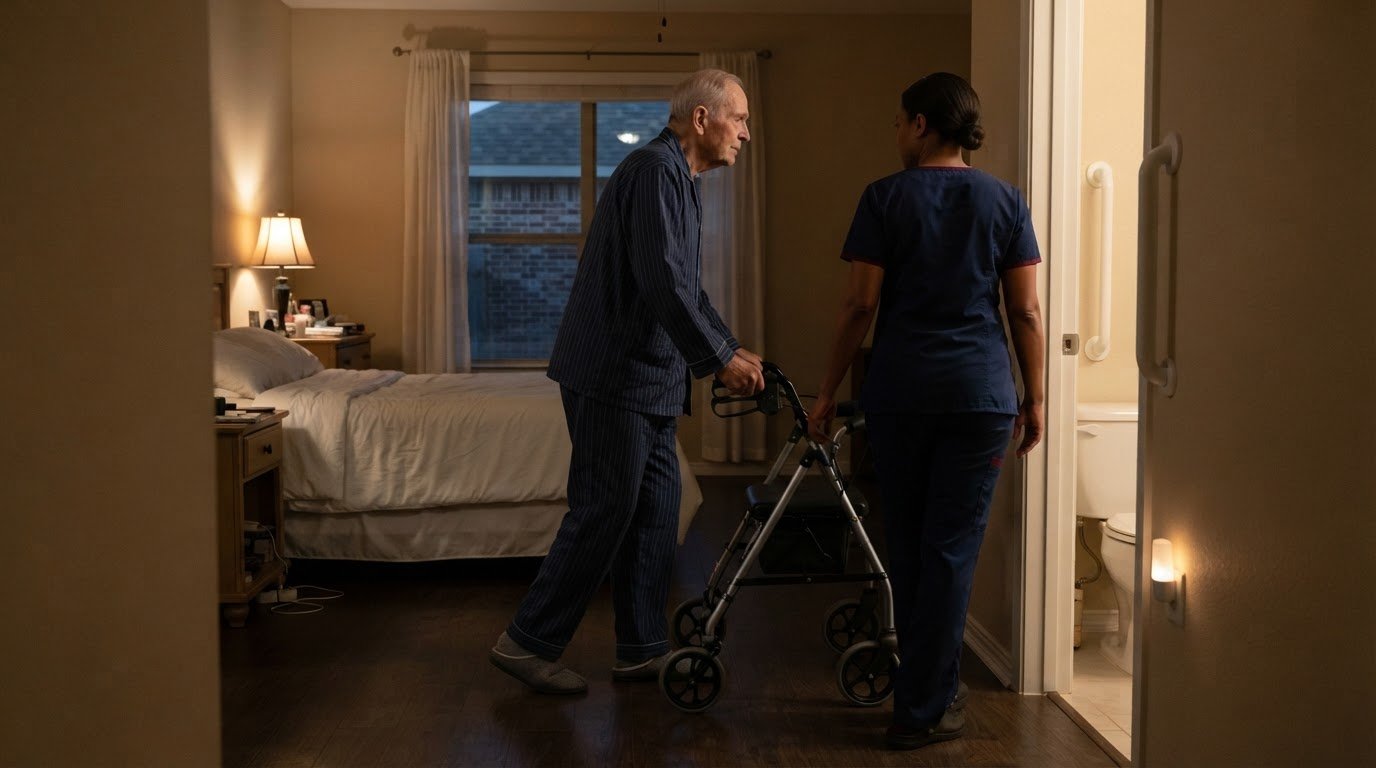
Safety at home depends on steady support, not just someone being nearby. 24-hour home care in Sienna Plantation provides continuous assistance through multiple caregivers working shifts of 8 to 12 hours. Care can include help with personal routines, meals, companionship, and everyday tasks, with support tailored to the person’s needs.
It’s understandable to want reassurance that a loved one won’t be alone when they need help, especially when changing health needs make daily routines harder to manage. Around-the-clock care can offer a consistent presence at home, while live-in care is a different arrangement with a caregiver staying in the home. The right fit depends on the kind of assistance needed throughout the day and night.
This article explains how care supports safety, daily activities, chronic conditions, meals, and housekeeping, and clarifies the difference between live-in and around-the-clock arrangements. You’ll also learn what shapes the care plan and how professional support can help a loved one maintain comfort and independence at home.
Key Takeaways
- See how personalized help with everyday activities can support comfort, dignity, and independence at home.
- Learn how care routines can adapt to Alzheimer’s, dementia, and changing support needs.
- Understand how meal preparation and light housekeeping can contribute to a more manageable daily routine.
- Explore what to consider when matching care arrangements to a loved one’s needs throughout the day and night.
- Find out how professional in-home support can bring practical help and companionship into the family’s care plan.
Assistance with activities of daily living
In Texas, licensing requirements depend on the services an agency provides. Non-medical assistance with bathing, dressing, meals, and mobility is distinct from skilled nursing or home health care. Knowing which type of service is involved helps clarify the applicable requirements.
Daily living assistance focuses on routines that can become difficult with age, reduced mobility, or memory changes. A caregiver may help a senior choose clothes, prepare for a shower, get dressed, and move between rooms. Support can be tailored to specific tasks: someone who dresses independently may need help only with buttons, shoes, or organizing clothing. This preserves choice while providing practical assistance.
Personal care can include help with grooming, toileting, and bathing. A caregiver can prepare towels and clothing before a bath, offer steady assistance as the person enters or leaves the bathing area, and allow time for each step. Respectful communication matters. Explaining what comes next and asking before offering hands-on help can make a private routine feel more comfortable and controlled.
Mobility assistance starts with understanding how the person usually moves around the home. A caregiver can stay close during a transfer from bed to chair, keep walking routes clear, and help the person use familiar supports. Practical details matter for reducing trip hazards: loose rugs, cluttered walkways, and items stored out of reach can complicate movement. Caregivers can help keep paths clear and frequently used belongings accessible.
Walking assistance should match the senior’s pace and abilities. A caregiver may walk beside someone going from the bedroom to the kitchen, pause when they need a rest, and offer an arm if appropriate. The caregiver can also notice changes in steadiness or confidence and share those observations with the family. This support can help seniors stay involved in familiar routines.
Non-medical in-home assistance can connect personal care with the ordinary rhythm of the day. A caregiver might help someone wash up, get dressed, move to the dining area, and get comfortable before a meal. If a senior tires easily, the routine can be broken into manageable steps with pauses between activities. The goal is to assist with practical tasks, not take over what the person can still do independently.
Families can describe which activities feel difficult, such as stepping into the shower or walking to the bathroom at night. These specific examples help shape a care routine around the person’s preferences, abilities, and home environment.
Requirements depend on the services provided. Non-medical help with daily activities is distinct from skilled nursing or home health care, and the service category determines which requirements apply.
Specialized and chronic-condition support
Chronic conditions can make familiar routines less predictable, so support works best when it respects the person’s established preferences. For example, a caregiver can help someone with memory changes get ready in the same order each morning, using familiar clothes and simple, calm reminders. A steady routine can reduce confusion without rushing or taking away choices. Good support recognizes what the person can do independently and where assistance is useful.
Bathing, dressing, and toileting may require different levels of help from one day to the next. A caregiver can set out clothing, explain each step, and offer support while preserving privacy. Toileting assistance may include walking with the person to the bathroom and helping with clothing. If the person feels unsteady or confused, a slower pace and clear instructions can make the routine easier to manage.
After a hospital stay or surgery, everyday tasks may feel more tiring than before. Non-medical in-home assistance can help with getting dressed, preparing a meal, or moving between rooms, while family members follow the discharge instructions from the care team. A caregiver can also share relevant changes in routine or comfort with the family. This support helps organize daily life at home, but it does not replace medical care.
Wandering or sleepwalking calls for attentive, person-centered supervision. If someone gets up at night and begins walking, a caregiver can approach calmly, offer reassurance, and guide them toward a familiar, safe place. Families can explain common patterns, such as waking and heading toward the kitchen, so the care routine reflects the person’s habits. Avoid startling or arguing; gentle redirection can help preserve dignity.
Alzheimer’s and dementia support centers on familiar cues and steady interaction. A caregiver can use the person’s preferred name, offer one simple choice at a time, and keep everyday objects in their usual places. For instance, placing a sweater beside the chair may help someone follow a morning routine with less prompting. Families seeking memory-focused support can consider how consistent companionship and personal assistance fit into the day.
Care needs can change as a condition progresses or a person returns home from a facility. Share practical details such as preferred bathing times, signs of fatigue, and activities that bring comfort. These examples help shape support around real routines rather than assumptions. For someone receiving hospice support, companionship and help with daily comfort can also give family caregivers more space to focus on meaningful time together.
24/7 And live-in care arrangements
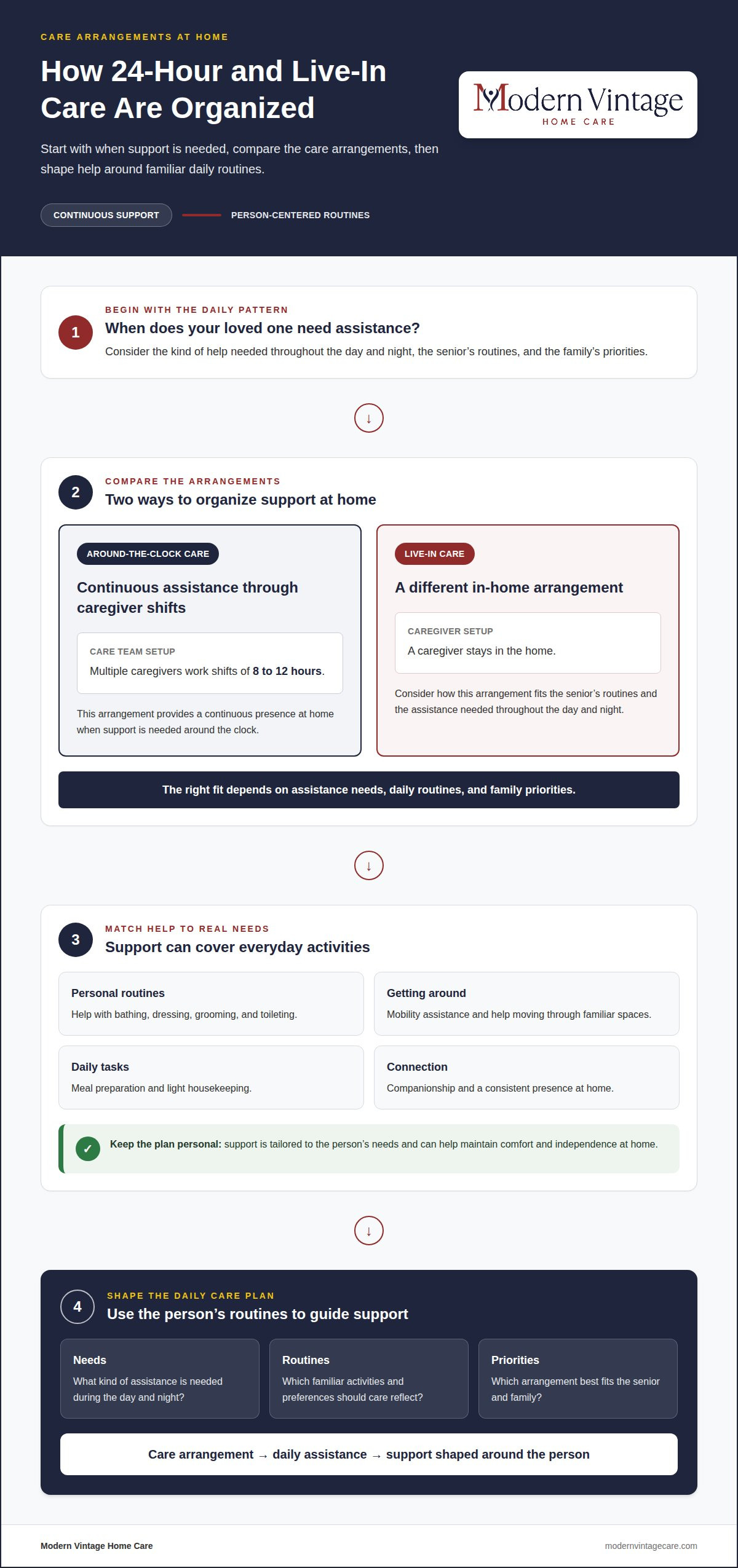
Around-the-clock and live-in care are different ways to organize support at home. The right arrangement depends on when assistance is needed, the senior’s routines, and the family’s priorities.
Arranging and starting care with a home care provider
Arranging care starts with a practical conversation about the senior’s daily routine, mobility, memory, and the times when help is most needed. Families can share examples, such as difficulty getting ready in the morning or confusion after dark. These details help shape a care plan, identify appropriate coverage, and clarify how caregivers will coordinate support.
For 24-hour home care in Sienna Plantation, continuous coverage uses multiple caregivers working shifts of 8 to 12 hours. Live-in care instead involves a caregiver staying in the home. These arrangements differ in how coverage is organized, so families can consider whether support is needed through changing shifts or a live-in setup. The senior’s overnight routine and need for assistance help inform that decision.
When discussing an agency’s services, ask how the care plan will reflect the senior’s routines, how caregivers coordinate, and how support addresses dementia-related needs or mobility assistance. Ask how observations are shared with family members. Clear answers about how the proposed arrangement fits the person’s daily needs make the service easier to understand before care starts.
When hiring a 24-hour caregiver, ask how shift handoffs are handled, what personal care tasks are included, and how changes in routine are communicated. Families can also describe a typical night or morning and ask how the caregiver would support those activities. Specific examples make it easier to judge whether the proposed approach suits the senior.
Respite and overnight care alternatives
Respite care can support families when a family caregiver needs time away. Overnight needs can also be included in planning, especially if a senior wakes frequently, experiences dementia-related confusion, or needs help moving around at night. Live-in and around-the-clock arrangements organize assistance differently; the person’s routine helps determine which may fit.
Families in Sienna Plantation can consider respite support when caregiving responsibilities need to be shared for a period. The respite care support option may help families plan a break while maintaining support for a loved one. Share the expected routine, including nighttime mobility or memory-related needs, so the care plan reflects the hours when assistance matters most.
Meal preparation and light housekeeping
Meal preparation can make the day easier when shopping, standing, or handling kitchen tasks has become tiring. A caregiver may prepare a familiar breakfast, such as oatmeal and fruit, or assemble a simple lunch the senior enjoys. Families can share preferred foods, usual mealtimes, and relevant instructions from the care team. This helps keep meals consistent with established routines and personal preferences.
Support can include setting out ingredients, preparing and serving a meal, and tidying the kitchen afterward. A caregiver might make a sandwich, place a drink within reach, and clear used dishes after the senior finishes eating. If the person likes to participate, the caregiver can invite them to choose between familiar options or help with a simple task. Involvement can support independence without making the person feel rushed.
Meal routines should reflect the individual, not a generic menu. An older adult who prefers smaller meals may feel more comfortable with a light breakfast and an afternoon snack, while someone else may enjoy sitting down for a full meal. Families can explain favorite recipes, foods the person avoids, and customary mealtimes. Caregivers can follow these preferences and relevant care instructions rather than assume what the person should eat.
Light housekeeping helps keep commonly used spaces orderly and usable. A caregiver may wash dishes, wipe kitchen counters after meal preparation, fold laundry, or straighten the living room. Tasks can focus on the areas used during the day, such as clearing a path from the bedroom to the kitchen or putting clean towels in the bathroom. A considerate approach means working alongside the senior where possible, rather than treating their home as a checklist.
Families can identify which household tasks matter most for daily comfort. For one person, clearing the dining table may make meals easier; another may value fresh sheets and neatly folded clothes. A short, practical list helps caregivers prioritize what matters. If a senior wants to participate, they might sort laundry while the caregiver handles washing and folding. Shared routines can keep the person engaged and help maintain a familiar home environment.
In a consistent care routine, meal preparation and light housekeeping fit around the senior’s schedule. A caregiver can prepare lunch after a morning activity, then tidy the kitchen before helping the person settle into the afternoon. Families can explain what “tidy” means to their loved one, including where dishes belong or how clothing is folded. These details make household support personal and keep attention on the daily tasks the senior needs help with.
What 24-hour home care includes
In Sienna Plantation, 24-hour home care means continuous in-home assistance organized around a senior’s routines and support needs. Around-the-clock coverage uses multiple caregivers working shifts of 8 to 12 hours, while live-in care is a different arrangement. Each plan should clarify what help is provided, when caregivers are present, and how family members receive updates.
Home care agencies serving Sienna Plantation are in-home providers that arrange support according to each person’s needs. Families can compare the proposed care plan’s coverage, caregiver coordination, and included assistance. Ask how the provider handles changes in mobility, dementia-related needs, or overnight routines, and how caregivers communicate observations to family. Clear, specific answers help show whether the service matches the senior’s day-to-day situation.
A comprehensive plan can bring together several kinds of non-medical assistance. A caregiver may help with personal routines, provide companionship, prepare meals, and support safe movement around the home. The mix depends on what the senior can manage independently and where help is needed. The plan should name practical tasks rather than rely on broad phrases such as “general support.”
It is also important to distinguish non-medical home care from medical services. A caregiver may help someone follow their established daily routine after a hospital stay, but this is not skilled nursing or home health care. The person’s medical team remains responsible for medical treatment and clinical instructions. Good coordination means family and caregivers understand their respective roles and share relevant changes appropriately.
For continuous coverage, multiple caregivers work shifts of 8 to 12 hours. Live-in care offers another structure, with a caregiver staying in the home; it can often be arranged within 48 hours, depending on the agency and the senior’s needs. These are distinct arrangements, so the family’s decision should account for when support is needed, including overnight, and how the senior responds to different caregivers.
Useful questions include: Which daily tasks are included? How are caregiver handoffs handled? How does the care plan adapt if mobility or memory needs change? What updates do family members receive? These questions make the service’s scope and communication practices clear before care begins.
Families can discuss a personalized in-home care plan that reflects a loved one’s routines and need for continuous assistance. The central takeaway is simple: around-the-clock care describes coverage, while the care plan defines the actual help provided.
Modern Vintage Home Care: 24-Hour Care
Modern Vintage Home Care offers 24-Hour Care for families seeking ongoing support at home in Sienna Plantation. Care can be shaped around daily routines and may include Personal Care, Companionship, or Alzheimer’s & Dementia Care, depending on the person’s needs.
This support may suit a loved one who needs help at different times of day or finds familiar routines harder to manage because of memory changes. Families can discuss the assistance their loved one needs and what kind of daily support would feel comfortable and respectful.
If you’re considering in-home support for someone you love, contact Modern Vintage Home Care to discuss their care needs.
Make the Next Step Personal
Choosing support starts with a conversation about what would make home feel more manageable for your loved one. Consider which moments cause the most concern, which routines they value, and where family members would welcome added support. These details can help shape a care plan around the person, rather than forcing daily life into a preset schedule.
For families considering 24-hour home care in Sienna Plantation, Modern Vintage Home Care offers 24-Hour Care, Alzheimer’s & Dementia Care, and Companionship. The next step is simply to share what your loved one’s days look like and what kind of assistance would help the family feel more supported. That conversation can clarify whether ongoing in-home care fits the situation.
Contact Modern Vintage Home Care to discuss care for someone you love. A thoughtful plan can begin with one clear conversation and grow from your family’s needs.
Frequently Asked Questions
What About Safety?
Safety depends on matching support to the senior’s specific risks and routines. A person who becomes disoriented after dark may need attentive supervision and familiar cues, while someone with limited mobility may need help moving between rooms. Families can discuss changing behaviors, nighttime habits, and household concerns when planning care. Medical treatment should be directed by the appropriate medical professional.
How much does 24-hour in-home care cost in Sienna Plantation?
The cost varies with the level of assistance, caregiver expertise, and additional services needed. A plan involving frequent personal assistance may differ from one centered on supervision and companionship. Modern Vintage Home Care provides customized quotes based on care needs rather than a fixed public price. Medicare typically doesn’t cover 24-hour home care, so families can consider how the care plan and possible payment sources fit their circumstances.
Does Medicare, Medicaid, or insurance cover 24-hour home care in Texas?
Medicare and most health-insurance plans typically don’t cover non-medical home care, such as help with daily routines or companionship. Medicaid coverage can depend on the person’s eligibility and the specific program benefits, so there isn’t one answer for every Texas family. Ask the relevant plan about the type of service and setting it covers. Long-term care insurance may also have its own eligibility terms.
What services are included in 24-hour home care for seniors?
Services can include personal care, companionship, meal preparation, light housekeeping, and help with everyday activities. A caregiver may help someone get ready for the day, prepare a meal, or stay engaged in a familiar activity. Modern Vintage Home Care also provides Alzheimer’s and dementia care and automated medication reminders. The care plan outlines the specific tasks included for the senior.
What are the risks and safety considerations for round-the-clock home care?
Round-the-clock care requires clear communication so important preferences and changes aren’t lost between caregivers. Families can discuss who shares updates, how routines are recorded, and how support responds when a senior’s needs change. Keep the care plan clear about personal preferences and the assistance required. Non-medical caregivers provide daily support, not clinical treatment, so medical concerns should be handled by appropriate health professionals.
