
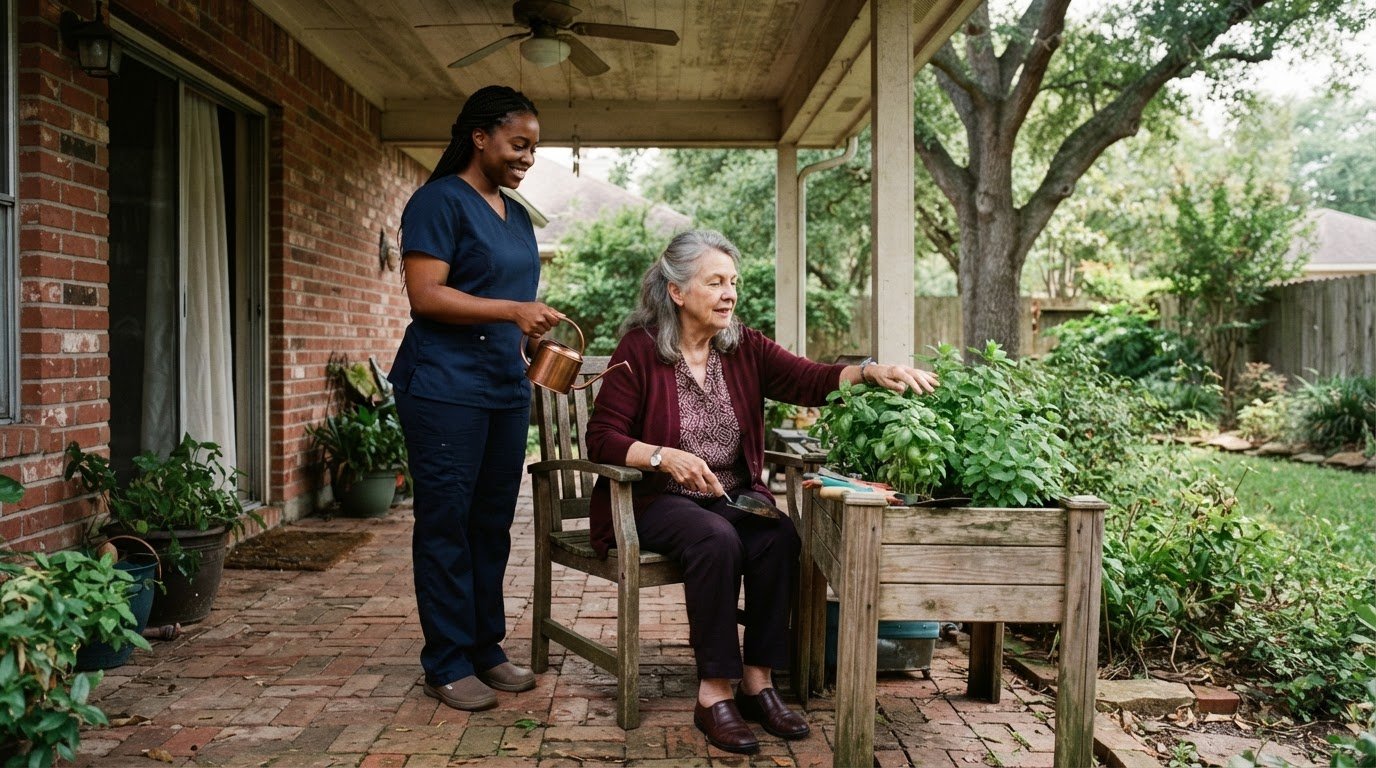
Daily support should help an older adult maintain familiar routines and feel comfortable at home. At-home senior support in Greatwood can provide professional help with everyday needs, tailored to the person’s routines, preferences, and changing circumstances.
It’s understandable to want dependable care that preserves a loved one’s independence. When looking for senior care near Sugar Land, consider both the daily tasks that need support and whether companionship or specialized memory care could help.
This guide explains what in-home support can include, what to consider when choosing care, and how Alzheimer’s and dementia support can fit into daily life. It also outlines how Modern Vintage Home Care’s services can address common needs and help your family identify a practical next step.
Key Takeaways
- Understand how in-home senior care can support daily routines while respecting an older adult’s preferences and independence.
- Learn how companionship and meaningful activities can encourage connection and engagement at home.
- See how help with household routines, groceries, and transportation can be planned around individual needs.
- Explore how Alzheimer’s and dementia support can bring structure and familiar, person-centered care to daily life.
- Find out when hospice support or respite care may help support an older adult and their family.
How do I find senior care near me in Sugar Land, TX?
Start by listing the daily tasks your loved one needs help with, such as dressing or preparing meals. Then match those needs with home care services, memory support, companionship, and a clear plan for consistent assistance.
Memory and Condition-Specific Care
Alzheimer’s and dementia support can center on familiar routines, calm communication, and help with everyday activities. For diabetes or Parkinson’s, note the person’s established routines and the practical support they need at home. Ask how a care plan will reflect personal preferences, changes in ability, and family observations. A written plan helps everyone understand their roles and recognize when needs change.
Comparing Home Care Options
Home care generally means assistance with daily activities and companionship in the person’s home. Home health care involves health-related services delivered at home, while assisted living provides housing alongside support with daily activities. The right option depends on the setting and type of help needed. Greatwood at Sugar Land describes assisted living as supporting daily activities while helping residents maintain independence.
Medicare, Medicaid, and long-term care insurance don’t have one shared coverage rule. According to the Centers for Medicare & Medicaid Services, Medicare home health coverage guidelines limit combined skilled-nursing and home-health-aide hours to 8 hours per day or 28 hours per week. Medicaid eligibility and long-term care policy benefits depend on their respective terms.
Assessments and Home-Care Safety
An in-home assessment can begin with a conversation about daily routines, mobility, personal care, memory, and companionship. Family members can describe the support needed, and the provider can use that information to shape a personalized care plan. Watch for concerns such as unexplained injuries, missed medication, sudden changes in hygiene, or a loved one seeming fearful around a caregiver.
In Greatwood, Sugar Land, and the surrounding area, in-home support can include personal care, medication reminders, companionship, and Alzheimer’s and dementia care. Needs may range from help getting dressed in the morning to company for conversation and familiar activities. Be specific about what matters most, such as bathing assistance, preparing a simple meal, or maintaining a regular routine.
Companionship can support social connection through conversation, shared hobbies, or familiar interests. A personalized plan should note what the older adult enjoys, which routines bring comfort, and what help supports independence. Families can also agree on how updates will be shared, so everyone has a consistent understanding of the care being provided.
For Fort Bend County families exploring payment, Medicaid and long-term care insurance are options to review, with eligibility and benefits shaped by program or policy terms. Medicare’s home health guidelines describe a specific limit, but they don’t establish coverage for every kind of daily home-care assistance. Clarifying the type of help needed makes it easier to understand which funding route may apply.
Interactive caregiving and social engagement
Interactive caregiving makes everyday support personal rather than just a checklist of tasks. A caregiver might help with a morning routine, then invite an older adult to choose music, prepare a familiar snack, or talk about family photographs.
Small choices give the person a meaningful role in the day. Someone who enjoys gardening might sort seed packets from a chair, while a former cook could help choose ingredients for lunch. The caregiver provides assistance while respecting the person’s preferences and independence.
Consistency can make these interactions more comfortable. When families share a person’s preferred name, conversation topics, routines, and sources of stress, caregivers gain helpful context. A short written note might mention that a loved one enjoys the newspaper with breakfast or prefers quiet before afternoon conversation.
Caregiver matching is about more than filling a schedule. Consider communication style, shared interests, language preferences, and the type of everyday assistance needed. If a person feels at ease with a calm conversationalist, that preference can guide caregiver selection and help establish a familiar rhythm.
Screening and training matter because caregivers enter a private home and support personal routines. A thoughtful process considers experience, communication, reliability, and preparation for the assigned responsibilities. Families can share specific concerns, such as a loved one becoming unsettled when plans change, so the care approach can reflect that context.
Caregiving can be meaningful work for people who value patience, practical help, and respectful connection. The role may involve companionship, support with personal routines, or communication with family members. It’s important to understand the responsibilities and boundaries of the role, including when a need requires licensed medical support rather than non-medical home care.
Family caregivers benefit from a clear communication routine. Agreeing on how updates are shared, which daily changes matter, and who receives information can reduce confusion. Relatives might want to know whether a loved one ate lunch, joined a favorite activity, or seemed less engaged than usual.
One testimonial describes a caregiver supporting a 94-year-old mother, illustrating how companionship can complement practical assistance. Families balancing visits and caregiving responsibilities may also explore respite support for family caregivers as a way to make room for their own needs.
Families considering respite can compare service options alongside the companionship and practical assistance that feel right.
Families can discuss the expected tasks, how updates will be shared, and whether the schedule allows time for familiar activities. Taking the older adult’s preferences into account can make support feel steady and personal, while helping relatives plan their own involvement.
Light housekeeping, grocery shopping, and transportation
Household routines, groceries, and outings all affect how manageable the day feels. A support plan can identify specific priorities, such as putting away groceries, keeping frequently used items within reach, or arranging transportation to an appointment.
Light housekeeping is most useful when it supports comfort and access rather than trying to complete every household task. Examples include tidying a kitchen counter, changing linens, or clearing a walkway. Families can identify which spaces the older adult uses most, then prioritize those areas in the daily routine.
Shopping plans work best when they reflect familiar foods and preferences. Sugar Land has nearby access to 2 grocery stores and a farmers market. A current list can note preferred brands, dietary choices, and household staples, helping the person stay involved even when someone else handles the shopping.
Medication routines may affect how errands fit into the day. A care schedule can note medication times and appointment details so outings don’t disrupt established routines. Automated medication reminders can support consistency, while family members remain responsible for decisions about prescriptions and health care.
Transportation planning starts with the destination and the person’s needs. For a medical appointment, note the time, mobility considerations, items to bring, and who will accompany the older adult. For an outing, consider the person’s energy, preferred activity, and a comfortable time to return.
Community destinations can make outings more engaging. Sugar Land’s City Park spans 21 acres and includes walking paths, tennis and pickleball courts, picnic pavilions, and open green space. A short visit might focus on sitting outdoors or enjoying a gentle walk, depending on the person’s interests and comfort.
For indoor activities, Fort Bend County Libraries’ Sugar Land Branch offers workshops, reading clubs, and technology help for people of all ages, including seniors. These activities can give families ideas for social outings focused on reading, learning, or familiar technology. A care plan can note preferred activities and the support needed to participate.
Assisted living communities may organize activities within their setting, while someone living at home follows an individualized routine. Hospital visits, errands, and recreational outings each have different planning needs. Respite care can also give family caregivers time away from regular responsibilities while the older adult continues to receive support.
Keep the plan practical: list priority household tasks, preferred shopping items, important destinations, and routine considerations. This gives caregivers and loved ones a shared reference while leaving room to adapt as interests or daily needs change.

Companionship and social interaction
Companionship supports connection through conversation, shared interests, and familiar routines. For an older adult living alone, a caregiver might talk over breakfast, look through family photographs, or watch a favorite television program together. These ordinary moments can give the day a more personal rhythm.
Good companionship starts with the person’s preferences, not a preset activity list. A caregiver can ask whether someone would enjoy music, a quiet conversation, or time outdoors. If memory changes make unfamiliar activities unsettling, familiar songs or well-known photographs may be more comfortable. Respecting the person’s choices preserves dignity.
Social interaction can fit naturally around personal care. A caregiver may help with a daily routine while chatting about a preferred meal or an upcoming family visit. Conversation should remain comfortable and respectful, especially during private tasks. The older adult can guide how much help they want and when they prefer quiet.
For adults who miss regular contact, a predictable visit can offer a welcome connection. Families can share details such as a loved one’s favorite topics, preferred name, or signs of fatigue. Caregivers can use this context to pace conversation without turning every visit into a series of questions.
Social connection doesn’t require elaborate plans. It might mean listening to a familiar radio program, sorting greeting cards, discussing a local event, or calling a relative together. In Sugar Land, talking about a favorite community activity can help identify interests to include in a routine.
Companionship at home differs from social programming in an assisted living community. A home visit can focus on one person’s pace and interests, while a community may offer group activities alongside residential support. The choice depends on the person’s preferred setting and whether one-to-one interaction or group activities feel more comfortable.
Family members can make visits more meaningful by sharing topics the older adult enjoys and subjects that cause distress. Relatives might mention a longtime hobby, a favorite book, or a familiar family story. These prompts can support conversation without pressuring someone to remember details or perform for others.
A client’s daughter described living more than 500 miles from her mother receiving care. Distance can make regular companionship especially meaningful, while clear family communication helps relatives feel included in everyday life. Families can agree on which updates matter, such as whether their loved one seemed engaged or preferred a quieter visit.
Compassionate companionship is attentive, not intrusive. A caregiver notices whether the person welcomes conversation, needs a break, or would prefer another activity. This balance preserves independence while making room for connection, comfort, and a sense of being heard.
Alzheimer’s and dementia support
Alzheimer’s and dementia can change how familiar routines feel from day to day. At home, support works best when caregivers learn the person’s preferences, communication style, and daily patterns. For example, keeping breakfast familiar by using the same cup and place setting can make assistance feel less disruptive.
Communication matters in everyday moments. If a person seems confused by several instructions, offer one clear choice at a time, such as selecting a sweater. Speak calmly, allow time for a response, and avoid correcting a story that causes no immediate concern. These adjustments show respect and help preserve dignity.
A personalized routine can include familiar activities, meals, rest, and social contact. Families might note that a loved one enjoys sorting photographs, listening to a favorite singer, or calling a friend after lunch. Caregivers can use these details to encourage meaningful engagement without overplanning the day.
Memory changes can make ordinary tasks more complicated. A caregiver may gently remind the person about the next step, keep commonly used items in consistent places, or provide personal care at a comfortable pace. The plan should describe what assistance helps and which tasks the older adult prefers to do independently.
Families can share useful observations with caregivers, including routines that bring comfort and situations that cause distress. For example, relatives might note that a noisy room makes conversation difficult or that familiar music is soothing. Specific details help caregivers provide consistent, compassionate support.
Assisted living communities offer a different setting, with support and activities organized around community life. In-home dementia care instead centers on the person’s home, familiar surroundings, and individual routines. The choice depends on the support needed, the person’s preferences, and the family’s caregiving situation.
Friends and relatives can remain part of daily life through short visits, shared meals, or familiar conversations. A family member could bring a favorite photo album and talk about the people pictured, without expecting the older adult to remember every name. Calm, focused visits can make connection more comfortable.
For Alzheimer’s and dementia support, look for an approach that respects personal history, adapts communication, and supports everyday independence. A plan can also explain how caregivers share observations with family, making it easier to discuss changes in routines or preferences.
If memory changes are making daily routines harder to manage, explore Alzheimer’s and dementia support options shaped around familiar needs and personal preferences.
Modern Vintage Home Care: Hospice Support & Respite Care
Modern Vintage Home Care provides Hospice Support & Respite Care for families seeking help during a demanding stage of care. Respite care can give a family caregiver time away from regular responsibilities, while hospice support offers compassionate assistance for a person receiving hospice care.
Families can also choose Alzheimer’s & Dementia Care when memory changes affect familiar routines, or Companionship when social connection and everyday engagement are priorities. The right support depends on the older adult’s needs and the family’s caregiving situation. Sharing the routines, preferences, and tasks that matter most can help clarify what assistance would be useful.
For at-home senior support in Greatwood, contact Modern Vintage Home Care to discuss your family’s needs and possible next steps.
Take the Next Step Toward Support at Home
Choosing care is an ongoing decision. A useful first step is identifying what would make daily life more manageable: the routines that matter most to your loved one, the support that would ease family responsibilities, and how care may need to adapt over time. These priorities can guide a thoughtful conversation about at-home senior support in Greatwood.
Modern Vintage Home Care offers Alzheimer’s & Dementia Care, 24-Hour Care, and Companionship. Sharing your family’s priorities can help you discuss which of these services may fit your loved one’s circumstances and preferences.
You don’t need to map out every future need before starting the conversation. Begin with the concerns that feel most pressing, such as maintaining familiar routines or having dependable support at home. A clear first step can make the path ahead feel more manageable for your family.
Contact Modern Vintage Home Care to discuss your family’s needs. With a person-centered plan, your loved one can receive support shaped around their life and preferences.
Frequently Asked Questions
Which home care agencies serve Greatwood and nearby Sugar Land?
Modern Vintage Home Care serves Greatwood, Sugar Land, Missouri City, and nearby Houston communities. Its in-home services include personal care, companionship, medication reminders, and Alzheimer’s and dementia care. Families can begin by identifying the support their loved one needs, from help with daily routines to memory care. Matching services to those needs helps clarify which care arrangement may fit.
How can families compare licensed home care providers near Greatwood?
Compare providers by the services they deliver, their care-planning approach, caregiver selection, and screening practices. Modern Vintage Home Care is licensed in Texas under License #020191 and provides non-medical in-home support. Its services are distinct from home health care, which involves licensed medical professionals delivering skilled services. For a meaningful comparison, first define whether the main need is daily assistance, companionship, or specialized memory support.
What qualifications and background checks should families look for in a senior caregiver?
Look for a caregiver whose skills and experience fit the person’s needs, and consider the provider’s screening process. Modern Vintage Home Care caregivers undergo rigorous background checks, and clients can choose a caregiver based on compatibility, skills, and personal preferences. Families can also identify practical qualities that matter at home, such as respectful communication, patience with routines, and comfort supporting specific daily tasks.
