

A strong caregiver relationship grows through small, everyday moments, not one perfect conversation. Building a relationship with your in-home caregiver starts with five practical habits: communicate openly, set clear expectations, allow time to adjust, find common ground, and show mutual respect. These steps can make care more comfortable and companionship more genuine.
It’s natural to want a loved one to feel safe, understood, and less alone with someone new in the home. Building that connection may take patience, especially when accepting help means changing familiar routines or relying on another person for personal tasks. This article explains how seniors and families can build trust, communicate supportively, and make room for shared interests while respecting privacy and independence. It also shows how companionship can become a meaningful part of daily care, rather than just another task on the schedule.
Key Takeaways
- Share care preferences, routines, and changes openly so everyone can stay aligned.
- Make room for privacy, personal choices, and a gradual adjustment to care.
- Build trust through respectful conversations and consistent follow-through.
- Use shared interests and familiar activities to create natural moments of connection.
- Companionship can make daily care feel more personal and help ease loneliness.
1. Maintaining open communication
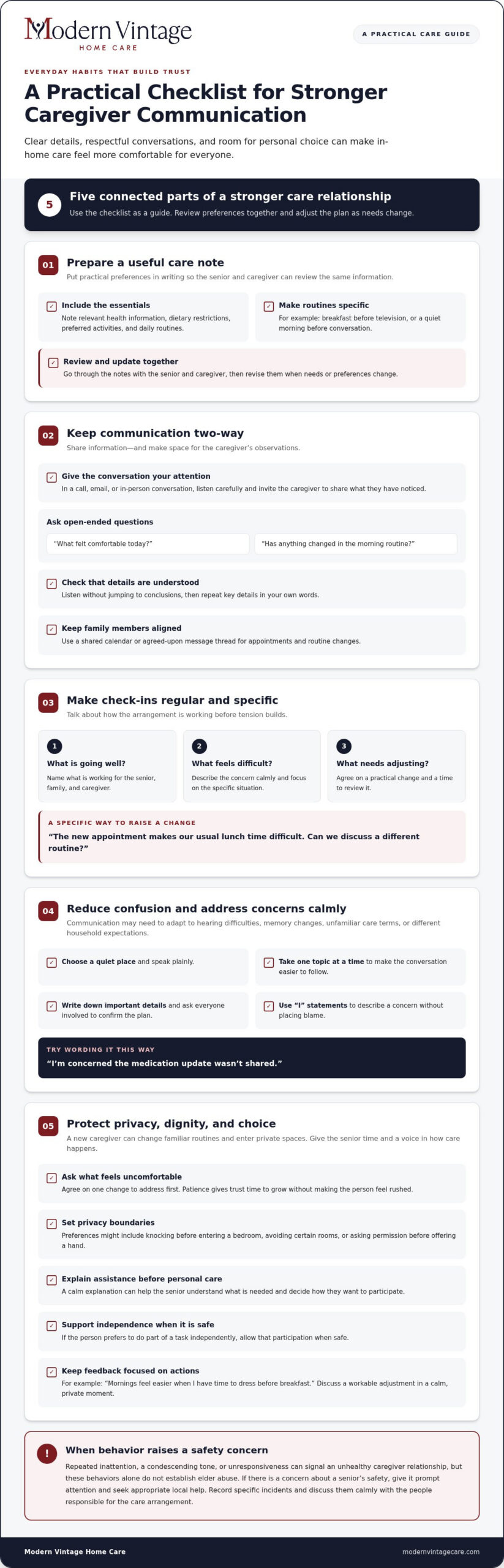
Families can communicate effectively with an in-home caregiver by sharing practical details, listening carefully, and arranging regular check-ins. Start with a written care note covering relevant health information, dietary restrictions, preferred activities, and routines. For example, note whether your loved one prefers breakfast before television or a quiet morning before conversation. Review the notes with the senior and caregiver, then update them as needs or preferences change.
Make communication two-way. During a call, email, or in-person conversation, give the caregiver your full attention and invite them to share observations. Ask open-ended questions such as, “What felt comfortable today?” or “Has anything changed in the morning routine?” Listen without jumping to conclusions, and repeat key details in your own words to check your understanding. A shared calendar or agreed-upon message thread can help family members stay informed about appointments and routine changes.
Schedule regular check-ins to discuss how the arrangement is working, rather than waiting for tension to build. Keep the conversation focused: What is going well? What feels difficult? What needs adjusting? If a caregiver’s schedule or a senior’s needs change, explain the effect clearly. For instance, say, “The new appointment makes our usual lunch time difficult. Can we discuss a different routine?” This keeps the conversation caring and specific.
Communication barriers can include hearing difficulties, memory changes, unfamiliar care terms, or different expectations about household routines. Reduce confusion by choosing a quiet place, speaking plainly, and addressing one topic at a time. Write down important details and ask everyone involved to confirm the plan. Address misunderstandings promptly and calmly, using “I” statements such as, “I’m concerned the medication update wasn’t shared,” rather than placing blame.
Repeated inattention, a condescending tone, or unresponsiveness can signal an unhealthy caregiver relationship. These behaviors alone don’t establish elder abuse, but any concern about a senior’s safety deserves prompt attention and appropriate local help. Record specific incidents and discuss them calmly with the people responsible for the care arrangement.
To maintain a positive relationship as care needs change, explain the new concern, describe the routine or assistance that needs adjusting, and agree on a time to review the change. Family members can also turn to community resources or caregiver support groups for practical guidance and a place to discuss the pressures of changing care. When a family caregiver needs time to rest, respite care may help them continue supporting a loved one.
2. Why Might New Clients Have Trouble Adjusting to Caregivers?
Accepting help at home can unsettle someone who has managed daily life independently. A caregiver may enter private spaces, assist with personal tasks, or change familiar household routines. Even a thoughtful adjustment, such as moving breakfast earlier, can feel like losing control. Start by asking the senior what feels uncomfortable, then agree on one change to address first. Patience gives trust time to grow without making the person feel rushed.
Clear privacy boundaries help protect dignity and personal space. The senior might ask the caregiver to knock before entering a bedroom, avoid certain rooms, or ask permission before offering a hand. Explain preferences before care begins, then revisit them if circumstances change. Respect means honoring the person’s choices wherever possible, including how they spend their time and which routines matter most. Before an intimate task, the caregiver should explain what assistance is needed.
Compassionate care recognizes that hesitation may come from fear, unfamiliarity, or a difficult past experience. A calm caregiver can acknowledge the feeling without arguing: “I understand this is new. Would you like me to explain each step?” That response supports emotional safety and gives the senior room to decide. Consistent, respectful interactions can build trust gradually. If the person prefers to complete part of a task independently, allow that participation when it is safe.
Feedback works best when it focuses on a specific action, not someone’s character. Instead of saying, “You never listen,” try, “Mornings feel easier when I have time to dress before breakfast.” The caregiver can explain their perspective, and both can discuss a workable adjustment. Choose a calm, private moment and agree on what will change. This respectful exchange can prevent a small concern from becoming lasting resentment.
Respecting a caregiver’s professionalism matters, too. Families can clarify expected tasks and avoid micromanaging every household choice. If the caregiver folds towels differently, explain a preference kindly rather than treating a harmless difference as poor care. Caregivers bring their own routines and experience; training and clear expectations can help everyone understand responsibilities. Finding common ground supports a working relationship without taking away the senior’s voice or the caregiver’s professional boundaries.
If adjustment remains difficult, identify the exact point of friction, such as privacy during dressing or the timing of meals. Discuss it with the senior and caregiver, then agree on a practical next step. For guidance on care that centers dignity and comfort, explore support for changing care needs.
3. Trust issues and previous negative care experiences
A difficult past experience can make it challenging to trust a new caregiver. A senior may worry that someone will ignore preferences, rush personal tasks, or change familiar routines. Don’t dismiss that feeling as resistance. Ask what happened before and which specific actions would help the person feel comfortable now. For example, agree that the caregiver will explain each personal-care task before beginning, then follow through consistently.
Discuss preferences before home care begins, including routines, interests, privacy needs, and the assistance the senior welcomes. Ask what the person wants to do independently and where help would be useful. Use those answers to shape an individualized care plan with clear tasks and goals. Caregiver matching can take those preferences and the senior’s history into account. A caregiver who understands why a familiar routine matters has a better starting point for building trust.
Trust grows through actions the senior can observe: keeping agreed routines, speaking honestly, and following through on commitments. Families can support this process by noticing what feels comfortable and what still causes concern. If a caregiver arrives late or misunderstands an instruction, discuss the specific incident calmly and agree on how to handle it next time. Repeated concerns deserve a direct conversation about whether the arrangement meets the senior’s needs.
Stress can affect both the person receiving care and family members providing support. Notice practical signs, such as exhaustion, becoming short-tempered during routine tasks, or struggling to keep up with appointments. Choose one step to reduce pressure, such as asking another family member to take on a regular task or arranging respite care. Personal care needs can change, too; update the plan when dressing, bathing, or other daily routines become more difficult.
For a privately hired caregiver in the United States, employment rules depend on the working arrangement and applicable federal, state, and local requirements. Before care starts, clarify who hires and directs the caregiver, which duties are expected, and how scheduling and payment will be handled. Keep the agreed details in writing so everyone understands the arrangement.
Before the first visit, discuss the senior’s preferred routines, assistance needs, boundaries, and any changes that affect daily care. If family members can no longer safely manage the needed support, identify which tasks are beyond their capacity and what kind of care could address them. Home health, private-duty care, and hospice support serve different circumstances, so the right fit depends on the person’s needs and level of assistance. Trust matters, but it cannot replace care suited to those needs.
4. Building personal connections through shared interests
Shared interests give a senior and caregiver an easy starting point for conversation. Ask the senior to name a favorite activity, such as tending plants, listening to jazz, or watching a familiar show. The caregiver can invite participation without making it an obligation. If gardening is tiring, looking through seed catalogs together may still create a pleasant moment. Finding common ground doesn’t require identical personalities; curiosity and compassion matter more.
Personality differences can shape how a connection develops. One person may enjoy lively conversation, while another prefers quiet company and short exchanges. Notice the senior’s responses: do they keep talking, relax, or seem ready for a pause? Try an activity that allows choice, such as selecting music or choosing between a walk and a puzzle. If it feels uncomfortable, adjust the activity rather than treating one awkward interaction as proof of incompatibility.
Warmth should go hand in hand with clear boundaries. Before a visit, discuss privacy preferences, including which rooms are private and whether the caregiver should knock before entering. The senior can also explain personal-space preferences, such as asking before a hug or any touch outside necessary care. These details make everyday interactions more predictable. Respecting “not now” or “please ask first” helps preserve the person’s comfort and control.
A positive connection doesn’t mean the caregiver must become a friend or share every personal detail. Care remains a professional relationship, even when conversation feels relaxed. The senior might enjoy hearing about the caregiver’s favorite music while keeping private topics off limits. Both people can choose what they feel comfortable sharing. Clear boundaries help prevent mismatched expectations, such as assuming a caregiver will attend family events or handle tasks beyond the agreed role.
Cultural differences can influence expectations about personal care, conversation, food, family involvement, and privacy. Rather than relying on assumptions, ask the senior how they prefer a task to be handled. For example, clarify whether they want a family member present during a personal-care routine or prefer more privacy. The caregiver can explain their approach respectfully, then work with the senior to find a suitable routine. This makes room for differing customs without treating either person’s preference as wrong.
To nurture connection, choose one low-pressure activity, ask permission, and observe how the senior responds. A familiar song, shared story, or favorite television program can prompt conversation without requiring constant talk. If the senior has memory changes, familiar music or photographs may offer a gentle way to connect. Focus on the person’s enjoyment, not on achieving a particular kind of relationship. Trust often grows through small, respectful moments.
5. Caregiver companionship and loneliness
Companionship can make home care feel less like a list of tasks and more like shared daily life. A senior who spends long stretches alone might enjoy conversation over breakfast, a short walk, or help calling a friend. These small moments bring a social rhythm to the day without taking away time for rest or privacy. A strong relationship grows when companionship reflects what the person enjoys, rather than what someone assumes they need.
Start with the senior’s own interests. Ask which hobbies still bring pleasure, such as gardening, cooking, card games, or listening to favorite music. Then choose an activity that suits the person’s energy that day. If arthritis makes planting difficult, sorting seed packets or talking about a garden may still feel meaningful. Offer choices and let the senior decide whether to participate or simply enjoy company nearby.
Companionship should also support independence. A caregiver can invite a senior to prepare part of a familiar recipe, select music, or water plants together. The goal isn’t to take over an activity, but to make participation easier when help is welcome. For example, the caregiver might set out ingredients while the senior chooses what to make. A care plan can include preferred social activities alongside practical assistance, then adapt as interests or abilities change.
Notice how the person responds after social time. Does a visit lead to relaxed conversation, or does the senior seem tired and ready for quiet? Share observations with family members and adjust the activity, timing, or pace. A person who enjoys a morning chat may prefer calm afternoons. This attention helps companionship feel personal, rather than scheduled for its own sake.
Caregivers can offer companionship, but they don’t replace family, friends, or community connections. If a senior misses a neighbor, help make a call or plan a visit with family. If leaving home feels difficult, a familiar board game or shared photo album can open conversation. These activities create connection while keeping important relationships active in the senior’s life.
Loneliness can be difficult to discuss directly. Try a gentle, specific question: “Would you like company while you listen to music?” rather than assuming the person feels lonely. If the senior welcomes regular social interaction, companionship care can make conversation and favorite activities part of the day. Explore companionship care to see how supportive visits can fit into a loved one’s routine.
Modern Vintage Home Care: Alzheimer’s & Dementia Care
Modern Vintage Home Care provides Alzheimer’s and dementia care for families seeking thoughtful support at home in Sugar Land, Missouri City, and SW Houston. If memory changes make familiar routines harder or increase the assistance a loved one needs, personalized care can support comfort and daily life. Depending on the person’s needs, support can also include companionship and personal care.
A strong caregiver relationship takes time, clear communication, and respect for the individual’s preferences. Share which routines feel reassuring, what activities your loved one enjoys, and how they prefer to receive assistance. These details can help shape care around the person, not just the tasks.
If your family is considering in-home support for a loved one with Alzheimer’s or dementia, contact Modern Vintage Home Care to discuss care needs.
Take the Next Step Toward Supportive Care
A caring relationship can keep growing as a loved one’s needs and routines change. Building a relationship with your in-home caregiver is an ongoing process shaped by everyday respect and the senior’s voice. A useful next step is to identify what would make home feel more comfortable now, then discuss that priority together.
When added support could help, Modern Vintage Home Care offers Alzheimer’s & Dementia Care, Companionship, and 24-Hour Care. The right kind of assistance depends on the person’s needs and the support they want at home. Family members can bring their priorities to a conversation and explore how care may fit into daily life.
Start a conversation with Modern Vintage Home Care about the support your loved one may need. A thoughtful next step can help your family move forward with greater clarity and care.
Frequently Asked Questions
How Can Seniors Build a Strong Relationship with Their Caregiver?
Building a relationship with your in-home caregiver can begin with a simple shared routine. A senior might choose a favorite conversation topic during breakfast or invite the caregiver to help select music for the day. Let the older adult lead these small interactions and decide how much they want to share. For families in Sugar Land, Missouri City, and SW Houston, respecting that pace can make care feel more personal.
Why Might New Clients Have Trouble Adjusting to Caregivers?
New clients may feel unsettled when a caregiver enters their home and helps with private routines. Changes to timing, household habits, or the amount of assistance can also be difficult. For example, someone who values a quiet morning may find conversation during breakfast tiring. Ask which part of the routine feels hardest, then consider a small adjustment that preserves the senior’s sense of control.
How can you build trust with an in-home caregiver?
Build trust by making small agreements clear and following through. If a caregiver says they’ll let the senior know before changing an activity, notice whether that happens consistently. Families can also acknowledge when the caregiver’s approach helps the senior feel at ease. Trust grows through dependable actions over time, not pressure to share personal information or become close before the senior is ready.
How do you set expectations and boundaries with an in-home caregiver?
Write down the main care tasks, the senior’s preferences, and any important household boundaries. For example, clarify which household tasks are part of the agreed care routine and which are outside it. Discuss how the caregiver should ask permission before assisting with personal tasks. A shared understanding gives the senior more predictability and helps prevent differing assumptions from becoming a source of tension.
How do you respect a caregiver’s privacy, culture, and professional boundaries?
Treat a caregiver with consideration while keeping the relationship professional. Avoid pressing for personal details, making assumptions about cultural practices, or expecting the caregiver to share private time outside work. If a custom affects a care routine, ask respectfully how to accommodate the senior’s preference. The caregiver can share what’s relevant to providing support while both people maintain appropriate personal boundaries.
How can you give feedback or resolve conflict with a caregiver?
Raise concerns privately and describe the specific event, its effect, and the change you’re requesting. For example: “The afternoon visit felt rushed. Could we allow more time for lunch?” Then listen to the caregiver’s response and agree on a practical next step. If the same issue continues, keep a clear record of what happened and bring the concern to the person coordinating the care arrangement.
