
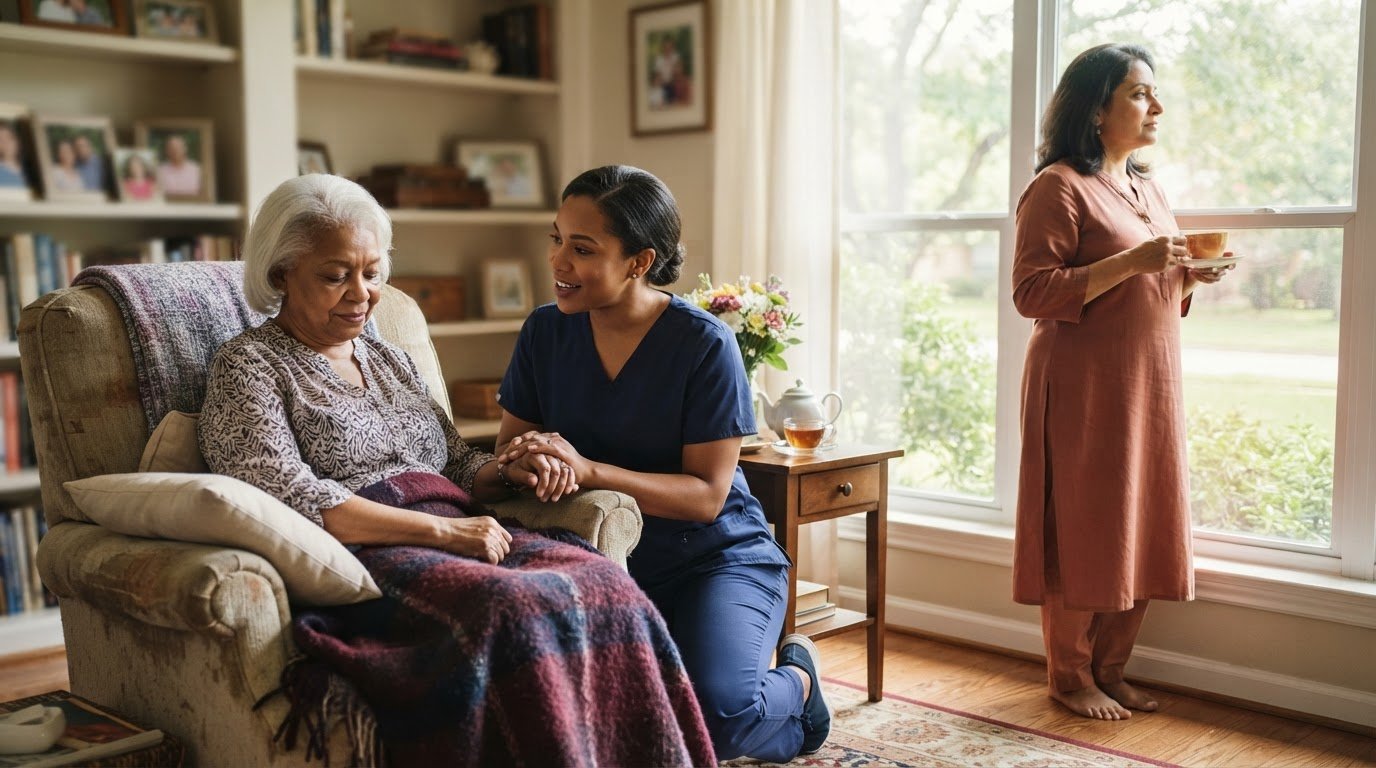
A caregiver’s break can be part of caring well. Respite care gives family caregivers temporary relief while their loved one continues receiving attentive support. Hospice support for dementia patients at home in Missouri City can help families focus on comfort, familiar routines, and symptom management.
It’s understandable to want care to stay steady and familiar, especially when dementia makes changes in routine unsettling. Accepting help doesn’t take away a family’s role. It can create time to rest, attend appointments, or manage daily responsibilities while preserving meaningful time together.
This article explains respite care and how it can fit alongside hospice support at home. You’ll learn what these services may involve, how in-home care can support daily comfort, and what to consider when arranging help in Missouri City. The goal is to make the options clearer so your family can take the next step with greater confidence.
Key Takeaways
- Use respite care to create time for caregiver rest, errands, or appointments while your loved one continues receiving support.
- Consider how in-home support can complement hospice care and help maintain familiar daily patterns.
- Notice which routines, surroundings, and personal preferences help your loved one feel most settled, and share them with caregivers.
- When comparing care options, focus on how support will fit your family’s needs and your loved one’s comfort.
- Track changes in comfort and symptoms so the care approach can respond to what your loved one needs day to day.
What is Respite Care?
Respite care is temporary support that gives a family caregiver time away while their loved one continues receiving assistance. During hospice care, that break might mean leaving home for an appointment, running errands, or taking time to recharge. For a person with dementia, familiar support during the caregiver’s absence can help preserve the day’s usual rhythm.
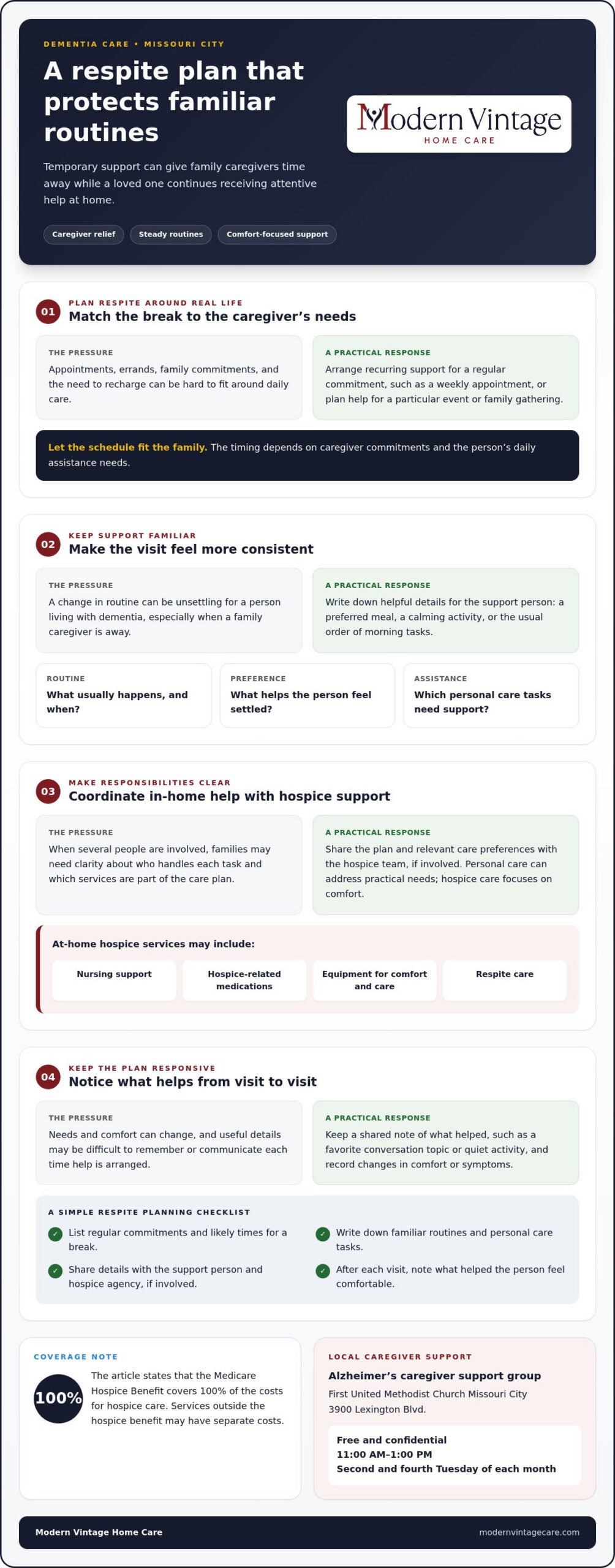
Families in Missouri City can plan respite on a recurring schedule or arrange it for a particular event. For example, a caregiver might set up weekly support during a regular appointment, then arrange help for a family gathering. The schedule depends on the caregiver’s commitments and the person’s daily assistance needs. A simple written plan can note preferred routines, communication needs, and tasks requiring support.
In-home respite may include companionship, personal care, and help with everyday routines. A caregiver could take time away while a care provider shares a familiar activity, helps with dressing, or offers companionship. For a senior living with dementia, clear instructions can guide the visit: note a preferred meal, a calming activity, or the usual order of morning tasks. These details help keep temporary support consistent.
In Missouri City and nearby communities, in-home care can provide practical assistance in a familiar setting. Families can identify when support would be most useful, such as during a busy morning or an appointment. A care consultation can help clarify the daily routine, the caregiver’s responsibilities, and the type of help needed, giving the family a practical starting point for arranging respite.
Respite and personal care can also be considered alongside hospice support in a long-term care facility. The family can describe the resident’s usual routine and identify daily tasks that need assistance. If a hospice agency is involved, share the planned support and relevant care preferences with its team. Personal care can address practical needs, while hospice care focuses on comfort. Clear roles help everyone understand who handles each task.
Caregiver support matters throughout hospice care, not only when someone needs to leave home. Dementia care can involve repeated reminders, changes to familiar routines, and close attention to emotional responses. Families can keep a shared note of what helped during each visit, such as a favorite conversation topic or a quiet activity. This record can guide future respite and help communicate the person’s preferences to anyone providing assistance.
- List the caregiver’s regular commitments and likely times for a break.
- Write down familiar routines and personal care tasks that need attention.
- Share those details with the support person and hospice agency, if involved.
- After each visit, note what helped the person feel comfortable.
What is hospice care near me in Missouri City, TX?
In Missouri City, in-home support can complement hospice care focused on comfort. When considering help, families can look at caregiver experience, available services, and their own need for support.
Dementia Caregiver Experience and Support
Caregiver listings in Missouri City describe support for hospice, dementia, personal care, meal preparation, and companionship. Compare the tasks each caregiver profile describes with your loved one’s daily needs, such as help with meals or familiar activities. Experience with Alzheimer’s or dementia can matter when a person needs steady communication and support for independence.
Caregivers also need emotional support while caring for adults and seniors through an illness. First United Methodist Church Missouri City hosts a free, confidential Alzheimer’s caregiver support group at 3900 Lexington Blvd. It meets from 11:00 AM to 1:00 PM on the second and fourth Tuesday of each month. Respite can give family caregivers time to attend appointments or take a break.
Dementia Hospice Eligibility and Coverage
Hospice eligibility for a person with dementia is determined by evaluating their condition, changes in function, and overall care needs. An evaluation considers the illness and the person’s current health, rather than relying on a dementia diagnosis alone.
The Medicare Hospice Benefit covers 100% of the costs for hospice care. Costs for services outside the hospice benefit may be separate, depending on what care is arranged. Families can distinguish hospice services from private home care when reviewing a care plan, so they understand which support addresses hospice needs and which supports daily assistance.
At-Home Hospice Services and Equipment
At home, hospice services may include nursing support, medications related to hospice care, and equipment for comfort and care. Respite care can also support family caregivers. The hospice plan connects services and equipment to the person’s needs and care goals.
Before an evaluation, make a concise list of current medications, daily routines, and practical concerns. Share it during the evaluation, then clarify which hospice services address each concern. This helps families understand how nursing, medication support, equipment, and respite fit together at home.
Home Care Challenges and Early Expectations
Advanced dementia can make daily care demanding, particularly when needs change or family caregivers need rest. A written routine can help organize meals, personal assistance, and preferred activities. Respite gives caregivers time away while their loved one continues receiving support.
During a hospice evaluation, families can discuss the person’s illness, care needs, and priorities for comfort. As care begins, keep a simple record of questions, routines, and changes that matter to the family. This information helps clarify the care plan and supports communication among everyone involved.
Familiar routines and surroundings
A steady home routine gives family members a practical way to organize daily care. Write down the usual order for waking, dressing, meals, rest, and evening activities. For example, note whether breakfast comes before getting dressed or a familiar radio program starts the morning. A written sequence helps everyone follow the person’s preferences rather than creating a different pattern at each visit.
Keep useful details specific. Record the person’s preferred name, familiar greetings, favorite foods, and activities they enjoy. If your loved one usually drinks tea beside the kitchen window, include that in the daily notes. These details help caregivers provide compassionate support and offer choices within a familiar routine.
Physical surroundings can also provide familiar cues. Keep frequently used belongings in their usual places, such as a favorite sweater on the bedroom chair or a family photograph beside the living-room lamp. If something must move, explain the change calmly and show where it is now. Keeping daily essentials in a consistent place can make routines easier to follow.
Plan for transitions, too. Before moving from lunch to rest, use the same short phrase, offer a familiar activity, or allow time to finish the current task. If a visitor arrives during a quiet part of the day, introduce them by name and keep the visit simple. A consistent cue can make a change in activity easier to understand than sudden instructions.
Personal care can follow familiar steps, too. Note whether the person prefers choosing clothes before washing or brushing their hair after breakfast. Offer one choice at a time, such as two shirts, and respect the person’s pace. A written guide can explain preferred words, privacy preferences, and the order of tasks, helping caregivers provide personal care without rushing familiar routines.
Review the routine as daily needs change. A family caregiver can add a brief note after each visit about activities the person enjoyed and where support was needed. For example, if an afternoon walk no longer feels comfortable, note another preferred activity at home. Share updates with everyone involved in care so familiar practices remain consistent and the person’s preferences stay central.
- Write the daily sequence in plain language and keep it easy to find.
- Record familiar names, preferred activities, and personal care preferences.
- Use consistent phrases to signal transitions between activities.
- Update the notes when a routine no longer suits the person.
A written routine can preserve familiar preferences while a family caregiver takes time away. In-home respite care in Missouri City can give a family caregiver time to run errands, attend appointments, or enjoy an activity. Notes about the usual sequence, preferred activities, and transition cues can help keep the person’s routine central during daily care. The routine can also help the caregiver return to familiar activities and choices.
Choosing a hospice provider
Choose support by matching the care plan to your loved one’s daily needs and priorities. For a person with Alzheimer’s, that may mean considering familiar communication, personal routines, mobility assistance, and caregiver respite. In Missouri City, Care Professionals from Modern Vintage Home Care are available 7 days a week, a useful local detail when planning support across the week.
Start with a written snapshot of the person’s day. Include preferred routines, communication cues, mobility needs, and changes that affect comfort. For example, note whether your loved one walks with support, prefers quiet meals, or responds well to a familiar song. These details help define what compassionate care at home should look like.
Next, identify what matters most to quality of life. One family may prioritize time outdoors, while another may focus on personal care and calm evenings. List the tasks that need attention, such as getting dressed or moving safely between rooms. A clear list helps distinguish hospice-related support from additional in-home care needs.
Discuss how respite care fits the family’s schedule. A caregiver might need regular time away for appointments or occasional support during a family event. Set out when help is needed, which routines should remain familiar, and how updates should reach family members. A simple communication plan can prevent missed preferences and unclear responsibilities.
- Write down the person’s routines, preferences, and mobility needs.
- Prioritize comfort, personal care, and activities that support quality of life.
- Describe when family caregivers need respite and what tasks require coverage.
- Set a clear method for sharing changes and care updates.
During a care consultation, use specific examples instead of broad descriptions. Rather than saying “mornings are difficult,” explain which step causes distress, such as choosing clothes or starting breakfast. Share what has helped, what tends to unsettle the person, and how they communicate discomfort. These details make the conversation more practical.
Finally, consider the home’s layout. Identify the rooms used most often, where essential belongings are kept, and any barriers affecting mobility. If the bedroom is upstairs, for example, mention it in the care conversation. A plan that reflects the actual home and the person’s abilities is more useful than a general checklist.
Choosing hospice support for dementia patients at home in Missouri City means considering both the person receiving care and the family providing it, including the family’s practical needs. Use the daily routine, care priorities, respite needs, and home layout to guide the discussion. These details help families focus on support that fits their circumstances.
Comfort and symptom management
Comfort-focused care starts with noticing what changes for the person. Family members can record examples such as restlessness during meals, reduced interest in familiar activities, or difficulty settling at bedtime. Note what happened beforehand and what seemed to help. Sharing these observations with the hospice team gives conversations about comfort and care useful detail.
A short daily log can make patterns easier to describe. Include the time, activity, observed change, and any response that followed. For example, note whether a quieter room helped during an unsettled afternoon. This record doesn’t diagnose a cause, but it gives caregivers and the hospice team a clearer account of the person’s experience at home.
Adjust the surroundings with practical, familiar steps. Reduce background television during a conversation, offer a preferred chair, or play music the person recognizes. If personal care becomes upsetting, pause and try a calm explanation or a familiar sequence of tasks. These changes help family members share preferences and support comfort without rushing the person.
Medication questions call for clear communication. Keep an updated list of medicines and share concerns about missed doses, changes in routine, or difficulty taking them with the hospice team. Don’t change a medication schedule based on a guess. Medication Management can help organize reminders and routines, while the hospice team addresses questions related to its care plan.
Care at home in Missouri City can involve several people, so agree on one way to share updates. A notebook near daily care supplies or a shared family message thread can capture observations. Record who noticed a change and when. This helps family members pass along consistent information, wherever they provide support at home.
- Describe the change with an observable example, not a diagnosis.
- Note the activity and surroundings at the time.
- Record what appeared to support comfort afterward.
- Share medication concerns with the hospice team before changing routines.
When a new concern appears, write down what you observe and contact the hospice team for guidance. For help organizing daily medication routines, explore medication management support.
Modern Vintage Home Care: Alzheimer’s & Dementia Care
Modern Vintage Home Care provides Alzheimer’s & Dementia Care for families who need additional help with daily life at home. When familiar routines become harder to manage, companionship and personal care can address practical needs while keeping the person’s preferences central. Families coordinating hospice care can describe the routines, assistance, and comfort priorities that matter most, then consider how in-home dementia care can complement the hospice plan.
Support may help when a family caregiver needs assistance with personal care or consistent companionship during the day. A clear outline of daily tasks can make the next conversation more focused. Contact Modern Vintage Home Care to discuss dementia care for your family.
Take the Next Step at Your Family’s Pace
The next step can be a conversation about what would make home care more manageable for your family. Before reaching out, choose a priority to discuss, such as daily routines, companionship, or support for a family caregiver. Starting with one clear need can make it easier to explain what matters most to your loved one and what your family hopes to preserve.
Modern Vintage Home Care offers Alzheimer’s & Dementia Care, 24-Hour Care, and Companionship. These services can support families seeking added help with dementia care at home. If you’re considering hospice support for dementia patients at home in Missouri City, consider how personalized in-home assistance may fit alongside the hospice plan and your family’s role.
There’s no need to have every detail settled before beginning a discussion. A simple description of your loved one’s needs can help shape a practical next step. Contact Modern Vintage Home Care to talk about care for your family. Moving forward one thoughtful decision at a time can help keep your loved one’s dignity and preferences at the center.
Frequently Asked Questions
Which hospice providers offer in-home dementia care in Missouri City, Texas?
Modern Vintage Home Care provides Alzheimer’s & Dementia Care and Hospice Support & Respite Care in Sugar Land, Missouri City, and SW Houston. Its nonmedical in-home support can complement care from a hospice agency, not replace hospice’s clinical services. For example, families may arrange companionship or personal care to support daily routines while hospice care addresses the person’s hospice plan.
How do families arrange hospice care at home in Missouri City?
Families can begin by discussing hospice care with the person’s healthcare team and arranging an evaluation through a hospice agency. Gather a current medication list, relevant care records, and the family’s main concerns for that discussion. Then identify practical help needed at home, such as companionship or personal care. Modern Vintage Home Care can discuss nonmedical support that complements the family’s care arrangements.
How do hospice agencies support family caregivers of dementia patients at home?
Hospice care can support the person’s comfort while families coordinate daily caregiving and time to rest. For example, a family caregiver may need companionship support while attending an appointment or managing household responsibilities. Modern Vintage Home Care provides respite care, companionship, and personal care at home. Families can keep a shared note of routines and preferences to communicate the support their loved one needs.
How can families compare local hospice providers, quality ratings, and availability in Missouri City?
Compare hospice providers by the care plan, services, communication approach, and schedule they describe for the person’s needs. Review ratings in context, distinguishing hospice care from nonmedical home-care assistance, since they provide different kinds of support. Ask how the planned schedule aligns with family routines and what support is available for caregivers. Modern Vintage Home Care also offers 24-Hour Care as a separate in-home care option.
