
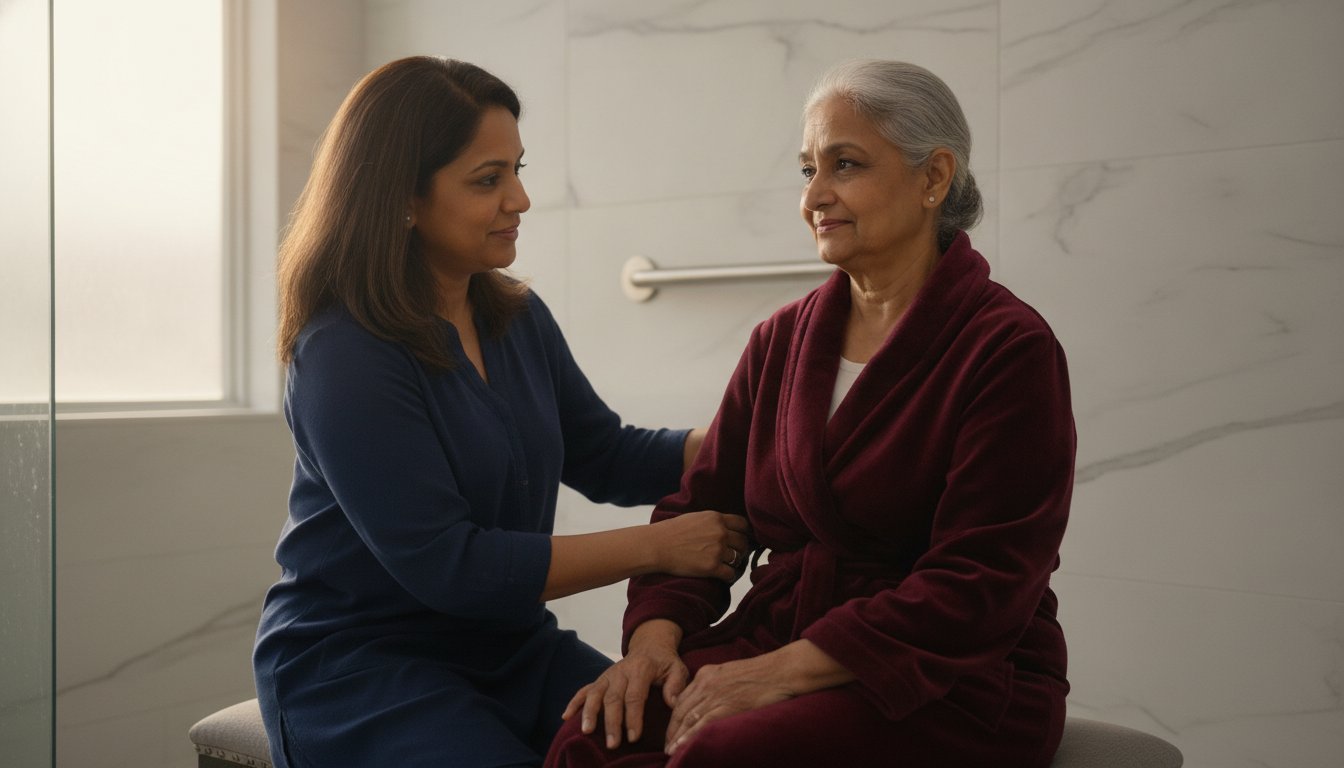
You stand outside the bathroom door, listening for the sound of the shower while your heart races during every moment of silence. You want to step in and offer elderly bathing and dressing help, but you’re often held back by the fear of making your parent feel small or the guilt of seeing them in such a vulnerable state. It’s a delicate transition that tests the patience and emotions of even the most dedicated family members.
Whether you’re worried about a dangerous fall on a slick tile floor or you’re simply exhausted from the physical strain of assisting with mobility, your concerns are deeply valid. You want what’s best for your loved one, yet the friction of daily hygiene routines can leave everyone feeling drained. This guide provides a path forward, showing you how to offer safe, compassionate, and respectful assistance that preserves your loved one’s independence and comfort.
We’ll walk you through practical ways to create a safe bathroom environment and establish a predictable routine that reduces arguments. By focusing on dignity first, you can ensure your family member feels supported rather than managed, turning a source of stress into a steady foundation of care.
Key Takeaways
- Learn to recognize the subtle physical and behavioral signs that indicate your loved one requires additional support with their daily hygiene routine.
- Discover how to create a safe, spa-like bathroom environment that reduces anxiety while using the right equipment to prevent slips and falls.
- Find practical ways to provide elderly bathing and dressing help that encourage independence, including the use of adaptive clothing and predictable schedules.
- Gain effective communication strategies to handle resistance by reframing chores as luxury experiences and identifying your loved one’s most cooperative times of day.
- Identify the key indicators that suggest it’s time to introduce a professional personal care provider to maintain your loved one’s safety and dignity.
Understanding the Need for Elderly Bathing and Dressing Help
Helping a parent with their most private routines marks a profound shift in the family dynamic. It’s the moment the child truly becomes the caregiver, navigating a role reversal that can feel heavy for both parties. This transition often begins when you notice a subtle need for elderly bathing and dressing help, even if your loved one hasn’t voiced it yet. Personal care tasks like hygiene and grooming are the fundamental building blocks of Activities of Daily Living (ADLs). These tasks serve as a vital benchmark for a senior’s ability to live independently and safely at home.
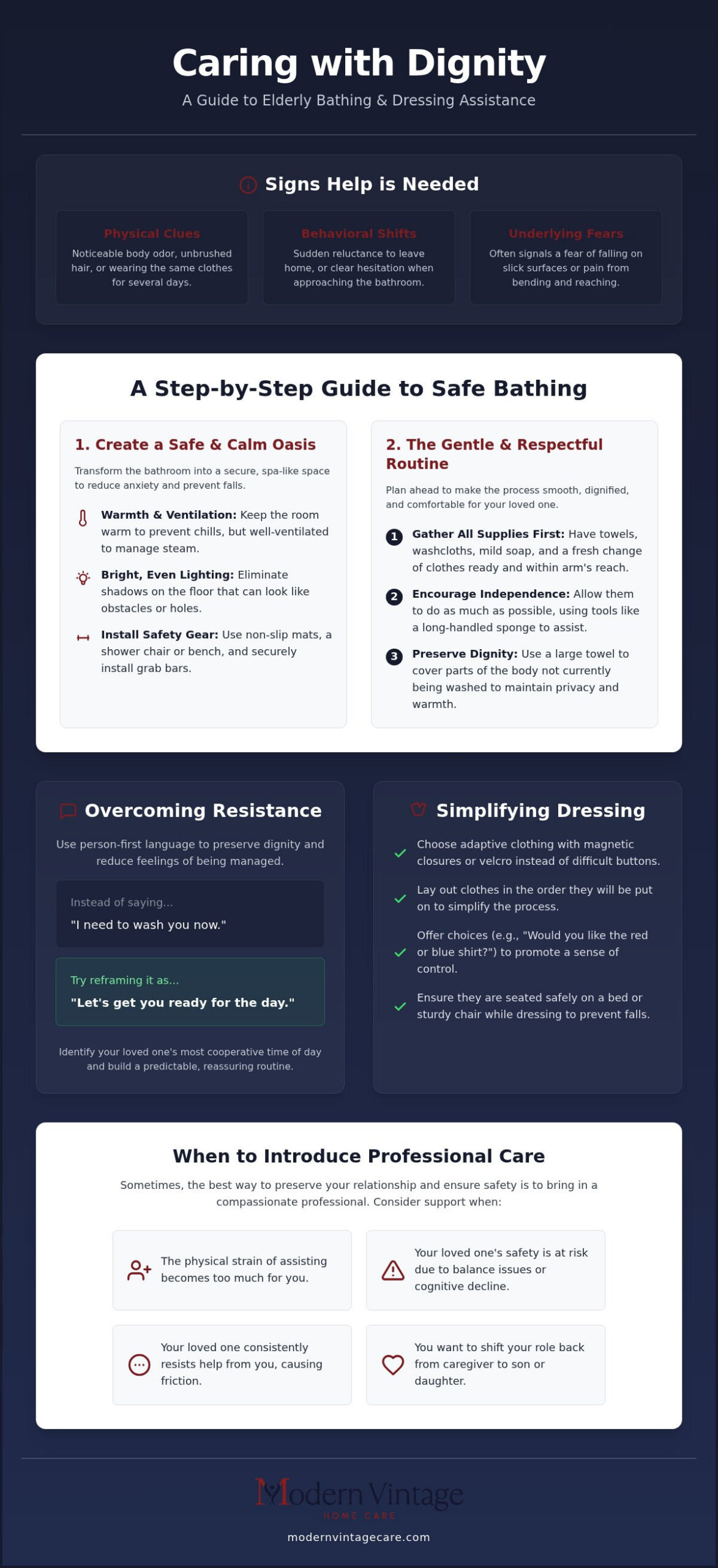
The signs that a senior needs assistance aren’t always obvious. You might notice uncharacteristic body odor, mismatched clothing, or hair that remains unbrushed for several days. Sometimes, the clues are behavioral, such as a sudden reluctance to leave the house or a noticeable hesitation when they approach the bathroom. These shifts aren’t just signs of forgetfulness. They often signal a deep-seated fear of falling on slick surfaces or the physical pain associated with bending and reaching. Recognizing these signs early allows you to step in with a plan that prioritizes their safety without damaging their self-esteem.
The Physical and Sensory Challenges of Aging
Aging brings physical changes that make once-simple tasks feel like insurmountable hurdles. Arthritis can turn a row of buttons or a stubborn zipper into a source of immense frustration and physical pain. When joints are stiff, the range of motion required to pull on a sweater or reach behind the back becomes limited. Sensory perception also changes. Water that feels comfortable to you might feel dangerously hot or ice cold to a senior with thinner skin or circulatory issues. Furthermore, vision impairment can make a white bathtub blend into white floor tile. This creates a “disappearing” floor effect that makes the simple act of stepping into a shower feel terrifying. Providing elderly bathing and dressing help requires an understanding of these physical barriers so you can adjust the environment accordingly.
The Psychological Hurdle: Preserving Dignity
Accepting help with bathing is often a form of grief for a senior. It represents a loss of privacy and a surrender of the independence they’ve maintained for decades. To ease this transition, it’s essential to use person-first language that emphasizes their agency. Instead of saying “I need to wash you,” try “Let’s get you ready for the day.” This simple shift reduces feelings of infantilization. Maintaining a sense of self-worth is also tied to their social life. A senior who feels clean and well-dressed is more likely to engage with others. The role of senior social engagement at home is critical here; feeling presentable helps a senior feel ready to interact with the world, preserving their spirit and emotional well-being.
A Step-by-Step Guide to Safe and Dignified Bathing
Bathing is a deeply personal experience that requires more than just soap and water. When you provide elderly bathing and dressing help, your primary goal is to transform a potentially stressful chore into a moment of calm and safety. Because hygiene is one of the most complex Activities of Daily Living, it requires careful planning to ensure your loved one feels supported rather than exposed. Start by gathering every necessary item before you begin. This includes towels, washcloths, mild cleansers, and a fresh change of clothes. Keeping a senior waiting while you search for a missing item can lead to agitation and physical chills.
Environmental Prep for the Houston Climate
In the Houston area, managing the bathroom environment is essential for comfort and safety. High humidity can make tile floors exceptionally slick and the air feel heavy, which might cause a senior to feel dizzy or short of breath. Ensure the room is warm enough to prevent shivering but well-ventilated to manage steam. Lighting is equally critical. You should use bright, even lighting to eliminate shadows on the floor. To someone with vision loss or cognitive decline, a dark shadow can look like a hole or an obstacle, leading to a refusal to move or a sudden loss of balance. Soft music or a familiar scent can further help ground your loved one in the routine.
Physical Assistance Techniques
Maintaining modesty is the most effective way to preserve a senior’s dignity during a bath. You can use the “towel-drape” method, which involves keeping the senior’s body covered with a large, dry towel while you wash one limb at a time. This keeps them warm and reduces the feeling of vulnerability. Always communicate every action before you take it. Simple phrases like “I am going to wash your left arm now” prevent startling your loved one and keep them engaged in the process. If they have significant mobility challenges, use sturdy, professionally installed grab bars or a gait belt to assist with transfers. If the physical demands of these tasks become a source of strain for you or your parent, considering professional personal care can provide a safer, more neutral solution for the family.
Once the bath is complete, focus on thorough but gentle drying. Senior skin is often fragile, so use a soft patting motion rather than rubbing. Pay close attention to skin folds where moisture can easily be trapped, as this can lead to irritation or fungal infections. This quiet moment is also an ideal time to perform a quick, respectful check for any new redness, sores, or changes in skin condition that might require medical attention.
Simplifying the Dressing Process: Strategies for Independence
Dressing is more than a physical requirement; it’s a vital cognitive anchor that signals the start of a new day. For many seniors, the act of choosing an outfit and putting it on provides a sense of routine and personal identity. When you provide elderly bathing and dressing help, the goal is to support this independence while reducing the frustration that often comes with declining motor skills or memory. If the process becomes a struggle, it can set a negative tone for the entire afternoon. By simplifying the wardrobe and the decision-making process, you help your loved one maintain their dignity and start their morning with confidence.
One of the most effective ways to empower a senior is the “Limited Choice” strategy. Instead of asking them to pick something from a full closet, offer two distinct options. This approach provides a sense of control without the overwhelming pressure of too many choices. It’s also helpful to follow a logical sequence. Dressing should flow from the inner layers to the outer layers in a consistent order every day. This predictability helps the brain map out the task, making it feel less like a series of obstacles and more like a familiar rhythm.
Adaptive Clothing and Tools
Modern wardrobe solutions can significantly reduce the physical strain of getting ready. You might consider replacing traditional buttons with magnetic closures or Velcro, which allow for easier manipulation if a senior has arthritis. Slip-on shoes with sturdy soles are often safer and more practical than those with laces. If reaching for feet becomes difficult, tools like long-handled shoehorns, sock sliders, or reachers can bridge the gap. These aids don’t just make the task easier; they allow the senior to do more for themselves, which is a powerful boost to their self-esteem.
Cognitive Support During Dressing
For those living with cognitive decline, the sequence of dressing can become confusing. You can provide support by laying out each piece of clothing in the exact order it should be put on, starting with undergarments at the top of the pile. Use simple, one-step instructions like “Please put your arm through this sleeve” rather than giving complex directions. Linking the dressing routine to an upcoming positive event can also increase cooperation. For example, you might mention that they are getting ready for a scheduled senior companionship visit. Knowing a friendly face is coming over can turn a difficult morning task into a purposeful preparation for social engagement. This creates a bridge between elderly bathing and dressing help and the joyful aspects of their daily life.
Overcoming Resistance and Communication Breakdowns
Resistance is rarely about the water or the clothes themselves. It’s usually a reaction to feeling vulnerable or losing a sense of autonomy. When you offer elderly bathing and dressing help, you might encounter sharp refusals or emotional outbursts that feel personal. Instead of meeting this with logic, which often fails in the heat of the moment, try validation therapy. Acknowledge the fear or discomfort they’re expressing. If they insist they’ve already bathed, don’t argue with the facts. Instead, focus on how refreshing a warm soak feels or how nice a clean shirt will look. This shift moves the conversation from a power struggle to a shared experience of comfort.
Timing plays a massive role in cooperation. Many seniors have a “best” window of time when they feel most alert and least anxious. For some, this is right after breakfast; for others, it’s the late morning. If you find yourself constantly arguing in the evening, you might be battling “sundowning” symptoms rather than simple stubbornness. Shifting the routine to a time when their energy is high can resolve many communication breakdowns before they even start. You can also use the “Spa Day” reframe. By positioning the bath as a luxury—complete with warm towels and favorite music—you turn a mandatory chore into an inviting escape.
Sometimes, the barrier is the child-parent dynamic itself. A parent may feel deep embarrassment at being seen in a vulnerable state by their own child. In these cases, your presence, no matter how loving, is the trigger for resistance. Stepping back and allowing a neutral third party to handle these personal tasks can often restore the peace in your relationship. If the friction at home is growing, it might be time to explore professional personal care support to help manage the routine safely and respectfully.
Communication Techniques for Dementia
The “Bridging” technique is particularly effective for those with memory loss. This involves handing the senior a familiar object, like a favorite washcloth or a specific bottle of lotion, to connect them to the task at hand. Avoid asking “yes or no” questions that invite a refusal. Instead of asking “Do you want to get dressed?”, offer a simple choice: “Would you like the blue shirt or the green shirt?” This gives them a sense of control. Professionals who provide dementia home care services in Sugar Land often use these specialized redirection techniques to bypass anxiety and maintain a calm atmosphere.
When to Involve Medical Professionals
If resistance is sudden or aggressive, rule out physical causes first. A urinary tract infection (UTI) or a skin infection can make even a light touch painful, leading to uncharacteristic outbursts. You might also consult an Occupational Therapist (OT) for a home safety evaluation. They can suggest specific modifications that make the process feel safer for everyone involved. Finally, discuss any signs of chronic anxiety or depression with a primary care physician, as these conditions can significantly impact a senior’s willingness to participate in their own care.
Professional Personal Care in Sugar Land: When to Call for Support
Every family caregiver eventually reaches a point where the physical and emotional demands of daily routines begin to outweigh their capacity to provide safe care. This “tipping point” isn’t a sign of failure; it’s a realization that your loved one’s needs have evolved. When the risk of a fall during a shower becomes too high or the emotional strain of assisting with intimate tasks begins to damage your relationship, it’s time to consider professional elderly bathing and dressing help. A professional caregiver brings a level of clinical distance that often reduces a senior’s resistance, as they frequently find it easier to accept help from a trained attendant than from their own child.
Modern Vintage Home Care provides a bridge between your desire to help and the necessity of expert support. By integrating compassionate, hands-on assistance with safety-focused technology, we ensure that your loved one remains safe and comfortable in their own home. Our services are highly customizable, ranging from focused one-hour visits to comprehensive 24-hour home care in Houston. This flexibility allows you to scale support exactly as your family’s situation changes, ensuring that dignity is never sacrificed for the sake of safety.
Modern Vintage Quick Care and Concierge Services
Many families don’t require full-day assistance but struggle during the critical morning and evening windows. Our Quick Care Services are designed specifically for these moments, providing targeted elderly bathing and dressing help right when it’s needed most. These short-term visits ensure that hygiene routines are completed safely without the need for a long-term shift commitment. To provide continuous peace of mind, we also offer automated check-ins and medication reminders. Our professional attendants can seamlessly integrate medication management for elderly seniors into these visits, ensuring that health and hygiene are addressed in one cohesive, respectful routine.
Finding the Right Fit in Fort Bend County
Local expertise matters when it comes to responsive care. Our deep roots in Sugar Land and Missouri City allow us to provide timely support and a neighborly connection that national agencies often lack. We understand that caregiving is a marathon, and utilizing respite care for family caregivers is essential to prevent burnout and maintain your own health. By stepping in to handle the more physically demanding tasks, we allow you to return to your primary role as a loving daughter or son. If you’re ready to explore how a personalized care plan can restore balance to your home, reaching out to a care coordinator today is the first step toward a more sustainable and dignified path forward.
Moving Toward a Safer, More Dignified Routine
Throughout this guide, we’ve explored how physical and sensory changes impact daily life, the techniques for maintaining privacy during bathing, and strategies to encourage independence through adaptive clothing. Providing elderly bathing and dressing help is a journey that requires immense patience and the right tools to balance safety with self-esteem. When these routines become a source of stress rather than care, it’s a sign that your family deserves additional support.
As a Licensed Texas Home Care Agency, we provide specialized Alzheimer’s and dementia training to handle the most sensitive situations with grace. Whether you need flexible Quick Care for morning routines or 24-hour options for continuous support, our team is here to help your loved one thrive at home. Schedule a Free In-Home Assessment with our Sugar Land Care Team to learn more about our personalized approach to personal care.
You don’t have to navigate these transitions alone. With the right plan in place, you can return to your role as a family member while ensuring your loved one receives the expert, compassionate care they deserve. A more peaceful and supported daily life is within reach for your entire family.
Frequently Asked Questions
How do I help an elderly parent who refuses to bathe?
Start by identifying the underlying cause of their refusal, such as a fear of falling or feeling cold. Instead of arguing about hygiene, try reframing the bath as a “spa time” or a relaxing soak before a favorite activity like a family visit. If they insist they’re already clean, avoid direct confrontation and focus on the sensory benefits of warm water and fresh clothes to encourage cooperation.
What is the best way to wash a senior with limited mobility?
Use a sturdy shower chair and a handheld showerhead to allow the senior to remain seated safely throughout the process. This setup reduces the risk of falls and allows for better reach while maintaining a sense of stability. You should always keep the senior covered with a large towel to maintain warmth and dignity, uncovering only the specific area you’re washing at that moment.
How often should an elderly person bathe?
Most seniors don’t need a full bath every day and typically find two to three times per week sufficient to maintain hygiene and skin health. Daily “sponge baths” for the face, underarms, and private areas can bridge the gap between full showers. This reduced schedule prevents the skin from becoming overly dry or irritated, which is a common concern as skin thins with age.
What are the most important bathroom safety features for seniors?
Install professionally anchored grab bars, non-slip mats, and a raised toilet seat to create a secure environment. High-quality lighting is also essential to eliminate shadows that can cause confusion or missteps. These features provide the physical support needed when providing elderly bathing and dressing help, significantly reducing the risk of accidents on wet, slippery surfaces.
Can I get professional help for just one hour a day for bathing?
Yes, you can utilize Quick Care or concierge services that are specifically designed for short-term visits like morning or evening hygiene routines. These targeted sessions allow a professional caregiver to assist with the most physically demanding tasks without requiring a full-day commitment. It’s an ideal solution for families who need elderly bathing and dressing help during specific, high-stress transitions of the day.
How do I dress someone with dementia without causing a meltdown?
Limit choices by offering only two outfits and use simple, one-step instructions to guide them through the process. Laying out clothes in the logical order they’re put on can also reduce cognitive overwhelm. If they become agitated, it’s best to take a short break and try again later when they’re in a more relaxed state of mind.
What should I do if my parent is embarrassed by my help?
Acknowledge their feelings of vulnerability and consider introducing a professional caregiver to provide a neutral third-party presence. Often, seniors find it less embarrassing to receive help from a trained professional than from their own adult children. This shift can preserve your familial bond and reduce power struggles while ensuring their personal care needs are met with total respect.
Are there specific clothes that make dressing easier for seniors?
Adaptive clothing featuring magnetic closures, Velcro, and elastic waistbands can significantly simplify the dressing process. These garments eliminate the frustration of small buttons and difficult zippers, which is especially helpful for those with arthritis or limited fine motor skills. Slip-on shoes with non-skid soles are also a safer and easier alternative to traditional footwear with laces.