

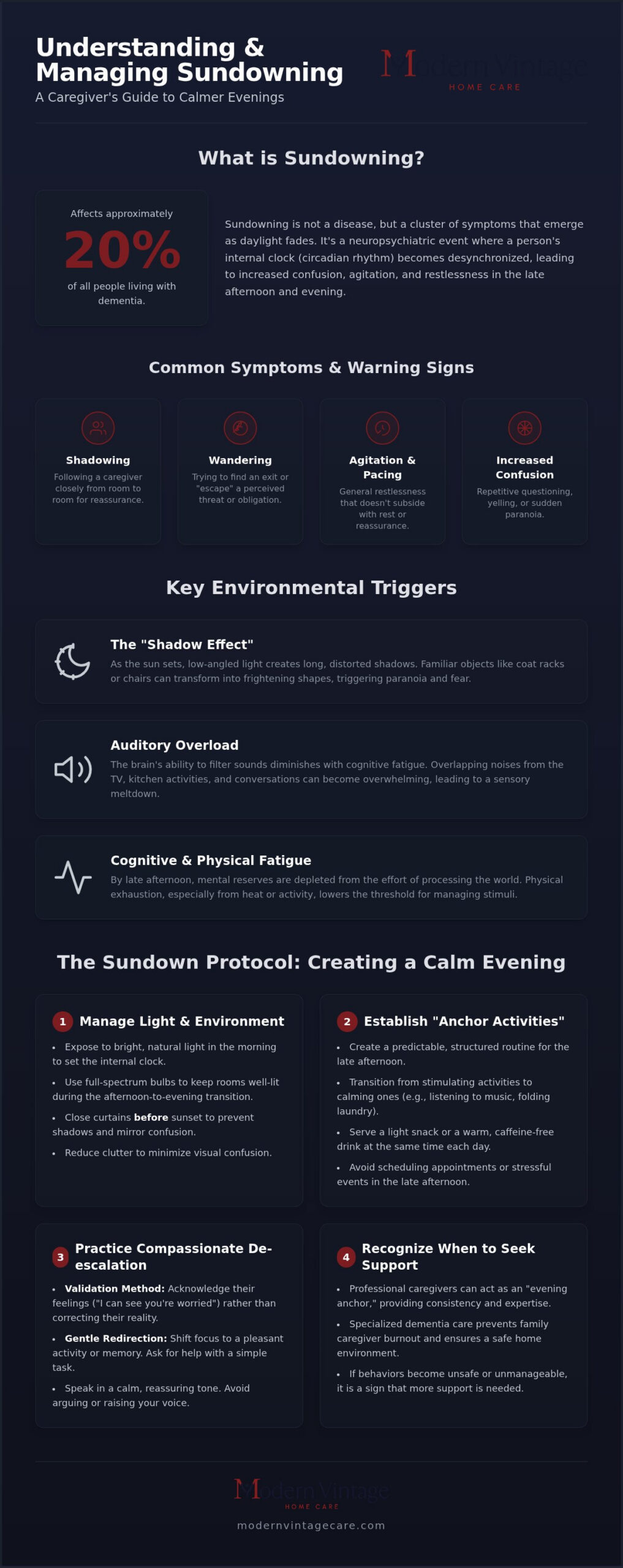
Imagine the clock strikes 4:00 PM and the parent you’ve known your whole life suddenly becomes a different person. They might pace the hallway with a restless energy or ask to go home even though they’re sitting in their own living room. You’re likely familiar with that heavy sense of dread as the sun begins to set, knowing the evening may bring hours of agitation or confusion. If you’re feeling exhausted by this daily shift, you aren’t alone. Research from 2026 shows that sundowning affects approximately 20% of all people living with dementia. Finding effective ways for managing sundowning in dementia patients is essential for preserving your own well-being and your loved one’s dignity.
This guide offers evidence-based strategies and compassionate care techniques designed to reduce late-day distress and improve quality of life. Whether you’re worried about nighttime falls or feeling the emotional weight of seeing a loved one lose touch with reality, there’s a path toward a calmer evening. We’ll examine how environmental resets, structured routines, and professional evening anchors can transform high-stress hours into a time of quiet safety. You’ll discover practical steps to create a peaceful atmosphere that encourages better sleep for both you and your family member.
Key Takeaways
- Understand how environmental triggers like the “Shadow Effect” and extreme heat can increase late-day confusion for your loved one.
- Learn to establish “Anchor Activities” that create a predictable transition from afternoon to evening, providing a sense of safety.
- Master compassionate de-escalation techniques for managing sundowning in dementia patients, such as the Validation Method and gentle redirection.
- Identify dietary adjustments and light management strategies that help reduce restlessness and improve nighttime sleep quality.
- Recognize when specialized dementia care can act as an “evening anchor” to prevent family burnout and ensure a peaceful home routine.
What is Sundowning? Defining Late-Day Confusion in Dementia
Sundowning isn’t a standalone disease. It’s a specific cluster of neuropsychiatric symptoms that emerge as daylight fades. For families, this shift often feels like a sudden storm. Sundowning typically occurs in the late afternoon or early evening, bringing a wave of confusion and restlessness that can be difficult to witness. While everyone feels a bit tired by late afternoon, this is more than just late-day exhaustion. It’s a biological event rooted in how the brain processes the passage of time.
The brain relies on an internal clock, or circadian rhythm, to signal when to be alert and when to rest. In a healthy brain, the hypothalamus keeps these cycles synchronized with the rising and setting sun. Dementia often disrupts this delicate mechanism. The internal clock becomes desynchronized, leaving the individual caught between wakefulness and sleep. This makes managing sundowning in dementia patients particularly challenging because their bodies are physically struggling to understand what time of day it is.
Common Symptoms and Warning Signs
Recognizing the early cues of an episode allows you to intervene before agitation peaks. You might notice subtle physical changes like hand-wringing, pacing, or a sudden fixation on searching for the exit. Emotional cues are just as significant. A loved one might suddenly become suspicious of your motives or insist they need to go home, even if they’ve lived in their current house for decades. Common behaviors often include:
- Shadowing: Following a caregiver closely from room to room for constant reassurance.
- Wandering: Trying to find an exit or “escaping” a perceived threat or obligation.
- Increased vocalization: Repetitive questioning, yelling, or calling out for help.
- Agitation: Pacing or general restlessness that doesn’t subside with rest.
Why Does Sundowning Happen? The Science
Science points to several factors beyond just the internal clock. As the day progresses, cognitive fatigue sets in. A brain dealing with dementia has a much lower threshold for processing stimuli. By the time evening arrives, the effort of trying to make sense of a complex world has exhausted their mental reserves. Additionally, aging brains often produce less melatonin. When you combine reduced sunlight with lower melatonin levels, the brain’s sleep trigger fails to fire correctly. This creates a state of high alert at the exact moment the body should be winding down. Understanding these biological shifts is the first step in managing sundowning in dementia patients effectively.
Environmental Triggers: Managing Light and Stimuli
The environment plays a massive role in how someone with dementia experiences the world as the day ends. In the Houston area, especially within Fort Bend County, the intense heat and humidity aren’t just physical discomforts. They drain energy quickly, leading to deeper fatigue by the late afternoon. This exhaustion lowers the brain’s ability to filter out sensory input, making managing sundowning in dementia patients more difficult. When a person is physically spent from the climate, their cognitive threshold for handling noise and light drops significantly.
As the sun dips lower, the “Shadow Effect” begins. Low-angled light stretches across floors and walls, turning simple furniture into frightening, unrecognizable shapes. For a person with cognitive impairment, a coat rack can easily look like an intruder. This visual distortion often triggers the paranoia or agitation that families find so distressing. Auditory triggers are equally powerful. The “cocktail party effect” describes the brain’s inability to isolate one voice among many. If the evening news is blaring while dinner is being prepared, the overlapping noise can lead to a sensory meltdown.
To counter these triggers, focus on resetting the internal clock early in the day. Exposure to natural sunlight or high-intensity lamps at breakfast helps signal to the brain that the day has begun. This morning light therapy is a simple but effective tool for stabilizing sleep-wake cycles.
Optimizing the Home Lighting Strategy
If you want to reduce visual confusion, start with full-spectrum bulbs. These mimic natural daylight and keep the room bright during the transition from afternoon to evening. You should draw the curtains before the sun starts to set. This prevents “mirror confusion,” where a person doesn’t recognize their reflection in a dark window, and it stops those long, frightening shadows from forming. Installing motion-sensor night lights in hallways and bathrooms also ensures safety without the need to find light switches in the dark.
Reducing Evening Overstimulation
A busy household can be a major trigger for late-day anxiety. Try to schedule heavy chores, like vacuuming or laundry, for earlier in the day when your loved one has more mental energy. If the evening news tends to be loud or distressing, replace it with soothing, familiar music or a favorite nature documentary. Creating a dedicated “quiet zone” with a comfortable chair and soft textures provides a sanctuary for relaxation. The National Institute on Aging offers excellent resources on Coping With Agitation, Aggression, and Sundowning, which highlights the importance of these calm environments. If you find it difficult to maintain this level of environmental control while managing your own household duties, our specialized Alzheimer’s & Dementia Care can provide the extra hands needed to keep the atmosphere peaceful.
The Sundown Protocol: Creating a Structured Evening Routine
Structure acts as a stabilizing force when the world begins to feel unpredictable. For those living with memory loss, a predictable sequence of events provides a sense of safety that words alone cannot offer. This protocol is about more than just a schedule; it’s about creating “Anchor Activities” that signal the body and mind to transition from the active day to a restorative evening. By implementing a consistent routine, you’re proactively managing sundowning in dementia patients rather than simply reacting to the symptoms as they arise.
Nutrition plays a silent but significant role in this transition. Caffeine consumed in the late afternoon can linger in the system, causing a spike in restlessness just as the sun sets. Similarly, heavy or spicy meals late in the day can lead to indigestion. A person with dementia might struggle to communicate this physical discomfort, which often results in increased agitation. Focus on offering a larger meal at lunch and a lighter, comforting dinner to keep the body at ease.
Stability also depends on consistency in healthcare. Integrating professional medication management for elderly ensures that prescriptions are administered at the exact same time each day. This prevents the “peaks and valleys” in mood that can occur with missed or late doses. The Alzheimer’s Association provides further depth on managing sleep issues and sundowning, noting that routine is often the most effective non-pharmacological tool available to families.
Step-by-Step Transition into Evening
A successful evening begins in the early afternoon. Aim for high-engagement activities, like a short walk or a simple puzzle, around 1:00 PM or 2:00 PM. This creates “healthy fatigue” that helps the body prepare for rest later. As 4:00 PM approaches, shift to low-stimulation comfort activities. This might include folding warm laundry, listening to soft music, or looking through a familiar photo album. Dinner should follow at a consistent time each night, served in a brightly lit but quiet setting to keep the individual focused and calm.
Managing Physical Needs and Comfort
Agitation is often a form of unspoken communication. Before an episode escalates, check for “hidden” triggers like a full bladder, thirst, or physical pain. Chronic pain often peaks in the evening, and a person with cognitive impairment may not be able to identify the source of their distress. Ensuring they’re physically comfortable can prevent a minor irritation from turning into a major outburst. Finally, keep wake-up times consistent every morning. This helps reinforce the circadian cycle, which is a vital component in managing sundowning in dementia patients over the long term.
De-escalation and Safety: Handling Agitation in the Moment
When a loved one becomes agitated as the sun sets, your response can either diffuse the situation or inadvertently escalate it. Managing sundowning in dementia patients requires a fundamental shift from logical correction to emotional validation. If your parent insists they need to leave for a job they held forty years ago, telling them they’re retired usually leads to more distress. Instead, use the “Validation Method.” Acknowledge the underlying emotion by saying something like, “I can see you’re worried about being late.” Once they feel understood, move toward redirection. Suggest a familiar, comforting task like folding napkins or listening to a favorite album to shift their focus away from the stressful thought.
Safety becomes a primary concern during these high-intensity hours. The “urge to leave” often peaks at dusk, making wandering a significant risk for many families. Securing the environment before the sun goes down is a proactive way to maintain peace of mind. If the evening hours have become a period of constant worry for your family, 24-hour home care Houston services can provide the round-the-clock monitoring necessary to prevent falls or nighttime wandering.
Communication Strategies for Agitated Moments
Keep your communication simple and direct. Use short sentences and maintain a calm, low-pitched voice, as high-pitched tones can sometimes signal alarm to a confused brain. It’s also helpful to avoid the “No” trap. Rather than telling someone what they can’t do, rephrase your request as an invitation or a choice. If they’re restless, you might ask, “Would you like to sit here by the window or on the sofa with me?” This gives them a sense of autonomy during a time when they feel most out of control. Never underestimate the power of a quiet presence; sometimes just sitting nearby is the best way to ground a confused patient.
Safety and Wandering Prevention
To reduce the impulse to leave, keep items like car keys, purses, and outdoor shoes out of plain sight. Visual cues often trigger the desire to “go home” or “go to work.” Installing simple alarms on exit doors that chime when opened can alert you immediately if a loved one tries to step outside. For those who need to step away for chores or rest, automated check-in services act as a vital safety net. These technologies ensure that help is never far away if a senior becomes unsettled while a caregiver is in another room. If you’re feeling overwhelmed by the demands of evening monitoring, our specialized Alzheimer’s & Dementia Care offers the expert support needed to keep your home a safe haven.
Professional Support: When to Seek Specialized Dementia Care
The period between 4:00 PM and 8:00 PM is often the most exhausting window for family members. It’s the time when your own energy is dipping just as your loved one’s confusion is rising. If you find yourself dreading the late afternoon or feeling a sense of panic as the sun starts to set, you’re likely experiencing caregiver burnout. Recognizing this limit isn’t a sign of failure; it’s a vital step in maintaining the health of your entire family unit. Transitioning to professional support allows you to step out of the high-stress role of behavior manager and return to being a supportive spouse, daughter, or son.
For many families in Fort Bend County, specialized dementia home care services in Sugar Land offer a bridge to a more peaceful evening. You don’t always need round-the-clock support to make a significant difference. Our Quick Care services are specifically designed to provide a much-needed break during these peak sundowning hours. This ensures your loved one has a calm, professional presence during their most vulnerable time of day while you take the time you need to recharge.
The Role of Respite Care
The best way to care for a relative is often to care for yourself first. Using respite care for family caregivers provides the space you need to rest without guilt. Professional caregivers bring specialized training in de-escalation techniques that can be difficult for family members to master in the heat of an emotional moment. They understand the biological roots of agitation and can implement the routines we’ve discussed with a steady, objective hand. Having scheduled evening support means you can enjoy a quiet dinner or focus on other responsibilities while knowing your loved one is safe and understood.
Customized Care Plans for Sundowning
At Modern Vintage Home Care, we don’t believe in one-size-fits-all solutions. We create customized care plans tailored to your loved one’s specific triggers and life history. If certain sounds or lighting patterns cause distress, we adjust the home environment to minimize those triggers. We also integrate automated medication reminders to ensure therapeutic levels stay consistent, which is a key part of managing sundowning in dementia patients. These small, organized details create a sense of stability that prevents episodes from escalating. If you’re ready to find a more sustainable way forward, contact Modern Vintage Home Care for a personalized dementia care assessment in Sugar Land.
Restoring Peace to Your Evening Routine
Navigating the shift from daylight to dusk doesn’t have to be a period of fear or exhaustion. By adjusting your home environment to eliminate shadows and establishing a consistent routine of anchor activities, you can significantly reduce late-day distress. Your response in these moments is a powerful tool; using the validation method and gentle redirection helps maintain both dignity and calm. Successfully managing sundowning in dementia patients is a journey of patience, but it’s one you don’t have to walk alone.
If the stress of the late afternoon window is impacting your family’s well-being, professional support can act as your evening anchor. Modern Vintage Home Care offers specialized memory care certified caregivers and local Sugar Land support to ensure your loved one remains safe and comfortable. Our care plans include automated safety monitoring to give you total peace of mind during high-risk periods. Get Expert Help Managing Sundowning—Schedule a Free Consultation today. Better evenings and more restful nights are within reach for both you and your loved one.
Frequently Asked Questions
Is sundowning a sign that dementia is getting worse?
Sundowning typically emerges during the middle and later stages of cognitive decline. While it doesn’t always signal a rapid worsening of the condition, it does indicate that the brain is struggling to regulate its internal clock. Many families in Sugar Land notice these behaviors becoming more prominent as their loved one requires more structure. If these episodes become frequent, it’s a signal to adjust your care plan rather than assuming a permanent loss of function.
Can certain medications cause or worsen sundowning behaviors?
Some prescriptions can definitely exacerbate late-day restlessness. Medications for allergies, sleep, or even certain heart conditions might cause side effects like dizziness or increased confusion as they wear off. It’s vital to review your relative’s list with a doctor regularly. In our Sugar Land care programs, we use automated medication reminders to ensure therapeutic levels stay steady, which can help prevent the mood swings associated with inconsistent dosing.
How long does a typical sundowning episode last?
A typical episode begins as the sun starts to set and can last anywhere from two to four hours. Some individuals may experience agitation until they eventually fall asleep for the night. Managing sundowning in dementia patients is most effective when you intervene early in this window. Recognizing the specific 4:00 PM to 8:00 PM timeframe allows you to implement calming routines before the confusion reaches its peak intensity.
What is the best way to react when a patient asks to “go home” during sundowning?
The most supportive response is to validate the feeling behind the request. When a loved one in Missouri City asks to “go home,” they’re often expressing a need for safety or comfort rather than a literal destination. Avoid pointing out that they’re already in their living room. Instead, say, “You want to feel safe, and I’m here with you.” Redirecting them to a comforting activity usually helps diffuse the immediate anxiety.
Are there specific foods that can help reduce evening agitation?
Diet can influence evening behavior, though it isn’t a cure. Serving a larger meal at lunch and a lighter, protein-rich dinner helps prevent blood sugar crashes that trigger irritability. Avoid serving caffeine, chocolate, or high-sugar desserts after 2:00 PM. Many families find that a small, warm snack like oatmeal or herbal tea before bed provides a sense of comfort that settles the stomach and the mind for the night.
Can professional in-home care help specifically with evening confusion?
Professional caregivers provide a vital “evening anchor” for families. They’re trained in specific de-escalation techniques and environmental management that can be difficult for exhausted family members to maintain. Modern Vintage Home Care offers specialized Quick Care services in Sugar Land to support you during these high-stress hours. This allows you to focus on your relationship with your loved one while a professional manages the complex behavioral shifts of the evening.
Is it safe to use melatonin for a dementia patient who sundowns?
Melatonin is sometimes recommended to help synchronize the sleep-wake cycle, but it isn’t a universal solution. You should always speak with a physician before introducing any supplements, as they can interact with dementia medications. A doctor can help determine if a sleep aid is appropriate for your relative’s specific health profile. Focus on natural light exposure during the day as a first step to help the brain regulate its own melatonin production.
How can I prevent my loved one from wandering during the evening hours?
Preventing wandering starts with securing the home environment before dusk. Install simple chime alarms on exit doors and keep outdoor shoes or car keys in a locked cabinet to reduce the impulse to leave. Managing sundowning in dementia patients also involves using technology for extra security. Modern Vintage Home Care provides automated check-in services that alert caregivers if a senior is moving around, ensuring safety during the most restless parts of the night.