
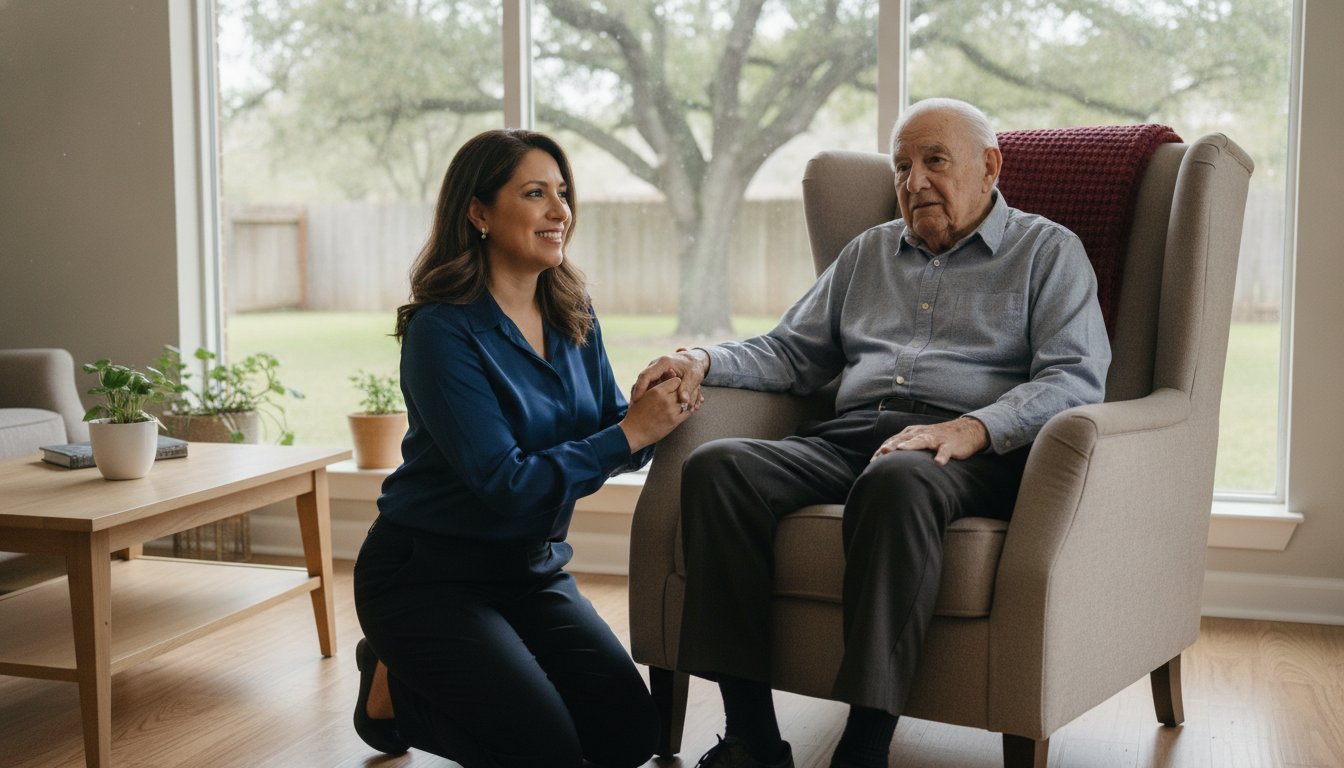
Last Tuesday evening, Sarah stood in her kitchen, frozen as her once-gentle father shouted about a “thief” in the hallway who didn’t exist. If you’ve found yourself in a similar moment, you know the hollow ache of watching a loved one’s personality shift into something unrecognizable. It’s exhausting to provide constant supervision while fearing for their safety or your own. You aren’t alone in this struggle, as nearly 7.4 million Americans are living with Alzheimer’s in 2026, many of whom are being cared for by family members just like you. Learning the nuances of managing dementia behaviors at home is often the difference between a household in crisis and one that feels like a sanctuary again.
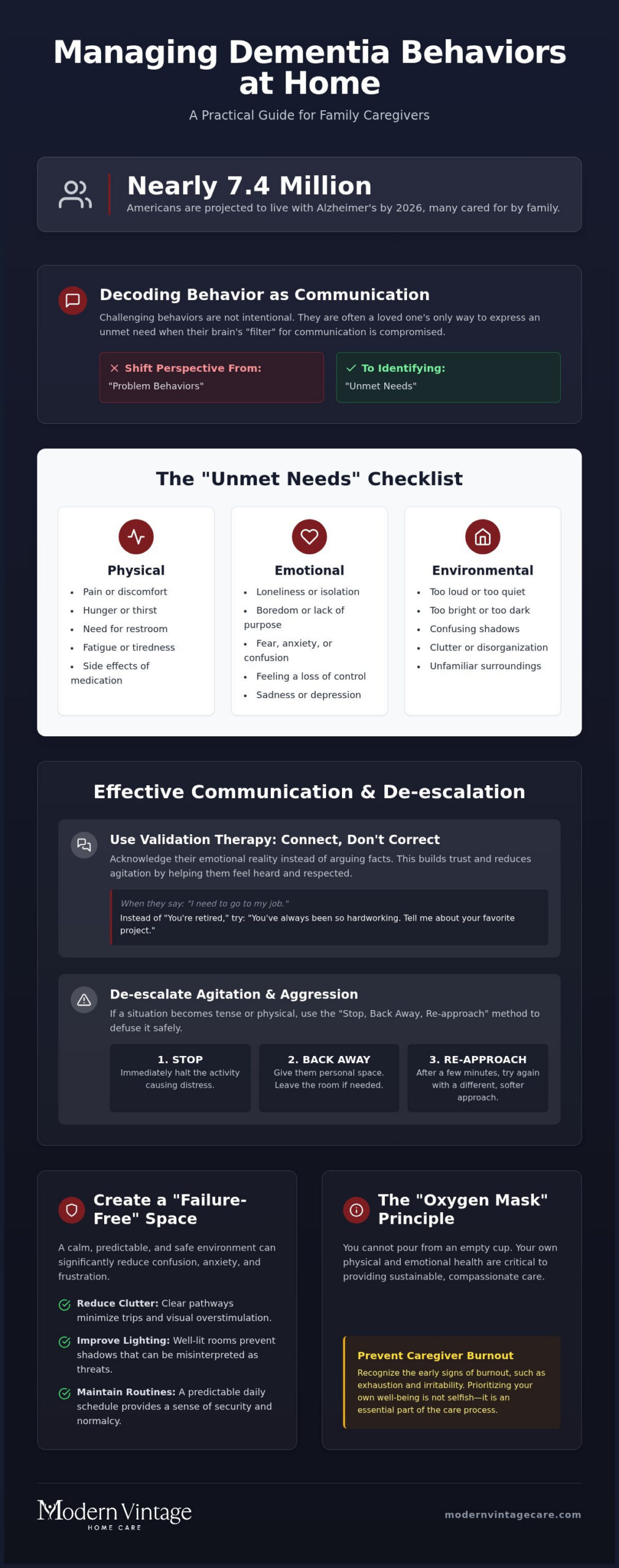
It’s natural to feel overwhelmed when a sweet person suddenly becomes aggressive or confused. You want to provide the best care possible, yet you’re physically and emotionally drained from the weight of 24/7 responsibility. This guide will help you decode the hidden messages behind challenging actions and implement practical, home-based strategies that restore peace to your daily routine. We’ll explore how to identify environmental triggers, use gentle de-escalation techniques, and determine when professional support can help preserve your family bond while ensuring everyone stays safe.
Key Takeaways
- Understand that challenging behaviors are a form of communication, helping you look past the “broken filter” of cognitive decline to address real, unmet needs.
- Learn practical techniques for managing dementia behaviors at home, such as effective ways to de-escalate sudden aggression and handle repetitive questions with patience.
- Find out how to create a “failure-free” living space by removing environmental triggers and clutter that often lead to confusion or frustration.
- Discover how modern tools like automated check-ins and professional companionship can provide safety and relief without sacrificing your loved one’s dignity.
- Master the “oxygen mask” principle by identifying early signs of caregiver burnout and learning why your own health is vital to the care process.
Decoding Dementia: Understanding Behavior as a Form of Communication
When a loved one begins to act in ways that seem confusing or aggressive, it’s helpful to view these actions as a new, albeit difficult, language. Cognitive decline often functions like a “broken filter.” In a healthy brain, we might feel frustration but choose not to shout; however, dementia can strip away those social inhibitions. Understanding Dementia Symptoms involves recognizing that the person isn’t trying to be difficult. Instead, their brain is losing the ability to process impulses and articulate complex feelings. By shifting your perspective from seeing “problem behaviors” to identifying “unmet needs,” you can transform how you approach managing dementia behaviors at home.
Logic and reasoning often become the first casualties of memory loss. If you try to explain why a fear is irrational or why a certain event didn’t happen, you may find that the tension only increases. This happens because the part of the brain responsible for analytical thinking is often damaged. Whether you are dealing with a repetitive question or a sudden outburst, responding with “but I just told you” or “that’s not true” usually leads to further distress. Instead of facts, focus on the person’s current emotional state to find a path toward de-escalation.
The “Unmet Needs” Checklist
If a senior is acting out, they are likely trying to tell you something they can no longer put into words. Use this checklist to decode the potential source of their agitation:
- Physical: Check if they are in pain, hungry, thirsty, or need to use the bathroom. Sometimes a simple infection or a tight pair of shoes can trigger a significant behavioral change.
- Emotional: Consider if they are feeling lonely, bored, or anxious about a perceived threat. A lack of social engagement can lead to restlessness or searching behaviors.
- Environmental: Look around the room. Is the television too loud? Is the lighting creating scary shadows? Overstimulation is a frequent culprit for evening “sundowning” episodes.
The Power of Validation Therapy
Validation therapy is a communication technique that prioritizes a person’s emotional reality over factual accuracy to create a sense of safety and connection. Instead of correcting a loved one who believes they need to go to a job they retired from decades ago, you might say, “You’ve always been such a hard worker; tell me about your favorite project.” This approach reduces immediate agitation by meeting the person where they are. If they feel heard and respected, the need to shout or resist care often diminishes. You are not “lying” to them; rather, you are advocating for their emotional well-being by acknowledging the very real feelings behind their words.
Practical Techniques for Managing Common Dementia Behaviors
Managing dementia behaviors at home requires a toolkit of responses that prioritize the senior’s dignity while maintaining household safety. When faced with repetitive speech, also known as perseveration, it’s easy to lose patience. However, if you realize the person is likely stuck in a loop of anxiety, you can respond to the emotion rather than the words. If they ask about lunch for the tenth time, try saying, “I’m looking forward to our meal too, it’s going to be delicious,” instead of just giving the time. Similarly, if they accuse you of “stealing” a misplaced item, avoid getting defensive. Defensive responses often confirm their suspicion in their mind. Instead, join them in a calm search for the “lost” object, which validates their concern without escalating the conflict into a full-blown argument.
De-escalation Strategies for Agitation
Sudden aggression or catastrophic reactions can be frightening for family caregivers. Using effective Dementia Communication Techniques is essential during these high-stress moments. If a situation turns physical, try the “Stop, Back Away, Re-approach” method. This involves stopping your current activity, physically moving out of the person’s immediate personal space, and waiting a few minutes before trying again with a softer tone. Use non-threatening body language, such as keeping your hands visible and maintaining eye level, to signal safety. Redirecting their focus to a familiar object, like a favorite sweater or a familiar song, often provides the necessary distraction to lower their heart rate and shift their mood.
Navigating Sundowning and Sleep Issues
Many families notice a sharp increase in confusion as the sun begins to set, a phenomenon known as Sundowning. To manage this at home, start with morning light exposure. Spending 20 to 30 minutes in natural sunlight early in the day helps regulate the body’s internal clock. Limit caffeine and heavy meals after 3:00 PM, as these can disrupt already fragile sleep patterns. Establish a “quiet hour” ritual as the afternoon fades; dim the lights, turn off loud news programs, and play soothing music to signal that the day is winding down. If these daily transitions become too much for your family to manage alone, specialized Alzheimer’s and dementia care can provide the professional respite you need to stay energized and present.
Environmental and Routine Modifications for Home Safety
The physical layout of a house acts as a silent caregiver, either supporting a senior’s independence or contributing to their confusion. When a home is filled with clutter, the brain must work overtime to process unnecessary visual information. This sensory overload often manifests as agitation or withdrawal. To succeed in managing dementia behaviors at home, you must look at your living space through your loved one’s eyes. If a hallway is dark or a rug has a busy pattern, it might look like a hole or an obstacle to someone with declining depth perception. Simplifying the environment reduces the “cognitive load” on their brain, which naturally lowers anxiety levels.
Creating a “failure-free” environment is about setting the stage for success in daily tasks. If your loved one struggles to find the bathroom, a simple, brightly colored sign on the door can prevent an accident and the resulting shame. Wandering prevention also requires a creative approach that goes beyond just locking the doors. You might place a dark mat in front of the exit, as many seniors perceive dark floor surfaces as a drop-off they should avoid. Camouflaging doorknobs with covers or painting the door the same color as the surrounding walls can also reduce the impulse to “exit seek” without making the home feel like a restricted facility.
Sensory Adjustments for Calm
Sensory triggers are often the hidden culprits behind sudden mood shifts. Small changes to the atmosphere can make a significant difference in daily comfort:
- Reduce Background Noise: Turn off the television or radio when they aren’t being used. Constant “chatter” from a news program can be misinterpreted as real people arguing in the room.
- Utilize High Contrast: Use a plate that is a different color than the table to help with object recognition. This simple adjustment makes it easier for a senior to see their food and eat independently.
- Eliminate Shadows: Ensure every corner is well-lit. Harsh shadows on the floor can look like intruders or trip hazards, often triggering paranoia or a refusal to walk through certain rooms.
The Structure of a Successful Day
A predictable daily routine provides an emotional anchor for someone whose world feels increasingly unpredictable. Start by keeping wake-up times and meals consistent, as these “time markers” help regulate the body’s internal rhythms. It’s also vital to incorporate meaningful “jobs” into the day. Whether it’s matching socks, folding towels, or helping set the table, having a purpose boosts self-esteem and reduces the restlessness that leads to difficult behaviors. Balance these active periods with scheduled rest in a quiet space to prevent the over-exhaustion that often triggers evening agitation.
Leveraging Professional Support and Technology for Home Safety
Families often feel they must carry the entire burden of care alone to prove their devotion. However, when physical exhaustion leads to a missed medication dose or a moment of inattention allows a loved one to wander, the safety risk becomes too high for both the senior and the caregiver. Managing dementia behaviors at home is more sustainable and effective when you integrate professional layers of protection. Medication management is a cornerstone of this approach. Proper dosing can stabilize mood swings and reduce the frequency of catastrophic reactions, but managing a complex schedule while sleep-deprived is incredibly difficult. Professional oversight ensures that these vital treatments are administered correctly, helping to maintain a baseline of emotional stability.
Modern Safety Tools: Automated Check-ins and Reminders
Technology now bridges the gap between family visits, offering peace of mind without intruding on a senior’s privacy. Automated medication reminders prevent dangerous dosing errors by providing clear, verbal prompts at exact times. If a dose isn’t confirmed, a notification can alert family members or caregivers immediately. Automated check-in services also support early-stage independence by ensuring your loved one is safe and responsive throughout the day. These wellness checks significantly reduce caregiver anxiety by providing real-time monitoring. By using these modern tools, you can act as a proactive advocate for your relative’s safety rather than constantly reacting to a crisis after it occurs.
In-Home Memory Care vs. Facility Placement
Many families prefer in-home care because it preserves the individual’s spirit and connection to familiar surroundings. Staying in a home where every hallway, chair, and family photo is known can drastically reduce the confusion that often triggers aggression. You don’t have to choose between “doing it all” and a facility placement. Professional support is highly customizable, ranging from “Quick Care” visits for short-term needs to comprehensive 24-hour care. This round-the-clock presence acts as a vital safety net for wandering and sundowning, providing expert de-escalation while you get the rest you need. For those in the Houston area, exploring Specialized Dementia Home Care Services in Sugar Land can help you understand how personalized plans keep your household safe.
If you’re ready to explore how a dedicated partner can restore peace to your household, learn more about our Alzheimer’s and dementia care options and how they can be tailored to your family’s unique situation.
Preventing Caregiver Burnout: The Essential Final Step
Caring for a loved one with memory loss is a marathon that requires immense emotional and physical stamina. If you find yourself snapping at small mistakes or feeling a deep sense of social withdrawal, you’re likely experiencing the early stages of burnout. This is a common reality when managing dementia behaviors at home for months or years without a consistent break. You might also notice physical symptoms like chronic fatigue, sleep disturbances, or frequent illnesses. These aren’t signs of weakness; they’re vital signals that your “emotional battery” is dangerously low and needs recharging to keep your household functioning safely.
Think of the “Oxygen Mask” principle used on airplanes. If you don’t secure your own mask first, you won’t be able to help the person sitting next to you. In the context of memory care, your well-being is the foundation of your loved one’s security. When you are depleted, your patience thins, and your ability to use the de-escalation techniques mentioned in previous sections diminishes. Prioritizing your own health is a strategic act of love that ensures you can remain the steady, nurturing presence your relative needs. It’s about preserving the family bond by ensuring the caregiver doesn’t break under the weight of 24/7 responsibility.
Understanding Respite Care Options
Respite care is a strategic necessity rather than a luxury. Short-term “Quick Care” visits are perfect for those times you need to run errands, attend your own medical appointments, or simply take a self-care break. For many families in our community, overnight support is the most transformative option. Having a trained professional present during the late-night hours ensures you get the restorative sleep required to handle the challenges of the next day with a clear mind. To learn more about building a sustainable plan, explore our Respite Care for Family Caregivers resource.
Next Steps for Families in Sugar Land
Starting a conversation about professional help with other family members can feel daunting, but it’s essential for long-term stability. Focus the discussion on the safety of your loved one and the sustainability of the current care plan. Preparing for an in-home assessment is an excellent first step; it allows an expert to identify specific behavioral triggers in your unique environment and suggest tailored solutions. By building a local support network in the Sugar Land and Houston area, you transition from being a solitary worker to the leader of a dedicated care team. If you’re ready to explore how we can support your journey, schedule a compassionate care consultation with Modern Vintage Home Care today.
Restoring Peace and Safety to Your Daily Life
Finding a path forward after a dementia diagnosis is a journey that requires both patience and a strategic plan. You’ve learned that by decoding behaviors as a new form of communication and modifying your living environment to reduce sensory triggers, you can significantly lower the tension in your household. Successfully managing dementia behaviors at home isn’t about doing everything yourself; it’s about building a sustainable support system that protects both your loved one’s dignity and your own health. Whether you need a short break through Quick Care services or the security of 24-hour companionship, help is available right here in our community.
Our team brings specialized memory care training and deep Sugar Land and Houston local expertise to every family we serve. We provide 24-hour round-the-clock support to ensure safety during wandering or sundowning episodes. If you’re feeling depleted, remember that seeking a partner in care is the most proactive step you can take for your family’s future. Get Expert Help Managing Dementia Behaviors at Home and take the first step toward a calmer, more connected household today. You don’t have to walk this path alone.
Frequently Asked Questions
What is the most effective way to handle aggression in dementia patients?
The most effective way to handle aggression is to remain calm and identify the underlying trigger before the situation escalates. Aggressive outbursts are often a reaction to physical pain, fear, or environmental overstimulation. If you respond with a soft voice and non-threatening body language, you can often lower the tension. Our specialized memory care training for caregivers in Sugar Land emphasizes de-escalation techniques that prioritize the senior’s dignity while ensuring everyone in the household remains safe.
Why does my loved one’s behavior get worse in the late afternoon (Sundowning)?
Sundowning occurs because a senior’s internal clock becomes disrupted, leading to increased confusion and agitation as daylight fades. Factors like end-of-day exhaustion or harsh shadows in the home can trigger fear. You can manage this by increasing morning light exposure and creating a quiet, well-lit environment in the late afternoon. For families in Missouri City, professional 24-hour care provides a vital safety net during these difficult evening hours when caregiver fatigue is highest.
How can I prevent a person with dementia from wandering away from home?
Preventing wandering involves a combination of environmental modifications and consistent supervision. You might install camouflaged doorknobs or use dark floor mats in front of exits to discourage exit-seeking. Managing dementia behaviors at home also benefits from modern technology like automated check-ins and monitoring. If wandering becomes a frequent risk, our 24-hour care services in the Houston area ensure that a trained companion is always present to provide redirection and safety.
Is it better to correct a person with dementia or go along with what they say?
It is generally more effective to use validation therapy rather than correcting their factual errors. Arguing about the truth often leads to unnecessary distress and agitation for the senior. If they believe they need to go to a job they left years ago, acknowledge their feelings of responsibility instead of pointing out the date. This approach fosters emotional safety and connection, which are essential for maintaining a peaceful and supportive home environment in Sugar Land.
How do I know when it is no longer safe to care for someone with dementia at home?
Safety concerns become critical when a senior frequently wanders, experiences falls, or exhibits aggression that puts themselves or others at risk. If you are physically or emotionally depleted, your ability to provide high-quality care also diminishes. Modern Vintage Home Care offers in-home assessments in Missouri City to help families identify specific behavioral triggers. We can help you determine if 24-hour companionship or medication management can bridge the gap to keep your loved one safe at home.
Can medication management help with dementia-related behavioral issues?
Yes, proper medication management can stabilize mood swings and reduce the frequency of challenging behaviors like paranoia or anxiety. However, keeping track of complex schedules is difficult for busy family members. Our services include automated medication reminders and professional oversight to ensure doses are never missed. Consistent adherence to a doctor’s plan helps maintain a baseline of emotional stability, making the daily task of managing dementia behaviors at home much more predictable and less stressful.
What is the difference between companionship and specialized memory care?
Companionship focuses on social engagement and assistance with daily activities, while specialized memory care involves specific training to handle cognitive decline and behavioral shifts. Our caregivers in the Houston area receive specialized training to decode “unmet needs” and use de-escalation protocols. While companionship prevents loneliness, memory care provides the structured routines and safety measures required to manage symptoms like wandering, sundowning, and repetitive speech with professional confidence and empathy.
How does respite care help prevent caregiver burnout?
Respite care provides you with a necessary break to rest and recharge while a professional steps in to provide care. Whether you use our short-term Quick Care Services for a few hours or overnight support, these breaks prevent the physical and emotional exhaustion that leads to burnout. By stepping away temporarily, you can return to your caregiving role with renewed patience. This strategic support is essential for families in Sugar Land who want to provide long-term care at home.
