

If your loved one couldn’t speak for themselves, would your family know what care they’d want and who should make decisions? Starting the conversation can feel daunting, especially when advance directives, hospice, and caregiving roles are unfamiliar. An end-of-life care planning checklist can clarify the first steps and help your family focus on what matters most to your loved one.
It’s understandable to want the right documents in place while also wondering how to share them, coordinate support, and respect everyone’s needs. Planning doesn’t have to happen all at once. A thoughtful conversation and a few organized decisions can give family members and care providers a clearer guide when difficult choices arise.
This guide offers a practical checklist for discussing care preferences, identifying decision-makers, gathering and sharing important documents, and planning day-to-day support. You’ll also find questions to ask about palliative care and hospice, ways family caregivers can coordinate help, and guidance on where in-home caregiver support may fit alongside a loved one’s clinicians and hospice team. The goal is a manageable, personal plan that’s easy to find when needed.
Key Takeaways
- Use an end-of-life care planning checklist to work through conversations, contacts, documents, care roles, and practical arrangements one step at a time.
- Clarify who your loved one wants involved in health-care decisions, and confirm Texas advance-care planning forms and requirements with an appropriate professional.
- Ask clinicians and hospice providers to explain their roles, eligibility, and coverage so family caregiving and nonmedical home care can be coordinated appropriately.
- Make key preferences and documents easy for designated decision-makers and care providers to find.
- Review the home-care schedule and available family support to identify where in-home caregiving or respite support may help.
Start an End-of-Life Care Plan with Your Loved One’s Wishes
Planning isn’t about predicting a specific timeline. It’s about understanding what matters to your loved one and helping family members honor those preferences if care decisions become difficult. Start with their voice, then build a plan around it.
A practical end-of-life care planning checklist can cover six areas: personal wishes, decision-makers, important documents, care coordination, practical arrangements, and regular review. You don’t need to resolve everything in one conversation. If your loved one can participate, inviting them into the planning early gives them room to express preferences and ask questions.
How can families begin a difficult planning conversation?
Choose a calm time when no immediate decision needs to be made. Ask whom your loved one would like involved, and give them time to answer in their own way. Open-ended questions can make the conversation feel less like an interview:
- “What helps you feel comfortable and like yourself?”
- “Which routines or relationships would you most want to preserve?”
- “What would you like us to understand about the kind of support you prefer?”
Listen before discussing forms, services, or disagreements. Reflect back what you hear, such as, “It sounds like staying connected with family is especially important to you.” If the conversation feels overwhelming, pause and return to it later. The goal is understanding, not agreement on every detail at once.
Which values and preferences should the checklist capture?
Record your loved one’s priorities in their own words where possible. Note spiritual or cultural practices, their preferred approach to making decisions, and who they’d like involved. Ask rather than assume whether they have preferences about their surroundings or who they want nearby. These details can help family and care providers offer more personal support.
Advance care planning brings together conversations about future health-care decisions, the people a person trusts to help make them, and documents that record their wishes. For a broader overview, see Advance care planning. Save medical questions for the person’s clinician. Don’t try to interpret treatment choices or predict what a particular option would mean on your own.
Preferences can change as health, circumstances, or priorities shift. Record when the plan was discussed or updated, and revisit it after a meaningful change or when your loved one wants to talk again. A dated, evolving record is more useful than treating an early conversation as a final answer.
Document Decision-Makers and Texas Advance-Care Planning Choices
Advance care planning means discussing and documenting a person’s preferences for future health-care decisions. It can help family members understand whom their loved one trusts to speak for them and what guidance they want considered. Documents matter, but they don’t replace conversations with the person, their chosen decision-maker, and their clinicians.
As you build an end-of-life care planning checklist, treat Texas forms as a prompt to confirm details, not as paperwork to complete from memory. Document names, scope, current versions, and signing requirements can depend on Texas law. Check current information through official Texas sources, such as Texas Health and Human Services, and consult a qualified legal professional if you need help understanding how a document applies to your family’s circumstances.
What Texas documents should families ask about?
Ask a clinician or qualified legal professional about the purpose and current requirements for these documents:
- Medical Power of Attorney: A document that names an agent to make health-care decisions under the circumstances described in the document.
- Directive to Physicians and Family or Surrogates: A document concerning certain future treatment decisions. Ask what choices it covers and how it should reflect the person’s wishes.
- Out-of-Hospital DNR Order: A separate topic to discuss with the person’s clinician. Confirm its scope, current form, and Texas requirements through official sources.
These documents address decision-making, not the full range of support a person may receive. For a separate overview of types of end-of-life care, including palliative care and hospice, consult the American Cancer Society and discuss care questions with the appropriate providers.
How should a family organize documents and contacts?
Create a simple contact and document record so the right people can reach one another and find the current paperwork. Include:
- The primary decision-maker and any alternate named in the documents.
- The person’s clinician contacts and a family communication lead, if your loved one wants one.
- Where current signed documents are stored and who can access them.
- The date each document was completed or reviewed.
Keep documents secure while ensuring the authorized decision-maker and relevant care team know how to access them. Share updates when the person’s health, relationships, or preferences change, and replace outdated copies where they’re stored. If your family is also considering nonmedical support at home, you can learn about in-home caregiving support as part of a broader plan coordinated with clinicians and, when involved, the hospice team.
Compare Care Options and Clarify What Each Team Provides
Care is often shared across several people, but their roles aren’t interchangeable. Use this comparison as a starting point for your end-of-life care planning checklist. Then confirm each provider’s responsibilities, availability, communication process, and steps for escalating concerns.
| Care role | What it may provide | What to clarify |
|---|---|---|
| Hospice provider | A clinical, team-based service for people who meet its eligibility criteria. | Ask the hospice provider about eligibility, covered services, who to contact with clinical concerns, and how urgent changes are handled. |
| Other clinical providers | Care and guidance related to the person’s health needs. | Confirm each clinician’s role, how they coordinate with hospice if involved, and whom to call with medical questions. |
| Family caregivers | Personal connection and day-to-day help, based on the family’s capacity and the person’s wishes. | Agree on tasks, schedules, updates, and when to ask for additional help. |
| Nonmedical home care | Support with companionship, personal care, routines, and caregiver respite when appropriate. | Discuss the support requested, visit schedule, communication expectations, and what falls outside the caregiver’s role. |
How is hospice different from nonmedical in-home care?
Hospice is a clinical service. Discuss eligibility, coverage, and specific services with the hospice provider and other relevant clinicians. Nonmedical in-home caregivers can help with daily routines and provide family caregivers with respite, but they don’t replace clinicians or hospice services.
Modern Vintage Home Care offers dedicated hospice support, not medical hospice services. Families can ask how this support may fit alongside the hospice team’s care plan and which needs should go directly to clinicians or the hospice provider.
How can families coordinate the people involved?
With your loved one’s consent, choose a family contact to share updates and keep questions organized. This can reduce repeated calls and help ensure concerns reach the appropriate person. Before care begins, ask each provider:
- Which needs and tasks are you responsible for?
- Who should we contact with a routine question, a clinical concern, or an urgent change?
- How will updates be shared, and with whom?
- What should family members do if a need falls outside your role or availability?
Write down the answers and keep contact details accessible to the people involved. For a closer look at coordinating nonmedical support with a hospice team, refer to the article on hospice support at home.
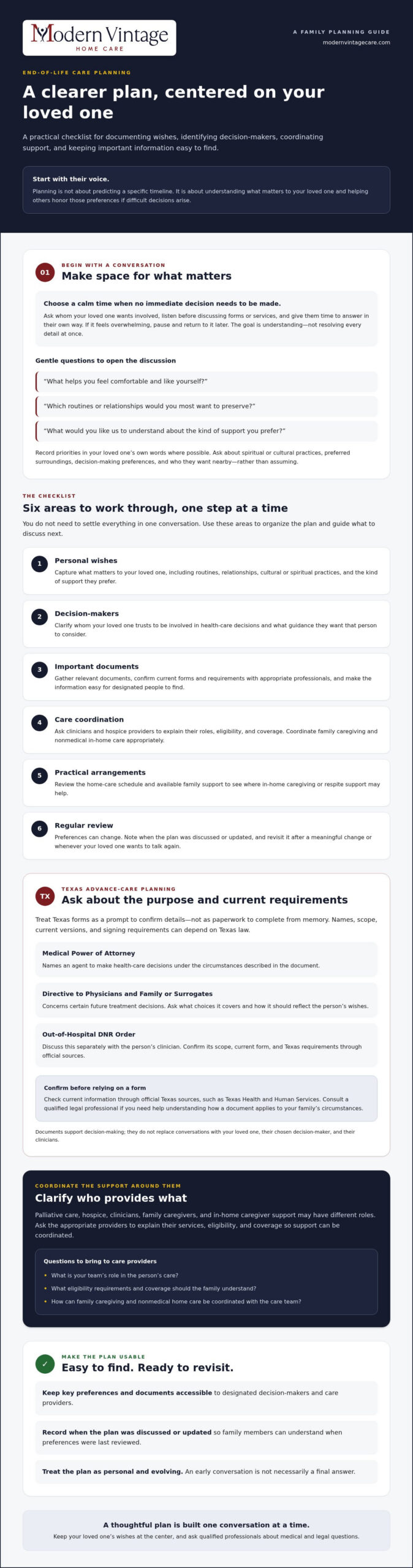
Use This Practical End-of-Life Care Planning Checklist
An end-of-life care planning checklist works best as a shared, updateable guide, not a stack of forms to finish in one sitting. Work through these steps at a pace that feels manageable. If your family can complete just one today, start with the conversation or contact sheet.
- Conversation: Ask your loved one what matters most in daily life, what brings comfort, and whom they want involved in decisions. Record their preferences in their own words when possible.
- Contacts: Create a shared contact sheet with the chosen decision-maker and alternate, clinicians, hospice contacts if involved, and a family communication lead. Note each person’s role, preferred way to be reached, and who may receive updates, following your loved one’s wishes.
- Documents: List current advance-care documents, where signed copies are kept, and who can access them. Legal question: Confirm Texas forms and requirements with an official source or qualified legal professional. Share relevant documents with the authorized decision-maker and care team as appropriate.
- Care roles: Write down daily tasks that need support, who may help, and when family members are available. Clinical question: Ask the person’s clinician or hospice provider about symptoms, treatment decisions, and whom to contact if needs change. Clarify what nonmedical caregivers can assist with.
- Review: Date the summary and note unanswered questions, who will follow up, and when the family will revisit it. Financial question: Ask the relevant insurer, benefits representative, or financial professional to explain coverage and planning questions for your circumstances.
What should families record about daily support?
Make the plan useful in everyday situations. Note preferred routines, comfort measures, meaningful activities, and relationships your loved one wants to maintain. List practical assistance needs, such as help with personal care or companionship, and identify who might provide each type of support. Be realistic about caregiver availability. If family members are already stretched, discuss respite options early rather than waiting until everyone is overwhelmed.
How can families make the plan usable?
Keep a dated summary of preferences, contacts, documents, care roles, and unresolved questions in a secure place that authorized people know how to access. Share only relevant information with the chosen decision-maker and care providers, in keeping with your loved one’s wishes. Revisit the plan when health, relationships, or preferences change.
If your family is weighing caregiver relief, read more about respite care and in-home support. To discuss how in-home caregiving or respite support may fit into a broader plan, connect with Modern Vintage Home Care.
Turn the Plan into Compassionate Support at Home
A written plan is more useful when it helps everyone understand how to support your loved one day to day. Share relevant preferences with family, clinicians, hospice providers, and in-home caregivers, while respecting your loved one’s wishes about who receives updates. Keep responsibilities clear: clinicians and hospice providers address clinical questions, while family and nonmedical caregivers can coordinate practical support around the person’s routines.
For families in Sugar Land and Missouri City, take stock of the help already available at home before arranging additional care. Map out when your loved one needs support, who in the family can be present, and where caregiving responsibilities are difficult to sustain. A schedule can reveal whether the gap is companionship during part of the day, help with personal care, or time for a family caregiver to rest.
When might additional in-home caregiver support help?
Consider nonmedical support if family members need help maintaining familiar routines or balancing caregiving with other responsibilities. Depending on the person’s needs, companionship, personal care, respite, or 24-hour support may be worth discussing. These are options to assess, not automatic recommendations. Describe the tasks, preferred schedule, and important routines to an agency, then confirm what support is available and appropriate. Direct clinical symptoms and medical decisions to clinicians and the hospice team.
What should families ask a home-care agency?
Before making arrangements, ask clear questions and compare the answers with your written plan:
- Which nonmedical services may meet the needs we’ve identified, and how are personal preferences reflected in the care plan?
- Do you currently serve our part of Sugar Land or Missouri City?
- What scheduling options are available, and how can we confirm whether they fit our family’s needs?
- Who will communicate with the family, and how are changes or concerns handled?
- Which questions should we direct to the clinician or hospice provider?
Modern Vintage Home Care offers companionship, personal care, respite care, and dedicated hospice support. Its caregiving is nonmedical and should complement, not replace, support from clinicians or a hospice provider. Families can use their checklist to explain the help they’re considering and ask whether it may fit their loved one’s preferences and care arrangements.
If you’re ready to discuss local nonmedical caregiver support, talk with Modern Vintage Home Care about in-home support. A conversation can help clarify possible next steps before your family has every detail settled.
Take the Next Step Toward Care That Honors Their Wishes
A thoughtful end-of-life care planning checklist turns your loved one’s preferences into guidance the family and care team can use. Keep decision-makers and current documents easy to locate, and make responsibilities clear so clinical questions go to clinicians while everyday support is coordinated around familiar routines.
Planning can develop over time. Start with one conversation or a simple review of the support available at home, then update the plan as needs and preferences change. Families in Sugar Land and Missouri City can also explore nonmedical help alongside their loved one’s clinicians and hospice provider. Modern Vintage Home Care offers dedicated hospice support and respite care as part of its in-home care offerings.
Talk with Modern Vintage Home Care about compassionate in-home support and discuss what may fit your family’s needs. Each small step can help make care more personal, coordinated, and grounded in the wishes of the person you love.
Frequently Asked Questions
What should be included in an end-of-life care planning checklist?
An end-of-life care planning checklist should record your loved one’s preferences, chosen decision-maker, relevant documents, care contacts, and practical support needs. Include preferred routines, meaningful relationships, and spiritual or cultural practices if your loved one wants them noted. Add a shared contact sheet, unresolved questions for clinicians or legal and financial professionals, and the date of the latest review. Keep the plan clear enough for family members to use.
When should a family start end-of-life care planning?
Start while your loved one can take part in the conversation, rather than waiting for a crisis or a specific diagnosis. Begin with a gentle question about what matters most in daily life, then return to documents and care arrangements later. Planning early doesn’t mean predicting when circumstances will change. It gives your family more opportunity to understand preferences and prepare thoughtfully.
What is the difference between a Texas Medical Power of Attorney and a Directive to Physicians?
A Texas Medical Power of Attorney names an agent to make health-care decisions as described in the document. A Directive to Physicians and Family or Surrogates addresses certain future treatment decisions. They serve different purposes, so don’t assume one replaces the other. Confirm current Texas forms, terminology, scope, and signing requirements with official Texas sources or a qualified legal professional before completing either document.
Can a person change their end-of-life care plan?
Yes. A person’s preferences and circumstances can evolve, so review and update the plan as needed. Record the date of each discussion or document update, and make sure the chosen decision-maker and relevant care providers know where the current information is kept. If a change involves legal documents, confirm the proper way to update or replace them with an appropriate legal professional or official Texas resource.
Does hospice provide the same services as in-home caregivers?
No. Hospice is a clinical service, while nonmedical in-home caregivers may help with companionship, personal care, routines, or respite for family caregivers. The roles can complement each other, but caregiver support doesn’t replace clinical care. Ask the hospice provider what services and eligibility apply, and clarify with any home-care agency which tasks it can provide. Modern Vintage Home Care offers dedicated hospice support, not medical hospice services, as part of its local service offerings.
How can family caregivers arrange respite during end-of-life care?
Start by listing the tasks family members are handling, when support is needed, and which responsibilities are becoming difficult to sustain. Discuss these needs with the hospice provider and potential nonmedical home-care agencies to understand appropriate options and scheduling. Modern Vintage Home Care offers respite care, but families should confirm current availability and whether the support fits their needs. Respite can be part of a broader plan, not a replacement for clinical care.
How do families keep end-of-life planning documents accessible?
Keep current documents in a secure, known location, and tell the authorized decision-maker where they’re stored. Ask how the clinician’s office or hospice provider prefers to receive relevant copies, and follow your loved one’s wishes about sharing personal information. Maintain a dated contact sheet with document locations and key contacts. When a document changes, remove or clearly mark outdated copies so family members don’t rely on an old version.