

What if the first week of home care isn’t about getting every routine right, but about helping everyone feel more at ease? It’s natural to wonder what to expect in the first week of home care, especially when a new person is entering your loved one’s home and daily life.
You may be unsure what the caregiver will do on the first visit, or how to share personal routines and preferences without making your loved one feel that decisions are being made for them. Those concerns deserve care, too. The first week is an adjustment period for the older adult, family, and caregiver. Familiarity and trust can take time to grow.
This guide explains how the first days may unfold, what information can help a caregiver provide respectful support, and how to raise questions or request changes as you learn what works. The initial care plan is a starting point, not a fixed script. With clear communication and room to adjust, your family can help make care feel familiar and centered on the person receiving it.
Key Takeaways
- Learn what to expect in the first week of home care, from confirming visit details to allowing time for adjustment.
- Use a shared care plan to outline the older adult’s preferences, priority tasks, and whom to contact with questions.
- Recognize the difference between ordinary first-visit awkwardness and a specific concern to raise with the provider.
- After the first week, review what feels comfortable and discuss changes to agreed tasks or support needs.
- Explore whether companionship, personal care, or Alzheimer’s and dementia care may fit your family’s needs.
What to Expect in the First Week of Home Care
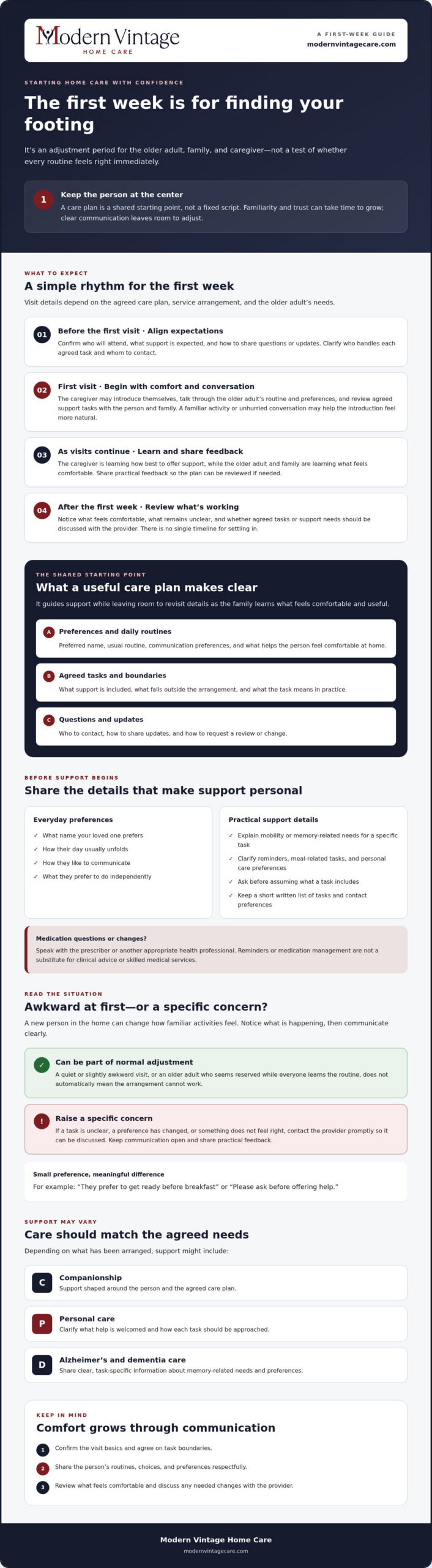
Welcoming a caregiver into your loved one’s home can bring relief, uncertainty, or both. The first week gives the older adult, family, and caregiver a chance to learn one another’s routines and build familiarity. It doesn’t need to feel perfect right away.
Visit details depend on the agreed care plan, the service arrangement, and the older adult’s needs. Support might include companionship, personal care, or Alzheimer’s and dementia care, depending on what has been arranged. For a general overview of the purpose and range of home care, families can explore this introductory resource.
A care plan should reflect the individual’s preferences, daily routines, and support needs. During the first week, the caregiver may provide the agreed assistance while learning what feels comfortable. The family can share practical feedback so the plan can be reviewed if needed.
What may happen during the first caregiver visit?
The first visit may begin with a warm introduction and a conversation about the older adult’s comfort, preferences, and usual routine. The caregiver may review agreed support tasks with the older adult and family, including what the person likes to do independently and where they welcome help. A familiar activity or unhurried conversation can make the introduction feel more natural.
Before the caregiver arrives, confirm the first-visit plan with the provider. Ask who will attend, what support is expected, and how to share questions or updates. Visit details vary, so confirming the basics helps everyone start with the same expectations.
How can the first week feel different from later weeks?
At first, even familiar activities may feel different with someone new in the home. The older adult may be reserved, and the caregiver is also learning how best to offer support. A quiet or slightly awkward visit doesn’t automatically mean the arrangement can’t work. Comfort can grow through respectful interactions and clear communication.
As the family shares practical feedback, the routine may become clearer. For example, you might explain that your loved one prefers to get ready before breakfast or appreciates being asked before receiving help. Notice what feels comfortable, what remains unclear, and whether agreed tasks need adjustment. There’s no single timeline for settling in. Keep communication open with the provider, and raise specific concerns promptly so they can be discussed.
How the Care Plan Guides Support During the First Week
A care plan is an agreed guide to the support a caregiver will provide, the older adult’s preferences and routines, and how the family and provider will communicate. It gives everyone a shared starting point while leaving room to revisit details as the family learns what feels comfortable and useful.
Before support begins, clarify who is responsible for each agreed task, what falls outside the arrangement, and whom to contact with questions or requests for changes. Clear task boundaries help the older adult, family, and caregiver share expectations with confidence. This is especially helpful when relatives have different assumptions about what a visit will include.
What information should families share with a caregiver?
Share details that help the caregiver offer respectful, person-centered support. For example, explain what name your loved one prefers, how their day usually unfolds, how they like to communicate, and what helps them feel comfortable at home. If mobility or memory-related needs affect a particular task, describe the situation clearly rather than relying on broad labels.
It can also help to explain what the older adult prefers to do independently. These details can guide the caregiver in supporting daily life without taking over familiar choices. For medication questions or changes, speak with the prescriber or another appropriate health professional. Medication reminders or management should not be treated as a substitute for clinical advice or skilled medical services.
Which support tasks should be clarified before visits?
Review each task with the provider and confirm that it’s included in the plan. Depending on the agreed arrangement, this might include companionship, personal care, reminders, or meal-related tasks. Ask what each task means in practice. For example, clarify whether the older adult wants a reminder at a particular point in their routine or prefers to be asked before receiving personal care support.
Also agree on who handles routine questions and how to share updates. If a family member notices that a task is unclear or a preference has changed, they should know how to bring it to the provider’s attention. A short written list of agreed tasks and contact preferences can make these conversations easier.
Families exploring support can review Modern Vintage Home Care’s services and discuss which options may fit their loved one’s needs. Confirm availability and the details of any arrangement directly with the provider.
When the First Week Feels Awkward: Normal Adjustment or a Care Concern?
A quiet first visit or a little discomfort doesn’t automatically mean home care can’t work. Having someone new in the home can feel personal, especially when the older adult is used to managing their own routines. Understanding what to expect in the first week of home care means making room for mixed feelings while staying attentive to specific concerns.
Privacy, an unfamiliar face, changes to daily habits, or worries about losing independence may contribute to resistance. Listen without arguing or dismissing the person’s preferences. Offering choices can help preserve dignity: “Would you like help getting ready now, or after breakfast?” Explain the caregiver’s role respectfully and, where possible, let the older adult guide how support is offered.
If memory-related needs affect comfort or communication, families can ask the provider whether specialized dementia home care services may be appropriate. Discuss support in relation to the individual rather than assuming every person with memory challenges responds the same way.
How can families tell ordinary adjustment from a care concern?
Ordinary unfamiliarity may look like a reserved conversation, hesitation about accepting help, or a preference to observe before joining in. A specific concern deserves prompt discussion, particularly if an agreed task wasn’t handled as expected, a boundary wasn’t respected, or the older adult describes feeling uncomfortable or unsafe. Take their words seriously. Don’t assume a concern is simply part of adjusting.
There’s no universal checklist that explains every behavior or situation. Consider what happened, what the older adult said, and whether the issue relates to a preference, an unclear expectation, or a safety concern. If you believe someone is in immediate danger, prioritize their safety and contact appropriate emergency help.
How should families raise a concern about the care arrangement?
Write down specific observations while they’re fresh. Note what happened, when it occurred, what was expected, and how your loved one responded. Then share the information calmly with the provider. Clear details make it easier to understand the concern without placing blame or making assumptions.
Ask what could be adjusted. A different introduction, a change to agreed timing, or clarification of a task may help address an arrangement-related issue. Include the older adult in the conversation as much as they wish, and explain any changes in a way that respects their choices. If a concern requires clinical assessment, contact the appropriate health professional rather than relying on a caregiver or provider to diagnose it.
How to Prepare for the First Week of Home Care
A little preparation can make the first visit feel less uncertain without turning the home into a formal checklist. Before care begins, agree with the provider on visit details, priority tasks, and how you’ll share questions or updates. Then invite the older adult to help shape the plan wherever possible.
What should families have ready before care begins?
Keep the information useful and easy to find. A short outline can help the caregiver understand what matters in daily life, while avoiding details that aren’t needed for the agreed support.
- Note daily rhythms and preferences. Include usual routines, preferred names, communication preferences, and comfort considerations.
- List the agreed priority tasks. Make clear which support is included and what the older adult prefers to handle independently.
- Share practical household details. Explain what the caregiver needs to know for the visit, such as where commonly used items are kept. Avoid sharing sensitive information that isn’t relevant.
- Confirm visit and contact details. Check the planned arrangements with the provider, identify whom to contact with routine questions, and agree how updates should be shared.
- Clarify reminders and other support. If medication reminders are part of the plan, confirm what that support involves. For medication instructions or clinical questions, contact the prescriber or an appropriate health professional.
Keep the notes somewhere the older adult is comfortable with, and ask before sharing personal information. A concise guide should support their preferences, not make them feel their privacy is being overlooked.
How can families make introductions more comfortable?
Ask your loved one how they’d like to meet the caregiver and whether they want to lead the conversation, have a family member nearby, or begin with a simple introduction. Keep the interaction calm. Too many new instructions or expectations at once can make a visit feel overwhelming.
Afterward, offer a low-pressure opening for feedback. You might ask, “Was there anything you’d like us to do differently next time?” Listen without rushing to explain away discomfort. Share useful feedback with the provider to discuss whether a practical adjustment is appropriate.
If you’re preparing to arrange support, talk with Modern Vintage Home Care about planning a personalized care arrangement. Families can confirm visit details, available services, and current availability for their location directly with the provider.
Choosing Next Steps After the First Week of Home Care
The first week offers useful information, not a final verdict. Take a moment with your loved one to review what felt comfortable, what remains unclear, and whether the agreed tasks matched the support they wanted. A caregiver may be following the plan as written while the family realizes that a preference or need wasn’t fully explained. Discuss proposed changes with the provider before assuming a task is included or shifting responsibilities.
How can families decide whether the care plan needs adjusting?
Compare the agreed tasks with the older adult’s experience and your own observations. Consider: Did the support feel respectful? Were priorities addressed? Was anything confusing or left uncertain? Bring specific examples to the provider, then ask what can be clarified or adjusted. The care plan can be revisited as everyone learns more, but changes should be agreed on together.
If you have ongoing questions about medication support, clarify what is included in the arrangement and speak with the prescriber or an appropriate health professional about medication instructions or clinical concerns. Families seeking general information about medication management for elderly seniors should remember that home-care support doesn’t replace clinical guidance.
What can families ask a local home-care provider?
A helpful conversation can make the next step feel more manageable. Ask how the provider learns about a client’s preferences, how family feedback is shared, and how changes to agreed tasks are discussed. You can also ask which services and visit arrangements may be available for your loved one’s needs and location. Options may include companionship, personal care, Alzheimer’s and dementia care, or other offered support, depending on the individual and what the provider can arrange.
For families in Sugar Land or Missouri City, confirm current availability for your specific location rather than assuming every service or arrangement is offered everywhere. You might also ask what information the provider needs to understand your loved one’s routines and what to do if the plan needs refinement.
Choosing support is a family decision, and it’s reasonable to take time to ask questions. If you’re ready to explore personalized in-home care, talk with Modern Vintage Home Care about your loved one’s needs and the options available in your area.
Take the Next Step Toward Support That Feels Right
Knowing what to expect in the first week of home care can help your family begin with more confidence. Treat the early days as a chance to learn what feels comfortable, clarify responsibilities, and share feedback. A quiet or awkward first visit doesn’t necessarily mean the arrangement won’t work, and specific concerns deserve a thoughtful conversation with the provider.
As routines become clearer, the care plan can be reviewed to better reflect your loved one’s preferences and needs. Personalized in-home support options may include companionship and personal care. Modern Vintage Home Care also offers automated check-ins and medication reminders. The right fit depends on the person and the support arranged. Medication reminders don’t replace clinical guidance.
If your family is exploring care, talk with Modern Vintage Home Care about a personalized support plan. Ask questions, discuss what matters most to your loved one, and confirm which options are available in Sugar Land, Missouri City, or your location. Respectful communication and room to adjust can help your family take the next step at a manageable pace.
Frequently Asked Questions
What happens during the first day of home care?
The first day often begins with an introduction and a review of the support agreed on in the care plan. The caregiver may learn about your loved one’s preferences and routine, then provide the included assistance. The exact visit depends on the arrangement and individual needs, so confirm the plan with the provider beforehand. Knowing what to expect in the first week of home care can help you prepare, but the first visit doesn’t need to feel perfect.
How long does it take to adjust to a home caregiver?
There’s no fixed adjustment period. Some older adults become comfortable as they get to know the caregiver, while others need more time or practical changes to the arrangement. Notice what feels easier or remains uncomfortable, and share specific feedback with the provider. Familiar routines, clear communication, and respectful choices can help build trust, but each person’s experience is different. Review the care plan together as you learn what works.
Is it normal for a senior to resist home care at first?
Yes, an older adult may feel unsure or resist help at first. A new person in the home can raise concerns about privacy, independence, or changes to familiar routines. Listen to your loved one and offer choices about how support is introduced. Don’t dismiss a specific concern as ordinary adjustment, especially if they say they feel unsafe or a boundary wasn’t respected. Share concerns promptly with the care provider.
What should a family tell a caregiver before the first visit?
Share practical details that help the caregiver provide agreed support respectfully. These may include your loved one’s preferred name, daily rhythm, communication preferences, comfort considerations, and tasks they want to manage independently. Explain relevant memory-related or mobility support needs clearly and specifically. Also confirm priority tasks, visit arrangements, and whom to contact with questions. For medication instructions or clinical questions, speak with the prescriber or an appropriate health professional.
Can family members stay during the first home-care visit?
Often, a family member can be present, but arrangements can vary. Ask the provider what to expect and check how your loved one would like to be introduced and included. Your presence may offer reassurance, while giving the older adult room to speak for themselves can help preserve their independence. Agree in advance on who will join the conversation and how family members can share feedback afterward.
What if the caregiver and my loved one do not seem like a good fit?
Raise the concern with the provider and describe what you observed rather than assuming the arrangement cannot work. Explain what felt uncomfortable, what your loved one said, and whether a specific task or expectation was involved. Ask whether an adjustment to the introduction, agreed tasks, or another part of the arrangement may help. If the concern involves safety or needs clinical assessment, seek appropriate help rather than relying on the caregiver to diagnose it.
Is home care the same as home health care?
No. Home care commonly refers to support such as companionship and help with personal care, while home health generally refers to clinical services provided at home by qualified health professionals. The terms and services can differ, so ask a provider to explain exactly what’s included. Modern Vintage Home Care offers in-home support options for families in Sugar Land and Missouri City, but does not provide home health services. Confirm current availability for your location directly.