
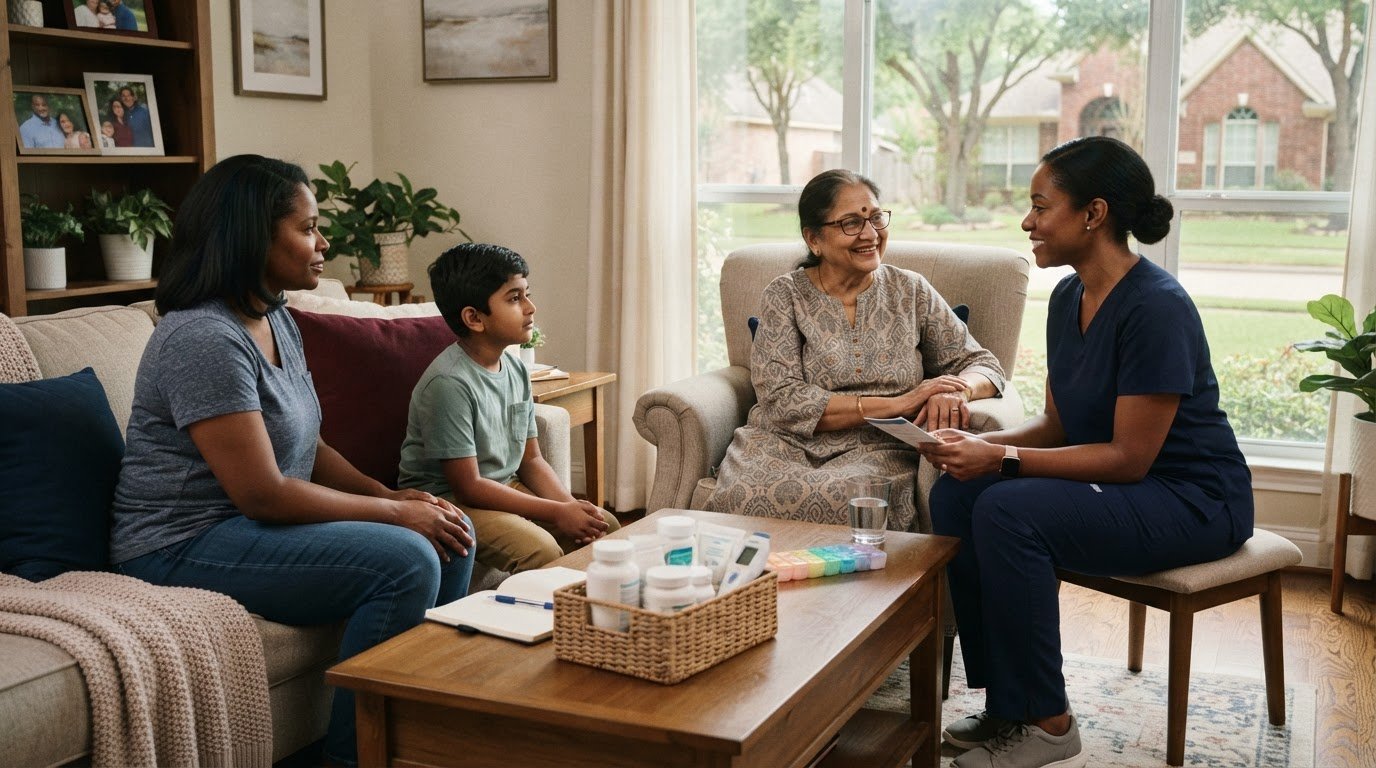
What if the most important part of preparing for a caregiver isn’t clearing a room, but helping them understand the person who lives there? If you’re wondering how to prepare your home for a caregiver, it’s natural to focus on practical details like supplies, safety, and where things belong. Just as important is making sure support fits your loved one’s routines, preferences, and need for privacy.
A new person in the home can bring questions for everyone. What should the caregiver know about meals, medication reminders, or a familiar daily routine? Which responsibilities will family members handle, and how will everyone stay informed? A little preparation can answer these questions without making the home feel unfamiliar or turning care into a rigid schedule.
This guide will help you set up a welcoming, practical space and share the information a caregiver needs to provide respectful support. You’ll learn how to organize essential supplies, communicate routines and preferences, set clear expectations, and coordinate with family. The goal isn’t to make everything perfect before the first visit. It’s to help care begin with more confidence, clarity, and comfort for the person receiving it.
Key Takeaways
- Learn how to prepare your home for a caregiver without making familiar spaces feel clinical or disrupting the older adult’s routines.
- Before the first visit, confirm arrival details and gather essential information related to the agreed support.
- Make a comfortable area available for planned activities, and discuss household changes with your loved one first.
- Keep agreed routines and household instructions in one clear, current place so family and caregiver can refer to the same information.
- Use the first visit to introduce everyone and raise questions, then check in privately with your loved one to hear how they feel.
How to Prepare Your Home for a Caregiver Without Disrupting Familiar Routines
Preparing for in-home support can happen gradually. You don’t need to make the house look clinical or reorganize every room before a caregiver arrives. Aim to provide a practical welcome and help the caregiver understand the older adult’s preferences, routines, and boundaries. A familiar chair, usual breakfast time, or preferred way of being greeted can matter as much as a clear place to sit and talk.
Start with small adjustments related to the agreed support. Make frequently used items easy to find, and clear the area where planned activities will take place. Extensive remodeling or medical equipment isn’t automatically needed when preparing a home. If you have concerns about specialized equipment or home changes, seek guidance appropriate to that need. The right preparation depends on the individual and the kind of home care services being arranged.
Start with the older adult’s comfort and preferences
Whenever possible, ask the person receiving care what would help them feel at ease meeting someone new at home. They may want to choose where the introduction happens, whether a family member stays, or which parts of the home remain private. Invite their input without making participation feel like a test. If they’d rather take time before discussing every detail, respect that pace and revisit decisions together.
Make a short note of preferences the caregiver should know, such as a usual daily rhythm, belongings that shouldn’t be moved, or boundaries around entering a bedroom. These details can help preserve a sense of ownership and independence. Ask before changing furniture or setting aside personal items, even if the adjustment seems practical to family members.
Agree on what the caregiver is there to support
Before care begins, talk as a family about what you hope support will address. Write down the main needs, then distinguish them from responsibilities that will stay with relatives. For example, a family may be looking for companionship or personal care, while a relative continues to coordinate appointments or handle household decisions. Clear expectations make it easier to discuss whether the proposed plan fits the person’s needs.
- List the daily activities or companionship needs you want to discuss.
- Note which responsibilities family members will continue to manage.
- Identify questions about routines, preferences, and the type of support requested.
Then confirm the requested tasks directly with the agency. Service scope can vary, so don’t assume every need falls within a caregiver’s role. Families in Sugar Land and Missouri City can discuss the older adult’s routines and level of support with a local agency. A care plan should reflect the person, not simply the household’s to-do list.
What to Prepare Before a Caregiver’s First Visit
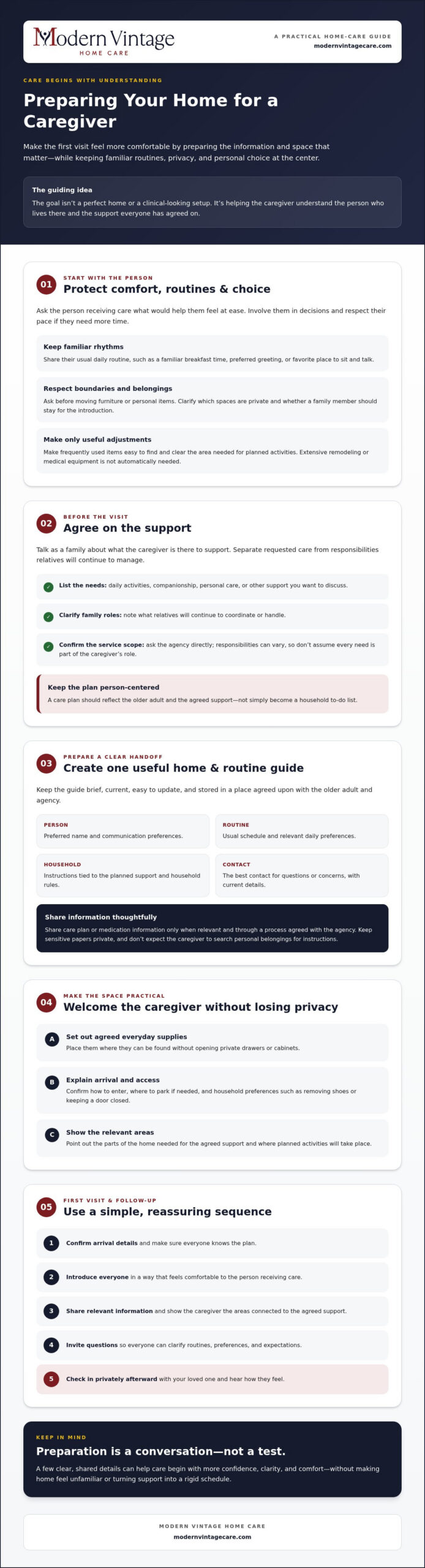
A simple handoff can help the first visit feel more settled. Follow a clear sequence: confirm arrival details, prepare essential information, show the caregiver the parts of the home relevant to the agreed support, then check that everyone understands the plan. Keep the focus on the support the family and caregiver have agreed on, rather than assembling an exhaustive medical history.
Create a useful home and routine guide
Write a brief guide that’s easy to update and store in a place agreed upon with the older adult and agency. Include the person’s preferred name, usual schedule, communication preferences, and household instructions relevant to the planned support. Add the best contact for questions or concerns, with current details. Share care plan or medication information only through an appropriate process agreed with the agency, and only when it’s relevant to the support.
Keep privacy in mind. Don’t leave sensitive papers where visitors can see them, and avoid asking the caregiver to search through personal belongings for instructions. The National Institute on Aging offers downloadable resources, including a home safety checklist, that families can use to organize caregiving information.
Set out supplies and explain access
Place agreed everyday supplies where the caregiver can find them without opening private drawers or cabinets. Before the visit, explain how to enter, where to park if needed, and any household rules, such as removing shoes or keeping a door closed. Let the caregiver know where the older adult prefers to talk or take part in planned activities. These details prevent avoidable confusion while respecting the person’s space.
Use this adaptable checklist to prepare:
- Arrival: Confirm the visit time, how the caregiver should enter, and where to park.
- Key information: Note the preferred name, daily rhythm, communication preferences, and relevant household instructions.
- Contacts: Provide the agreed family contact’s current phone number and clarify who should be contacted with questions.
- Supplies: Set out only the items needed for the planned support, in a known, accessible place.
- Privacy: Identify private areas and decide where conversations or activities should take place.
- Care plan: Confirm which relevant details should be shared and how to share them appropriately.
Walk through the essentials together when the caregiver arrives, then invite them to ask questions or repeat back key instructions. That quick check can catch misunderstandings early. If you’re still working out what support would fit your loved one’s routines, you can discuss personalized in-home support with a local agency.
How to Make the Home Welcoming, Practical, and Respectful
A welcoming care space doesn’t require a home makeover. Focus on the area where the older adult and caregiver will spend time together, and make adjustments only when they suit the person’s needs and preferences. As you consider how to prepare your home for a caregiver, aim for comfort and ease, not a one-size-fits-all list of safety changes.
Prepare a comfortable space for visits
Choose a calm, accessible spot for conversation or the agreed activities. This might be the living room, kitchen table, or another place the older adult already enjoys. Check that seating feels comfortable and that lighting and temperature suit their preferences. Keep agreed supplies nearby, but avoid moving familiar belongings unless the person wants them moved. Small, thoughtful choices can make the space practical without making it feel unfamiliar.
Consider how the person usually uses the room. If they like to read in a particular chair, for example, preserve that setup unless there’s a specific reason to discuss a change. Keep walkways and frequently used surfaces clear where practical, but don’t assume that rearranging furniture or adding equipment is right for everyone.
Protect privacy while sharing what’s needed
Before care begins, discuss which rooms, belongings, or household routines are private. Explain boundaries clearly and respectfully, such as asking before entering a personal space or handling items on a desk. Agree with the agency how relevant personal information will be shared and stored. Share only what supports the agreed care plan, using a process that respects the older adult’s privacy.
Daily support can look different from one person to another. A plan may involve companionship, personal care, or another agreed form of assistance, shaped around the individual’s routines and preferences. Learn more about personal care for seniors in Houston and discuss directly with an agency whether the requested support fits its service scope.
General safety advice can prompt useful questions, but it shouldn’t automatically lead to changes in every home. A family may be concerned about a particular doorway, moving between rooms, or the layout of a frequently used space. If you have a specific mobility or safety concern, ask a qualified professional for guidance before making substantial changes or choosing equipment. Involve the older adult in that conversation whenever possible, so the home remains practical while still feeling like theirs.
How to Share Care Instructions and Coordinate with Family
Clear communication helps the caregiver follow agreed routines and gives family members a shared understanding of what’s happening. Choose one current source for household instructions and care preferences, such as a dated notebook or shared document. Avoid keeping competing versions in different places. Update the source when a routine changes, and make sure the caregiver and designated family contacts know where to find the current information.
Make handoffs clear and manageable
Keep notes brief and practical. Record relevant changes in routine, preferences the caregiver should know, and questions that need follow-up. Name one primary family contact and a backup, then agree who receives routine updates and who handles urgent concerns. This reduces the chance of multiple relatives giving conflicting directions. Set expectations with the agency about how updates should be shared and what information the family wants to receive.
Date each update so everyone can tell what’s current. A short entry such as “prefers lunch after a morning walk” is easier to use than a long narrative. Include only details relevant to the agreed support, and share personal information through a process the family and agency have agreed upon.
Plan for reminders and additional support
If reminders are part of the plan, discuss them with the agency and confirm exactly what support is available. Modern Vintage Home Care offers automated check-ins and automated medication reminders. Families should verify directly whether these options fit their needs. Clarify separately who is responsible for each task, and don’t assume that a reminder includes another form of medication assistance.
Families can also review medication management for elderly seniors for more context on planning medication safety. Keep written instructions aligned with the agreed care plan, and ask the agency about any task that’s unclear. Caregivers shouldn’t be asked to perform clinical tasks outside the confirmed service scope. If a need changes, discuss it with the agency before updating expectations.
- One current guide: Keep routine and household instructions in an agreed, accessible location.
- Clear contacts: Identify a primary family contact and backup, with current details.
- Defined updates: Agree what the family wants to hear, who receives updates, and how they’re shared.
- Reviewed responsibilities: Confirm which tasks belong to family members and which are included in the agreed support.
Consistent handoffs can help care feel less fragmented as needs evolve. Families in Sugar Land and Missouri City can discuss care coordination and support options with Modern Vintage Home Care.
First Caregiver Visit: What to Expect and Next Steps
The first visit is a chance for your loved one, family, and caregiver to meet, review the agreed routine, and clarify questions together. It doesn’t need to feel like a formal inspection or a test. The preparation you’ve done to learn how to prepare your home for a caregiver can support a more natural introduction while leaving room for everyone to get comfortable.
Use the first visit to build familiarity
Before the caregiver arrives, ask your loved one how they’d like to be introduced and whether they prefer a family member to stay for the conversation. Share their preferred name, communication style, and any topics they’d rather avoid. Then show the caregiver the household areas relevant to the agreed support and review the most important routines. Keep the overview focused. There’s no need to explain every detail of the home at once.
After the introductions, give the older adult and caregiver space to find a comfortable rhythm. You might stay nearby at first if your loved one wants that, then step back when they seem ready. Follow the person’s cues. Some may enjoy conversation right away, while others feel more at ease easing into the visit through a familiar activity.
Review how the arrangement is working
After the visit, check in privately with your loved one. Ask open, low-pressure questions such as, “How did you feel about the visit?” or “Was anything unclear?” Listen without rushing to defend the arrangement or solve every concern immediately. If they don’t want to talk then, offer another opportunity later. Their comfort and perspective should help guide any adjustments.
Families can also compare notes on what seemed to work and what needs clarification. If the routine, support needs, or expectations change, bring the question to the agency rather than assuming the caregiver’s role has changed. Small adjustments to timing, activities, or communication may help as the person and caregiver become more familiar with each other. Keep agreed instructions current so changes are clear to everyone.
If memory-related support is part of your family’s planning, read about specialized dementia home care services in Sugar Land and discuss the individual’s needs and suitable support directly with an agency.
Families in Sugar Land, Missouri City, and the greater Houston area can speak with a local agency about care needs, routines, and service scope. A thoughtful first visit isn’t about getting every detail perfect. It’s a starting point for listening, communicating, and shaping support around the person.
Take the Next Step Toward a More Comfortable Start
Knowing how to prepare your home for a caregiver doesn’t mean changing everything. A welcoming start comes from respecting familiar routines, sharing clear and relevant instructions, and agreeing on how family members and the caregiver will communicate. Keep the older adult involved in decisions, and adjust the plan as you learn what feels comfortable and helpful.
Every family’s needs are different. Modern Vintage Home Care is an independent home care agency licensed in Texas, providing personalized in-home support for families in Sugar Land, Missouri City, and the greater Houston area. Discuss your loved one’s routines, preferences, and level of support needed to understand what may be a suitable fit.
Talk with Modern Vintage Home Care about preparing for in-home support. A thoughtful conversation can help your family move forward with greater clarity and confidence, one step at a time.
Frequently Asked Questions
What should I do before a caregiver comes to my home?
To prepare your home for a caregiver, start by confirming visit details and agreeing on the support requested. Prepare concise notes on routines, preferences, household access, and family contacts. Set out agreed everyday supplies and explain privacy boundaries. Invite the older adult to choose what would help the visit feel comfortable. You don’t need to make major changes; ask the agency what information or preparation its caregiver needs.
How do I make my home welcoming for a caregiver?
Choose a comfortable, practical area for planned activities and make agreed supplies easy to find. Explain entry arrangements and household preferences, and identify private areas or belongings. A welcoming home doesn’t need to look clinical or be extensively rearranged. Include the older adult in decisions whenever possible, whether that means choosing where to talk or what furniture stays in place. Ask the agency if it has specific requirements for the visit.
What information should I leave for an in-home caregiver?
Share concise, current information relevant to the agreed support, such as the person’s preferred name, daily routines, communication preferences, household instructions, and the family contact. Discuss how sensitive information should be shared and stored. Provide medication-related details only through an appropriate process, and confirm the caregiver’s role with the agency. Don’t assume a caregiver can provide clinical care; clarify which tasks are within the agreed service scope.
Should I be home during a caregiver’s first visit?
There’s no single arrangement that suits every family. Some older adults may appreciate a family member making introductions and reviewing routines; others may prefer more privacy. Discuss the person’s wishes, the caregiver’s planned responsibilities, and the agency’s guidance beforehand. If a family member can’t stay, agree on a clear contact and a suitable way to check in afterward. Let your loved one’s comfort help guide the decision.
How can I help an older adult feel comfortable with a new caregiver?
Explain who’s coming and why, using language your loved one finds reassuring. Ask how they’d like to be introduced, and let them choose where to meet when possible. Share familiar routines or interests that could help conversation begin naturally. Don’t rush closeness; comfort may develop over time. If the person has dementia, consider discussing individualized introductions and communication preferences with the agency or their care team.
What should I do if a caregiver and my family have different expectations?
Pause and clarify the agreed care plan, the caregiver’s role, and your family’s priorities. Write down the specific concern so you can discuss it clearly with the agency and ask whether an adjustment is appropriate. Keep the older adult’s preferences central. Don’t ask a caregiver to take on clinical or other tasks until the agency confirms they’re included in the agreed service scope.
Can a home care agency help prepare for a caregiver’s first visit in Sugar Land?
A local agency can explain its intake process, what information it needs, and what to expect from the services being discussed. Ask how the care plan can reflect the older adult’s routines and preferences, how family updates work, and which tasks are within scope. Modern Vintage Home Care serves Sugar Land, Missouri City, and the greater Houston area. Contact the agency directly to discuss your family’s situation.