
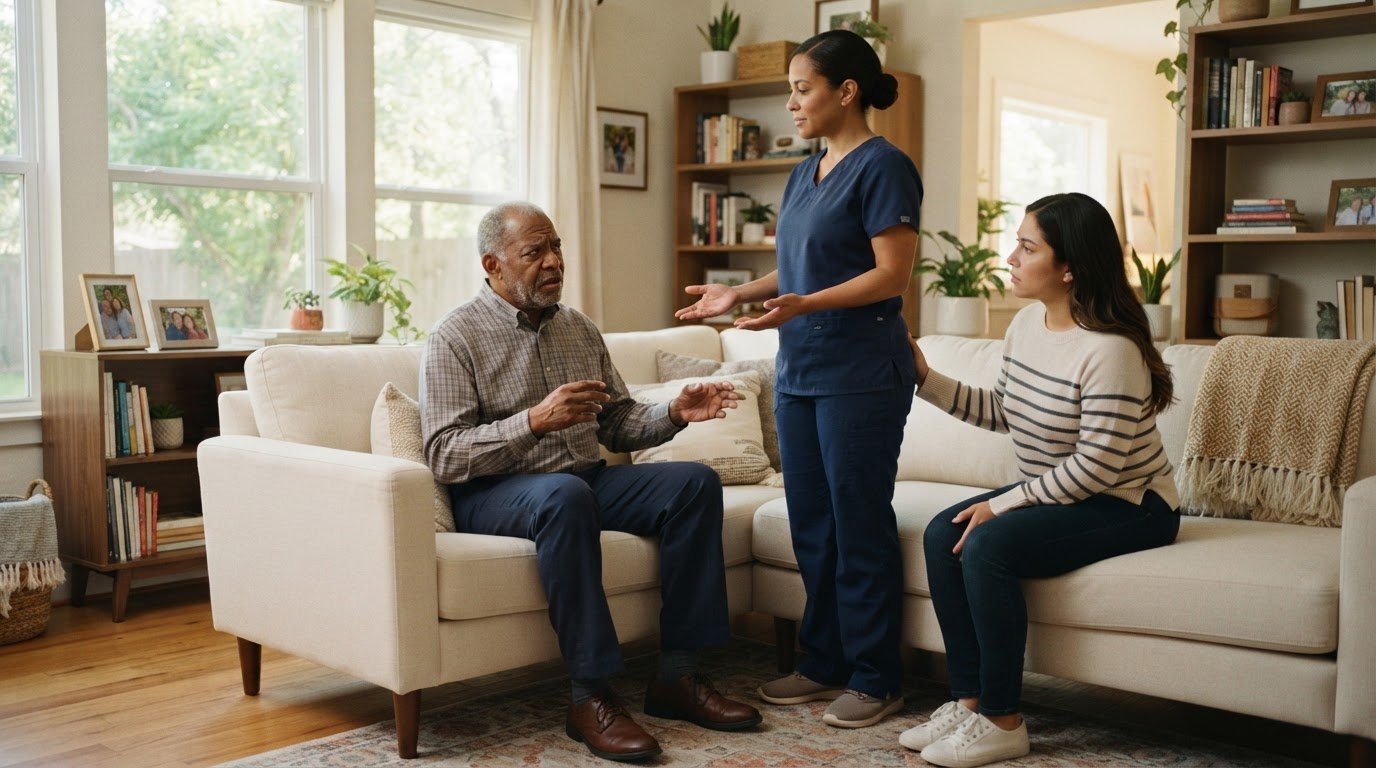
What if a sudden outburst is less a choice to hurt you than a sign that your loved one feels frightened, uncomfortable, or confused? That possibility can change how you respond. Knowing how to handle dementia-related aggression starts with keeping everyone safe and looking for what the behavior may be communicating.
If you’ve felt scared during an episode or guilty afterward, you’re not alone. Aggression can be distressing for both the person experiencing dementia and the family member trying to help. It doesn’t mean your loved one is acting with intent, and it doesn’t mean you have to manage every situation without support.
This guide shares practical steps to reduce tension in the moment, notice possible triggers, and record patterns that may help a clinician understand what’s happening. You’ll also learn when to seek urgent help and how familiar routines, personalized in-home care, and respite support can ease caregiving demands while respecting your loved one’s dignity.
Key Takeaways
- Learn how to handle dementia-related aggression with calm, safety-focused steps that give your loved one space and time.
- Consider whether fear, discomfort, confusion, or an unmet need may be behind the behavior rather than assuming it’s deliberate hostility.
- Track what happens before, during, and after episodes to notice possible patterns and share useful details with a clinician.
- Recognize when a sudden or significant change calls for prompt clinical attention, and what information can help guide that conversation.
- Explore how familiar routines, in-home dementia care, and respite support may help ease daily caregiving demands.
What dementia-related aggression may communicate, and what it does not mean
Dementia-related aggression describes words or actions that come across as angry, threatening, or resistant. It may include shouting, refusing help, or pushing someone away. The behavior can be upsetting, especially when it comes from someone you love, but it isn’t necessarily deliberate hostility or evidence of a fixed personality trait. Dementia can change how a person understands what’s happening and expresses what they need.
Fear, discomfort, confusion, frustration, or another unmet need may be part of the picture. For example, getting dressed may feel confusing or intrusive if the person doesn’t understand why someone is helping. That doesn’t mean every episode has the same cause. The person’s experience and the situation around them both matter.
The term Agitation in Dementia describes a broader range of changes that can include restlessness and emotional distress alongside aggression. Looking at behavior as a possible signal, rather than a character judgment, can help families respond with curiosity and care. It doesn’t mean dismissing the impact or accepting unsafe behavior. Safety still matters.
How aggression can appear in everyday interactions
Expressions vary. A person might raise their voice, use upsetting words, pull away during personal care, or resist a change in plans. In some situations, they may make a sudden physical movement, such as swatting at a hand reaching toward them. These moments can feel startling, even when no one is hurt.
One person may become distressed during a familiar task, while another may react differently in a similar situation. The same person’s behavior can also vary from day to day. A single action doesn’t prove what caused the distress or indicate a particular dementia stage. It’s one part of a wider experience to understand.
Why the behavior is not necessarily intentional
Dementia can affect communication, interpretation, and a person’s response to unfamiliar situations. Someone may not recognize an offered helping hand as help, understand a question, or find words to express discomfort. Their reaction may reflect how the moment feels to them, even if that understanding differs from yours.
Try to separate the person from the behavior. Your loved one is not defined by a raised voice or a moment of resistance, and you don’t have to assume they intended to frighten or hurt you. At the same time, it’s reasonable to feel shaken, sad, or frustrated afterward. Those feelings don’t mean you failed. The interaction affected you, too.
Dementia-related aggression is a behavior to understand, not a reason to blame. Keeping that thought in mind can offer a steadier starting point as you consider what your loved one may be experiencing and what kind of support feels respectful to them.
What to do during a dementia-related aggression episode
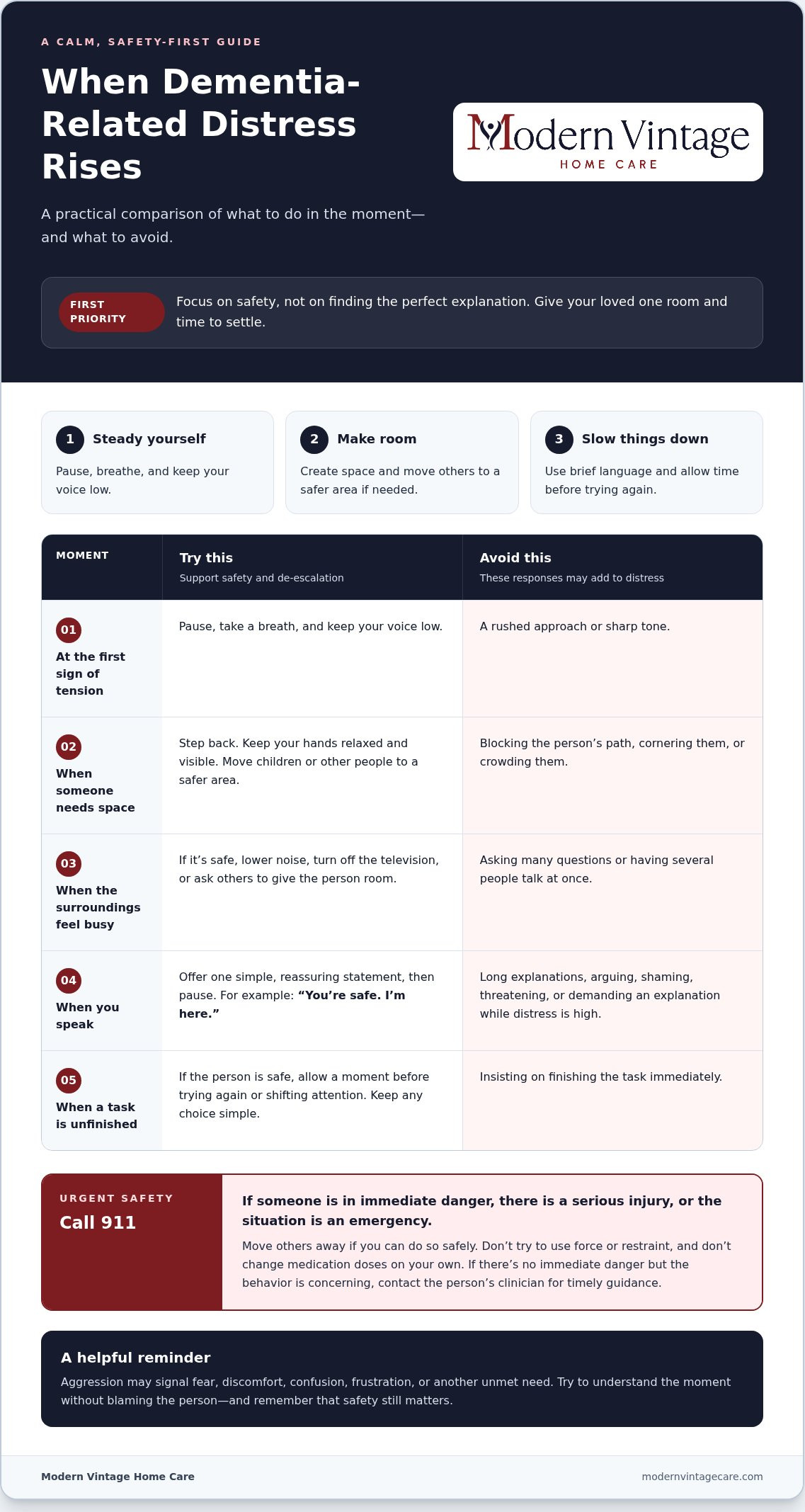
In the moment, focus first on safety, not on finding the perfect explanation. A steady response can give your loved one room to settle while helping you protect everyone nearby. If you’re wondering how to handle dementia-related aggression, use these steps as a flexible guide and adjust them to the person and situation.
- Pause. Take a breath and keep your voice low. A rushed approach or sharp tone may add to the distress.
- Create space. Step back, keep your hands relaxed and visible, and avoid blocking the person’s path or cornering them. Move children or other people to a safer area.
- Reduce stimulation. If it’s safe, lower the noise, turn off the television, or ask others to give the person room. Avoid crowding them with questions or having several people talk at once.
- Use brief language. Offer one simple, reassuring statement, then pause. Long explanations can be hard to follow when someone is distressed.
- Allow time. Don’t insist on finishing a task immediately. If the person is safe, give them a moment before trying again or shifting attention.
A calm voice, simple words, and physical space can support de-escalation. Avoid arguing, shaming, threatening, or demanding an explanation while distress is high. These responses can make a tense exchange harder to manage and may leave your loved one feeling more overwhelmed.
Words and body language that may lower tension
Speak gently and use a familiar name or form of address. Try one short idea at a time, such as, “You’re safe. I’m here.” Reassure without correcting every mistaken belief or challenging what the person says. If a choice could help, keep it simple: “Would you like to sit here or by the window?” If even that feels like too much, offer quiet presence instead.
When safety requires urgent help
If someone is in immediate danger, there’s a serious injury, or the situation is an emergency requiring an urgent response, call 911. Move others away if you can do so safely. Don’t try to use force or restraint, and don’t change medication doses on your own.
If there’s no immediate danger but the behavior is concerning, contact the person’s clinician for timely guidance. The National Institute on Aging offers further caregiver strategies in Managing Aggression in Alzheimer’s. If ongoing caregiving feels difficult to manage alone, in-home dementia care and companionship can be part of a family’s support plan.
How to look for triggers and reduce repeat distress
A brief record can help you notice what tends to happen around an episode and give the person’s clinician clearer information. Think of it as gathering clues, not diagnosing the cause. A pattern may be useful to discuss, but it doesn’t prove that one event or condition caused the behavior. If you’re learning how to handle dementia-related aggression, careful observation can help guide thoughtful changes to daily routines.
Keep a simple behavior and situation record
Write down what happened as soon as you can, using neutral descriptions rather than labels such as “difficult.” Include the time, activity, people present, and any change from the person’s usual pattern. Note what happened just before, how the person responded, how long the distress seemed to last, and what appeared to help them feel more settled.
- Record possible context, such as background noise, a change in routine, fatigue, hunger, discomfort, or an unfamiliar request.
- Note practical details, such as whether the room was busy or a task was rushed.
- Describe what you tried and what happened next, without assuming the response proves cause and effect.
Keep entries short enough to maintain. A few clear observations are more useful than a long account that’s difficult to review. Share the notes with the clinician, especially if the behavior is new, changing, or affecting daily life. They can consider the information alongside other details about the person’s health and circumstances.
Adjust routines and communication gently
Use your observations to consider small, respectful adjustments. If distress seems to coincide with a rushed transition, allow more time and give notice before changing activities. If a room is noisy, reduce avoidable sound where practical. These steps may make a situation feel more manageable, but they can’t guarantee that distress won’t happen again.
- Keep familiar parts of the day predictable, while allowing flexibility when the person seems tired or uncomfortable.
- Offer one-step requests and pause long enough for the person to respond.
- Use familiar activities and adapt assistance to the person’s preferences, offering choices and preserving independence where practical.
For example, if getting ready to leave often feels hurried, prepare items in advance and offer a calm reminder before the transition. If a particular approach seems unwelcome, step back and consider whether a different time, wording, or form of assistance might feel more comfortable. The aim is to learn what supports this individual, not to enforce a rigid schedule.
Consistent support at home can help families maintain familiar routines and keep useful observations connected across caregiving. Modern Vintage Home Care’s specialized dementia home care guide offers broader context on personalized in-home dementia support for families in Sugar Land, Missouri City, and southwest Houston.
When dementia-related aggression calls for clinical follow-up
A familiar behavior pattern can still be difficult, but a sudden or markedly different change deserves attention. If your loved one becomes distressed in a new way, the behavior becomes unusually severe or persistent, or their overall well-being changes, contact their clinician promptly. Don’t assume a new behavior is simply part of dementia. A professional assessment can help determine what may be contributing and what support is appropriate.
Changes that warrant prompt professional advice
Trust your sense of what’s different from the person’s usual behavior. A noticeable shift in their responses, distress that continues beyond what’s familiar, or a change alongside altered sleep or daily functioning is worth discussing with a clinician. You don’t need to know the cause before reaching out.
If there’s an injury, immediate danger, or a serious change in well-being, seek urgent help. Call 911 for an emergency requiring an immediate response. If the situation isn’t immediately dangerous, contact the person’s clinician for timely guidance and explain what has changed and when it began.
Caregivers shouldn’t diagnose the cause or start, stop, or change prescribed medication on their own. Even if an episode appears connected to a particular medicine or routine, share that observation with the clinician and ask what to do next. Keep medication information accurate and share it during the conversation.
What information to share with the clinician
Clear, concise details can make a conversation more useful. Bring your behavior and situation notes, even if they’re brief. Describe what you saw rather than interpreting the person’s intentions. Include what happened before the episode, how the behavior differed from their usual pattern, and what seemed to help or make the situation harder.
- Note the time, activity, people present, and how long the change lasted.
- Share relevant changes in routine, health, sleep, or prescribed medicines, including when you first noticed them.
- Explain whether the behavior has happened before and what is different this time.
- Ask what follow-up is appropriate and which changes should prompt urgent care.
You can prepare a short summary ahead of a call or appointment. For example: “This began yesterday, which is unusual for her. It happened during her morning routine and lasted longer than we’ve seen before.” If you’re unsure whether a detail matters, include it and let the clinician help assess its relevance.
Learning how to handle dementia-related aggression also means knowing when a change needs professional input, not trying to manage every concern alone. If your family would benefit from consistent in-home dementia support alongside the clinician’s guidance, explore personalized dementia care at home.
How in-home dementia care can support the person and family
When caregiving becomes demanding, consistent help at home can support everyday routines while allowing your loved one to remain in familiar surroundings. A caregiver who learns the person’s preferences, daily rhythms, and communication style can offer steadier assistance with ordinary tasks. This support can make care easier to coordinate, though it can’t guarantee that distress or aggression won’t occur.
Modern Vintage Home Care provides personalized Alzheimer’s and dementia care, companionship, personal care, and 24-hour care options. Depending on the family’s needs, support can include help with daily activities, time together, and maintaining familiar routines. Automated check-ins and medication reminders are also available to support everyday care routines.
Matching support to changing family needs
Care needs can shift over time. Families might consider scheduled visits for help with particular parts of the day, extended support when caregiving demands are greater, or respite care when a family caregiver needs time away. The right arrangement depends on the person’s routines and the family’s circumstances, and can be revisited as those needs change.
Respite is practical support, not a promise of a particular behavioral outcome. Time away may give a family caregiver room to rest, attend to responsibilities, or spend time with others. It can be one part of a broader plan for sharing caregiving responsibilities and maintaining familiar routines.
Starting a conversation about care at home
A useful first conversation can start with what a typical day looks like. Share the person’s preferences, familiar routines, tasks where they value independence, and situations that have felt challenging. You can also describe what helps them feel comfortable and how caregiving is affecting the family. These details help shape support around the person, rather than expecting them to adjust to a one-size-fits-all approach.
If you’re considering how to handle dementia-related aggression as part of a broader care plan, in-home support can complement guidance from the person’s clinician. Caregivers can help families maintain consistent routines and provide companionship or personal care, while families continue to share concerns and behavior observations with the clinician.
Modern Vintage Home Care serves families in Sugar Land, Missouri City, and southwest Houston. If you’re weighing the next step, you can explore personalized in-home dementia care options. A conversation about your loved one’s routines and your family’s needs can be a calm place to begin.
Choose a next step that feels manageable
You don’t have to solve every caregiving challenge at once. Consider what would make the coming days feel more supported, whether that’s setting aside time to talk with family or identifying what help would make daily care easier. A small, thoughtful step can create room to plan without pressure.
Understanding how to handle dementia-related aggression is an ongoing process, and asking for support is part of caring for both your loved one and yourself. Modern Vintage Home Care offers personalized in-home dementia care for families in Sugar Land, Missouri City, and southwest Houston, with support options for different caregiving needs. No care approach can promise to prevent every difficult moment, but you don’t have to face the responsibilities alone.
If you’re ready to explore what support at home could look like for your family, explore personalized dementia care at home. Start with a conversation about what matters most to your loved one and what would help your family feel more supported. You can take the next step at your own pace.
Frequently Asked Questions
Is aggression a normal part of dementia?
Aggression can occur with dementia, but it isn’t inevitable, and it doesn’t happen to everyone. A person may show distress through words or actions, and the form it takes can differ from one individual to another. If a behavior worries you or starts affecting everyday care, mention it to the person’s clinician. You don’t need to wait for it to become severe before asking for guidance.
How should I respond when someone with dementia becomes aggressive?
Prioritize space and safety, then keep your response simple. If your loved one is upset during a task, stop the task if you can do so safely, step back, and speak in a calm, familiar way. Move others out of the immediate area rather than crowding around. Learning how to handle dementia-related aggression also means recognizing when to pause and try again later instead of pressing for cooperation.
Can dementia-related aggression come on suddenly?
Yes, a change in behavior can appear suddenly, and a new or unusually intense episode deserves prompt attention. Don’t assume dementia alone explains a sharp change from the person’s usual pattern. Contact their clinician and describe when it began and what else seems different, such as sleep, appetite, or general well-being. If there’s immediate danger, a serious injury, or another emergency, seek urgent help.
What can trigger aggression in a person with dementia?
Possible contributors include discomfort, tiredness, hunger, too much activity around the person, or difficulty understanding what’s being asked. A task involving unfamiliar people or a change in the usual sequence may also feel unsettling. These are possibilities, not a diagnosis. For instance, if distress seems to arise during dressing, note the timing and circumstances, then share what you observed with the person’s clinician.
Should I correct someone with dementia during an aggressive episode?
Usually, avoid arguing over details while the person is highly distressed. Correcting a mistaken belief may increase tension without helping them feel understood. Instead, respond to the emotion you can hear: “That sounds upsetting,” or “I’m here with you.” If the misunderstanding creates an immediate safety concern, calmly guide the person toward a safer option. You can discuss recurring concerns with their clinician when the moment has passed.
When should I call 911 for dementia-related aggression?
Call 911 if someone faces immediate danger, has a serious injury, or needs an urgent emergency response. If it’s safe, create distance and move other people away while help is on the way. Don’t attempt to restrain your loved one or manage the emergency alone. If there’s no immediate danger but the behavior is new or concerning, contact the person’s clinician promptly for advice about appropriate next steps.
Can in-home care help families manage dementia-related aggression?
In-home care can support families with routines and daily caregiving, though it can’t promise to prevent aggressive behavior. Modern Vintage Home Care provides Alzheimer’s and dementia care, companionship, personal care, and 24-hour care options, along with automated check-ins and medication reminders. Families in Sugar Land, Missouri City, and southwest Houston can consider support that fits their needs while continuing to discuss behavior concerns with the person’s clinician.