

A caregiver’s break can be part of a loved one’s care plan, not a step away from it. Short-term senior care in Missouri City can provide temporary in-home support, including help with daily routines and companionship, while a family caregiver takes time for errands, appointments, or rest. Respite care can be arranged for a few hours, days, or longer periods.
It’s understandable to want a familiar, reassuring routine for your loved one while you step away. The right support can give you both breathing room while keeping your loved one’s comfort and dignity at the center.
This guide explains what respite care may include, who it can support, and how to assess your family’s needs. You’ll also learn how in-home support in Missouri City, Sugar Land, and southwest Houston can fit into a family caregiver’s routine.
Key Takeaways
- Respite care can provide temporary help with personal routines and companionship while a family caregiver takes time for other needs.
- Match the support to the older adult’s daily routine, including the personal care assistance they need.
- Learn how respite care can support people living with Alzheimer’s or dementia while maintaining familiar routines.
- Explore service coverage around Missouri City and southwest Houston to understand where in-home support may fit.
- See how short-term care can work alongside a family’s caregiving responsibilities and when additional support may be helpful.
What is respite care near me in Missouri City, TX?
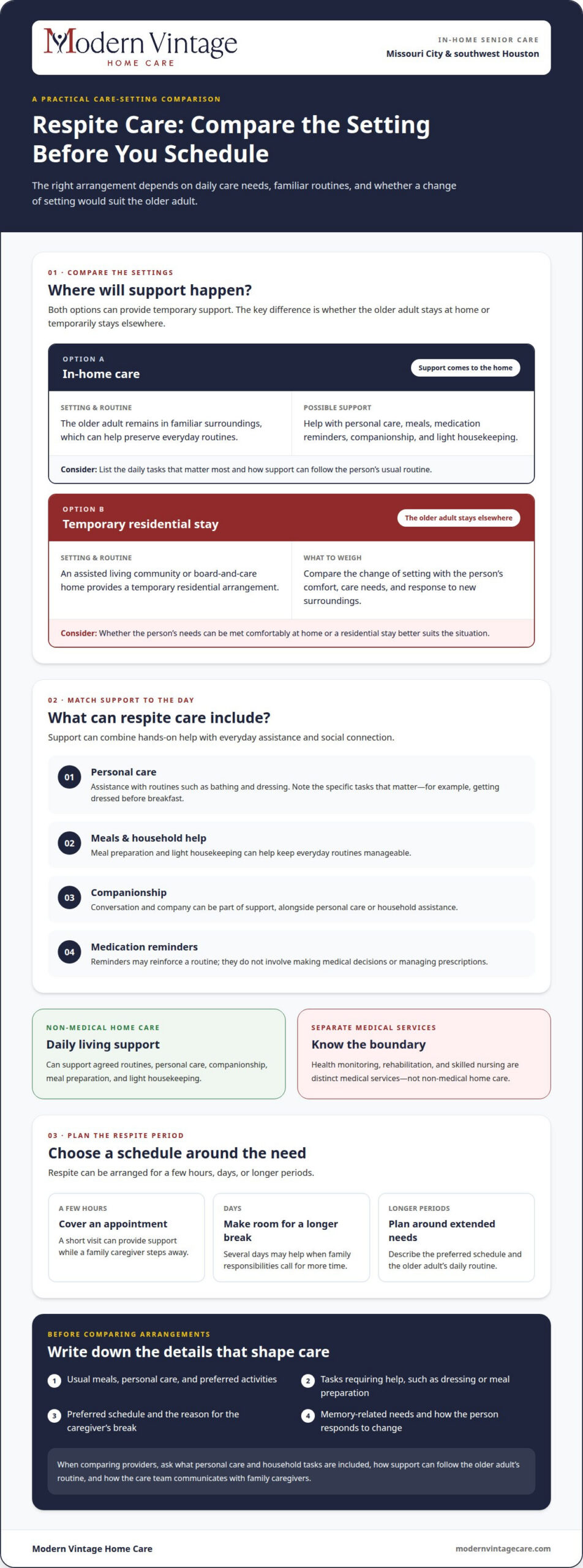
In Missouri City, respite care is temporary support that lets a family caregiver step away while an older adult receives assistance at home or in a residential setting. The right option depends on daily care needs, household routines, and whether a change of setting would suit the person.
In-Home Care and Residential Alternatives
In-home care brings assistance into the older adult’s own surroundings, helping preserve familiar routines. Support can include bathing, dressing, meal preparation, medication reminders, companionship, or light housekeeping. List the tasks that matter most, such as getting dressed before breakfast, to clarify the support needed.
Assisted living communities near Missouri City provide a residential setting, while board-and-care homes offer another residential arrangement. A respite stay in either setting means the older adult temporarily stays away from home. Compare that change with in-home support, where the person remains in familiar surroundings. Home healthcare can include daily-living support, health monitoring, and rehabilitation in a person’s home.
For families seeking short-term senior care in Missouri City, the practical question is whether the person’s needs can be met comfortably at home or whether a residential stay better suits the situation. Consider familiar routines, tasks requiring assistance, and how the older adult responds to a new setting.
Companion and Household Assistance
Companion care focuses on social connection and everyday support, while personal care helps with hands-on routines such as bathing and dressing. Respite care can combine both. For example, a caregiver could help with dressing, prepare a meal, and keep the older adult company during a family caregiver’s appointment.
Household assistance can include light housekeeping and meal preparation to keep everyday routines manageable. Medication reminders can also be part of support, but they do not involve making medical decisions or managing prescriptions. Outline a typical day, including meals, personal care, and preferred activities, to clarify what help would be useful.
Comparing Care Settings and Providers
An assisted living respite stay means temporarily living in a residential community; in-home care brings support to the older adult’s own home. Skilled nursing is a distinct service. Match the assistance needed to the setting: non-medical home care can support daily living tasks, while rehabilitation and medical monitoring are separate medical services.
When comparing short-term care in Missouri City, ask what personal care and household tasks are included, how support can follow the older adult’s routine, and how the care team communicates with family caregivers. Discuss how the care plan can adapt as daily needs change. Clear answers help you compare practical assistance, companionship, and setting.
Care can be arranged for a few hours, days, or longer periods. Matching the schedule to a specific need, such as an appointment or time to recover at home after a hospital stay, helps you describe the respite you’re seeking.
Service areas around Missouri City and southwest Houston
Respite care in Missouri City can take place in an older adult’s home, with support shaped around daily routines. Services may include companionship, bathing and dressing assistance, meal preparation, medication reminders, and light housekeeping. A caregiver can remain present and help with agreed daily activities during the scheduled respite period.
Missouri City is a key location for families considering short-term support in southwest Houston. Modern Vintage Home Care provides in-home senior care in Missouri City, Sugar Land, Houston, and surrounding Texas communities. Share the older adult’s address and daily needs to discuss local support that fits the family’s routine.
Scheduling can reflect why a family needs a break. Respite care may be arranged for a few hours, days, or longer periods, such as during an appointment or extended family commitment. When planning, outline the preferred schedule and daily routine. The older adult’s personal care, meals, and memory-related needs help shape useful support.
Companionship and household help can add structure to time at home. A caregiver may share conversation, help prepare lunch, and tidy the immediate living area. Personal care can include help with bathing or dressing. Medication reminders can reinforce a routine, but health monitoring and rehabilitation are medical services, not non-medical home care.
Local destinations can also shape a caregiver’s schedule. A Missouri City neighborhood profile reports a grocery store, farmers market, and park nearby. A family might schedule respite while running errands or spending time outdoors. These are examples of how a planned break can fit community activities without requiring an older adult to leave home.
When coordinating care in southwest Houston, write down the home address, preferred schedule, and specific tasks requiring help. Note whether the older adult needs assistance getting dressed, preparing meals, or having company during a quiet afternoon. These details give care planning a practical starting point and help distinguish a brief visit from support over several days.
If companionship or personal care would help your family plan a break, explore in-home senior care services as a next step.
Respite care for family caregivers
Respite care gives family caregivers planned time away while an older adult continues receiving support. In Missouri City, families can consider in-home assistance or a temporary residential stay, depending on the person’s needs and preferred setting.
Flexible Respite Schedules
Respite can be scheduled for a few hours, days, or longer periods. A short visit could cover an appointment; several days may help when family responsibilities call for a longer break. Build the schedule around the older adult’s usual meals, personal care, and rest times. For dementia care, familiar routines and clear handoffs help keep visits consistent.
Families supporting someone receiving hospice care may also arrange respite. The aim is to give family caregivers a break while the person continues receiving appropriate support. Describe the daily assistance needed, the preferred schedule, and the routines that matter most.
Rates and Coverage Options
Respite care costs vary with the arrangement and assistance involved, so a general market figure cannot establish what a particular family will pay. Cost depends on factors such as the schedule, care tasks, and whether support is at home or in a residential setting. Modern Vintage Home Care provides personalized quotes after discussing the family’s needs.
Medicare, Medicaid, and private insurance coverage depends on the specific plan, benefit, and type of care. Families should distinguish respite support from medical services and review the applicable coverage terms. A care discussion can clarify the requested tasks and schedule, while plan documents identify any relevant benefits.
Short-Term Care Types and Providers
Missouri City families can consider in-home respite, companionship, personal care, and temporary residential stays. Each option differs in setting and daily support. In-home respite keeps the older adult at home; a residential stay changes the setting. The right fit depends on the person’s routine, assistance needs, and comfort with a temporary move.
Local options include respite-care providers offering in-home support and residential communities that provide short-term stays. Compare the tasks covered, supervision approach, schedule, and how family updates are handled. Ask what qualifications apply to the assigned caregiver, whether an assessment is part of planning, and which documents the setting requests. Requirements can differ by care arrangement.
To review a provider’s licensing, inspection records, or complaint history in Texas, use official state records and search by the provider or facility’s exact name. Confirm that the record matches the location you’re considering, then review inspection details and complaint outcomes rather than relying on a name alone.
Before respite begins, write down the older adult’s daily support needs, relevant care instructions, and preferred schedule. This gives caregivers a practical basis for planning, including support during hospice care, without assuming every setting provides the same services.
Respite care for people with Alzheimer’s or dementia
Respite care can support people with Alzheimer’s or dementia while giving family caregivers time away. In Missouri City, temporary support may be considered for someone living with dementia, receiving hospice care, managing chronic illness, or returning home after a hospital or rehabilitation stay. The care plan should reflect the person’s daily needs and preferences.
For a loved one with memory changes, a familiar routine can make a respite visit easier to follow. Families can share a simple description of the person’s usual day, such as when they prefer breakfast, which activities they enjoy, and what helps them feel settled. Include preferred ways to communicate, too. These details help a caregiver understand the person as an individual, not just a diagnosis.
Alzheimer’s and dementia care needs vary from person to person. One older adult may need reminders and companionship, while another may need hands-on help with daily routines. Parkinson’s can involve different support needs, so distinguish everyday assistance from medical care. Respite can support daily living, but it is not a substitute for skilled nursing or medical treatment.
Memory care describes support organized around the needs of people with memory loss, often in a residential setting. In-home respite offers another approach: the person stays in familiar surroundings while a caregiver provides temporary assistance. Consider the setting, daily routine, and level of help required. Someone who becomes unsettled in unfamiliar places, for example, may feel more comfortable receiving support at home.
Caregiver experience with dementia and clear communication are useful topics to cover during planning. Explain how the person responds to changes, what activities bring comfort, and how they prefer to be supported during dressing or meals. A clear handoff can include name preferences, familiar cues, and routines, helping make respite more person-centered.
Yes. Respite care near Missouri City can support people with Alzheimer’s or dementia. Temporary non-medical assistance may also help after a hospital or rehabilitation stay, but it does not replace medical care. The right support depends on daily needs, routines, and the type of assistance required.
Before respite begins, caregivers can organize key information in a brief written note:
- Usual meal, rest, and activity routines.
- Personal preferences, familiar cues, and communication approaches.
- Daily tasks where assistance is helpful.
- Relevant care instructions and contacts for medical concerns.
For families arranging short-term care, these preferences provide a practical starting point. They help caregivers offer consistent support while loved ones maintain familiar routines during a temporary change in care.
Location and nearby healthcare
For short-term care in Missouri City, location affects daily routines, family visits, and access to community activities. Consider the older adult’s home address, nearby destinations, and travel needs when choosing a care setting.
Provider Location and Nearby Healthcare
A provider’s service area and a care setting’s distance from medical services are separate considerations. For in-home support, confirm whether the older adult’s address is in the service area. For assisted living, consider how family members would reach the community and how the person would get to healthcare appointments.
Missouri City families can make a simple location plan: note the home or facility address, usual routes to appointments, and who will arrange transportation. If the older adult has Alzheimer’s or needs follow-up after a hospital stay, include appointment routines in care planning. Don’t assume a respite arrangement includes transportation or medical care.
Location and Walkability
A Missouri City neighborhood profile reports a grocery store, farmers market, and park nearby. Their presence may support familiar outings, but it doesn’t establish that a particular home is walkable or accessible for an older adult.
Consider the actual route from the residence, the person’s mobility, and whether an outing requires assistance. A nearby park may suit someone who enjoys outdoor activities, while another person may prefer staying home. A caregiver can help families plan around everyday routines and independence without treating proximity as a substitute for individual support.
Location also shapes how relatives participate in care. Before respite begins, identify who can visit, how the older adult will get to planned appointments, and what happens if a routine changes. A written plan with the address, appointment details, and family contacts makes responsibilities clearer and helps you compare care at home with a temporary residential stay.
For families considering a residential setting, proximity to healthcare matters alongside the person’s preferences. Note regular medical appointments and practical travel arrangements. A facility may be convenient for relatives yet still require planning for appointments or community activities. In-home care keeps support centered at the older adult’s residence, which may suit someone who values familiar surroundings.
Use location details to frame a care conversation: share the address, explain the older adult’s routine, and describe regular appointments or outings. If Alzheimer’s-related memory changes affect travel or unfamiliar places, include that in planning. Match care arrangements to the person’s daily life, not a map alone.
For help aligning in-home support with routines around Missouri City, discuss care for your family’s needs.
Modern Vintage Home Care
Modern Vintage Home Care provides in-home support for older adults who need assistance while family caregivers take time away. Planning starts with the person’s daily routine, the tasks that need support, and the preferences that help care feel familiar.
Support may include personal care, companionship, or Alzheimer’s and dementia care. A family, for example, may need help with personal routines while keeping familiar activities in place for a loved one with memory changes. Sharing these priorities helps shape a care plan around the support that fits.
If you’re weighing temporary help for a loved one in Missouri City, contact Modern Vintage Home Care to discuss your family’s needs.
Plan a care conversation that fits your family
Choosing short-term senior care in Missouri City can make caregiving more sustainable while keeping your loved one’s needs at the center. Consider what support would make the greatest difference: companionship during the day, help with personal routines, or more extensive assistance as needs change. A clear picture of your priorities makes care planning more focused.
Modern Vintage Home Care offers Alzheimer’s & Dementia Care, 24-Hour Care, and Companionship. These services can be relevant when an older adult needs memory-related support, ongoing assistance, or social connection at home. The next step is to talk through your loved one’s routine and the kind of help your family is seeking.
Contact Modern Vintage Home Care to discuss care for your family. Taking that first step can help you find a more considered path forward together.
Frequently Asked Questions
Can hours change as needs evolve?
Care plans can adapt as a senior’s needs change. If your family initially requests daytime companionship and later needs help with personal routines, share the new priorities during care planning. Changes in mobility, memory, or family schedules can also affect support needs. Discuss the tasks and preferred schedule so the plan reflects the older adult’s current routine and your family’s caregiving responsibilities.
How soon can services start?
Services typically begin within a few days after an initial assessment. The assessment helps establish the older adult’s support needs and the family’s priorities. To prepare, gather a current list of daily routines, requested tasks, and relevant care instructions. For example, note the usual meal schedule and any medication reminders needed. These details give planning a concrete starting point.
Ready to Bring Comfort Home in Missouri City?
If your family is considering in-home support in Missouri City, contact Modern Vintage Home Care to discuss what would help your loved one feel comfortable. You can describe the routines that matter, the assistance your family is seeking, and any memory-related needs. A conversation can help you understand the next planning step for your situation. Contact Modern Vintage Home Care to begin.
What is the average cost of short-term senior care in Missouri City, TX?
There isn’t one price for every short-term care arrangement. The cost of non-medical in-home care varies by service, location, level of assistance, schedule, and specific tasks. Modern Vintage Home Care provides a personalized quote based on the requested care plan. Medicare generally does not cover non-medical home care; Medicaid, veterans’ benefits, or long-term-care insurance may be options, depending on the plan.
How can families arrange short-term senior care in Missouri City, and how far in advance should they book?
Start by sharing the older adult’s Missouri City location, requested care dates, daily routine, and specific support needs. An initial assessment helps shape a suitable care plan. Contact the provider once you have a likely schedule, especially if support is tied to a planned family commitment or a transition home. Since start timing follows the assessment, early discussion gives the family room to plan details without assuming a fixed booking window.
