

Caring for two elderly parents at once is more manageable when you build support around your family instead of trying to meet every need alone. Caregiver support groups can offer shared experience and practical ideas, while respite care, help from loved ones, and regular breaks create time to rest. In-home support can also help when your parents’ needs or your own well-being make caregiving harder to sustain.
It’s understandable to feel pulled between two people you love, especially when their routines, needs, and personalities differ. Constant exhaustion, irritability, or feeling mentally drained may mean you need more support, not that you’re failing. This article explains how to connect with caregiver groups, plan respite and mental health breaks, and consider in-home help. You’ll also find practical ways to balance your parents’ needs while protecting your energy and connection with them.
Key Takeaways
- Use caregiver groups to find shared experience, practical ideas, and a sense of connection.
- Plan respite and small regular breaks so caregiving leaves room for rest and personal needs.
- Consider in-home support when your parents’ needs or the strain of caregiving become harder to manage alone.
- Notice signs of emotional strain and make space for activities that help you reset.
- Balance your parents’ different needs by listening to each person and creating routines that work for both.
1. Connecting with caregiver support groups
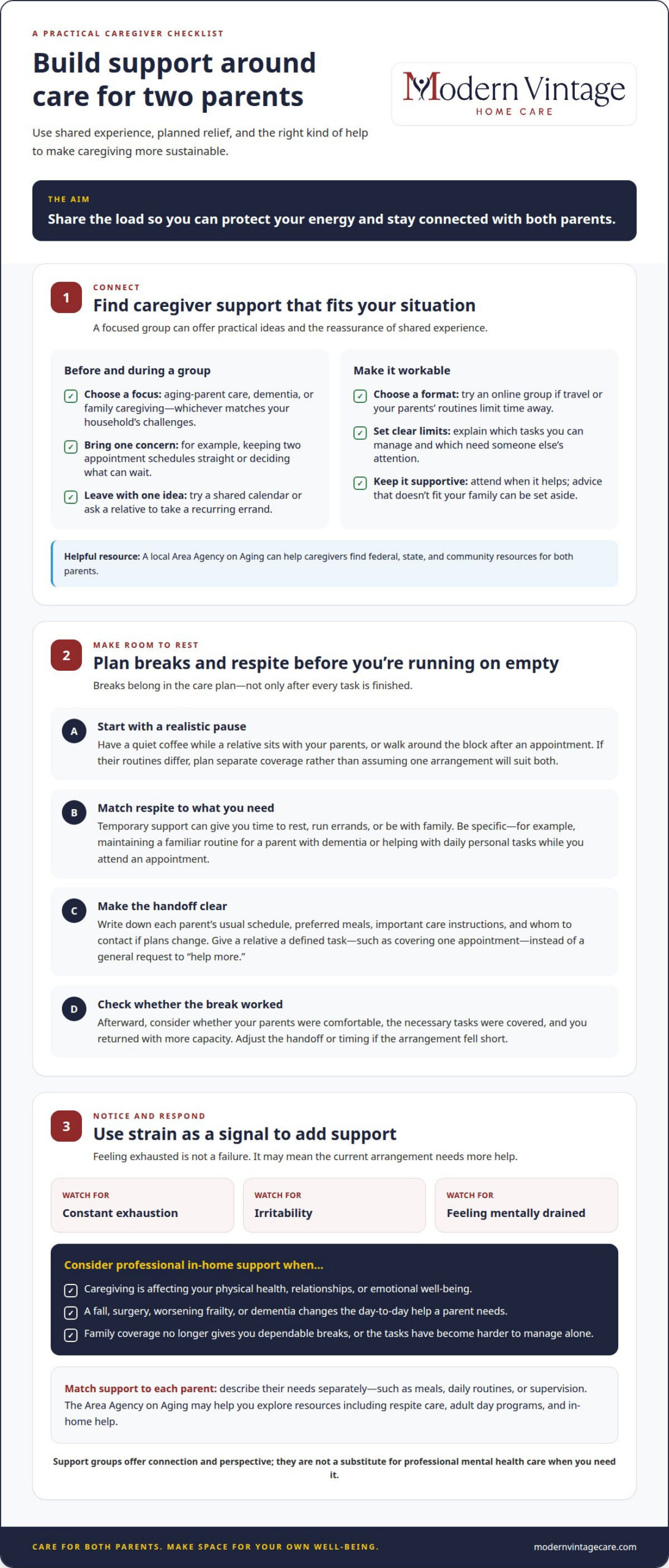
A local or online caregiver support group can give you a place to share experiences and hear practical suggestions. When you’re caring for two parents with different routines, another caregiver may understand why one appointment can disrupt the whole day. Choose a group focused on aging-parent care, dementia, or family caregiving, depending on the challenges in your household. A focused discussion may be more useful than general advice.
Pay attention to changes in your mood and energy. Constant exhaustion, irritability, or feeling mentally drained may signal caregiver burnout. For example, if you snap during routine conversations or struggle to concentrate while coordinating both parents’ appointments, treat that pattern as a sign to seek more support. A support group can help you describe what’s changing and hear how others divide responsibilities. It isn’t a substitute for professional mental health care when you need it.
Make your first visit easier by bringing one specific concern. You might say, “I’m managing two appointment schedules and can’t keep both straight,” or “I need help deciding what can wait.” Ask how other caregivers track medication questions, transportation, household tasks, and family updates. Write down one idea to try, such as keeping a shared calendar or asking a relative to handle a recurring errand. Small, specific steps make advice easier to put into practice.
Competing responsibilities can make it hard to attend regularly. Try an online group if travel or your parents’ routines limit your time away from home. For in-person meetings, schedule around a reliable time in their day and arrange help for that period. Set clear limits with relatives by explaining which tasks you can manage and which need someone else’s attention. Boundaries can keep every request from becoming your responsibility.
Consider whether your current arrangement is sustainable. If caregiving is affecting your physical health, relationships, or emotional well-being, a group can help you name the strain and consider additional support. A local Area Agency on Aging can help caregivers find federal, state, and community resources that may ease the workload and support care recipients’ quality of life. Ask about resources for both parents, since their needs may call for different kinds of help.
Use the group as a source of connection, not another obligation. Attend when it helps, listen without feeling responsible for solving everyone’s problems, and leave with one useful next step. If advice doesn’t fit your family, set it aside. The aim is to build a support network that offers perspective, companionship, and relief while you decide how to share care more sustainably.
2. Taking regular breaks and using respite care
Preventing burnout starts with making breaks part of the care plan, not a reward for finishing everything. Schedule regular relief, share responsibilities with loved ones, and use respite care when you need time away.
Start with one realistic break in your existing routine. For example, have a quiet coffee while a relative sits with your parents, or walk around the block after an appointment. Small pauses can help you feel more energized. If your parents follow different routines, plan separate coverage for each rather than assuming one arrangement will meet both their needs.
Respite care can provide temporary support while you rest, run errands, or spend time with other family members. Before arranging it, consider what you need from the break. You might want someone present while a parent with dementia follows a familiar routine, or help with daily personal tasks while you attend an appointment. Clear details make it easier to use the time for genuine relief.
Make the handoff practical. Write down each parent’s usual schedule, preferred meals, and important care instructions. Note whom to contact if plans change, and explain which tasks need attention during the break. If a sibling or trusted relative can cover one parent’s appointment, ask them to take that specific responsibility. A defined task is easier to share than a general request to “help more.”
Self-care can also mean protecting time for ordinary parts of your life. Keep a personal appointment, call a friend, or set aside a quiet period after a demanding day. If you’re coordinating frequent appointments, group errands where practical and ask someone else to handle a call or pickup. These small adjustments create space without requiring a perfect schedule.
Consider adding professional in-home support if family coverage no longer gives you dependable breaks, or if your parents’ needs have changed. A parent recovering from an illness or living with dementia may need a different level of day-to-day assistance. Respite support can be one option for planned relief; respite care support may fit when additional help at home would let you step away. Match the support to the tasks your parents need and the time you need to recharge.
Review the plan after each break. Ask whether your parents were comfortable, whether the coverage handled the necessary tasks, and whether you returned with more capacity. If an arrangement falls short, adjust the handoff or choose a different time. Taking care of yourself helps sustain care for both parents; it isn’t a separate responsibility to postpone.
3. Transitioning to professional in-home support
A local Area Agency on Aging can help you find federal, state, and community resources, including respite care, adult day programs, and in-home help. Describe each parent’s needs separately, such as help with meals, daily routines, or supervision, so the options suit your family’s situation.
Consider professional support when caregiving affects your physical health, relationships, or emotional well-being. A fall, surgery, or worsening frailty can change what one parent needs, while the other may still manage familiar routines. Needing help doesn’t erase your role as a family caregiver. Sharing tasks that have become difficult to manage alone can make care more sustainable.
Start by identifying the specific pressure points. For example, note whether you’re missing work for appointments, struggling to help both parents get ready, or unable to leave one parent safely. A written list helps you explain what support could ease the strain. It also separates tasks that need hands-on assistance from errands or scheduling that relatives might share.
Before support begins, agree on responsibilities and boundaries. Explain each parent’s routines, preferences, and communication needs. If a parent has dementia, describe familiar approaches that help reduce confusion during daily activities. Decide who will handle appointment updates and how family members will share changes. Clear expectations make it easier to assess whether the arrangement is helping or needs adjustment.
Assisted living and nursing home decisions involve a different setting from in-home help. Consider what each parent needs throughout the day, how safely they manage at home, and whether the household can meet those needs. One parent may benefit from help at home while the other needs a different care setting. Discuss preferences together where possible, and recognize that the right arrangement may differ for each person.
Care needs can change, so review the plan after a fall, hospital stay, or new difficulty with everyday activities. If home support no longer meets a parent’s needs, reconsider the setting and level of help. You can also ask the Area Agency on Aging about community resources that may reduce your workload. A thoughtful transition gives your parents and family time to understand new routines and share responsibilities.
4. Taking mental health breaks
A mental health break gives you space to step out of caregiver mode and notice your own needs. Choose something restorative, such as sitting quietly with tea, listening to music, or walking around the block. Make the break specific: tell a family member you’re stepping away, agree on who will respond to your parents, and decide when you’ll return. A clear handoff can help you focus instead of monitoring every sound.
Try a brief check-in after a demanding moment. Name what you’re feeling, then identify one practical need: a meal, a quiet room, help with a task, or a conversation with someone you trust. For example, after a tense discussion about an appointment, take a few minutes to breathe before responding to another request. This pause can interrupt the habit of reacting while tired and help you choose your next step more carefully.
Protect relationships by making sure every interaction with family and friends isn’t about caregiving. When you call a sibling, save part of the conversation for something beyond your parents’ schedules. If a friend asks how you’re doing, share one honest detail instead of automatically saying everything is fine. A direct request, such as asking someone to listen or sit with your parents, makes it easier for them to understand what would help.
Use boundaries to keep every open moment from becoming another task. You might stop taking non-urgent calls during dinner, set a time to review messages, or ask relatives to group updates into one conversation. If changing a familiar routine feels difficult, start with one boundary and explain it calmly. For instance, say you’ll discuss household decisions after your parents’ evening routine, rather than during a stressful appointment or rushed meal.
Notice patterns that affect your well-being. If you’re losing patience during ordinary conversations, avoiding people you care about, or finding it hard to settle after a demanding day, write down what happened and what support might help. These observations aren’t a diagnosis; they can show where your current routine is straining your mental health and relationships. Share the pattern with someone you trust or a qualified mental health professional.
Build a small reset into familiar parts of the day. After dropping off paperwork, sit quietly in the car before driving home. While your parents rest, step outside or stretch instead of immediately starting another chore. If one parent’s needs interrupt a planned break, arrange a fresh handoff with a relative or another support person. Treating these pauses as part of caregiving can help you return with greater attention and patience.
5. Caring for two elderly parents at once
When caring for two elderly parents at once, one shared routine rarely meets both people’s needs. One parent may need help getting dressed while the other needs transportation to an appointment. Start by treating each parent as an individual, then identify tasks, schedules, and decisions that overlap. This gives you a clearer picture of how you spend your time and which responsibilities need separate plans.
Create a simple care profile for each parent. Record preferred routines, important contacts, mobility concerns, and the help they’re comfortable accepting. For example, your father may want reminders before appointments, while your mother prefers written notes. Keeping these details separate can reduce mix-ups and help relatives provide support that respects each parent’s preferences.
Map the week on a shared calendar, using a different color or label for each parent. Add appointments, medication-related reminders, meal planning, and family commitments. If both parents need help on the same afternoon, decide which task can move and who else could take responsibility. A calendar makes competing demands visible before they become last-minute conflicts.
Try not to become the referee when your parents disagree. Listen to each person’s concern, acknowledge their feelings, and avoid automatically taking sides. For example, if they disagree about a household routine, ask what each wants to change and what matters most. If the conflict becomes a daily struggle, a mediator or counselor who works with older adults may help them discuss it.
Gather each parent’s existing powers of attorney and advance directives, along with related planning paperwork. Review the documents with an estate-planning attorney, and organize copies so the appropriate family members can find them when needed.
Make an emergency plan that accounts for both parents. Write down who can be called, where essential information is kept, and how relatives will divide responsibilities if one parent suddenly needs extra help. If three relatives share caregiving, for example, assign distinct roles rather than relying on everyone to respond to every request. Clear roles can limit confusion during a stressful change.
Review the arrangement after a major change, such as a fall, new difficulty with daily routines, or a shift in either parent’s preferences. Ask what is working for each person, what is placing constant strain on the household, and what support might ease it. The goal isn’t identical care; it’s a fair, workable plan that protects both parents’ dignity and your ability to keep showing up.
Modern Vintage Home Care
Modern Vintage Home Care can help families share caregiving responsibilities through personalized in-home support. If one parent needs help with daily routines while the other would benefit from companionship, matching support to each person’s needs can ease pressure on the family. Alzheimer’s and dementia care, companionship, and personal care can support comfort and familiar routines at home.
Consider reaching out when coordinating both parents’ care becomes difficult to sustain or their needs change. A no-obligation care consultation can help you discuss the support that may fit your family and complement the care relatives already provide.
Contact Modern Vintage Home Care to talk about support for your parents.
Choose a Next Step That Fits Your Family
Caring for two elderly parents at once can change as their needs and your family’s capacity shift. You don’t have to settle every decision today. Choose one manageable next step, such as discussing a shared care plan with relatives or identifying a task that needs more support. Then review how the change affects your parents and your own ability to continue caregiving.
If support at home could ease the pressure, Modern Vintage Home Care offers options including 24-Hour Care. The right conversation can help you consider what kind of assistance may fit your parents’ routines and your family’s needs. You can take that step when you’re ready, without having every detail figured out first.
Contact Modern Vintage Home Care to discuss support for your family. Building care around both parents, while leaving room for your own wellbeing, can help make the path ahead feel more manageable.
Frequently Asked Questions
How can I assess and prioritize the care needs of two elderly parents?
Assess each parent separately, then identify needs that compete for your attention. Note changes in mobility, memory, eating, personal routines, and ability to manage daily tasks. For example, a missed meal may need a different response from difficulty getting safely out of bed. Ask each parent what matters most to them, and bring new or worsening concerns to their healthcare professional.
How do I coordinate medical appointments and medications for two aging parents?
Keep separate appointment and medication records for each parent, even if they see the same healthcare professional. Record appointment dates, questions, prescribed medication names, and any instructions the family is responsible for following. Before a visit, gather that parent’s current list and recent observations. Afterward, add the next steps to their record and share relevant updates with family members involved in their care.
What are the costs of caring for two elderly parents at home in the United States?
Home-care expenses depend on the support each parent needs, how often help is required, and the location. Estimate each parent’s needs separately, then consider shared household support, such as meal preparation, alongside individual assistance. Account for costs outside paid care too, including transportation and supplies. A written monthly budget can distinguish recurring expenses from occasional ones without assuming both parents need the same level of support.
What financial assistance, benefits, or tax credits can family caregivers receive?
Available assistance depends on each parent’s circumstances, location, and eligibility. A local Area Agency on Aging can help identify federal, state, and community resources. Keep receipts and records of care-related expenses. Some non-medical care expenses may be tax-deductible when they exceed 7.5% of adjusted gross income, according to the IRS. A tax professional can explain how that guideline applies to your family’s return.
How can siblings divide caregiving responsibilities fairly?
Fair doesn’t always mean identical hours; it means assigning responsibilities around each sibling’s time, skills, and capacity. One person might manage insurance paperwork, another could coordinate transportation, and someone nearby might handle home visits. Agree on who will serve as backup when plans change, and revisit assignments as circumstances shift. A shared written record of completed tasks can help prevent overlooked work and make contributions visible.
What are the signs that elderly parents need assisted living or nursing home care?
Consider a different care setting if a parent’s daily needs repeatedly go unmet, the home feels unsafe, or their support needs exceed what the household can provide. Examples include recurring difficulty with meals, personal routines, or moving around safely. Discuss specific changes and your parent’s preferences with their healthcare professional and family. Assisted living and nursing homes are distinct options, so consider the type of daily support each parent needs.
What Medicare, Medicaid, and state rules affect long-term care for elderly parents?
Medicare and most health-insurance plans typically don’t cover non-medical home care, according to Modern Vintage Home Care’s published information. Medicaid and state programs have separate eligibility and service rules, so don’t assume one parent’s coverage applies to the other. Ask the relevant program about eligibility, covered services, and application steps for each parent. A local Area Agency on Aging can help identify government and community resources.
