
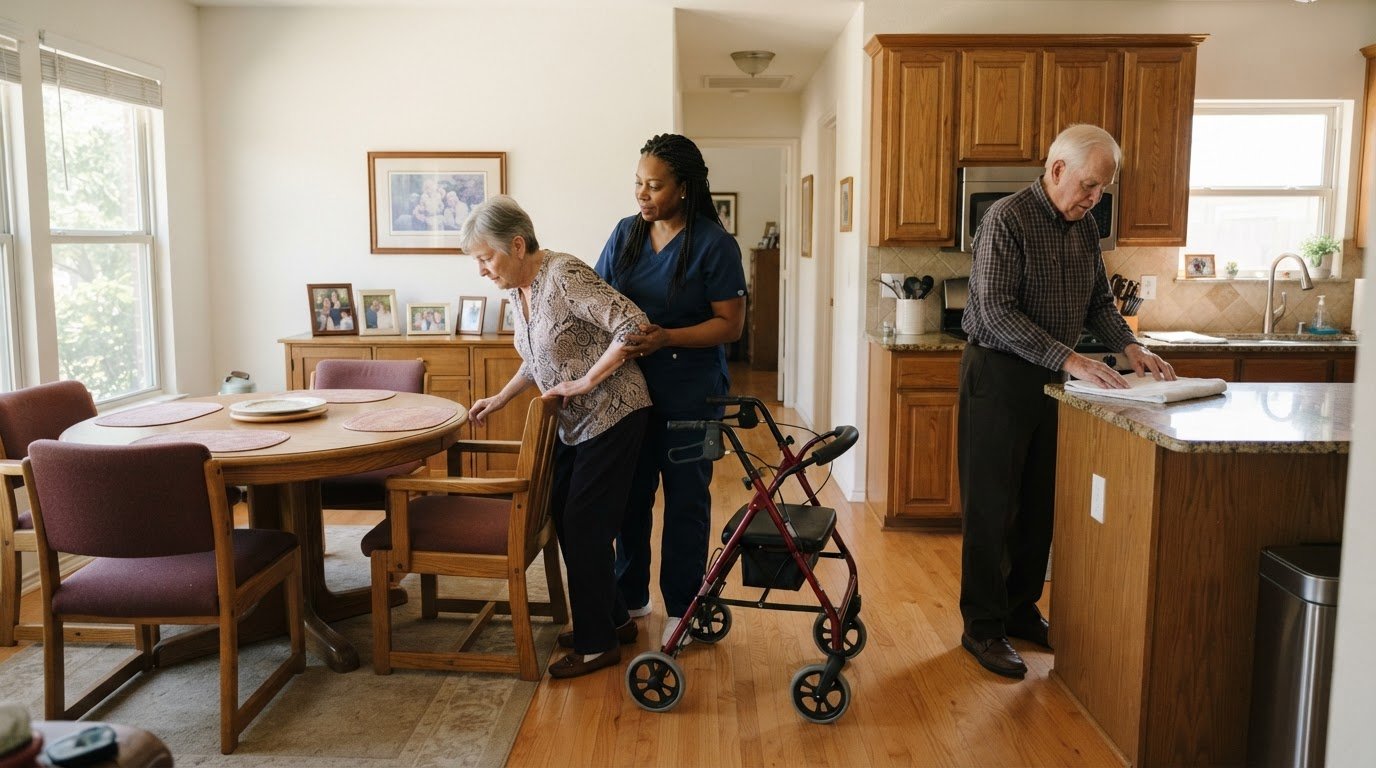
One caregiver may be able to support both partners, but their needs don’t have to match for care to work at home. Home care for couples with different needs can be arranged around each person’s daily routines, abilities, and support requirements, with the plan adjusted as health changes.
It’s understandable to hope that one shared arrangement can simplify daily life and help partners remain together. The key is to assess each person individually rather than assume both need the same kind or amount of help.
This article explains how to consider physical, emotional, and cognitive needs, plan for changes over time, and coordinate different levels of support under one roof. You’ll also learn when a caregiver may be able to assist both partners and when their needs call for a more tailored schedule.
Key Takeaways
- Assess each partner’s physical, emotional, and cognitive needs separately to understand what support would help each person day to day.
- Different care needs don’t automatically rule out living together; the right arrangement depends on each partner’s support needs and how they can be met at home.
- Plan for health changes before they become urgent, and revisit the care arrangement as routines or abilities change.
- When dementia or another progressive condition affects one partner, consider how support can protect both their well-being and the caregiving spouse’s capacity.
- A shared home care plan can include different levels of help for each partner, including companionship, personal care, or dementia care where appropriate.
Assessing each partner’s physical, emotional, and cognitive health
Assess each spouse separately before deciding whether one home care arrangement can support both. A clear picture of each person’s health, routines, and safety needs helps you identify suitable options and decide whether a change in living arrangements may be needed.
Assessing Individual Health and Care Needs
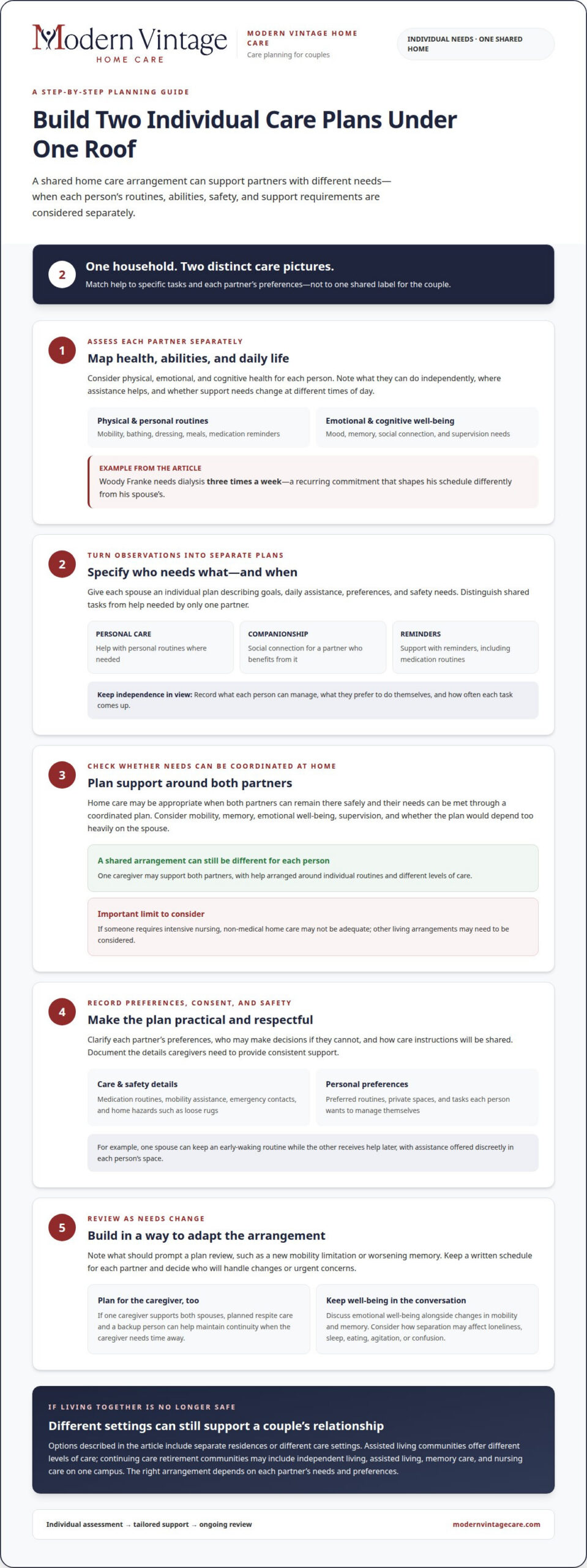
An individual assessment shows how physical, emotional, and cognitive health affects daily activities. Consider mobility, bathing, dressing, meals, medication reminders, mood, memory, and social connection for each partner. These details clarify where assistance is needed and where independence can continue. For example, Woody Franke needs dialysis three times a week, a recurring commitment that would shape his schedule differently from his spouse’s.
Assess each partner’s level of care by matching support to specific tasks, not assigning the couple one shared label. One spouse may need help with personal routines, while the other mainly benefits from companionship or reminders. Note how often each task comes up, what the person can do independently, and whether needs vary at different times of day. This makes the assessment useful when comparing home care with senior living options.
Care for both partners at home may be appropriate when they can remain there safely and their needs can be met through a coordinated plan. Assess each person’s mobility, memory, emotional well-being, and need for supervision. Then consider whether support can address both sets of needs without relying only on the spouse. If someone requires intensive nursing, non-medical home care may not be adequate, and the couple may need to consider other living arrangements.
Planning for consent and safety means clarifying each partner’s preferences, who may make decisions if they cannot, and how care instructions will be shared. Before care begins, document medication routines, mobility assistance, emergency contacts, and home hazards such as loose rugs.
Caregivers can respect privacy and independence by asking each partner about preferred routines, private spaces, and tasks they want to manage themselves. A spouse who wakes early, for example, can keep that routine while the other receives help later, with assistance offered discreetly in each person’s space.
Creating Separate Care Plans
Separate care plans describe each spouse’s goals, daily assistance, preferences, and safety needs, even when both receive care at home. An assessment can gather this information through individual conversations and a review of daily routines, then distinguish shared tasks from support needed by just one person. This helps caregivers understand who needs help, when it is needed, and how to respect each partner’s choices.
A useful assessment also records what should prompt a plan review, such as a new mobility limitation or worsening memory. Families can keep a written schedule for each partner and decide who will handle changes or urgent concerns. If one caregiver supports both spouses, planned respite care and a backup person can help maintain continuity when the caregiver needs time away.
Physical and cognitive health when couples age together
Partners can grow older under the same roof while needing different kinds of support. Their shared history matters, but physical ability, memory, and caregiving capacity can change independently.
Aging in Place Together
Aging in place together means continuing to share a home as each partner’s health and routines evolve. Familiar surroundings can be reassuring, while practical planning addresses differences in mobility or memory. For example, a partner who walks independently may still need to adapt shared spaces for a spouse who uses mobility assistance.
Start with a room-by-room review. Consider entry steps, doorways, pathways, bathroom access, seating, and the places where each partner spends time. Possible changes include clearing clutter, improving lighting, or adding support features where needed. Match each change to the partners’ abilities and the home’s layout rather than assuming one solution suits both.
Physical and cognitive changes can also affect the relationship. If one partner becomes a caregiver, the responsibilities can strain their physical and emotional well-being. Agree on which tasks they can manage, which need additional support, and how each partner can maintain meaningful routines. A written division of tasks makes it easier to discuss changing responsibilities.
Remaining together should not mean overlooking loneliness or distress. Separation from a spouse can be associated with depression and changes in sleep or eating habits. For a person with dementia, separation may also increase agitation or confusion. Make regular conversations about emotional well-being part of planning, alongside discussions about mobility and memory.
Options When Partners Cannot Live Together
When partners can’t safely live together, separate residences or different care settings may meet their needs while preserving their relationship. Assisted living communities offer different levels of care, and continuing care retirement communities provide multiple levels on one campus, including independent living, assisted living, memory care, and nursing care.
Some couples can live together in assisted living, but this arrangement isn’t right for every pair. One partner may need memory care while the other needs a different level of support. Discuss how each person’s needs, preferences, and daily contact might fit the available arrangement. Involve both partners in decisions where possible, along with loved ones who understand their priorities.
A couple’s attachment to home can make transition decisions especially tender. One family described parents who were both 90 and had lived in their home for 40 years. Their example highlights why discussions should include familiar routines, emotional connection, and the support each partner needs, rather than focusing only on physical limitations.
If remaining at home becomes difficult, a care planning conversation can help organize the next steps around both partners’ needs. Consider in-home care support as part of that discussion, including how routines and assistance could be arranged at home.
Planning for changes in care needs over time
Care needs can change at different rates for each spouse, so a useful plan needs room for adjustments. Discuss possible changes, responsibilities, and the household budget before a health event makes decisions urgent.
Planning for Different Care Needs
Planning ahead means agreeing how support could change as each partner’s health, independence, or daily routine changes. A plan that works today may not fit later. Identify who will notice changes, how the couple will discuss them, and which familiar routines they want to preserve.
Use specific signs to guide a review, such as difficulty preparing meals, increased help with personal routines, or memory changes that disrupt daily tasks. A family increased in-home caregiving for two parents from 8 hours a week to 24 hours a week over two years. That example shows why couples can plan for gradual adjustments instead of treating the current schedule as permanent.
Discuss senior living options before a crisis, including what each partner wants if home support no longer meets their needs. A community may have policies about whether one spouse can remain an active resident while the other needs a different setting. Understanding the possibilities early gives couples more time to weigh preferences and prepare for a transition.
Tailoring Home Care for Each Partner
Tailored home care assigns support according to each partner’s needs instead of assuming both require the same tasks or schedule. One senior, for example, might need help with personal routines while their spouse values companionship and support with everyday activities. Separate schedules can still preserve shared meals, conversation, and time together.
Review the plan when either partner’s abilities or routines change. Adjust which tasks receive help, when assistance takes place, and how to protect the couple’s shared time. If one spouse’s needs increase, reconsider support for both partners without treating them as a single care recipient.
Financial planning should compare the household budget with current and possible future care needs. Account for regular support, possible increases in care, long-term care insurance, and other financial resources. Independent living and assisted living involve different costs and arrangements, so couples considering either option should understand the expenses for each partner’s level of care.
If a couple needs round-the-clock care, they may consider whether a long-term care facility better fits their needs and budget. Non-medical home care may also be inadequate when someone requires intensive nursing. Considering these possibilities in advance helps partners decide what would allow them to remain together and what alternatives they would consider if needs outgrow the home plan.
Care for dementia or progressive conditions
Dementia or another progressive condition can change one partner’s memory, judgment, and ability to manage daily activities. Home support should respond to that person’s changing needs while recognizing that their spouse may have different routines and support needs.
Dementia and Alzheimer’s disease affect 55 million people worldwide, and nearly 10 million new cases occur every year. Those figures describe a broad range of experiences, not one predictable path. A person may need increasing help with familiar tasks as memory changes, while their partner remains independent and manages their own day.
Begin by noting how memory changes affect everyday routines. A person might lose track of meal times, forget steps in a familiar task, or become unsettled by changes at home. A consistent daily rhythm, familiar objects, and calm communication can help make support more personal. Keep the spouse’s preferences in view, too, rather than treating the couple as one care recipient.
One spouse often becomes the caregiver when the other has dementia or another memory-loss condition. If their partner needs assistance around the clock, the caregiver may face responsibilities that are difficult to sustain alone. Write down daily support needs, shared routines, and signs that the current arrangement is becoming harder. Include time for the caregiving spouse to rest and look after their own well-being.
Home care options for seniors with different needs include Alzheimer’s & Dementia Care, Concierge Services, and Quick Care Services. For a person with dementia, support can focus on familiar routines and daily needs, while their partner may need another kind of assistance. Each service should fit the individual, not assume both spouses need the same care.
Separate plans help caregivers balance support with independence. Record which tasks each person can still manage, where reminders or hands-on help are useful, and which routines matter most. One partner, for example, may prefer to choose clothes independently but need help staying on track with dressing. Revisit the plan as abilities change and adjust the level of assistance.
A community with memory care may be worth considering if a person’s needs outgrow what can be managed safely at home. Non-medical home care may not be adequate when someone requires intensive nursing. This distinction helps couples assess each partner’s needs, the caregiving spouse’s capacity, and whether their current living arrangement remains suitable.
Example of spouses receiving different levels of care
Different needs don’t always require identical schedules or the same level of care. A tiered assisted living example illustrates the difference: one spouse may be at level 4 while the other is at level 1. The same principle can guide planning at home, where each partner’s support should reflect their own daily needs.
Imagine one spouse needs frequent help with daily tasks, while the other remains mostly independent and wants companionship. A shared care plan can coordinate support around both people without assuming they need equal assistance. For example, caregivers can focus on one spouse’s hands-on needs while preserving shared meals or social time that matters to them both.
To make this practical, describe each partner’s needs separately:
- Record which daily activities require assistance and which remain independent.
- Note preferred routines, including times for meals, rest, and shared activities.
- Identify whether memory changes, mobility, or supervision affect either person’s safety.
- Set a point for reviewing the plan when either spouse’s situation changes.
These details help distinguish shared tasks from individual ones. A meal may be a social routine for both partners, while only one needs help preparing or eating it. Similarly, one spouse may need reminders to follow a routine while the other manages independently. Clear distinctions help caregivers provide suitable support without taking over tasks a partner can still do.
Senior living facilities may offer different levels of care, and a community may support partners with different needs while they live together or nearby. Some couples may instead need separate settings, such as memory care for one partner and assisted living for the other. The right arrangement depends on whether each person’s needs can be met safely and how the couple wants to stay in touch.
When considering a community, discuss how care plans are coordinated, how partners can spend time together, and what might happen if either person’s needs increase. Ask how each spouse’s care level is reviewed and how a change could affect their living arrangement. These conversations clarify the practical steps involved, beyond a community’s general description of its services.
At home, different care levels can also be reflected through distinct routines and support schedules. If one spouse needs assistance at particular times, plan those visits around the other partner’s independence and shared activities. Then revisit the arrangement whenever a new need changes the balance. Discuss care planning for both spouses as you consider which support may fit your household.
Modern Vintage Home Care
Modern Vintage Home Care helps families in Sugar Land, Missouri City, and SW Houston plan home care for couples with different needs. Support is shaped around each partner’s routines, abilities, and priorities. If one spouse is living with dementia while the other needs help with personal activities or companionship, a tailored plan can address both people’s needs at home.
For home care for couples with different needs, support may include Alzheimer’s & Dementia Care, Personal Care, or Companionship, according to each partner’s situation. Contact Modern Vintage Home Care to discuss care for both partners.
Take the Next Step Toward a Shared Plan
A thoughtful plan can respect each partner’s choices while helping them decide what support feels right at home. Start a family conversation about what each person wants to preserve, what feels difficult now, and what changes would prompt another discussion. These priorities give future decisions a personal foundation, not just a list of tasks.
Planning home care for couples with different needs is an ongoing conversation, not a one-time decision. As circumstances shift, revisiting the plan can help partners and loved ones talk openly about comfort, independence, and the kind of help that fits. If frequent support is part of the discussion, 24-Hour Care is one option Modern Vintage Home Care offers.
For a calm next step, share your household’s needs and priorities with Modern Vintage Home Care. A conversation can help you explore support that reflects both partners’ circumstances. You can move forward at a pace that feels manageable, with each person’s dignity and relationship at the heart of the plan.
Frequently Asked Questions
Can One Caregiver Provide Care for Both Spouses?
One caregiver may support both spouses if the tasks can be managed safely and don’t require attention at the same time. For example, a caregiver might help one partner get ready, then prepare a shared meal while the other remains independent. If both need hands-on help simultaneously, or one needs close supervision, the schedule may require additional caregiver support.
What Does a Couples Care Schedule Look Like?
Build the schedule around each partner’s routines rather than treating the day as one shared checklist. A caregiver might assist one spouse with morning personal care, then provide companionship while both partners have lunch. Later support could include reminders or help with an evening routine. The schedule can also identify shared activities and note which tasks each person manages independently.
What If One Spouse Has Dementia or Another Progressive Condition?
Care should adapt to changes in a person’s memory, routines, and ability to manage daily activities. A familiar meal routine and clear, calm reminders may help the person feel oriented while their spouse continues usual activities. Alzheimer’s & Dementia Care provides non-medical support at home. If someone needs medical treatment or intensive nursing, home care is not a substitute for that care.
Can spouses receive different levels or types of home care at the same time?
One spouse may receive Personal Care for daily activities while the other benefits from Companionship or medication reminders. Schedule support around each person’s preferences, including shared routines where they suit both. For example, assistance for one partner can be arranged before a shared afternoon activity, rather than requiring both spouses to follow identical routines.
How much does in-home care cost for couples in the United States?
There is no fixed price for in-home care for couples. The cost varies according to the care needed, location, schedule, and tasks. In Sugar Land, Missouri City, and SW Houston, Modern Vintage Home Care provides a personalized quote after learning about the household’s support needs. The estimate reflects each spouse’s care plan and the combined schedule, not an assumption that both need the same assistance.
Does Medicare, Medicaid, or long-term care insurance cover home care for both spouses?
Medicare generally doesn’t cover non-medical home care. Medicaid, veterans’ benefits, and long-term care insurance may be options, depending on each spouse’s eligibility, policy terms, and the type of support involved. Don’t assume one partner’s benefits automatically apply to the other. Review the details for each person and distinguish non-medical home care from medical home health services.
How do families choose between one shared caregiver and separate caregivers for a couple?
Consider whether spouses need help at the same time, have different privacy preferences, or require distinct types of support. One caregiver may be a good fit when tasks can be arranged in sequence and both partners are comfortable sharing support. Separate caregivers may suit a household where needs regularly occur at the same time. Reassess the arrangement if either spouse’s routines or care needs change.
What respite care and backup options are available when one caregiver supports both partners?
The plan can include scheduled respite care and identify a backup person to maintain continuity when the caregiver needs time away.
