
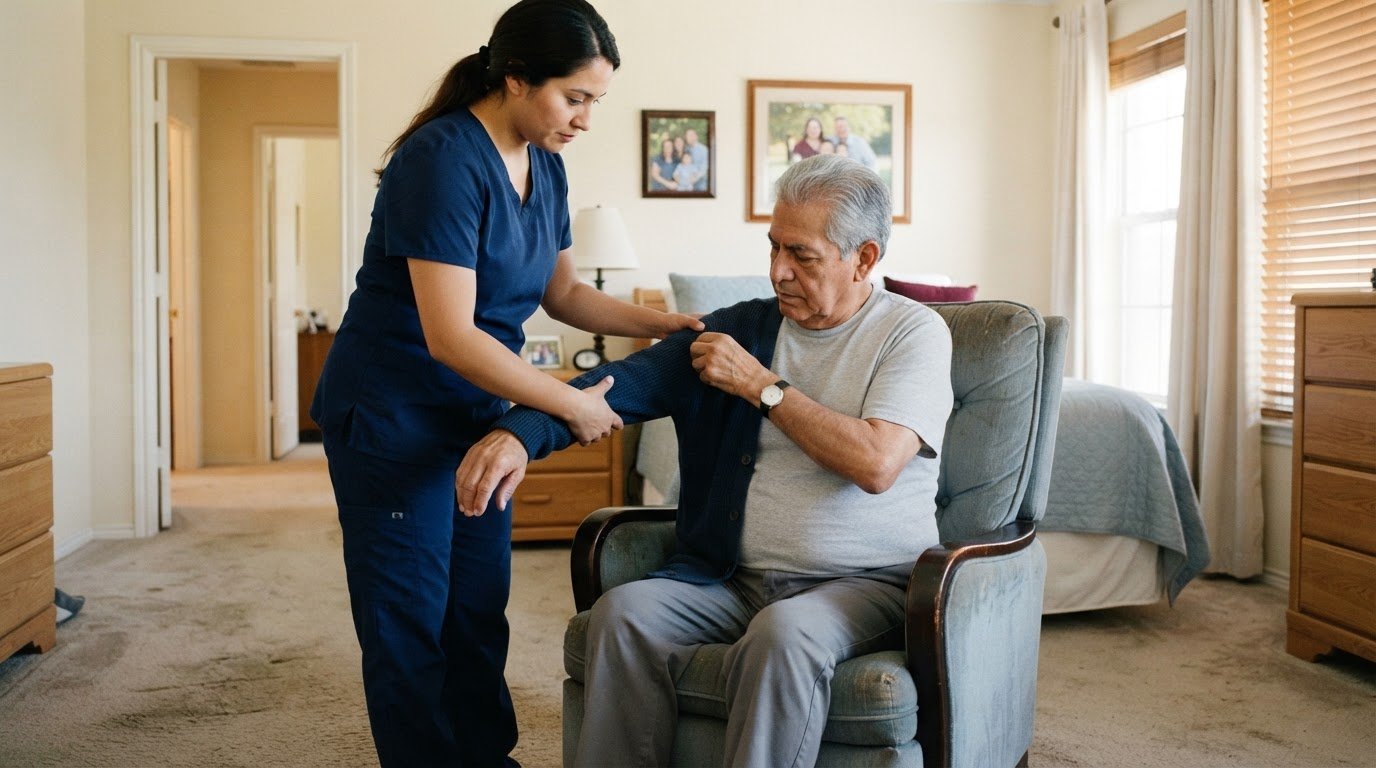
The safest next step after a stroke isn’t always the most intensive setting. Home care for stroke recovery may be suitable when the person’s daily support needs can be met safely at home, with a plan for rehabilitation and follow-up that reflects their abilities and goals. The decision should take into account everyday tasks such as eating, dressing, and bathing, as well as the level of medical support they need.
It’s understandable to want the comfort of home while worrying about falls, medication routines, and whether recovery needs will be supported. A thoughtful plan can balance familiar surroundings with dependable help, clear safety measures, and support that adapts as needs change.
This article explains how to assess whether home is a good fit, what rehabilitation and follow-up may involve, and how safety changes, medication support, and regular physical, cognitive, and emotional assessments can contribute to a thoughtful recovery plan.
Key Takeaways
- Assess whether home can safely support daily tasks and the level of rehabilitation and medical oversight the stroke survivor needs.
- Reduce hazards and improve access with thoughtful changes such as removing throw rugs, installing handrails, and considering grab bars or transfer benches.
- Support recovery by following prescribed medication directions and watching for changes or possible side effects to discuss with the care team.
- Make room for regular physical, cognitive, and emotional assessments so support can reflect the person’s changing needs and goals.
- Build follow-up around safe activity and ongoing health needs. If stroke symptoms occur, call 9-1-1 right away, according to the National 911 Program.
1. Choosing stroke rehabilitation plans
Choosing a rehabilitation setting starts with the patient’s medical needs, abilities, and goals. If new stroke symptoms appear, call 9-1-1 right away, according to the National 911 Program. A sudden change needs emergency attention, not a routine adjustment to recovery support.
Inpatient rehabilitation facilities may suit stroke patients who need an intensive, coordinated program and close medical supervision. They often provide at least three hours per day of active therapy, five or six days a week, with 24-hour doctor supervision. This level of structure can be appropriate when the survivor needs frequent, focused rehabilitation. Inpatient rehabilitation is recommended for the best patient outcomes when its intensity and oversight fit the person’s condition.
A tailored rehabilitation plan connects therapy goals with specific challenges. Someone who struggles to move from bed to chair may need transfer practice, while someone having trouble speaking may benefit from speech therapy. An assessment helps determine which setting can meet those needs. The plan should reflect the survivor’s abilities and goals, then adapt as needs change.
In-home stroke rehabilitation brings therapy into familiar surroundings. Professionals can consider how a patient manages everyday routines, such as moving between rooms or getting dressed. Home-based care may also use telehealth and digital monitoring to track progress and adjust treatment plans. Home care for stroke recovery can support daily routines, but nonmedical personal assistance doesn’t replace physical, occupational, or speech therapy.
A home care provider can help clarify practical assistance needs, such as support with bathing, dressing, or meals. Families can distinguish daily living assistance from clinical rehabilitation and consider whether each part of the plan fits the survivor’s needs. Home care for stroke recovery works best as one part of a coordinated plan, with clear roles for daily support, clinical therapy, and follow-up.
Coverage depends on the service and the individual plan. Home health care and nonmedical home care are different categories. Medicare and most health insurance plans typically do not cover nonmedical home care, although some expenses may be tax-deductible under IRS guidelines. Rehabilitation costs depend on the therapy and schedule, while home care costs depend on the support arranged.
Family caregivers can use respite care to take a break from caregiving responsibilities. Modern Vintage Home Care provides Respite Care to support caregiver relief, with help arranged around the survivor’s routine and daily needs.
Call 9-1-1 right away if new stroke symptoms appear. Any sudden change needs emergency attention rather than a routine adjustment to recovery support.
2. Home safety and accessibility modifications
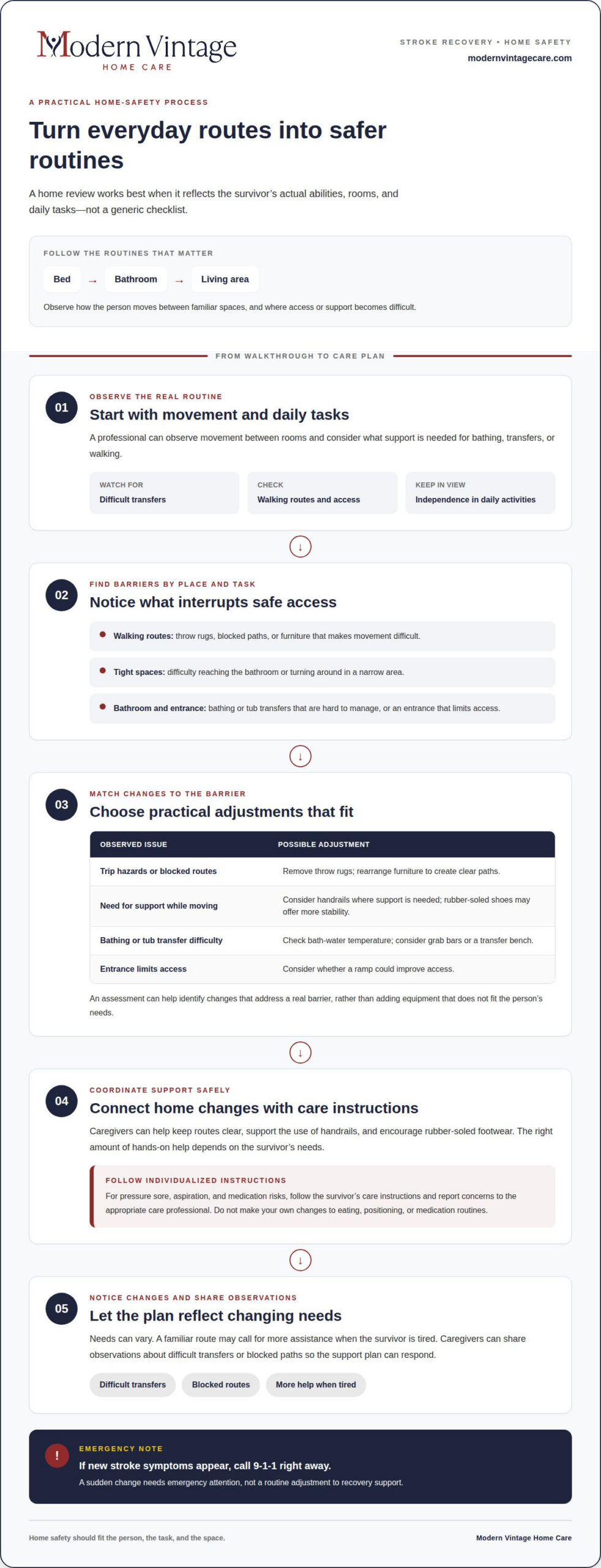
After hospital discharge, a home safety review should focus on the survivor’s actual routes and routines. Professionals can observe movement between the bed, bathroom, and living area, then identify obstacles affecting access. They can also consider whether support is needed for bathing, transfers, or walking. The goal is to make daily activities more accessible while preserving as much independence as possible.
Practical changes can address common hazards without redesigning the whole home. Remove throw rugs from walking routes, rearrange furniture to create clear paths, and consider handrails where the survivor needs support. Rubber-soled shoes may offer more stability during movement. In the bathroom, checking bath-water temperature and considering grab bars or a transfer bench can make bathing routines more manageable.
A safety assessment connects the survivor’s abilities with specific rooms and tasks. For example, a professional may observe whether the person can reach the bathroom, turn around in a narrow space, or transfer onto a seat. They can identify where furniture may need rearranging, where a ramp could improve access, and which daily activities call for hands-on assistance. The assessment should reflect the person’s mobility and usual routine, not rely on a generic checklist alone.
Caregivers can help reduce fall risks by keeping routes clear, supporting the use of handrails, and encouraging rubber-soled footwear. For pressure sore, aspiration, and medication risks, they should follow the survivor’s individualized care instructions and report concerns to the appropriate care professional. Needs vary, so caregivers should not make their own changes to eating, positioning, or medication routines.
Equipment should match the task. A grab bar may offer support near a bathing area, while a transfer bench can help with getting into and out of a tub. If a doorway or entrance limits access, a ramp may be considered. An assessment can help identify which changes fit the home and the survivor’s needs, rather than adding equipment that does not address a real barrier.
Good safety planning also accounts for changing needs. A survivor who can manage a familiar route in the morning may need more assistance when tired. Caregivers can share observations about difficult transfers or blocked paths, allowing the support plan to respond. For medication routines, professional medication management and reminders can help caregivers support consistent use as prescribed.
3. Medication management and side-effect monitoring
After a stroke, medication routines should follow the treating clinician’s instructions. Caregivers can keep an up-to-date list of each medicine, its prescribed directions, and the clinician responsible for it. They should refer to the list when questions arise, rather than changing a dose or stopping a medicine themselves. Consistent information helps the care team understand what the patient is taking.
Monitoring means noticing changes and sharing them clearly. If a patient seems different after starting or changing a medicine, caregivers can record what changed and when, then report it to the medical team. A written note can help distinguish a new concern from the survivor’s usual pattern. Medication reminders can support an established schedule, while caregivers can help keep the routine organized around the prescribed directions.
Communication with medical staff works best when it is specific. Caregivers can share the current medication list, describe missed doses, and explain observed changes. If a pharmacist or clinician provides updated directions, the family can record who gave the guidance and when. A social worker may help coordinate practical care needs, while medication questions belong with the patient’s medical team.
Appointments are easier to manage when the family keeps a shared calendar of visits, transportation plans, and follow-up tasks. Before an appointment, caregivers can note questions about medication changes, side effects, or difficulties following the routine. Afterward, they can update the medication list using the clinician’s instructions and share relevant changes with other caregivers. This can reduce confusion when several people support the same patient.
Taking medication as prescribed and following medical advice are important parts of recovery and efforts to prevent another stroke or complications. The care team can explain the purpose of each prescribed medicine and which changes to report. Caregivers should not add over-the-counter products or supplements without discussing them with the appropriate clinician, since the full medication picture matters.
If you or someone else has stroke symptoms, call 9-1-1 right away, according to the National 911 Program. For other concerning changes, contact the patient’s medical team and describe what happened, when it began, and which medicines are being taken. Prompt, clear details help clinicians respond appropriately.
A simple routine can connect these steps: keep the medication list current, use reminders for scheduled doses, note changes, and bring questions to appointments. Caregivers can share responsibility for recording information, but one current list should guide communication. This structure supports safer medication routines without asking family members to make clinical decisions.
4. Physical, cognitive, and emotional assessment
Home care professionals can support bathing, dressing, eating, and mobility by assisting with daily routines according to the survivor’s abilities and care plan. For example, a caregiver can provide hands-on help with getting dressed while encouraging the person to manage the steps they can do safely.
Regular assessment should consider physical, cognitive, and emotional health, not mobility alone. A stroke survivor may have partial or full paralysis on one side, affecting reaching, balance, and everyday tasks. Caregivers can note changes in movement or confidence and share those observations with the healthcare team. This helps the team understand how the person is managing between appointments.
Physical therapy may help stroke survivors build strength, flexibility, coordination, and balance. A therapist can connect those goals with functional movements, such as standing, walking, or reaching. Home care professionals can support daily routines, but they do not replace a physical therapist or prescribe exercises. The therapist’s plan guides clinical rehabilitation, while caregivers can share practical difficulties they observe at home.
Speech therapy may help improve speaking and swallowing abilities. Changes in either can affect conversation or mealtimes, so caregivers can report difficulties to the healthcare team and follow the instructions provided. Occupational therapy may address memory and comprehension. A therapist can connect these skills to tasks such as following a familiar routine or understanding directions while dressing.
Cognitive assessment can include noticing changes in memory, attention, or understanding. For instance, a survivor who forgets the next step in a familiar routine may need different cues or support. Emotional well-being matters too: changes in mood or signs of depression should be shared with the care team. These observations help professionals understand the person’s experience, rather than judging progress only by physical tasks.
A useful assessment connects observations to specific activities. Caregivers can describe whether the survivor needs help moving from a chair to the bathroom, using utensils at meals, or choosing clothing. They can also note what the person does independently and where assistance is needed. These practical details help healthcare professionals review support needs and coordinate appropriate therapy.
Assessments should continue as abilities and challenges change. Someone who manages a task with limited assistance may need more support on a difficult day, while progress may allow greater participation in another routine. Families and caregivers can share these changes with the healthcare team. Clear communication helps keep daily support aligned with rehabilitation goals, emotional needs, and the survivor’s dignity.
5. Home-based stroke recovery and follow-up care
After a stroke, home support should reflect the survivor’s abilities and daily assistance needs. A practical starting point is whether the person can eat, dress, and bathe safely, and where help is needed. A plan for home care for stroke recovery can clarify which routines need support and how that assistance fits alongside clinical rehabilitation and medical follow-up.
Daily assistance may include bathing, dressing, grooming, or meal preparation. A caregiver can help with a morning routine while supporting the survivor’s participation in manageable tasks. The support plan should reflect personal preferences and existing care instructions. It should also identify when a task becomes difficult, so caregivers can share useful observations with the appropriate professionals.
Follow-up care depends on coordination among the people supporting recovery. Home-based stroke care can involve nurses, physical therapists, occupational therapists, speech therapists, aides, and social workers. Their roles differ: therapists address rehabilitation goals, while aides may assist with daily routines. Sharing relevant observations helps connect these roles and gives the care team a clearer picture of how the survivor is managing at home.
Ongoing planning should include steps to help minimize the risk of another stroke. Medical follow-up and lifestyle changes may form part of that plan, including dietary changes to help control blood pressure, cholesterol, and weight. In the United States, one in four stroke survivors will experience another stroke. Follow-up should remain part of the recovery plan, rather than ending when the survivor returns home.
Safe activity matters too. Stroke survivors should exercise and take part in activities safely to support recovery. Activities should fit the survivor’s abilities and rehabilitation guidance. Caregivers can help maintain the agreed routine and report when an activity becomes difficult, so the relevant professionals can review the plan.
Families can make coordination more practical by keeping appointment details and care instructions together. They can share changes in daily functioning, such as needing more help with meals or dressing, with the professionals involved. This information helps distinguish a one-time challenge from an ongoing support need and keeps follow-up discussions grounded in everyday experience.
Families arranging home care for stroke recovery can use the survivor’s daily routines to guide what support is needed. For help with practical assistance and companionship at home, explore home care support. The central takeaway is to connect daily help with rehabilitation and medical follow-up, while adjusting support as the survivor’s needs evolve.
Modern Vintage Home Care
Modern Vintage Home Care supports families in Sugar Land, Missouri City, and SW Houston with daily routines after a loved one returns home following a stroke. Personal Care and Companionship can help with everyday needs while respecting the survivor’s preferences and independence.
Families may also turn to Alzheimer’s & Dementia Care when memory changes make familiar routines harder to manage. These services support daily life at home; they do not replace clinical rehabilitation or medical follow-up. Contact Modern Vintage Home Care to discuss practical support for your family.
Build a supportive path forward at home
The next step is to shape support around the survivor’s daily life, preferences, and family routine. Home care for stroke recovery can be part of the plan when practical help at home is needed alongside clinical rehabilitation and medical follow-up. Keeping those roles clear helps families find appropriate support without expecting one service to meet every need.
Modern Vintage Home Care offers Alzheimer’s & Dementia Care, 24-Hour Care, and Companionship. These services can support families managing daily routines and seeking a steady, person-centered presence at home. The right conversation can begin with what has become difficult, what the survivor can do independently, and where family caregivers need support.
Recovery is personal, and the next step can be a simple discussion about your family’s needs. Contact Modern Vintage Home Care to talk through the support that may fit your loved one’s routine. With a thoughtful plan and the right help, families can move forward with greater confidence.
Frequently Asked Questions
How do I know if going home is the right choice?
Home may be suitable when the survivor’s daily support needs can be met safely there. Consider whether help is available for essential routines and whether the person needs intensive rehabilitation or close medical supervision. For example, needing assistance with transfers may affect the level of support required at home. A sound decision weighs the survivor’s abilities, medical needs, home environment, and available caregiver support together.
What home changes can a professional recommend after a stroke?
A professional can recommend changes based on the survivor’s mobility and the home’s layout. For example, they may suggest improving access at an entrance, adjusting a frequently used route, or adding support near a bathing area. Recommendations should address the specific activity that is difficult, rather than adding equipment without a clear purpose. A walkthrough can connect observed challenges, such as difficulty turning or reaching, with relevant safety changes.
What exercises may a therapist recommend for stroke recovery at home, and how often should they be done?
A physical therapist may recommend exercises focused on strength, flexibility, coordination, or balance. The therapist sets a schedule based on the survivor’s goals, abilities, and rehabilitation plan, so one routine will not suit everyone. For example, practice with standing or reaching may support a particular daily activity. The survivor should follow the therapist’s instructions and ask the care team about changes in ability.
What equipment and home modifications may a professional recommend after a stroke, and how much do they cost?
Recommendations may include handrails, grab bars, transfer benches, or a ramp, depending on the survivor’s needs and the home’s layout. Costs depend on the equipment selected, the scope of changes, and any installation work. A simple equipment purchase and a structural access change involve different considerations. A professional assessment can help clarify which changes address actual barriers, so families can focus planning on relevant modifications.
How do you find and compare qualified home care agencies or stroke rehabilitation providers?
Compare providers by whether they assess the survivor’s abilities and goals, tailor a treatment plan, and coordinate the needed physical, occupational, or speech therapy with daily support. Look for regular physical, cognitive, and emotional assessments; Age-Friendly Care at Home Certification incorporates the evidence-based 4Ms Framework.
What warning signs after a stroke require calling 911 or contacting a doctor?
Call 9-1-1 right away if new stroke symptoms occur. For other concerning changes, contact the patient’s medical team and describe what happened, when it began, and which medicines are being taken.
