
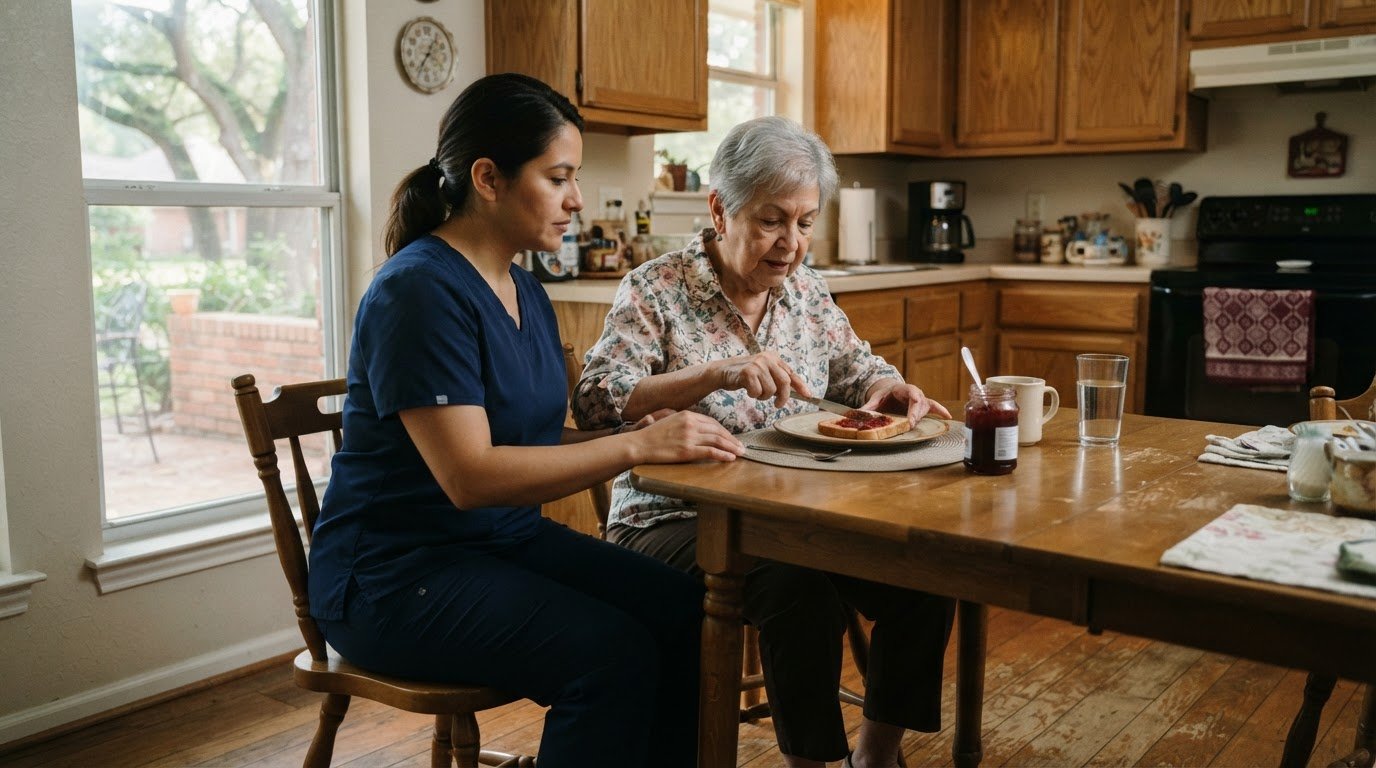
Around-the-clock care can be the right fit, but it isn’t the only way to support a senior at home. For families considering home care for seniors in First Colony, start with the person’s daily needs, routines, and level of supervision rather than assuming one schedule suits everyone.
It’s understandable to want clear answers about what support can look like and whether it can adapt as needs change. This guide explains how care options align with different levels of need, including when 24-hour in-home care may be appropriate.
This guide covers practical considerations for personal care, companionship, dementia care, medication reminders, and respite for family caregivers. Use these details to identify the support that may fit your family’s needs and plan a thoughtful next step.
Key Takeaways
- Match the care schedule to the senior’s daily needs, from occasional help to support around the clock.
- Respite care can give family caregivers time to rest while a senior continues receiving support at home.
- Consider how medication reminders and coordination can support a consistent daily routine.
- Personal care can help with everyday activities while respecting the senior’s comfort and independence.
- Choose support based on the individual’s needs, including whether companionship, dementia care, or 24-hour care is appropriate.
Respite care for family caregivers
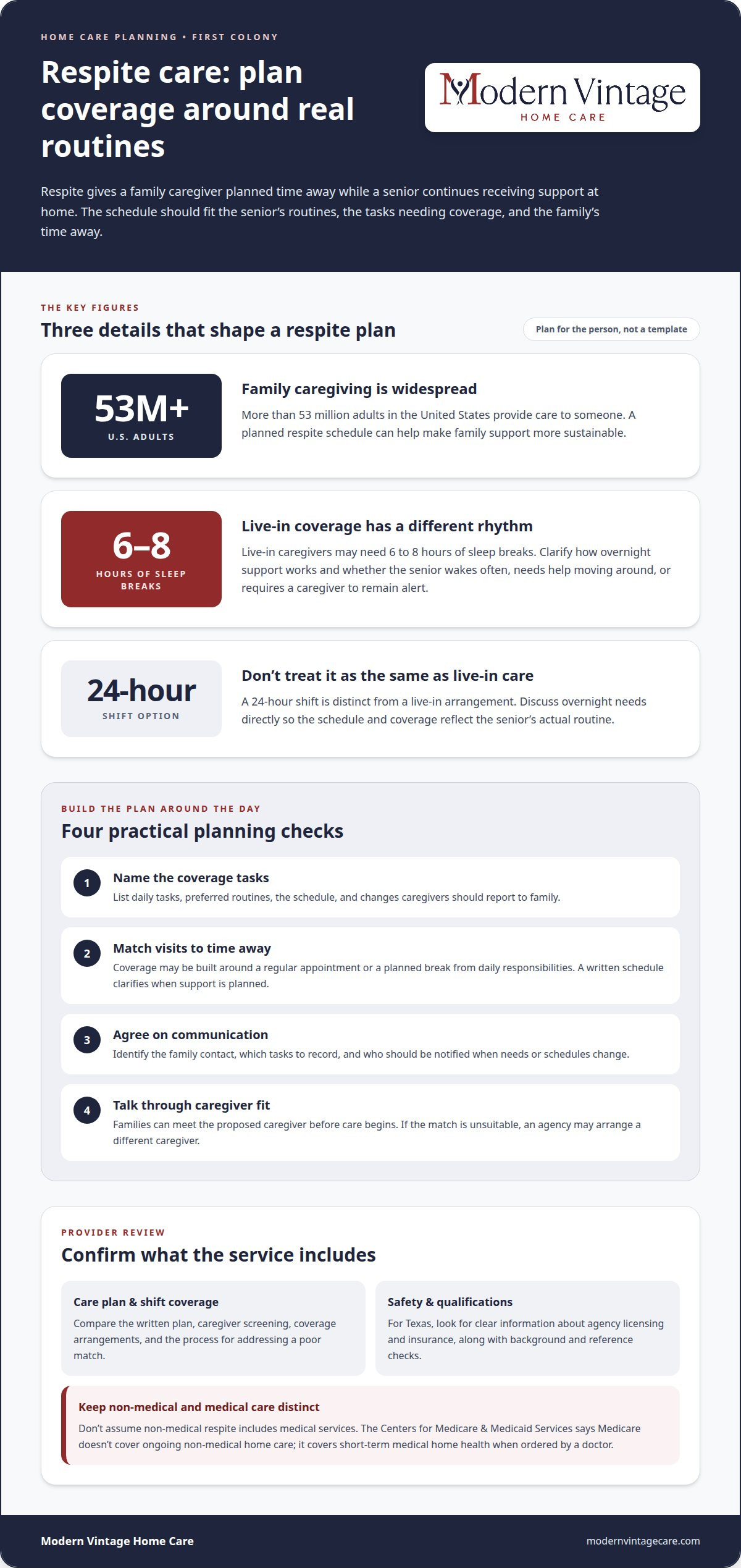
Respite care gives a family caregiver planned time away while a senior continues receiving support at home. In First Colony, choosing home care for seniors means matching that support to the family’s schedule, the senior’s routines, and the tasks that need coverage.
For choosing and assessing providers, compare the written care plan, caregiver screening, shift coverage, and process for addressing a poor match. For Texas safety and licensing, look for clear information about agency licensing and insurance, along with background and reference checks; don’t assume non-medical care includes medical services.
Care Planning and Caregiver Matching
A useful care plan names the daily tasks, preferred routines, schedule, and any changes caregivers should report to family. For example, a plan might cover meal support and companionship during a family member’s weekly appointment. Families meet the proposed caregiver before care begins, and an agency may arrange a different caregiver if the match isn’t suitable. That meeting lets the senior and family discuss communication and comfort.
Personalized Care and Caregiver Ratios
Personalized care connects each visit to specific needs instead of assuming every senior needs the same level of help. Ask how the plan supports independence, preferred routines, and changing needs. Clarify whether one caregiver will focus on the senior during the scheduled care or share duties. This helps families understand who provides support and communicates updates.
Schedules can be built around the family caregiver’s actual time away. One family might need coverage during a regular appointment; another might need a planned break from daily responsibilities. More than 53 million adults in the United States provide care to someone, so a respite plan can make family support more sustainable. The value is practical: a named caregiver covers agreed tasks while relatives step away.
Overnight coverage needs a clear distinction between a live-in arrangement and a 24-hour shift. Live-in caregivers may need 6 to 8 hours of sleep breaks, unlike caregivers on 24-hour shifts. Families should clarify how overnight needs are handled, including whether the senior commonly wakes, needs help moving around, or requires a caregiver to remain alert. Those details shape the schedule and the kind of coverage needed.
Before care starts, establish who shares updates and how schedule changes are communicated. A simple plan can identify the family contact, the tasks to record, and the person to notify when needs shift. The Centers for Medicare & Medicaid Services says Medicare doesn’t cover ongoing non-medical home care, though it covers short-term medical home health when ordered by a doctor. That distinction helps families separate respite support from medical care.
Care services in The Colony and nearby communities
For families seeking home care for seniors in First Colony and nearby Sugar Land communities, care planning starts with the senior’s address, daily routine, and support needs. These details help identify which in-home services may fit and how often assistance is needed.
Start by identifying the senior’s location. First Colony is part of Sugar Land, and families may also be considering care in Missouri City or southwest Houston. Then describe whether the priority is personal care, companionship, or help with routine tasks to shape a suitable care plan.
A schedule should reflect the senior’s day, not a standard template. One family may need support during work hours; another may prefer visits around meals or appointments. Visit frequency depends on the tasks and when assistance is most useful. A written schedule clarifies when support is planned.
After an initial assessment, Modern Vintage Home Care typically starts services within a few days. The assessment gives families a chance to explain routines, identify priorities, and discuss a suitable schedule. If a senior needs support around a regular appointment, for example, that timing can be included in the care plan. Clear communication about the start date helps families organize household responsibilities.
Appointments and pharmacy routines can shape a senior’s week, but non-medical home care is distinct from clinical treatment. Families can share appointment details and identify who handles healthcare questions. Caregivers provide agreed non-medical assistance and follow household routines; medical decisions remain with healthcare professionals.
The cost of non-medical home care depends on the type of assistance, location, and level of care. A service outline can help families understand the planned tasks and schedule and how they fit daily life. There is no single schedule or quote that suits every household.
Medicare does not cover ongoing non-medical home care, according to the Centers for Medicare & Medicaid Services; it covers short-term medical home health when ordered by a doctor. Most health insurance plans typically don’t cover non-medical home care. Medicaid eligibility and covered services depend on program criteria. A provider can describe the non-medical services and planned schedule, helping families discuss how those needs relate to Texas Medicaid program requirements.
Medication management and healthcare coordination
Medication reminders can help seniors follow familiar daily routines at home. Non-medical support may include a prompt at an agreed time, while medication decisions remain with the senior and healthcare professionals.
A clear care plan identifies reminders that fit the senior’s routine and whom to notify if a dose appears to be missed. A family might specify morning and evening reminders and share the preferred instructions with caregivers. Automated medication reminders can reinforce those cues. They don’t replace a prescription, determine a dose, or assess whether a medicine is working.
Keeping healthcare communication organized can help families coordinate around a senior’s care. Identify a primary contact, record upcoming appointments, and share relevant updates with the appropriate healthcare professional. If appointment instructions change, caregivers should follow the family’s communication process, not interpret or change medication directions.
For an older adult with Alzheimer’s disease, familiar routines and calm, plain-language reminders can make daily support easier to follow. A care plan can note preferred wording, the usual schedule, and which family contact to tell about concerns. Support should respect comfort and dignity, and questions about medical care should go to the healthcare team.
- Record: Include the reminder schedule and the family contact in the care plan.
- Prompt: Use the agreed cue, such as a gentle reminder alongside breakfast.
- Communicate: Share a missed reminder or concern with the designated contact.
- Refer: Direct questions about dosage or side effects to a healthcare professional.
These steps help families distinguish non-medical in-home senior care from clinical treatment. Support at home can assist with routines and communication, but it doesn’t replace a clinician’s assessment, prescription instructions, or medical care. Eligible veterans may use the VA Aid & Attendance benefit to help cover non-medical home care. Keep benefit questions separate from care instructions so financial planning doesn’t change the senior’s medication routine.
Medication reminders work best when everyone understands their role. The senior follows instructions from healthcare professionals; caregivers provide agreed reminders and report concerns; family members help maintain the care plan and communication. This shared approach can support independence and consistent assistance, whether the senior has memory changes or simply wants help remembering a routine.
Personal care and help with activities of daily living
Support with daily tasks can help seniors maintain familiar routines at home. A suitable plan focuses on what the person wants to do independently and where hands-on assistance would help.
Meals and Medication Reminders
Meal support can help keep mealtimes consistent and prepare familiar foods. A caregiver can follow the senior’s preferences, such as serving breakfast before a morning activity. Medication reminders can reinforce a routine at agreed times, but they don’t change medication instructions or replace guidance from healthcare professionals.
Families can include food preferences, usual mealtimes, and reminder routines in the care plan. If a senior tends to skip lunch while alone, for example, planned assistance can add structure to that part of the day. Clear instructions help caregivers provide consistent support while respecting the person’s choices and comfort.
Activities of daily living may include dressing, bathing, grooming, moving around the home, and using the bathroom. Personal care should focus on the specific task that feels difficult, rather than taking over everything. A senior who dresses independently but needs help preparing for a shower may benefit from support with that routine.
Personalized Home Care Plans
A personalized plan describes the senior’s abilities, preferred routines, and areas where assistance is needed. It can specify which personal care tasks a caregiver supports, when help fits best, and how the senior prefers to receive it. If needs change after a hospital stay, families can update the plan to reflect the current daily routine.
Respect matters during personal care. A caregiver can explain each step, offer choices, and give the senior time to participate. For instance, the caregiver might set out clothing while the senior chooses what to wear. This balances practical help with independence and dignity.
For someone living with Alzheimer’s disease or another form of dementia, familiar cues can make daily care easier to follow. A person-centered memory care plan can include preferred phrases, routines, and comforting activities. If getting ready feels confusing, a caregiver can offer one simple choice at a time instead of rushing through several instructions.
Personal care and companionship can also support the social side of the day. A caregiver might talk with the senior during a meal, share a familiar activity at home, or help with grooming before family visits. These examples connect everyday support with personal preferences. Compassionate care recognizes the individual and adapts routines respectfully.
24-Hour in-home senior care
Yes. Respite care and 24-hour home care are available for seniors in First Colony. Overnight support can be part of a planned schedule, based on the senior’s needs and required supervision.
Around-the-clock care may suit someone who needs support during both daytime routines and overnight hours. For example, a senior with dementia may need reminders, help dressing, and supervision through changing parts of the day. Families can describe when assistance is needed, what tasks matter most, and which routines help the senior feel comfortable. That detail helps shape a comprehensive care plan.
Consider what “24-hour care” means for the household’s schedule. Shift-based care and live-in arrangements differ in how caregivers cover the day and night. Live-in caregivers need sleep breaks, while 24-hour shifts provide coverage around the clock. Ask how the proposed schedule accounts for overnight needs, caregiver rest, and continuity between shifts. Clear handoffs can help caregivers follow the same routines and communicate relevant updates.
The key consideration is how much supervision the senior needs, not simply how many hours relatives would prefer. A family might consider overnight support if the senior regularly needs help at night. If assistance is needed only for a few daytime tasks, a shorter schedule may fit better. Respite care can provide planned coverage while a family caregiver takes time away.
Before care begins, outline the senior’s typical day and night. Include dressing, meals, bedtime preferences, overnight concerns, and the family contact for updates. For someone living with dementia, note familiar cues and communication preferences. These details give caregivers a practical guide and clarify what the schedule is intended to cover.
Funding needs careful planning. According to the Centers for Medicare & Medicaid Services, Medicare typically does not cover 24-hour home care. Families may explore VA benefits or long-term care insurance to help with costs. Coverage depends on the applicable benefit or policy, so keep funding questions separate from the care schedule and daily instructions.
A wonderful plan is one that matches support to the senior’s needs while respecting familiar routines. If overnight supervision, respite, or continuous coverage is being considered, discuss 24-hour care planning and the schedule that may fit your family.
Modern Vintage Home Care
Modern Vintage Home Care helps families plan in-home support around a senior’s needs and daily routines. When memory changes affect familiar activities, Alzheimer’s & Dementia Care offers focused support. If daily tasks or social connection are the main concerns, Personal Care and Companionship may be a good fit.
Families considering home care for seniors in First Colony can describe the support that would help, such as assistance with personal routines or companionship during the day. A no-obligation care consultation can help clarify which type of in-home support may suit the senior and family.
Contact Modern Vintage Home Care to discuss the support your family is considering.
Take the Next Step Toward Care That Fits
Choosing home care for seniors in First Colony is an opportunity to shape support around the person, not just a list of tasks. Identify what would make daily life feel safer, more manageable, and more connected, then discuss those priorities with a care professional.
Modern Vintage Home Care offers Alzheimer’s & Dementia Care, 24-Hour Care, and Companionship. These options can help families explore support for changing needs, extended coverage, or more social connection at home.
A thoughtful conversation can help clarify which needs matter most now and what may change over time. You can contact Modern Vintage Home Care to discuss care for your family. A clear next step can make the path forward feel more manageable.
Frequently Asked Questions
Do you serve all of Sugar Land, or just certain neighborhoods?
Modern Vintage Home Care serves Sugar Land, Missouri City, SW Houston, and surrounding Texas communities. Families can share the senior’s address and explain the support needed to discuss care for their household. For someone in First Colony, for example, the conversation can focus on daily routines and the assistance that would make living at home more manageable. Care needs help shape the discussion, alongside location.
How Are Caregivers Trained And Selected?
Clients can choose a caregiver based on compatibility, skills, and personal preferences, and all caregivers undergo rigorous background checks. Families can describe the senior’s communication style, daily habits, and preferred approach to assistance. A senior who values a quiet morning routine, for example, may feel more comfortable with a caregiver who respects that preference. Sharing these details helps tailor the match to the person.
What Do Home Care Services Include?
Non-medical home care can include help with daily activities, companionship, and support that follows a senior’s care plan. Depending on the needs discussed, assistance may include personal care, medication reminders, meal preparation, or light housekeeping. A senior who wants to remain involved in preparing breakfast, for example, may need help with setup and routine, not someone to take over every task. The focus is practical support at home.
What types of senior home care are available in First Colony, Texas?
Home care for seniors in First Colony, Texas, may include personal care, companionship, Alzheimer’s and dementia support, and 24-hour care. Other forms of in-home assistance can include medication reminders and respite support for family caregivers. The appropriate type depends on what the senior needs help with and how much support fits the household’s routine. A family might prioritize companionship during the day or additional supervision for changing memory needs.
Which home care agencies serve seniors in First Colony and Sugar Land?
Modern Vintage Home Care serves Sugar Land, Missouri City, and SW Houston. Families in First Colony can consider non-medical in-home support, including personal care, companionship, and memory care. The care plan is shaped around the senior’s needs and routines. A household seeking help with personal routines can discuss those tasks as part of planning care at home.
What are the hourly and monthly costs of in-home senior care in First Colony?
Costs vary by the type of support, location, and level of care. Modern Vintage Home Care provides customized quotes after a no-obligation care consultation. Medicare and most health insurance plans typically don’t cover non-medical home care, and some expenses may be tax-deductible under IRS guidelines. Families can discuss the proposed tasks and schedule to understand how they shape the care plan and quote.
What services do personal care aides and skilled home health nurses provide?
Personal care aides provide non-medical assistance with everyday activities, while skilled home health care involves licensed medical professionals providing clinical services. Personal care may support routines such as dressing or grooming, and companionship can add social connection. Skilled services such as nursing or physical therapy are distinct from non-medical home care. Understanding the difference helps families plan appropriate support at home.
How can a home care provider guide families through arranging home care for a senior in First Colony?
Modern Vintage Home Care can help families plan support by learning about the senior’s routines, needs, and preferences. Identify priority tasks, such as personal care or companionship, and describe a schedule that fits daily life. Caregiver selection can reflect compatibility and personal preferences. A no-obligation care consultation is a clear starting point for discussing in-home support.
