
Hospice isn’t simply palliative care delivered at home. In comparing palliative care at home vs hospice, the key difference is that palliative care can ease symptoms alongside treatment aimed at curing or controlling an illness, while hospice focuses on comfort when a doctor believes a person has six months or less to live if the illness follows its natural course, according to the Centers for Medicare & Medicaid Services.
It’s understandable to wonder whether choosing one means giving up treatment, or what support your family would receive day to day. Palliative care can accompany treatment at different stages of serious illness, while hospice is a specific kind of comfort-focused care for people who meet its eligibility criteria.
This comparison explains how treatment goals, care teams, caregiver responsibilities, and insurance coverage differ. It also offers a practical way to think through which support may fit your family’s needs at home.
Key Takeaways
- Compare care goals to understand when symptom support can accompany treatment and when hospice focuses on comfort.
- Learn how prognosis and hospice eligibility shape the care options available.
- See how care teams contribute and what day-to-day support may still fall to family caregivers.
- Understand why coverage can differ between hospice benefits and palliative services delivered separately.
- Explore how hospice support, respite care, companionship, and dementia care can help families manage needs at home.
Palliative Care vs. Hospice Care: Key Differences
Palliative care and hospice both support comfort and quality of life, but their eligibility requirements and treatment goals differ. The key distinction is whether care can accompany treatment intended to cure or control an illness.
Palliative Care Eligibility and Purpose
Palliative care supports a patient living with a serious illness, such as cancer, heart disease, lung disease, or kidney failure. Its purpose is to ease symptoms and address physical, emotional, and other concerns affecting daily life. A person may receive it at different stages of illness, including while pursuing treatment.
Unlike hospice, palliative care does not depend on a six-month prognosis. For example, someone receiving chemotherapy may also seek help managing pain, fatigue, or disrupted sleep. The focus is quality of life while the patient and healthcare team consider appropriate treatment options.
Hospice Eligibility and Prognosis
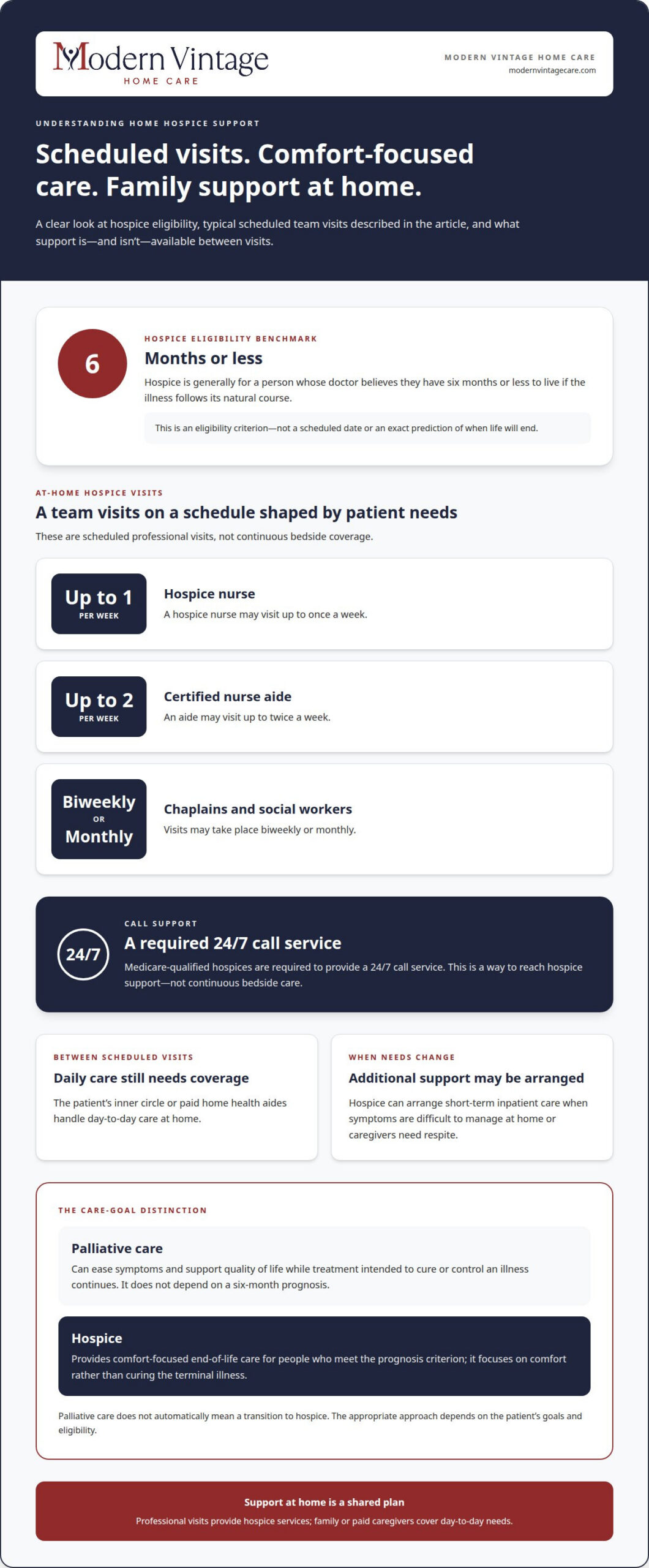
Hospice is end-of-life care focused on comfort for people with a terminal illness. According to the Centers for Medicare & Medicaid Services, hospice care is generally for a person whose doctor believes they have six months or less to live if the illness runs its natural course.
The six-month prognosis is an eligibility criterion, not a scheduled date or a prediction of exactly when life will end. Hospice focuses on comfort rather than treatment intended to cure the terminal illness. The patient’s needs and goals, along with the caregivers’ role, help shape the care plan.
To find home hospice or palliative care nearby, start with the patient’s health plan directory or the clinician coordinating their treatment. Ask what care is available at home and how each option fits the patient’s goals.
| Option | Eligibility | Purpose | Treatment approach |
|---|---|---|---|
| Palliative care | Serious illness; no six-month prognosis required | Relieve symptoms and support quality of life | May accompany treatment intended to cure or control illness |
| Hospice | Doctor believes the patient has six months or less if the illness follows its natural course, according to the Centers for Medicare & Medicaid Services | Provide comfort-focused end-of-life care | Focuses on comfort rather than curing the terminal illness |
Choose based on the patient’s treatment goals: palliative care can support ongoing treatment, while hospice is for a comfort-focused approach and patients who meet the stated prognosis criterion.
Both options can address pain and other symptoms, but they serve different points in a person’s care. Receiving palliative care does not automatically mean transitioning to hospice. The decision depends on whether the person’s goals still include treatment aimed at the illness or have shifted to comfort-focused end-of-life care.
Palliative care alongside curative treatment
Receiving palliative care doesn’t automatically mean stopping treatment for a serious illness. The care team can address symptoms while the patient continues an illness-focused plan, such as chemotherapy, dialysis, or surgery.
Yes. A patient can receive palliative care at home while continuing curative treatment. For example, someone having chemotherapy may receive support for pain, fatigue, or shortness of breath alongside cancer treatment. Palliative care can begin at diagnosis, during treatment and follow-up, or later in the illness.
This approach adds symptom support to the existing treatment plan rather than replacing it. The care team considers concerns such as disrupted sleep, depression, or treatment-related discomfort, then coordinates support around the patient’s goals. Care may address physical, emotional, and spiritual well-being, and help patients and families discuss decisions as needs change.
Hospice takes a different approach. It centers on comfort for a terminal illness, rather than treatment intended to cure that illness. According to the Centers for Medicare & Medicaid Services, a six-month prognosis is an eligibility benchmark when the illness runs its natural course. Care therefore shifts toward end-of-life support rather than curative treatment for the terminal condition.
Home hospice can include visits from nurses and certified nurse aides, with frequency based on the patient’s needs. A hospice nurse may visit up to once a week, and an aide up to twice a week. Chaplains and social workers may visit biweekly or monthly. These are scheduled visits, not continuous bedside coverage.
That distinction matters for families planning daily support. Hospice team members provide professional services during visits, while the patient’s inner circle or paid home health aides handle day-to-day care at home. Hospice can also arrange short-term inpatient care when symptoms are difficult to manage at home or caregivers need respite. A 24/7 call service is required for Medicare-qualified hospices, according to the Centers for Medicare & Medicaid Services.
Insurance coverage also affects treatment choices. During hospice enrollment, insurance does not cover curative treatment for the terminal illness. Palliative care provided separately from hospice may involve copays, and coverage depends on the health plan and services. Families should clarify which care is billed through hospice and which remains part of the patient’s other treatment.
In practical terms, consider the treatment goal first: if the patient wants to continue chemotherapy, dialysis, or another curative approach, palliative care may support that plan. If care is focused on comfort at the end of life, hospice may fit better. For help with family routines during hospice, explore support for caregivers at home.
Care teams and caregiver responsibilities
At home, care teams and family members contribute in different ways. The professional team helps manage symptoms and coordinate care, while caregivers provide familiar support between visits. Knowing who handles each part can help families plan daily routines around the patient’s needs.
Home palliative care can include help managing pain, disrupted sleep, fatigue, shortness of breath, and depression. The team may include physicians, nurses, social workers, and chaplains. For example, a nurse may address symptom concerns while a social worker helps the family consider practical and emotional needs. The team depends on the program and the patient’s care plan.
Home palliative care focuses on symptom support and quality of life during serious illness. It doesn’t automatically include continuous, around-the-clock support. A 24/7 call service is required for Medicare-qualified hospices, according to the Centers for Medicare & Medicaid Services. That hospice requirement shouldn’t be assumed to apply to every home palliative care program.
Hospice teams can include physicians, nurses, social workers, case managers, spiritual counselors, volunteers, and bereavement counselors. Their work may address physical symptoms as well as anxiety, insomnia, and depression. Hospice also considers the needs of family members and caregivers, including grief support. Team members provide different forms of care, rather than replacing the family’s daily presence at home.
For someone receiving hospice at home, day-to-day care comes from the patient’s inner circle or paid home health aides. This may mean helping maintain familiar routines and sharing observations about changes in comfort with the care team. A simple handoff can help: describe the symptom, when it began, and what affects it. This gives the team useful context for planning care.
Caregiver support matters when the demands of a terminal illness become difficult to sustain. Hospice may arrange short-term inpatient care when symptoms are too difficult to manage at home or caregivers need respite. Hospice respite care can last from a few hours to several weeks. Families can use that time to rest or attend to other responsibilities while the patient receives care.
Bereavement support is another way hospice can help families. It recognizes that care needs may continue after a patient’s death, as relatives adjust to loss. The hospice team may include counselors who support family members and caregivers. This differs from symptom-focused visits, which address the patient’s comfort during care.
When comparing options, consider three practical needs: which symptoms require support, what daily help caregivers can provide, and whether respite or emotional support matters. Both palliative care and hospice address comfort, but their teams and services follow different care goals. The arrangement should make clear whom to contact about changing symptoms and who supports the patient between professional visits.
Medicare, Medicaid, and private insurance coverage
Coverage depends on whether care is billed through a hospice benefit or provided separately as palliative care. Medicare, Medicaid, and private plans may cover different services, so identifying the type of care helps families understand potential medical expenses and caregiver support.
For eligible patients, the Medicare hospice benefit can include hospice services, durable medical equipment, inpatient hospice care, and respite care. According to the Centers for Medicare & Medicaid Services, Medicare hospice care may be provided through two 90-day benefit periods, followed by an unlimited number of 60-day benefit periods. These are benefit periods, not limits on how long a person can live.
Medicaid and most private insurance plans offer a hospice benefit. Covered care is organized through hospice, while services outside that benefit may be billed separately. For example, a family reviewing a statement can distinguish hospice-provided equipment from medical services billed under another part of the patient’s coverage. This can clarify what the hospice benefit covers and where other plan terms apply.
Palliative care services are available through Medicare and typically through other health insurance, but they are not packaged as one standard benefit. Medicare, Medicaid, and private plans may cover palliative treatments and medication; a copay may apply. Care provided separately from hospice may also involve copays. Services received, billing, and the patient’s specific plan all affect coverage.
Home-based palliative care is covered in most cases by Medicare, Medicaid, and most private insurance plans, though details vary. A patient receiving palliative care alongside treatment for a serious illness may have separate claims for medical appointments, medication, or symptom support. Reviewing claims by service can help families understand how their plan processes care without assuming every palliative service uses the same benefit.
To make coverage easier to follow, separate the questions into practical steps:
- Identify whether the care is provided through hospice or separately as palliative care.
- Group billed services by type, such as medication, equipment, or inpatient care.
- Check how Medicare, Medicaid, or the private plan applies its benefit to each service.
- Note any copay shown for palliative care billed outside hospice.
Medicare coverage can support hospice care across successive benefit periods, while separately delivered palliative care is billed through applicable health coverage. Medicaid and private plans also offer hospice benefits, and palliative care coverage varies by service and plan. Keeping the type of care and each billed service clear can reduce confusion and help families understand insurance as they plan care.
Palliative Care and Hospice Care Compared
The practical difference is not simply where care happens. It is whether the patient’s plan continues to treat the illness or centers on comfort, and how each care team supports the patient and family. For families comparing palliative care at home vs hospice, the patient’s goals are a useful starting point.
| Care factor | Palliative care | Hospice care |
|---|---|---|
| Primary focus | Pain and symptom relief alongside serious-illness care | Comfort-focused end-of-life care |
| Treatment goals | May accompany treatment intended to cure or control disease | Focuses on comfort rather than curing the terminal illness |
| Care settings | Home, hospital, nursing home, or outpatient clinic | Where the patient lives, including a home or care facility |
| Care team | May include physicians, nurses, social workers, and chaplains | Can include nurses, social workers, spiritual counselors, and other team members |
| Moving between options | No required transition to hospice | Patients may leave hospice if they want to pursue curative treatment |
Both approaches include pain and symptom relief, and both can support patients in community settings. The difference is the focus of the care plan. A patient receiving palliative care may continue treatment for the illness, while hospice organizes care around comfort and the needs of the patient and family.
The team’s relationship with existing clinicians also matters. Hospice works collaboratively with current healthcare providers, primarily the primary care physician. That coordination can help the care provider understand the comfort plan and the patient’s priorities. Palliative care teams may also work alongside other clinicians while addressing physical, emotional, and spiritual needs.
Consider a patient whose pain affects sleep but who still wants treatment for the illness. Palliative care may address the pain while that treatment continues. If the patient’s goals shift toward comfort at the end of life, hospice may better match those priorities. A family’s need for respite, emotional support, or help coordinating care can also inform the discussion.
Choosing hospice does not make the decision permanent. Patients may leave hospice at any time, including to pursue curative treatment, and those receiving palliative care are not required to move into hospice. These are distinct paths, not automatic steps in a single progression.
A practical comparison of palliative care at home vs hospice starts with the patient’s current goals: ongoing illness-focused treatment or comfort-centered care. If the family also needs support with home routines, discuss support for your family.
Modern Vintage Home Care: Hospice Support & Respite Care
Modern Vintage Home Care offers Hospice Support & Respite Care for families who need extra help supporting a loved one at home. This support can complement hospice services by helping with everyday routines and giving family caregivers time to rest or attend to other responsibilities.
If memory changes are part of the family’s care needs, Alzheimer’s & Dementia Care offers relevant in-home support. Companionship can also bring conversation and a familiar presence to daily life. These services support comfort and connection at home; they do not replace the hospice team’s medical care.
Contact Modern Vintage Home Care to discuss hospice support and respite care for your family.
Choose the Next Step That Fits Your Family
The decision between palliative care at home and hospice is also an opportunity to clarify what matters most in daily life. Consider the patient’s wishes, the family’s capacity to provide support, and which routines could benefit from extra help. These priorities offer a practical starting point for discussing care.
If the family needs assistance beyond clinical care, in-home support can complement the hospice team’s work. Modern Vintage Home Care offers 24-Hour Care, which may be relevant when a loved one needs ongoing help with everyday routines. The aim is to support comfort at home while respecting the care plan established by the patient’s healthcare team.
Bring the family’s priorities and questions together, then take one manageable step toward support. Contact Modern Vintage Home Care to discuss care that may fit your household’s needs. With a clear plan and the right support, your family can focus on time together.
Frequently Asked Questions
How can palliative care help me and my loved one?
Palliative care can ease symptoms and address concerns affecting everyday life. For example, a care team can help a patient discuss pain, fatigue, or shortness of breath and consider how these symptoms affect sleep or family routines. Support can also address emotional and spiritual well-being. Families can share what matters most to the patient to help shape care around personal priorities.
Can I still get treatment for my illness?
Yes. Palliative care can accompany treatment intended to cure or control an illness. For example, someone receiving dialysis or chemotherapy may also receive help managing symptoms. This differs from hospice, which focuses on comfort rather than curing the terminal illness. Discussing the treatment plan and symptom support together can keep the patient’s goals central to care decisions.
What Kind of Patients Choose Palliative Care?
People living with serious illnesses may choose palliative care when symptoms or treatment affect daily life. Examples include cancer, heart disease, lung disease, or kidney failure. A patient may seek support for pain, fatigue, disrupted sleep, or emotional concerns while continuing other treatment. For families comparing palliative care at home vs hospice, the patient’s current needs can help frame the discussion.
What is end-of-life care?
End-of-life care supports a person nearing the end of life, with attention to comfort, symptoms, and personal wishes. It can also address the needs of family members and caregivers. For example, a care plan may include emotional or spiritual support alongside symptom relief. Hospice is a form of end-of-life care for eligible patients whose goals focus on comfort.
Where is palliative care provided?
Palliative care can take place at home, in a hospital, nursing home, or outpatient clinic. The setting depends on the patient’s circumstances and the care provided. For instance, someone living at home may receive palliative support while attending appointments for illness treatment. The care team can coordinate symptom support around the setting where the patient receives other care.
Who can receive this type of care?
People of any age who need support for a serious illness can receive palliative care; it isn’t limited to older adults. A patient may benefit if pain, breathing difficulty, fatigue, or emotional distress affects daily life. For example, a younger person receiving cancer treatment may need symptom support just as an older adult with heart disease might.
What is the difference between palliative care and hospice care at home?
The key distinction in palliative care at home vs hospice is whether the patient’s care plan continues illness-focused treatment or centers on comfort. Palliative care may accompany treatment for the illness, while hospice provides comfort-focused care for eligible patients. Someone who wants to continue treatment may consider palliative support; someone whose goals have shifted may consider hospice.
Who qualifies for home hospice in the United States?
In the United States, hospice is generally for a patient whose doctor believes they have six months or less to live if the illness runs its natural course, according to the Centers for Medicare & Medicaid Services. Hospice focuses on comfort. The prognosis is an eligibility criterion, not a statement that the patient will die on a particular date.
