
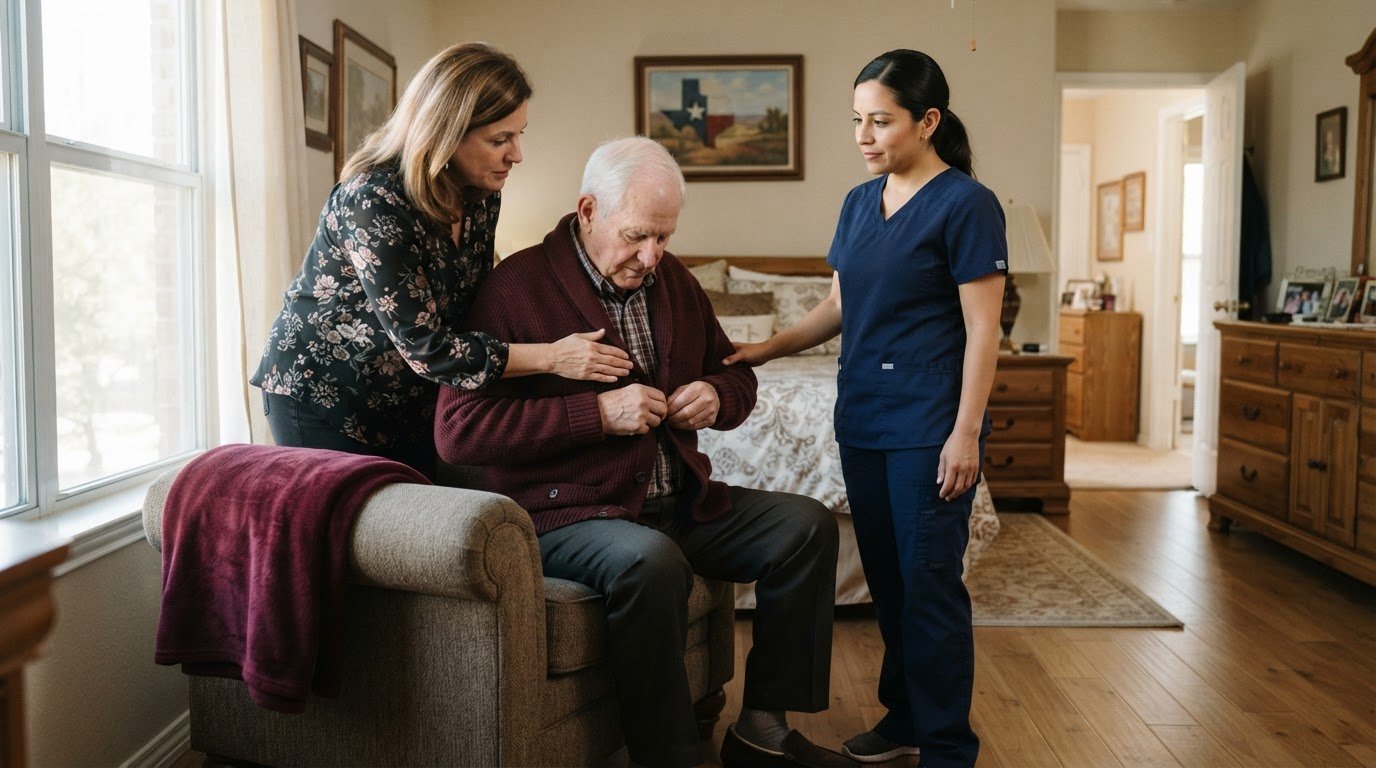
A safe return home depends on more than the discharge date. For Sugar Land families, discharge planning support means understanding the care needed after a hospital stay and arranging an appropriate next step with the hospital team. That may mean returning home with family support, arranging in-home care, or moving to a rehabilitation or senior-care setting. Plans can change as a person’s health, abilities, and support needs become clearer.
It’s understandable to feel unsure about who will manage medications, appointments, transportation, and everyday routines after your loved one leaves the hospital. Dementia can add another layer: familiar surroundings, safe access, and consistent support may all affect the transition.
This guide explains what discharge planning involves, how your family can share useful information and coordinate with clinicians, and what to clarify before leaving the hospital. You’ll also learn how to raise concerns if the plan changes and consider dementia-related needs at home, so the next steps feel organized and centered on your loved one.
Key Takeaways
- If discharge options change, revisit the care plan around your loved one’s current abilities, safety, medical needs, and available support.
- Coordinate with clinicians by clarifying who will handle medications, follow-up appointments, transportation, and day-to-day check-ins.
- Before leaving the hospital, ask what changed in the diagnosis or treatment, what symptoms need attention, and which daily activities are safe.
- If the proposed plan feels difficult to manage, explain the specific concerns and the support your family can realistically provide.
- For a loved one with dementia, consider home access, fall risks, bathroom safety, and whether someone can be available overnight.
WHAT IF MY INITIAL DISCHARGE OPTIONS CHANGE DURING HOSPITALIZATION?
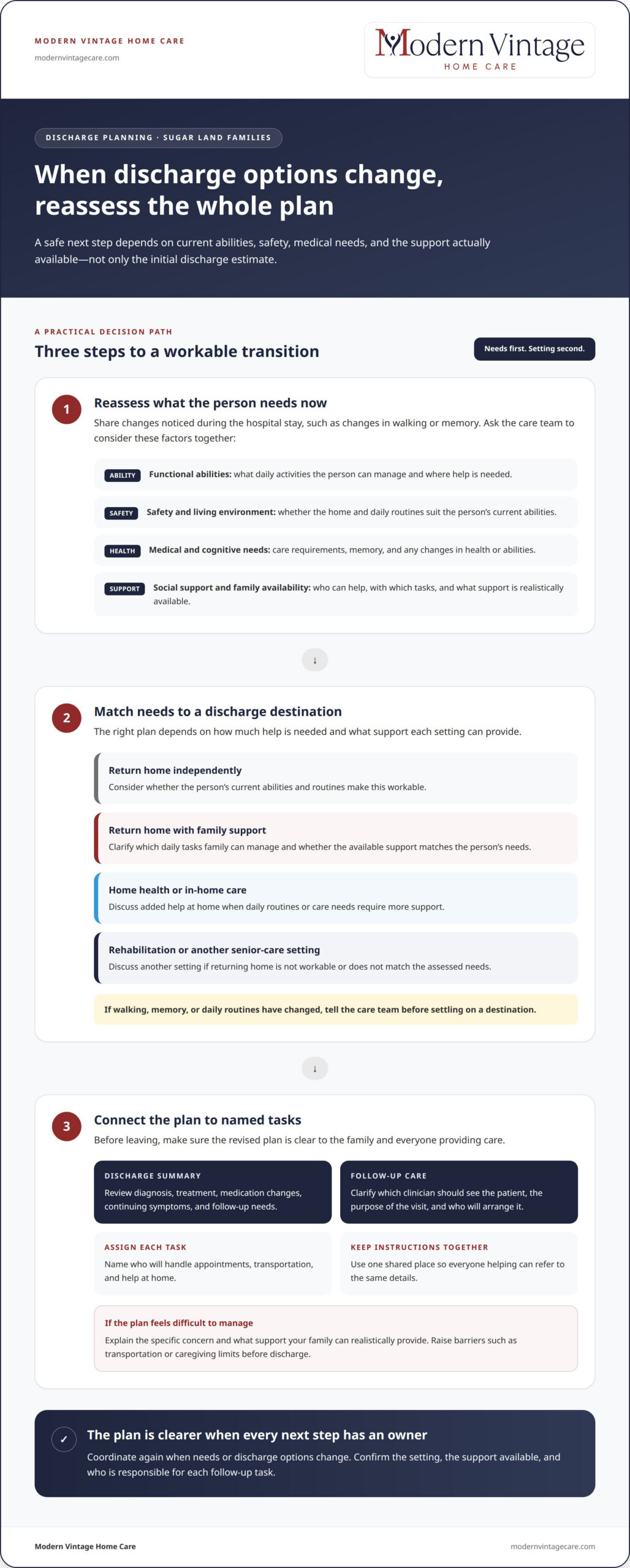
Caregiver instruction can be discussed with hospital clinicians, who can explain tasks tied to the planned care; respite support can help families arrange caregiving breaks. If discharge options change, coordinate again around the person’s current abilities, safety, medical needs, and available support.
Care Coordination After a Stay
Care coordination matches a person’s needs after a hospital or rehabilitation stay with appropriate support. An assessment may consider functional abilities, safety, medical and cognitive needs, the living environment, social support, and family availability. If walking or memory changes during hospitalization, tell the care team. Then clarify who will handle each next step, such as arranging appointments or organizing help at home.
Discharge Destinations and Care Settings
A discharge destination is where someone continues recovery after leaving the hospital. Options may include returning home independently, returning home with family support, receiving home health or in-home care, or moving to rehabilitation or another senior-care setting. The right plan depends on how much help the person needs and what support is available. For example, difficulty managing daily routines may mean discussing additional help before choosing to return home.
Discharge Summaries and Follow-Up Care
A discharge summary is a written account of the hospital stay and recommended follow-up care. Use it to understand the diagnosis, treatment provided, medication changes, continuing symptoms, and follow-up needs. If the destination changes, ask the care team how the summary and appointments fit the revised plan. Keep the instructions together so everyone helping at home can refer to the same details.
When considering in-home care or senior living, compare the person’s current needs with the practical support each setting can provide. Consider whether family members can help with daily routines, whether the home suits the person’s abilities, and whether another setting better matches the plan. A nearby senior-care community may be worth discussing when returning home isn’t workable. Base the decision on assessed needs, not only the initial discharge estimate.
After rehabilitation or a residential program, a clear routine helps families turn recommendations into manageable steps. Write down the next appointment, who will arrange it, and what support is needed between visits. If the plan includes several services, clarify who coordinates each one and how updates reach the family. This record can reveal a gap, such as unassigned transportation, before the move or return home.
Family involvement and coordination with clinicians
Family involvement means sharing practical knowledge that helps clinicians plan around the person’s daily life. Choosing one point of contact can organize updates and reduce confusion when several relatives are helping.
Share What You Know About Daily Life
Family members can describe routines, abilities, and changes that may not be obvious during a hospital stay. For example, explain whether your loved one usually prepares meals independently or needs reminders to follow familiar steps. Mention communication preferences, mobility challenges, and the support realistically available at home. These details help clinicians understand the person beyond the immediate reason for hospitalization.
Keep observations specific and neutral. Instead of saying, “Dad can’t manage,” describe what happened, such as forgetting a familiar task or needing help to stand. If relatives have different information, explain the difference: one may see daytime routines, while another knows what happens overnight. Together, these perspectives can help the care team consider appropriate support.
Coordinate Medical Advocacy and Appointments
Medical advocacy means helping your loved one understand care recommendations and communicate concerns to clinicians. Ask who will explain the plan, who can help your relative remember details, and how the family should share questions. If your loved one wants family involved, agree on who will speak during discussions and who will take notes.
For follow-up, clarify which doctor or clinician should see the patient and who will arrange the appointment. Write down the clinician’s name, the purpose of the visit, and any instructions. If transportation is a barrier, raise it before discharge so the plan accounts for it. Family advocacy supports informed discussion; it doesn’t replace the patient’s voice or make relatives the decision-makers.
Keep Hospital and Caregiver Communication Connected
Caregiver coordination means ensuring that everyone supporting your relative receives clear, consistent information. Choose a family contact to share updates with relatives and anyone providing day-to-day help. Before discharge, ask clinicians what information caregivers need to follow the agreed plan safely. Clarify whom to contact if instructions are confusing or the person’s needs change.
- Record key instructions in one shared place, such as a family notebook.
- Assign each follow-up task to a specific person, rather than leaving it to “someone.”
- Tell clinicians about scheduling or caregiving limits that could affect the plan.
For families balancing ongoing care with work or other responsibilities, Hospice Support & Respite Care may offer relevant support. A defined respite arrangement can give caregivers time away while keeping the family’s care coordination in view.
For someone receiving addiction treatment, family members may share insights about aftercare needs, but they cannot dictate the patient’s discharge plan. Keep communication focused on the patient’s needs and the clinician’s recommendations.
Questions to ask before leaving the hospital
A discharge checklist is a brief record of what your family needs to know before leaving the hospital. Use it to clarify the diagnosis, treatment, medication instructions, follow-up care, and daily assistance your loved one may need. Ask the care team to explain unfamiliar terms in plain language, then write down the answers and the clinician’s name.
Diagnosis and Treatment
The diagnosis and treatment summary explains what the hospital identified and what care your loved one received. Ask, “What diagnosis was made, and what treatment was provided?” Then clarify which symptoms may continue during recovery and what changes should prompt a call to a doctor or a return to the emergency room. For example, ask whether ongoing discomfort is expected and which worsening symptoms need prompt attention.
If an explanation is unclear, repeat it in your own words and ask the clinician to correct anything you misunderstood. This gives your family a chance to resolve confusion before the person leaves. Record the instructions alongside the discharge summary so the family member providing help can refer to the same guidance at home.
Medication Instructions
A medication review identifies which medicines were added, stopped, or changed during the hospital stay. Ask the clinician to explain each change and when every prescribed medication should be taken. If a medicine was stopped, clarify that change rather than relying on an older list at home. Keep the updated instructions together, especially if several relatives may help.
Ask how the medication plan fits the person’s usual routine. For example, clarify what the instructions say about a dose taken at a different time than expected. The hospital team can explain the prescribed directions and where to raise questions. Don’t rely on memory alone; record the answer in the medication list provided with the discharge information.
Follow-Up Care
A follow-up plan identifies the doctors, appointments, tests, or therapy needed after discharge. Ask which clinicians should see your loved one, the purpose of each visit, and who will schedule it. If a test or appointment is recommended, write down the next step and who is responsible for arranging it. Confirm how the family will learn when the appointment details are set.
If the discharge plan includes ongoing care after addiction treatment, ask about connections with local doctors and mental health professionals for monitoring. Clarify how prescribed medication fits the plan and whether counseling, outpatient clinical services, or a support group is recommended. These details help the person and family understand what follow-up involves after leaving the hospital.
Daily Activities and Safety
A daily-activity review clarifies which routines your loved one can manage safely and where help may be needed. Ask about walking, stairs, bathing, dressing, using the toilet, preparing meals, driving, lifting, managing medication, and caring for a wound. Consider each activity separately: needing help with stairs, for example, may affect access to the bedroom or bathroom.
Describe the help available after discharge and ask how the plan addresses any gaps. If one person can help with meals but not wound care, make that distinction clear. Before leaving, confirm whom to contact with questions about written instructions, follow-up, or changes in symptoms.
Raising concerns about a discharge plan
A discharge concern is a specific gap between the proposed plan and the support a person will have after leaving care. Describe the gap clearly, then explain what could help address it. For example, if nobody can assist with meals during the day, say so directly rather than calling the entire plan unworkable.
Start with the person coordinating discharge, such as the hospital social worker or another care-team member. Explain the concern with a concrete example: “She needs help getting dressed, and nobody is available in the morning.” Then ask how the plan can address that need. If a recommendation depends on family support, describe who is available and when. Specific details give the team something practical to discuss.
Separate immediate safety needs from preferences. A concern about getting into the home, managing basic routines, or having a safe place to stay calls for direct discussion before the move. A preference about timing or routine still matters, so explain why it’s important. For example, describe how a familiar evening routine helps someone settle, then ask how to keep it part of the plan.
- Name the exact task or support that is missing.
- Give one example of what could happen without that support.
- Explain which family members can help and their limits.
- Ask what change to the plan could address the gap.
- Write down the response and who will follow through.
If the concern remains after the first discussion, return to the care team with the specific unanswered question. For example, explain that the plan mentions follow-up care but doesn’t identify who will arrange transportation. Ask which person or service will handle that task, and request that the agreed next step be added to the written instructions. This keeps the discussion focused on a solvable issue.
For someone leaving residential addiction treatment, safe accommodation immediately after treatment can support recovery. If the proposed home environment doesn’t feel safe or supportive, explain the specific concern, such as exposure to substance use or having no stable place to stay. Ask the treatment team to discuss suitable housing and continuing support. Family members can share what they know about the living situation while keeping the conversation centered on the patient’s needs.
Keep a brief record of each conversation: the concern raised, who responded, and the next agreed action. If the plan changes, note which instructions are replaced and which still apply. Before the person leaves, restate any unresolved issue and ask who will address it. This helps the family understand what the plan includes and what remains unsettled.
Dementia and discharge planning
Dementia-focused discharge planning adapts the transition home to a person’s memory, routines, and safety needs. Coverage for discharge planning and post-discharge services in Texas depends on the insurance plan, eligibility, and specific service. Ask the plan administrator how each recommended service is handled rather than assuming all follow-up support falls under one benefit.
Prepare by describing how your loved one manages familiar routines, communicates discomfort, and responds to changes in surroundings. Someone who becomes confused in unfamiliar places may need a calm arrival and a familiar family member nearby. Share routines that help the person feel settled, such as eating at the usual time or keeping familiar objects in view. This context helps the care team plan the transition.
Before the return home, assess the route from the entrance to the rooms your loved one uses. Check stairs, bathroom access, loose rugs, clutter, and other fall hazards. Consider whether someone can be available overnight, especially if the person wakes, wanders, or needs help reaching the bathroom. If a stairway or bathroom creates a practical barrier, raise it before the plan is finalized.
A dementia-ready home plan identifies who will provide immediate help and which tasks they can manage. For example, one relative may prepare meals, while another can stay overnight but not provide daytime help. State those limits clearly. The plan should reflect actual family availability, not assume relatives can cover every part of the day.
Build consistency into the first days at home by keeping essential information and familiar routines easy to find. Place written care instructions where family caregivers can refer to them. Keep commonly used items in predictable locations, and explain new routines in simple, calm language. If several relatives are involved, agree on how to share updates so the person receives consistent support.
Planning should also cover what family members will do if the person’s condition or needs change. Write down whom to contact and what immediate steps the family will take. For someone with a history of substance use, include a step-by-step response plan for a possible relapse, including whom to call and what support to involve. Clear responsibilities can help relatives respond without improvising during a stressful moment.
When a loved one’s memory needs make the transition home difficult to coordinate, explore Alzheimer’s & Dementia Care as a way to support routines and daily well-being after discharge.
Modern Vintage Home Care: Hospice Support & Respite Care
Modern Vintage Home Care offers Hospice Support & Respite Care for families caring for a loved one at home. If caregiving responsibilities leave little time to rest or attend to other needs, respite care can give family caregivers a break. Hospice support may be relevant when a loved one is receiving hospice care.
For a person living with dementia, Alzheimer’s & Dementia Care can support memory-related needs and daily routines. Companionship can also provide social connection. Consider these services when arranging support at home alongside recommendations from your loved one’s care team.
If you’d like to discuss support for your family, contact Modern Vintage Home Care.
Take the Next Step at Your Family’s Pace
The transition home can begin a new routine, not end your family’s planning. As needs become clearer, adjust daily support to your loved one’s comfort, preferences, and changing abilities. For Sugar Land families seeking discharge planning support, arranging help at home may make everyday life more manageable.
Modern Vintage Home Care offers Alzheimer’s & Dementia Care, 24-Hour Care, and Companionship. These services may suit families who need dementia-focused assistance, more continuous support, or friendly presence in daily life. Choose the kind of help that fits your relative and your family’s situation.
Contact Modern Vintage Home Care to discuss support for your family. A thoughtful next step can help you shape a home routine with care and dignity.
Frequently Asked Questions
Quick Answer: What Is Hospital Discharge Planning?
Hospital discharge planning organizes the transition from a hospital to the next care setting. It connects the person’s current needs with suitable support, which may include returning home, rehabilitation, or another senior-care setting. For example, clinicians may consider whether the person can manage daily activities and what help is available at home. The plan also identifies follow-up needs, so patients and families understand what comes next.
What Happens After the Hospital’s Discharge Plan Ends?
After the immediate transition, ongoing support depends on the person’s needs and care-plan recommendations. Follow-up may involve doctor’s appointments, continued treatment, community support, or help with daily routines. Families can use the written discharge instructions to track next steps and share relevant updates with clinicians. If needs change, contact the care team involved in follow-up to discuss appropriate support.
WHAT CAN I DO IF I DISAGREE WITH ANY AREA OF MY DISCHARGE PLAN?
Tell the hospital social worker or care team what concerns you and why the plan doesn’t fit the patient’s needs. Describe the specific issue, such as a recommended destination that isn’t accessible or a care task no family member can take on. Ask the team to discuss alternatives and explain how each addresses the concern. Keep your loved one involved whenever possible.
WHO AND WHAT DETERMINES WHEN I AM READY FOR DISCHARGE?
The hospital care team considers the patient’s condition and support needs before planning discharge. Relevant factors may include functional abilities, safety, medical and cognitive needs, the living environment, and available social or family support. Changes in a patient’s abilities or care needs during the stay can affect the plan. Ask the team to explain how the recommended setting matches the patient’s current needs.
WHO PARTICIPATES IN DEVELOPING MY DISCHARGE PLAN?
The patient and hospital care team are central to discharge planning. Family members can share information about everyday needs and available support, and a social worker or other clinician may help coordinate details. The patient can tell the team whom they want involved. For example, a relative who knows the person’s home routine can explain what support is realistically available after discharge.
What discharge planning support is available for families in Sugar Land, Texas?
Families seeking discharge planning support in Sugar Land can coordinate with hospital clinicians about the next care setting, follow-up needs, and in-home assistance. Modern Vintage Home Care provides Personal Care, Medication Management, and Quick Care Services for daily support needs. These are non-medical home-care services; discuss clinical treatment and medical follow-up with the hospital care team. The right combination depends on the person’s needs.
How can families in Sugar Land arrange home health care after a hospital stay?
Discuss home health with the hospital care team before discharge, and clarify which clinical services are recommended and who will coordinate them. Home health is different from non-medical help with daily routines. Medicare and most health-insurance plans generally don’t cover non-medical home care; Medicaid coverage depends on eligibility. Distinguish the clinical services in the discharge plan from separate in-home assistance.
What steps should families take before a loved one is discharged from the hospital?
Before discharge, make sure one family contact understands the plan and can share it with others involved in the transition. Keep the written instructions, medication list, and follow-up details together, and note unresolved questions for the care team. Confirm that everyone responsible for an agreed task understands their role. For Sugar Land families coordinating help from different relatives, a shared written record can reduce crossed messages.