
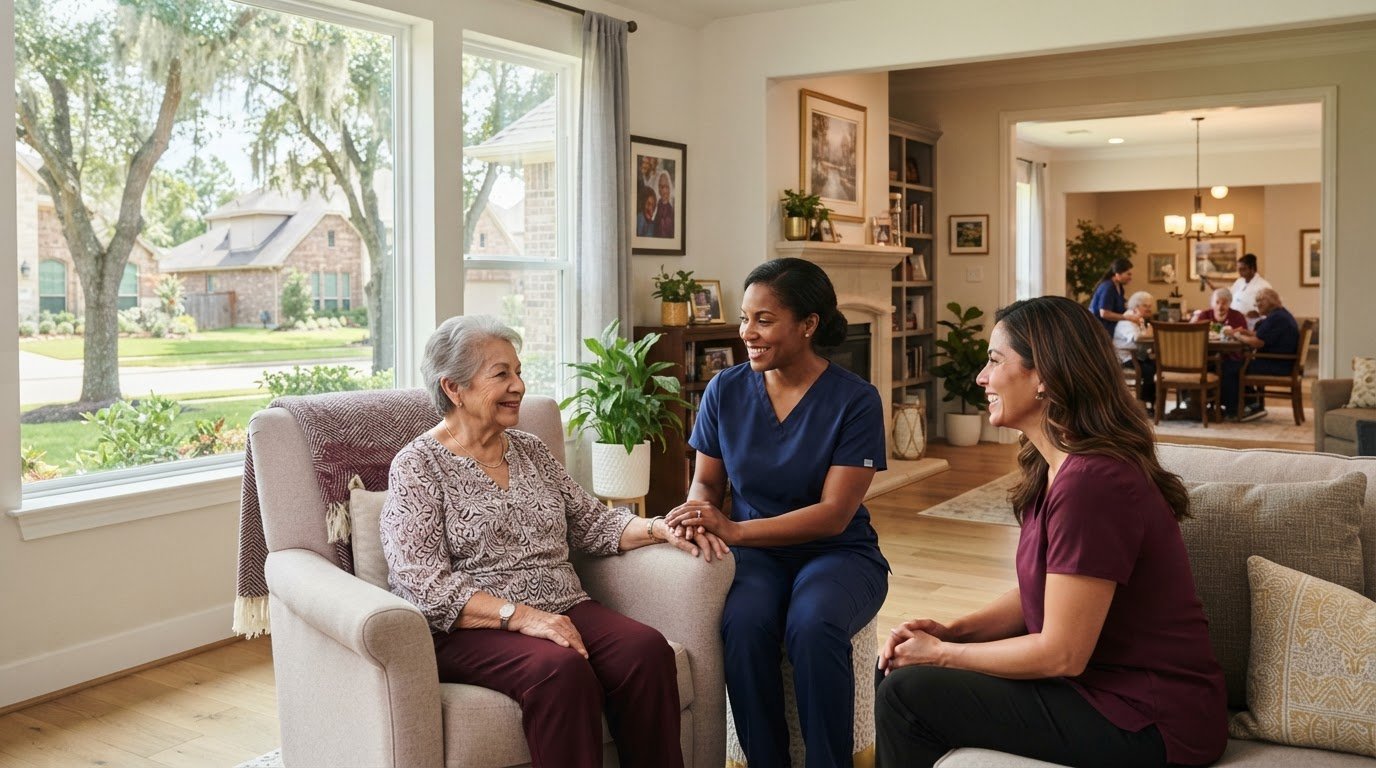
A nursing home may not be the only safe next step when living alone becomes a concern. The right choice among alternatives to nursing homes in Sugar Land depends on the help your loved one needs each day, the level of supervision required, and how important it is to preserve familiar routines and independence.
It’s understandable to feel unsure: in-home care, assisted living, and nursing homes provide different kinds of support, and their names don’t always make those differences clear. Choosing a setting that offers too little help can leave important needs unmet. At the same time, a move to a more structured setting may not be necessary if appropriate support can be arranged at home.
This guide compares what each option can and cannot provide, so you can match care to your loved one’s daily needs and preferences. You’ll learn how in-home caregiving may support routines at home, when assisted living may offer a more structured setting, and when nursing-home care may be appropriate for more complex needs. You’ll also find practical questions to ask Sugar Land-area providers as your family weighs the options.
Key Takeaways
- Compare in-home care, assisted living, and nursing homes by the daily support and clinical care each can provide.
- When exploring alternatives to nursing homes in Sugar Land, start with your loved one’s safety needs, preferences, and familiar routines.
- Decide whether in-home support fits by considering how much oversight is needed, including when a caregiver is not present.
- Before choosing a home care provider, ask about service scope, care-plan communication, supervision, and local availability.
- Companionship, personal care, and respite may support daily life at home, but skilled clinical care may require a different provider or setting.
Alternatives to Nursing Homes in Sugar Land: Start With the Care Need
Concern about a loved one’s safety can make every option feel urgent. But a change in routine or a difficult week doesn’t automatically mean it’s time to move. Start by identifying what help is needed, when it is needed, where it can be provided, and what your loved one wants. Comparing alternatives to nursing homes in Sugar Land is about finding an appropriate level of care, not choosing a setting based on its name alone.
A nursing home alternative is a different care setting, not a universal substitute for nursing-home care. Families may consider support at home, assisted living, or another community setting. Each offers a different mix of help with daily routines, supervision, and access to clinical care. Long-term care options can vary widely, so compare the services and limits of each setting rather than assuming they’re interchangeable.
Non-medical home care can help with daily routines, but it doesn’t provide skilled nursing care. If a person needs clinical assessment or treatment from medical professionals, discuss those needs with a qualified health care provider. Home-based caregiving may support everyday life, but it shouldn’t be treated as a replacement for clinical care.
What families usually mean by a nursing home alternative
Often, families are weighing whether their loved one can remain at home with support or would be better served in a residential community. Help with personal routines and companionship is different from clinical services delivered by qualified medical professionals. Home care isn’t automatically safe or sufficient for everyone. The fit depends on the person’s needs, the supervision available, the home environment, and their preferences.
Which changes suggest it is time to compare care options?
Look for changes that make daily life harder or less predictable. These can be reasons to talk as a family and seek a professional assessment, not diagnoses in themselves. Consider whether your loved one:
- Is having more difficulty with everyday activities, such as dressing or bathing.
- Seems increasingly isolated or has less regular social contact.
- Is missing familiar routines, appointments, or medication reminders.
- Would benefit from more supervision or help coordinating daily support.
When possible, include the older adult in the conversation. Ask what matters most to them, such as staying in familiar surroundings, keeping a daily routine, or having more opportunities for social connection. Their perspective can help your family compare options respectfully and identify questions for providers or health care professionals.
Compare In-Home Care, Assisted Living, and Nursing Homes
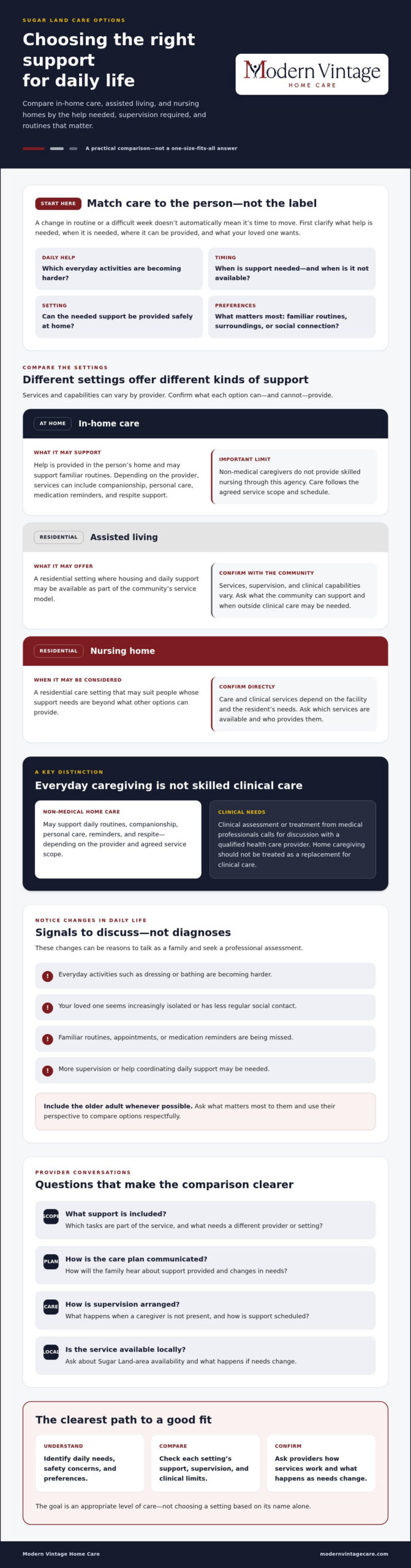
These options differ in more than location. The setting affects how daily help is arranged, who provides it, and whether clinical care is part of the service. Use this comparison as a starting point, then confirm the details directly with each Sugar Land-area provider. The Texas long-term care services resource can also help families explore care options in the state.
| Care setting | Setting and daily support | Supervision and clinical needs | Questions to ask |
|---|---|---|---|
| In-home care | Support is provided in the person’s home and may help maintain familiar routines. Depending on the provider, services can include companionship, personal care, medication reminders, and respite support. | Care is arranged according to the agreed service scope and schedule. Non-medical caregivers don’t provide skilled nursing through this agency. | Which tasks are included? How is support scheduled and communicated? What happens if needs change? |
| Assisted living | A residential setting where housing and daily support may be available as part of the community’s service model. | Services, supervision, and clinical capabilities vary by provider. Ask what the community can support and when outside clinical care may be needed. | How are residents assessed? What support is included? How are changes in care needs handled? |
| Nursing home | A residential care setting that may suit people whose support needs are beyond what other options can provide. | Care and clinical services depend on the facility and the resident’s needs. Confirm directly which services are available and who provides them. | What care can the facility provide? How is supervision arranged? What would prompt a care transition? |
Care settings differ in environment, daily support, supervision, and clinical scope. The best fit depends on the person’s needs and the services each provider can actually deliver.
When in-home care may fit a family’s priorities
Home care may appeal to someone who values familiar surroundings and wants help woven into existing routines. A caregiver might provide companionship, assist with personal care, offer medication reminders, or give family caregivers respite. If medical needs change, ask a clinician what level of care is appropriate. Non-medical caregiving isn’t a substitute for medical assessment or skilled clinical services.
How assisted living and nursing homes differ
Assisted living and nursing homes are distinct settings, not interchangeable labels. Their services and clinical capabilities can vary, so don’t rely on general descriptions alone. Ask each provider how it assesses needs, arranges supervision, defines included services, and responds when a resident needs more support. If you’re weighing care at home, you can also review non-medical in-home care support as one option among the alternatives to nursing homes in Sugar Land.
Is In-Home Care Enough? Match Support to Safety and Daily Needs
In-home care can preserve familiar routines, but it isn’t automatically the safest or most suitable choice for every person. Compare the support your loved one needs with what a provider can deliver, including what happens when a caregiver isn’t present. A check-in, reminder, or scheduled visit can help with routines, but it can’t guarantee safety or replace clinical oversight.
Weigh the benefits and limitations together:
- Familiarity: Staying at home may help a person keep preferred routines and surroundings. However, the home environment may need changes, and some needs may require more support than can be arranged there.
- Flexibility: Support can be planned around daily activities, such as personal care or companionship. Ask whether the schedule and services can meet the person’s needs throughout the day and night.
- Oversight: Caregiver visits and automated check-ins may support communication or routines, but they don’t eliminate risk or ensure someone is always physically present.
- Coordination: Families may need to coordinate caregiving with health care professionals and other supports. Clarify who communicates changes and what falls outside the provider’s service scope.
Questions that help assess daily support needs
Make a practical list of what’s going well and where help is needed. Consider bathing, dressing, meals, mobility, companionship, and daily routines. Then ask whether occasional visits are enough, whether longer periods of support are needed, or whether continuous supervision may be necessary. Discuss health changes, safety concerns, and care limitations with appropriate professionals, including the person’s health care team.
Needs can shift over time, so revisit the plan when routines, health, or safety concerns change. A plan that fits today may need adjustment later. Ask the provider how changes are reviewed and who to contact if the current arrangement no longer feels adequate.
When another care setting or clinical assessment may be needed
Repeated safety concerns, increasing difficulty with daily activities, or medical needs that exceed non-medical support are reasons to seek professional guidance. They don’t automatically determine where someone should live. A clinician can help clarify whether skilled or medical care is needed, while your family explores settings that match the person’s preferences and support requirements.
Be clear about service boundaries. Modern Vintage Home Care provides non-medical caregiving, not skilled nursing or facility-based assisted living. If a loved one needs either, discuss appropriate options with their health care team and relevant providers before deciding whether in-home support is enough.
How Sugar Land Families Can Evaluate Home Care Providers
A clear process can make provider conversations less overwhelming. First, write down the support your loved one needs and when help is wanted. Note which routines matter most, then ask providers the same questions so you can compare their answers. This turns a broad search for alternatives to nursing homes in Sugar Land into a practical review of daily needs and service fit.
Questions to ask a Sugar Land home care agency
Bring a short list to each conversation. Ask which services the agency provides directly and which needs require a clinician or another provider. Clarify what terms such as medication management or medication reminders mean in practice. Also ask how the agency respects personal preferences and keeps family members informed.
- What support can you provide with the routines we’ve identified, and what’s outside your service scope?
- How are care preferences, schedule changes, and concerns shared with the family?
- How is supervision arranged, and what happens if my loved one’s needs change?
- Does your service area include our Sugar Land address or nearby Missouri City location?
If dementia-related support is relevant, ask about the provider’s experience and services in that area. Families can also review this guide to specialized dementia home care in Sugar Land as they prepare questions.
Plan for changing needs and family caregiver relief
Consider the schedule as well as the tasks. Occasional visits may fit one family’s needs, while another may need longer periods of support or to explore round-the-clock care. Ask what’s available locally, how care is arranged, and how schedule adjustments are handled. For more context about continuous in-home support, see this 24-hour home care guide. The term “24-hour care” can mean different arrangements, so confirm the details with each provider.
Family caregivers may also need planned time to rest, attend appointments, or manage other responsibilities. Ask whether respite support could fit those needs and how visits can be coordinated with the family’s routine. This family caregiver respite guide offers another starting point for that conversation.
Before deciding, review the provider’s service scope, communication approach, supervision arrangements, and local availability together. If you’re comparing non-medical support at home, explore Modern Vintage Home Care’s services, including companionship, personal care, respite, and memory care. Ask directly whether the agency can meet your family’s specific needs and schedule.
Explore In-Home Nursing Home Alternatives With Modern Vintage Home Care
The right choice depends on matching the care setting to your loved one’s daily needs, preferences, and required level of clinical support. For some families, non-medical help at home may support familiar routines. For others, a different setting or skilled clinical care may be needed. Modern Vintage Home Care provides non-medical home care in Sugar Land and Missouri City. Confirm current coverage for your specific address and ask whether the agency’s services fit your situation.
What in-home support can include
Listed services include companionship, personal care, Alzheimer’s and dementia care, respite, and medication reminders. The agency also lists 24-hour support, but families should ask how this service is arranged and what supervision it includes. These services provide caregiving support, not skilled nursing or facility-based assisted living. If your loved one has memory-related needs, the specialized dementia home care guide offers more information to consider.
As you compare alternatives to nursing homes in Sugar Land, be specific about what help is needed, when it’s needed, and what your loved one wants to preserve in their routine. If medical needs are part of the picture, discuss them with the person’s health care team. Non-medical caregiving doesn’t replace clinical assessment or skilled care.
A low-pressure next step for Sugar Land families
Before contacting an agency, jot down the daily tasks that are becoming difficult, preferred routines, desired schedule, and questions about service limits. Ask whether the provider can support those needs, how it communicates with family, and what happens if circumstances change. You don’t need to have every answer before starting the conversation.
If you’d like to explore whether non-medical home care may be appropriate, discuss in-home care options with Modern Vintage Home Care. A conversation can help clarify the services available and whether they align with your family’s needs.
Choose the Support That Fits Your Loved One
The best alternatives to nursing homes in Sugar Land depend on the support your loved one needs, the care a provider can actually deliver, and the routines and preferences they want to preserve. Compare settings carefully, and ask for professional guidance if health or safety needs call for clinical assessment. In-home care may help with daily routines, but it isn’t the right fit for every situation.
Modern Vintage Home Care serves Sugar Land and Missouri City, with non-medical services that include dementia care, personal care, companionship, and respite support. The agency describes itself as licensed in Texas. Confirm current license details and service coverage directly, and ask whether its services match your family’s needs.
A thoughtful next step can be simple: write down the help needed, preferred routines, and questions you want answered. Then discuss in-home care options with Modern Vintage Home Care to learn whether its non-medical support may be an appropriate fit. You can take this decision one conversation at a time, with your loved one’s dignity and well-being at the center.
Frequently Asked Questions
What are the alternatives to nursing homes in Sugar Land?
Alternatives include non-medical support at home, assisted living, and other community-based settings. Each offers a different environment and level of assistance, so compare services, supervision, and clinical capabilities rather than assuming one option can replace another. For families in Sugar Land and nearby Missouri City, the right choice depends on the person’s daily needs, safety, health care requirements, and preferences. A health care professional can help assess clinical needs.
Is in-home care a good alternative to a nursing home?
In-home care may suit someone who wants familiar surroundings and needs help with daily routines, companionship, or personal care. It isn’t automatically appropriate for every situation: consider how much support is needed and what happens when a caregiver isn’t present. Non-medical home care doesn’t provide skilled nursing or replace clinical assessment. Discuss changing health or safety needs with the person’s health care team before deciding whether home support is enough.
Can someone with dementia stay at home instead of moving to a nursing home?
Some people living with dementia may remain at home if their support, supervision, and safety needs can be met there, but there isn’t one suitable arrangement for everyone. Consider changes in daily routines, the home environment, family capacity, and the person’s preferences. Ask their health care team to assess evolving needs. Modern Vintage Home Care lists Alzheimer’s and dementia care as a non-medical service, not skilled nursing or facility-based care.
What is the difference between in-home care and a nursing home?
In-home care takes place in the person’s residence and may provide non-medical help with daily routines, companionship, or personal care. A nursing home is a residential setting whose services and clinical capabilities depend on the facility and resident’s needs. Ask each provider what care is available, who delivers it, and how changing needs are handled. Home caregivers do not replace skilled nursing or medical services when those are required.
How do I know if my loved one needs more care than home care can provide?
Increasing difficulty with daily activities, recurring safety concerns, or health needs beyond a provider’s service scope are reasons to seek professional guidance. These signs don’t determine placement by themselves. Discuss the situation with your loved one’s health care team, and ask the home care provider to clarify which needs it can and cannot support. If needs require skilled clinical care or more supervision, explore appropriate services or settings with qualified professionals.
Does Medicare or Medicaid pay for alternatives to nursing homes in Texas?
Coverage depends on the service, eligibility, and current program rules. Medicare generally doesn’t pay for ongoing non-medical personal care when that’s the only help needed, though eligible people may qualify for certain limited home health services. Texas Medicaid may cover some long-term services for eligible individuals under applicable programs. Confirm details with official Medicare and Texas Health and Human Services sources before making a care or financial decision.
What should I ask a home care agency in Sugar Land before hiring?
Ask which services the agency provides, what falls outside its scope, how it respects routines, and how care updates are shared with family. Confirm whether your address in Sugar Land or nearby Missouri City is within its current service area, what schedule can be arranged, and how changes or missed visits are handled. Also ask about current licensing details, supervision arrangements, and how the agency responds if needs exceed non-medical care.