

For most bed-bound patients, repositioning about every two hours helps reduce prolonged pressure, unless a clinician recommends a different schedule. Check pressure areas for redness that doesn’t fade, warmth, swelling, tenderness, broken skin, or darkened skin, and note any discomfort during a turn. Bed-bound patient care at home also means attending to needs that are easy to overlook, including oral care.
Keeping someone comfortable in bed involves more than changing their position. You may already be managing meals, personal hygiene, and daily routines while protecting your loved one’s dignity and sense of connection. This guide covers practical ways to support repositioning, nutrition and hydration, emotional well-being, bedside hygiene, and incontinence care. It also explains how to clean teeth gently and why regular oral care matters for comfort. Steady routines and attentive observation can make daily support more manageable for both you and the person in your care.
Key Takeaways
- Offer nourishing food and fluids regularly, and watch for coughing or other signs that swallowing may be difficult.
- Use familiar music, conversation, and family calls to help maintain connection and support emotional well-being.
- Keep skin clean and dry during bedside bathing and incontinence care, and wash hands for at least 20 seconds.
- Make gentle oral care part of the daily routine with a soft toothbrush and fluoride toothpaste, aiming for at least twice daily.
- Build a calm, personal care routine around the person’s comfort, preferences, and dignity.
1. Repositioning and pressure sore prevention
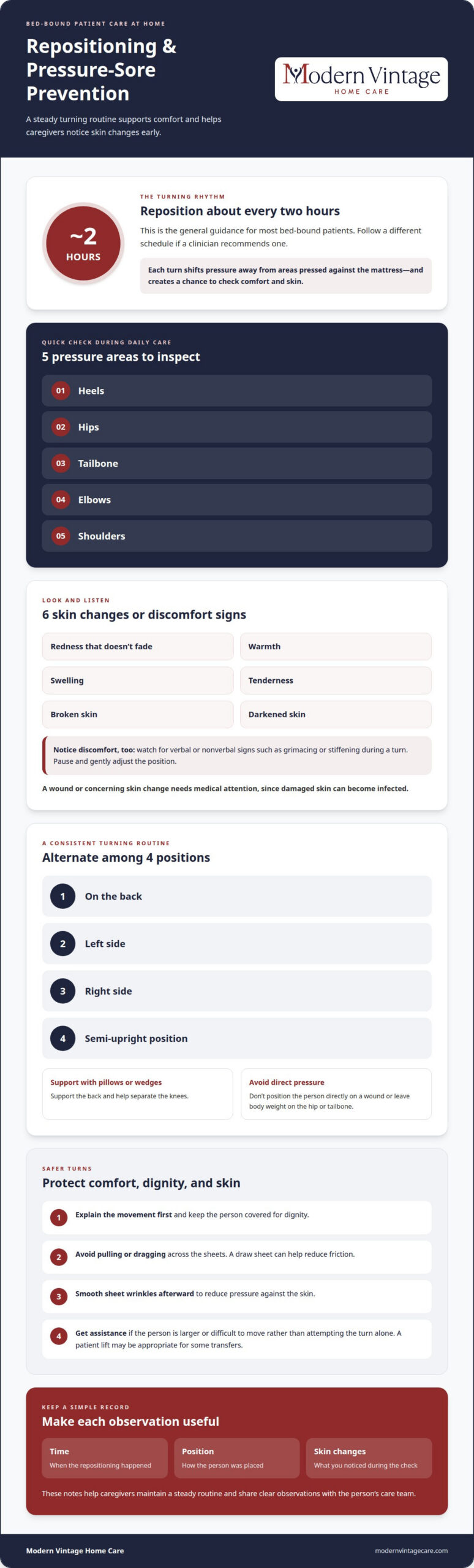
For most bed-bound patients, caregivers should reposition them about every two hours unless a clinician recommends otherwise. Regular repositioning shifts pressure away from areas pressed against the mattress. It also gives caregivers a chance to notice early skin changes and support comfort.
Pressure injuries can develop when pressure, friction, and moisture affect the skin over time. Check pressure areas during daily care, including the heels, hips, tailbone, elbows, and shoulders. Look for redness that doesn’t fade, warmth, swelling, tenderness, broken skin, or darkened skin. A wound or concerning change needs medical attention, since damaged skin can become infected.
Use a consistent turning routine that alternates between the back, left side, right side, and a semi-upright position. Pillows or wedges can support the back and help separate the knees. Avoid positioning someone directly on a wound or leaving body weight on the hip or tailbone. If the person shows discomfort, pause and gently adjust their position.
Caregiver safety matters during every turn. Explain the movement first, keep the person covered for dignity, and avoid pulling or dragging them across the sheets. A draw sheet can help caregivers move someone with less friction. Smooth its wrinkles afterward to reduce pressure against the skin. If the person is larger or difficult to move, get assistance rather than attempting the turn alone. A patient lift may be appropriate for some transfers.
How much does in-home caregiving or home health care cost in the United States? Costs depend on care hours, the level of assistance, and location. A case-specific price requires a quote.
How can caregivers transfer a bed-bound patient safely from bed to wheelchair? First, assess whether the person can bear weight and follow instructions. Position the wheelchair close to the bed and lock its brakes. Use an appropriate transfer method or patient lift, and get help if the person is difficult to move. Movement restrictions or a history of stroke require clinician guidance.
During each repositioning, watch for verbal and nonverbal signs of discomfort, such as grimacing or stiffening. Keep a simple record of the time and position, along with any skin changes. These notes help caregivers maintain a steady routine and share clear observations with the person’s care team.
2. Nutrition and hydration
In bed-bound patient care at home, meals and drinks should suit the person’s appetite, abilities, and daily routine. Adequate protein and hydration support nutritional needs, while familiar foods may make meals more appealing. Notice what your family member enjoys and can comfortably manage. An older adult may want different foods from one day to the next, so pay attention to their responses rather than treating every meal alike.
Offer water frequently throughout the day, not only with meals. Keep an easy-to-handle, spill-proof cup within reach if the person can drink independently. If they need help, offer small sips and allow time between them. A simple record of drinks can help caregivers notice changes in intake and share specific observations with the care team.
Set up the bed and meal area before serving food. Use pillows to support a comfortable position, and place the plate, drink, and napkin where the person can reach them. Offer manageable portions and reduce distractions that make eating difficult. For someone confined to bed, these adjustments can make it easier to take part in meals and express preferences.
Watch for signs of difficulty swallowing. Coughing while eating can indicate a swallowing problem. If a person struggles with certain textures, softening, mashing, or pureeing food may help. Don’t rush bites or offer another spoonful before the previous one is swallowed. Note which foods caused difficulty and what happened, so the care team receives clear examples.
If your loved one cannot chew or eat solid food, consult their doctor about alternative ways to provide nourishment. Describe specific concerns, such as coughing during meals, difficulty with a particular texture, or leaving food uneaten. These details can help inform the discussion. Don’t assume difficulty with one food means every food is unsuitable. Observe how the person manages different options.
A consistent routine makes nutrition and hydration easier to support and monitor. Offer meals at familiar times, provide drinks between meals, and note which foods the person accepts comfortably. Give them time to respond and make choices whenever possible. This thoughtful approach to bed-bound patient care at home keeps daily support attentive to the person’s preferences, not just the meal schedule.
Keep nutrition support centered on adequate protein and hydration, offering water regularly in amounts the person can manage. A spill-proof, easy-to-handle cup may make drinking more accessible. Coughing during meals can signal difficulty swallowing, which warrants attention. Softening, mashing, or pureeing food may help with difficult textures. If chewing or eating solid food is not possible, ask the doctor about other ways to provide nourishment.
Emotional well-being and social connection
Being confined to bed can narrow a person’s daily world, so make room for familiar voices and meaningful choices. Start with a simple conversation about a favorite memory, current interests, or how the person feels today. Listen without rushing to fill quiet moments. Familiar topics can help seniors preserve a sense of identity and make daily care feel more personal.
Build connection around activities the person already enjoys. Play familiar music, offer an audiobook, watch a favorite television program together, or arrange a family call. If hearing or vision is limited, adjust the volume or screen position and ask what feels comfortable. A brief conversation during personal care can also provide human contact while respecting the person’s privacy and need for rest.
Offer choices that let the person take part in the day. Ask whether they would prefer music or an audiobook, a family call now or later, or a favorite program before or after a meal. A person who can speak may answer directly; someone with limited speech may communicate through gestures, facial expressions, or eye contact. Pause after offering a choice so they have time to respond.
Small changes to the room can make the setting more pleasant. Keep the bedside area uncluttered, place familiar items within view, and let in natural light when possible. A family photograph, favorite book, or meaningful spiritual object can make the space feel more personal. During positioning and routine care, explain each step and respect the person’s choices about music, conversation, and quiet.
Gentle movement may offer engagement for someone who can participate comfortably. For example, a caregiver can invite the person to try an ankle circle, hand stretch, or arm lift as part of a familiar activity. Focus on the person’s response and avoid pushing through pain or discomfort. Anyone with medical restrictions, a stroke history, or severe pain needs clinician guidance before movement.
Notice changes in emotional expression during ordinary interactions. A person who usually enjoys a family call may turn away, become unusually quiet, or lose interest in a favorite program. Share specific observations with their care team, including what changed and which activities still prompt a response. Emotional support complements practical routines such as nutrition, personal care, and movement, helping caregivers see the whole person, not only the day’s tasks.
Companionship can bring conversation and familiar activities into a person’s routine when family members cannot be present. The most meaningful approach follows the individual’s preferences: one person may welcome a lively family call, while another prefers quiet music and a short visit. Respecting those differences helps preserve dignity and gives seniors a stronger voice in their daily experience.
4. Bedside hygiene and incontinence care
Prepare supplies before beginning a bed bath, such as clean towels, a washcloth, fresh clothing, and a basin. Explain each step and keep your loved one covered except for the area being washed. Check the water temperature before bathing, and use gentle strokes rather than scrubbing fragile skin. A sponge bath can maintain hygiene when a shower or full bath isn’t possible.
Wash from the cleanest areas toward less clean areas, changing to a clean part of the washcloth as you go. Dry carefully, especially in skin folds around the lower back, inner thighs, and armpits, where moisture can irritate skin. Avoid harsh soaps and aggressive scrubbing. A brief daily skin check can help caregivers notice redness, irritation, or developing bedsores during routine personal care.
After incontinence, clean the skin promptly and gently from front to back to reduce bacterial transfer. Pat the area dry, then replace wet clothing or bedding. The Centers for Disease Control and Prevention (CDC) recommends scrubbing hands for at least 20 seconds when washing to help prevent the spread of germs. Wash before and after personal care, and use clean supplies for each task.
Keep bedding fresh and smooth after accidents or bathing. Change sheets and pillowcases every 2-3 days, and sooner when they become wet or soiled. No-rinse shampoo caps or a portable hair-washing basin can make hair care easier in bed. Set out a comb, clean clothing, and towels first, then offer assistance while allowing the person to do any steps they can manage comfortably.
How can caregivers manage nutrition, hydration, toileting, and incontinence for a bed-bound patient? Offer meals and fluids regularly, help with toileting when needed, and respond promptly to incontinence by cleaning and drying the skin. Keep a simple record of food and fluid intake, toileting, and care needs to help maintain a consistent routine.
Include oral hygiene and grooming in the daily routine. Use a soft toothbrush and fluoride toothpaste to clean teeth, and provide oral care at least twice daily. If the person wears dentures, handle them gently during cleaning and leave them safely within reach afterward. Regular mouth care supports comfort, while washing the face, combing hair, and offering fresh clothing can help preserve dignity.
During each task, describe what you’re doing and ask permission before moving clothing or touching sensitive areas. A calm pace, privacy, and clean towels make necessary assistance more person-centered. For loved ones who feel embarrassed by incontinence, matter-of-fact language and prompt cleanup can protect dignity and keep daily hygiene manageable.
5. Oral care for bed bound patients
Oral care deserves a regular place in daily routines, even when a person has limited mobility. Use a soft toothbrush and fluoride toothpaste to clean teeth at least twice daily. Gently brush the outer, inner, and chewing surfaces, then carefully clean the tongue. Move at a pace the person can tolerate, pausing if they show discomfort or need a break.
Before starting, explain each step and gather the toothbrush, toothpaste, and a cup or cloth for cleanup. Help the person sit as upright as comfortably possible, with their head supported. If they can hold the brush, let them; otherwise, guide it gently. Keep a towel nearby, and allow time to rinse or spit if they can manage it.
Make oral care personal and predictable. Pair it with an established morning or bedtime routine, and use familiar instructions such as, “Let’s brush the front teeth first.” If the person has dentures, follow their usual care routine and keep them safely within reach when not being worn. Don’t force brushing if they resist. Pause, explain again, and try a gentler approach.
Monitor the mouth during routine care. Notice changes such as soreness, bleeding, dry lips, or difficulty tolerating brushing, and record when they occur. MedlinePlus oral care guidance highlights that mouth care supports comfort and infection prevention for medically vulnerable adults. Share persistent or worsening symptoms with the person’s healthcare team so they can assess the concern.
Does Medicare or Medicaid cover home health care or equipment for bed-bound patients? Coverage depends on the person’s eligibility, the specific program, and whether the request concerns a service or equipment. These are separate coverage questions, so the exact item or service matters.
To reduce falls, infections, blood clots, and other complications, keep the immediate bedside area clear and follow the person’s care plan for movement and hygiene. Call a doctor about new broken skin or concerning changes, including warmth, swelling, tenderness, or darkened skin. Seek emergency care for sudden, severe symptoms or immediate danger.
For respite care near you, consider the type of relief needed and how it fits the person’s daily routine. Explore respite care support when regular caregiving demands leave you needing help to maintain care and take a break.
Modern Vintage Home Care: Alzheimer’s & Dementia Care
Modern Vintage Home Care provides Alzheimer’s & Dementia Care, Personal Care, and Companionship for older adults at home. If a loved one’s memory changes make daily routines or personal care more challenging, this support can help families maintain familiar rhythms and meaningful connection. Companionship offers social engagement, while Personal Care supports everyday needs with attention to dignity and individual preferences.
Consider reaching out when caregiving responsibilities become difficult to manage alongside family, work, and rest. A conversation can help you describe your loved one’s daily needs and understand how these services may fit your situation.
Contact Modern Vintage Home Care to discuss support for your loved one.
Take the Next Step Toward Steady Support
A helpful next step is to identify which parts of daily care feel hardest to sustain. Perhaps you need more time to rest, support as care needs change, or a consistent presence for a loved one. Naming those priorities can make it easier to discuss what kind of help would fit your family’s routine. Thoughtful bed-bound patient care at home should respect the person’s preferences while supporting the people who care for them.
Modern Vintage Home Care offers Alzheimer’s & Dementia Care, Companionship, and 24-Hour Care. If additional support would help your family plan for the days ahead, contact Modern Vintage Home Care to talk about your needs.
Every family’s situation is personal. A thoughtful conversation can help you consider a caring next step at a pace that feels right for your loved one.
Frequently Asked Questions
How often should bed bound residents be repositioned?
Most bed-bound residents should be repositioned about every two hours, unless a clinician recommends another schedule. The right routine also considers comfort, existing wounds, movement limits, and how the person responds to each position. If a turn causes pain or distress, for example, pause and report the response to the care team. A written schedule can help everyone providing care follow the same plan.
What Does Bed-Bound Mean?
Bed-bound means a person spends most of their time in bed and cannot get up or move around independently for daily activities. They may need help changing position, reaching personal items, or completing routine tasks. The term describes a person’s current functional needs, not a specific illness. Someone may be bed-bound temporarily or for a longer period, depending on their condition and mobility.
What Does Bedridden Patient Nursing Care at Home Usually Include?
At-home support may include help with personal care, meals, companionship, and medication reminders. These are non-medical home care tasks, distinct from skilled nursing or medical home health services. Modern Vintage Home Care provides non-medical in-home support in Sugar Land, Missouri City, TX, and SW Houston. Medical needs, such as diagnosis or treatment, require an appropriate healthcare professional, not a home caregiver.
What Is Bed Bound and What Does It Look Like Day to Day?
Being bed-bound means a person relies on assistance because they cannot independently get out of bed or move around for ordinary activities. Day to day, they may need help reaching a drink, changing clothing, using the bathroom, or moving into a more comfortable position. The amount of help varies: one person may manage parts of a task, while another needs support throughout.
What Is the Definition of Bed Bound for Care Planning?
For care planning, “bed-bound” is a practical description of someone’s ability to move and manage everyday activities, not a diagnosis by itself. Record what assistance the person needs, what they can still do, and which movements cause difficulty. For instance, note whether they can turn independently or need help reaching the bedside table. These details help caregivers plan routines around the individual.
When Caring for a Patient Who Is on Bed Rest, What Should Be Prioritised First?
Start by following the person’s care plan and any movement restrictions, then address immediate comfort and essential daily needs. Keep needed items within reach and make sure the person can communicate discomfort or request help. If the plan limits movement, don’t add exercises or transfers independently. A clinician’s instructions are especially important when bed rest follows an injury, surgery, severe pain, or another medical concern.
