
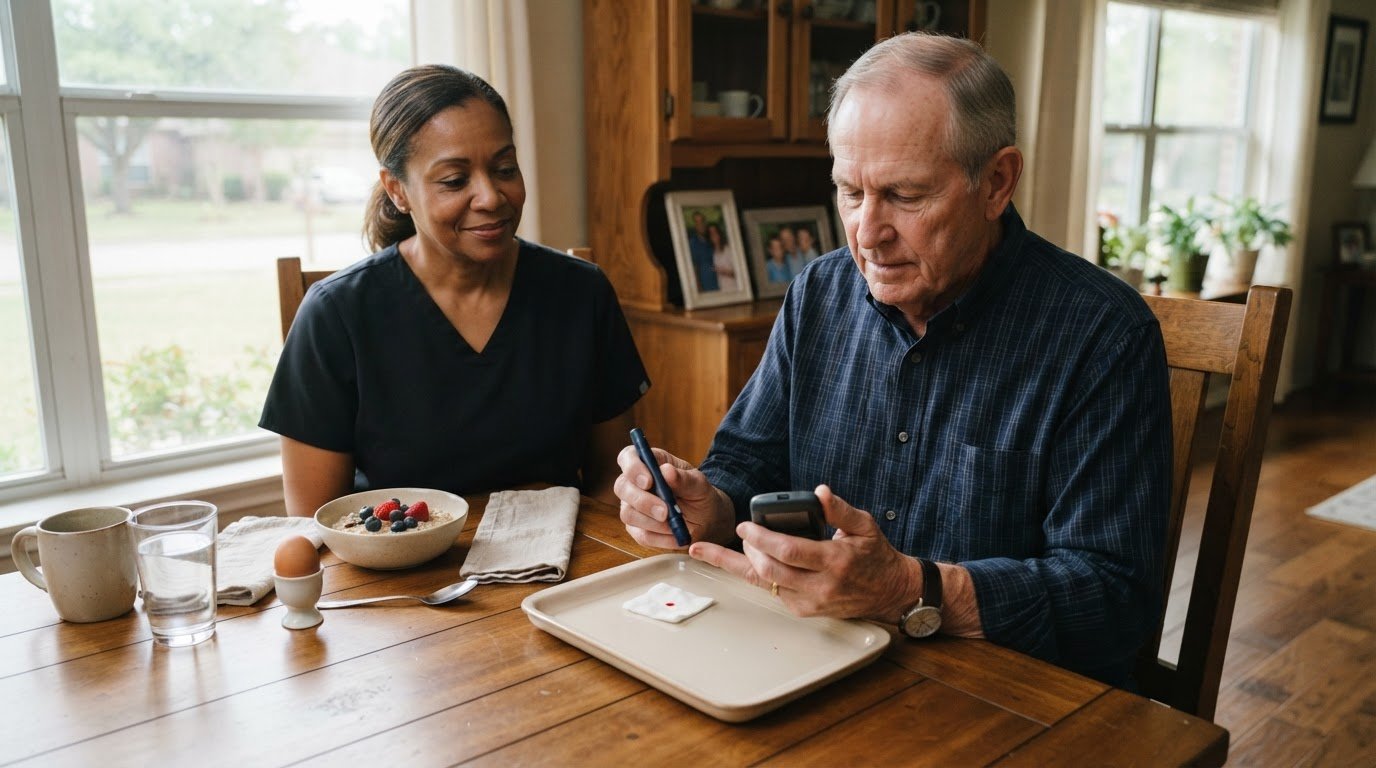
Diabetes care at home works best when daily routines feel manageable and support respects an older adult’s independence. For families considering home care for seniors with diabetes in Missouri City, the right support can help with everyday activities, reminders, and companionship while fitting around the person’s established care plan.
It’s understandable to want clear answers about what support can look like and how to plan for it. This article explains the day-to-day help families can consider, how care needs shape a plan, and what affects cost. Pricing varies with the support and schedule involved, and a personalized quote follows a consultation.
You’ll also learn how to think through safety, routines, and the level of assistance that fits at home. The goal is a clearer path to support that helps your loved one maintain dignity and familiarity in daily life.
Key Takeaways
- Identify the everyday routines where support can make diabetes care at home easier to manage alongside the person’s established care plan.
- Consider how help with personal care and daily activities can support comfort, dignity, and independence.
- Learn what to discuss about a caregiver’s experience and screening when arranging in-home support.
- Understand how care needs, schedule, and location can shape a home care plan and its cost.
- Explore when companionship, personal care, or Alzheimer’s and dementia care may fit a senior’s needs.
In-home support for seniors with chronic conditions, including diabetes
In Missouri City, in-home support can help older adults keep daily routines manageable while living with diabetes or another chronic condition. Caregivers can assist with everyday tasks, follow established routines, and share relevant observations with family and the person’s medical team.
For families arranging home care for seniors with diabetes in Missouri City, start by listing the times and tasks that cause difficulty. Include meals, personal care, companionship, and getting home safely after a hospital or rehabilitation stay.
Around-the-Clock Caregiver Support
Care arranged throughout the day and night can provide a consistent presence for a senior who needs help at different hours. Map when support is needed, what tasks are involved, and how family members will share updates. A written routine helps caregivers understand preferences and keep daily support consistent.
Reducing Risks of Home Diabetes Management
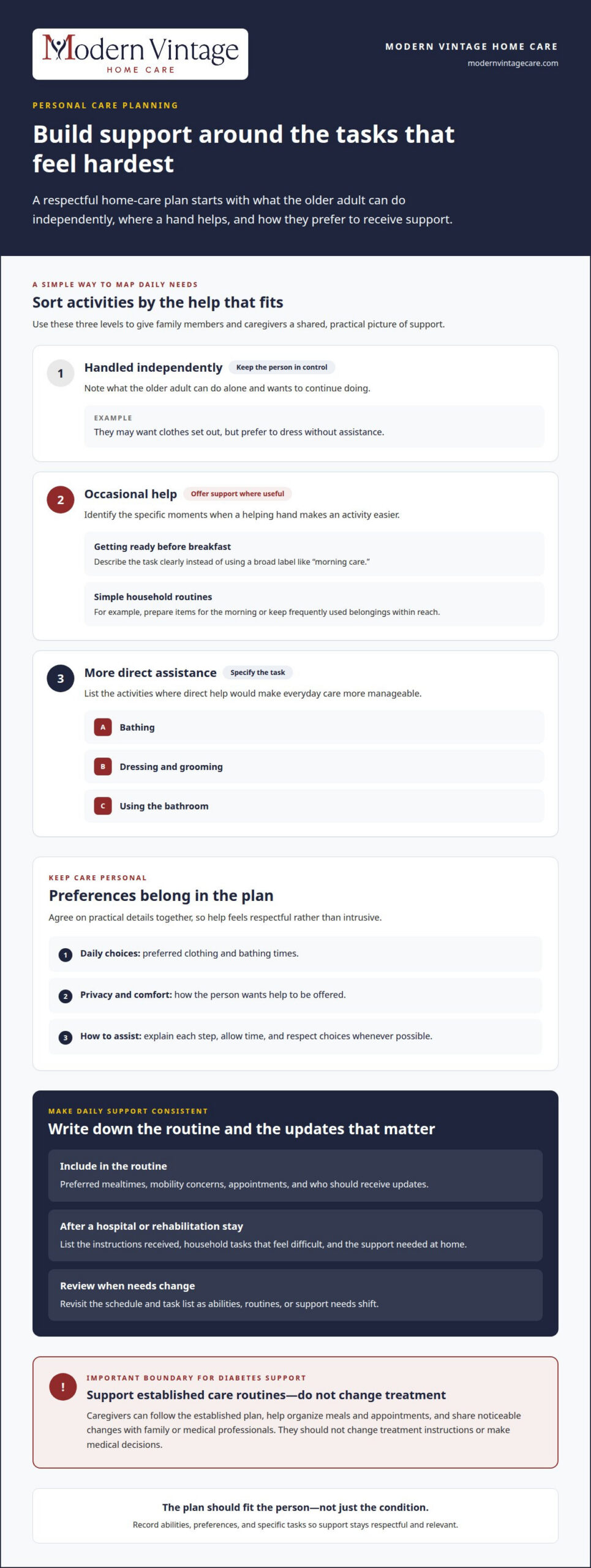
Managing diabetes at home can become harder when routines are disrupted, instructions are confusing, or a senior struggles with daily tasks. Caregivers can follow the established plan, help organize meals and appointments, and tell family or medical professionals about noticeable changes. They should not change treatment instructions or make medical decisions.
Clear communication matters. Keep the senior’s current instructions in one accessible place, and ask caregivers to record questions or changes for the family. If a person with Alzheimer’s forgets a familiar routine, for example, a calm reminder and shared written schedule can support continuity without taking away independence.
Support should reflect the person, not just the condition. A veteran may value familiar routines and respectful conversation, while a senior with a disability may need help with specific daily tasks. A caregiver can follow stated preferences, preserve privacy, and focus assistance where it is useful.
After a hospital or rehabilitation stay, families can list the instructions they received, the household tasks that now feel difficult, and the support needed at home. Mrs. Patel, described as 74 years old after hip surgery in Sienna Plantation, regained strength and improved her balance, and avoided readmission within two weeks of receiving care.
A practical first step is to prepare the home routine before support begins. Write down preferred mealtimes, mobility concerns, appointments, and who should receive updates. Clear information helps caregivers provide consistent non-medical assistance while the senior follows their medical care plan.
When needs change, revisit the schedule and task list with the family. A senior who once needed reminders may later need more help with daily activities or companionship. Regular reviews keep support aligned with current routines, goals, and the person’s wish to remain at home.
Personal care and assistance with daily activities
Personal assistance can make everyday tasks more manageable while helping older adults retain choice and privacy. Identify which activities feel difficult and how the person prefers to receive help.
Help With Daily Activities
Daily assistance may include help with bathing, dressing, grooming, and using the bathroom. First ask what the person can do independently and where a helping hand would make the task easier. Someone may want clothes set out, for example, but prefer to dress without assistance.
Personal care should follow the older adult’s preferences, not a fixed routine. Agree on practical details such as preferred clothing, bathing times, privacy, and how to offer help. A compassionate approach means explaining each step, allowing time, and respecting the person’s choices whenever possible. These habits help assistance feel respectful rather than intrusive.
Daily living support can also include simple household tasks that help the person take part in familiar routines. Make a short list together, such as preparing items for the morning or keeping frequently used belongings within reach. For a senior with diabetes, families can note how daily routines fit around existing medical instructions, without asking a caregiver to make treatment decisions.
Personalized In-Home Care Plans
A personalized plan should describe the person’s abilities, preferences, and the specific tasks where assistance is useful. Separate tasks into those the older adult handles alone, those needing occasional help, and those requiring more direct support. This gives family members and caregivers a shared picture of respectful personal care at home.
Include practical examples rather than broad labels. “Needs help getting ready before breakfast” gives clearer guidance than “needs morning care.” Add preferred routines, communication preferences, and any changes after a hospital stay. Review the plan as abilities or daily needs shift, so support remains relevant and no more intrusive than necessary.
Companionship can complement personal assistance through conversation and shared everyday activities. A caregiver might join someone in a familiar hobby or provide company during a comfortable routine. Ask which moments matter most to the older adult, then build those preferences into the schedule.
For a useful starting point, write down three tasks that cause difficulty and the kind of help preferred for each. Then discuss support for daily routines at home as part of planning compassionate, individualized care.
Caregiver qualifications and background checks
Caregiver fit involves more than availability. Families also need clear communication, relevant experience, and respectful support. Compare each caregiver’s skills with the senior’s routines and care needs.
Ask how caregivers are screened, what background checks involve, and how experience is assessed. Discuss how caregiver matching works and how families can share preferences and feedback.
When looking for support near Missouri City, describe the help needed and discuss the caregiver’s experience following established diabetes routines. Clarify task boundaries, communication with family, and how caregivers share concerns with the appropriate medical professionals.
Caregiver Qualifications and Training
Look for specific examples of relevant experience rather than relying on broad descriptions such as “experienced with seniors.” Ask how a caregiver supports an older adult who needs reminders, personal assistance, or a steady daily routine. Discuss experience with dementia, communication, and privacy, and make sure everyone understands which tasks are outside the caregiver’s role.
Start comparisons with the senior’s actual needs. Write down daily tasks, communication preferences, and any relevant experience with veterans or adults living with dementia. Then consider how a caregiver’s skills and approach match those needs. A clear match can support a comfortable relationship and the person’s quality of life.
Finding Diabetes-Trained Caregivers
In Missouri City and the greater Houston area, describe the person’s routine before discussing caregiver fit. Ask about experience supporting seniors who follow diabetes-related instructions, and clarify that caregivers follow the established plan rather than make medical decisions. Explain, for example, how the senior prefers reminders or help organizing daily activities.
Use a short set of questions when comparing care options: What screening steps are used? What relevant training and experience does the caregiver have? How are preferences shared with a matched caregiver? How can family members communicate concerns? Clear answers help families understand the process and whether the proposed match fits their loved one.
Caregiver profiles can help families prepare for an introduction. Review relevant experience, communication style, and interests, then discuss what would help the senior feel at ease. A veteran may value familiar conversation, while a person with dementia may respond better to a calm, consistent approach.
Family caregivers also need time to rest and manage their own responsibilities. Consider respite support when regular caregiving makes it difficult to handle work, appointments, or household needs. Before support begins, share the senior’s routines and the best way to reach family members.
After care begins, check in with the senior and family. Discuss what feels comfortable, where instructions need clarification, and whether the caregiver’s approach supports the person’s independence and quality of life.
Home care service areas in Missouri City and nearby communities
For families in Missouri City, location affects how support fits into familiar routines. Start by listing the home address, regular destinations, and nearby family members who help coordinate care.
Missouri City is the focus here, with Sugar Land and the greater Houston area also relevant to local planning. Before arranging home care, map the senior’s routine: where they live, which appointments they attend, and who needs updates about schedule changes.
Residential communities may have their own routines and support arrangements. If an older adult moves into a senior living community, clarify which daily tasks staff handle and which remain with family or outside caregivers. Agree, for example, who will help maintain familiar meal and personal-care routines.
A change in health or illness may prompt a move from home to a residential setting, or a return home after a stay. Prepare a simple transition note with the senior’s preferences, daily schedule, and important contacts. Share it with the family coordinating the move so instructions remain clear across settings.
Memory care requires thoughtful coordination when a senior with dementia changes surroundings. Familiar objects, predictable routines, and calm introductions can make a transition easier to understand. Families can identify important belongings and explain the person’s preferred ways of communicating.
Transportation is another practical part of location planning. List regular destinations, such as medical appointments or community activities, then identify who will arrange each trip. Don’t assume transportation is included in home care. Confirm the plan with the people involved and keep appointment details accessible.
For older adults who prefer to remain at home, consider how the home’s location affects family visits and daily support. A relative in Houston, for instance, can coordinate updates with someone closer to the Missouri City home. Agree on a consistent way to share schedule changes and concerns.
Use these steps when comparing local care arrangements:
- Write down the home or community address and the senior’s regular destinations.
- Separate daily assistance from medical care and facility responsibilities.
- Identify who coordinates appointments, transportation, and family updates.
- Review the plan after a move, hospital stay, or change in routine.
These details help families describe the support needed in a specific setting. Whether the senior remains in a Missouri City home or moves to a nearby residential community, clear roles and familiar routines make care easier to coordinate.
Missouri City home care costs
Plan costs by defining the care, schedule, and tasks a senior needs. In Missouri City, a written care plan makes those choices easier to discuss and price.
Pricing varies with the type of support, location, schedule, and level of care. A personalized quote follows a consultation about which daily tasks matter most, how often assistance is needed, and whether respite support is part of the plan.
Build a practical care request by listing tasks instead of starting with a broad label like “diabetes care.” Note whether the senior needs help with personal routines, companionship, or household organization, then describe the schedule and any expected changes after a hospital stay. This gives the consultation a concrete starting point.
Medicare generally does not cover non-medical home care. Home care is separate from medical treatment and home health services, so keep those categories distinct when reviewing benefits.
Texas Medicaid programs may help eligible people with certain in-home needs. The specific program, individual eligibility, and covered services matter; diabetes alone does not determine which benefits apply.
Keep funding questions separate from the care plan. First list the support the older adult needs, then distinguish daily assistance from medical treatment. This helps families describe their needs accurately when discussing Medicare or Texas Medicaid benefits.
For a family budget, consider how the schedule may change as needs shift. A senior might need more support after rehabilitation, then a different pattern as daily routines become familiar. Record current tasks and revisit the plan when circumstances change. This helps families discuss costs while choosing support that fits the person and preserves dignity.
Respite can also be part of family planning. If a relative provides regular care, identify when time away would help, which tasks need coverage, and how the senior prefers assistance. A thoughtful plan accounts for both the older adult’s routine and the family’s capacity.
Before a consultation, prepare a short list of priorities:
- Daily tasks where assistance is needed.
- Preferred days and times for support.
- Changes in routine, including after a hospital stay.
- Questions about benefit eligibility and covered services.
These steps help families in Missouri City discuss a realistic plan rather than guess from a generic estimate. To include family caregiver breaks in that conversation, explore respite support options.
Modern Vintage Home Care: Alzheimer’s & Dementia Care
Modern Vintage Home Care provides Alzheimer’s and dementia care for families seeking steady, familiar support at home. When memory changes make daily routines harder, caregivers can offer companionship and personal care while respecting the senior’s preferences and independence.
This support can complement a family’s diabetes care plan by helping maintain familiar routines and assisting with everyday activities. Families can discuss difficult tasks, what brings comfort, and how caregivers can share relevant observations. A senior may, for example, appreciate companionship during a regular activity and help with personal care when needed.
If your family is considering Alzheimer’s and dementia care, contact Modern Vintage Home Care to discuss your loved one’s needs.
Take the Next Step Toward Support at Home
Choosing support is also a chance to ask what would make each day more manageable for your loved one. For families considering home care for seniors with diabetes in Missouri City, start with the senior’s priorities: which routines they want to keep, where they welcome assistance, and how support can fit alongside their established medical care plan.
Modern Vintage Home Care offers Alzheimer’s and dementia care, 24-hour care, and companionship. These services can support families seeking consistent help, familiar company, or added assistance as needs change. Share the routines that matter, the tasks that are difficult, and the kind of communication that helps your family feel involved. That conversation can help shape a practical next step around your loved one’s preferences.
Contact Modern Vintage Home Care to discuss support for your family. A thoughtful plan can help your loved one feel respected and supported at home.
Frequently Asked Questions
What home care services are available for seniors with diabetes in Missouri City, Texas?
Non-medical support can include personal care, companionship, medication reminders, and help maintaining familiar routines. A caregiver may remind a senior about scheduled medication or provide company during daily activities. Modern Vintage Home Care serves Missouri City, Texas, with supportive home care options. These services complement, but do not replace, diabetes treatment or guidance from the senior’s healthcare professionals.
Which home care agencies in Missouri City provide diabetes care for seniors?
Modern Vintage Home Care provides non-medical in-home support for seniors in Missouri City and nearby areas. Families can discuss the older adult’s daily routine, the help they need, and how caregivers can support established instructions without providing medical treatment. Options include personal care, companionship, medication reminders, and Alzheimer’s and dementia care. The right fit depends on the senior’s preferences and specific needs.
How much does in-home senior care cost in Missouri City, Texas?
In-home care costs vary by service, location, schedule, and level of support. Modern Vintage Home Care provides a personalized quote after discussing the senior’s needs rather than publishing a fixed rate. Medicare generally does not cover non-medical home care. Medicaid, veterans’ benefits, and long-term-care insurance may be possible funding options, depending on eligibility and the specific benefit.
What qualifications should a caregiver have to support a senior with diabetes at home?
Families should look for a caregiver whose experience and communication style fit the senior’s daily support needs. Ask about relevant experience, screening, and how the caregiver will follow the established routine without making medical decisions. Modern Vintage Home Care states that its caregivers undergo background checks, and families may choose a caregiver based on compatibility, skills, and preferences. Clear role expectations help everyone coordinate support.
What diabetes tasks can home caregivers perform, such as glucose monitoring and insulin assistance?
Non-medical home caregivers can provide medication reminders and help seniors stay organized around established routines. They do not diagnose or treat diabetes, perform clinical glucose monitoring, administer insulin, or manage prescriptions. Families can share written instructions and clarify which reminders or daily tasks would help. Questions about glucose testing, insulin use, or treatment decisions belong with the senior’s healthcare professionals.
