
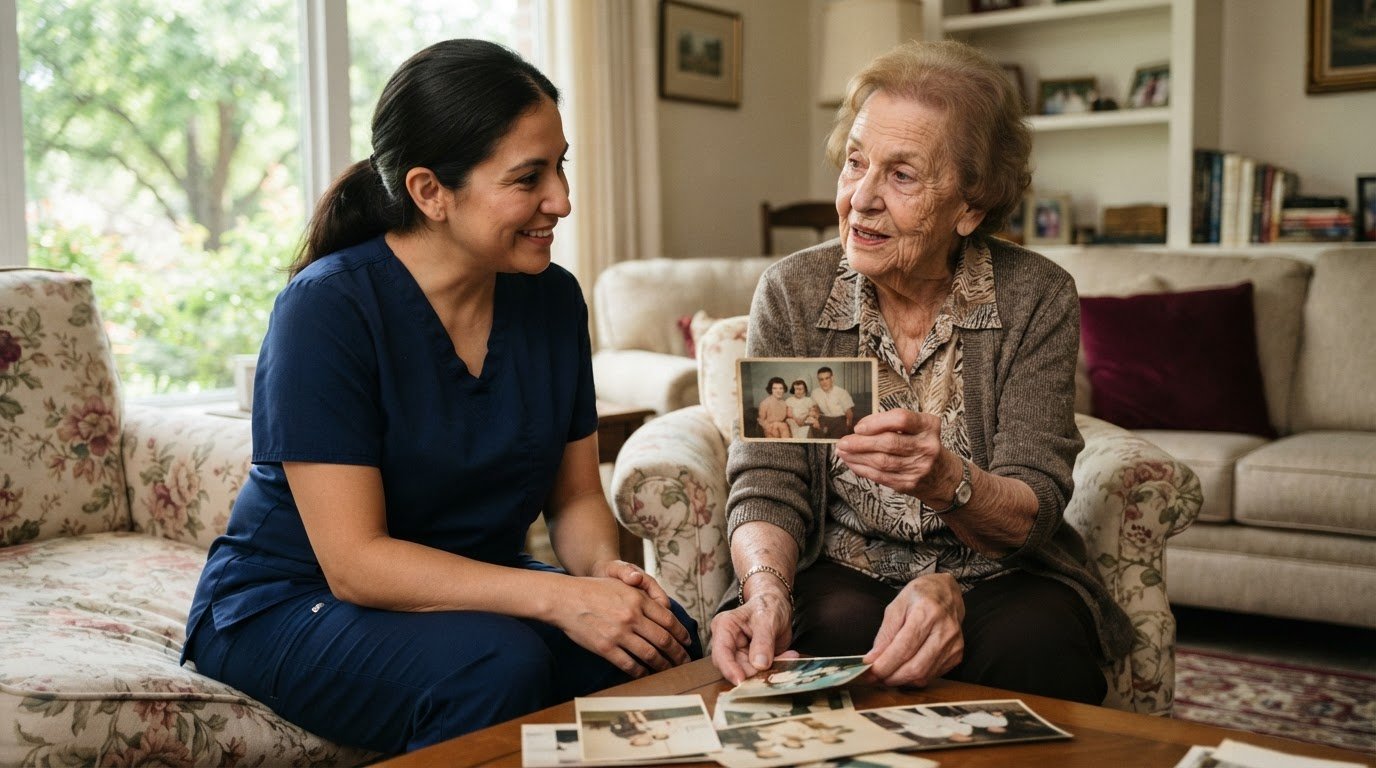
The best brain exercises for seniors with dementia are enjoyable, familiar activities adapted to the person’s abilities. Word and number games, creative hobbies, reading, music, and storytelling offer different ways to engage attention and memory without making every activity feel like a test.
It’s understandable to want an activity that feels worthwhile and manageable, especially when a once-loved pastime has become frustrating. Choose something the person enjoys, keep the steps clear, and adjust the challenge to how they feel that day.
This guide explores games, puzzles, hobbies, reading, and storytelling activities for older adults with dementia or mild cognitive impairment. You’ll find ideas to try, ways to make them more comfortable, and signs that it may be time to simplify or switch to another activity.
Key Takeaways
- Choose familiar, enjoyable hobbies and adjust the steps so the activity feels engaging rather than frustrating.
- Use bingo and other shared games to combine gentle mental activity with time together.
- For someone with mild cognitive impairment, digital crosswords may be a useful word-puzzle option to explore.
- Make number puzzles easier to approach by starting with a quick, manageable challenge and building from there.
- Reading aloud and sharing stories can invite conversation, attention, and connection at the person’s own pace.
1. Learning new skills and hobbies
Brain exercises for seniors with dementia work best as meaningful activities, not pass-or-fail tests. Cognitive exercises can engage memory, focus, and problem-solving, but they should also connect with the person’s interests. A former gardener might sort seed packets or identify familiar plants. Someone who enjoyed music could revisit a favorite melody or try a simple rhythm.
Learning something new can add a gentle change to familiar routines. Choose one small step, demonstrate it, then let the person try at their own pace. A foreign language activity might start with practicing a familiar greeting or naming foods in Spanish. Focus on participation and enjoyment rather than fluency or perfect recall. If the lesson becomes tiring, return to a familiar word or activity.
- Try a creative skill: Paint a simple picture, knit a familiar pattern, or arrange flowers by color.
- Explore music: Listen to a favorite song, tap its rhythm, or sing a well-known chorus together.
- Practice technology: Use a tablet to look through family photos or play a simple, familiar game.
- Build on a routine: Follow a favorite recipe together, with the person completing a comfortable step such as stirring.
These activities engage different kinds of thinking and can be adjusted to suit the person. For technology activities, keep the screen simple and stay nearby to help with each step. If digital brain games are part of the routine, limit screen time, especially close to bedtime. A paper activity or conversation may be easier when a screen feels distracting.
Free or low-cost dementia activities are available in the United States. Borrow a book from a public library, draw with paper and pencils, or practice a familiar hobby using supplies already at home. Simple materials can make learning enjoyable without making it feel like homework.
To make an activity enjoyable, start with a familiar interest and offer one clear step at a time. Let the person choose between two options, such as music or painting, and praise participation rather than correctness. A session of 20-30 minutes a day is a suggested starting point for brain training, with breaks or a shorter activity if fatigue appears.
An activity that feels too difficult or continues after the person wants to stop can lead to frustration or mental fatigue. Start with an easy version, simplify the steps, and switch activities if distress appears. For a new technology activity, choose a straightforward task and offer support rather than leaving the person to manage unfamiliar controls alone.
Sudoku, crosswords, and new hobbies are other ways to keep the brain active. Set aside time each week to explore a skill such as knitting, painting, or playing a musical instrument. The Alzheimer Society of Canada recommends lifelong learning to challenge the brain, while arts and crafts can involve planning and problem-solving. The McGill University Dementia Education Program encourages enjoyable activities that support a person’s sense of self, creativity, and quality of life.
2. Bingo and social interaction
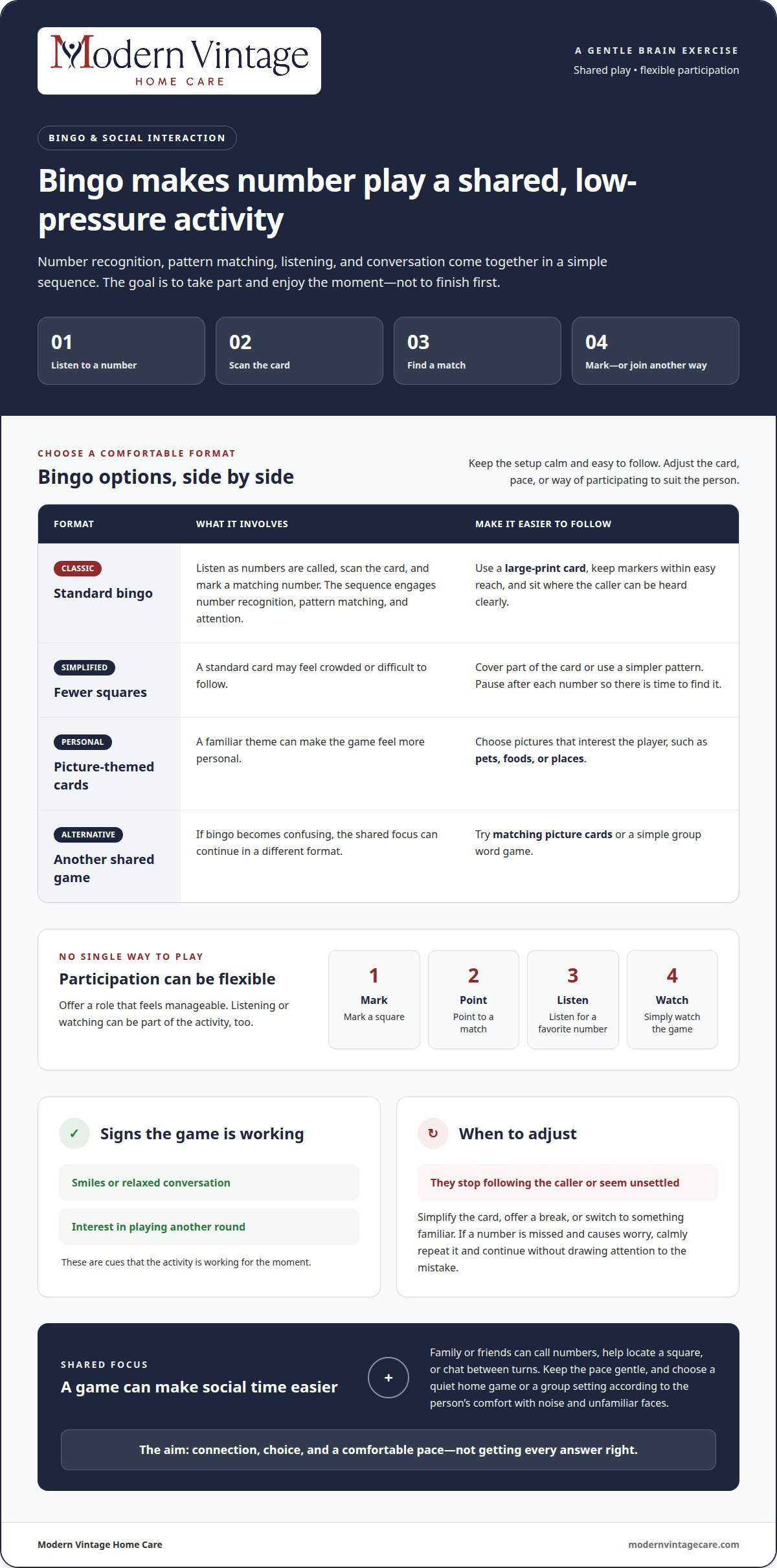
Bingo combines number recognition, pattern matching, listening, and conversation. As someone calls each number, a player scans the card and marks a match. This simple sequence gives older adults a clear role while engaging attention and thinking. A familiar game can also make social time easier than a conversation without an activity.
Keep the setup calm and easy to follow. Use a large-print card, place markers within easy reach, and sit where the player can hear the caller. Read each number clearly, then pause so the person can find it. If a standard card feels crowded, cover part of it or use a simpler pattern. The aim is to participate and enjoy the game, not finish first.
Playing with family or friends adds social connection to the game. A relative might call numbers, help locate a square, or chat between turns. Group games and classes can build connections and ease loneliness. Bingo gives everyone a shared focus, which may help someone join in when keeping a conversation going feels difficult.
Keep participation flexible. The person can mark squares, point to a match, listen for a favorite number, or simply watch. If a missed number causes worry, calmly repeat it and continue without drawing attention to the mistake. A familiar theme can make the activity more personal: choose cards with pictures of pets, foods, or places that interest the player.
- Prepare together: Let the player choose a marker or a comfortable seat before the game begins.
- Keep the pace gentle: Pause after calling each number and offer help only when needed.
- Make room for conversation: Talk about a picture or memory during a natural break.
- Change the format: Try matching picture cards or a simple group word game if bingo becomes confusing.
Social activities can also include a familiar card game, a small hobby group, or singing with others. Choose a setting that suits the person’s comfort with noise, conversation, and unfamiliar faces. A quiet game at home may suit someone who feels overwhelmed in a busy room. Another person may enjoy a group, especially with a trusted relative alongside them.
Notice how the person responds during and after playing. Smiles, relaxed conversation, or interest in another round suggest the activity is working for the moment. If they stop following the caller or seem unsettled, simplify the card, offer a break, or switch to something familiar. The best social brain exercise leaves room for connection, choice, and a comfortable pace.
3. Digital crosswords for mild cognitive impairment
A digital crossword can turn word recall into a focused cognitive challenge. The player reads a clue, considers possible answers, and enters letters into connected spaces. For adults with mild cognitive impairment, this format may stimulate language and attention while offering clear progress across the grid. People older than 55 with mild cognitive impairment may see more cognitive effects from digital crosswords than from other computerized cognitive games.
Evidence about crosswords is encouraging, but it needs careful interpretation. Regular crossword use later in life was associated in one study with delaying memory decline by 2 1/2 years. That association does not establish that crosswords prevent dementia or produce the same result for every player. It does support considering word puzzles as one engaging activity, alongside other interests and daily routines.
Start with a familiar crossword. Someone who enjoys cooking might try clues about ingredients, meals, or kitchen tools. Choose a larger display, reduce background distractions, and read clues aloud if helpful. If typing feels awkward, offer a pencil-and-paper crossword. The goal is meaningful engagement, not completing every square or using a particular device.
- Choose the right level: Begin with short clues and familiar words, then adjust based on the player’s response.
- Offer a hint: Give a first letter or a simple clue rather than supplying the whole answer.
- Make the screen easier: Increase text size and keep only the puzzle visible.
- Keep variety: Alternate crosswords with conversation, music, or another preferred activity.
For people aged 50 and older, doing word puzzles even once a month may bolster brain function, and more frequent practice may have a greater impact on focus and attention. A regular routine can make it easier to remember the activity, but the person’s interest matters more than a fixed schedule. Stop or switch activities if the screen becomes tiring or the clues cause distress.
Caregivers can adapt activities to different dementia stages by adjusting the puzzle’s difficulty, the number of clues, and the amount of support. If a full crossword becomes confusing, try filling in one familiar answer together or discussing a clue without using a screen.
For frequency and duration, begin with short sessions and let attention and comfort guide the stopping point. A suggested starting range for memory and brain training is 20-30 minutes a day, but a crossword can be shorter, with breaks when needed.
Digital crosswords are one option, not a measure of ability. Completing a word, sharing a laugh over a clue, or choosing to try again can all make the activity worthwhile. Keep it flexible, and let the person’s preferences guide the next puzzle.
4. Number puzzles and cognitive function
Number puzzles give the mind a clear task: notice patterns, compare options, and work toward a solution. Sudoku is one familiar choice. Its 9×9 grid requires the digits 1 through 9 in each row, column, and 3×3 section, without repeats. For a senior with dementia, a complete grid may be too demanding, so try solving one section together or pointing out a possible next move.
Sudoku uses pattern recognition, strategic thinking, and problem-solving. It can be a useful mental activity when the puzzle suits the person’s abilities. Start with an easier grid or a partly completed puzzle. If the person enjoys finding one missing number, that small task can be enough. A challenging puzzle is not more valuable if it causes confusion or frustration.
Research involving almost 20,000 people aged 50 and older found a correlation between brain function and how often participants did number puzzles. Doing them more than once a day may put cognitive performance at the level of people eight years younger. These findings describe associations, not a promise that puzzles will prevent dementia or reverse decline.
Make number puzzles part of an ordinary routine. A quick puzzle in the morning can offer a focused activity before other tasks. If Sudoku feels unfamiliar, try a practical number exercise instead: divide a phone number into three sections of three or four numbers. Read each section aloud, then try recalling it after a short pause. Keep the exercise conversational, not a test.
- Reduce the task: Cover part of a Sudoku grid and focus on one row or 3×3 section.
- Offer a choice: Ask whether the person prefers Sudoku or a familiar number game.
- Support without taking over: Point to a row or repeat the instructions, then allow time to respond.
- Switch when needed: Replace the puzzle with music, art, or a short walk if concentration fades.
Brain exercises are one part of a broader mix of activities. Music and rhythm can evoke memories and emotions, while arts and crafts can involve planning and problem-solving. Walking outdoors engages the senses and keeps the mind active. Brain training alone is not enough to protect an aging brain; games alongside regular physical activity, a healthy diet, and quality sleep can support memory and cognitive function.
Choose the activity that feels engaging and comfortable that day. If a number puzzle sparks curiosity, work through one small part together. If not, music, painting, or a walk offers another way to engage attention without insisting on one kind of thinking.
5. Reading and storytelling
Reading offers a familiar way to focus on details, follow a storyline, and revisit information. Choose a favorite book, short newspaper article, or family photo caption. The person can read aloud, listen as you read, or look at pictures. Each option keeps the activity flexible without turning it into a memory test.
For someone living with Alzheimer’s disease or another form of dementia, match the material to their current interests and comfort. A familiar cookbook, short poem, or gardening magazine may invite more engagement than a long, unfamiliar novel. Pause after a paragraph and ask what stood out, while accepting a gesture, smile, or brief comment as a response.
Storytelling can start with a photograph or a familiar object. Hold up a family picture and invite the person to describe what they notice. If details are hard to recall, offer a gentle prompt such as, “That looks like the garden.” Let the conversation continue without correcting uncertain memories or expecting a complete account.
- Pick a short passage: Choose a few lines from a familiar story, poem, or recipe.
- Use visual cues: Point to a picture, name an object, or read a caption together.
- Invite a personal story: Ask about a familiar place, song, or family tradition.
- Follow the person’s lead: Continue if interest remains, or switch to another activity.
Reading together can also build connection. A caregiver might read a short article about a favorite sports team, then share a related memory. If the person prefers listening, take turns reading a sentence or pause to discuss an image. These small choices give the person a role while keeping the pace comfortable.
Stories do not need a strict beginning, middle, and end. A favorite meal might bring up cooking with family; a song title could prompt a conversation about a dance. Let the person choose which detail to discuss. Avoid quizzing them about names or dates. The purpose is shared attention, not testing recall.
Reading encourages attention to detail, following storylines, and retaining information. Treat it as an engaging activity, not a promise of improved brain health or a way to stop cognitive decline. A few lines that spark interest may be more suitable than a whole chapter. Follow the person’s response and let comfort guide whether to continue, pause, or choose another story.
Modern Vintage Home Care: Alzheimer’s & Dementia Care
Modern Vintage Home Care provides Alzheimer’s & Dementia Care for older adults who need support with daily life and meaningful engagement. When memory changes make familiar activities harder to manage alone, personalized in-home support can help families build comfortable routines around the person’s interests, such as reading together, enjoying music, or sharing conversation.
Companionship can provide social connection during everyday activities, while Personal Care supports assistance with personal routines. Families in Sugar Land, Missouri City, and southwest Houston may consider this support when care needs change or consistent engagement becomes difficult to manage on their own.
Contact Modern Vintage Home Care to discuss Alzheimer’s & Dementia Care and the support that may suit your family.
Let meaningful moments shape the next step
The most helpful brain exercises for seniors with dementia fit the person, not a rigid schedule. Notice what sparks interest, what feels tiring, and when a familiar activity feels easier with someone alongside them. These observations can help shape everyday moments around the person’s preferences and maintain a sense of connection.
If supporting those moments is becoming difficult to manage alongside other care needs, Modern Vintage Home Care offers Alzheimer’s & Dementia Care, 24-Hour Care, and Companionship. Reach out to discuss how support at home may fit your family’s situation.
Contact Modern Vintage Home Care to talk about a supportive next step. A familiar activity and a caring presence can help make room for connection, one moment at a time.
Frequently Asked Questions
What games are good for the brain as you age?
Games that invite attention, choice, or conversation can be enjoyable as people age. Try dominoes, a familiar card game, or a simple word game, choosing something the person already likes. For dominoes, match a tile by number or color, then take turns placing pieces. Keep the rules familiar and focus on playing together rather than winning.
Can Memory Exercises for Dementia Actually Make a Difference?
Memory exercises can give someone a chance to practice recall and stay engaged. After looking at a family photo, for example, invite them to name one detail they noticed without pressing for a correct answer. This can create a shared moment and offer gentle mental stimulation. Brain-training activities have not been shown to prevent dementia, so use them for engagement, not as a cure.
What Are Cognitive exercises?
Cognitive exercises ask a person to use skills such as attention, language, planning, or recall. Sorting recipe cards by meal, describing a familiar object, or following a short set of directions are practical examples. Each activity engages a different mental skill, so caregivers can choose tasks that feel relevant. The best fit is something the person can do comfortably.
Do brain exercises improve memory or slow dementia progression?
Brain exercises can offer practice with tasks such as remembering a clue or making a choice, and can be used as engaging activities. Studies have not shown that brain training prevents dementia. Treat a game as an opportunity for engagement, not a measure of ability or a substitute for medical care. Let the person’s comfort and interest guide which activities continue.
What are easy at-home brain games for people with dementia?
Try sorting household items, such as matching socks or grouping spoons and forks, with a family member nearby. A familiar domino game can also be an easy shared activity, especially if you demonstrate each turn. For a language-based option, take turns naming foods for a meal. Keep instructions simple, and change the task if it becomes tiring or upsetting.
