
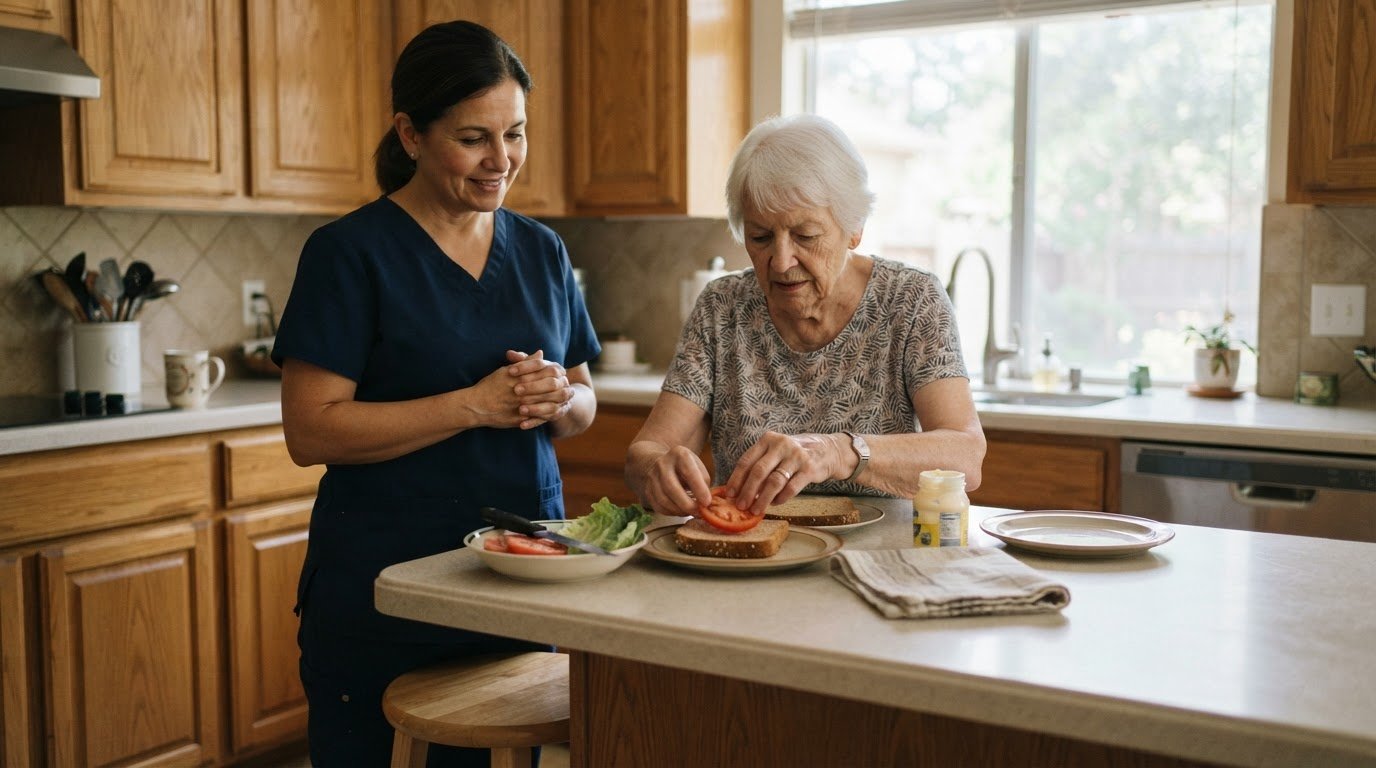
The care that helps someone manage day-to-day life at home isn’t always medical care. If you’re asking what non-medical home care covers, it can include help with dressing, bathing, and moving between a bed and chair, along with meal preparation, errands, light housekeeping, companionship, and medication reminders. Home health care is different: licensed medical professionals provide skilled services such as nursing or physical therapy.
The terms can be confusing, especially when a loved one needs both practical support and medical care. The right type of help depends on the task: assistance with daily routines and household needs, or clinical treatment from a qualified health professional.
This guide compares the services, explains how eligibility and payment can differ, and outlines where the two types of care may complement each other. You’ll also learn which payment options may help cover non-medical support, since Medicare and most health insurance typically don’t cover non-medical home care.
Key Takeaways
- Non-medical care can support daily routines, personal care, companionship, errands, and light household tasks.
- Skilled home health care is for clinical needs handled by licensed professionals; the two types of support may work alongside each other.
- Medicare and most other health insurance typically don’t cover non-medical home care, so understand the payment options that may apply to your situation.
- According to the Internal Revenue Service, certain non-medical home care expenses may be deductible when they exceed 7.5% of adjusted gross income.
- Use the person’s daily support needs and any clinical care needs to help decide which type of help fits.
Home Health Care vs. Non-Medical Home Care
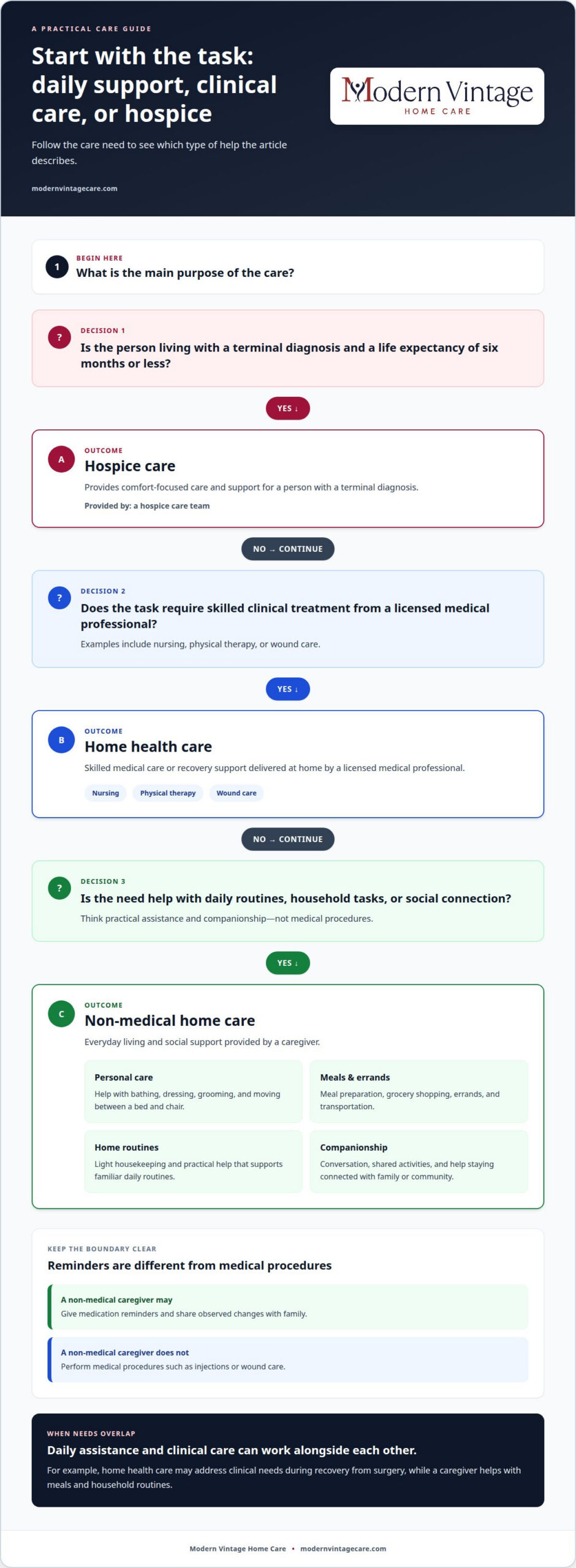
Non-medical home care supports daily routines and social connection, while home health care provides skilled medical services. A caregiver may help with bathing, transportation, or companionship; a nurse or physical therapist may provide clinical care at home. Hospice care supports someone with a terminal diagnosis and a life expectancy of six months or less.
The clearest distinction is the kind of help a person needs. During recovery from surgery, home health care may address clinical needs, while a caregiver can help with meals and household routines. Non-medical home care can also be arranged for everyday support without a homebound requirement or doctor’s note.
Companionship is more than having another person in the room. A caregiver can talk with someone over breakfast, share a familiar hobby, or help them stay connected with family. These activities encourage social engagement and mental stimulation, especially when a person has limited opportunities to leave home.
| Care option | Main purpose | Typical support | Who provides it |
|---|---|---|---|
| Non-medical home care | Daily living and social support | Companionship, bathing assistance, transportation, household help | Caregiver |
| Home health care | Skilled medical care or recovery support | Nursing, physical therapy, wound care | Licensed medical professional |
| Hospice care | Support for a person with a terminal diagnosis | Care focused on comfort and support | Hospice care team |
Choose based on the task: everyday assistance points to non-medical home care, while clinical treatment requires skilled home health care.
Companion care can include practical help that makes time together easier. A caregiver might prepare lunch, tidy the dining area, and then sit with the person during a favorite radio program. These tasks leave room for conversation without making the visit feel clinical.
Social outings can also be part of companionship. A caregiver may provide transportation to a family gathering, help someone run an errand, or accompany them to a community activity. Before an outing, identify the person’s preferences and the assistance they need, such as help getting ready or moving safely from the car.
For someone receiving ongoing care at home, regular companionship can add structure to the day. A simple routine might include a shared meal, a walk when appropriate, and a call with a relative. These moments support connection while respecting the person’s choices.
Non-medical caregivers don’t perform medical procedures such as injections or wound care. They can provide medication reminders and share observed changes with family. When someone needs both clinical treatment and help with daily activities, the two types of care may work alongside each other.
What services are included in nonmedical home care?
Non-medical home care can help with activities of daily living, or ADLs: personal routines people manage each day. Personal care may include help with bathing, dressing, and moving between a bed and chair. The caregiver assists while respecting the person’s preferences, pace, and privacy. For example, someone who chooses clothes independently may need help reaching them or fastening buttons.
Support should match the task without replacing abilities the person still has. A caregiver can set out clean clothes, offer help while the person dresses, and allow time for each step. During bathing, help may involve preparing towels and toiletries or assisting with washing. Moving from bed to chair may require support during the transfer. These are examples of daily assistance, not medical procedures.
Everyday needs can also include instrumental activities of daily living, which help a person manage home and community routines. Depending on the care plan, a caregiver may help prepare meals, organize a shopping list, pick up groceries, or provide transportation to an appointment. For instance, a morning visit could include preparing breakfast, tidying the kitchen, and setting out items needed for the day.
- Getting ready: Help with dressing, grooming, and preparing personal items.
- Personal routines: Assistance with bathing and moving safely between a bed and chair.
- Meals and errands: Meal preparation, grocery shopping, and other practical tasks.
- Daily structure: Support that helps someone follow familiar routines at home.
For seniors, a small change can affect several routines. If dressing takes longer, identify the difficult steps, such as choosing clothes, reaching a closet, or fastening buttons. That detail helps tailor assistance to the person’s abilities. A caregiver can support the challenging step while leaving other parts of the routine to the person.
Care needs can change over time. Someone might first need help preparing meals and later need assistance with bathing or transfers. Families can note which tasks need support and when, such as in the morning or at mealtimes. Long-term care insurance benefits generally begin when someone needs help with two or more activities of daily living, so a clear record can help when reviewing a policy.
Nonmedical personal care focuses on these practical routines, while nursing addresses clinical needs. If daily tasks are becoming harder to manage, personal care support can help address bathing, dressing, and other everyday needs with dignity.
Non-Medical vs. Skilled Home Health Care
Non-medical home care focuses on everyday assistance; skilled home health addresses clinical needs. A caregiver may remind someone to take prescribed medication, but a qualified health professional handles clinical adjustments. Home health may also involve wound care, injections, or therapy after illness, injury, or surgery. The distinction is the task, not simply where care takes place.
Needs can overlap. After a hospital stay, someone might receive skilled visits for wound care and caregiver support with meals, dressing, or household routines. A caregiver can encourage prescribed exercises, notice a change, and share it with family. Caregivers don’t replace skilled professionals or change treatment plans.
Medicare home health services must come from a Medicare-certified home health agency and be ordered by a health care provider, according to the Centers for Medicare & Medicaid Services. Home health care is generally intermittent, while non-medical care can support daily routines over longer periods. A treatment visit and ongoing help at home serve different purposes.
When hiring privately, the family and caregiver coordinate duties, schedules, and what happens if plans change. An agency provides an additional point of coordination, so clarify who handles scheduling, supervision, and communication. These responsibilities affect how smoothly care continues when a caregiver is unavailable.
Non-medical caregivers aren’t necessarily required to have medical training or certification, although some may have relevant experience. When comparing care options, consider experience, training, background-check practices, and the duties included. Requirements may differ by state.
Non-medical home care excludes medical procedures such as injections, IV therapy, and wound care. A caregiver can give medication reminders, but a qualified health professional handles intravenous medication or clinical adjustments based on vital signs.
To choose and assess care, list daily tasks and clinical needs separately. Then compare the caregiver’s experience, training, background-check process, and stated duties with that list. For example, if wound care is needed, identify it as a skilled medical service, not a non-medical caregiving task.
Care can change as needs change. If a wound, medication adjustment, or therapy need arises, the family can coordinate skilled home health while maintaining daily assistance. If practical support becomes the main need after clinical treatment ends, non-medical care can continue with meals, routines, and companionship.
Light housekeeping
Light housekeeping can make everyday routines at home easier to manage. The specific tasks depend on what needs attention during a visit.
Household Cleaning Tasks
Light housekeeping means everyday tidying, not clinical care or a full-home cleaning service. A caregiver may straighten a living area, wipe a kitchen counter, or return household items to their usual places. These tasks support the home environment, unlike personal assistance with bathing or dressing. Families can identify priority areas, such as the kitchen table or a frequently used walkway.
Make housekeeping requests specific by naming the task and location. “Clear the breakfast table” is more useful than “clean the house.” The same approach works for tidying a living room or putting away items used during a visit. A short, clear list keeps the focus on light household tasks.
Housekeeping can complement companionship. A caregiver might tidy the table while talking with the person, then help arrange the room for a family visit. The task creates a comfortable setting for an activity the person values. Prioritize chores that support daily routines, such as keeping commonly used spaces orderly.
Meal Preparation and Laundry
Meal preparation and laundry support different routines from surface tidying. A caregiver may help prepare a meal, organize ingredients, or put away clean clothes. Preparing lunch might include setting out the ingredients and leaving the kitchen ready to use. Laundry assistance concerns clothing and linens; meal preparation focuses on food and mealtimes.
Make household tasks clearer by describing the desired result. “Prepare soup and place it in the refrigerator” is more specific than “help with food.” For laundry, say whether the priority is sorting clothes, folding clean items, or putting them away. Specific requests keep assistance tied to practical needs and familiar preferences.
Meal preparation can also create a natural moment for companionship. The caregiver and person receiving care can talk while choosing ingredients or setting the table. Sharing a person’s preferred meal routine helps make assistance more personal. Everyday meal preparation is not medical meal planning or clinical diet advice.
Before home care services begin, families can write down priority chores, preferred meals, and laundry tasks. Agencies and caregivers can use those details to understand what matters during a visit. A clear task list can also bring peace of mind by helping relatives see how household support fits the person’s routine. For support that pairs daily help with human connection, companionship support may be a useful part of the care plan.
Eligibility and payment options for non-medical home care
Non-medical home care can support people who need help with daily routines; a homebound status or doctor’s note isn’t required. Payment programs have their own eligibility rules. Start by listing the assistance needed, such as meal preparation, laundry, or help with daily activities.
Personal savings are one way families pay for non-medical services. Long-term care insurance may also help; benefits generally begin when someone needs assistance with two or more activities of daily living. Review the policy’s criteria and the daily tasks involved, since companionship or housekeeping alone may not meet its requirements.
Veterans’ benefits and Medicaid waiver programs may be other options. The VA’s Aid and Attendance Benefits and Household Allowance may provide support to qualifying veterans and families. Some state Medicaid programs cover certain home care services for eligible seniors, including specific non-medical support through home and community-based services waivers. Coverage depends on the program and state.
Medicare and most other health insurance typically don’t cover non-medical home care. Medicare’s home health care benefit focuses on skilled services, rather than personal care or housekeeping alone. Some Medicare Advantage plans offer supplemental benefits that cover non-medical home care in 2026. Look at the plan’s covered services and eligibility rules when comparing payment routes.
Tax treatment is another consideration. According to the Internal Revenue Service, certain non-medical home care expenses may be deductible when they exceed 7.5% of adjusted gross income. Keep records that identify the services and expenses, such as help with personal care, meal preparation, or laundry. The deduction applies to qualifying expenses, not automatically to every home care charge.
Use these steps to organize a payment review:
- Write down the daily tasks requiring assistance and how they affect independence.
- Identify whether the need involves skilled care or non-medical support.
- Review long-term care insurance, veterans benefits, and state Medicaid waiver criteria.
- Compare available coverage with the specific services and eligibility conditions.
A doctor’s note may be relevant to skilled home health care, but non-medical support doesn’t require being homebound or having a doctor’s note. If sorting through support needs is the first step, explore care options for help planning everyday assistance.
Modern Vintage Home Care: Alzheimer’s & Dementia Care
Modern Vintage Home Care provides Alzheimer’s & Dementia Care for families seeking support at home in Sugar Land, Missouri City, and SW Houston. When memory changes make routines harder, structured daily routines, companionship, and personal care can support everyday needs while respecting the person’s preferences.
Start by identifying the moments that feel most difficult, such as getting ready in the morning or spending time alone. Sharing these needs can help shape a conversation about appropriate support. Families considering Alzheimer’s & Dementia Care can contact Modern Vintage Home Care to discuss care needs and next steps.
Choose Support That Fits the Next Step
Care needs can change, so focus on the support that would make daily life easier now. Understanding what non-medical home care covers helps your family describe the routines, concerns, and preferences that matter most. Note where assistance would help and what the person hopes to continue doing independently.
Modern Vintage Home Care offers Alzheimer’s & Dementia Care, 24-Hour Care, and Companionship. These services may be relevant when memory changes, the need for ongoing support, or limited social connection affects life at home. A conversation can help your family consider which kind of support aligns with your loved one’s needs.
Take the next step at your family’s pace. Contact Modern Vintage Home Care to discuss the support you’re looking for and explore a thoughtful path forward.
Frequently Asked Questions
What happens when care needs change?
Update the care plan as daily tasks or safety needs change. If someone who needed meal support now struggles with bathing, note the new task and when assistance is needed. Keep non-medical needs separate from clinical ones. Wound care or medication adjustments require skilled health services, while familiar routines can remain part of non-medical care.
Who Can Benefit From Home Caregiving Services?
People who need help with everyday routines may benefit, including seniors who want to remain at home. Someone may make personal choices independently yet need help organizing the day, preparing meals, or staying socially connected. Families in Sugar Land, Missouri City, and SW Houston may consider in-home support when a relative needs practical assistance rather than clinical treatment from a licensed professional.
What does non-medical home care cover?
Non-medical home care can include personal assistance, companionship, meal preparation, light housekeeping, errands, and medication reminders. The support depends on the person’s routine and priorities. A care plan might include help getting ready, preparing a meal, and medication reminders. These supportive tasks don’t include clinical procedures such as injections or wound care.
Does non-medical home care include personal care, companionship, and household help?
Yes. Support can include personal care, companionship, and household assistance, shaped around daily needs. Personal care can help someone get ready, companionship can provide conversation or shared activities, and household assistance can keep commonly used spaces orderly. A family might prioritize morning grooming and a shared meal while encouraging the person to manage tasks they can safely do independently.
How much does non-medical home care cost per hour in the United States?
There isn’t one hourly rate for every home care arrangement. Pricing depends on location, service type, schedule, and level of support. A companionship-focused plan may differ from one involving regular personal care or more extensive daily assistance. Modern Vintage Home Care provides personalized quotes based on the requested services.
Does Medicare cover non-medical home care?
Medicare generally doesn’t cover non-medical home care on its own, such as personal assistance or housekeeping without skilled services. Home health coverage is different. According to the Centers for Medicare & Medicaid Services, covered home health services must be ordered by a health care provider and provided by a Medicare-certified home health agency. This distinction helps separate everyday assistance from clinical care.
Does Medicaid cover non-medical home care, and how does coverage vary by state?
Some state Medicaid programs cover certain home care services for financially eligible seniors, including specific non-medical support through home and community-based services waivers. Covered tasks and eligibility requirements vary by state and program. One program may allow particular in-home assistance, while another may use different services or qualification criteria. The applicable state program’s rules shape which support is available.
Can long-term care insurance pay for non-medical home care?
Yes, long-term care insurance may help pay for non-medical in-home care when policy requirements are met. Benefits generally begin when someone needs help with two or more activities of daily living, such as bathing or dressing. Review the policy’s qualifying activities, assessment process, and covered services. Understanding what non-medical home care covers can help families compare the policy terms with the support needed.
