
What if the most therapeutic part of your loved one’s day isn’t found in a pill bottle, but in the simple rhythm of a shared song or the tactile comfort of folding warm towels? Finding meaningful activities for seniors with dementia at home often feels like an uphill battle, especially when you are already exhausted from the demands of around-the-clock care. It’s natural to feel a heavy sense of guilt when the afternoon stretches on with nothing but the television for company, particularly if sundowning behaviors are beginning to create tension for everyone in the house.
Engaging your loved one doesn’t have to require hours of preparation or expensive equipment. Whether you are looking for ways to reduce evening agitation or simply want to see a spark of recognition in their eyes, the right engagement can transform a stressful day into one of genuine connection. This guide explores therapeutic, low-prep ideas tailored to every stage of memory loss. We will look at how to create a sense of purpose through daily tasks and when to consider professional companionship to ensure both you and your loved one can thrive.
Key Takeaways
- Meaningful engagement reduces challenging behaviors like wandering by tapping into a senior’s remaining skills and interests.
- Learn how to adapt activities for seniors with dementia at home based on their specific stage of memory loss to prevent unnecessary frustration.
- Explore five diverse activity categories, including cognitive and creative options, that foster a sense of accomplishment and joy.
- Establishing a structured daily routine helps lower anxiety by creating a predictable and comforting environment for your loved one.
- Recognize the signs of caregiver burnout and learn how professional companionship can provide essential support and fresh energy.
The Therapeutic Value of Engagement in Dementia Care
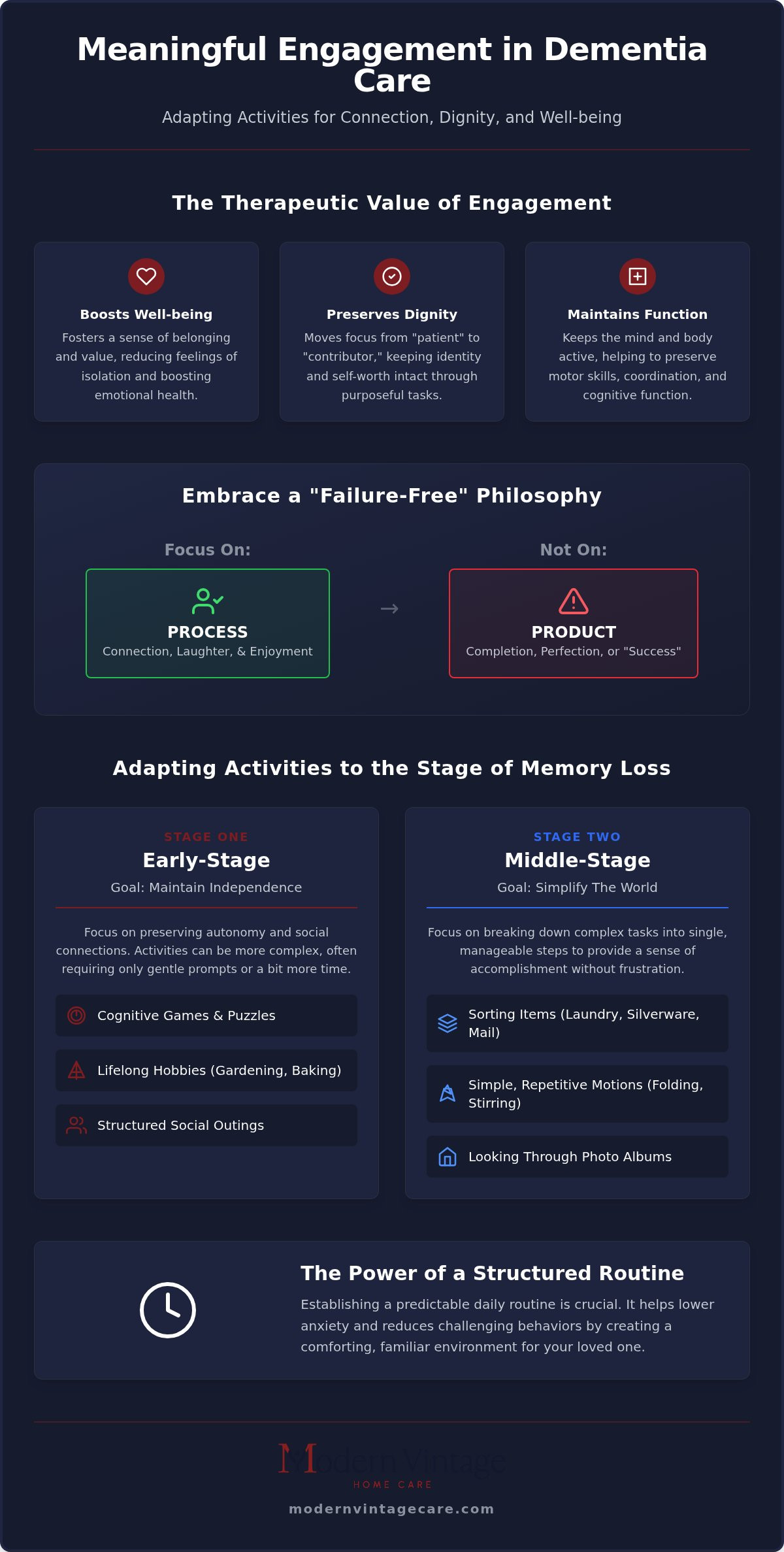
Meaningful engagement is far more than a way to fill the hours; it is a vital component of holistic health. When we choose activities for seniors with dementia at home, we are looking for ways to tap into their remaining skills and deep-seated interests. If your father was a carpenter, he might find comfort in sanding a smooth piece of wood. If your mother was a librarian, she might enjoy the tactile sensation of organizing books by color. This person-centered approach focuses on the individual’s history and spirit rather than their diagnosis.
One of the most important shifts a caregiver can make is prioritizing the process over the product. It isn’t about whether the puzzle is completed or the song is sung perfectly. The value lies in the laughter, the focus, and the shared connection during the task. When the pressure to “succeed” is removed, the senior is free to enjoy the activity without the fear of failure or frustration.
Consistent engagement also serves as a proactive tool for managing difficult symptoms. If a senior is left without stimulation, they may experience increased anxiety, which often manifests as wandering or aggression. By providing a structured outlet for their energy, you can help reduce these challenging behaviors and create a more peaceful home environment. The “use it or lose it” principle is a reality in dementia care; keeping the mind and body active helps preserve function for as long as possible.
Boosting Emotional Well-being and Dignity
Participating in daily tasks helps seniors feel valued and productive. It moves them away from the role of a “patient” and back into the role of a contributing family member. This sense of belonging is essential for reducing the isolation that sometimes accompanies dementia home care. When a senior feels heard and seen through shared activities, their dignity remains intact. Therapeutic engagement is the cornerstone of quality of life in memory care.
Physical and Cognitive Health Benefits
Engaging in simple, repetitive motions helps maintain motor skills and hand-eye coordination. Whether it’s folding laundry or sorting buttons, these movements keep joints flexible and muscles engaged. There is also a significant cognitive benefit to this stimulation. Evidence regarding the Therapeutic Value of Engagement shows that neuroplasticity can still be encouraged, especially in the earlier stages of memory loss. Introducing various activities for seniors with dementia at home also helps regulate the body’s internal clock. Increasing daytime activity levels often leads to more restful sleep patterns and a reduction in nighttime restlessness.
Adapting Activities to Different Stages of Memory Loss
Dementia is a journey that changes over time, meaning our approach to engagement must remain flexible. The most effective activities for seniors with dementia at home are those that evolve alongside the individual’s cognitive abilities. We advocate for a “failure-free” philosophy, where the focus remains entirely on the enjoyment of the moment. If there is no “correct” way to complete a task, there is no risk of the senior feeling discouraged or embarrassed. By matching the challenge to their current state, you preserve their dignity and prevent the agitation that often stems from frustration.
Early-Stage: Maintaining Independence
In the early stages, the goal is to preserve autonomy and social connections. Many seniors can still enjoy lifelong hobbies like gardening, baking, or playing bridge, though they might need a bit more time or gentle prompts. Keeping health stable is a prerequisite for engagement; utilizing medication management for elderly loved ones ensures that symptoms like anxiety or physical discomfort don’t interfere with their favorite pastimes. Focus on complex cognitive games or structured puzzles that challenge the mind without becoming overwhelming.
Middle-Stage: Simplifying the World
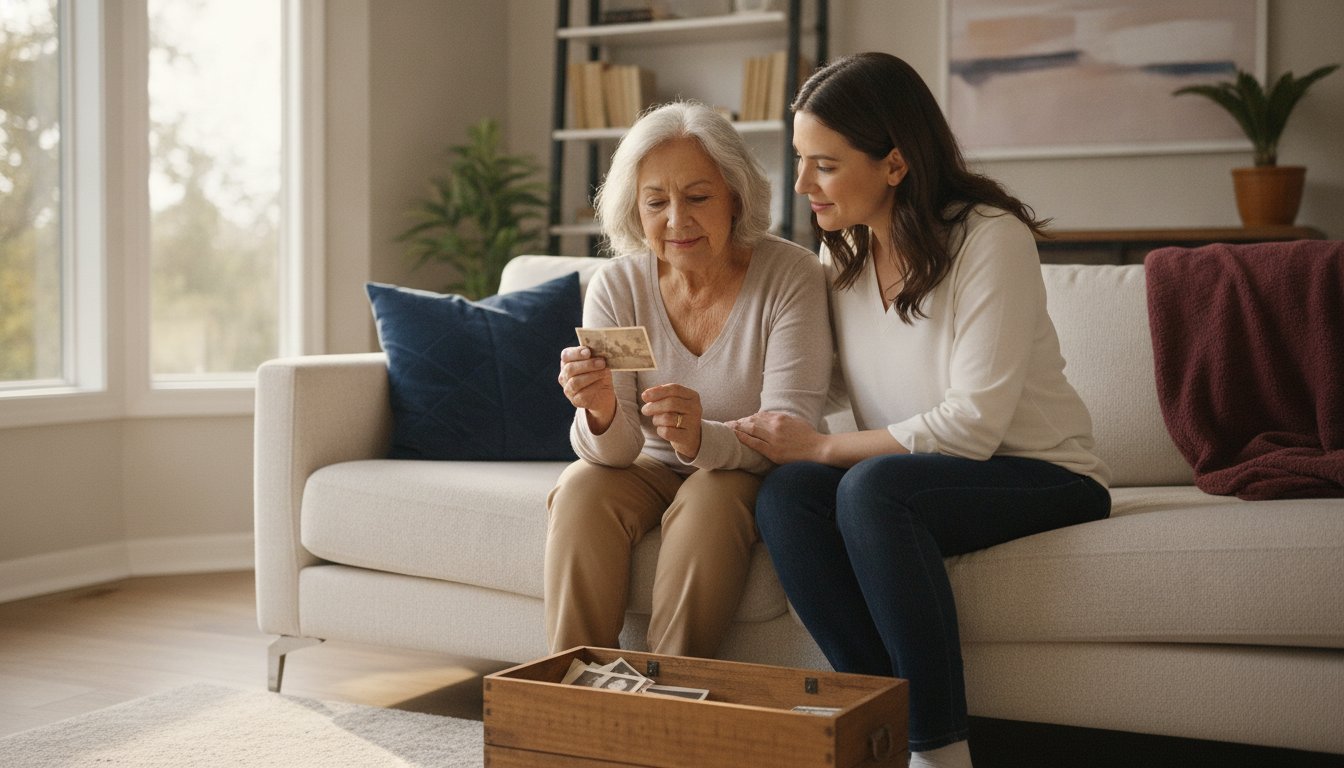
As cognitive decline progresses, complex projects can become stressful. This is the time to simplify. Instead of asking a senior to cook a full meal, ask them to help with a single, manageable step like stirring batter or snapping green beans. Breaking down tasks like folding laundry into “towels only” or sorting mail into “colorful versus white” gives a sense of accomplishment. Visual cues and “over-explaining” with a kind, patient tone can help them stay on track. You can find many stage-appropriate At-Home Activities to Try that focus on reminiscence, such as looking through old photo albums or listening to music from their youth. If you find yourself struggling to keep up with these changing needs, reaching out for professional dementia care can offer the respite you need while providing your loved one with expert engagement.
Late-Stage: Sensory and Comfort-Based Care
In the later stages, communication often moves beyond words. Engagement shifts toward sensory stimulation to provide comfort and soothe the spirit. Soft textures like a fleece blanket, the scent of lavender aromatherapy, or the familiar sound of a loved one’s voice can make a significant difference. Using the “hand-under-hand” technique allows the senior to feel the motion of an activity, such as brushing hair or holding a cup, even if they can’t initiate the movement themselves. These small, sensory-rich activities for seniors with dementia at home help maintain a vital connection to the world around them while prioritizing their immediate physical and emotional comfort.
5 Categories of At-Home Activities to Try Today
Finding the right activities for seniors with dementia at home requires a balance of variety and familiarity. We have categorized these ideas to help you choose the best fit for your loved one’s energy levels and mood at any given moment. By offering different types of stimulation, you can address their emotional, physical, and cognitive needs throughout the day. It’s often helpful to have a few options ready so you can pivot if one activity doesn’t seem to resonate.
Cognitive and Creative Stimulation
Cognitive activities should stimulate the mind without causing undue stress. When selecting puzzles, look for high-contrast images with larger pieces that are specifically designed for adults. You should avoid anything that looks like it is for children, as maintaining their dignity is a priority. If memory-based games like trivia become frustrating, try the TimeSlips method. This approach uses a photograph or a painting to prompt creative storytelling rather than asking for specific facts. Instead of asking “Where is this?” you might ask “What do you think this person is feeling?” Creative expression bypasses verbal deficits, allowing a senior to communicate through color or texture even when words are difficult to find. Watercolor painting, clay modeling, and flower arranging offer tactile and visual outlets for their spirit.
Physical and Domestic Engagement
Maintaining movement is vital for physical health and fall prevention. Simple activities for seniors with dementia at home like chair yoga or a gentle balloon toss keep the body active in a safe, controlled way. If the weather allows, a short walk around the yard can provide a much-needed change of scenery and fresh air. These movements help maintain balance and can improve overall mood by releasing natural endorphins.
Domestic tasks often provide the strongest sense of purpose for seniors. We find that many individuals thrive when they feel they are “helping” with the household. Dusting a coffee table, folding hand towels, or shelling peas are low-risk tasks that make a loved one feel like a valued member of the home. Before starting these tasks, ensuring your loved one is comfortable and ready is key. Utilizing personal care for seniors Houston can help with morning routines and grooming, ensuring they are physically prepared and refreshed to participate in the day’s events.
Sensory Engagement
For moments when cognitive or physical effort is too much, sensory activities provide quiet comfort. Scented playdough or a gentle hand massage with lavender lotion can be incredibly soothing for a restless senior. Listening to nature sounds or familiar melodies can help ground a person who feels overwhelmed. These moments of calm are just as important as the more active parts of their day, helping to regulate their nervous system and promote a sense of peace.
Creating a Structured Daily Routine to Reduce Anxiety
Predictability is a wonderful gift for someone whose world feels increasingly confusing. A well-designed routine acts as a steady anchor, providing a sense of safety that minimizes the need for constant reorientation. When you plan activities for seniors with dementia at home, the timing is just as vital as the task itself. A rhythmic schedule helps regulate the body’s internal clock, which can improve both mood and sleep quality.
Start each day with a consistent wake-up and grooming ritual. This familiar sequence signals that the day has begun and helps your loved one feel prepared. We recommend front-loading the morning with high-energy or cognitively demanding tasks while they are most refreshed. If they enjoy puzzles or creative storytelling, these are best handled before the midday meal. After lunch, it is helpful to plan for a “quiet hour” with minimal noise and soft lighting. This period of rest prevents the cumulative fatigue that often leads to late-day agitation.
Addressing Sundowning and Late-Day Agitation
Many families notice a significant shift in behavior as the sun begins to set. This phenomenon, often called sundowning, can trigger restlessness, shadows can become frightening, and fatigue can turn into confusion. Identifying these triggers is the first step toward a more peaceful evening. As the light fades, shift to low-stimulation, sensory-rich activities. We suggest creating a “calm down kit” filled with familiar, comforting items like a soft fleece blanket, a favorite scent, or a photo album. If these transitions become difficult to manage alone, our specialized dementia care can provide the extra support needed to maintain a calm atmosphere at home.
Adapting for the Houston Environment
Living in the Houston and Sugar Land area requires special consideration for the local climate. While outdoor activities for seniors with dementia at home are beneficial, the intense humidity and heat can quickly become dangerous. Limit outdoor time to the early morning hours when the air is cooler. If the heat is too intense, you can create indoor “nature” alternatives. A sunroom or a comfortable chair by a window with a bird feeder offers the benefits of the outdoors without the physical strain of the heat. Regardless of the setting, ensure constant hydration. Even mild dehydration can significantly increase confusion and lethargy in seniors with memory loss.
When to Seek Professional Support for In-Home Memory Care
Providing consistent, engaging activities for seniors with dementia at home is a deeply rewarding act of love, but it is also physically and emotionally demanding. There may come a point where the 24/7 nature of care begins to impact your own well-being. Recognizing the signs of caregiver burnout is essential for the health of the entire family. If you find yourself feeling constant exhaustion, irritability, or a sense of dread about the day’s routine, it is often a signal that you need a supportive partner in care.
Professional dementia home care services Sugar Land bring fresh energy and specialized techniques to your household. A trained caregiver can step in to lead the activities we have discussed, allowing you to transition from being a task-manager back to being a son, daughter, or spouse. We also offer Quick Care Services for those moments when you need short-term respite. These services ensure your loved one stays active and engaged while you take the time you need to rest and recharge.
The Role of Companionship and Specialized Care
A professional caregiver acts as a trained companion who understands the nuances of memory loss. They utilize specialized techniques like reminiscence therapy to build a bridge to the past, helping seniors share stories and maintain their sense of identity. Safety is always the priority; having an expert present ensures that physical activities for seniors with dementia at home are conducted without the risk of falls or overexertion. For families requiring more intensive support, 24-hour home care Houston offers the peace of mind that comes with round-the-clock professional supervision and engagement.
Next Steps with Modern Vintage Home Care
At Modern Vintage Home Care, we don’t believe in one-size-fits-all solutions. Our care plans are personalized to reflect each individual’s unique history, preferences, and current cognitive stage. Whether we are serving families in Sugar Land, Houston, or Missouri City, our caregivers focus on integrating joy and purpose into every daily routine. We act as a steady advocate for your loved one’s dignity while providing the reliable support you deserve. We invite you to reach out and learn how a professional partnership can improve your family’s quality of life. Contact us today for a personalized consultation to discuss a tailored care plan for your loved one.
Empowering Your Loved One Through Daily Connection
Enhancing your loved one’s quality of life doesn’t require complex plans; it simply requires presence and the right approach. By matching activities for seniors with dementia at home to their specific stage of memory loss, you can reduce daily frustration and replace it with moments of genuine joy. Whether you are using sensory stimulation to soothe late-day anxiety or domestic tasks to restore a sense of purpose, your efforts are building a bridge to the person they have always been. These small, intentional interactions preserve dignity and strengthen the emotional bond you share.
You don’t have to walk this path alone. As a locally owned and operated provider in Sugar Land, Modern Vintage Home Care is here to act as your trusted partner. Our team has specialized Alzheimer’s and dementia training, ensuring that every interaction is grounded in a compassionate, person-centered care approach. If you are feeling overwhelmed or simply want to ensure your relative is receiving the most engaging support possible, we are ready to help. Schedule a Free In-Home Assessment with our Sugar Land Memory Care Experts today. Remember that even the smallest shared activity can make a significant difference in preserving your loved one’s spirit and your own peace of mind.
Frequently Asked Questions
What are the best low-prep activities for dementia patients at home?
The best low-prep activities for seniors with dementia at home involve everyday household objects that spark recognition. You might ask your loved one to help sort a basket of clean socks by color or stack plastic containers in the kitchen. Listening to a favorite radio station or looking through a basket of textured fabric scraps provides instant engagement. These tasks don’t require any special equipment or lengthy cleanup afterward.
How do I deal with a senior who refuses to participate in activities?
If a senior refuses to participate, it’s best to stop and try again later rather than forcing the issue. Often, a refusal is a sign of fatigue or feeling overwhelmed by the request. Try rephrasing the activity as an invitation for help. Saying, “I’m having trouble matching these socks; could you help me?” often feels more empowering and less like a demand for performance.
Can activities really help slow the progression of Alzheimer’s?
Engaging in regular activities for seniors with dementia at home can help maintain cognitive function by stimulating neural pathways. While activities can’t cure the underlying condition, they promote neuroplasticity and can slow the decline of functional skills. Staying active also helps manage secondary symptoms like depression and anxiety. These issues often accelerate cognitive decline when they are left unaddressed in a home care setting.
What should I do if an activity causes my loved one to become frustrated?
When an activity causes frustration, you should immediately redirect your loved one’s attention to something simpler or more soothing. Frustration often occurs when a task is too complex or if the senior feels they are being tested. Validate their feelings with a calm voice and transition to a sensory-based activity, such as a hand massage or a cup of warm tea, to reset their mood.
How can I safely incorporate outdoor activities in the Houston heat?
Safely enjoying the outdoors in the Houston and Sugar Land heat requires careful timing and constant monitoring. Limit outdoor activities to the early morning hours, typically before 9:00 AM, when temperatures are at their lowest. Ensure your loved one drinks water every 15 to 20 minutes to prevent dehydration, which can worsen confusion. If the humidity is too high, utilize sunrooms to provide a visual connection to nature.
Are there specific activities that help with sundowning?
Activities that focus on relaxation and sensory comfort are most effective for managing sundowning behaviors. As the light begins to change in the late afternoon, move away from cognitively demanding tasks and toward familiar, repetitive motions. Folding warm laundry or listening to soft, classical music can help ground a senior. Reducing environmental noise and closing the curtains early can also prevent the visual triggers that cause evening restlessness.
Is it okay to use ‘child-like’ activities like coloring books?
It is important to avoid activities that feel demeaning or child-like, as maintaining a senior’s dignity is paramount. While coloring can be therapeutic, you should choose adult coloring books with sophisticated designs rather than those intended for children. Similarly, instead of playing with blocks, ask them to help you organize items. This shift in language ensures they feel like a contributing adult rather than a patient.
How often should we change the daily routine for someone with dementia?
You should change a daily routine as rarely as possible because consistency provides a vital sense of security. People living with dementia rely on predictable patterns to navigate their day without anxiety. While you might swap specific activities within a time slot to keep things interesting, the overall structure of wake-up times, meals, and rest periods should remain identical from one day to the next.