

Imagine sitting across from your father in his Houston living room, watching him stare at a television program he no longer follows. It’s a quiet, heavy moment that many local families experience as they search for ways to bridge the growing gap. You want to see that spark of recognition again, yet the weight of constant supervision can leave you feeling more like a manager than a loved one. Finding meaningful activities for dementia patients at home is about more than just filling time; it’s about reclaiming the dignity and joy that define your family’s bond.
We understand the guilt that comes when you feel you aren’t doing enough, or the sheer exhaustion that follows a long day of caregiving. This guide provides a path toward a more peaceful home environment by introducing therapeutic, stage-appropriate tasks that require very little equipment. Whether you’re looking to reduce the agitation of sundowning or simply want to share a smile, you’ll discover practical strategies to improve your senior’s quality of life. We will walk through how to build a structured routine that fosters independence and creates lasting emotional connections.
Key Takeaways
- Learn how therapeutic activities for dementia patients at home focus on the “use it or lose it” principle to help preserve cognitive function and emotional well-being.
- Discover the importance of matching activities to your loved one’s specific stage of dementia to prevent frustration while avoiding the indignity of infantilization.
- Find practical ways to adapt physical activities for the local Houston and Sugar Land climate, focusing on indoor alternatives and strict hydration safety.
- Use the “Watch, Join, Lead” method to introduce new routines gently and learn how to pivot when a senior shows signs of resistance or agitation.
- Explore how professional caregivers can elevate daily engagement by turning routine tasks like dressing into opportunities for meaningful social connection.
The Therapeutic Power of Engagement for Dementia Patients
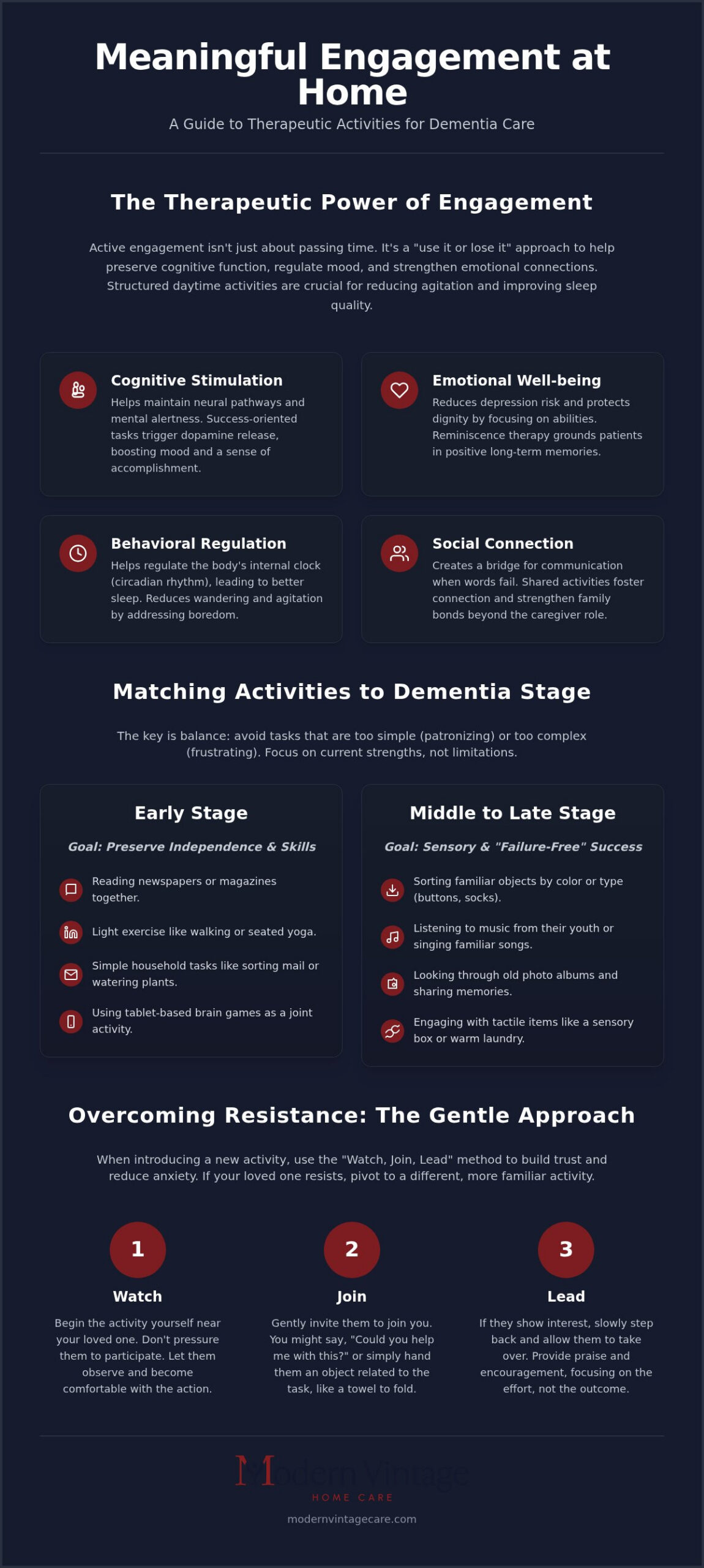
Therapeutic engagement is much more than a way to pass the hours; it’s an intentional approach that targets a senior’s cognitive, physical, and social well-being. When we discuss The Therapeutic Power of Engagement, we refer to the structured support that helps maintain neural pathways. Current 2026 research continues to highlight the “use it or lose it” principle, suggesting that active mental participation can help preserve the connections that remain. For families organizing activities for dementia patients at home, it’s vital to remember that you’re not just providing entertainment. You’re providing a lifeline to their sense of self.
Passive activities, such as leaving the television on for hours, often backfire. While it might seem like a calm distraction, the flickering lights and confusing narratives can overstimulate a fragile mind. This confusion often leads to increased agitation or “sundowning” as the sun begins to set. As a caregiver, your role in facilitating these activities is essential. These moments become a bridge to communication when words fail, allowing you to connect through shared action rather than complex conversation. It works because it prioritizes the person over the process.
Cognitive and Emotional Benefits of Active Participation
Success-oriented tasks are powerful because they trigger the release of dopamine, which naturally boosts a senior’s mood and reduces the risk of depression. When a loved one completes a simple puzzle or helps fold towels, they feel a sense of accomplishment that words alone cannot provide. Reminiscence therapy plays a key role here, as it uses familiar objects, scents, or music to ground patients in their long-term memories. Cognitive stimulation is the structured use of activities designed to maintain mental alertness and social functioning through tailored engagement. By focusing on what a senior can still do, we help protect their dignity and emotional health.
Reducing Behavioral Symptoms Through Daytime Stimulation
A structured activity plan does more than provide fun; it helps regulate the body’s internal clock, or circadian rhythm. When a senior is active during the day, they’re more likely to experience restful sleep at night. There is a direct link between daytime boredom and difficult behaviors like wandering or aggression. If a senior is engaged, they’re less likely to seek stimulation through unsafe means. When planning activities for dementia patients at home, consistency is your most reliable tool. You can also use these activities as a gentle distraction during challenging transitions. For example, if bath time causes anxiety, introducing a familiar song or a tactile object can pivot their focus and ease the stress of the moment.
Selecting Stage-Appropriate Activities for Your Loved One
Choosing the right level of engagement is a delicate balance. If a task is too simple, it can feel patronizing and strip away a person’s sense of adulthood. Conversely, if an activity is too complex, it can lead to immediate frustration and emotional outbursts. The goal is to “match the challenge” to their current cognitive abilities. This ensures that the time spent together remains a source of joy rather than a source of stress. When you are planning activities for dementia patients at home, it’s helpful to view each task through the lens of their current strengths rather than their limitations.
Early-Stage: Preserving Independence and Skill
In the early stages, the focus should remain on maintaining the skills and hobbies your loved one has always enjoyed. This is a time to encourage continued involvement in family traditions, such as light holiday baking or helping with simple household management like sorting the morning mail. Understanding the Different Stages of Dementia Care helps you recognize when to step in and when to let them lead. Technology can also play a helpful role; tablet-based brain games can provide cognitive stimulation, provided they are introduced as a fun joint activity rather than a high-stakes test.
Middle to Late-Stage: Sensory and Success-Oriented Tasks
As the condition progresses, shifting to a “Failure-Free” philosophy becomes essential. These are activities where there is no “wrong” way to participate. For many, repetitive and tactile tasks like folding warm laundry or sorting a box of colorful buttons provide a deep sense of purpose and calm. You might also introduce sensory bags or “busy blankets” that feature different textures, zippers, or buttons to help reduce anxiety and keep hands occupied during periods of restlessness.
Music remains one of the most powerful tools for connection. Creating personalized playlists of songs from your loved one’s youth, specifically the music they enjoyed between the ages of 15 and 25, can spark memories that seemed lost. When searching for new dementia activities at home, remember that the goal is the experience itself, not the finished product. If you find that planning these daily routines is becoming overwhelming, reaching out for professional Alzheimer’s and dementia care can provide you with the respite and support needed to sustain a high quality of life for everyone involved. By tailoring your approach to their specific stage, you preserve their dignity while fostering a sense of accomplishment.
Adapting Activities for the Houston and Sugar Land Environment
Living in Southeast Texas requires a specialized approach to planning the day. While outdoor engagement is often recommended, a simple walk in Sugar Land during a July afternoon isn’t just uncomfortable; it’s a significant health risk. High humidity and heat indices in Fort Bend County can lead to rapid dehydration, which is often harder for seniors with cognitive decline to recognize or communicate. When organizing activities for dementia patients at home, you must prioritize the local climate to ensure every moment remains safe and restorative. If the weather is too intense for outdoor time, bringing the “outdoors” inside becomes a creative and necessary solution.
Local resources also offer wonderful opportunities for early-stage outings. The Houston Museum of Natural Science, for example, provides a climate-controlled environment where the Butterfly Center can offer a serene, sensory-rich experience. These types of structured outings allow for social engagement without the physical strain of the Texas sun. By following established dementia caregiver tips, you can learn to balance these excursions with quiet periods of rest at home, ensuring your loved one doesn’t become overstimulated by the transition.
Safe Outdoor Engagement in the Texas Climate
Timing is everything when it comes to the Houston heat. It’s best to schedule any outdoor movement for the early morning, ideally before 9 AM, or during the late evening when the sun begins to dip. If your loved one used to enjoy yard work, consider container gardening on a shaded patio as a safer alternative. This allows them to touch the soil and care for plants without the exertion of traditional gardening. It’s also vital to watch for signs of heat exhaustion, such as increased lethargy or sudden confusion beyond their normal baseline. Keeping a pitcher of cool water visible at all times helps ensure hydration remains a natural part of the routine.
Sensory Experiences Inspired by Local Culture
You can stimulate memory and comfort by leaning into the familiar scents and tastes of our region. Using local scents like magnolia or jasmine for aromatherapy can trigger positive emotional responses and ground a senior in the present moment. Similarly, cooking-based activities for dementia patients at home can be incredibly effective when using familiar Texas or Southern recipes. The smell of baking cornbread or slow-simmering stew can trigger an appetite and spark long-term memories of family gatherings. On days with high-heat or ozone alerts, you might plan an “indoor nature walk” at a local climate-controlled mall or senior center. These spaces provide a flat, safe surface for exercise while keeping your loved one cool and comfortable.
Overcoming Resistance and Planning a Daily Routine
Introducing new activities for dementia patients at home can sometimes feel like an uphill battle. It’s common for a senior to feel skeptical or overwhelmed by a new task, which can lead to immediate refusal. To ease this transition, we recommend the “Watch, Join, Lead” method. Start by doing the activity yourself while your loved one watches from a comfortable distance. Then, invite them to join you in a small, low-pressure way, such as holding a piece of a puzzle or stirring a bowl. Finally, let them take the lead as their confidence grows. Integrating these moments into a formal care plan ensures that engagement is treated with the same clinical importance as medication management or physical safety.
Consistency is the foundation of a successful home environment. When engagement becomes a predictable part of the day, it reduces the cognitive load on your loved one. They no longer have to wonder what comes next, which lowers overall anxiety. Modern technology, such as automated check-ins, can also provide a safety net during these times. These systems ensure that your loved one is secure and following their routine even when you are occupied with other household responsibilities. If you find that managing a full daily schedule is becoming a source of burnout, our team can help you find a sustainable balance. Learn more about how we support families with respite care and specialized dementia support to ensure your loved one stays engaged and safe.
A Sample Daily Routine for Memory Care at Home
A structured flow helps regulate the body’s internal clock and prevents the restlessness often associated with the later hours of the day. We suggest organizing the day into three distinct phases:
- Morning: Focus on cognitive tasks and light physical movement. This is typically when energy levels are highest and mental clarity is at its peak.
- Afternoon: Shift toward sensory and low-stress creative tasks. Activities like sorting fabrics, folding laundry, or listening to familiar music help mitigate late-day anxiety and “sundowning.”
- Evening: Prioritize calming rituals. Soft lighting, quiet conversation, and familiar wind-down activities prepare the mind for a restful night of sleep.
Managing Activity-Related Frustration
It’s vital to recognize when a task is no longer therapeutic and has become a source of stress. Look for subtle signs of frustration such as deep sighing, looking away, or physical tension in the shoulders. If these appear, it’s time for an “Exit Strategy.” You might say, “Let’s take a break and try this later,” or gently pivot to a different, simpler task without drawing attention to the difficulty. This prevents the senior from feeling like they have “failed” a test, which preserves their dignity and willingness to try again tomorrow. Remember that the goal of any of these activities for dementia patients at home is the process of doing, not the finished product.
How Professional In-Home Care Elevates Daily Engagement
Professional caregivers serve as vital activity facilitators, bringing a renewed sense of energy and perspective into the home environment. While a family member may feel the heavy weight of daily chores, a trained professional views every interaction as an opportunity for connection. Through Specialized Dementia Home Care Services, even basic tasks like personal hygiene or dressing are transformed into meaningful social engagement. Instead of a clinical routine, these moments become times for conversation, choice-making, and dignity-preserving care. It’s about turning the “must-do” tasks into “want-to-do” moments.
For families who only need a short burst of support, “Quick Care” visits offer focused 1-2 hour engagement sessions. These visits are perfect for wellness checks or leading specific activities for dementia patients at home when the primary caregiver needs to step away for errands or rest. This structured support ensures that the senior remains active and safe without requiring a full 24-hour commitment. Above all, professional support provides the foundation of Respite Care for Family Caregivers. When you are rested and supported, you can return to your loved one with the patience and creativity needed to sustain a successful activity plan.
Professional Companionship vs. Basic Supervision
The difference between basic supervision and professional companionship lies in specialized training. Our staff is specifically educated to identify “windows of engagement,” which are those brief periods when a senior is most alert and receptive to interaction. Having a non-family member facilitate these activities often reduces the “caregiver-spouse” friction that can occur when a partner feels they are being managed by their loved one. A fresh face often encourages a senior to participate in games or hobbies they might resist with a child or spouse, creating a more harmonious home dynamic.
Safety and Peace of Mind During Activity Planning
Safety is the silent partner of every successful daily routine. We use automated medication reminders and check-ins to ensure that the physical health of the senior supports their mental activity levels. Whether it’s ensuring they don’t overexert themselves during light exercise or maintaining balance during a gardening session on the patio, a professional eye provides the security you need. This proactive approach allows the senior to explore their interests without the risk of injury or overstimulation. If you’re ready to see how a structured, personalized approach can change your daily life, please contact Modern Vintage Home Care for a personalized dementia care consultation in Sugar Land.
Reclaiming Joy Through Purposeful Daily Engagement
Creating a supportive environment for your loved one begins with the understanding that every small interaction matters. By matching activities for dementia patients at home to their specific cognitive stage and accounting for the unique Houston climate, you provide more than just safety; you provide a sense of belonging. Whether you’re adapting a family recipe or finding a quiet moment for music, these intentional choices reduce agitation and foster deep emotional connections. You don’t have to navigate this sensitive transition alone.
As Texas-licensed memory care experts, we specialize in developing personalized routines for Houston families that prioritize dignity and well-being. Our approach includes automated safety monitoring to give you peace of mind while your loved one explores new ways to stay active. If you’re feeling overwhelmed by the demands of caregiving, we invite you to Schedule a Free Dementia Care Consultation in Sugar Land. We are here to act as your steady advocate and compassionate guide. Together, we can ensure that your loved one’s spirit continues to shine in a safe, nurturing home.
Frequently Asked Questions
What are the best activities for a dementia patient who refuses everything?
The best approach is to stop asking for permission and start modeling the behavior instead. If you sit nearby and begin a simple task like sorting colorful cards or listening to familiar music, your loved one may naturally gravitate toward the action. If they continue to refuse, don’t force the issue. Simply sitting together in a calm, quiet space is a valid form of engagement that respects their current emotional state.
How many hours of activity should a dementia patient have each day?
Aim for one to two hours of total engagement, but avoid trying to complete this in a single session. It’s much more effective to plan short, 15 to 20-minute bursts throughout the morning and afternoon when energy levels are highest. This approach prevents the cognitive fatigue that leads to frustration. Consistency is far more important than the total number of minutes spent on a specific task.
Can activities really slow down the progression of Alzheimer’s?
While activities for dementia patients at home aren’t a cure, regular cognitive and social stimulation helps maintain existing neural pathways. Engaging the brain through tailored tasks can improve mood and reduce the severity of behavioral symptoms like aggression or depression. Research suggests that a structured routine improves the overall quality of life and helps seniors stay connected to their environment for a longer period.
What are some safe outdoor activities for seniors in the Houston heat?
Safe outdoor engagement in Southeast Texas requires careful timing and shade. Early morning porch time with a high-powered fan or container gardening in a fully shaded area are excellent options before the midday heat peaks. If the humidity is too high, you can bring nature indoors by setting up a bird feeder near a large window, allowing for visual stimulation without the risk of heat exhaustion.
How do I know if an activity is too difficult for my loved one?
Watch for subtle physical cues like deep sighing, looking away, or tension in their shoulders and hands. If your loved one starts repeating questions or suddenly becomes very quiet, the cognitive load is likely too heavy for them. When these signs appear, it’s best to simplify the task immediately or gently pivot to a familiar, “failure-free” activity to help them regain their confidence and calm.
How can a professional caregiver help with activities at home?
A professional caregiver acts as a trained facilitator who brings fresh energy and specialized techniques to your home. They’re skilled at recognizing “windows of engagement” when a senior is most receptive to interaction. By leading activities for dementia patients at home, a professional can reduce the emotional friction that sometimes occurs between family members, allowing the spouse or child to focus on being a supportive loved one.
Are there specific activities that help with sundowning in the evening?
Calming, repetitive tasks are most effective for mitigating the restlessness of sundowning. Activities like folding warm towels, listening to soft instrumental music, or engaging in a gentle hand massage with scented lotion can help transition the mind into a restful state. The goal during the evening hours is to lower stimulation and provide a sense of security through familiar, low-stress rituals that prepare the body for sleep.
What should I do if my loved one starts crying or gets angry during a craft?
If an emotional outburst occurs, stop the activity immediately and focus entirely on providing comfort. Don’t try to explain the instructions or fix the craft; instead, validate their feelings by saying something like, “It’s okay to feel frustrated.” Use a gentle exit strategy by moving to a different room or offering a warm drink. This shift in environment helps reset their mood and preserves their dignity.