

What if refusing a meal is your loved one’s way of telling you something is wrong, rather than a behavior to overcome? When you’re worried about their health, it’s natural to wonder what to do when a dementia patient refuses to eat. Pushing or arguing can add stress, while simply waiting may leave you unsure whether they’re getting enough nourishment.
Eating can become difficult for many reasons, from trouble recognizing food or using utensils to mouth pain, medication effects, fatigue, or difficulty swallowing. The cause isn’t always obvious, so a change in eating habits deserves calm attention.
This guide explains how to look for possible reasons, respond respectfully, and make meals more manageable without forcing or deceiving your loved one. You’ll find practical ways to simplify the setting, adapt food and routines, and offer gentle encouragement. You’ll also learn which changes, such as sudden weight loss, signs of dehydration, coughing, or difficulty swallowing, call for prompt medical guidance. Treating food refusal as information can help protect your loved one’s well-being and the trust you share.
Key Takeaways
- When considering what to do when a dementia patient refuses to eat, pause, ease pressure, and look for clues before offering another bite.
- Eating changes can have several possible causes. Notice patterns in comfort, food preferences, surroundings, and routine.
- Try gentle adjustments that fit the person’s abilities and preferences, and avoid turning meals into a struggle.
- Contact a healthcare professional about ongoing changes, repeated refusal, or symptoms that raise concern.
- Simple observations and consistent routines can help you adapt support as your loved one’s needs change.
What to Do First When a Person With Dementia Refuses to Eat
A refused meal can feel alarming, especially when you’re worried about your loved one’s strength and health. Treat it as a reason to pause and notice, not as something to blame them for. Dementia can affect how a person recognizes food, manages eating, or responds to changes in taste and swallowing. This overview of dementia provides general background, but one refused meal can’t tell you what is causing the change.
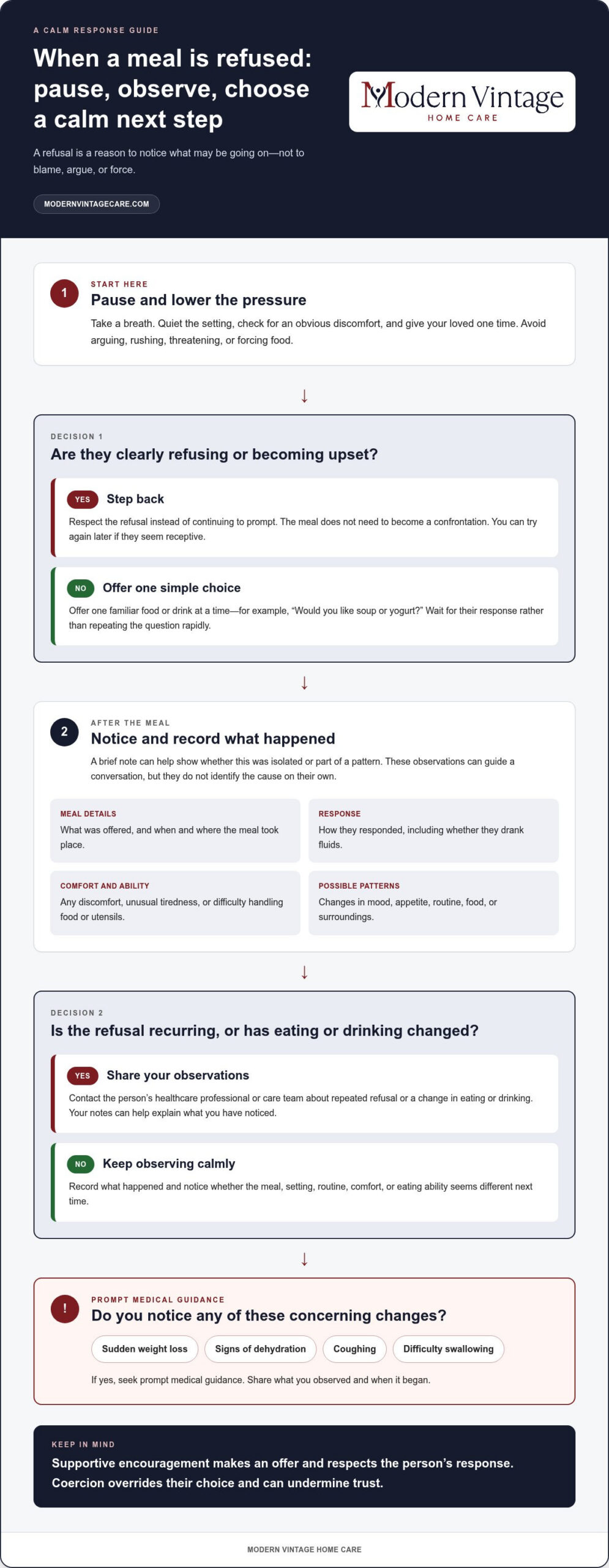
If you’re deciding what to do when a dementia patient refuses to eat, start with a calm reset. Pause, lower the pressure, check whether they seem comfortable, offer one simple choice, and observe their response. They may be tired, distracted, uncomfortable, or simply not ready to eat at that moment. Avoid arguing, rushing, threatening, or forcing food. Those responses can increase distress and make the interaction feel less safe.
A calm response during the refused meal
Take a breath and quiet the setting. Turn off the television or move away from other distractions, then check for an obvious source of discomfort, such as an uncomfortable position or a noisy room. Offer one familiar food or drink at a time, with a simple choice such as, “Would you like soup or yogurt?” Give your loved one time to answer rather than repeating the question rapidly.
Supportive encouragement makes an offer and respects the person’s response; coercion overrides their choice and can undermine trust. If they clearly refuse or become upset, step back instead of continuing to prompt. You can try again later if they seem receptive, but the meal doesn’t need to become a confrontation.
What to observe and record afterward
A brief note can help you tell whether the refusal was isolated or part of a pattern. Record what you offered, when and where the meal took place, and how your loved one responded. Include whether they drank fluids, seemed uncomfortable or unusually tired, or had difficulty handling food or utensils. Note changes in mood or appetite as well.
- Did the refusal happen at a particular meal or in a certain setting?
- Was anything different about the food, routine, or level of noise?
- Have appetite, fluid intake, comfort, or eating ability changed?
These details won’t identify a cause on their own, but they can help you explain what you’ve noticed. If refusals recur or you see a change in eating or drinking, share your notes with the person’s healthcare professional or care team. A clear record gives you a useful starting point for discussing what support may be needed.
Why Someone With Dementia May Stop Eating
A change in eating can have several possible contributors and shouldn’t automatically be attributed to dementia. Pain, illness, medication effects, difficulty managing food, or a disrupted routine may all affect how a meal goes. Looking for clues can help you describe the change, but it can’t confirm its cause.
As you consider what to do when a dementia patient refuses to eat, notice whether the change is sudden, recurring, or linked to a particular food, time, or setting. A new or ongoing change in eating deserves a conversation with a healthcare professional, especially if it worries you.
Physical discomfort and changes worth discussing
Watch for signs that eating may be uncomfortable or tiring. Your loved one may chew less, avoid certain textures, seem uncomfortable swallowing, or appear unusually tired during meals. Mouth soreness, nausea, constipation, pain, or an illness may also affect appetite. Treat these as observations to share, not as a basis for diagnosing the problem yourself.
Consider whether reduced eating began around the time a medication was started or changed. Some medicines can affect appetite or cause side effects, but don’t stop or adjust a medication on your own. Tell the person’s healthcare professional what changed and when, and ask for guidance.
Changes in routine, surroundings, or eating tasks
The meal may feel harder if the food is unfamiliar, the room is busy, or the usual timing has shifted. Dementia can also make it challenging to recognize food, handle utensils, or follow several steps at once. A person who pauses or turns away may be confused, overwhelmed, or having difficulty with the task rather than deliberately being difficult.
Notice what happens before and during meals. Does your loved one eat more comfortably in a quieter space, with familiar foods, or when the routine is predictable? Share recurring patterns with their healthcare professional or care team, along with changes in appetite, comfort, or ability to eat. Mention medication concerns too, and don’t make medication changes yourself.
When daily care feels harder to manage, familiar routines and steady companionship at home may support both the person and family caregivers. Learn more about in-home dementia care as an option for personalized daily support.
How to Make Meals Easier Without Pressuring the Person
Small changes can make a meal feel more familiar and manageable, although what helps depends on the person’s preferences and abilities. If you’re considering what to do when a dementia patient refuses to eat, try one adjustment at a time and notice how they respond. A quieter room, a familiar dish, or a little more time may feel more comfortable than changing several things at once.
Small adjustments to the meal and setting
Keep the eating area calm and comfortable. Turn off background noise, use a familiar place setting, and serve a modest portion of a food the person usually enjoys. Too many items or choices at once can feel overwhelming, so offer one or two options simply. Keeping mealtimes close to the usual routine may also provide a reassuring sense of what to expect.
Give your loved one time to notice the food and begin at their own pace. If an approach doesn’t feel right, pause and try a different gentle adjustment another time. These ideas are options, not guarantees. Let the person’s comfort and preferences guide what you continue.
Offer support while preserving choice
Ask before helping: “Would you like me to cut this for you?” If they welcome assistance, offer only what they need, such as setting out utensils or bringing a drink within reach. Easy-to-manage foods may suit some people, but only when they fit the person’s known swallowing abilities and preferences. Respect a refusal or a request to do something independently.
| May feel more supportive | May add pressure |
|---|---|
| Offering a familiar food and a simple choice | Presenting many options or insisting on a particular dish |
| Allowing time and asking before assisting | Rushing, repeatedly prompting, or taking over |
| Keeping the setting calm and predictable | Arguing or making the meal feel like a test |
Don’t disguise food or change its texture without considering the person’s consent and safety. If there are signs of swallowing difficulty, or you’re unsure which textures are appropriate, ask a healthcare professional for guidance. A doctor or speech-language pathologist can assess swallowing concerns and advise on safe ways to eat.
For more about familiar routines and personalized support at home, read this guide to dementia home care.
When Eating Refusal Needs Medical Advice or Urgent Attention
A single refused meal may not explain what’s happening, but ongoing changes deserve attention. Contact a healthcare professional if reduced intake persists, refusals keep recurring, or you’re concerned about your loved one’s health. Seek advice promptly if you notice weight loss, signs of dehydration, pain, illness, mouth problems, or increasing difficulty chewing or swallowing.
Describe what you’ve observed and how long it has been happening. Mention whether the change is worsening or comes and goes, what your loved one can eat or drink, and any related symptoms. If there has been a recent medication change, share that information too. Ask the clinician what assessment or next step is appropriate for this person. Don’t stop, change, or adjust a prescription on your own.
Changes to report promptly to a clinician
Specific observations can help the clinician understand the concern. Note whether your loved one seems uncomfortable while chewing, has mouth soreness, feels unwell, or struggles to swallow. If eating less began around an illness or medication change, include the timing. For background on discussing prescriptions and safety, see this senior medication safety guide. Use it to prepare questions, not to make medication changes without professional guidance.
Recognize situations that should not wait
Choking, breathing difficulty, or a suspected inability to swallow safely needs urgent attention. Follow local emergency guidance if there’s immediate danger. During an acute breathing or swallowing emergency, don’t offer food or drink, as it could worsen the situation. Once the immediate concern has been addressed, tell the person’s healthcare professional what happened and ask about appropriate follow-up.
If you’re unsure whether a symptom is urgent, contact a healthcare professional or local emergency service for direction rather than waiting for the next meal. There isn’t one eating plan or response that fits every person, so don’t start supplements, change food or fluid consistency, or set fluid targets without guidance tailored to your loved one.
Families who would benefit from added support with daily routines and dementia care at home can explore personalized in-home dementia care.
Building Ongoing Support Around Dementia-Related Eating Changes
Eating needs can change over time, so a simple shared plan can help family members respond consistently without making meals feel rigid. Keep notes on familiar foods, preferred mealtimes, helpful prompts, and signs that your loved one may be uncomfortable. Include what you’ve observed about appetite, drinking, or eating ability, then share the information with family caregivers and the healthcare professional involved in their care.
Create a shared, person-centered mealtime plan
A concise care note can help everyone understand what feels familiar or supportive. Include the person’s preferences and approaches they seem comfortable with, while respecting a clear refusal. Review the plan when routines, health, or eating abilities change, and discuss new or persistent concerns with a healthcare professional. Consistency may make daily care feel more predictable, but it can’t guarantee that someone will eat more.
- Record familiar foods, preferred routines, and assistance the person welcomes.
- Share observations about discomfort, appetite, and changes in eating or drinking.
- Adjust the plan respectfully as needs and preferences shift.
Knowing what to do when a dementia patient refuses to eat involves more than responding to one meal. A calm, coordinated approach helps caregivers notice changes and share useful information, while leaving room to adapt when an approach no longer feels right.
When family caregivers may benefit from added support
Supporting someone with dementia at home can involve companionship, personal care, and maintaining familiar daily routines. If coordinating care or keeping up with everyday responsibilities becomes difficult, added support may help families share caregiving demands. Respite support can also give family caregivers time to attend to their own needs while their loved one receives care.
Modern Vintage Home Care provides personalized Alzheimer’s and dementia care at home in Sugar Land, Missouri City, and the greater Houston area. Families can explore respite support as one way to get help with caregiving. A useful first step is to identify which parts of the daily routine feel hardest to manage.
Take the Next Step With Calm, Consistent Support
When you’re deciding what to do when a dementia patient refuses to eat, treat the change as something to understand, not behavior to blame. A calm response, gentle adjustments that respect your loved one’s choices, and notes about recurring patterns can help you respond thoughtfully. If eating changes persist or you’re concerned, share what you’ve observed with a healthcare professional.
Mealtimes are only one part of daily care. Familiar routines, companionship, and personal care can support a person’s comfort at home while helping family caregivers share the work. Modern Vintage Home Care is an independent local home care agency licensed in Texas, providing Alzheimer’s and dementia care in Sugar Land, Missouri City, and the greater Houston area.
If you’re exploring added support for your family, contact Modern Vintage Home Care to explore personalized dementia care at home. Care can include companionship, personal care, medication management, and respite support, tailored to individual needs.
Frequently Asked Questions
What should I do first when a person with dementia refuses to eat?
Pause, stay calm, and avoid arguing or forcing food. If you’re wondering what to do when a dementia patient refuses to eat, reduce distractions and offer one familiar food or a simple choice, then give them time to respond. Note what was offered and whether this is new or recurring. If reduced eating continues, concerns you, or appears alongside other symptoms, contact their healthcare professional for guidance.
Should I force someone with dementia to eat?
No. Don’t force, threaten, or turn a meal into a confrontation. Pressure can increase distress without explaining why eating has become difficult. Instead, offer a calm setting, a respectful choice, and help only if the person welcomes it. If they continue to refuse food or you’re concerned about their health, discuss the change with a healthcare professional rather than trying to manage it through force.
Why might a person with dementia suddenly stop eating?
Several factors may contribute, including discomfort, illness, medication changes, difficulty chewing or swallowing, trouble recognizing food, fatigue, or a disrupted routine. These are possibilities, not a diagnosis. Note when the change began and any related observations, such as mouth discomfort or difficulty handling utensils. Share this information with a healthcare professional, especially if the change is sudden, persists, recurs, or worries you.
Can dementia affect chewing or swallowing?
Yes, dementia can be accompanied by changes that make eating tasks harder, although chewing or swallowing problems can have other causes too. Notice whether the person has difficulty managing food, coughs during meals, or seems less able to eat safely. Share these observations with a healthcare professional. Don’t change food texture or try swallowing exercises without guidance suited to the person’s needs.
When should I call a doctor about a dementia patient not eating?
Contact their healthcare professional if reduced eating persists, keeps recurring, or concerns you. Describe how long it has been happening and mention changes in comfort, health, medication, or swallowing. A clinician can assess the person’s circumstances and advise on next steps. For immediate danger, such as choking or breathing difficulty, follow local emergency guidance and seek urgent help rather than waiting for a routine appointment.
How can I encourage someone with dementia to eat without upsetting them?
Keep the atmosphere calm, reduce distractions, and offer one familiar food or a simple choice. Give the person time to respond, and ask whether they’d like help instead of taking over. Respect a refusal and avoid repeated prompting if it causes distress. If eating remains difficult, note any patterns and discuss them with a healthcare professional, who can help consider possible causes and appropriate support.
Should I offer supplements or change the food texture when someone refuses meals?
Don’t start supplements or make major diet or texture changes without guidance for the individual. Swallowing ability, health conditions, preferences, and medications can affect what’s suitable. Share your observations with a healthcare professional and ask whether an assessment or dietary support is appropriate. Until you receive guidance, avoid pressuring the person or offering foods they may not be able to manage safely.