
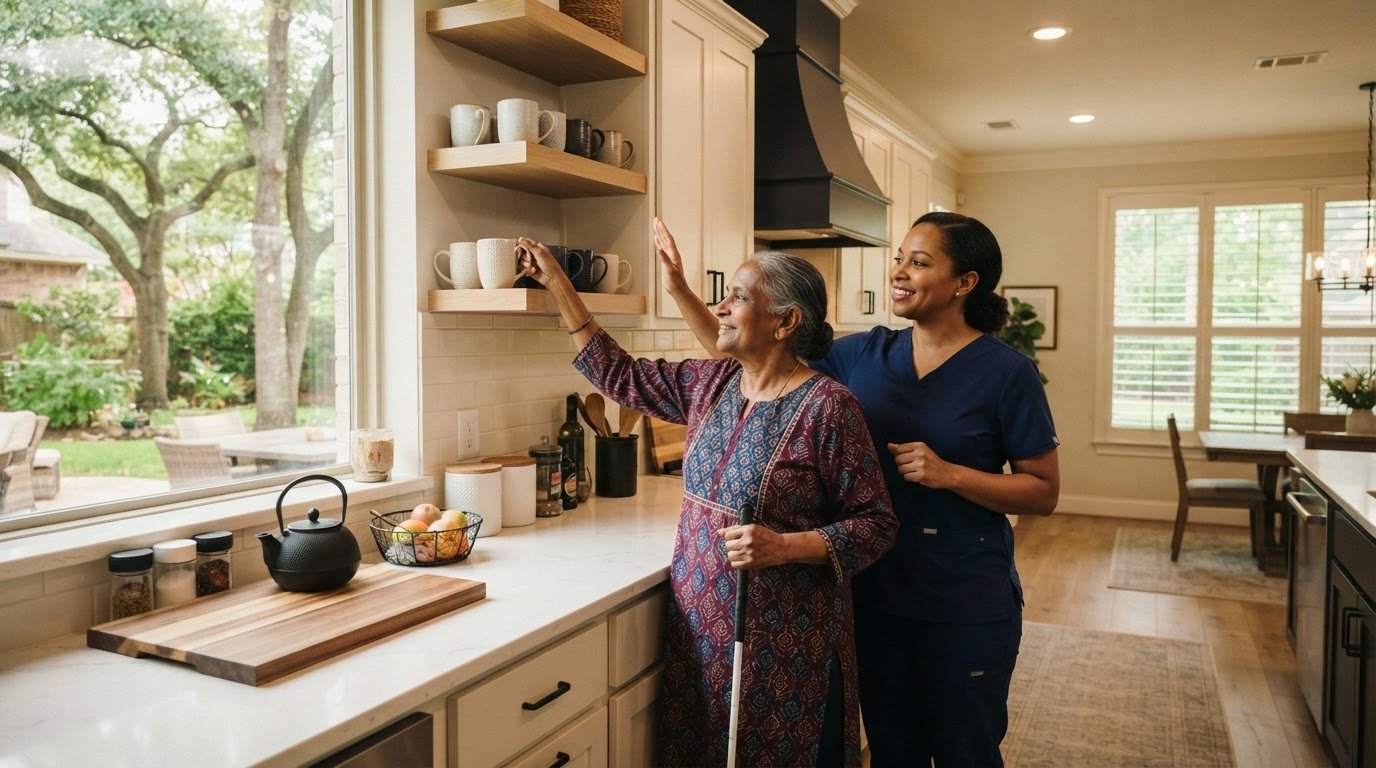
What if the best way to help a loved one with changing vision is to make daily life easier without taking choices away? For families considering home care for seniors with vision impairment, that balance can feel difficult. A familiar room may bring comfort, yet dim lighting, clutter, or an unexpected change to a routine can make everyday tasks harder.
Start by asking your loved one which tasks feel inconvenient, tiring, or uncertain. Don’t assume that a diagnosis tells you what they can manage: the right support depends on the person’s vision, abilities, preferences, and routines. Home adjustments and adaptive tools may help with specific tasks, while companionship or hands-on assistance can provide support when it’s wanted.
This guide explains how to compare those options, adapt daily support as needs change, and plan for safety while preserving dignity and choice. Families in Sugar Land and Missouri City can also learn how Modern Vintage Home Care’s companionship, personal care, and other in-home services can fit into an established routine.
Key Takeaways
- Notice which familiar tasks have become challenging, and tailor support to your loved one’s abilities and preferences.
- Offer clear guidance and practical help while allowing your loved one to make choices and do what they can comfortably manage.
- Compare home adjustments, adaptive tools, family assistance, and home care to see how each could support daily routines.
- Use a simple planning process to identify priorities, agree on support, and revisit the plan as needs change.
- Explore how home care for seniors with vision impairment in Sugar Land can complement existing routines through companionship, personal care, and reminders.
When Can Vision Changes Make Home Care Helpful for Seniors?
Vision changes can affect how clearly a person sees, how much detail they can make out, or how well they see in certain lighting. Low vision and blindness aren’t identical experiences: people with low vision may use their remaining sight in different ways, while blindness describes a more profound loss of sight. The broad term Visual impairment covers a range of experiences, so two seniors with similar diagnoses may have different support needs.
In-home support for a senior with vision impairment means practical, person-centered help with the daily tasks they find difficult, while respecting what they prefer to do independently. That could mean occasional help with a specific activity or regular assistance built around an established routine. The goal is not to take over. It’s to make daily life more manageable while supporting the senior’s choices.
A familiar home can still present challenges if lighting, furniture, or the location of household items makes it harder to get around. Reading labels, following a recipe, finding a phone, or recognizing a face across a room may take more time. Changes can also affect confidence and social activities: someone may hesitate to visit an unfamiliar place or join a group if they’re unsure what to expect. The right level of home care for seniors with vision impairment depends on the person’s abilities and preferences, their home environment, and the tasks they want help with.
Which everyday tasks may become harder when vision changes?
Begin with the senior’s own view. Ask which parts of the day feel inconvenient, tiring, or uncertain rather than assuming a task is beyond their ability. They may want occasional help reading a label or locating an item while continuing to prepare familiar meals independently. If cooking, organizing medications, or moving through a room regularly feels difficult, more consistent practical support may be useful. Needs can vary by task, lighting, and familiarity.
When might a family consider in-home support?
Consider a conversation when everyday routines repeatedly feel harder, moving around the home becomes less comfortable, or the senior starts avoiding activities they value. Family members may also notice growing isolation or worry when they can’t provide help consistently. You don’t have to wait for a fall or a major change in independence to discuss options. Ask what your loved one wants help with, what they’d like to keep doing, and whether support with selected tasks could make the day feel steadier.
How Can a Caregiver Support Independence with Vision Impairment?
A caregiver can make daily routines easier by sharing clear information and offering help in the way the senior prefers. That might mean describing what’s nearby, reading a label when asked, or helping with a personal-care task while leaving the steps the person can manage to them. The aim of home care for seniors with vision impairment is to support choice, confidence, and everyday life, not to take over.
Vision needs and useful strategies vary from person to person. The National Eye Institute guide to low vision offers background on low vision and resources related to vision rehabilitation. At home, let the senior’s own experience guide how assistance fits into the day.
What does respectful assistance look like?
Respect starts with communication. A caregiver can introduce themselves when entering a room, explain what they’re about to do, and ask before offering physical guidance. Rather than taking someone’s arm or moving belongings without warning, they can give a clear direction or ask, “Would you like me to guide you?” If help is welcome, the senior can explain what feels comfortable.
Keep the person involved in ordinary decisions, too. They can choose their clothes, meals, activities, and schedule, even if they’d like help locating items or preparing something. For support with personal routines, personal care for seniors in Houston can be part of a broader plan shaped around the individual’s preferences.
How can companionship and routine make a difference?
Predictability can make a day feel more manageable. With the senior’s agreement, keep everyday items in consistent places and follow familiar steps for getting ready, preparing a meal, or settling in for the evening. This can reduce avoidable searching. If something needs to move, explain the change and describe where the item is now.
Companionship offers social connection as well as practical support. A caregiver might talk with the senior over a meal, listen to music together, share a hobby, or accompany them during an errand. Ask which activities the person enjoys and adapt assistance to what they welcome.
Automated check-ins can add a regular touchpoint to an agreed care routine, while medication reminders can support an established schedule. These tools don’t replace emergency services or personal connection. Families in Sugar Land and Missouri City can include companionship and personal care from Modern Vintage Home Care in a plan built around a senior’s routines and choices.
Home Modifications, Adaptive Tools, or Home Care: How Do They Compare?
Different challenges call for different kinds of support. A clear walkway may help with getting around the home, while an adaptive tool can make one task easier. Family assistance and paid in-home care add human support, such as answering a question or helping with a daily activity. These options can work together. Let the senior’s preferences and routines guide what to try.
| Option | Need it may address | Personal interaction | Fit with established routines |
|---|---|---|---|
| Home adjustments | Making familiar spaces easier to navigate with clear walkways, suitable lighting, consistent furniture placement, or high-contrast markings where useful. | Little ongoing interaction once changes are made. | Can preserve familiar routines when changes are individualized and the senior knows what has moved or changed. |
| Adaptive tools | Making particular tasks easier with large-print labels, audio resources, tactile markers, or accessible controls. | Usually used independently, though someone may help set up or locate a tool. | May fit smoothly when the tool suits the senior’s preferences and is easy to use in a familiar place. |
| Family assistance | Offering help with occasional tasks, errands, or activities a relative finds difficult. | Personal and familiar, based on family availability. | Can build on shared knowledge of the person’s habits, though help may depend on family schedules. |
| Paid in-home care | Providing practical assistance, companionship, or help with daily living according to agreed needs. | Direct, responsive support from a caregiver. | Can be shaped around the senior’s preferred schedule and routines. |
What can home adjustments and adaptive tools help with?
Start with the places and tasks that matter most to the senior. Keeping furniture in familiar positions and walkways clear may make it easier to move around. Lighting adjustments or high-contrast markings can help in specific areas. Large-print labels, audio resources, tactile markers, and accessible controls may support particular activities. No single change suits everyone. Discuss adjustments together, avoid unnecessary rearranging, and explain a change before it happens.
What can a caregiver add that tools cannot?
A tool can assist with a task, but it can’t respond to someone’s changing needs in the moment. A caregiver can offer verbal guidance, help with daily living, or share conversation and an activity. Support can also vary from day to day: a senior may welcome help with a task on some days and prefer to manage it independently on others. Family members and technology can remain useful parts of the same plan.
Thoughtful home care for seniors with vision impairment works alongside useful home adjustments and adaptive tools. The right mix is practical, comfortable, and respectful of the senior’s independence.

How Can Families Build a Vision-Aware Home Care Plan?
A useful plan starts with the senior, not a checklist. Ask what feels comfortable, which routines matter most, and where they’d welcome help. Vision changes alone don’t show what someone can or can’t do. Let the senior’s abilities, preferences, and experience shape each decision.
Use this process to turn those conversations into practical home care for seniors with vision impairment:
- 1. Listen. Invite your loved one to describe daily routines, concerns, and the activities they want to keep managing independently.
- 2. Identify challenging tasks. Note which activities feel difficult, stressful, or less predictable, and when those challenges tend to occur.
- 3. Agree on priorities. Choose together what needs attention first. Separate immediate practical concerns from changes you can consider gradually.
- 4. Arrange support. Decide whether a home adjustment, adaptive tool, family help, or paid caregiving best fits each priority. If medication reminders or organizing a medication routine is a concern, explore medication management for elderly seniors.
- 5. Review. Revisit the plan with your loved one and adjust it as preferences, routines, or support needs change.
How should families identify the first priorities?
Begin with the tasks the senior says are important, difficult, or stressful. One person may want help with a particular part of the morning routine but feel confident with other activities. Another may benefit from an environmental adjustment before considering hands-on assistance. Discuss immediate concerns calmly, then list changes that can be planned over time. Vision impairment alone doesn’t prove someone can’t manage a task.
How can families review a care arrangement over time?
Set regular, low-pressure check-ins to ask what’s working and what feels less comfortable. Talk about independence, daily routines, and whether the level of assistance still feels right. With the senior’s permission, share useful details with family members and caregivers: preferred ways to offer guidance, the order of familiar tasks, and any agreed changes at home. A brief written note can help everyone follow the same approach.
If support needs become ongoing or include overnight assistance, families can learn more about 24-hour home care in Houston. A plan can account for which tasks need help, when support is most useful, and how to maintain familiar routines.
In-Home Care for Visually Impaired Seniors in Sugar Land
A helpful care arrangement begins with the senior’s preferences, not assumptions about what vision loss means. Identify the parts of the day where an extra person would be welcome, then shape assistance around established routines and the tasks your loved one wants to keep doing. With home care for seniors with vision impairment, details matter: how a caregiver gives directions, when reminders are helpful, and which activities the senior prefers to manage independently.
What can families expect from personalized in-home support?
Modern Vintage Home Care provides in-home support for seniors and families in Sugar Land and Missouri City. A caregiver can learn the senior’s preferred communication style, daily schedule, and priorities for assistance, then follow those preferences consistently.
For example, companionship might mean conversation over breakfast, sharing a favorite activity, or accompanying the senior during an errand. Personal care can support daily routines while leaving room for the person to choose how and when help is offered. Medication reminders can add a prompt to an established schedule. These services offer practical, person-centered assistance without assuming the senior needs someone to take over.
The amount of help can reflect the family’s needs. Quick Care Services can provide focused support for a limited need, while 24-hour care offers more continuous assistance. The plan can account for which tasks need help, when support is most useful, and how to maintain familiar routines at home.
What is a simple next step for families in the Houston area?
Before discussing care, write down the tasks where your loved one says help would be useful. Include their preferred approach, routines they value, and communication details that make assistance more comfortable. For instance, note whether they like a verbal description before a caregiver offers help or prefer to complete parts of a routine on their own. These notes give the family and care team a clear starting point.
You don’t need every detail settled before exploring options. Modern Vintage Home Care offers companionship, personal care, medication management, and other in-home support. Share your loved one’s priorities to start a conversation about a plan that respects their choices and helps home continue to feel like their own.
Discuss in-home care options with Modern Vintage Home Care.
Take the Next Step Toward Support That Fits
Vision changes don’t erase a senior’s abilities or preferences. The most helpful plan starts by listening, identifying where assistance would make daily life easier, and choosing support that respects familiar routines and independence. Home adjustments and adaptive tools can work alongside personal help, with the level of home care for seniors with vision impairment shaped around the individual.
For families in Sugar Land, Missouri City, and the greater Houston area, Modern Vintage Home Care offers companionship, personal care, automated check-ins, and medication reminders. These services can complement a senior’s routine while leaving room for choice and meaningful connection.
Start by sharing what your loved one values and where help would be welcome. Discuss personalized in-home care with Modern Vintage Home Care to explore support that fits your family’s priorities.
Frequently Asked Questions
What kind of home care helps seniors with vision impairment?
The most helpful support depends on the senior’s abilities, preferences, and daily routines. A caregiver may offer companionship, practical assistance with daily activities, verbal guidance, or medication reminders as part of an agreed routine. Home adjustments and adaptive tools may also help with specific tasks. In Sugar Land and Missouri City, families can combine these options while keeping the senior involved in decisions and supporting independence.
Can a senior with vision loss live independently at home?
Yes, many people with vision loss continue living at home, though useful support varies from person to person. Familiar layouts, accessible tools, and steady routines may help with everyday activities. Some seniors also appreciate help from family or an in-home caregiver. Talk with your loved one about specific concerns and preferences, then adapt support as needs change. A vision change alone doesn’t determine how much assistance someone needs.
How can caregivers help a blind or visually impaired senior?
Caregivers can offer practical assistance, companionship, and clear verbal guidance in ways that suit the senior’s preferences. Respectful help includes introducing yourself, explaining what you’re doing, and asking before providing physical assistance. Keep the person involved in decisions about daily activities and routines. A caregiver may also offer reminders or help with tasks the senior identifies as challenging. Appropriate support depends on the person’s needs and choices.
What changes can make a home easier for a senior with low vision?
Families can consider keeping walkways clear, leaving furniture in familiar places, and adjusting lighting where needed. High-contrast markings or tactile cues may help identify selected areas, while large-print labels and audio tools can support particular tasks. Choose changes based on the senior’s preferences and the home’s layout. Discuss adjustments before making them, since unexpectedly moving belongings or furniture may make familiar spaces harder to navigate.
Is in-home care different from using vision aids?
Yes. Vision aids and home adjustments can make information or surroundings easier to use, while a caregiver offers responsive human assistance and companionship. These supports can work together. For example, a senior may use audio resources and still appreciate help with a daily activity or an outing. The right combination depends on the person’s routines, needs, and preferred level of support, whether they live in Sugar Land, Missouri City, or nearby.
When should a family consider more regular home care for a senior with vision impairment?
Consider discussing regular support if important daily tasks repeatedly feel difficult, the senior wants more companionship, or consistent help with routines would be welcome. A change in vision alone doesn’t determine the level of care needed. Ask what assistance your loved one wants, note which tasks are challenging, and talk through whether occasional or more regular support feels right. Families in Sugar Land and Missouri City can shape a plan around those preferences.