
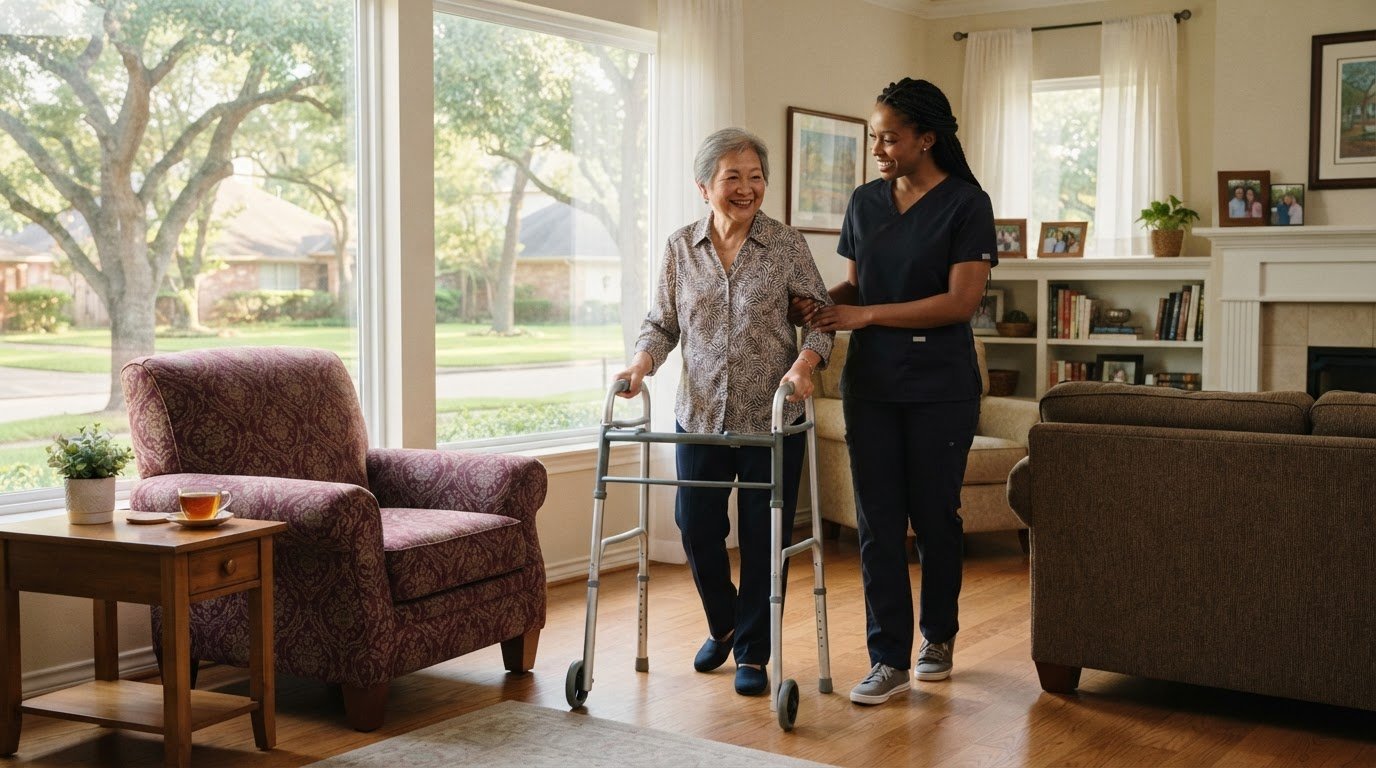
For families searching online for “support for elderly with limited mobility Sugar Land,” the first question is often where help would make daily life easier without taking away independence. A loved one may need assistance with personal care, getting ready for the day, or moving through familiar routines at a comfortable pace.
It’s understandable to worry about falls while also wanting to protect your family member’s privacy, preferences, and independence. Balancing caregiving with work and other responsibilities can add pressure, too. The right support starts with the tasks that are difficult and the times when help is welcome.
This guide explains how to identify daily needs and compare options such as personal care, companionship, Quick Care Services, automated check-ins, and 24-hour care. These practical steps can help Sugar Land and Missouri City families plan support around an older adult’s routines and preferences.
Key Takeaways
- Notice which familiar daily activities have become harder, then identify where assistance can help preserve independence.
- Match personal care and companionship to practical needs, social preferences, and the rhythm of the older adult’s day.
- Compare occasional visits, recurring assistance, and 24-hour support by how often help is needed and when family members are available.
- For support for elderly with limited mobility Sugar Land families can create a clearer plan by noting when assistance helps and what their loved one prefers to do independently.
- Consider how Quick Care Services, automated check-ins, and medication reminders can complement personalized in-home support as needs change.
When Limited Mobility Changes Daily Life in Sugar Land, What Support Can Help?
When movement becomes more difficult, familiar routines can take longer or feel less manageable. Getting dressed, moving between commonly used rooms, or settling comfortably into a chair may prompt families to wonder how to help without taking over. Needs and preferences vary, so start with the older adult’s experience rather than assuming every task requires assistance.
Non-medical in-home support can help with personal care and everyday routines. Depending on the person’s preferences, assistance might include getting ready for the day or completing a personal-care routine at a comfortable pace. This support is distinct from clinical treatment, rehabilitation, or physical therapy. Families seeking support for elderly with limited mobility Sugar Land can begin by listing the specific routines where a helping hand would be useful.
Which everyday activities may become more difficult?
Notice which tasks take more effort instead of treating all activities as a problem. Someone may be comfortable preparing breakfast but want help getting ready. Another person may manage familiar rooms independently yet appreciate assistance with dressing or personal care. A calm conversation can clarify what feels challenging and what the older adult wants to keep doing alone.
Try asking, “Which part of your morning would you like help with?” or “What would you prefer to keep doing independently?” These questions focus on the person’s choices, not only the family’s concerns. Note when help is welcome, which tasks the person wants to manage, and any preferences about how assistance is offered. That record can make it easier to explain needs as routines change.
How can support protect independence and dignity?
Helpful support doesn’t mean stepping in automatically. Offer assistance at the person’s pace, allow time for familiar tasks, and help with the parts that feel difficult. For example, a caregiver can assist with personal care while respecting the older adult’s privacy and preferences. Keeping a consistent routine can make support more predictable and give the person opportunities to express how they want things done.
Person-centered mobility support helps someone manage daily routines in the way they prefer, with assistance for the tasks that are harder to do alone.
For many families, supporting Aging in place means making everyday life at home more manageable while honoring the older adult’s choices. Support may range from occasional assistance to more continuous care, depending on daily needs and family availability. Begin with the routines that matter most, then adjust the plan as circumstances change.
What In-Home Support Can Address Mobility-Related Daily Needs?
Mobility-related help is most useful when it fits the moments that make daily routines harder. A caregiver can assist with personal care, provide support while someone gets ready, or offer companionship during the day. The aim is practical help that respects the older adult’s privacy, choices, and pace, rather than taking over tasks they can still manage.
Personal care, companionship, and daily routines
Personal care can support everyday activities such as getting dressed or completing a morning routine, with assistance shaped around the person’s preferences. Families exploring personal care for seniors in Houston can consider which tasks are difficult, when help is needed, and how the older adult wants assistance to be provided.
Companionship adds a social dimension to practical support. A caregiver can offer conversation and a reassuring presence during daily routines, which can be meaningful when family members can’t be there throughout the day. For support for elderly with limited mobility Sugar Land families, it helps to consider both the task that needs assistance and the kind of company their loved one enjoys.
Short visits or more continuous support?
The right schedule depends on when assistance is useful and how much supervision the family observes their loved one needing. Quick Care Services provide short-term care visits for focused support. 24-hour support is a more continuous option for people who need assistance or supervision across more of the day and night. Consider the routines that need help, when family members are available, and how the older adult feels between visits. Learn more about 24-hour home care in Houston.
Automated check-ins and medication reminders can complement an established routine with structured prompts. They support the plan agreed on by the person and family, while personal care provides direct assistance with everyday activities.
In-home care supports everyday living. It doesn’t replace physical therapy, skilled nursing, or other clinical care. If a person needs rehabilitation or medical treatment, that is separate from help with personal routines and companionship. Modern Vintage Home Care provides personalized options in Sugar Land, including personal care, companionship, Quick Care Services, and 24-hour support. Explore in-home care options to consider how practical assistance can fit into daily life.
How Should Sugar Land Families Compare Mobility Support Options?
The best fit depends on when help is needed, how much supervision feels reassuring, and what the older adult wants to keep doing independently. Support doesn’t have to mean taking over. A caregiver can assist with selected routines while leaving familiar tasks and personal choices in the older adult’s hands.
Use this comparison to guide a family discussion. The options can overlap, and needs may shift over time.
| Support option | Routine frequency | Supervision and family availability | Older adult’s preferences |
|---|---|---|---|
| Occasional help or Quick Care Services | For a defined task or short-term need | May fit when family can help at other times and support isn’t needed throughout the day | Works best when the person welcomes help with specific activities |
| Recurring personal care | Follows a regular routine, such as getting ready | Can support predictable needs while family members are away or managing other responsibilities | Agree on which tasks the older adult wants help with and which they prefer to do independently |
| Companionship | Scheduled around time together and daily routines | Offers social connection and a supportive presence; family availability helps shape when visits are useful | Consider whether the person enjoys conversation or company during parts of the day |
| 24-hour support | More continuous support across the day and night | May be considered when supervision needs persist and family cannot be present consistently | Discuss how the person feels about having ongoing support in the home |
When might occasional or Quick Care visits fit?
A short visit may suit a specific, temporary need, such as help with a daily task while a family caregiver is unavailable. Modern Vintage Home Care’s Quick Care Services provide short-term care visits. If assistance is useful at the same points in the routine day after day, recurring support may provide more consistency than occasional visits.
When might a family consider 24-hour support?
Families may consider 24-hour support when their loved one needs supervision across much of the day and night, or when family members have limited availability to be present. Limited mobility alone doesn’t mean continuous support is the right choice. Compare the person’s observed needs with the hours when family can help, and include the older adult in the discussion. Planned support can also give family caregivers time to rest; learn more about respite care for family caregivers.
A plan for support for elderly with limited mobility Sugar Land families can feel comfortable with starts with the person’s preferences, then matches assistance to actual routines. Revisit the plan if needs or family schedules change.

How Can Families Plan a Safer, More Supportive Home Routine?
A practical plan starts with the older adult’s perspective, then turns daily observations into clear guidance for family members and caregivers. For families arranging support for elderly with limited mobility Sugar Land, a written routine can clarify where assistance is welcome and which choices should remain in the person’s hands.
A simple planning sequence
- 1. Listen. Ask which parts of the day feel comfortable, which feel tiring or difficult, and what the older adult wants to keep doing independently.
- 2. Identify routines. Talk through a typical day, from getting up and getting ready to moving between commonly used rooms. Note when family members are usually present and when support would be helpful.
- 3. Record support needs. Write down the specific tasks where assistance is useful, preferred timing, and communication preferences. For example, someone may welcome help with part of a morning routine but prefer to choose their own clothes or complete another task alone.
- 4. Coordinate care. Share the agreed routine with family and caregivers, including what to help with, what to leave to the older adult, and how to communicate changes.
What should families discuss before care begins?
Include the older adult in decisions rather than planning around them. Ask which routines matter most, how they prefer assistance to be offered, and whether they like reminders or conversation during daily activities. Family members can add their schedules and responsibilities to the plan to identify when additional support would be useful. Keep the notes simple and update them as preferences or needs change.
Walk through the routes the person commonly uses and notice whether frequently needed items are easy to reach. Discuss any parts of the day that feel inconvenient. This is an observation, not a diagnosis of home hazards. If mobility concerns are new or worsening, encourage the older adult to discuss them with their healthcare professional.
How can families keep the routine coordinated?
Automated check-ins can support communication around an established care routine, while automated medication reminders can provide prompts at planned times. They complement the agreed routine and do not replace personal assistance or clinical care. If cognitive support is relevant, families can also learn about specialized dementia home care services when planning assistance that respects the person’s needs.
Clear notes and regular communication help keep the plan consistent while leaving room for the older adult’s choices. Discuss a personalized in-home care routine with Modern Vintage Home Care.
How Modern Vintage Home Care Supports Older Adults in Sugar Land
Choosing in-home support is easier when families can connect specific routines with practical help. Modern Vintage Home Care supports older adults in Sugar Land, Missouri City, and the greater Houston area with personalized care shaped around daily needs and preferences. For families looking for support for elderly with limited mobility Sugar Land, the focus is on making familiar routines more manageable while respecting the older adult’s independence.
What does personalized in-home care look like?
Personal care can help with everyday routines according to what the person wants assistance with and what they prefer to do on their own. Companionship adds conversation and a supportive presence to the day. For shorter-term needs, Quick Care Services provide short-term care visits. When support needs are more continuous, 24-hour care is another option.
Automated check-ins and medication reminders can complement everyday support by reinforcing an established routine. These tools provide prompts and support communication, while caregivers provide personal assistance. In-home support is non-medical and doesn’t include physical therapy or skilled nursing.
Respectful care also means paying attention to the person’s pace, privacy, and familiar habits. A caregiver can follow the agreed routine and adapt assistance to the tasks where help is welcome. Clear communication with family members helps keep preferences and changing daily needs in view without making assumptions about what the older adult can or wants to do.
What are the next steps for a Sugar Land family?
Start by noting which routines have become difficult, when assistance would be most useful, and what your loved one hopes to continue doing independently. Include family schedules and priorities, such as times when relatives are at work or balancing other responsibilities. These details provide a practical starting point for discussing suitable support.
The first conversation can be a calm opportunity to talk through those routines and priorities. You don’t need to have every detail figured out beforehand. Sharing what a typical day looks like can bring the family’s questions into focus and open a discussion about personal care, companionship, short-term visits, or more continuous support.
For local support for elderly with limited mobility Sugar Land families can explore, discuss personalized in-home care with Modern Vintage Home Care.
Build a Support Plan Around Everyday Life
Mobility support works best when it fits the person, not the other way around. Identify the daily routines where assistance would help, then consider how often support is needed and what your loved one prefers to keep doing independently. A thoughtful plan can protect dignity while helping family members share caregiving responsibilities more clearly.
For support for elderly with limited mobility Sugar Land families can consider personalized personal care, companionship, Quick Care Services for short-term visits, or 24-hour support. Automated check-ins and medication reminders can also complement an established routine. Modern Vintage Home Care serves Sugar Land, Missouri City, and the greater Houston area.
Start with a conversation about the routines that have become difficult and the support your family hopes to add. Discuss personalized in-home support with Modern Vintage Home Care. A plan shaped around your loved one’s preferences can help make daily life at home feel more supported.
Frequently Asked Questions
What support is available for elderly adults with limited mobility at home?
In-home support can help with personal care, everyday routines, companionship, and agreed check-ins. For families seeking support for elderly with limited mobility Sugar Land, options include assistance with getting ready, short-term visits through Quick Care Services, or 24-hour care when more continuous support is needed. Automated medication reminders can complement an established routine. The right mix depends on the older adult’s preferences and when help is most useful.
Can an older adult with limited mobility remain at home?
Some older adults with limited mobility can continue living at home with support that fits their needs, preferences, and routines. Consider which daily activities are manageable, when assistance is helpful, and whether family or caregivers can provide support at those times. A healthcare professional can address health-related concerns, especially if mobility changes. In Sugar Land and Missouri City, personalized in-home care can support everyday routines while respecting the older adult’s independence.
How do I choose between short visits and 24-hour home care?
Choose based on how often assistance or supervision is needed, not mobility limitations alone. Short-term visits, such as Quick Care Services, may fit a defined need or a time when family is unavailable. If support needs extend across much of the day and night, 24-hour care may be worth considering. Review the person’s routine, family availability, and preferences together, then revisit the plan if those needs change.
Does in-home mobility support include physical therapy?
No. Non-medical in-home support helps with everyday activities and personal care, while physical therapy is a separate clinical service. Caregivers can provide practical assistance with daily routines and companionship, but they don’t provide physical therapy, skilled nursing, or medical treatment. If an older adult needs rehabilitation or has new or worsening mobility concerns, discuss those needs with their healthcare professional. Keeping these types of support distinct helps families plan appropriately.
How can caregivers help protect an older adult’s independence?
Caregivers can protect independence by asking what help the person wants, allowing time for familiar tasks, and assisting where needed. For example, someone may welcome help with part of a morning routine but prefer to choose their clothes or complete other steps themselves. Sharing preferences and routines with caregivers helps keep assistance respectful and predictable. Involving the older adult in decisions keeps their voice central as support is arranged.
Is 24-hour care necessary for every senior with limited mobility?
No. Limited mobility by itself doesn’t mean someone needs 24-hour care. Some older adults may benefit from occasional or recurring assistance, while others may need more continuous supervision. Families can consider which tasks require help, how the person manages between visits, and when relatives are available. Include the older adult’s preferences in the decision, and adjust the support plan if daily needs or family circumstances change.
What should a family prepare before arranging in-home care in Sugar Land?
Write down the routines that have become difficult, when assistance would be useful, and what the older adult wants to continue doing independently. Note preferred timing, communication preferences, and family schedules, including times when relatives can’t be present. A simple overview of the person’s typical day can make a planning conversation more focused. Families in Sugar Land and Missouri City can use these details to discuss personalized in-home support.