

What if the best way to keep your parent’s appointments on track is to make the routine feel more like theirs, not yours? Managing appointments for elderly parents can become stressful when dates, reminders, provider details, transportation, and follow-up tasks are scattered across family members. Your parent may also feel uneasy about accepting help, especially if they worry that decisions are being made without them.
Those concerns are understandable. A shared system can reduce last-minute confusion while helping your parent stay informed and involved. With a calm, repeatable routine, family members can coordinate responsibilities without taking away the independence that matters to your parent.
This guide covers how to organize appointments in one shared place, prepare together for each visit, coordinate practical details, and track follow-up. You’ll also learn how to make reminders feel supportive rather than controlling, and when companionship or in-home care may help with appointment-day routines.
Key Takeaways
- Keep appointment details in one shared system so family members can coordinate dates, contacts, and responsibilities.
- Use a simple sequence to schedule, prepare for, attend, and follow up on each visit.
- Help your parent feel included by asking permission, respecting their preferences, and letting them lead where possible.
- When managing appointments for elderly parents, offer calm, specific help instead of taking over or arguing.
- Notice when missed visits or caregiver strain signal a need for added support with daily routines and companionship.
Managing appointments for elderly parents starts with a respectful shared plan
Appointment details can end up scattered across a parent’s calendar, a family group chat, provider paperwork, and someone’s work schedule. Add transportation and follow-up, and relatives may each hold a different piece of the plan. A shared routine brings those details together, but it should support your parent’s choices, not take them over.
Before changing calendars or contacting a provider, ask what kind of help would feel useful. Your parent might welcome a ride or a reminder but prefer to book their own visits. The role of a caregiver can include practical support, but the right arrangement depends on what your parent wants and needs.
Start with the appointment responsibilities your parent wants to share
Choose an unhurried time to talk. Ask whether reminders, transportation, note-taking, or scheduling would make visits easier. Then agree on who will track appointments, who may attend, and who will help with follow-up. One family member can share updates with others while your parent remains involved in decisions about their care. The goal is to coordinate support without replacing your parent’s voice.
Choose one simple calendar and reminder routine
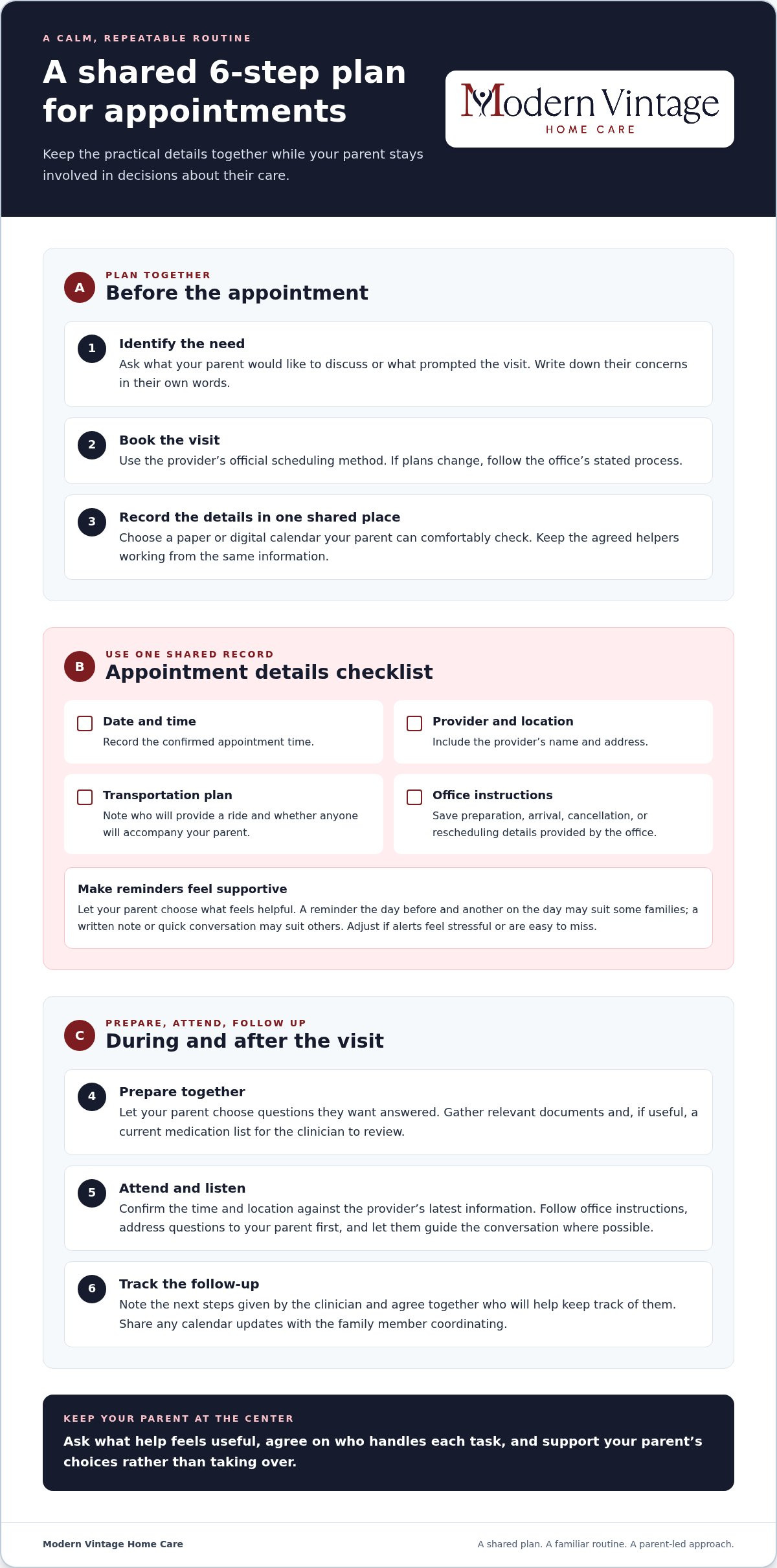
Pick a paper calendar or shared digital calendar that your parent can comfortably check. The best system is one they can use consistently, not necessarily the newest app. With their agreement, record the key details in one place:
- Appointment date and time
- Provider’s name and location
- Transportation plan and who will accompany them
- Any agreed reminder or preparation notes
Set reminders at intervals your parent finds helpful. A reminder the day before and another on the day may suit some families; others may prefer a written note or a quick conversation. Let your parent guide the approach, and adjust it if alerts feel stressful or are easy to miss.
Use the same routine for each appointment. If plans change, the family member coordinating can contact the provider through its official channels and update the shared calendar. That simple step helps everyone work from the same information while keeping your parent included.
Build a System for Scheduling and Preparing Appointments
A repeatable process turns appointment planning into manageable steps. When managing appointments for elderly parents, keep the routine practical and follow any instructions the clinician or office provides. Use the provider’s official phone number, patient portal, or other designated contact method to book or reschedule. Then share updates with your parent and the family member helping coordinate.
- 1. Identify the need. Ask your parent what they’d like to discuss or what prompted the visit. Write down their concerns in their own words.
- 2. Book the appointment. Contact the provider using its official scheduling method. If plans change, follow the office’s stated process.
- 3. Record the details. Add the date, time, address, provider’s name, and any instructions from the office to the shared calendar.
- 4. Prepare together. Help gather information your parent chooses to share, along with relevant documents and a current medication list when appropriate.
- 5. Attend and listen. Follow the clinician’s directions during the visit, and let your parent guide the conversation where possible.
- 6. Follow up. Note any next steps the clinician gives and agree on who will help track them.
What to record when an appointment is booked
Record the provider’s name and location, appointment time, and any preparation or arrival instructions from the office. Note whether your parent wants transportation, mobility assistance, or a companion. If the office provides cancellation or rescheduling details, save them rather than assuming every provider follows the same policy. Keep the information accessible to the people your parent has agreed should help.
Prepare questions and information before the visit
Invite your parent to choose the questions they most want answered. Write them down together so they’re easy to refer to during the visit. Gather relevant paperwork and, if useful, a current medication list for the clinician to review. For broader medication-safety planning, see this guide to medication management for elderly seniors. Keep preparation organizational; the parent’s clinician is the source for medical instructions and advice.
If appointment-day routines are becoming difficult to organize, in-home companionship and personal care from Modern Vintage Home Care can provide practical support while helping your parent maintain familiar routines in Sugar Land and Missouri City.
Make appointment day and follow-up easier for everyone
A little preparation can make the trip and visit feel less rushed. Before leaving, confirm the appointment time and location against the provider’s latest information, review the agreed transportation plan, and follow any instructions the office gave your parent. If anything has changed, use the provider’s official contact method rather than relying on an old calendar entry.
Decide together what support your parent wants that day. A family member might provide transportation, attend the visit, take notes, or wait nearby. Managing appointments for elderly parents works best when your parent has a clear say in that role and remains the first voice in conversations about their care.
Support your parent during the appointment without speaking over them
At the visit, address questions to your parent first and give them time to answer. Add context only if they invite you to or need help sharing a detail. Ask permission before taking notes, and keep them factual: distinguish what the provider said from reminders or ideas the family added afterward. If an instruction is unclear, ask the provider to explain it before you leave rather than guessing at its meaning.
Turn visit instructions into manageable next steps
After the appointment, review the provider’s stated next steps with your parent. Write them in plain language for their review while preserving the meaning of the original instructions. Then agree on who will handle each task and record relevant dates in the family’s shared calendar or written plan.
- Provider instruction: Record what the clinician or office specifically asked the parent to do.
- Family task: Note who will help with an agreed action, such as arranging a follow-up visit.
- Next date: Add a reminder for a scheduled appointment or other time-sensitive step.
Assigning a clear owner keeps tasks from disappearing into a group message or being assumed to belong to someone else. Keep your parent involved in reviewing the plan, and follow the provider’s directions if questions come up. For support with everyday routines at home, explore personal care for seniors in Sugar Land and Missouri City with Modern Vintage Home Care.
When your parent resists appointment help or has memory challenges
A parent may decline help because they value privacy, want to stay in charge, or find planning stressful. Offering support doesn’t mean they have to give up control. When managing appointments for elderly parents, try to understand what feels difficult before changing a routine or stepping in.
Respond to reluctance with choices and small offers
Try asking, “Which part of the appointment feels hardest?” Your parent may want help with the drive but prefer to speak with the provider alone. They may welcome a reminder but not want someone else managing the calendar. Offer one specific option at a time, and respect a refusal where it’s safe to do so. Specific, optional help can preserve your parent’s role in planning.
A calm conversation is usually more productive than an argument. If your parent isn’t ready to decide, pause and revisit the topic later. If you’re unsure how to handle a care decision, ask the parent’s healthcare team for guidance. Their input can help clarify appropriate support while keeping the conversation centered on your parent.
Adapt appointment reminders when memory needs change
Memory challenges can make changes to plans harder to follow. Keep the routine familiar where possible, use brief reminders, and put upcoming dates and provider details in one agreed, easy-to-find place. A paper calendar near a familiar daily stopping point may work better for one person; another may prefer a reminder from a family member. Ask what feels comfortable, then notice whether the approach helps or creates extra stress.
Keep reminders simple and consistent. Use the same calendar and wording each time, for example, rather than sending repeated alerts through several channels. If appointments are becoming harder to remember or prepare for, share those observations with the healthcare team and ask what they recommend. Don’t change care plans or interpret medical instructions on your own.
Families exploring support at home can read about specialized dementia home care services in Sugar Land. Familiar routines, companionship, and personalized in-home support can help a parent feel more at ease in daily life while respecting their dignity and preferences.
If memory-related routines are becoming difficult to manage at home, explore dementia care and in-home support from Modern Vintage Home Care in Sugar Land and Missouri City.
Know when family coordination could use extra support
A shared calendar can solve scattered information, but it can’t take every daily responsibility off a family’s plate. Consider whether extra help may be useful if appointments are repeatedly missed, coordinating rides is disrupting work or caregiving schedules, or familiar routines at home are becoming difficult to maintain. These signs don’t mean your family has failed. They may show that the current plan needs another layer of support.
Separate appointment coordination from ongoing care needs
Calendars, reminders, and clear task assignments address organization. Ongoing help with everyday activities is a different need. Companionship or personal care can support routines at home and give family members more room to manage other responsibilities. A caregiver can also help maintain a familiar rhythm around an appointment day, while the parent and family continue to coordinate medical visits with the provider.
Keep medication reminders separate from clinical decisions. A reminder can help someone remember a medication routine, but caregivers don’t replace clinicians or make changes to treatment. If your parent has questions about a medicine, missed a dose, or needs instructions clarified, direct those questions to the healthcare team.
Explore supportive care in Sugar Land and Missouri City
When family coordination becomes difficult to sustain, personalized in-home support can complement the plan you’ve built. Modern Vintage Home Care provides support in Sugar Land and Missouri City, including companionship, personal care, and Alzheimer’s and dementia care. For a parent with memory challenges, structured routines and familiar, respectful support can help preserve dignity and quality of life at home. Caregivers support daily life, not replace the parent’s clinicians or make healthcare decisions.
You can keep using the shared calendar and family point person while adding help with agreed daily routines. That way, support can fit around your parent’s preferences instead of shifting control away from them. Learn about in-home support from Modern Vintage Home Care in Sugar Land and Missouri City.
Make the next appointment feel more manageable
A dependable appointment routine doesn’t need to be complicated. Keep the details in one shared place, agree on who will handle each task, and invite your parent to guide the support they receive. Before and after each visit, follow the provider’s instructions and make next steps clear. These small habits can make managing appointments for elderly parents feel less scattered while protecting your parent’s independence.
If organizing appointments is part of wider family caregiving strain, support at home may help with everyday routines. Modern Vintage Home Care offers personalized in-home support in Sugar Land and Missouri City, including companionship, personal care, and Alzheimer’s and dementia care. Automated check-ins and medication reminders are also available as part of its offerings.
Explore in-home support for your family from Modern Vintage Home Care in Sugar Land and Missouri City. Consider what kind of help best fits your parent’s preferences, then take the next step toward a more manageable routine.
Frequently Asked Questions
How do I keep track of my elderly parent’s appointments?
Use one calendar your parent can access and feels comfortable using, whether it’s a paper calendar or a shared digital one. Record each appointment’s date, time, provider, location, transportation plan, and agreed companion. Choose reminders that suit your parent rather than sending repeated alerts. Managing appointments for elderly parents becomes easier when one family point person updates the calendar and shares changes with everyone involved.
How can I help an elderly parent who refuses appointment help?
Ask what part of the process feels difficult instead of assuming why your parent is reluctant. Offer one specific, optional form of help, such as a ride, a reminder, or help writing down questions. Respect their preferences and avoid taking over without discussion. If they aren’t ready to decide, pause and revisit the conversation later. For concerns about a care decision, seek guidance from their healthcare team.
Should I go to my elderly parent’s doctor appointments?
Go if your parent wants you there and your presence would be helpful. Talk beforehand about whether they’d like you to provide transportation, take notes, or join the conversation. During the visit, address questions to your parent first and add information only with their permission or when needed. If you attend, ask the provider to clarify instructions you don’t understand, and review your notes with your parent afterward.
What should I bring to an elderly parent’s medical appointment?
Bring the information the provider or office has requested, along with your parent’s questions and any relevant documents they choose to share. A current medication list may be useful for the clinician to review. Keep appointment details and preparation instructions together so they’re easy to find. Follow the office’s directions about what to bring, and don’t add medical information or make changes to treatment plans without guidance from your parent’s clinician.
How do I manage appointments for a parent with dementia?
Keep appointment information in one familiar, easy-to-find place and use brief reminders that fit your parent’s routine. Involve them in planning as much as possible, and keep the day’s steps calm and predictable. Write down questions or concerns in your parent’s words, and follow instructions from their healthcare team. If memory changes make the routine harder to manage, ask the team for guidance on appropriate support.
Can a caregiver help take an elderly parent to appointments?
A caregiver can support appointment-day routines and offer companionship, but transportation and attendance arrangements should be planned with your parent and family. Don’t assume the caregiver will make medical decisions or replace the clinician. Modern Vintage Home Care provides personalized in-home support in Sugar Land and Missouri City, including companionship, personal care, and Alzheimer’s and dementia care. This support can complement family coordination and familiar routines at home.